Hello everyone and welcome to this talk followed by a meditation,
A guided meditation on the subject of evenness of breath,
Evenness of mind.
Generally talking about the benefits of meditation and finding that consistency of calmness in our everyday life.
One of the fundamental necessities to achieve success in whatever you desire is to acquire the quality of evenness of mind.
But as desirable as it is,
It does remain a challenge for most of us.
It seems to be the nature of the mind to often default to thoughts of negativity,
Restlessness and doubt,
With a lot of internal dialogue going on around these emotions.
In the great spiritual epic,
The Bhagavad Gita,
Lord Krishna praised even-mindedness as an essential virtue.
Speaking to his devotee Arjuna,
He said,
He who cannot be ruffled,
Who is calm and even-minded,
During pain and pleasure,
He alone is fit to attain everlastingness.
In other words,
To live and move and have our being in the stability,
The stability of calmness,
Clarity and evenness of mind.
To be even-minded during pain and pleasure suggests that we remain the same,
Not only when life is flowing smoothly and when we are happy with everything and everyone around us,
But it is important to feel even-minded under all circumstances,
In pleasure and when we are feeling what one could describe as pain,
And that comes in varying forms.
Accomplishing this state of mind brings positive results.
The thing is,
Just how do we acquire evenness of mind?
There is a vast array of ways one can go about this.
I'm going to suggest that yoga is the most effective way,
And when I say yoga,
I'm referring to the entire system of yoga,
Which is given in Patanjali's Sutras,
Where he outlines the eight limbs of yoga.
If you're not familiar with the eight limbs,
Very briefly,
They consist firstly of the yamas and the niyamas,
These are Sanskrit words,
And these are the universal principles of moral behaviour.
Paramahansa Yogananda,
He liked to call these principles the eternal rules of happiness.
Firstly,
The yamas,
These are non-violence,
Truthfulness,
Non-stealing,
Not being possessed by possessions,
Moderation in all that we do,
Including the creative force in the body.
And then comes the niyamas,
Cleanliness,
Contentment,
Which actually holds the key to even-mindedness.
Then we have self-discipline,
Introspection and study of the scriptures,
And lastly,
To cultivate a feeling of devotion and gratitude to a higher force,
Whatever that concept may be to you,
Whether it's God or something else,
Whatever feels right for you.
If you think about it carefully,
It is the breaking of these guidelines that is the fundamental reason for suffering in this world.
So with a little contemplation,
It's not hard to realise that without being aware of and developing these virtues,
It is difficult for the nervous system in the body to be calm,
And I would say even healthy.
For example,
How can one be calm if you are harbouring feelings of violence towards someone or something,
Or even being untruthful?
When we talk about evenness of mind,
Naturally it is the mind that we need to deal with,
And that is not always an easy thing to do.
One could say that the mind has a mind of its own.
The nature of the mind is to be restless,
We all know that.
Using various techniques and being consistent with the practices,
We are able to train the mind to go where we want it to go.
But remember,
The techniques,
As wonderful as they are,
In themselves is not meditation,
But a means to reach stillness and experience the calmness and peace of meditation,
And thus evenness of mind.
Now after the yamas and niyamas comes asana,
The third of the eight limbs,
The physical postures which among many other benefits assists in helping to bring balance into the body.
Then we have pranayama,
Evenness and control of the life force energy,
And that includes using the breath.
Then pratyahara,
The withdrawal of the senses so as to avoid distraction.
Then concentration,
And then meditation,
And finally in the stillness and focus of meditation to experience oneness with the divine,
Often called samadhi.
Now it's a huge subject,
It's a very vast subject,
The eight limbs of yoga,
So if you're interested,
Please explore this course that I have published on Inside Timer,
Quite in depth on the eight limbs of yoga.
It's titled Reflection on the Eight Limbs of Yoga as given in Patanjali's Yoga Sutras.
So see how you go with that.
But for now,
We will concentrate on moving toward that place where you can experience evenness of breath and evenness of mind.
As I said,
I will at the end of this talk give you a guided meditation which can help with this endeavour.
Sometimes it takes looking at reasons why it is difficult to relax and to be still,
To feel inner calmness.
And to relax and to be still and to feel that inner calmness is at the very foundation of success in life and feeling that consistency of evenness of breath and mind.
Those reasons that we face may stem from what is going on in everyday life.
They can range from stress,
And we all have that,
Anxiety,
Which is pretty rampant in the world at the moment and always has been,
Pressures at work or at home,
Perhaps even a particular health condition,
Lack of restorative sleep,
Lack of appropriate exercise as well,
Relationship difficulties,
Financial difficulties,
And the list goes on.
It may even be all of the above.
But please know that listening to this talk,
You are not alone.
We all struggle and we all feel these things one way or another.
But the good news is we do not have to.
Yes,
Life challenges come,
But with evenness of mind,
Our reaction is different.
We have more resilience and we're able to make better choices and decisions.
So you see,
With the work that you put into this,
You are training the mind and therein lies the development of more resilience and to be able to make those choices and decisions for the highest and the best.
Do you need to change a habit that may be holding you back?
Think carefully about that.
That's the introspection.
Always introspect with a positive attitude and to experience positive outcomes.
You can do it.
Perhaps consider developing the spiritual habit of devoting even a short amount of time in the morning and or evening to be still,
Just to be still.
If it's new to you,
I know it's very hard to sit and suddenly meditate and let all those thoughts of the day disappear.
Impossible.
We have to have a way and means to do this.
Initially,
Just sit and breathe,
Observing the body and the breath without having any preconceived idea of how it should be.
And again,
If you're new to trying this,
Limit it to five or ten minutes.
Forcing yourself to be there is of no benefit at all.
One has to be disciplined when it comes to this,
But never force it.
So little steps.
Start with five or ten minutes of stillness and see where that takes you.
Of course,
It will take you toward meditation and I have plenty of sleep meditations and Ryoga Nidra and others on Insight Timer that you may wish to have a look at or listen to.
Cultivating evenness of breath and mind does require discipline at first and for that matter,
I believe that discipline is constantly required.
It does become easier and the will to continue to experience personal growth becomes stronger.
The discipline of applying spiritual principles such as given in the Eight Limbs is not meant to confine us in any way,
But rather to train the mind to become more expansive,
More creative and calm.
Once the habit of prioritizing your time is established,
It hardly requires any discipline at all.
But first,
Think of discipline as your friend,
Leading you,
Holding your hand and taking you to a place of happiness,
Calmness and evenness of mind.
Time is a big factor in our life and these days,
Most of us talk about not having time for one thing or another,
But when it comes to prioritizing your meditation and those few minutes of stillness,
Think about putting that first.
It requires personal effort,
Sincerity,
Determination and the desire to achieve it and of course,
Training.
One must watch the mind,
Watch the thoughts.
Quoting Proverbs 23 verse 7,
For as a man thinketh in his heart,
So is he.
I love the way it suggests that we think in our heart because the heart is a place for a lot of our deeper feelings in life.
Whatever you think,
It is inevitable that you express it in what you say and what you do.
We must learn to replace any negative,
Critical,
Doubting thoughts,
Whether it be about ourselves or others or situations,
Replace these thoughts with positive thoughts.
And remember that any negative thought was a learned behavior,
It can be unlearned and it can be learned,
You can learn to create a behavior of positivity.
Meditation is the most important commitment we can make to find evenness of mind,
Which in turn allows us to see meaning to all of life,
To enjoy life.
Neglecting that commitment to meditate on a regular basis gives rise to thinking that you can put it off till you have more time,
As we suggested.
So you see,
That is where you have to stay strong and put meditation first.
There is always enough time.
As Swami Sri Yukteswar said,
Making a spiritual effort now,
Everything in future will improve.
If you are facing difficulties and challenges at times,
There is often a temptation to become discouraged and thus abandon your meditation.
But these are the times when you need it most.
Yes,
It is going to require more willpower to do it,
But I guarantee that you will feel better within yourself if you keep doing it.
You must maintain that kind of determination.
Of course you won't know if it works if you don't try it.
That kind of determination makes you stronger in every sense of the word.
So keep on keeping on and know that if you spark that willpower within and practice it,
It becomes easier.
Have faith in yourself and what you want to achieve.
Seeking that stillness within,
You can and will receive guidance and help to overcome whatever might be disturbing your inner peace and causing restlessness of body and mind.
It is so important to rise above all that restlessness in the body and restlessness of your mind causes restlessness and fidgeting in your body.
So it is very much a whole process of understanding,
Learning and trying,
Experimenting with all that you can find in the teachings of the Eight Limbs of Yoga.
Allow yourself to relax.
Just train yourself to relax.
Once you have done all that is necessary to help yourself,
Feel that you can surrender all your efforts to the Lord,
To God or the universe,
To whatever higher power that feels right for you.
This is a very important step on the spiritual path.
Be content and know that all is well.
Now let's get ready for a meditation practice.
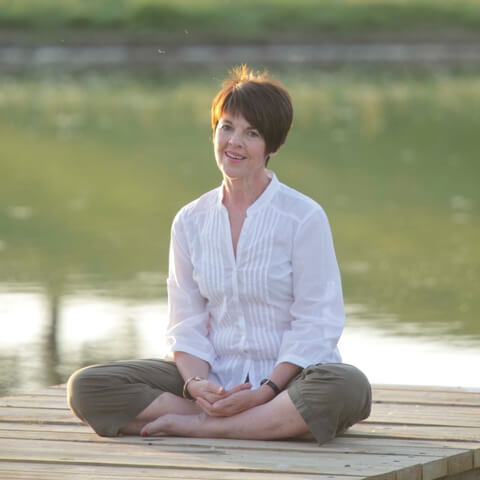
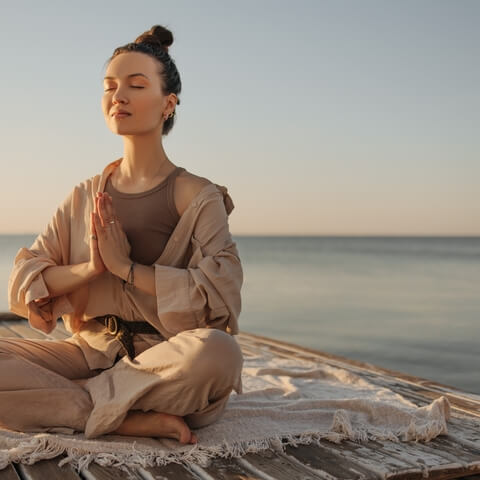
The first thing to notice when you settle down for meditation is your posture.
And this is one of the most important preliminaries for meditation.
You might be sitting on the floor with your legs crossed on a cushion or you may be sitting in a chair,
An upright chair.
Holding your spine straight,
Elongated,
Not slouching down and concaving your chest.
Ensure that you're poised and upright.
Now it is suggested if you're sitting in a chair to have your feet firmly grounded on the floor.
And then whether you're sitting on the floor or if you're in your chair,
Just place your hands at the very top of your thighs with the palms faced upward,
Drawing your hands close to the very top of your thighs.
This will bring the shoulders back and it will help to just extend the chest a tiny bit forward,
The sternum part of your chest,
Maintaining a sense of ease right throughout all these postural adjustments.
And then feel your whole body relaxed and still.
And we use a breathing exercise that was given by Paramahansa Yogananda.
This is used across many traditions and it is very helpful in settling the mind and body and just bringing about a feeling of balance within.
So what we do is inhale deeply through the nostrils and hold the breath and then tense the body,
All through your body tense and then you exhale with a double breath like this,
Which is a short,
Long exhalation.
And as you do that,
You actually relax right through your body.
Feel your body relaxing and dropping any tension away.
So we'll do that together three times.
Inhale deeply through your nostrils and tense your body quite firmly.
Don't overdo it,
But just firmly.
And then exhale,
Relaxing right through your body.
And again,
Breathe in through your nostrils,
Hold and tense and exhale releasing.
And again,
Inhaling,
Hold and tense and exhale releasing.
Feel your whole body relaxing with that final exhalation.
And now just feel your body relaxing and take a deep breath in through your nose,
Deeply and slowly.
And exhale deeply and slowly,
Just with those slightly open lips.
And then welcome the breath just as the body demands.
There's a shift in how you might breathe normally.
There may be more ease and more calmness.
Just let that happen.
Let that arise very,
Very gently.
So you can say that you're aware,
You take time now to be aware of the natural rhythm of your breathing in and out through the nose.
And then we can apply a very basic rhythm to your breath.
And it consists of breathing in through your nose,
Counting four,
One,
Two,
Three,
Four,
And then breathing out through your nose for six,
One,
Two,
Three,
Four,
Five,
Six.
This is a breath rhythm that is suggested to turn on the relaxation response in your nervous system and to turn off that fight or flight response that we often remain in unconsciously,
Where we feel we have to go,
Go,
Go.
So let's do that together a few times.
Inhaling four,
Exhaling six,
Remaining very still and relaxed whilst you do that.
I'll call you back.
And now let that rhythm of the breath,
The counting,
Let that subside.
And the next stage in preparation is a mantra.
Now a mantra is a word usually that you repeat over and over,
Often referred to as Japa Yoga.
And it can be two words or three words,
But today I'm going to suggest that we use the word peace,
Very simply peace.
You may have a mantra that you're familiar with and by all means use that.
But if not,
Use the word peace or you can use love or joy,
Anything like that as a mantra.
And in the stillness of the breath and the body,
Just let that link to your breath.
Inhaling peace,
Exhaling peace.
Please continue and you can cease the mantra now as we enter a space of stillness,
Divine stillness.
And just continue to breathe naturally and easily.
From time to time,
Check that you're not gathering any tension around your neck or shoulders.
If you are,
Simply just drop that.
Lift your inner eye gaze behind your closed eyes to the point between the eyebrows,
Looking to that point of divine consciousness,
Inspiration,
Allowing yourself to remain perfectly still.
And it feels good to be relaxed.
It feels good to be still.
You might find that you're connected to the evenness of breath and evenness of mind.
Just enjoy the stillness.
Be there,
Be there now and I'll call you back.
Coming back now,
Gently,
Very gently coming back.
In that space of stillness that you've experienced now,
Just remember the sensation of calmness,
Evenness of breath,
Evenness of mind.
Do not let the peace and the understanding that you have received in meditation disappear.
When you leave your meditation practice,
Carry it with you as long as you can.
This is a way that you can feel that evenness of breath and evenness of mind throughout all your activities in daily life.
In the words of Paramahansa Yogananda,
He said,
We must learn to be calmly active and actively calm.
A regular meditation practice allows you to be as active as is required,
Enthusiastic about what you do and clear about where you want to go and be in your life.
Be calmly active and actively calm,
Carrying that calmness,
That evenness of breath and evenness of mind into all that you do in everyday life.
And don't forget to take it into your nightly rest.
Go to sleep with those words,
Evenness of breath,
Evenness of mind.
So this has been a relatively short meditation.
Of course I encourage you to stay longer in the stillness if you can.
But do continue,
I encourage you to try your very best and that's all that's required to do your best.
Don't worry if you slip up or you,
You know,
Sort of take two steps forward and one step back.
That's what most of us do at times.
But keep on keeping on.
Don't lose your enthusiasm to find in life that peaceful evenness and clarity that takes us forward in success in whatever we want to achieve.
So thank you very much for tuning in and I look forward to hearing from you if you try out this meditation and listen to the talk.
Many blessings to you now.