Hey everyone,
It's Judy Cohen and this is Wake Up Call 447.
Let's keep talking about suffering.
So as I mentioned on the last Wake Up Call,
There are three kinds of suffering in classical mindfulness and the first one,
Which I talked about last time,
Is ordinary suffering.
It's just the fact that as humans,
We don't get what we want or we get things we don't want or we have pain and sorrow and loss in our lives and of course that's not the sum total of our existence.
There's joy in this being human,
In helping others,
Being in nature,
Eating good food every day and loving other beings,
In our successes,
In our everyday wins,
In the sunsets,
In the forests,
In the ocean.
There's a lot to be joyful about.
But there's also suffering and one way to contend with ordinary suffering is to wish things were other than they are.
You know,
We get a cold,
We get COVID and we wish we didn't have it or we lose a case and we wish we hadn't lost it or we lose someone we love and we ask,
You know,
Why them?
Or we ask,
Why me?
So we chafe at our lives and in my experience,
This makes it a lot harder.
And another way to contend with ordinary suffering is to relax with whatever is present and let go of wanting things to be different.
And that doesn't ever mean not trying harder next time,
You know,
When you lose this time or not trying to make the world a better,
More just place.
It just means moment by moment relaxing with what is,
You know,
And in some ways I feel like this isn't just a more mindful strategy.
It's also a more realistic one.
So with the second kind of suffering,
I think being realistic is equally important or maybe maybe even more important.
The second kind of suffering is what's called the suffering of change.
So if you're someone who generally likes change,
Your first thought might be,
You know,
Why would change cause suffering?
New house,
New job,
New car,
New haircut,
New relationship,
All good.
And I am somewhat like that.
I generally like change.
So it took me a minute to grok,
What is this suffering of change?
But the suffering of change is about how everything is impermanent,
How everything including our lives is just slipping through our fingers.
So maybe start by thinking about it this way.
Let's say that you,
You love your apartment and then the landlord decides to move in and you have to move out.
And I mean,
I've moved a lot and I don't always mind,
But it's disruptive.
You know,
Everything is in its place and I want things to,
To stay just so and who doesn't if,
If you're living in a nice space and a change of space might ultimately be good.
But in the immediate moment,
It's kind of,
I don't want to,
I don't want to have to deal.
I don't want the upheaval,
The confusion,
Now the days,
The weeks of reconstituting my home,
But we don't get to hold on to our place if our landlord wants it back.
Or maybe we,
We own our own place.
So we think we've solved for that,
But then where I live,
Maybe it burns down or it falls down in an earthquake,
Or maybe it gets infested by termites or unexpectedly,
You know,
We find ourselves unable to afford our mortgage.
Or look,
Our whole system crumbles.
And,
You know,
Just like the ancient civilizations,
Our homes,
Our buildings,
They just become dust in the wind.
You know,
These things happen.
Time disrupts what we prefer to think of as stable and unchanging.
And this can be really hard.
I mean,
I'll speak for myself.
It can be hard for me.
You know,
The stress of change,
The suffering of change.
Maybe we have a great job and then something happens.
Someone leaves and the character of the office shifts or we get targeted or we're passed over or discriminated against or,
Or we just feel,
Even though the job is great,
We just feel like we don't belong.
Or maybe the whole company or organization or the whole sector collapses,
You know,
Maybe it's,
It's,
It's just the whole thing crumbles.
And it could be over in a moment and the suffering of change happens quickly,
Or it could be long over a long period of time,
A long disruptive period of time.
And maybe we're resilient and we feel like,
You know,
Ultimately I'll adapt.
Or maybe we experience feelings of being cast out and unmoored for a long time.
I can say I've,
I've experienced that in relationship to work both ways.
I've felt both of those ways,
You know?
And so here it is again,
The suffering of change or just something simple or something super serious.
You're in great shape.
You twist your ankle.
Now you can't run.
You can't walk.
Can't work out.
Everything was great.
Now it's not,
Even though eventually the ankle will heal.
It's hard.
I did the,
I broke my ankle seven years ago and there was real suffering.
I had to let go of my routine,
This routine that had felt durable and permanent and then it wasn't.
Or we get a serious diagnosis or a fatal diagnosis or someone we love gets one.
You know,
The impermanence of our very lives appearing right in front of us in this very stark relief,
You know,
And change,
Change like that.
Maybe that's the hardest of all because,
You know,
We're shifting from essentially counting on being here,
Right?
Counting on waking up tomorrow morning.
Counting on getting all the things on our to-do list done.
Counting on not having to do that hard work of going through all of our passwords and bank accounts and giving that to somebody so that they know how to get in because we're no longer here.
You know,
We're shifting from being able to think,
We think we're being able to count on that,
Right?
To realizing we cannot count on that.
We cannot count on that.
We really are just here for a moment.
So the suffering of change and then there's good news.
First,
Of course,
The things we don't like also mostly change.
The fatal diagnosis for ourselves or someone we love,
When we talk about change there,
It's more of a philosophical or a religious discussion.
But the ankle will hopefully heal.
The new job,
Working in a new sector,
Hopefully it'll be good.
Maybe it'll be better than the last one.
The new home will be beautiful someday when we get everything put away and all the stuff up on the walls,
You know.
So plenty of times change changes good.
But even when it's not,
There's still good news.
And as usual,
From a mindfulness perspective,
It's all in our attitude.
It's all in our approach.
It's in our approach to the change.
It's kind of in being realistic,
Right?
We can wish things were other than they are and then,
You know,
See above,
Right?
All the things that we've just been talking about.
Or we can remember that change is inevitable.
You know,
Our ankle is going to heal,
But then another body part is going to crack or it's going to fail.
The new job,
It's good,
But it's not forever.
The new home is,
Yeah,
It's just made of bricks and mortar.
It's as vulnerable as the last one.
Whole civilizations and great monuments to their queens and gods already crumpled to the dust and someday ours will too.
I don't know,
Sometimes I feel this less as suffering,
Meaning less as wanting things to be other than they are and more as a kind of soundness,
You know,
Change this fundamental law of physics or of the universe and knowing I'm not exempt,
You know,
Sometimes it just feels really sad.
But then I remember,
You know,
I remember it's also always possible to just take a breath right here,
Right now and look up at the sky or into the face of a being that I love or down at a good job well done.
And right in that moment,
Right in that moment,
There's so much joy.
However fleeting that moment,
There's so much peace.
And so relaxing into the truth of impermanence,
There really is this true peace.
And that's why change is stress and suffering and it's also joy and peace.
That's why change is all the things.
Okay,
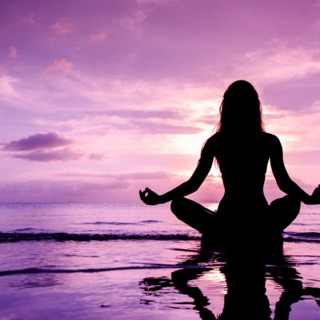
So let's sit.
So finding your posture for right now and organizing your body into that posture,
Being intentional.
Whether you're sitting or standing or lying down or walking or driving,
Right,
Whatever your posture,
Come into it intentionally,
Settle into it,
Relax into it,
Knowing that even something as elemental as a posture is always changing.
You know,
We can notice the impermanence of things just by noticing that the body is not still,
It's always changing and moving.
So the invitation is to come to stillness,
Noticing that the stillness can be really delicious and it's also just for a moment.
And then finding the breath in the body,
Noticing how each breath is different.
The breath is always changing.
In-breath,
Out-breath,
The body moves,
The lungs expand and contract,
There's ease,
But then there's a catch in the breath where today the air is good and tomorrow it's not.
Or maybe you notice the sound in your environment coming and going,
Just taking time in our practice,
Taking time in our practice to notice the truth of change,
To notice it and to get used to it on this very fundamental level,
To make peace with it.
Changes in the body,
Changes in the breath,
Changes in the sound in the environment.
I think not so much trying to make things easy because some change is just hard and sad,
But to make things easeful,
Beginning right here in our practice,
To develop an easeful relationship,
A realistic relationship.
To change.
Thanks everyone for being on the Wake Up Call.
It's wonderful to see you.
Be safe out there,
Take care,
I'll see you next week.