So,
Thank you all for being here.
And today I'd like to talk about how we cope with existential crises.
And I'll be accessing the teachings of the Buddha,
But I was inspired to give a talk about this topic from listening to a lecture on existential approaches to crises or crisis.
And this talk was by Professor Emi van Duven.
And she quoted a number of really wonderful philosophers and theologians and writers from history.
So that's what really got me.
I thought that some of those quotes were fantastic.
So I'm going to try and bring them into this talk today.
So existential crisis,
According to the Wikipedia,
Is known,
It's also known as existential grid.
And there are moments when an individual questions whether their lives have meaning,
Purpose or value,
And are negatively impacted by this contemplation.
It could mean,
For example,
We may think about how we're all going to die one day and if we're forgotten,
Why bother doing all the work we're doing?
Why will it matter?
It's a question about why bother.
Sometimes that's related to depression,
But it can also mean a sense of anxiety as well.
So the causes of existential crisis are many,
But they usually arrive when we perceive that our normal way of being in the world is challenged and threatened in some way.
It could follow deep despair or a significant event such as a major trauma or a significant loss.
Some of the causes for existential crisis include losing a loved one or facing the reality of one's own death,
Feeling socially unfulfilled or isolated,
A sense of dissatisfaction in life and also a history of bottled up emotions like never really being fulfilled and feeling life has meaning.
And you've heard me give talks on the Buddha's life at different times and 2,
600 years ago,
The Buddha had us since our sort of existential crisis as well.
He was shaken up by seeing the dukkha in the world.
He was shaken up by seeing the dukkha in his own life and the lives of others and he wanted to resolve it.
He wanted to find freedom from the despair of the dukkha,
Dukkha being unsatisfactoriness and also another way of describing suffering.
But as you've heard me speak at other times,
It's not necessarily confined to that limited sense of gross suffering.
It can be a sense of meaningless,
Include a sense of meaninglessness.
So in many ways when we begin to reflect on the realities of life,
The fact that for example,
Our own sense of being ourselves will one day stop and we will no longer be is shocking.
Moreover,
The whole process of getting older and having to cope with illness and loss can very strongly disrupt our sense of security in the world.
We will often have a sense of wellbeing because our lives are unfolding in the way that we like them to unfold or happening,
But something goes wrong and somehow this unfolding the way we like it is blocked and we are forced to reevaluate things.
So many of us have existential crisis.
In fact,
I think a lot of people get attracted to Buddhism because of a sort of existential crisis that they realize in their lives in an ongoing way.
And in many ways we are kind of having existential crisis all the time.
Everything is changing.
Every day is getting one day closer to our final demise,
Our final death.
I hope I'm not sounding too depressing,
But this is the reality of things.
And currently the globe is having a form of existential crisis with COVID-19 where COVID-19 is really,
Really challenging us with severe illness and the possibility of death,
But also dramatic changes and limits to our lifestyle.
The fact that we can't do what we want to do and the fact that our livelihoods for many of us have been threatened.
And also we can't just travel overseas like we used to travel overseas.
These things might actually be a form of existential crisis for many.
And for those who are willing to consider the facts of climate change,
We may sink into a form of global existential despair.
And about a year ago I wrote a,
Was it a year ago,
A little bit longer now,
About 18 months ago I wrote an article on climate change and a Buddhist approach.
And I mentioned something called eco-anxiety,
Which is a term used to describe anxieties about ecological disasters,
Threats to our natural environment and the survival of homo sapiens or our species.
Another term that's used in regards to climate change,
Sort of climate change anxiety and despair is solastasia.
That's a neologism,
Which is a made up word that refers to mental or existential distress caused by environmental change.
It mostly relates to climate change,
The climate change crisis,
But it also refers to other events in our lives,
Such as drought,
Volcanic eruptions,
Destructive and destructive mining practice practices such as coal seam gas extraction.
So at a personal level,
Crises can be fantastic.
That might be weird to say,
But they're kind of like the grit in an oyster that develops into a pearl.
They can be a stimulation for transformative and liberating change.
And as I mentioned earlier,
The Buddha was having a form of existential crisis when he realized that and saw the dukkha around him and in his own life.
And he was motivated by his existential crisis to seek awakening.
And what he did do was wake up to the four truths,
The four truths being the reality of dukkha,
The reality of unsatisfaction,
Suffering,
Difficulty and a whole raft of other things,
Which I've talked about many times.
The second truth being that this dukkha has its origins,
Usually related to greed,
Ignorance and hatred,
Things out on the outside can happen,
But it's the way we relate to these experiences,
These difficulties on the outside that causes our dukkha.
The third truth is that there's possibility to be free.
Ultimate freedom is called Nibbana and also relative freedom.
There's the possibility of relative freedom to the extent that we let go of the origins of a particular occurrence of suffering.
To that extent,
We can loosen up the grip that that suffering has on us.
And also the fourth truth being a path to freedom.
And you've all heard me talk about that analogy,
Which is a symbol of Buddhism,
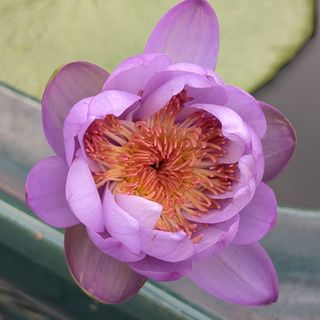
Of the beautiful lotus growing out of the mud.
And this process,
A beautiful lotus growing out of the mud is a symbol of dukkha stimulating freedom from it,
From itself basically.
It's this process of the very dukkha in our lives stimulates us to look into the possibility of freedom from it.
And the beautiful lotus that comes from the mud is a symbol of awakening.
So I've talked about this many times and sometimes,
Sometimes that's,
You know,
Often we're not sort of necessarily seeing the crises that happen in our lives in a way that's going to lead to freedom.
And sometimes we need to respond to the challenges of crisis with fight,
Flight or freeze.
Because there's no choice.
In fact,
Sometimes these responses are part of our autonomic nervous response.
It's beyond thinking we just respond to challenges with fight,
Flight or freeze.
Because these responses have evolved in order for us to survive.
In most cases,
They are completely beyond conscious choice and they arise automatically.
Unfortunately they are only short term fixes.
And if these responses continue to occur in the long term,
They eventually burn us out.
They eventually become dysfunctional and very destructive.
With the fight or flight,
When the fight or flight or freeze response becomes our conditioned and chronic response,
It becomes like a groove that you'll see in a ski slope.
I haven't done much skiing but I'm aware that if you do,
If you ski down a slope and you ski down that same slope in the same way,
Over time there'll be a groove in that ski slope.
And it gets hard to get out of that groove.
It just sort of takes you along.
So when we're in a conditioned response to responding to things,
Anything with fight,
Flight or freeze,
It becomes a well trodden pathway that we stick to.
And it often gets hard to kind of get out of that groove.
It often gets hard to do something different.
And these grooves of our patterns of relating to difficult experience are maintained by greed,
Ignorance and hatred,
Greed being clinging to pleasant experiences,
Ignorance meaning ignoring or not being aware or not knowing or not perceiving or misunderstanding the way things are and hatred being this tendency to reject,
To push away,
To be aversive,
To deny,
To avoid.
When we get caught in these patterns and then maintained by these ways we relate to experience,
Greed,
Ignorance and hatred,
It just perpetuates being more stuck in that groove.
It perpetuates deepening the groove of our despair and difficulty and we just get stuck.
We just stay there.
So when we are challenged by crises,
I want to mention by the way,
What you're doing now listening to this talk for example and practicing meditation and practicing inquiry is a way of getting out of the groove.
So please don't despair.
It is possible to be free from all this stuff.
So when we are challenged by crisis,
We are also challenged by our sense of self.
Our sense of self is no longer the way we would like it to be.
In fact,
When we identify with a sense of being that is a constructed self and we are faced with non-being or something other than being that idea that we have of ourselves,
It is a crisis of identity.
And for most of us,
This is an existential crisis.
This sense of being stuck in the groove,
Sometimes people don't even engage in life for fear of being challenged with the crisis of non-being.
And it's a form of death denial.
So in these cases,
It is the anxiety of living that traps us.
We tend to shrink into ourselves,
Consolidate our constructed egos and deny the reality of what's happening around us.
We try to continue on as usual,
Pretending that it's just like it's always been.
And we play it safe to avoid catastrophes.
But eventually something will happen and we'll need to face up to life's universal challenges.
So I've got this lovely quote now and it's from Tillich,
Who wrote a book called The Courage to Be in 1952.
So courage is the universal affirmation of being in the face of the threat of non-being.
That's really,
Really lovely.
It's the universal affirmation of a sense of being present in the face.
He doesn't say present,
I've added that.
In the face of non-being.
So we can avoid,
Deny,
Dissociate or freeze in the face of these challenges.
Or we can face them with curiosity and courage.
Courage here means the willingness to face up to reality.
And this tendency to not face up to reality can be seen at the global level as well.
With the current crisis of COVID-19 and also climate change,
We've seen a surge in tribalism promoting ideologies of hate,
Conspiracy theories and extreme polarized views.
We have to reflect on what happened in America and is still happening during the elections.
Fortunately we also witness a balance of that with heroic altruism and compassionate wisdom.
And thank goodness these,
I'm being very biased here,
These balancing forces can help us overcome the force of negativism,
The force of this hate ideology.
So individuals,
With individuals and globally,
There are ways of responding to crises that are productive and liberating.
When we are challenged with meaninglessness,
Hopelessness,
Annihilation and even extinction,
It becomes an opportunity for us to define freedom.
And I'm coming up with another quote here.
This quote is from Meister Eckart who was a German theologian in the late 13th century.
It goes like this.
If you seek the kernel,
Then you must break the shell.
And likewise,
If you would know the reality of nature,
You must destroy the appearance.
And the farther you go up,
You go beyond the appearance,
The nearer you will be to the essence.
That's pretty cool.
I won't kind of make commentary on that statement.
I'll read it again.
If you seek the kernel,
Then you must break the shell.
And likewise,
If you would know the reality of nature,
You must destroy the appearance and go farther.
And the farther you go beyond the appearance,
The nearer you will be to the essence.
In other words,
We have to go through some barriers.
We have to kind of dig a little bit deeper,
See things differently.
And when we're faced with crises,
We need to access coping skills.
For resilience,
We need stamina,
Courage,
And vision.
And I'm coming up with another quote.
And this is from Nietzsche,
Written in a book in 1883.
But there is something in me that I call courage.
It has always destroyed every discouragement in me.
For courage is the best destroyer,
Courage that attacks.
For in every attack,
There is a triumphant shout.
So that's really cool.
I really like the way I never thought of that as discouragement being lack of courage.
Isn't that interesting?
Even in that word discouragement,
It's the dis before courage.
So the way we work with discouragement,
The way we work with despair,
The way we work with wanting to freeze and pull back and when we become depressed about things,
Is to call forth courage,
Is to find courage.
And you know,
There's many ways we can understand courage.
One way I would understand it would be the willingness to face up to things,
The willingness to see things as they are.
And in a minute,
I'll talk about the definitions of effort from a Buddhist perspective,
But and this includes courage.
So when Viktor Frankl was faced with the horrors of the Nazi concentration camps,
And all his family and friends were dying around him,
It was his vision of hope and understanding that kept him alive.
He knew that no matter what was forced upon him,
The Nazis could not take away his own sense of meaning.
And in there,
In his book,
The man's search for meaning.
Sean Murray summarizes five insights.
And they said that these are the insights.
We always retain the ability to choose our attitude.
The next one is,
There will be suffering.
It's how we react to suffering that counts.
The third one is the power of purpose.
And I've made meaning around that saying,
It's finding a purpose,
Finding a purpose gives us power.
And the next one is,
Sorry,
I'll just get my screen up.
The true test of our character is revealed in how we act.
And the fifth one is human kindness can be found in the most surprising places.
So I admire Victor Frankl,
And he's very admirable.
He developed existential philosophy from his experience in the concentration camps.
So now coming to the Buddha's Eightfold Path.
With understanding,
Which is the first factor on the path,
Right view,
We are able to make a firm right intention.
And we could call this a kind of a vision.
And it is absolutely important to have a vision of something to aim towards.
Visions give us purpose,
Courage and possibility.
And they counter discouragement and paralyzing doubt.
In Buddhism there's something called sattva.
And I would have spoke about sattva a couple of months ago on one of these days on a day of meditation,
When I was talking about the five spiritual powers and it's the first spiritual power.
Actually sattva refers to faith,
And also refers to trust and confidence.
Now confidence is a little bit different than trust.
Confidence is when you may have had an experience of something working.
Therefore,
You have confidence that will work again.
And you know,
We can have confidence in ourselves and confidence in a process and so on.
In this case,
It's confidence in a process.
When we talk about the eightfold path,
It's confidence in a process and a confidence also in ourselves to follow that process,
To follow that path.
Trust is a little bit different.
Trust is not having the taste,
Not having experienced the taste of freedom,
Yet knowing that it is possible,
Or trusting that it is possible.
And this trust enables us to set forth on a path of freedom.
It also gives us courage and determination to persevere,
Especially when the path becomes very,
Very difficult.
We all know,
When we know for example that unwholesome actions of body,
Speech and mind lead to unwholesome outcomes,
Then it will help us act differently.
Sadha-sattva provides us with the courageous effort to get out of the groove of unwholesomeness.
And it enables us to set a direction towards the wholesome and liberation.
So,
Sattva keeps us going.
It gives us something to hope for.
It provides trust in this vision of something,
Of some possibility.
And it reminds us that no matter how much we suffer,
Or how much suffering we experience,
Psychological freedom is always possible.
Even if physical death is the outcome of the difficulty,
We can face up to physical death,
Graciously filled with meaning.
We can face up to our death,
Our physical demise.
With a graciousness,
With a deep acceptance,
With a peacefulness.
So rather than avoiding,
Denying and turning away from the opportunities that crisis brings,
We can develop the courage to turn towards the experience so that we can understand it.
So I mentioned earlier that I was going to talk about effort.
So,
Wirja is the Pali term for effort.
And it comes from the root viro.
One way this term is translated is as heroic,
Because it takes courage to stop and look at our predicament and to look at ourselves.
Right effort needs to be balanced,
Whether it's not too much or too little.
It's not too lax,
Nor is there over exertion.
And there are four aspects to right effort.
And these are the four.
The energy or effort,
Effort gives us energy.
And the first aspect is the effort to stop doing something that is unwholesome.
The second one is the effort to restrain from doing unwholesome things.
So we might have started doing unwholesome things,
Oh sorry.
The first one is we've started doing something unwholesome,
But we stop it.
The effort to stop it.
The next effort is the effort to restrain from being tempted to go down that groove again,
If that makes sense.
Meaning the effort to restrain from falling for or being seduced by or falling into those old habits that bring a lot of suffering.
The third one is the effort to do something wholesome.
In other words,
Knowing something is wholesome,
Knowing something is helpful.
And then actually doing it.
That effort,
The energy behind that is this third aspect of effort.
And the fourth aspect of effort is the effort required to maintain wholesome,
Acting in wholesome ways.
So the turning towards that I mentioned earlier,
Turning towards our difficulties,
Turning towards the crisis,
For example,
Turning towards the predicament,
Turning towards looking into ourselves,
Another way we can understand this is mindfulness.
And with mindfulness we begin to see along with experience and we begin to understand ourselves and our situations.
We develop insight.
And one aspect of insight is having a perspective.
So rather than being locked into an ego-based limited self-concept that struggles with being right,
Struggles with getting what we want all the time,
Is trying to survive as a centralized ego identity,
Rather than that we begin to see the realities of not-self and independence.
That is,
We begin to see the crisis and ourselves in the crisis within a context.
The context that we see is the way things are,
That all things change,
Everything is impermanent.
Even ourselves,
We find that hard to believe,
We find that hard to confront or challenge,
But it is true,
You know,
We're slowly every day getting closer to death.
So the reality is that when we see the way things are,
We see that change is part of life.
We see that dukkha is also part of life.
Things have dukkha nature,
Things are unreliable.
And we also see that there are other beings in the world and on the grand scale of things,
We are just part of a very much bigger whole.
It's this gaining perspective on things rather than coming from an egocentric perspective of me and here and everything out there,
We're sort of stepping back and seeing the bigger picture.
And I've mentioned a few times death,
But probably death is one of life's biggest crises and we'll all die one day.
What's ironic,
However,
Is that we have many deaths every day.
These many deaths are when our sense of self is challenged on a daily basis,
Such as when we have little disappointments and failures,
Or we lose that sense of security with something when we're rejected or things don't go away.
The amount we suffer or experience dukkha with these little mini deaths is dependent on how much we cling to the outcomes.
When we can see these mini crises from a broader perspective with a clear view,
We can either see the solutions and possibilities within them,
Or we are able to let go of what we cling to.
Sometimes as the serenity pre-goes,
We might rouse the courage to change the things that need to be changed and graciously accept the things that can't.
And mindfulness,
Or that remembering to be aware and attentive,
Is one way we develop this broader perspective.
And this broader perspective is sometimes called wisdom,
And equanimity is one feature of this wisdom.
So many of you have heard me talk about equanimity and I'm going to talk about it again.
I don't think we can say too little about equanimity.
So equanimity essentially is this sense of being sent,
Stable,
Emotionally balanced,
Still peaceful and unshaken,
Unshaken in the midst of the eight worldly winds.
Now what are the eight worldly winds?
Praise and blame,
Loss and gain,
Pain and pleasure,
And fame and disrepute.
I mean I usually add on to that last one as social acceptance and social rejection.
These eight worldly winds are called winds because they blow us around.
We're constantly shaken around by the eight worldly winds.
When we develop equanimity,
We realize these eight worldly winds are always happening.
They're a natural part of life.
Somebody's always going to praise us and somebody's always going to blame us.
We're always going to have loss and gain.
Life is full of pain and pleasure and not everyone loves us.
I'm afraid to say.
Sometimes people accuse us of many things,
Such as fame and disrepute.
Sometimes we're rejected,
Sometimes we're not wanted.
So equanimity is also knowing that everyone,
Every individual is on their own individual life trajectories and every individual has to be responsible for their own thoughts,
Feelings and behaviors because nobody else can.
It's not to say that the reason we suffer is our fault and I just want to quote Paul Gilbert here who often says,
The way we are is not our fault,
But it is our responsibility.
Equanimity is this sense of being unshaken in the face of the loss of ego and all that we grasp after when we are facing crises.
In other words,
Equanimity,
Other words for equanimity include peacefulness,
Impartial responsiveness,
Calmness,
Stillness,
Stability,
Being unshaken,
Even handedness,
Being serene and which actually Paul used,
Which is a lovely term,
I think it's this sense of standing,
Just standing present.
Wonderful.
The thing about equanimity in relationships,
It's really about not getting,
Not feeling responsible for everyone's issues.
It's really about not taking things personally,
It's about not reacting to what other people say and do about you.
I know we have to respond if they're physically harming us,
But I've heard a saying,
What other people say and do is none of your business.
What other people say and do about you,
What other people say about you is none of your business,
That's what they say.
Meaning that people have their own perspectives on your things,
The way you act and what your life is and it's just their perspective.
Equanimity is understanding that that's their story and this is my story.
It's an individuation from stories.
In the face of global crisis,
Everyone needs equanimity often balanced with compassion.
I just want to tell you about the Pali word for equanimity.
I missed a little section in my talk here.
The Pali word for equanimity is upeka.
It means to look over.
It also means to see with patience.
And we might understand this as also seeing with understanding.
A second word often translated as equanimity and often I find it hard to say this word,
But I'll try,
I'll give it a go.
Tatra madja hatatata and that's a compound word made of Pali terms.
Tatra means there and it sometimes refers to all these things.
Madja means middle and tata means to stand or to pose.
Put together,
The word becomes to stand in the middle of all this.
As a form of equanimity,
Being in the middle refers to balance,
To remaining centered.
In the middle of whatever is happening,
This balance comes from an inner strength and stability.
So in the face of global crisis,
We all need equanimity.
And I was thinking about this,
My friend,
I have a dear friend,
A mentor,
Often I go to and talk about,
Well I used to anyway,
About when I was having troubles in life and he would say to me,
Malcolm,
You know,
Think about 100 years from now,
What will it matter?
And it would give me,
Kind of give me a good sense of distance and perspective,
Equanimity if you like,
About that particular situation.
Well the other day,
I read in the news that most of life on earth will be killed by a lack of oxygen in a billion years time.
In fact,
One billion years from now,
The earth's atmosphere will contain very little oxygen,
Make it uninhabitable for complex aerobic life.
So today,
Oxygen makes up about 21% of it,
Of the earth's atmosphere,
And in a billion years time,
There won't be enough to support life or aerobic life.
So when I read that news,
I thought,
I wasn't really fazed,
I thought,
Oh,
A billion years,
That's a long time.
Nobody that I know,
Or you know,
All the people on the planet right now won't be affected by that at all.
And I was thinking,
It's somewhat similar to that statement that my friend made,
You know,
In a billion years,
What will it matter?
And you think about it,
Everything is impermanent.
Planets come and go,
Solar systems come and go,
The universe is in this constant flux of arising and passing away.
So deep equanimity relates to this broader perspective of all things.
And it includes the future of the human race,
As well as our personal births and deaths.
Compassion is necessary because it provides a sense of connection,
As well as breaking down that limited sense of ego identity.
It's almost delusional,
This sense that we are me and here,
Like there's me and here and yous out there.
But in fact,
We're not kind of limited to that kind of separation.
We're all interdependent in a very,
Very profound way.
We're all interrelated.
And when we can see that perspective,
You know,
Crises become,
Have a perspective,
We get a different perspective on personal crises.
The serenity prayer symbolizes equanimity.
And the serenity prayer was written by an American theologian called Reinhold Niebuhl in about 1932.
And it's commonly quoted like this,
God,
And you can,
If you're,
You know,
Aversive to that term God,
You can just put it aside and just think about the universe.
Grant me the serenity to accept the things I cannot change,
The courage to change the things I can,
And the wisdom to know the difference.
Now we've all heard that.
That's great.
It's a great,
It's a great prayer.
However,
In his original prayer,
He asked for courage first.
And his original prayer goes like this.
Father,
Give us courage to change what must be altered,
Serenity to accept what cannot be helped,
And the insight to know the one from the other.
I thought that was really lovely.
In the face of crisis,
We need to act skillfully.
Sometimes this means we need to fight with strenuous effort against something.
It may also mean that we need to deeply and graciously accept the situation as it is.
It's true that sometimes the best way of dealing with crisis is to avoid it.
If and when our avoiding becomes futile,
However,
We have no other option than to courageously face up to being present with it,
And it and our experience of it.
Also becoming present with our experience of ourselves.
In this way we can open our hearts to this reality and wake up to it and ourselves.
And going back to those four truths,
When we can have trust in the four truths,
It gives us the peace of equanimity,
And the capacity,
The courage,
The vision to face anything.
And the peace comes from knowing that no matter what happens in the world of people,
Places,
Things and time,
That the four truths are realities that endure,
And that it is possible to be free.
So when we can look at crisis from this very broad perspective,
It's all okay.
And this I feel is the heart mind's liberation.
This is true peace,
And it is the lotus that results from all that mud in the crisis,
All that slush and slime and crap in the mud.
Okay,
So thank you very much.
That's the end of the talk.
And we'll open it up.
We'll just have a moment's quiet first,
And then we'll open it up to discussion.