Hello,
Everyone.
Welcome to Insight Timer.
Welcome to a very special session today on navigating grief myths and what it looks like to be on your own side this holiday season.
As folks begin to arrive,
A couple of things to get us started today is just take a couple of moments to maybe pause,
Look around your space,
Just see if there's anything you might be able to shift or do to really settle into this space for the next hour.
Your comfort is the most important thing,
So maybe you need to grab a glass of cold water or put some cozy socks on.
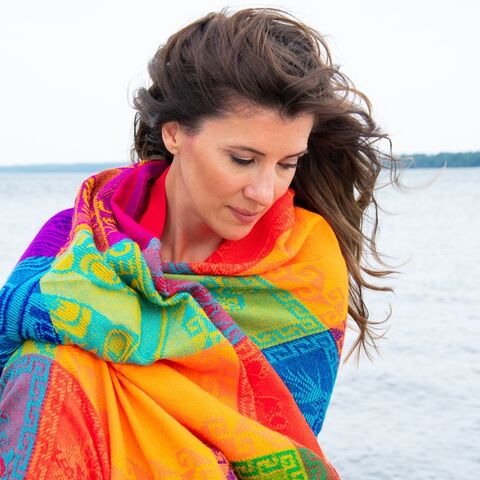
Maybe you need to put a blanket over you.
Whatever makes the most sense for your comfort level.
Definitely take those moments to create this space to be inviting and welcoming for you.
For folks that haven't had the chance to get to know me yet on Insight Timer,
My name is Megan,
And I've been on the platform for about five years now,
Predominantly started in the middle of the pandemic.
As I was finishing up my doctoral work,
I was looking at building a cognitive behavioral therapy,
Yoga,
And mindfulness intervention for adults with post-traumatic stress disorder.
I absolutely loved the research that I did throughout my PhD and really wanted to bring the education and knowledge and understanding to the masses.
So Insight Timer was a place where I could talk more,
I guess just less academic and more person-to-person and bring my content to the platform.
And so with that being said,
I want to dive into our topic today.
It's really near and dear to my heart because I am currently navigating my own journey of grief-mas this year.
So this year represents the second Christmas since my family lost my sister.
And it doesn't feel like that amount of time has passed.
In some ways,
It feels like we are still in the early days.
But then when I say out loud,
This is the second Christmas season that's passed,
It kind of is a bit alarming.
So I bet folks here,
Whatever led you to be in this space,
I imagine some folks are feeling the same as well.
And so it's important with this session today,
To remember to be very welcoming and gentle to yourself,
Allowing whatever emotions,
Whatever feelings are coming up to be there.
I want to name something really important about this session.
And that is that there is nothing you need to do in this space.
You do not need to feel a certain way.
You do not need to participate in any particular way,
Or take anything that I say that doesn't fit for you.
So you're welcome to listen,
To step away,
To come back,
Simply be however makes sense for you today.
And this time together is an invitation,
Not a requirement.
And we're going to be reflecting on grief during the holidays,
Things that we might consider in terms of what does it look like to be on our own side during a season that might feel a little bit tender.
And so with that in mind,
What I would love if you felt comfortable is in the chat,
Using an emoji of your choice,
Whether it's a candle,
A star,
Or a heart,
If you feel so inclined,
To put in the chat perhaps somebody that you're honoring today.
Maybe it's somebody that you've lost,
Or maybe it's somebody that's going through grief that you are really thinking about this season.
And so as community,
Just bringing those small moments where we can of honoring our collective humanity,
Our collective grief.
And as human beings,
We don't get out of this lifetime without the experience of loss.
And today I'm bringing the perspective of a loss of a sibling,
But there's a lot of different types of loss that can magnify grief.
So we could potentially have lost a job and we're navigating a new identity.
We could potentially have lost a relationship or a friendship that meant something to us,
And now we're shifting what that relationship looks like.
We might be experiencing a very close recent loss of somebody we loved,
And you might be here experiencing the loss of somebody many,
Many years ago.
And I think it's really important that we acknowledge that there's no grief Olympics.
Everybody's experience and journey of grief and what that means is completely valid.
And I see Christina in the chat talking about family overseas.
Absolutely.
Just the nature of being away and apart from the people that we love is a form of grief as well.
And we can have what's called compounded grief.
And perhaps some of you are going through this,
Where maybe you have a very significant grief that you're going through,
But then there's elements of other types of grief around that.
So whether you've lost somebody,
A family member,
And then you're grieving an identity,
Maybe you're grieving the distance of not being near family.
So grief is really,
Really complex in the best of times.
And I just wanted to create a space where we could just normalize it together and,
You know,
Just be with grief as it's surfacing,
Rather than trying to suppress it,
Push it away,
Tell ourselves that it's wrong,
Or it shouldn't be here.
So in the chat,
I see some beautiful honorings.
Joy is honoring her son,
Jean,
Your cat of 19 plus years.
Oh my goodness.
New family dynamic,
Navigating that after your mother's death.
Yeah.
Cecilia's sister Gracie passed in October and your kit kitty midnight who is slowly leaving you.
These are very real things that how could they not impact the way that we approach the holiday season.
And so I wanted to start with a bit of a connection and read a beautiful poem by an author that I have found a lot of solace and comfort in.
And this is John O'Donohue.
Some of you may know who this author is,
I'm going to type their name in the chat.
And the poem that John O'Donohue writes that I just sit with every now and then is called For Grief.
So I'm going to read it as a grounding for us as we settle into this chat.
For grief.
When you lose someone you love,
Your life becomes strange.
The ground beneath you gets fragile.
Your thoughts make your eyes unsure.
And some dead echo drags your,
Your voice down where words have no confidence.
Your heart has grown heavy with loss.
And though this loss has wounded others too.
No one knows what has been taken from you.
When the silence of absence deepens.
Flickers of guilt kindle regret for all that was left unsaid or undone.
There are days when you wake up happy again inside the fullness of life until the moment breaks and you are thrown back onto the black tide of loss.
Days when you have your heart back.
You are able to function well.
Until in the middle of work or an encounter,
Suddenly with no warning,
You are ambushed by grief.
It becomes hard to trust yourself.
All you can depend on now is that sorrow will remain faithful to itself.
More than you,
It knows its way and will find the right time to pull and pull the rope of grief until that coil hill of tears has reduced to its last drop.
Gradually,
You will learn acquaintance with the invisible form of your departed.
And when the work of grief is done,
The wound of loss will heal.
And you will have learned to wean your eyes from that gap in the air and be able to enter the hearth in your soul where your loved one has awaited your return.
All that time.
I love that poem.
So again,
It's by John O'Donohue and it's called For Grief.
And I think it sums up the rollercoaster of emotion and sensation and feeling that can occur as we navigate our own journeys of grief.
And so as we settle in,
I just invite you to notice what it feels like to place a hand over your heart.
And just simply notice what comes up as you observe the sensation of gentle contact of the warmth of your hand over your heart space.
If it feels right for you,
You can draw the eyes to a close,
But you don't have to.
And just noticing if you can tune in to the sensation of the breath moving in and out of the body.
Seeing if you can feel the subtle movement of the heart space beneath the hand on the in-breath and on the out-breath.
Just bringing this sensation to your heart as gentle hand to heart contact.
Simply noticing your experience.
For many folks who are navigating grief of any kind,
Sometimes a gentle hand over heart can feel a little uncomfortable at first.
There might be some resistance there.
There might be almost like a recoil effect or rigidity in the body.
And just let that be there without judging it,
Without assessing whether it's right or wrong or you should or shouldn't feel.
For many of us now,
We are navigating grief.
Our first instinct is not to reconnect to self.
Our first instinct is to distract,
Avoid,
Push away what's trying to surface.
And with grief,
This can happen for many reasons.
We might feel like the emotion will overtake us or like we can't trust ourselves to navigate the grief that's there.
We might feel like we don't have time,
Our roles in our lives,
Whether it's work or family.
Maybe we're so focused on making sure everyone else is okay that this gentle hand to heart can be very difficult at first.
But what I've learned in my own experience with grief is that grief will wait.
Grief will wait as long as it needs to until I'm ready to spend some time with it.
And so as we navigate this chat together,
Notice what it feels like if you want to keep the hand over your heart or if it feels like that's enough connection,
You can gently move the hand away to another place that feels right for you.
But I invite you to think about these gentle ways of self-connection to allow what's here to surface and to trust that you've got the resource,
The inner resource and the tools to be able to navigate whatever sensation may be there.
So for me doing that,
I noticed a little bit of that recoil.
I'm going through,
I've had a pretty good start to the holiday season,
But today some grief and emotion that was unexpected has surfaced right as I'm about to do a talk on Insight Timer.
And so for me to connect to heart right now,
I didn't soften into that right away like I normally do.
And that's okay.
And I think being okay with what's there without the inner critic taking over,
Not that it won't be there,
Is really important as we navigate the holiday season.
So as I mentioned,
I did this session a couple of weeks ago,
So we're a little more distant from sort of the holidays,
Whether it's Hanukkah,
Christmas,
Some other celebration that you do.
So we're now at a closer time of the actual holiday season.
And so we might be feeling that our grief is further intensified than a few weeks ago.
And not because something's wrong with us,
But because this is how the season is structured.
So as we get closer and closer to those holiday traditions,
It's very common for memories to surface,
Expectations,
Family expectations.
And while we're getting ready for the holidays,
There's a potential for a lot of different triggers.
So I know for myself going into every single store these days,
There is very festive music happening,
Festive food,
Festive beverages,
And sparkles and decorations and bright lights,
Which is all really beautiful.
But sometimes depending on where we're at can be overwhelming.
And it's normal when we're going through grief where rituals,
Familiar music,
Foods,
Hit parts of the brain that are tied to memory and attachment.
And this can be memory and attachment of folks we've loved and lost,
Whether through death or whether through relationship changes.
But this can also activate parts of the brain connected to memory and attachment associated with our identity.
So like I said before,
If we're navigating a shift in relationship,
A loss of a job,
We've moved.
And so these types of triggers can make the sensation of loss feel really,
Really close to us at this time of year,
Even if you've experienced something many,
Many years ago.
So grief in the holidays is not limited to being close in proximity to that loss.
I had folks show up last day who had losses 25,
30 years ago that were saying it feels at this time of year like it did 30 years ago.
And this is normal,
Normal,
Normal,
Normal.
There's also the contrast effect that happens at this time of year when the world really is emphasizing joy,
Togetherness,
Celebration.
And when we're going through grief,
It becomes more noticeable the magnitude of absence or loss.
And it doesn't mean that we're failing the season.
It just means that we're human and we're going through a very human experience.
There's things you see on social media right now around,
You know,
Highlighting the best of 2025 and how are we entering 2026.
And for those going through grief,
Myself included,
It can be really difficult to amplify all of the things that we think are on our highlight reel when we've gone through perhaps some of the most difficult days in our lifetimes this past year.
So this contrast effect can be really difficult to navigate.
And the other thing to mention is that grief during the holidays doesn't always look like sadness or tears.
I think that's one of the common ways that we express grief,
But it's important to remember that grief can show up as surprising irritability or being really,
Really short,
Restlessness,
Extreme levels of exhaustion that are unlike what you're normally used to,
And a strong,
Strong desire to withdraw or to be alone.
And so I'd love to know in the chat,
How does grief show up for you in addition to sadness?
What are some of the ways that you might be able to think,
Oh,
Okay,
This is grief showing up in a bit of a different way than the typical sadness and tears that we know of?
For myself,
I have been surprised at how grief can show up.
And I think one of the most confusing ways it's shown up for me is in the extreme level of fatigue after doing a simple or what I believe to be a simple task.
So maybe I go to the grocery store to pick up some food or Christmas shopping.
I find my capacity is so much more limited than what I'm used to.
So sometimes I can really only go to one store or at the grocery store,
I can only do half of the shopping list and then I have to get out of there and get back home.
And I share that with you because I think we sometimes hold those things inside and criticize ourselves thinking,
Well,
This person over here seems to have it all together or this person is doing so much better than I am at this time period.
That comparison game can really,
Really intensify the inner critic.
And so I share that with you as someone who actively researches and works in mental health and grief and loss and trauma to normalize that as someone who's quite capable,
I have found this year in particular,
I've really had to scale back the amount of time I have to go out and do things because I just need to rest and honor that the fatigue and exhaustion are very,
Very real.
Another surprise that some might find is that the hardest moments or the hardest days can actually come leading up to the holiday itself or before it happens.
And this is called anticipatory grief and it's a very,
Very common kind of overlooked component of grief where we anticipate and play out in our minds what could happen,
What if it goes like this,
What if this happens.
We almost double,
Give ourselves a double hit of grief when we're in anticipatory grief,
But it's normal.
And so thank you,
Mina.
Mina says that her body goes heavy,
Your brain goes numb,
Your chest gets really tight,
You're sleepy and tired and you're short of breath.
Yeah,
Really beautiful list of things to remember,
Oh,
Okay,
Grief is here.
This is how it might look for me.
I think sometimes with symptoms like shortness of breath or chest tightness,
We can chalk it up to we're not exercising enough or we're out of shape when if we slow down and pause and think through how might grief show up in a way that's different than sadness and tears,
We can start to really get connected with what our body's cues are.
So thank you so much for that,
Mina.
And then another surprise that I've noticed is that joy and grief are not mutually exclusive,
That over the holidays,
Moments of joy and moments of grief can coexist together.
So you might have a laugh and then very shortly afterwards you might feel really guilty.
You might feel a brief relief or ease and then quickly wonder,
Oh my gosh,
Does this mean I'm betraying the loss or does it mean that I'm moving on too quickly?
So this experience of two things can be true,
Can be confusing to deal with or surprising.
And these experiences are not signs of betrayal or weakness.
They are signs of the complexity of what the experience of grief is.
And so my ask for you as we approach the holidays next week is how can you allow joy and grief to coexist together and not rob yourself of joy or over-criticize yourself when grief surfaces?
What does it look like to allow space for both,
To allow space for the complexity of grief?
So Karen talks about her extreme exhaustion.
You can only do one thing at a time and shut down.
Karen,
I hear you.
That's probably one of the most surprising things.
I'm used to being a multitasker.
I'm used to doing many,
Many things at once.
I have to really focus on doing one thing at a time.
It's boundary setting too,
Which can be difficult.
Yes,
Jean.
So taking longer to recover from an illness,
Especially if we're going through grief,
It really does affect our immune system.
Jeanine,
Very real comment.
Did I do enough for her this time last year?
And constantly asking yourself that.
The enoughness questions,
I think,
Are very,
Very real.
So thank you for sharing that,
Jeanine.
And so essentially,
You know,
Just this gentle reminder to all of us that grief isn't linear.
We don't consistently move step-by-step through the healing phase of grief.
The capacity of grief really changes from day-to-day,
Sometimes even hour-to-hour,
Moment-to-moment.
And that fluctuation,
We misinterpret it in our minds as a problem,
That we're not doing something right with healing from grief.
But it is a very normal response to the emotional,
Cognitive,
And physical load that happens when we're impacted from grief.
So I love in the chat some of your responses so far,
And I invite folks to keep sharing,
Because even if you're here and you're observing the chat,
You can take away,
Oh,
I'm not alone here.
Someone else said something that,
Yes,
I do experience.
So in terms of grief responses,
So we've talked about a few,
But there is the emotional component.
And this is the most common that we associate with grief,
And these are the feelings of sadness,
The grief tsunami,
So the crying,
The irritability,
The guilt that surfaces,
The numbness that can come or we dissociate sometimes.
These are the emotional impacts of grief.
But there's the physical impacts as well,
And a lot of folks shared a few really key things.
What is the physical body doing?
The fatigue,
The exhaustion,
The tightness in the chest,
The headaches.
Perhaps when you wake up in the morning,
You are waking up with a headache,
Or if there's your systems in overwhelm,
A stress or tension headache can happen in the middle of the day.
Another physical very common in early grief is disrupted sleep.
Being able to just have patience with what sleep might look like is a feat in and of itself.
So we've got the emotional,
We've got the physical,
But there's also the cognitive response of grief,
And folks mentioned this in the chat.
So the difficulties with concentration or the incessant replaying of did I do enough or am I doing this right?
Is my joy a betrayal of the grief?
Is my grief an indicator that I'm not doing well?
The mind can take on its own journey,
Sometimes separate from our body.
We might also notice a tremendous amount of brain fog or forgetfulness,
Walking into a room and not remembering why you walked into the room,
Forgetting your keys,
Something I did the other week was put cold milk in the cupboard and had no idea that I did that.
So that forgetfulness,
Memory lapse,
Very,
Very common when we're going through grief,
And it can amplify even if the grief isn't proximal right now,
It happened years ago.
It's a natural impact closer to a holiday season or a milestone event where those cognitive symptoms can emerge.
Another one is intrusive memories.
So not everyone has had a beautiful ending to their life.
Maybe there's a tragedy that you've experienced,
Or maybe there's a family dynamic that's turned really difficult since the loss of somebody.
And this can magnify intrusive memories or flashbacks.
And this really happens when we're not planning it.
It's not like we wake up and say we want to replay the memory that is tragic or scary or unbearable.
It just floats in,
And it could kind of come in and blindside you at any point.
When you're in the middle of a meeting at work,
Or maybe you're having a beautiful moment with family,
An intrusive memory can really be jarring and pull you out of that present moment.
And then there's the social impact of the grief as well.
And I saw some folks share in the chat this feeling of wanting to pull away from others,
Or just that craving of wanting to be alone.
Alternatively,
That craving for connection.
So what is true for one person might be very different for another.
I know for myself,
I tend to withdraw and retreat a little bit,
Especially if I've had days of a lot of events where I've had to be on.
I tend to recoil a little bit.
I have that recoil effect,
Almost like a turtle.
I want to crawl back into my comfortable shell.
I want to have a hot bath.
I want to just be by myself,
Or even just go for a walk by myself.
And then I flip a little bit later,
And I'm just really craving connection,
And I feel deeply a sense of aloneness or loneliness.
So that pendulum swing can be very,
Very common and confusing and exhausting,
But just know that this is very normal.
And then a reactivation of past losses can happen.
So we may have a close loss,
But the holidays can resurface old griefs,
Old losses,
Other losses that have happened in the past.
And so it becomes magnified and complex in the best of times.
So just remembering,
I share this with you about the responses,
Because we often look to the emotional response first,
And we forget that there's the physical,
The cognitive,
The social,
The reactivation of other losses as well.
Things where you're like,
Oh,
I haven't thought about that in many,
Many years,
And now it's here.
And all of this is incredibly,
Incredibly normal,
And you might be experiencing it.
So just going through the chat,
People are talking about inflammation and how everything hurts.
Yes,
Nina,
You're dreading the next few days and not sure how you're going to cope,
And so maybe there's some anticipatory grief there as well.
Emotional lability is very disturbing,
Feels like you're going to feel like you're losing your mind sometimes.
Yes,
And thank you for sharing that,
Because with the pendulum swing of going through from sadness to irritability to brain fog to fatigue to chest tightness to intrusive memories,
This is such a tremendous physiological and psychological impact on ourselves that how could we not feel a bit worrisome about what's going on for us?
You know,
As human beings,
We seek to be in control.
We seek the familiar.
Our default mode network in our brains and in our bodies is comfort and familiarity.
So when we have these waves of emotion or these experiences where we go out to decorate a tree with friends and then we basically collapse when we get at home,
We can question ourselves.
And it's really,
Really important to recognize here,
How do you validate yourself?
Instead of question yourself,
What does validating yourself look like?
I'd love to know in the chat,
What does telling yourself you're okay exactly as you are,
What does that look like for you?
How can you be on your own side?
Patricia says,
You can't manage the house,
The daily chores.
Girl,
Same.
My sink some days,
Honestly,
I just have to walk away.
I just have to walk away.
So I'd love folks,
You know,
We're doing a really good job getting up and out some of the things that we experience over the holidays when we're grieving.
How do we be on our own side in the midst of all of this?
In the midst of grief being so unpredictable,
It doesn't follow our timeline.
And in fact,
The days where we want to hold it together sometimes is where grief is most loud.
How do we be on our own side?
So rather than asking,
How the heck am I going to get through the holidays?
What is a more gentle question you might ask yourself?
I would love to see in the chat.
I want to see what is a more gentle question we can ask ourselves when we're in the midst of grief.
I'm happy to wait to see what folks will say,
Because I want you to be actively involved in this and really think through.
You've been able to name all the ways grief pulls you out of joy,
Pulls you out of present moment awareness,
Pulls you more into fatigue.
So what gentle question can you ask yourself as we approach the holiday season?
Mai says,
Remember to breathe.
Mina says to remember that you're safe.
Yeah,
Beautiful.
Z says,
Maybe it's about allowing grief.
It's okay to not be okay.
So a question,
Two questions that I have come up with that I'm not always great at asking myself,
But I'm getting better at asking myself more frequently.
The first one is,
What does it look like to be on my own side today?
So I'm going to write that in the chat.
What does it look like to be on my own side today?
And maybe it's about maybe this is where you type this out or write this out and you put it in a visual place on your fridge,
On your bathroom mirror,
In a journal that you frequently go to.
What does it look like to be on my own side today?
What if you started your day with that prompt?
Just an option.
The other question is,
What would support me in this season?
What would support me in this season?
And thinking through,
What does that gentle response look like?
And Karen,
I see your point and I see you.
You said it's hard.
How long can you not be okay after a loss?
And I mean,
I'm one person of 7 billion,
And I've been through a lot that will go through my own journey of grief.
But something I feel I'm discovering is that there's always potential to not be okay.
And we can't always predict when that will be.
But as many people who have walked grief before me have reminded me that it never goes away.
Grief really is a reflection of where there's love or where relationship and connection once was.
Sometimes the relationship can be a difficult one.
And so I think giving ourselves permission to take as long as it takes,
It's tough because I'm in the middle of it and the same thing that goes through my mind,
Karen,
Is how long until I feel like myself again?
And maybe the goal isn't to feel like myself again because I'm a totally different person than I am before the loss.
So I'm working through that own journey as well.
And the questions are tough.
So that's why now it's like,
How do we ask a more gentle question of ourselves?
So what does it look like to be on our own side when we're not okay?
Or what does support look like for me this season?
And one of the things I want to invite you to think about,
And I'd love to hear your thoughts,
Is what if it starts with permission?
What is your relationship with giving yourself permission?
I want to know from all of you,
When was the last time you gave yourself permission?
Permission to change a tradition this holiday or permission to skip traditions altogether?
Last year,
During the first Christmas,
Without my sibling,
My parents,
Prior to her death,
Had pre-booked a Christmas cruise for themselves.
They had pre-booked a trip and they were really struggling with,
They just wanted to cancel the trip.
They felt like,
Nope,
Cancel Christmas,
Not doing this,
Cannot bring ourselves to do this.
We're in the midst of profound loss,
Profound grief.
And sure,
Selfishly,
That first Christmas,
I wanted to be with my parents,
Believe you me.
But I really thought about like,
What if this is exactly what my parents need this first Christmas?
Where they're permission to skip putting the tree up,
Managing the meal,
Hosting permission to skip all that,
And they honor what they'd originally planned to do.
And they went,
And it wasn't easy for them by any stretch of the means,
But now as we're talking about approaching year two,
They can say now,
They were glad that they had a change,
A complete change of scenery,
Where the pressure was off to do the tradition.
And so maybe that resonates for you.
Permission to change the tradition or to skip it altogether.
Permission to say no without over-explaining.
And I know there's a number of people pleasers here on this call who have a really difficult time saying no unapologetically.
I want you to put your hand up if this is you.
I'm putting mine up.
I know I can't see you putting yours up,
But I know there's a lot of people who struggle with saying no.
Thank you,
P.
P's put her hand up in an emoji.
Amazing.
Thank you,
Janine.
Yes.
Thank you,
Mina.
Oh,
I feel less alone.
Thank you everyone for validating that.
But yes,
This feeling of setting boundaries and saying no when we're used to pleasing,
Over-extending ourselves,
Being the one that's usually the one that hosts or is on or has the most energy.
What does it look like if perhaps you gave yourself permission to say no?
Rosa with three hands.
I love it.
Permission to leave early.
Permission to decide today in this community ahead of time,
What events are you going to attend?
But with holidays and navigating events and family gatherings,
Also permission to decide how long you are going to stay and holding firm,
Not from a place of,
Sometimes we often think it's being selfish,
But no,
What if you put yourself permission to put your nervous system and your needs first that maybe you set an alarm and hold firm that,
Okay,
I'm going to stay spending time at this event.
I can commit to 90 minutes and once 90 minutes is up for the sake of my health,
My nervous system,
My wellbeing,
I'm going to exit.
So permission to decide ahead of time what events you'll attend,
How many,
And how long you'll stay.
Permission to also reach out to folks or somebody that you feel the most safe with,
And that can be challenging to determine as well,
Especially this time of year.
But to say ahead of time,
Hey,
I'm going through grief this season or I'm healing,
I'm in the middle of healing right now and I'm going to come and I'm going to stay for 90 minutes and I just wanted you to know that for when I leave.
Setting yourself up in advance can reduce the overwhelm you might feel in the moment,
Especially when folks,
You know,
It's not lost on me with certain family members that you might get comments,
You might get pressure,
You might get side comments when you start to set boundaries for yourself and that can be really difficult,
Right?
But remembering that boundaries are an act of nervous system care during a time that you're healing and that the people in your corner are going to understand and respect those boundaries and the people who don't respect your boundaries are the ones who will give you a hard time.
And so I share that with like a little bit of a joke because we all have somebody in our minds that we're thinking of that's going to have a really hard time when we set boundaries.
But what do we do to set ourselves up for success in advance?
And supporting your nervous system health matters.
Your nervous system is linked to the entire functioning of your physiology and your cognition.
And we forget about it.
We forget sometimes about this beautiful system inside that helps regulate our stress response and our body is always working for us to bring us into a balanced state.
It's just we don't always listen.
We are on autopilot.
We betray what our boundaries really are sometimes knowingly and sometimes unknowingly and we magnify that stress response.
So permission this year,
Permission to support your nervous system,
Especially if you're going through deep grief,
Compounded grief,
Really close tragic loss,
Permission to prioritize your nervous system health.
What does that look like for you?
And finding those moments,
Maybe you can't get out of certain events this holiday season,
But you can find moments to create safety to create calm where you can.
So maybe it's getting up 10 minutes earlier,
Literally locking your bathroom door,
Sitting on the toilet and doing deep breathing.
Maybe it's taking regular breaks away to get outside for a couple of deep breaths.
Finding that way to support your nervous system really,
Really matters.
And that you're not built to say yes to everything this holiday season and you're not expected to say yes to everything.
You might also find comfort in small rituals.
If it's uncomfortable for you to share more widely,
What are the small rituals you can do with yourself or in the presence of a safe other?
So maybe you light a candle in memory.
Maybe you pause to remember.
Maybe you cook your loved one's favorite dish.
Sometimes not engaging at all with rituals is what you need as well.
Both are valid.
But finding those little comforts that can help you get through the holiday season and just thinking through what does that look like for you.
So I'm going to go through the chat and just see what some folks are saying here.
So Rye says it's your fourth year without your son who passed away on the 19th of December.
Oh,
19 years old.
December 1st,
2021.
Angel anniversary.
Born June 10.
I'm just thinking of your son.
I'm just wanting to honor that you've named him here.
There's a lot of feeling going on.
Prayer and meditation.
Also,
How can I be helpful within my means?
It's okay to listen to my body.
I'm learning now like a two year old.
Yes,
It can feel that way.
And I'm okay with that.
It's love,
Not fear.
Thinking of the beautiful memories with my son of 19 years.
Acting on love is clarity and fear is confusion.
I love that.
I love that.
And thank you for sharing,
You four.
I love what you've shared.
It's really beautiful.
Clarity says when her mom passed,
She took a trip the next year on her birthday and visualized she was with you the entire time.
I love that.
You went shopping,
Dining,
Laugh.
And it was cathartic and a turning point.
You realized your mom wouldn't have wanted you to stay sad,
But to enjoy your life.
And she's always in your DNA.
Oh,
I love that.
That's beautiful.
I think that's a beautiful reframing as well that the person you lost wouldn't want you to spend the rest of your days in misery and suffering.
And so that permission piece,
How do we give ourselves permission?
It doesn't have to be full blown joy if that's not what we're capable of,
But softness or ease.
You know,
Reframing that you don't have to be the most extroverted,
Loudest person at the party or the family gathering.
But perhaps there's a conversation you can linger in with a family member,
Or maybe noticing if you have young ones around,
Just the joy on their face and being able to experience joy vicariously.
Some of those softer ways can feel a bit more manageable as well.
Janine reopened her hot tub.
Yep,
Love that and helps with your nervous system.
And lots of love and thank yous.
I love this.
So what are some of the ways you're going to give yourself permission this holiday season?
I want to see in the chat that tangible putting into action.
We've been able to name how grief shows up for us and how difficult it is.
But what let's reframe here.
What's the permission that we need to give ourselves this holiday season.
So I've shared a few things.
And there's a couple more that I wanted to touch on.
One's more of a cognitive behavioral technique,
Where we identify our should voice.
And in my trauma,
Healing and action group here on insight timer,
We talk a lot about stop shooting on yourself.
The should voice really negates and diminishes our experience as it's unfolding.
So an example is I should be feeling better by now,
Or I shouldn't be so upset in this moment.
What are the shoulds that come up and are magnified by our holiday culture.
And,
You know,
Getting a I've got one in front of me here,
We write down three to five,
One,
Start there,
If that's all it takes three to five shoulds that you might notice in your mind come up.
And how can you replace each should voice with something a bit more gentle,
Something a bit more permission giving to say,
I will do what feels doable today,
Or I'm proud of myself for getting out of the house for three deep breaths.
So really identifying cognitively,
What are the shoulds that you're telling yourself that are robbing you of your own kindness,
Your own gentleness.
And I always like to say this as well,
You might want to grab a picture of a younger version of yourself.
Or if you have a child,
Imagine holding their beautiful face in between your hands.
Or imagine somebody that you have deep reverence for deep appreciation for,
You would not,
It would be very unlikely,
I have to go out and say you would not point a finger at somebody and say,
You should be feeling different right now.
When they're going through an unimaginable loss.
And so why do we put that on ourselves?
Why do we hold ourselves to such a different standard than we would a cherished friend,
A cherished child that we know.
And so this reframe might be something that you're like,
Oh,
Yeah,
I really could identify with that and see how I can reframe.
And then also practical resourcing or micro planning.
So mapping out your stress points.
So we are five days away from Christmas,
Some of you are currently in the middle of Hanukkah.
Some of you celebrate other types of events at this time of year.
Or,
You know,
We're 11 days from the new year,
Mapping out the stress points or the pain points that you might experience over the next one to two weeks.
What are the events that are coming up?
What are the anniversary dates?
What are the sensory triggers?
So I'm just trying to think of an example for me,
A sensory trigger for me in my home is when there's the TV on,
The radio on,
I'm cooking and the fan of the,
Um,
Like the overhead of the stove is on full blast to prevent the smoke.
My sensory triggers is when there's too many noises.
And so mapping out,
Okay,
Where,
Where is that going to be obvious over the next little while?
And what can I do?
Right,
So mapping out stress points,
Or going to,
Maybe you're going to like a Christmas mass,
Or maybe there's in-laws that you've got a tense relationship with,
Or that brother-in-law or sister-in-law,
You know,
What are the events where you have to dig a little deeper and mapping out,
Okay,
There's a potential here that I might get a little more stressed.
What's the care plan that I can create for myself?
And so your care plan need to have one person that you can text.
And if you don't have one person,
You can create a text loop with yourself.
Or something,
You know,
You might consider is somebody unrelated in your family,
Like a close friend that you feel safe with.
So one person that you can send,
I have my best friend in Canada,
When I send two things,
When I send a certain emoji,
And when I send,
Do you have eight minutes?
And that's from Simon Sinek,
The author of Start With Why.
He talks about his person,
That he says,
Do you have eight minutes?
And that is code for I really need you to,
The moment you have time free to spend eight minutes with me,
I'm in a bit of a crisis.
So I do that with with one of my friends in Canada,
As like a way to say,
This isn't,
You know,
Fluff,
When you can call me back,
Please do.
And Mina,
You know what I was gonna say,
Chat GPT,
It is a little bit controversial,
And people have mixed feelings about AI.
But I'll be honest,
I suggested therapist GPT to my parents to explore.
Because my parents are of a different generation,
We're going to weekly therapy sessions,
Wasn't part of what they did growing up to deal with challenges and difficulty.
And,
You know,
Generationally,
Things are different,
People have different choices.
And you know,
When it comes to different types of loss,
And the circumstances around the loss.
Sometimes,
My parents don't want to talk to another person,
They're a bit more private,
They're a bit more self reflective.
So I actually suggested therapist GPT.
And it seems to work every now and then.
So,
You know,
One person,
Or one supportive place that you can text messages to one grounding tool.
And this can be something tactile in your hand,
Maybe it's a soft,
Smooth stone.
Or maybe it's the very quick five senses strategy where you run through something you see,
Touch,
Hear,
Taste and smell.
A grounding tool that makes sense for you,
We did the hand to heart today.
So maybe that's a simple strategy.
One exit strategy.
So perhaps,
Again,
Informing somebody in advance that you're coming to this event,
But you're staying for a limited amount of time because you're healing.
And what's your exit strategy.
And then so,
So important,
And we often forget this is carving out intentional rest.
I cannot stress enough how much rest is needed when we're going through grief and through the holiday period.
So what does it look like to carve out intentional rest and give yourself permission and prepare for those grief waves,
It might happen.
And here's what I can do in the moment,
I might not be able to stop the tears.
But here's what I can do.
So I'd love to hear folks suggestions on the ways that you're going to navigate the season with permission.
With permission.
Jean says she doesn't allow herself to shit on herself or anyone else.
It might be nice to fair.
Christina permission to be real.
I love that.
I love that.
So,
Patricia,
I'm just putting in the author I mentioned who talks about the eight minutes.
This is Simon Sinek start with why permission to feel Thank you,
Mina.
Yes.
And we can put boundaries around the time that we allow ourselves to and I think it's really important to mention to folks to a swell or a wave of grief,
That original emotion,
The intensity of it,
On average lasts for 90 seconds.
And I think sometimes we get really,
Really afraid of not being able to trust that we can move through a grief tsunami.
We think it'll overtake us,
We think,
But we have to remember,
Logically,
That a wave of emotion or grief doesn't have that same intensity forever more.
There is the ebbs and the flows.
And so if you find yourself and I found myself in this,
You know,
I spoke with my mom just before this call and had a flooding start to surface and I,
You know,
What's my grounding tool?
Mine is my hand to heart and to shut my eyes and to just breathe into my heart.
Just keep breathing into my heart.
And,
You know,
It subsides.
The tears could come back right after this call.
Who knows?
Right.
But to remember that around 90 seconds is the how long on average the intensity of an emotion happens before it shifts its shape.
It's not to say it doesn't come back,
But,
You know,
90 seconds.
We got this.
Okay.
So thinking through that.
So Pamela says,
I had a grief wave Thursday.
Lots of great chats coming in.
And you were flattened by the stress.
And then yesterday you were so tired,
You felt like you needed to sleep all day.
I wondered if that was normal.
What helped was yoga and Al-Anon to pull me out.
So here's the beautiful thing is see how the mind puts in doubt,
Wondered if that was normal.
And then you followed up.
What helped was yoga and Al-Anon.
So my reflection back is to say,
Remember,
You've got resource.
Remember,
You've got wisdom.
The fact that that's what you did to help shows the inner wisdom shining through.
But that should voice should I should I be doing this?
Is this normal?
That inner critic can override sometimes that inner wisdom that's already there.
And my hope with this talk,
And with future talks on insight timers to just remind folks and myself included that we have our own inner resource right here.
And we know intuitively what we need to do.
So the fact that you needed to sleep all day,
Like you honored that.
And it's very,
Very normal.
Yes,
Without me having to validate that for you.
I hope at some point you can validate within yourself that you had this grief wave,
It knocked you out.
Yeah,
Of course it did.
I don't even need to know the nature of your loss.
Very normal.
And it's not going to be forever.
So really beautiful job that you tried something.
And sometimes we try,
Like I've gone to yoga as a solution,
Like you've suggested,
And I've had to leave in the middle of the class.
And the permission piece was to be okay to leave.
If that makes sense,
Rather than forcing myself to stay the entire time.
Mina says,
I have this fear because I keep myself so busy that I don't have one minute to sit with the feeling I always run away.
And when the holiday comes,
There's no escape where most places are closed.
And that's when I don't know how to sit and feel because it's too intense.
I echo that feeling.
And I imagine if folks are here reading that you show a heart if you'd like for support for Mina,
I think this is a very common feeling.
And why distraction,
Our default mode when we're going through grief,
Is to distract to avoid to numb to push away to push down.
Because we somehow feel like we won't be able to handle it.
And that couldn't be the furthest thing from the truth.
And what I've learned very intimately,
Is that grief will wait,
You can distract and keep distracting.
But grief will wait until there is a softness and an opportunity to rise to the surface.
And so what I would suggest to you is,
For lack of better words,
The words of titration.
So permission to spend a couple of minutes at a time with yourself.
And what are the activities Mina that you're doing where you feel the most like yourself?
Not distracted Mina,
Not absent Mina,
But what are the things that you do where you feel the most alive and most like yourself?
So for me,
That's getting out into nature,
That is spending time with my dog,
That is cooking with my hands,
Like making fresh pasta.
For example,
Very rarely is it a distracting task,
It's more of an engagement task or a presence.
And so I would invite you to give yourself permission to engage in activities where you feel the most connected to the essence of who you are,
Not pushing presence away with distraction.
So Janine's trying to give all of your parts permission to be and to behave differently.
Yeah,
Internal family systems.
Yeah,
Beautiful,
Beautiful.
Rai prays,
Pauses,
Meditates,
Which is how you process and proceed when God says it's safe,
Remembering you're surrounded by love and a higher power.
You worked hard on losing the should,
Would,
Could,
And if only's out of your vocabulary.
And thank you so much for sharing that because it and you're saying trust is very difficult.
And it starts with your own relationship with your own divine consciousness.
And thank you for sharing that as a beacon of hope for folks who might not be there yet.
For me,
I've really questioned my relationship over the last year with my higher power.
And to read that gives me hope that I can find that connection again.
And so remembering that we're all on those different,
Different time points along a healing journey,
And that what you're feeling is valid,
Who you are is valid,
What you're bringing to the holiday season is valid.
And to just keep returning to that sacred connection with yourself,
And to remind yourself that you are enough exactly as you are.
So I would love if folks wanted to stay a little bit longer and had some questions.
I'm happy to stay on for a few more minutes.
That concludes Navigating Grief-mas on this 20th of December.
I just wish you gentleness in your journey ahead over the next few days and over the holidays and the arrival of the new year.
I want to thank you so much for spending time with me and being here.
It's not the easiest thing to come on and talk about grief in the midst of grief.
But your presence,
Your comments in the chat,
Your tenderness,
Your humanity,
Really make this feel like it's a shared,
Co-created space.
So thank you so much for being here.
I have more content on my teacher profile,
Including a 15-day trauma healing course for folks who might be navigating with trauma around their loss.
And just really can't thank you enough for all of your support here on Insight Timer.