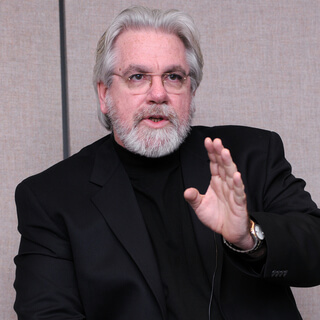
Practice No Credentials by Michael Carroll from Awake at Work from Shambhala Publications.
Workplace credentials are titles,
College degrees,
Qualifications,
Symbols of status and authority.
Can sometimes help get the job done and sometimes just get in the way.
We trust our physician because she had to graduate from an accredited medical school to earn the MD at the end of her name.
Yet we may also be suspicious of doctors who often seem aloof and unavailable or are quick to propose solutions without actually listening.
We know that the four-star general has profound responsibility in putting lives at risk.
Yet to some of us,
Military titles and symbols invite doubt and suspicion,
Possibly even outrage.
Our company's CEO seems to be a pleasant fellow,
Yet even the sound of the title invokes images of arrogance and greed.
Credentials of all kinds can build trust or invite suspicion,
Foster accountability or irresponsibility,
Communicate expertise or mask weaknesses.
We can never entirely dismiss the value of credentials,
Of course,
But we can learn to keep them in proper perspective by practicing no credentials.
Such a practice begins with noticing how we speak to others about what we do at work and feeling the subtle emotions that run behind our words.
For example,
At a dinner party or at the local bar,
When someone inevitably asks,
So what do you do?
We may notice that we often answer the question with a noun rather than a verb.
Instead of I teach,
We respond,
I am a teacher.
Instead of I build buildings and bridges,
We answer,
I am an engineer.
Or we may hand the person our business card,
Detective,
Homicide division,
Metropolitan Police Force.
This apparently insignificant shift of phrasing reminds us that we want to be someone at work.
We want our jobs and livelihood to shape an identity for us,
To provide us a storyline of who we are.
We share a beer with a newfound friend and she asks,
So what do you do?
Perhaps we feel a bit exposed by the question,
As if someone had walked into our home unannounced and suddenly sat down at our dinner table.
We want to put our best foot forward when we answer,
I'm a divorce lawyer.
We don't know what experience our new friend has had with divorces or lawyers in the past.
So we feel a bit hesitant,
Unsure if we're making the right impression.
Maybe we're particularly proud of what we do for a living,
Maybe a bit embarrassed.
We may respond with poise and restraint.
I am the president of Costa Rica or lower our heads and mumble.
I'm the dishwasher and chef at the moldy bottom lounge and restaurant or even I'm stay at home mom.
For many of us answering the question,
So what do you do?
Is like walking onto life stage for a moment to make a fundamental statement about who we are.
How we portray ourselves to others,
The workplace storyline that we live in words,
Feelings and deeds is of primary importance in practicing no credentials.
By carefully examining our storylines,
We actually feel the emotions we invest in needing to be someone at work.
The vague relief when we are introduced as vice president so and so,
The tightness in our chest or tone of voice when we respond to a customer who dismisses us rudely.
Or the sense of loneliness when we hear others discuss their college education,
An education we never had.
When we practice no credentials,
We sharply examine such feelings in order to uncover any smugness,
Impoverishment,
Defensiveness or blindness we may be harboring as part of how we conduct ourselves at work.
In doing so,
We confront one of the great obstacles to being authentic and effective at work,
Mistakenly thinking we are our job.
Coming to the conclusion that we are what is written on our business card or printed on our paycheck is an understandable occupational hazard however.
We invest so much in our jobs,
40,
50 or more hours a week,
Personal commitments,
Creative effort.
In fact,
We invest our lives.
Yet despite our generous investment,
Our jobs cannot offer us a true identity.
Harbor master,
Cab driver,
Owner,
Nurse,
These titles cannot offer us a fixed view of ourselves or our world.
Like everything else at work,
Credentials are fluid and constantly changing.
Try as we might,
We cannot create a seamless,
Reliable version of ourselves out of our career or job.
And when we expect otherwise,
When we expect work to deliver something it can never deliver.
We become frustrated and uptight,
Exaggerating achievements,
Glossing over failures,
Sugar coating mistakes,
Feeling arrogant,
Slighted,
Embarrassed or smug.
By practicing no credentials,
We're willing to examine these feelings candidly,
Gradually unraveling the blinding effects of clinging to our credentials.
We learn to let go of job titles and pretense and shift our attention to being authentic,
To being who we are,
Where we are at work.
In dropping our preoccupation with credentials,
We begin to rely more on our natural instincts and curiosity.
We naturally become more curious about others than about ourselves.
When we practice no credentials as a fast food server,
For example,
We know that we are not our uniform,
We are not the storyline.
We may feel detached or uneasy about having a minimum wage job and the uniform we are wearing may be tight fitting and awkward.
But for a moment,
We can let go of the fast food server storyline and notice our world.
We see people of all kinds,
Young and old,
Rich and poor,
Black,
Brown,
Yellow and white,
Who are hungry.
We begin to understand and appreciate our world from this perspective.
Some people are rushed and rude,
Others courteous,
Still others indecisive or distracted.
Some seem to have little money to afford their meal.
All wait in line,
Hungry,
Wanting to order something to eat.
As a fast food server,
We can uniquely and intimately appreciate this world.
We become a kind of expert on the behavior of hungry people.
By practicing no credentials in this way,
We discover the poetry of our job and begin to become deeply curious about our world rather than preoccupied with ourselves.
We discover that our credentials actually provide us with a wider view of the world rather than just a storyline.
Of course,
Practicing no credentials is not limited to those of us who work in fast food restaurants.
Dr.
John Coleman was the former president of the Federal Reserve Bank of Philadelphia,
One of 12 reserve banks that make up the central bank of the United States.
As president of the bank,
Dr.
Coleman was a member of a small team of strategists responsible for setting financial policy that had profound influence on lives throughout the United States and the world.
Their decisions affected everything from the cost of a first grade education to the tonnage of free wheat shipped to underdeveloped nations to the cost of a square foot of new highway.
But Dr.
Coleman did not permit his impeccable qualifications and power to blind him.
His upbringing as a Quaker taught him that his status and title were as much an obstacle to the truth as a vehicle for understanding it.
Relying solely on the rarefied dominion of the Federal Reserve Bank presidency with its staff of economists modeling statistical views of the world was not sufficient for him.
In order to get a true picture of the world that he was so profoundly influencing,
To be authentic as a president,
He needed to fully appreciate other people's lives,
Their struggles and joys,
Their hopes and fears.
So Dr.
Coleman took occasional time out to walk in other people's shoes,
As he put it,
Traveling the country to dig ditches,
Collect garbage,
Work in mines,
Labor in emergency rooms,
And at one point live destitute on the streets of New York City.
As the president of the Federal Reserve Bank of Philadelphia,
Dr.
Coleman practiced no credentials.
He let go of his status,
Power,
Title and qualifications,
And he engaged the world on its terms,
From a fresh perspective of interested curiosity.
We may not have the time to literally go on the road and walk in other people's shoes,
Though many people do just that as part of their spiritual practice.
But we can make a practice out of genuinely considering the other person's point of view.
The bridge construction worker at the roadside as we speed past at 60 miles per hour?
What's it like for him to be out there twisting a steel girder into place in 10 degree weather?
The politician on CNN trying to explain why she should be re-elected.
How does it feel to have such ambition and be so relentlessly on stage all the time?
The customer on the telephone line,
Confused and disheartened about receiving the wrong product for the third time.
What kind of frustration must he be experiencing?
The systems analyst nervously presenting the cost-benefit study.
How genuine and well-meaning her uneasiness is.
By being humble enough to drop our storyline and carefully consider others,
We develop a powerful flexibility of mind and heart that not only instructs us in how the world works,
But also inspires trust and mutual respect.
By practicing no credentials,
We discover how to be truly responsible.
Appreciating how others feel as secretaries,
Chemists,
Priests,
And cops makes us even more aware of how people rely on us,
Whether to serve fast food properly or to run a bank that helps eliminate poverty.
By practicing no credentials,
We discover that to be who we are,
Where we are at work is simply to appreciate others and do the best job we can.