Welcome to Untangle.
I'm Patricia Karpeth.
Today's guest is Roshi Joan Halifax,
A Buddhist teacher,
Zen priest,
Medical anthropologist,
Author,
And pioneer in the field of end-of-life care.
It was such an honor to interview Joan Halifax.
Knowing her,
Meeting her has been on my personal bucket list for as long as I can remember.
She has cultivated so much wisdom in her life from years and years of study,
Work,
Social activism,
Humanitarian work,
And meditating.
In this amazing book,
She talks about the courage to face things just as they are.
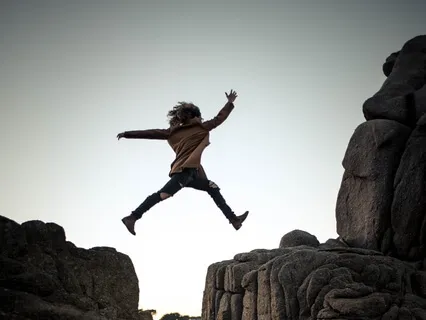
The edge states that epitomize our strength of character and that also open us up to our greatest potential.
We all go over the edge at times in our lives,
But we can cultivate the capacity to,
As she says,
Correct course,
To stop and take account of our internal life and to awaken to the new insights and growth that come from these defining moments.
The most important thing we can do now to face the complexities of the world we live in,
She says,
Practice intentional kindness.
We need to connect with one another more,
Listen to one another more,
Spend more time in relationship with one another.
Needless to say,
She has had an enormous impact in her lifetime and continues.
Now,
Here's the amazing Rashi Joan Halifax.
Thank you so much for being with us on Untangled today.
We are just thrilled to have you here.
Thank you so much.
Wonderful summer day here in Santa Fe.
Oh,
That's awesome.
I wanted to start by asking you the question.
I love the book.
I read it this weekend and just devoured it and wanted to understand what inspired you to write this particular book.
I've had the good fortune to be working in the end of life care field and in various other fields,
Including working with people in corporations,
Working in humanitarian efforts,
Working as a volunteer in the penitentiary system,
Working with educators.
And it's just been for 50 years and I've had the opportunity to hear people who want to serve others,
Who are engaged in service to others,
Whether in education or medicine or law or business,
Hearing them speak about the kinds of challenges they experience in their work of service to others.
And it has been an extraordinary experience for me because one thinks that being a good person,
Opening one's life to a world of service,
Whether you're a doctor,
A nurse,
A lawyer,
An educator,
Or even a parent,
That this is work that is continually easy,
But it's not necessarily so.
And so I began to look at the consistent patterns in relation to states that are considered to be virtuous,
Like altruism or empathy or integrity and respect and engagement,
And discovered that there are shadow sides to these important human capacities and that the shadow sides are often a source of great suffering,
Not only to those who are serving,
But to those who are being served.
So I wrote the book.
I wrote the book in part because I also saw that the lever or the means of transforming the shadow side of these virtuous states is compassion.
And so the last section of the book,
As you know,
Is about compassion.
Yeah.
And you just mentioned the edge states and you talked about being at the edge can either gives us great potential for growth or for suffering,
Depending on how we face our situations.
And you also mentioned that like our toughest challenges can be our most valuable source of wisdom.
And I'm so curious about what is the difference between people who fall apart when they're challenged in these situations and the people who do become wiser and who are able to grow.
How do you think about that?
I don't know what the common feature is because what I've seen is that this potential for transformation exists within all of us.
And I think that's really important for all of us to understand that we all have this capacity to actually shift out of these conditions and to cause us so much suffering and in the process of shifting to actually become stronger as a result of this transformation process.
In my experience,
It can happen to any kind of person.
But that shift also involves,
As I said before,
Opening up the experience of fundamental compassion.
And when I talk about compassion,
I'm speaking about this capacity to actually attend to our own experience into the experience of others,
As well as to have the intention to actually transform suffering and various other qualities,
Which I describe in relation to compassion.
But it's like in our de profundus,
In our deepest,
Most difficult moments,
This is where,
And Rebecca Solnit talks about this,
There is hope in the darkness.
I look,
Patricia,
As someone who has also been through a lot in relation to my own work as a time of kind of,
It's an experience of building character,
If you will.
When we fall over the edge,
Find ourselves in great difficulties,
And we manage to pull ourselves out of the difficulties.
And as a result of that,
We're actually strengthened,
And we have more capacity to be observed through others.
What is that,
Like in that moment,
And I think at some points you call this the defining moment,
You talk about in each of these edge states,
They have a virtuous side,
And then there's the shadow side,
But then there's this choice point that when you do go kind of over that edge,
What is the training?
I mean,
I love that you're saying that we all have the capacity for the transformation and even for the awareness or being able to witness in that moment that we have potentially a choice.
Is that training the training for compassion for ourselves and for those that we're working with,
Or is there a menu of training that we need to embody?
In my experience,
And I think this also shows up in work in social psychology and in neuroscience,
There in fact are many different aspects that we can mobilize.
One is the experience of insight.
In other words,
We begin to attend to our own subjectivity and realize that we're in a kind of lockdown.
Our intention is basically self-centered or our self-centeredness is coming out of our need to protect ourselves because we don't feel that we have the capacity to actually present suffering in ourselves or in others.
So insight is a really important capacity.
And how do we have insight?
One is by actually directing our attention to our subjectivity,
To our direct experience.
And what does that mean?
That means that we actually stop,
If you will,
And begin to take account of our internal life.
So that's just one set of capacities related to opening up our ability to look deeply into our experience and also to be able to look more deeply into the experience of others.
Often we're looking for the one defining moment.
I think it's actually not just one defining moment.
There's a kind of suite of capacities or a suite of events that allow us to actually wake up.
And this is a kind of awakening.
And the powerful thing for me about this work is that I know of no,
Almost no spiritual teacher,
Whether it's Jesus Christ or the Buddha or any of the great teachers who are alive with us today who haven't been through this experience of falling over the edge,
Experiencing profound sadness or futility or experiencing too great an identification with the others.
So they go through the experience of empathic distress and then they begin to correct course.
And I think this correcting course,
It's an event where when it happens,
We begin to actually have that ability to stand at the high edge of our humanity and see the whole landscape of our human experience,
Both the profound virtue,
For example,
Of altruism or the profound virtue of empathy,
But also the shadow side of altruism,
Which is pathological altruism or the shadow side of empathy,
Which is empathic distress.
Right.
I love that you're saying it's hopeful that to understand that everyone goes over the edge and that there is this opportunity to correct course.
And I think it makes so much sense that you say that's a time for us to really take account of our internal life and to cultivate that capacity.
Do you think correcting course is similar to learning how to be more resilient?
One of the images that is common in Buddhism and that I use in the book is of the Lotus.
The Lotus are deep in the mud of suffering,
If you will.
And the mud of suffering is actually feeding the Lotus and making it possible for the Lotus flower to bloom.
Another image,
Which I'm not sure I used in the book,
But is commonly found in certain Buddhist literature is of the peacock who eats poisonous plants.
And then out of those poisonous plants,
These beautiful feathers arise.
So it's this capacity to actually work with our difficulties and to be able to digest them in a way that allows for the best of our nature to bloom.
Yeah,
That's so beautiful.
And you said in the book something about what we do with our experience that really matters and how we expand our boundaries by meeting suffering head on.
And I think that is maybe part of what you're saying there.
As an anthropologist,
You've studied so many areas in your lifetime and you've worked with shamans and Zen masters and Tibetan lamas and Native American elders.
What are some of the things that you've seen that just crosses all religions,
Spirituality and philosophies?
What have you learned that we all share in common about human nature and our ability to meet suffering and survive and thrive?
Is that another book?
That's a huge question and I'm not sure I can answer it.
I mean,
Every person is unique.
I can't really speak from the point of view of perennial philosophy.
All of us suffer in various ways.
Even the Buddha,
As the Buddha was dying,
Mara,
That is the expression of suffering in the Buddha's experience.
Even Mara showed up.
But what can I say?
Is there a common thread?
I don't know.
But I do know,
Again,
From my experience of working with so many good people and my book is filled with the voices,
The most remarkable people,
Whether I never met him,
But Nicholas Winton,
Who was a big inspiration for me,
Or Wesley Autry,
Another inspiration for me,
And I never met him.
But prisoners and psychologists and Buddhist teachers and therapists and educators are all speaking from my pages,
Chaplains and doctors and nurses.
And the thing I've found that really holds all these voices together is their courage.
The courage to face things as they are,
Including the deepest kinds of difficulties.
What a great thing for us to be able to do that,
Right?
And you also talk about crisis being so important for our personal growth and maturation.
I love that you're saying that we don't have to seek it.
We don't have difficulties will find us.
But you know,
In certain cultures,
Like in the indigenous world,
It's fascinating because crisis is woven into the fabric of culture in terms of rites of passage.
And we've kind of lost that thread in our society.
We have less context available to us,
Which is promising for us,
Is hopeful for us in terms of the capacity to actually in the kind of realization that we can transform these difficulties into strengths.
What are some of the rites of passages that you think are most profound in the cultures that you've seen in terms of helping us move from one place to another?
I think all of them are profound.
I think that for example,
Medicalizing birth,
Where the sacred aspects,
The mystery of birth is taken away from the child,
The mother,
The father,
The family system.
Birth itself is a rite of passage.
Pregnancy is anticipatory of the critical moment of the rite of passage when the child is born.
Adolescence is a rite of passage where there's a maturation leap on the part of young people where suddenly they realize,
Oh,
I'm actually an adult.
And that process,
Of course,
In the indigenous world and in all high cultures was marked in a very significant way.
Marriage is a rite of passage where your identity expands to include the whole family system or clan of another in addition to the intimacy of marriage and all that it promises and all the difficulties that marriage brings.
And of course,
Sickness is a kind of rite of passage where we encounter the truth of our own mortality.
But again,
Medicalization has made it difficult for us to actually understand that our encounter with physical illness has within it the potential for really waking us up and so forth.
So divorce,
The movement from one place to another,
There are many forms of rites of passage.
And if we begin to understand the power in these phase shifts,
That they introduce us to the truth of change,
The truth of impermanence,
To the experience of uncertainty,
To letting go of an old identity.
All these are important lessons for us.
But if they're happening in a social context,
Without recognition of the power of these moments,
These phase shifts in our lives,
Like the loss of a loved one,
Can undo us for the rest of our life.
So for me,
We are often not in the social position to recognize the great potential in these phase shifts.
So when somebody is describing to me,
For example,
Their experience of total burnout,
This is a kind of invitation to stop,
To rest,
To cease doing,
And to go inward,
And to heap,
And to evaluate our priorities.
What is really important in our life?
When we look at the truth of our mortality,
And are we in a situation which allows us to find meaning and purpose in our lives,
For example.
So burnout for me is a kind of rite of passage.
Yeah.
In the book,
You've used Shonda Rhimes as an example.
I love that because you talked about when you do the thing that you love,
And you know that you love it,
But you're still burnt out.
And she said,
It turns to dust and you don't feel that hum in your ear anymore.
What do you do in that situation?
And I mean,
I love everything that you're saying because I think we're not often given the tools in our society to handle these rites of passages or these defining moments.
And I think people either ride the bliss or they get crushed by the challenges of them.
And so it does feel like we need some tools for these moments that we ride in our lives.
But I want to go back to the burnout that you were mentioning,
Because what do you do in that kind of a situation?
And what have you done because you've been in such incredibly,
Incredibly difficult situations in prisons in Nepal and all kinds of crisis situations.
How do you handle that?
I feel very fortunate,
Patricia,
Because I've had a meditation practice for 50 years.
It has given me a set of internal tools that allow me to actually navigate through difficulties with a little more nimbleness than,
For example,
When I was considerably younger.
So when I talk about being able to actually recognize what's going on in my experience to realize,
Oops,
I'm very upregulated or I'm over identified with the suffering person before me,
I can begin to downregulate,
Take a breath,
Get grounded.
Remember why I'm really in that interaction,
Which is to serve,
Not to harm and to really open myself up to a shift which comes from being grounded and remembering why I'm really there.
So I think really the most powerful tool that I have accessible to me personally is meditation practice.
Not everybody wants to hear that because it means that you have to stop and direct your attention into your subjectivity and cultivate mental qualities which allow you to be more resilient.
And it takes time and it's a process.
It also is not always,
You know,
Every day I do it and it's not easy every day.
But I realized that my life has really shifted so profoundly from one of being extremely sensitive and overreactive to a life that is more grounded,
More inclusive,
Less fearful,
More courageous,
More curious.
Were you a sensitive child?
I know that you had a trauma when you were four years old.
You had a condition that caused you to become blind for two years.
Did that have a huge impact on your life?
I know that's such a big trauma,
But were you always a very sensitive child?
It's hard to say because that was a long time ago,
But I think I probably was.
In fact,
I think probably most kids are.
But I also think I was fortunate because I was brought up in a circumstance where I didn't have to develop huge defenses in order to survive.
And many people are not so blessed as that.
Their families aren't as healthy.
Their ego development is more fraught and their trust is more challenged because they're not in such a safe situation.
I do feel that I could afford,
If you will,
The sensitivity that I had.
I hope I still have it present in my life,
But I also have a lot more insight.
Well,
You've had many,
Many years of study and action.
And you said that you originally came to Buddhism in the sixties because of the core teachings that transform anguish and provide a path to freedom and wellbeing in this world.
And is that what has been your,
Like the,
I guess,
Rallying cry for you over the years,
This idea of transforming anguish and creating more wellbeing in the world?
I think that this really came again out of my childhood and family system.
And it naturally unfolded for me in the 1960s because of the social conditions of that era.
But also I feel that when I encountered Buddhism,
It was as though I encountered a view that allowed me to see things with greater depth of field.
And I wanted just to cultivate the kind of heart and mind that allowed me to be socially engaged,
To address issues that related to structural violence and personal violence.
And really my whole life has been dedicated to,
And I haven't been perfect,
But to addressing the cultivation of a world that is fundamentally non-violent.
So it's a big assignment.
It's a giant assignment and it's a great mission.
I feel like nobody wants to promote suffering in this world,
Except for people who are really crazy.
We all want to do good,
But I think there's also a lot of confusion out there in our landscape.
Part of it is how do we wake up?
How do we create the conditions where others can wake up?
I've done my own teeny little part in that.
I mean,
I've had such a profound experience in working with professional caregivers and family caregivers and as I said,
Educators and humanitarians.
I've learned so much from people who are directly involved in the field of caring for others in various ways.
Their voices,
Their experiences really live inside of me.
But it's not just my life.
It's really about,
From my point of view,
It's not about me.
It's about everything I've learned from those who give care,
But also from dying people,
From prisoners,
From refugees,
Extraordinary people I've met who are struggling deeply with difficult conditions in which they find themselves,
But they themselves have been my greatest teachers.
So beautiful.
I could get chills just listening to you talk about it because it's just such incredibly important work.
And I wanted to ask you,
There's been so much suffering and there is always so much suffering and we live in such a complex world now.
The news has been really focused on suicide and the increasing rates of suicide since early 2000.
And we see some high profile people that looked really happy on the outside taking their own lives.
And what are your thoughts on that and how do we help people become more honest about their feelings so that we can help them?
I don't know if that's the right question,
But maybe you understand.
I don't know if I understand or not,
But in a way I look on suicide as a case of mistaken identity and that what wants to die is the ego taking our lives in a way is misplaced concreteness.
And my other feeling about people who take their lives is they have lost relational connection.
That when people lose the sense of connection,
When people feel they have everything,
For example,
In terms of this,
Two people who recently took their own lives,
Very well-known people,
It looks like they have everything,
But actually they don't.
Everything in the material world doesn't mean that we are psycho-spiritually fulfilled.
And it's that kind of,
Usually that kind of desolation that leads to futility and then a lot,
There's no connection and why live?
It's too painful.
It's too painful.
In your chapter on engagement,
You talk about our culture of busy-ness and that this has such a huge impact on us personally and in relationship to others.
And maybe there's some connection there too.
We're all moving so fast.
I mean,
How did you think about that in terms of what your writings on that edge state in particular,
This idea of engagement?
I think it's important to be engaged,
But I think it's equally important to be engaged with each other at the psychosocial level.
Connection is so essential.
And what is happening is that our identity is moving away from an identity where a human being to an identity of where we're a human doing.
And so you say,
How are you?
I say,
I'm really busy.
As though this is a virtue within our culture,
But actually what we learn in practice is that it's about stopping.
It's about cessation.
It's about being,
Not doing and not accomplishing in the external world,
But being able to find rest in the present moment.
That's really hard in a consumeristic materialistic culture to make that a value.
And yet what we see is that without it being a value,
We suffer and that suffering can lead to us not valuing our own lives and ending up taking them.
And we don't really have the language or many people don't really have the language to talk about that.
And they go blindly through the dialogue of I'm so busy,
I'm running from this place to the next.
And these teachings,
Your books,
They're so important.
The other thing you say is that compassion is the most powerful means you know of keeping our feet firmly planted on the earth and our hearts wide open.
I loved that.
Yeah,
It's so beautiful.
I mean,
So much of your book is just so beautiful,
But can you talk about some of the practices that we can do and our audience can take home after they buy the book to really become more aware and really focus on insight and taking account of our internal lives and these things that you're teaching?
What are some of your favorite?
I know you talk about meditation,
But there are so many meditation practices that you mentioned in the book.
And I'm just wondering if there are any that are the most powerful for you?
You know,
His Holiness the Dalai Lama says,
My religion is kindness.
I think actually practicing kindness intentionally,
Speaking kindly,
Behaving kindly,
Being respectful and kind to ourselves.
I think the intentional practice of loving kindness is so important in our world,
In a world that is feeling less and less civil every day.
We have an opportunity to actually cultivate prosocial states of heart and mind that cause our own social world to become more civil.
I want to live in a civil society and a civil society is characterized by altruism,
Characterized by empathy,
It's characterized by integrity,
By respect and by engagement.
And practicing these qualities intentionally,
Which we can,
Every time we do negative self-talk,
That's disrespecting who we really are.
Every time we speak unkindly about others,
That's not a healthy thing to do.
That's falling into the toxic swamp of disrespect.
And it's learning how to be conscientious and aware of how we cultivate these powerful human virtues.
That's really the heart of the book.
These five states,
These five virtues,
These qualities that we can practice and to turn around,
You talk about incivility being on the rise and maybe this book can become a bit of a movement because it's just such important work.
And I feel like.
.
.
Thank you,
Patricia.
I feel like there's just so much for us all to learn from this book.
And is there anything else that you want to share from the book that there's so many beautiful things you talk about,
Not letting our fear keep out the moonlight and not being attached to outcomes.
There are just so many gifts and quotes and just great lessons in the book.
Is there anything that you'd like to share that we haven't touched upon yet?
I feel kind of shy.
It's a big book.
I think it's a deep book.
I think it's a book that is also very timely.
It's a book that anyone I believe can benefit from because we live in a world that's very vulnerable,
But we also live in a world where there's great promise.
I'm hoping that this book can be a gift that helps people to recognize that although we face great challenges,
We also have great potential.
Yes,
Yes,
Yes.
And you have a quote from James Baldwin that says,
Not everything that is faced can be changed,
But nothing will change if it's not faced.
Exactly.
So beautiful.
I'm so grateful you read the book so thoroughly.
Oh,
It's such a beautiful book.
That's so wonderful.
Well,
I love it.
And I think our audience is going to love it too.
So I am so grateful.
I could talk to you forever.
I'm just like in awe of you and the work that you've done.
And I'm just so grateful that you were able to make the time to be with us today and to be with us.
Thank you,
Patricia.
It's just been a delight on this Tuesday afternoon in Santa Fe,
New Mexico.
And again,
I'm very grateful that you allowed yourself the time and space to bring this book into your whole life.
Yes,
Thank you.
And I will continue to do that because it's a practice.
Wonderful.
You need to keep practicing these things.
Thank you again.
And oh,
Keep writing the books.
I will.
Okay.
Little by little.
Little by little.
I want this book to settle,
You know,
Just like my book,
Being With Dying,
And then the one before that,
The Foothill Darkness.
It's like 10 years of incubation and then the book.
You want to sit with this one.
I do.
I feel no rush to write another book at this point.
This book is still being written inside of me.
That's so beautiful.
Well,
Thank you again.
Thank you so much.
All right.
Thank you,
Listeners and Patricia,
And have a beautiful rest of your day.
You too.
Thanks so much to Rashi Joan Halifax for being on Untangled today.
We'll see you next week.