Welcome.
Welcome to awakening to our mindfulness this week.
We are awakening.
Hi,
Yes,
The tour portion that we jumped into yesterday on Shabbat of the 19th of November,
And the 25th of cash van and 5783.
If you had a chance to read it and prepare yourself.
The week before then you're ready to jump in with me.
So we call it awakening hi Sarah today's day is actually the 20th of November,
The 26th of cash van.
And please forgive us for any of you who are attempting to log into the zoom link or a live streaming we're having a bit of technical difficulty.
And but hopefully this will all be addressed soon.
So,
Before we begin,
What is it that we do every week if you're new,
A,
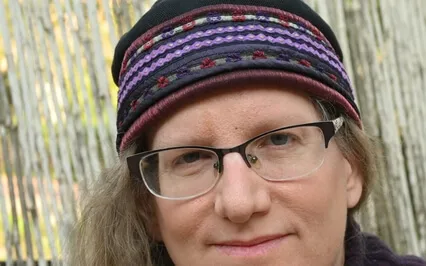
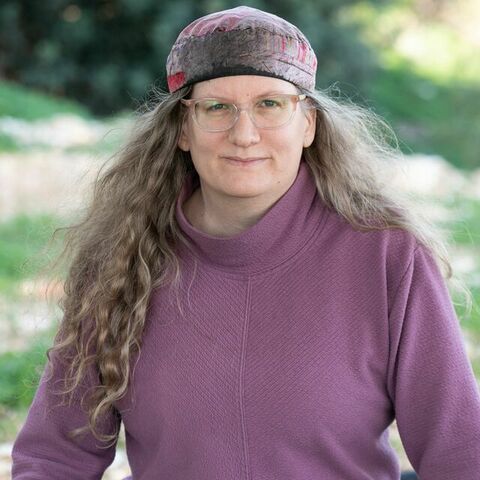
I will first will introduce myself I'm Rabbi hassio real Steinbauer,
I'm the founder and director of the Institute for holiness,
He left me sir,
Where we practice moose our mindfulness,
We have tracks of moose our tracks of mindfulness and the integration and synergy of both to learn from the wisdom of both.
And all are welcome to learn from these ancient traditions and wisdom,
And I'm delighted to have you in our weekly series of awakening on Sundays at 1230 Eastern Standard Time.
And the usual way that we move into this together is that we begin with our covenant our intentions for today's practice.
So I always share screen at this point for those of you who have vision for those of you who don't or listening to audio.
And you will hear me read our intentions are covered note for today's practice which is the same every Sunday.
So the first,
We see this act this practice that we're doing together every Sunday as an act of caring for the self.
And it's not just the self that's insular like an island to oneself but one that is deeply connected and rooted in community,
That will make sense when we get to the second and third cover not.
And it.
So,
We're doing this radical self care together and so we say this is something I'm doing to strengthen my own soul in order to be a benefit to others in the future.
We're also doing this practice for others for the sake of them right for service of them to have service to God in them,
We say this is something I'm doing to strengthen my relationship to others.
So I can be a better conduit of God's good to others when they need me.
And finally we see this time together of learning and practicing Musa mindfulness with the weekly Torah portion.
Excuse me if I sneeze,
I can feel it coming in that we see this as strengthening our relationship with divine.
So we say this is something I'm doing to strengthen my relationship with the Creator,
God,
Hashem,
The Holy One.
So I can be a better conduit of God's good when others to others when they need me.
Okay,
So that's what we're holding in for our intention today that we continue to strengthen ourselves,
So that we can fulfill all of this together out in the world to make it a better place.
So I'm going to stop sharing screen now and move into our practice today.
So,
As if you've been following along we started a new Torah cycle right back in Bereshit,
And then we moved into Noach,
And then we moved into L'chlecha.
And then we had a Vayera right before Chayesara.
And so that means we're on the fifth of this meeting,
This fifth session of learning and practicing together.
So,
There's obviously so much rich material in all of these weekly Torah portions if you read through them and whatever language,
You are comfortable in,
Much that we could discuss and learn from and practice,
But I'm going to hone in on our beloved Rivka,
Right,
In the English.
And why am I choosing to do this because if you've been following the pattern along,
We really pointed out during Bereshit that it's quite a gift that God gave us the knowledge that we were created in the likeness and image of the Divine.
There was no circumstances did we necessarily have to have that knowledge or know it.
But because we do,
Really,
If we can internalize that as a daily practice,
It strengthens our self-esteem and self-worth so that we're balanced in an ava of humility to be able to be out in the world.
Right,
To be able to care for others and to do the meets vote and commandments if that's what we do.
And if we want to make this a better place.
So,
With that in mind,
We've been looking at examples from our ancestors,
Where people are really strong in an ava of humility,
Of how much space they take up,
With their concern for self and others and God.
And with that are like a whole array of other midot,
Of other soul traits that fall within that strong core an ava of humility,
Right.
So you have zerizut,
Enthusiasm,
And you have siddiq,
Righteousness.
Someone who's really,
That's combined with chesed,
With loving kindness,
Right.
And so you have this,
This beautiful setup where you're starting to see these other midots like the spokes of a wheel on a,
On a bicycle,
Right,
Ophanayim.
And you can begin to see as long as you have that strong core of knowing that you are a child created in the image and likeness of the Divine,
It really sends out the sun rays of strengthening the other midot.
So,
We're going to jump into this beautiful person or beautiful ancestor who becomes selected to serve and be as the spouse of Yitzhak,
The son of Avraham.
And it's all back in Vayirah that we ended with Avraham,
Our beloved ancestor,
Being commanded to take his son Yitzhak and to offer him as a sacrifice in a certain location.
And that sacrifice of course gets changed to a ram,
And the whole thing is kind of understood as a test in some form of Avraham.
And it really gets discussed in the Torah of what that was like for Yitzhak,
And what that was like for Sarah,
His mother,
Either knowing about it or hearing about it after afterwards.
This is in the Torah itself there are midrashim,
A rabbinic exegesis texts that expound upon this but we're left with Yitzhak leaving one direction,
Last week,
And Avraham going another direction.
Right.
So we can fill in those blanks right we can understand that he returns,
And it might be immediately or years later.
Again,
There's the timing is not very clear that his mother dies when he returns.
Okay.
And you can imagine,
We can have our own reading of why she died.
But you can imagine what this is like for a child to almost be murdered or homicide by their father.
And because he's commanded by his God to do so.
And then to come down and not have his ima his mother the other parent to support him through this.
So you can imagine that there's probably some form of trauma,
And perhaps even a turning in right and so that's Yitzhak.
We do notice that Avraham in his distance decides to still care for his son it's not as if something's changed for him.
He knows that it's part of his obligation and his desire to find a spouse for his wife,
Perhaps out of concern for his own fulfillment and wish for what God had promised him that there would be a lineage and offspring and that has to happen through Yitzhak.
So,
Avraham causes one of his servants,
Which we assume is Eliezer but it's not named in the Torah,
To go find a wife,
A partner a spouse for Yitzhak back in his homeland.
I'm not going to touch upon why he's sending him there versus finding him a local spouse that gets discussed in the rabbinic text,
But what I'm interested in,
Is this young amazing a woman,
Sometimes known as a young maiden.
And her name is Ripka in the Hebrew.
Rebecca is so to give you the scenario if you're not familiar we are in chapter 24 is starting on to sue Kim.
Let's see here 15,
Where is the servant has decided that what his quality is what is he looking for in a spouse,
Two things.
So I want you to think even right now for yourself if you had to decide as your own parent to yourself.
What would be the criteria two things that you would look for and expect in a spouse,
Just two things.
And then what do you think your parents would want from that's that spouse,
Right.
Okay.
So what is the,
What is the servant looking for,
Right,
What is his criteria for a good wife,
That she give him water.
After his long journey,
And that she give his camels water.
Okay,
It doesn't,
It's not the particular of the water or him,
But it's that someone is these deeds,
These two acts signify and represent me dots character traits and deeds that someone is strong and balanced in.
Okay.
And so what they signify when someone is a complete stranger that you meet at the well.
And you decide to lower the water you've already filled up in our caring to offer them water to give it to them when they asked for a little water,
Right,
The language,
We're going to follow this language here.
So the servant says you know,
May I please have a little water.
Okay,
So she already is moving it off of carrying it,
Which is a burden and love itself moves it off and gives him water.
And before he can even ask me I either have more we feed my animals,
And when you give some to my animals all that,
And it's not just that she,
You know,
Nonchalantly gives him the water she hurries.
She hurries to do it.
Okay.
She lowers her jar drink.
Right.
And then all sudden you if she has him drink his fill.
And she says,
I'll also draw for your camels until they finish drinking.
Now let me give you the context of these camps.
When a camel has traveled through the desert,
It requires a huge significant amount of water to fill back up the humps basically carry the water for them.
25 gallons per camel,
There are 10 of them with the servant.
It's 250 gallons here I took a picture of 25 gallons let's see if I can pull it up for you.
It's always good to get visuals right so we can really understand for those of you who have site.
For those of you who don't I will describe as best detail as I can how large this is so you can get a sense of 25.
Okay,
It's a small picture but this big barrel that collects water outside someone's house is 25 gallons.
She gets 10 of these the equivalent of 10 of these so for someone who doesn't have vision or cannot see.
It's one of those huge water barrels that people put on their side of their house to collect water.
So,
She gets 10 of these and fills exactly what the camels need.
All right,
This is a huge amount of labor.
I'm not something that most people would do for a stranger,
And probably even reluctantly for for even someone they didn't know right.
So,
Um,
Let's move here so what what are her me though what are her qualities to even jump into this right because she,
She does all this to quickly right she quickly empties her jar into the trough she runs back to the well,
She drew for all of his camels.
Okay.
Okay.
Um,
I'm going to talk about if you think this is going overboard but I think it's there for a reason and we'll touch upon it okay but first the me dog.
She is mindful.
She's very emotionally intelligent,
Meaning she,
She can see that this person is thirsty,
And he's sitting there with 10 camels.
The fact that he asked for water to drink it there might even be an assumption there on her part that he can't build or can't retrieve it himself,
Otherwise why would he ask when he could clearly get his own water from the well.
So she rightly assumes if he can't get his water,
Then he obviously cannot get the water for all these camels.
She,
Not only so she's considerate she's considering the needs of the other.
And so she's mindful of it.
He's aware of these animals off also in addition to them so there's great static great righteousness great has said great loving finest she going way way up and beyond what the average person would be expected,
Or would do in a situation like this.
Right.
So,
We have this concept in Judaism that there's the meets vote the commandments the basic law of how you're supposed to behave.
And then there are those who behave like offer home,
Who basically go up and beyond the law.
And we call that tested or static loving kindness or righteousness.
And then in all honesty our tradition really I think aspires to really hopes that it's a it's Jews it's people will be like Avraham right it to your,
You're supposed to aspire to be like Avraham.
And so,
Um,
I think,
This is what we're witnessing here so let's just let's just delve into this quickly right here before we do.
Because she's kind of amazing right she has this is not her only me though right she has a ton of the results of enthusiasm right there's no tearing,
You know,
Like,
Holding back or being,
There's no laziness she's quick acting,
She's in alignment with her values and.
And so,
Immediately,
If you've been following along you should think well this reminds me of a certain ancestor like who else is quick to get up to perform meets or or go above and beyond what's expected.
So immediately you should think of offer home right it sucks father.
So he's obviously someone who got up and went when God commanded him to go leave his country his where his family lived and leave his father's house and go to a land that he is foreign to him that he that he will be a girl that was shot he will be an alien a foreigner.
And in this new location he just gets up and goes right so what else did he do this for if you might recall,
He did this with the same type of behavior when he found out his nephew lot had been kidnapped by the five kings taken completely very far north,
The equivalent of Syria today.
And he went and and and fought them in a war and redeem the captive,
Which is a huge meet so right,
But this is way above and beyond what the average person would do right.
And this is even what is required of them are not required to go to war personally to go and save our nephew,
And we're,
We're required to try to raise funds to,
You know,
Drive the people to pay them back and to allow the captive to go all sorts of things and he goes and goes to war.
What else does he do.
He,
He,
He when he sees the three men who end up being angels.
Right after he has surgery after circumcision,
He gets up and runs to them and he bows down to them offering that they wash their feet and they come and he's going to feed them and give them water.
You know this is all his same has said his loving kindness his static his their righteousness to consider the needs of someone else at the height of the day the heat in the desert,
That he wants to accommodate them and bring them in and make sure that they are protected from the heat and the sun.
He also does it obviously with the most controversial thing which is what we addressed last week in the era where he rose early in the morning to attempt to fulfill God's command to sacrifice his Sunday at sock.
So,
And obviously if you're like me,
You wish that he had not done that that he had tarried and argued right that he was not going to that maybe the God of justice and kindness would not request such a thing or expect such a thing like taking like he argue on the behalf of Saddam and Amorra right where he really felt that in both the righteous and that the righteous basically should not be murdered on the account of those who are doing evil deeds and acts.
He really wants an act of mercy so this is Rivka Rebecca here should really start triggering that model for you right.
So let's look at some more of the deeds right.
Also in how Abraham buries his wife right he he does eulogize it's her and cries for her and then seeks out among the hits heights to arrange for buying a burial plot for her to do it right he's doing all these amazing deeds.
Some of them that we see is like basic that are required by law,
But usually there's always like a step up and beyond it right the what we call the headset the static,
The righteousness and loving kindness.
And so this is a.
This is Rivka Okay,
So you might be thinking,
Okay,
The servant is looking for someone like offer home,
Even though it's never stated as such,
Right,
But he's looking for someone who is kind and generous.
Who considers others who is emotionally intelligent,
Who is willing to be uncomfortable and engage in labor to to provide for the needs of others.
So,
A little bit of self sacrificing essentially right so he chooses Rivka.
So,
Just to impress upon you to discuss this and discuss it from a gender perspective,
To give us some real strong perspective here of who this Rivka is.
All right,
So I want to press upon you,
The,
The magnanimity of her deeds of her soul and of her soul traits of her me dot,
And that she's incredibly courageous.
But if we had imagined her if if she wasn't confined to her gender and her role back in the ancient Near East,
And we if we could,
This is a moose our mindfulness practice we're going to engage in just briefly right now.
What's called imagine imagination practice where we could really engage in envisioning her in the role of offer home.
Okay,
In order to see.
We're going to learn how amazing she is okay so let's picture river river river gets the call from God,
This is a new version of the Torah.
She gets the call from God to get up,
Leave the Tula,
Her,
Her Abba her father,
A leave live on her brother or and get up,
Leave her land,
And her family's home and go to listen to this voice in a new land right to follow the commands she goes.
She travels with her,
Her niece,
Her niece and her have to part because they have too many cows in common.
Unfortunately the nice ends up getting kidnapped by five queens and and decides to go to war to retrieve back her niece right to redeem the captive so she travels very far from the middle of the state of Israel today Medina to Israel,
Up to Syria retrieves her nice right.
And then she,
She undergoes a covenant,
A sort of a breach not a Britney law obviously but something that requires her to have some change and her body to mark that relationship.
And she's recovering from that surgery and three women come in the heat of the day,
Women angels,
Where she runs to them and is bowing even though she's recovering from surgery.
She hasn't cleanses their feet feeds them she instructs her,
Her spouse,
Her husband perhaps the other servants to prepare the food in the water.
She does all that is does it with enthusiasm.
And then of course,
A.
She,
You know,
Is commanded to sacrifice for only daughter or beloved daughter her one,
Even though she's had another daughter who went off,
It was essentially kicked out of the family.
And she does that she gets up early in the morning to do that.
So,
This might sound absurd,
Or it might make some of you uncomfortable listening to this but others that might be really amazing and exciting to listen to.
And I'm like,
Wow,
Like,
I've never pictured this I never imagined this right,
But this is Rivka.
Right.
And so I want us to know that sometimes we're stuck,
Especially in a text in the gender role and which were born right that she could never do those things,
Women weren't allowed to do those things back then,
And God was not calling to women to leave their land to do such things,
Probably because of the gender roles right like a woman is not to leave the household.
So,
Which makes it all the more painful when Hagar is actually kicked out because she's a woman who's by herself,
Isolated in the middle of the desert.
Okay,
With a child.
Um,
I think that's why we have a story now that seems so out of proportion,
That someone would feed someone,
Give some a stranger water that we can understand maybe,
But then to go and get 200 250 gallons of water to feed their camp to make sure their their chemicals are hydrated also,
It seems a way up and beyond right,
But we need a story like that to be come across if you're paying attention and reading it slowly.
We need that absurdity.
In order to kind of wake us up to how special and amazing Rivka is in her being in her soul and in her me don't have said dick and chesed of righteousness and loving kindness that she really is this.
A person of generosity and kindness and courage and bravery.
Someone full of an ava of balance humility she takes a proper amount of space.
She does it with every zoo with enthusiasm and joy.
She's running around crazy,
I can just picture her as a not around as a young girl young woman.
And,
You know,
Excited about life excited about meeting this new person.
And she really is a religious role model and had she been a man.
We would be praying today,
Not just a low hey Avraham we would be saying hello hey Rivka.
And I know that we add her in the more liberal communities and listen to her prayer but I'm talking about an all prayer that had she been a male,
She would have been included in the patriarchs right in the of what they know and our forefathers and our patriarchs and our fathers.
So,
A,
I don't I want I don't want you to shortchange her I want you to realize how important she is to.
Her ancestors.
And why she so she's just,
And why,
Why do we need an Avraham replacement.
Well Avraham obviously is aging and about to die soon.
But we also need an Avraham replacement because yet sock will never be able to be that in our offer.
And so,
No one should,
No one should necessarily be a exactly like their parent right they need to be their own person their own temperament their own personality,
But he threw that trauma that he survived and then the trauma of losing his mother right afterwards right.
He is not able to be enthusiastic and a other oriented.
And,
You know,
He does so you know a lot of people think that he doesn't do much right,
But he does he does something very important.
I'll just quickly point out to you.
He is commanded never to leave the land of Israel,
He doesn't leave right the land of Canaan.
He fulfills his role,
It might come across as passivity,
But it's a quiet role but it's extremely strong,
Meaning he knows his role is to remain there and to make sure that that next generation makes it so Avraham obviously leaves the land of Canaan of Israel and he goes down to Egypt during the famine and returns yet talk is not to do so,
Commanded not to he knows this place his role.
He fulfills it.
It's like a,
It's like that quiet strengths.
Right.
And so,
We're not going to get the,
The mag in the nimman is Avraham right in yet sock instead.
We're going to witness that in the choice of the spouse.
Right.
The servant seeks out an offer harm replacement.
All right.
So that's what I want to impress on you.
I,
We're going to move into our guided meditation practice together.
Oh,
I will share one more wonderful thing with you before we move on,
And I have a minute to do so.
So,
You know how I love Nahama level it's right she's one of my favorite teachers.
And for those of you who don't know her she's a wonderful Torah scholar,
May her memory be for a blessing.
And he is she she brings just,
She coaches the Torah from a literary analysis in addition to the causal burning the classic medieval rabbis that we learn commentary from.
And listen to her here,
Just to press upon you even more about Rifka,
What's going on here.
And we can apply this to our practice coming up.
Okay,
So the first example when the servant comes,
And he's standing by the well right.
And she says the ordinary reaction,
This is on page 225 of new studies and bit of a sheet,
Genesis,
Excuse me.
And she says the ordinary reaction and I would say not even ordinary.
The accepted the basis of usual cause no harm,
Right,
The basis of what is hateful to you do not do to others which we say is like the central precept of the Torah,
We're going to put it in one,
One idea one word one commandment one,
One way of being from this coming from a discussion obviously from he L.
And Shammai and then later Akiva this idea of standing on one foot if you could summarize the whole Torah,
A,
You know what is hateful you do not do to others so here's the girl,
The average girl right which might be yourself or even me included right,
The ordinary reaction would be to the servant who just asked for a little bit water,
You're standing by the well help yourself to the water.
Right.
Maybe in a kinder way.
Are you able to go ahead and get the water from the well yourself like why,
Like,
And of course the thoughts in the head would be like why don't we have to do this for you right.
Okay,
That's the ordinary person who doesn't want to cause harm but it's not going to be bothered to go beyond that.
Then,
This is there,
There were plenty of girls going out to fetch water at that hour that was the time when when girls traditionally went out to get water.
And then she says she could imagine the average girl saying,
Why pick on me.
Right.
When I've already replaced the job on my shoulder,
We know this from the Torah text.
Pick another girl who's still holding the water jug in her hand.
This is like passing responsibility,
Some of our previous answers probably would have responded this way right I can even think of pion pion doing this right.
I don't even a dumb,
Like,
You know why,
Why are you picking on me.
Go ask one of the other girls.
And then she says,
It goes on to say that is she has to do special effort to let down the brim of the water drug for him to drink,
And she would be justified and being annoyed right until the char yourself from my shoulder and say,
Don't bother me to do it yourself.
Right.
Right.
Don't bother me.
When you can do it yourself,
Essentially.
So,
Again,
This is the person who's at the basic level I'm not going to cause harm to someone but I'm not going to cause good to someone up and beyond that's the level of static of acid of righteousness and loving kindness,
And finally goes on to say her offer to give camels to drink,
Obviously,
Is way up and beyond anything we can imagine.
And this is where we get this beautiful reading right here she says,
Man is obviously handicapped and cannot draw the water himself from the well and lower the jug.
If he cannot give himself a drink he most certainly it cannot water his camels.
Also,
This would indicate her kindness to animals and not forgetting the thirst of them.
I think this is even more kindness than animals this is kindness to the servant,
Because she's trying to consider in her head why he can't actually handle the water himself right.
And so she gets this from her mindfulness practice.
She's in alignment with her me dope,
It's,
And so that's such a beautiful reading that the hammer brains because it helps us in our practice,
Right,
Where we are looking at in our practice of static of righteousness.
Where are we doing what's hateful to us we don't do to others.
Okay,
That's the basic level,
It's a in a terrible terrible Buddhism you shall not do any harm right.
You should try not to cause harm and suffering,
That's the basic level.
What is the level beyond that for us who are practitioners of Muslim mindfulness.
We attempt to be on this path towards holiness.
It is the path of static of chesed it is the path of Rivka parts of Africa.
What,
What is it that we're doing.
We are trying to go above beyond that we're trying to bring good to others,
Not just not cause them a harm right or not just to make sure that we don't do what's hateful to us to them.
Okay,
That is the practice is that's going to also be our practice during the week.
Let me cover that before we move into our mindfulness meditation practice for today.
Again,
I told you that we're learning from a rabbi Jamie Arnold,
Who has a wonderful practice called Torah to me.
And we,
We look at a meter,
We're going to practice the static this righteousness of being kind to others bringing goodness and kindness to others are meets our commandment is going to be in service of another so I want you to think daily as your kabana your intention.
What is one way I can bring good to someone today and pick a specific person make it small,
It's a kabbalah to practice,
Pick something small that you can be successful at.
Okay.
And then the avodah the service is this intrapersonal spiritual practice.
This is going to be our mindfulness meditation today that you can practice daily.
Alright so come to a your upright position for your meditation practice.
It can either assume one of the four postures traditionally that we do in mindfulness meditation.
For those of you new to meditation you can sit,
Either on the ground or in a chair,
You can stand.
You can do walking meditation or you can lie down.
And I want you to begin by drawing yourself in coming to awareness,
Allowing yourself to settle and arrive,
You may close your eyes if you feel safe,
Being held and grounded by holding your feet to the earth,
Knowing that you are here in this practice,
Beginning with three deep cleansing breath inhalation and exhalation and inhalation breathing and ease exhalation compassion.
This is a practice from Thai from who says you breathe in ease and you exhale kindness and compassion.
Now settling and arriving,
Leaving behind whatever proceeded today,
Coming to your full attention to my voice to your breath and body,
Whatever your anchor is for today.
You can be feeling whatever is here for you.
There's anything trying to pull your attention away from the present moment,
Whether it's thoughts ruminating about something in the past,
Planning for the future.
Maybe they're very strong emotions calling for your loving attention.
Sensations in the body that are unpleasant,
That are drawing your attention away,
No need to push them away.
That won't work as a practice anyway.
We don't need a version.
We also don't need to over identify with them,
Simply observe them like a friend.
What we call leaning in and befriending.
And even whisper to whatever is needed inside you that you will visit it later.
You'll be here right here and right now.
We are moving into a practice of gratitude that moves us to generosity.
Right,
Part of the aim of this spiritual path is awakening such deep joy,
The benevolent compassionate heart.
Maybe because of everything,
If not in spite of everything.
Right,
It is this hakara tatov,
This gracious acknowledgement of all that sustains us.
And with that energy that that awakening to the good and giving thanks moves us outward oriented to the other.
We cannot help but give to do the nidivut,
This generosity,
This opening of the heart.
And this is what we witness in Rivka today.
This gladdened heart,
Right,
Full of joy,
Courage.
Such beautiful thing to witness that is why the servant sat there in awe,
Watching,
Couldn't believe what was before him.
That pure heart that moment of goodness.
And we are grateful for her.
We allow ourselves to sit quietly and at ease,
Allowing our body to be relaxed and open.
You can allow your breath to fall naturally now.
And we will begin to acknowledge all that has supported us in our own care.
We can imagine our ancestor Rivka also being fully aware of all the gifts that she has and had.
With gratitude,
I remember the people,
Animals,
Plants,
Insects,
Creatures of the sky and sea.
Air,
Water,
Fire and earth,
All those who bless me every day.
Allow yourself to repeat this in any way that comes to you.
With gratitude,
I remember the care and labor of 1000 generations of our ancestors and elders who came before us.
And like Rivka,
I offer my generosity to others for the safety and well being that I have been given.
I offer my awareness and my consideration,
My enthusiasm to help the other for the blessings of this earth that I have been given.
And I will quietly repeat after me.
I offer generosity for the family and friends I have been given.
I offer generosity for the community I've been given.
I offer generosity for the teachings and lessons I have been given.
I offer generosity for the life I have been given.
I offer generosity for the life I have been given.
I offer generosity for the life I have been given.
Continue to breathe gently.
Bringing to mind someone you care about.
Picture them,
Feel the natural joy for their well being.
And with each breath,
We will offer the following heartfelt wishes.
May you be joyful.
Think about how much joy Rivka cause the servant.
May your happiness increase.
May you not be separated from great joy and well being.
May your good fortune and the causes of your joy increase.
Think about the lovely servant who we think is Eliezer,
Right?
Think about how fortunate after he traveled so many miles to return to Avraham's homeland.
And the joy he must have felt an experience knowing he was returning with not only the mission fulfilled,
But the great great spouse for Yitzhak.
And in this practice,
Extend it to another person you care for and gradually open your meditation to include neutral people,
Difficult people,
And perhaps even those you would consider an enemy until you can extend this generosity and gratitude to all beings everywhere.
When you are ready,
Gently and slowly open your eyes if you have them closed,
Join us back into this sacred space together that we've created.
Bow to God or whatever divine presence you hold bow to your practice bow to your teachers.
Bow for taking refuge in this community.
I'm delighted to have you today.
Thank you for taking time out of your day to engage in this practice and learning together.
I encourage you to practice all week as I said and please email me at the kehilatmusar.
Com.
Rabbi Hasya at kehilatmusar.
Com.
Let me know how your practice is going and how we at the Institute can be of support to you.
I look forward to seeing you next week.
Take care of yourself.