Shalom,
Shalom,
Shalom,
Welcome to Awakening,
Torah,
Musa,
Mindfulness.
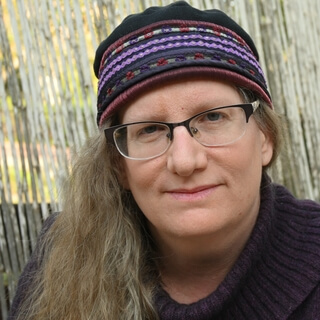
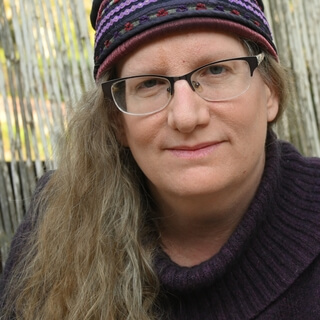
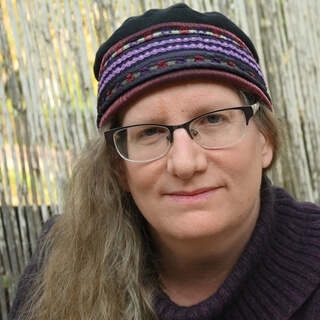
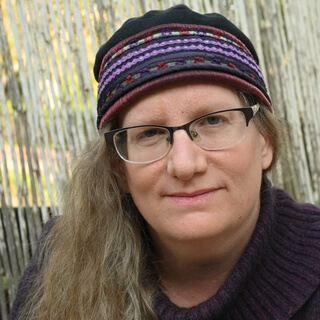
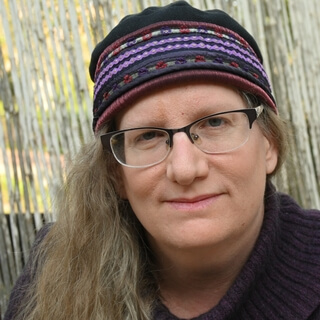
I am Rabbi Chassi Uriel Steinbauer,
The founder and director of the Institute for Holiness,
Kihilat Musa,
Mindfulness.
We gather the Drat Hashem,
With God's help,
Every Sunday,
Unless it's a holiday.
It's 7.
30 p.
M.
Israeli time,
Which translates into 12.
30 p.
M.
Eastern Standard Time,
And then,
Of course,
All the other amazing time zones throughout the world,
Where we engage in the practice of looking at the weekly Torah portion from the Hebrew Bible,
From the ancestral wisdom and knowledge and lineages of Musa in the Jewish tradition,
And mindfulness of the Dharma from Theravada Buddhism.
I'm so delighted that you've joined us.
We always begin with our Kavanot,
Our intentions for today's practice,
And then we'll delve into what are we looking at today.
We'll give a nice summary,
And then we'll hone in on what we're going to pay attention to,
With God's help.
So,
If you are a vision,
And you're watching by video,
Either live streaming right now with us,
Either from our YouTube channel,
Please subscribe,
Or subscribe to our newsletter at our website,
Or watch any other medium on social media,
Including Insight Timer.
You can see this before you,
The three intentions,
The three Kavanot.
For those of you listening through audio,
Like our podcast,
You will hear me read these out loud.
So,
We see this 45 minutes together every Sunday as an act of radical self-care,
One in which we're spending time to engage in some deep soul learning that we can actually apply to our lives,
And in embodied practice of mindfulness meditation.
So,
We say this is something I am doing to strengthen my own soul in order to be of benefit to others in the future.
We also see this time together as doing on behalf of others.
We say this is something I'm doing to strengthen my relationship to others,
So I can be a better conduit of God's good to others when they need me.
It's an amazing intention,
Is it not?
May we all merit it.
The last Kavanot,
The last intention,
Is that we say we're doing this to strengthen our relationship with the Divine.
We say this is something I'm doing to strengthen my relationship with Hashem,
God,
The Creator,
So I can be a better conduit of God's good to others when they need me.
So,
May we merit all three of these today in our learning and practice.
So,
What is our learning and practice today?
We are jumping into the Torah portion that we learned yesterday on the Jewish Sabbath,
On Shabbat,
That was read out loud in synagogues throughout the world,
In minyanim,
Quorums across the world,
And hopefully you had a chance to jump in and look at this.
So,
This was read yesterday on Shabbat,
August 26,
2023.
Today is Sunday,
August 27,
2023.
So,
The Hebrew day yesterday was the 10th of the Hebrew month of Elul,
From Tafshin Pei Gimel 5783.
And so,
Today is Yud of Elul,
The 10th of Elul.
It's quite a gift and honor to be learning and practicing it together during the month of Elul.
This special practice,
You're welcome to join us,
Called the 40 Days Elul Musar Mindfulness Practice,
Where we engage in a cheshbon hanefesh,
An accounting of the soul,
To prepare ourselves on this path toward the new year,
The head of the year,
Rosh Hashanah,
And for Yom Kippurim,
The day of Yom Kippur,
The day of atonement,
Which will happen in the Hebrew month of Tishrei.
The whole 40 days from the new moon,
Rosh Chodesh of Elul,
Which happened 10 days ago,
To the day of Yom Kippur.
So,
10th of Tishrei.
So,
We are jumping into the Torah portion called Ki Teitzei.
Ki Teitzei is actually quite unique and special because it contains 74 mitzvot,
74 commandments,
The most of any parasha in the whole Torah,
In the Torah portion.
And the mitzvot here focus mostly on individuals,
On families,
On neighbors.
And here are some of the examples that are covered in this Torah portion.
For instance,
If you find someone's lost animal or a lost object,
You are to return it to its owner.
If you want to take eggs or young birds from a nest,
That you first send away the mother.
And when you build a house,
That you are to build a fence around the roofs,
Assuming that you have a second floor or higher,
In order to keep people from falling off.
And also,
Some mixtures are considered problematic,
That we don't plant two kinds of seeds together.
We don't plow with two different kinds of animals.
We don't wear pieces of clothing from wool and linen together.
We're also to be dignified,
Even when using the restroom,
And to make sure we don't leave a mess.
We don't charge interest when lending money to other people within Bnei Israel,
The children of Israel.
A neder is a vow that is very serious promise to God,
And that you have to keep your word.
And you must pay workers on time,
Particularly poor workers.
And you don't muzzle an ox while it's brushing,
While it's doing its work.
And we use honest measurements and weights.
These are some of the key ones that we find here.
But if you notice something in common with all of them,
What do they all have in common?
And this ties into our mindfulness practice of Musar mindfulness.
We must be deeply awake and aware.
First,
We have to obviously know what are the mitzvot,
What are the commandments,
What is being really called to us to live a moral and ethical upright life.
And in particular,
Once we're obviously aware of what some people either see as a suggestion and others see as obligatory,
Within the Jewish tradition sees it as obligatory,
That you have to be awake to this and do it with intention.
You have to be awake that you're about to use two animals that you're needing their help,
Their labor.
For instance,
When you're farming and all of a sudden you have to pause and go,
Wait,
Which animals am I using?
And should I really,
I shouldn't be using two different kinds.
I'm hungry and I'm going to go hunt for eggs or for birds from the nest.
I want to be mindful and really aware to send the mother away,
Right,
To not cause any more suffering than there already is in taking the eggs and consuming the birds.
When I'm building a house,
I need to think about not putting that stumbling block for before the blind.
I need to think about who's going to be visiting and that I want to protect them.
And so I put this fence around my roof and so much of this,
Right,
We can go on and on and on.
And we must be mindful of the workers in our lives and make sure that we pay them on time and pay them before they go home.
So they have that which to take care of their families and their lives.
Everything about this is being totally awake to the lives that are before us and how we're going to wake up and actually practice and live this.
So there's some key things that I want to point out here from the text and then we can delve into our practice.
So let me just pull this up here.
That was very important,
What I wanted to.
And it's in the very language.
So if you want to,
If you haven't studied this yet,
I encourage you to move,
Jump into Ki Te Tse after this session and maybe even watch it again.
But Ki Te Tse,
Let me find the text for you.
So it starts in chapter 21,
Verse 10.
And the parts about civil and domestic life continue through chapter 25,
Verse 19.
And then I want to take you past here to make sure.
That's it.
That's the whole Torah portion.
But what I want us to focus on,
There's so much here that we could focus on,
Obviously,
Especially from a practice and lose our mindfulness.
Where's my text here?
Hold on.
It's the language of,
Yes,
Chapter 22.
So please join me.
That's kof bet,
Okay?
Lo t'yareh et shor achicha,
Or et sev.
Nidachim vechib alamta mehem.
Hashev teshivayin leachicha.
If you see your fellow's ox or sheep has gone astray,
Right?
Has,
Yeah,
Kind of moved on,
Has gone astray.
Do not ignore it.
Look at this language here,
Right?
Do not ignore it.
You must take it back to your fellow.
Then it goes on to,
That is verse Aleph,
Number one.
Then it goes on to verse Gimel,
Number three.
Where it talks about,
You know,
You'll do the same for his other animal,
Which is a hamor,
A donkey.
You do so with a garment,
If it's a simlah.
You do so if they lose or anything.
And then it says,
Finally,
Lo tuchal lehit alein.
You are not able,
Meaning you must not,
Must not be able to remain indifferent.
And what is this text here?
What is the lehit alein,
Right?
To almost disappear oneself,
Right?
To act as if we are not deeply connected to all potential acts before us.
To our relationships with everyone around us,
Both intimate ones,
With our neighbors,
With our community,
With the world.
You must not disappear.
You must not lehit alein.
You must not go within.
And it's like a form of withdrawing.
It's a form of a lack of engagement,
A lack of taking up a proper amount of space as a child,
As a person created in the image and likeness of the divine.
It's all about balance anavah,
Balance humility.
That you are here,
God created you for a purpose.
You are not to lo tuchal lehit alein.
You are able to withdraw,
To ignore,
To be indifferent,
To pull away from.
This is it.
This is your achar yehut,
Right?
You are here,
God created you for a purpose.
Your responsibility here is to step forward.
Even with something as small as your neighbor dropped their shirt or their bag,
Or God forbid,
I don't know,
Something even smaller,
On the sidewalk,
You find it,
You protect it,
You can do more than protect it,
I will share that in a minute.
You make sure the neighbor benefits.
You protect it,
You try to find that owner and return it.
This is something larger going on here.
These small daily acts not only build this foundation and strengthen it,
It creates more responsibility and has us be able to turn and deal with and delve into the larger issues that most of us,
What do we do?
We do that indifferent,
That ignoring,
That hiding,
That turning within,
Such as climate change.
Something huge and enormous,
But it begins with small little acts of returning lost items.
Right?
So,
It goes on,
You can't ignore things,
You must not remain indifferent.
This is so important.
You even found this in Exodus,
Chapter 23,
Verse 4.
This idea that you can't refrain from raising a fallen animal,
That even your enemies fall on an animal.
You have to engage.
You have to be present.
You have to be here in this world.
You were born.
You exist right now.
It's for a reason.
It's for a purpose.
So,
What's happening here in Deuteronomy,
Where Ki Tetzei is,
There's an anticipation of psychological reactions,
Right?
It's very common.
And there's this almost like sermon-type approach that's teaching us and telling us we cannot remain indifferent.
It goes on,
Right?
It goes on to verse 4.
This time,
If you see,
Again,
It's going to say a chamor again,
Right?
If you end up,
If you see the chamor or an ox that has fallen on the road,
Do not ignore it.
Right?
Here we go again.
Not only must you not,
Like,
Withdraw,
Be indifferent,
Ignore it,
Kind of erase yourself,
Right?
That verb today,
When we use it,
It's like there is a form of erasing oneself.
And it's erasing oneself from responsibility.
It's very important.
Let's see here.
To ignore.
Yeah,
Still to ignore.
But ignoring is a way of saying,
I am not here.
I'm going to pass over.
I'm going to vanish.
Right?
We're talking about wholesome,
Wise,
Ethical,
Moral,
Upright behavior that is being called upon us over and over again on this path towards holiness and in the Torah and Musa mindfulness.
And this is so in particular that not only must you not ignore it,
But then what does that mean?
If I'm not going to withdraw and ignore them,
What is it that I'm supposed to do?
Oh,
I'm actually supposed to engage.
I'm supposed to engage.
I'm supposed to help lift the animal.
But even more,
Let's look at this.
This comes from our beloved teacher,
Nechama Lebowitz,
And her studies in Devarim and Deuteronomy,
Where on page 214,
Where she's looking at Ki Tetzei,
She talks about the mitzvah,
Restoring lost property.
And she says this involves not merely the passive taking charge of an article.
Right?
We're like,
Okay,
All right,
I won't ignore it.
I'll take it home with me.
I'm just going to put it on the table.
Right?
No.
She says no.
We don't do that just until the owner claims it.
There's an active concern with safeguarding the neighbors or the,
You know,
It can be brother,
It could be neighbor,
It could be our dear friend,
It could be anyone involved in our community.
Not just safe,
There's an active concern with safeguarding our neighbor's possessions,
So that it'll remain intact.
And it'll constitute something worth restoring.
That's profound.
Okay,
What are we saying here?
What does this mean?
Here's an example from our sages.
Right?
Who understood the precept of restoring lost property and the lengths they went to to fulfill the obligation.
Listen to this beautiful story from Ta'anit.
I love both of these stories.
Okay?
This is Ta'anit from 25a.
It is related that a man passed by the door of Rav Hanina Vendosa's house,
And he left there by mistake some hens,
Which were found by Rav Hanina's wife.
And the farmer said to her,
Don't eat those eggs.
Okay?
The eggs and the hens were accumulated.
Right?
They caused them an inconvenience.
So,
What did they do?
They went up ahead and he sold them.
And he bought,
With the proceeds,
Some goats.
And once that same man,
Who had actually left the hens aside,
Passed by and said,
Here,
I left my hens,
Rav Hanina overheard and said to him,
Do you have your mark of identification?
He says yes.
He identifies them.
And he gives them the goats.
So,
He actually,
Like,
It's like an upgrade.
It's an upgrade.
So,
The equivalent of this,
Of Rav Hanina Vendosa,
Was somebody's Android phone that's quite old is found on the street,
Picks it up,
Brings it to the house,
Decides to,
What is he going to do?
What is he doing with it?
Right?
He's going to go to head and,
You know,
Upgrade it,
I don't know,
To the latest iPhone or something and protect it and make sure everything's fine.
And that person,
Finally,
He's able to find the owner and he gives him the new iPhone.
Right?
That would be the equivalent of Rav Hanina Vendosa's behavior.
He upgrades the hens to goats.
Okay?
Here's another story from the Dvarim Rabbah,
Chapter 3,
Verse 5,
Or section 5.
It's related that Rav Pinchas bin Ya'ir,
That he was living in the city of the south,
And some men came there to seek a livelihood.
And they had with them two measures of barley,
Which they had deposited with them,
And they forgot about it and they went away.
So Rav Pinchas bin Ya'ir sowed the barley year by year.
He took what they had left and sowed it year by year,
Harvested it,
And stored it.
And after a lapse of seven years,
These men returned to that place to claim their grain.
As soon as Rav Pinchas bin Ya'ir recognized them,
He said to them,
Come,
Take your granaries,
I hope I'm saying that correctly,
Where you store all the grain,
Full of grain,
Full of grain now.
Now this is how the people left it.
But what is he doing?
He is taking that which was left,
Which is really God's,
Is really Hashem's,
And doing what Hashem wants us to do with it.
Really beautifying it,
Doing what we're supposed to be doing.
And they're not just sitting idle,
Putting it off and away,
And maybe the owner will return.
Doing what is intended for it,
Benefit in the sense of like having it really grow and become something even more worthy,
Something even more part of God's world,
Right?
And then gladly returns and gives back here.
That is so profound,
Right?
So this treaty and this obligation to restore lost property,
It really,
There's this tension,
But it's a beautiful one,
Between a moral and educational lesson.
This concept of lo tukhal lehit alem,
Right?
You shall not hide yourself.
You can't withdraw.
You can't withdraw from this moment and this responsibility.
It's literally,
You cannot hide yourself,
Right?
There's a physical inability that should be present,
Because you have to take up your proper amount of space.
You have to be balanced in anava and humility.
That is what Hashem intends for all of us.
And it has to begin with these little acts,
Whether it's just the,
You know,
The little bracelet that,
For instance,
I found out in the street here.
It belongs to,
You know,
A lovely small child.
And I've been posting it everywhere and I took picture of it going all around.
But I see that it's actually kind of a little bit broken here.
And so I'm actually going to build on it and strengthen it.
So you can see a little gap here.
I don't know if you can see that.
Maybe I can show it up to the camera.
I don't know if you can see,
But there's a tiny little gap here.
So I'm going to actually strengthen this and close it more and make it so it won't and can't fall off next time.
And beautify it.
I'm going to tarnish it.
I'm going to clean it.
And hopefully that little child will be reunited with it soon.
And in the meantime,
I'm the keeper.
And more than I'm just the keeper,
I'm the one that's going to not only restore its beauty,
But turn it into something even more than that child couldn't even anticipate.
All in honor of the child,
Honor of myself,
Honor my relationship with God,
Betrothing myself to God daily,
This wholehearted devotion of really living out this Torah,
Our Torah,
Our gift.
So with that,
Beautiful,
Beautiful task this week and even during the month of Elul is really finding your one mitzvah,
Your one commandment,
Your one deed that you really want to do to unite and strengthen your relationship with the divine,
With God.
And really just seek to build on that.
So maybe this is it.
Maybe this is the mitzvah.
You're not going to hide.
You're going to take up your proper amount of space.
You're going to take joy in it.
You're going to really return lost property,
Right?
And do so in a way that benefits the person,
Benefits the society.
Yes.
Oh,
Quite,
Quite beautiful teaching in the Torah portion this week.
We're going to move into our mindfulness meditation together,
Assuming one of the four postures.
Or we're going to jump into this guided meditation of lo tocha lehit alein.
We're not going to hide.
We're not going to withdraw as if we need to become smaller because we're not worthy of protecting and making something better of others' property,
Which is really God's property in the end.
So let's assume your posture.
I'm going to be sitting on the edge of my seat so that I remain upright,
Right?
Not West Point stiff,
As our teacher,
Jon Kabat-Zinn,
Loves to say,
But upright and dignified and at ease.
So I invite you to raise your shoulders with the inhalation and exhale.
If you have vision and you feel safe and comfortable,
I invite you to close your eyes.
You can stand,
You can walk,
You can lie down or be in the seated posture,
Either on a zafu,
On a meditation cushion or on your seat like I am.
If you are seated like me,
Ground your feet,
Please.
Being really held by the earth.
If you want to keep your eyes open,
If you have vision,
Just lower your gaze so that you can block distractions from your field of vision.
Another inhalation,
The gift of oxygen,
And exhale.
And again,
Inhalation and exhale.
Let's move into our meditation practice together today.
Really inviting yourself to fully arrive.
And that can be even a soft,
Quiet whisper.
I am fully arriving,
I am coming here.
I'm cultivating my practice.
I'm arriving in this moment.
Wakeful,
Soft,
Alert and balanced.
And that is exactly how it feels to be embodied in the balance,
Binda,
Of anava,
Of humility.
Wakeful,
Soft,
Alert.
See if you could feel the felt sense of wakefulness,
Soft,
Alert,
And balanced.
See if you can gently even explain to yourself what is that felt sense to be wakeful,
Soft,
Alert,
And balanced.
Bringing the awareness of the body into the forefront of your intentional field.
Letting the passing thoughts,
The passing sound,
Just sit quietly in the background of your attention right now.
Not pushing them away,
Not getting lost in them,
But foregrounding the simple awareness of the body at this moment.
Simple and clear knowing of the body just as it is right here and right now.
The body sitting,
The body sensing,
The body feeling,
The body touching,
The body listening,
The body breathing.
Breathing in with mindfulness.
Breathing out with mindfulness.
Breathing in with wakefulness.
Breathing out with wakefulness.
Breathing in with softness.
Breathing out with softness.
Breathing in with alertness.
Breathing out with alertness.
Breathing in with balance.
Breathing out with balance.
Be balanced in anava and humility is to take up your proper amounts of space that your physical body picks up,
Which it should.
The practice is to be here in the body.
Know that you deserve as created in the image and likeness of the divine to take up your proper amount of space.
Breathing in with mindfulness.
Breathing out with mindfulness.
Breathing in and cultivating an affectionate curiosity.
A beginner's mind,
We call it.
And what does it mean to be a beginner.
Someone open minded curious,
Not an expert an expert is the closed mind the mind that thinks it already knows,
Has nothing new to learn.
Sensing the places in the body where there is ease,
Where there is wellness,
Appreciating those parts,
Those areas of the body,
Appreciating the parts of the body that are able to take up the proper amount of space that are able to recognize,
For instance,
The last item to reach to pick up to protect to better sensing the parts of the body that are struggling.
It might be distressed or painful.
Being able to ask what does this need just now.
Perhaps a greater sense of kindness or befriending.
Perhaps a greater sense of compassion.
Perhaps a greater sense of men are hot on that fish.
Real centeredness of the soul of equanimity,
Being able to establish those intentions that I can be here for this moment that I can be responsible that I can take up the right amount space.
My place.
My place is low to call the heat LM to not hide to not withdraw to not become less than listening to the heart minds,
Fighting your attention to what is happening in your heart mind right now.
What is the shape what is the climate of the mind heart just now.
Perhaps even putting your hand on your hearts.
Is it spacious is it calm.
Being able to appreciate the gladness of that.
Perhaps it is contracted anxious restless and all being able to question,
What does this need.
What would be helpful.
What is an appropriate response.
What would be healing.
Perhaps a greater sense of Rahman of compassion,
Acknowledging shambling this compassion and the face of what is distress of what is difficult.
Does there need a greater sense of centered so not to define ourselves by the content of our minds,
Our hearts but to be able to care to act.
Low to call the heat LM.
You must not withdraw you must not hide you must not become less than the space you occupy,
Whether it is in your words thoughts or deeds,
Acknowledging your life,
Acknowledging the life that you live right now with all its joys and sorrows.
Are you inhabiting this life right here and right now.
Do you notice your intentions towards anxiety,
Confusion harshness or ill will,
Or with the intentions of kindness,
Compassion of non clinging,
Acknowledging that the path is to know what is helpful to know what is unhelpful to know what leads to distress.
To know what leads to the end of distress,
Being the possibility of being able to make those choices to inhabit this life with kindness,
With compassion,
Taking up the proper amount of space to know our place is to be here to be engaged to be awake.
Ignore and extending our wakefulness to the life that we share with many,
The wider world with all its joys and sorrows and conflicts,
Cultivating the intention that heals that liberates brings distress to an end that acknowledges it kindness,
Compassion.
The way of meeting the events of the world that we cannot always control.
You can't control that Hashem has placed in front of you the last item.
It is a test way for you to meet the events and experiences with equanimity,
With a centered soul.
I know this is my place to pick up this last item that I will allow my body to embody that full space,
A way of meeting the challenge and the change that's not always welcome to know the distress of the person who lost the item.
You will be the redeemer.
You will be the one to protect to better cultivating balance and equanimity,
Compassion and care.
This pathway to healing.
He did say,
When you go out on your way.
Be awake and alert.
There's your opportunity this is your curriculum.
This is the classroom of our lives.
This is where we encounter God.
This is where we emulate God.
What a great privilege what a great responsibility,
Taking this into your practice this week with commitment and dedication to cultivate these intentions.
As we enter into silent meditation for a few minutes,
I will ring the bell.
When we are to come out.
Gently and slowly open them,
Allowing the light to filter back in.
Please give yourself a deep bow to your practice honoring God and yourself for this moment.
Being grateful to our ancestors for passing on these amazing traditions of Musa mindfulness.
Thank you to the Institute for holiness to heal up was for mindfulness for providing this weekly offering to the public for all of you to join us from all over the world,
No matter who you are,
To learn Torah Musa mindfulness together.
It is an honor and a privilege and a delight.
We look forward to learning and practicing with you this rotation God willing next week on Sunday,
Please do look out to join us and look for announcements and such.
And welcome to join us during this 40 days,
Almost our mindfulness practice through audio video found on instant timer,
And the website and other social media and mediums.
And we thank you again.
Look forward to seeing you tune.
Good luck with your practice this week,
And we welcome the full moon.
Coming later this week.
Take care.