Shalom and welcome to awakening.
Allow yourselves to settle and arrive.
We will begin in one minute.
Welcome to awakening.
And now so the partial that we will enter the weekly tour portion in the book of numbers bummy bar awakening Torah moose our mindfulness.
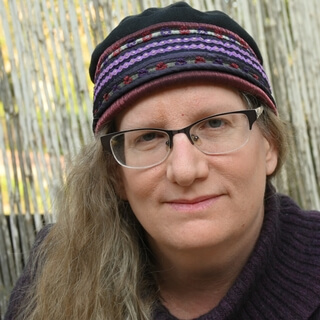
I am Rabbi Hasia Oriole Steinbauer,
The founder and director of the Institute for Holiness Kehilat Musar.
I'm delighted that you have joined us to spend this time in self care in practice so that you can be of benefit to others and bring God's good to others.
For those of you new to us this is our weekly series we are the Rata Shem Todah Raba on our 36th sitting which means we've been meeting consistently for every Torah portion for 36 weeks or more.
Where we encounter the text of the master text the master narrative of the Jewish tradition,
And we become active interpreters of it through the lens of moose our mindfulness this beautiful synergy of two ancient traditions of moose are in the Jewish tradition and mindfulness and Theravada Vipassana Buddhism.
In order to learn from both and strengthen both so that we may be a benefit so that we can do our best out in the world our best versions of ourselves.
So,
Delighted to have you we begin with a short talk about the partial the weekly tour portion and then we move into a guided mindfulness meditation together in order to practice together.
So,
Before we begin we always do our cover notes our intentions for today's practice.
I'm going to go ahead and share screen with you.
We recite the first and the last.
The first says for those of you listening on audio before doing acts of caring for the self,
We say this is something I am doing to strengthen my own soul in order to be a benefit to others in the future.
So this is how we see this practice this time together of doing awakening the series is that we're doing an act of caring for the self it's a radical act.
It's one we're taking refuge and community together.
The last one says before in doing acts to strengthen your relationship with the divine.
That's what we also are simultaneously doing.
We and community are taking refuge in the divine in the teachings in community.
This is something I'm doing to strengthen my relationship with the Creator,
So that I can be a better conduit of God's good to others when they need me.
And the world is in so much need right now we're all we all are in need.
That's why it's so important to practice to strengthen ourselves and we can therefore help others be what they need also.
So that is part of our amazing practice and time together.
All right,
Now so we here in Haaretz in Israel just listen to and learned and had chanted out loud and synagogues throughout the land and many a name.
Parshat Naso comes from Nun Sin Alef to lift up to carry.
So we discovered it and for those of you who are outside of Israel,
You will be learning this portion this week as we traditionally do and then you will hear it cited in synagogues or at home or on zoom or wherever you read to hear it.
And this coming Shabbat is ratat Shem.
So,
Listen,
We learn a number of laws that seem may seem quite random right there first appearance,
But they all have something in common there's a common connection to all of them.
And it's to the Kohanim all right and so I want to pay particular attention to the Nazir.
What is a Nazir?
A Nazir is a and it can be also a Nazirah which will touch base on and that's the feminine version of it.
It can be a man or a woman who essentially takes a vowel like takes a promise upon themselves that they will not cut their hair,
That they will not drink wine,
And that they will not come into contact with a dead body for however long their vowel is of taking on the Nazir oath essentially.
All right,
And after this,
They would bring a korban,
An offering to the Mishkan at the time in the desert and later on in the temple.
And again,
A Kohanim would officiate.
And at first glance,
You might think,
Okay,
That's,
That's,
That's why this is being brought here because these laws all have in common that the Kohanim does here.
However,
I want to posit that it is not only because a Kohanim officiates the Nazir's korban after the Nazir has finished his or her amount of time that they've committed to this.
I think there's something really deep and important here,
Really deep lesson for all of us that we can actually apply today.
And which is,
I believe the Nazir is attempting to be the Kohanim,
To be like the Kohanim.
Now,
If you look at the Kohanim and the Kohangadol,
They are considered holy,
Holy to God,
Right,
Holy to Hashem.
And the Nazir has this deep impulse,
Deep desire,
Maybe even coveting,
Which would be more of on the negative end towards it.
But there's this pure impulse,
This pure desire to be holy to Hashem,
Which can often mean to be separate from Hashem.
If we look at the,
The root of lehazir,
Right,
Non zayin rish,
It means to separate oneself.
Okay.
And if the separation is for God,
Then it implies sanctification.
So essentially,
You have our ancestors looking at the Kohanim who have been separated for sanctification for God,
But there's a fine detail here that we'll touch on soon,
Is that the Kohanim are not just serving God.
All right,
So we'll touch base on that very clearly.
So basically,
By separating oneself,
What the Nazir does is by separating themselves,
They're abstaining from certain acts permitted to all others except for the Kohanim,
Particularly the Kohanim and Godolah at certain points,
Okay.
That this then,
That this Nazir oath can be sanctified to God.
All right.
And so what I want to say and share with you is that,
That they do this,
They can't be a Kohanim,
Right?
The Kohanim,
To be a priest,
It is someone who has to be descended from,
In theory,
Right,
That we descended from someone of Aharon.
It is a bloodline,
Meaning passed down from son,
Father to son.
And that is how one becomes a Kohanim in this system in the priesthood.
So you could imagine all of our other ancestors,
And all of us having this kind of deep little seed of this impulse,
This desire to be like them,
To do like them,
To draw near,
To do this type of service,
Right?
And so this is what we're witnessing here is that they do this through the acts that are forbidden to the Kohane at different points.
So for the Kohane Godol,
He can't even attend his parents funeral,
He can't be around a dead body.
And so this is like the Nazir during the time of the oath can't be around any dead body because it imparts impurity in the system,
It's called Tumma.
And the not cutting of the hair also reflects what happens to the Kohane when he's in mourning,
He's not allowed to just cut his hair or rip it off or remove even the sides.
There's that connection there.
And the not drinking of alcohol,
In this case,
Wine from grapes and grape juice,
It was commanded after the deaths of two Kohanim,
Medaven Vavihu,
That the priest should never officiate while drunk or drinking alcohol,
It is forbidden.
So essentially,
You have a whole set of Kohanim,
A priesthood that is not consuming alcohol either.
And so the Nazir begins to take on this kind of cloth,
This costume,
This way of being like the Kohane through the prohibitions.
And so you have to also think that the Nazir in some ways is isolating,
Separating themselves from the rest of the community too.
This is an extreme form by not partaking in alcohol,
You're not celebrating with the community and consuming that by not being able to bury family members or participate in funerals,
Which is a great mitzvah.
This is again,
You're isolating yourself,
You're separated.
And the last,
Like not cutting the hair,
We're dealing with a society where kinnim,
Lice was rampant,
The longer hair that you had,
And the more involved,
The more likelihood you had lice.
That's why it was so common in certain societies,
And those ancient times to remove the hair.
And so essentially,
You have someone who is doing the instead of actually being of benefit to the community,
Of doing sanctification of oneself and service for the benefit of community,
You have now this role of the Nazir who is doing the exact opposite,
Who is withdrawing from community,
Who is separating from community,
Similar to the Kohaneem,
Except that the Kohaneem are doing service for B'nai Yisrael through their sanctification of God,
And they're doing it with love.
How do we know that?
So in this Torah portion,
We are told the Kohaneem,
That they are to bless B'nai Yisrael,
And they do it through the Birkat Chocho-Kohaneem.
So if you're following with me,
It's in Numbers Bami Bar,
Chapter six,
Verses 24 through 26,
Where we say,
May God bless you and protect you.
Yevarechecha,
Anonai v'yishmerechecha,
Goes through this beautiful three line simple prayer that is very powerful.
And it's actually commanded for the Kohaneem to do this blessing before they offer it,
This blessing from God to B'nai Yisrael,
To the community.
And it says in the blessing that they are commanded to do so to bless L'Amou Yisrael Ba'ahava,
With love.
And so much so that our post scheme,
Our rabbis say and make into law and practice for us that the Kohaneem cannot actually go ahead and do this blessing on behalf of the community to bless them,
God,
Having God's blessing flow through them,
If they are in conflict with someone in the community,
Because then they won't be doing it in love.
They have to work through that conflict first.
And so we know from the nazir that it's not necessarily something positive that we should be emulating,
Something that we should want to do,
Someone who separates,
Right?
And how do we know this?
If we look in Bamibar in Numbers chapter six,
Verse 11,
It says,
L'vechiber alav me'asher khatta al hanefesh,
And the nazir will atone for sinning by the soul.
So even though the nazir is permitted by God to do this oath and act,
It is a sin.
It is something that they need to bring a korban for later on.
And some of our rabbis,
You know,
Trying to figure out what is the sin here,
What's going on here.
And so,
For instance,
Rabbi Alazar HaKapar,
Excuse me,
He says in,
I believe it's in Ta'anit,
In the Gemara,
In the Babli,
In the Babylonian Talmud,
Ta'anit 11a,
If I'm correct.
He goes on to say that he thinks it must be because the nazir is practicing self-denial,
That self-denial from avoiding wine,
I would say even self-denial,
Not cutting the hair,
It's such a heavy burden with potential lice,
And the dirt and everything that happens.
You know,
Very dusty,
If you live in Israel,
You know this today,
Very dusty,
Hot climates,
Okay?
But the self-denial for Rabbi HaKapar is essentially that he's avoiding wine.
He's like doing almost a form of self-harm.
And so that's why he needs to bring this offering.
But for me,
It is not because he's denying himself or she's denying herself wine.
It's because they are attempting to be someone they are not.
They are almost coveting to be a kohi.
And when we don't live in alignment with who we are,
What's been assigned to us,
Where our role is in society,
Particularly in this type of tight-knit,
Ancient community,
Where you figure out your serviced community with love,
That is who you are and how to live.
And so Hashem,
In Hashem's wisdom,
I feel like creates this ability to be a nazir as a tikkun,
As a repair and a correction for Nadav and Avihu,
The two lovely,
Beloved young priests,
The sons of Aharon who were taken by God.
Some even use the term killed or murdered.
They had this impulse,
However pure it might be,
To draw near on their own selfish terms,
Meaning for their own benefit,
Not necessarily for the benefit of community with love.
They had this personal desire to draw near with their firepans,
Their strange fire,
And they approached God when it was not correct,
Not commanded,
Not desired,
And they were taken in the fire.
The same thing I posited a long time ago during the Golden Calf incident,
If you recall,
If you've been with me during this time,
That same pure impulses there in the community.
They want to draw near,
They're afraid,
They miss Moshe,
They want their leader.
So they create this golden calf,
Right?
The impulse is pure,
It's there,
But it's inappropriate.
It's really not for the benefit of community.
It comes from a selfish desire either out of greed,
Hatred,
Delusion,
Whatever it might be.
So I want to basically say that the Nazir,
And I want to honor that we know historically,
It's been shared with us that the inclusion of women,
Even in this Pasuk in the Torah that tells us that women also,
If anyone utters the Nazarite vowel,
Man or woman,
It indicates that this Nazir oath,
Right,
This vowel,
Was widely practiced.
And it was widely practiced even by women.
So you have to think about women who historically for thousands and thousands of years have been second class citizens in our patriarchal Jewish tradition and among other traditions also obviously.
And she has this impulse,
This desire to draw near to God,
To be counted,
To be seen,
To be of service,
Right?
And it's her way also to be a kohane,
Which she's been excluded for thousands and thousands of years.
And so I want to honor that this is what's so beautiful about Musa mindfulness practice is that it teaches us and it can be both pure and beautiful and we can recognize why someone's wanting to go and do this.
And we can recognize it's also a sin.
Because they are living off the derekh.
They are not on the path.
The sin means that you've missed the mark.
They've missed the mark that they are attempting to be someone they're not,
That they're attempting to be like the kohane,
Instead of looking at themselves with practice,
With awareness.
Who am I?
What is it that God wants me to offer?
What can I be of,
How can I be of benefit to the kahila,
To the kahal,
The community?
And how can I do it with love?
Right?
So we want to honor that and place.
So Hashem and Hashem's wisdom,
I really think,
Included this in the same way to people.
Like,
Why would Hashem allow something that then later on is really considered a sin and needs to be brought for korban,
Which,
You know,
There's going to be different interpretations for this.
Some will just say,
Well,
You know,
The nazir was pure and now the nazir is impure.
When you move into like an impure state,
There has to be some type of offering.
That's that's not my reading.
You're welcome to have that and share that reading.
But for me,
This is Hashem's way of containing and directing that impulse as if God had learned from God's experience,
The previous experience with Nadav and Avihu and with our ancestors in the golden calf incident.
Okay,
So there's always going to be this impulse and desire,
Right?
This is just part of it and we're going to witness it in some of our brethren,
Some of our ancestors,
Right?
This desire to draw near to God,
Which then can become tainted,
Full of tumah,
This impurity to have power,
Perhaps to be recognized,
To be separate to.
But really,
I think for most people,
It comes from this,
This pure impulse of trying to draw near to God,
Trying to belong,
Trying to have a place,
Particularly if we're going to look at women.
And so,
While also recognizing and accepting as part of our almost application of the RAIN practice of our of recognizing A for allowing and accepting and I for investigating,
We'll get to nurturing and non-identification soon.
So,
This is all a part of us that we look at this text and we see what's going on from this lens.
So,
I shared with you why I think the sin is the way it is.
It's denying one's soul nature.
And it's a need of God's forgiveness and that really is this beautiful tycoon on God's part of Nadav and Avihu,
This need for sanctification.
You know,
We were told after Nadav and Avihu passed,
Moshe says to his brother,
You know,
God will be sanctified by those closest to God.
And this is a,
You know,
The Nazir is attempting to be sanctified,
Be close to God.
But it's just not the right path and it's contained in a certain amount of time with this korban,
With this sin offering,
Right?
So,
Basically,
We're learning all about boundaries,
Healthy ones,
Right?
And learning about what it means to draw near and if we're doing it on the behalf of others with love,
Okay?
Or when it's inappropriate,
When we have to face that our practice is becoming selfish,
When it's becoming that we're separating ourselves,
When we are attempting to see ourselves as in,
You know,
In a sense of it's almost like the practice of drawing near to God at the expense,
Right?
Or separate from community.
Excuse me for one minute.
So,
Let's learn how we're supposed to be,
Right?
We talked about where the growth has to happen within the Nazir,
Where the Nazir has to realize that taking that oath and that path was not the right path.
Not to be the lifelong path towards holiness,
Not to be life affirming,
Right?
So,
We actually learned this,
Hag sameach to those of you who are still practicing and honoring the festival of Shavuot,
The festival of weeks.
We are not doing it anymore here in Israel,
But we learn our greatest model from the book of Ruth,
In the story that we read in the Megillah during Shavuot.
She is our model for both the Nazir and all of us,
How we are to be.
So,
I'm going to share a little bit more about that.
I shared with you how the kohanim,
Even then themselves,
Even though they've been separated for sanctification of God,
All their service is on behalf of B'nai Israel.
And even carrying,
Physically embedded in their clothing,
The reminder that they're carrying this burden of all 12 tribes on their shoulders,
The kohangadol and the high priest.
And that they must do their service in love,
Right?
Otherwise they have to excuse themselves,
All right?
So,
I want to just share briefly about Ruth,
Okay?
She's quite beautiful.
The story of her and I just have to find my notes here where she's.
.
.
Here we go,
Okay.
So,
Let's honor Ruth in honor of Shavuot to all of you.
So,
She lives a life,
And Naomi,
To be honest with you,
And Boaz,
Okay?
All the beautiful characters in the end.
They live a life of loyalty,
Of kindness,
And love.
And they don't just do it once.
It is steadfast.
It's a steadfast application of it in the most trying of times.
Experiencing a famine in the land of Moab even before which led Naomi's husband to even leave Bethlehem,
Where they were residing,
To go into the land of Moab,
Moabites.
Then the famine happens there.
They need to leave and return to Bethlehem.
And she leaves with her mother-in-law this steadfast commitment.
I'm going to be with you.
I'm going to support you.
We're going to carry this burden together.
We're going to support each other.
This loyalty,
This kindness,
This love.
And we see this,
As I said,
Applied in the most difficult and trying of situations.
She maintains steadfast throughout the whole time in the land of Yehuda.
And she does it with effort and consistency and practice.
And it creates a world of chesed.
Olam chesed,
Ibanei.
Hashem will create this world of chesed through us,
Through our deeds.
And so root and Naomi and Boaz,
Beautiful models for us in our practice for how we can take this pure impulse to draw near to God and to make sure that we're on the path that is the benefit of others with love.
We're going to move into our seated meditation practice right now.
If you cannot sit,
That is absolutely fine.
Perhaps you're just sore today or you live with a disability or chronic pain or chronic illness.
Feel free to take care of yourself for what you need to do.
This is all about self-care during this time together.
So if you need to lie down,
Please do so with eyes open to remain awake and alert.
You're also welcome to stand or do a walking meditation while I guide you.
For the rest of us,
We move into an upright position in our seats with our feet firmly planted on Mother Earth.
May she carry us and hold us.
We want to be upright in a dignified position,
Not West Point stiff,
As our beloved teacher,
Jon Kabat-Zinn,
Likes to say.
We don't want to be stiff.
We just want to be dignified as who we are,
Created in the image and likeness of Hashem of God.
Allow yourself to take three deep cleansing breaths as you slowly shut your eyes if you feel safe and comfortable.
In breath inhalation.
Out breath.
In breath,
The gift of oxygen.
Exhalation.
Anishifaa.
Shaifa,
Anishima,
The breath,
Gift from God.
Allowing yourself to settle and arrive,
To be present,
To come to stillness.
For those of you,
You may need more guidance to arrive at this moment to listen to my voice for right now is your anchor.
If you are being pulled away by thoughts of the past,
Or perhaps thoughts of planning for the future,
Simply recognize it,
Honor it,
Allow it.
Use wonderful tools in our mindfulness meditation practice to simply tell yourself,
I will visit you later.
For some of us,
It might be strong sensations or emotions centered occupying taking the body,
Wanting your loving attention.
Send love and chesed metta to it.
You may want to put your hand on your heart.
If you're needing some loving kindness for others you can gently allow them to just rest in your lap.
From time to time I will move into silence.
You may use your breath as your anchor if you are comfortable using your breath.
Meaning you will direct your attention to your breath.
For those of you that is difficult to breathe either from COVID or asthma,
Or you have a cold or whatever it might be,
Simply honor it and choose another anchor.
It can be the sounds around you.
It can be even the sensations in the body.
Allowing ourselves to recognize that deep impulse within each of us.
That impulse to be unique or special.
Maybe to be considered more holy or better.
How many of us have followed a teacher or guru and attracted to someone teaching and wanting to be them,
To be like them.
We even have a cute little story in our tradition where one of the rabbis passes away and the angels up at heaven say you know why didn't you give more sadaqah and says I didn't have enough money and why didn't you do this act of good deed because I was sick and wasn't feeling well and go through the whole conversation.
Only to say in the end well if you were so sick and so poor and so this then why were you so arrogant,
Which is to teach that we need to be ourselves,
We need to occupy our own rightful space.
No more than no less.
No less than our space,
No more than our place our practice of anava of humility.
Deeply honoring also with kov kavod who we are created in the image and likeness of God,
Each and every one holy soul.
To be able to honor the spark within.
Knowing that we don't have to attempt to separate in order to be on this path towards holiness separation at the expense of community.
A type of isolation of not being of service of others with love.
There's no need to become somebody else.
We are to become the best versions of our own selves.
Realizing that this takes a lifetime.
And for many of us it's a blessing and a privilege that we've been given a lifetime to do this work and practice.
Some say we've been given a lifetime in order.
Today Shay in order to do this growth and practice.
So honor right now if you've had that impulse or even if you feel it now.
Or you've wanted to be unique or different or separate oneself.
Did you see where there was even a drop of sin within of being off the mark.
Did you leave the path for just an instant.
Can you become awake and alert to it with nurturing yourself.
Can you not identify in the sense that you look at yourself and your behavior with a beginner's mind with that loving curiosity.
Oh yes,
I've done this before.
I recognize that I recognize myself in the nazir.
And I also recognize when I became awake again to that I wasn't run the right path.
We'll spend the next five to 10 minutes in silence.
Practicing.
If you find that you travel off with your thoughts which you will that is the practice.
If you're awake,
You just simply bring yourself back to the present moment,
Simply begin again in the words of our teacher,
Joseph Goldstein.
And now when we are to come together again in sacred community.
Whatever may be arising in you in this moment if there's anything unpleasant.
Kindly hold yourself and ask if you can be with it,
Knowing through our practice and being here together that we can be open to whatever arises.
But for whatever reason if it is too unpleasant too difficult for you in this moment.
Honor that.
If you're practicing right now you can gently open your eyes and look around the room to know that you are rooted in safe.
Simply being open to whatever arises pleasant neutral unpleasant.
Thank you.
Thank you.
Thank you.
Thank you.
Have you been through your final nurturing investigation of where you are right now.
Have you learned more about your spiritual curriculum.
Have you found the space to investigate the Nazir Mazi Rav within.
In a different place than when you began this practice today.
Gently and slowly,
Open your eyes if they were closed when you're ready.
Come back into this shared live streaming space on Facebook,
And on our YouTube channel.
We are no longer live on LinkedIn or Twitter,
The live streaming service has narrowed it down to two but we will post there later for those of you who enjoyed watching or being live there.
I'm so grateful that you've joined us and engage in this weekly practice together.
And on behalf of the Institute for holiness we want to continue to offer this free will offering for all everyone to benefit from.
And we do so based on your Donna and your true man your donations to our institute which you can find on the offerings and donation pages of our website.
And we also welcome sponsorships every week in honor of somebody or in memory of someone.
And so it has been a very challenging time across the world but in particular for our members and practitioners in North America and particularly in the United States with the gun violence and what I would call terrorism,
Going on.
So we are honoring and sponsoring this sitting for your strength and well being made this practice tonight merit strengthening yourself care so that you can care for yourself to go out into that society to do T Coon to repair so badly needed.
And they we strengthen you in doing so from everyone here across the whole world who comes together for this most our mindfulness practice of awakening Torah.
Thank you again for your practice,
Do be in touch with us,
How this impact to do,
How you're applying the practice,
And I look forward to seeing you visit to sham next Sunday.
We used to meet at 3pm Eastern Standard Time we have now changed our time.
In order to accommodate more people at 1230 pm Eastern Standard Time 930am Pacific Standard Time.
For us here in Israel,
It will be 730pm.
And for anyone else in this world may you be able to join or watch later.
You can also find us on insight timer,
And of course,
Audio podcast,
Which I believe goes on spot fly but some others also anchor,
And of course wherever you can find podcast.
Thank you again.
Delighted to have you again I'm Rabbi has to real Steinbauer founder and director of the Institute for holiness Hamakon the kadusha to heal up moose are you have a beloved strong week full of Torah and mindfulness.
One day at a time.
Take care of yourselves.