Welcome.
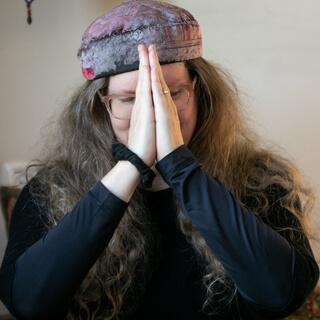
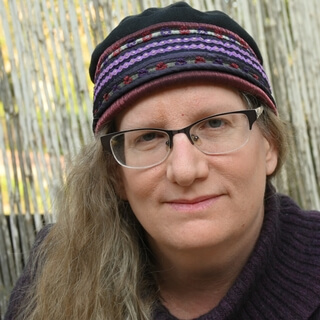
I'm Rabbi Hasil Ury Elshteynbauer,
The founder and director of the Institute for Holiness Kehilat Musar.
We are delighted that you're joining us for this weekly teaching and sitting.
And today we're going to delve into the weekly Torah portion called Titzaveh,
Which you will find if you haven't studied it already,
Starting in chapter 27,
Verse 20.
And this is our weekly gathering on Sundays at 3 p.
M.
Eastern Standard Time.
We do meet weekly the Zrat HaShem,
Where we look at the Torah portion from yesterday,
From the previous Shabbat,
Where we,
God willing,
Had some time to rest and listen to the Torah reading or to study it ourselves,
To really be able to arrive here as a gift together in this sacred space to look at the Torah portion from the lens of Musar mindfulness.
And that is what we commit to today.
As always,
We take your sponsorships in honor of somebody or in memory of someone who has passed,
May their memory be for a blessing.
We also accept donations,
But even more importantly than that,
Which you can reach us at our website at kehilatmusar.
Com.
Or at email at kehilatmusar at Gmail.
Com,
Is that I'm delighted to share that we now have a full beautiful website to share with our community so that it can be a portal to get all the information that you need and to reach out to us and to learn and practice together,
To take refuge in God and also in the wisdom of the Dharma,
Of the Buddha and in our practice together with our vad,
Our kehila,
Our sangha,
And with our teachers and community.
So I'm delighted to have you.
And in that website,
You will find information for membership.
We would be delighted for you to join us for 18 US dollars per month if you reside outside of Israel.
If you reside in Haaretz,
In the land,
It is 18 shekels per month,
And you will support this budding institution to do its work and to get out to the world.
And you will receive many wonderful benefits as a member also.
Please subscribe to our newsletter that will most likely come out no more than once a week where you'll receive the written version of this practice together,
Which will include much more sources and analysis than what can be done in our shared time together.
So how do we begin this practice together every week?
If you're not new to this,
You know what we go to first,
Which is our kavanah,
Our intention for today's practice.
So I share with you right now on the screen,
For those of you listening on audio,
I will read this.
We share the first kavanah.
Before doing acts of caring for the self,
We say,
This is something I am doing to strengthen my own soul in order to be of benefit to others in the future.
This is how we see this practice right now.
It is an act of kavod,
Of honor,
Of self-honor,
Of self-care,
So that you can be the highest version of yourself to be of service to others in God.
The second kavanah is down here at the bottom where we say before doing acts to strengthen our relationship with the divine.
This is something I'm doing to strengthen my relationship with the Creator so that I can be a better conduit of God's good to others when they need me.
So obviously here at the Institute for Holiness,
Hamahonda Qadusha,
We see this practice together and our,
Most of our mindfulness practice in general,
As strengthening our relationship with the divine.
So with that,
We'll carry our intentions,
Maybe merit,
Bringing this blessing to the rest of the world together.
So as with Truma two weeks ago and now with Tetzaveh,
We are getting into parshiot,
The Hebrew Bible Torah portion with lots of detailed instruction.
And it's the type of detail that you can tell God and our ancestors loved,
Who they were and what they were doing.
It's a kind of detail of a love letter,
So much precision,
So much beautiful detail.
And may we keep that in mind and to our own daily practice as we,
As we move through this text,
What is it in our own life that we can pay such fine detail to?
Almost like what we call hidor bitzvah,
The beautification of the mitzvah,
The commandment.
What is it that we can pay such fine detail to?
To raise it up and raise ourselves up and raise those around us.
And this is what's happening here.
So we're going to pay attention to the midah,
To the trait of acharayot,
Of responsibility,
Of kavod,
Of honor.
Because what we're having here is not only B'nai Yisrael,
The Yisraelites are bringing this beautiful oil to serve and of course those who have the privilege to make the vestments for the kohanim,
In particular the kohangadol,
The high priest,
But also his sons.
And that it's a communal effort,
It's something that's going to benefit all.
But in particular I want to look at the vestments of the kohangadol and then I want to look at his personal relationship with Moshe and what that might teach us to do in our own personal practice.
Then what that might enable in the larger picture.
So first he carries on his shoulders these kind of plates that have ingrained in them six of the tribes of Israel's name on this side and six on this side.
Other traditions hold that even our patriarchs names were there of Avraham,
Yitzchak,
And Yaakov,
These names.
And this is where we carry the burden,
Carry burden on our shoulders.
And carrying a burden in the Musa and Jewish tradition is not seen as a bad thing,
A negative thing,
Something to have aversion.
It is something of savlanut,
Of lisbul,
Of carrying the burden,
Carrying the other person.
It's a joy,
It's part of a cube of obligation of being responsible,
Of coming into adulthood,
Coming to our higher selves.
So here's the kohangadol with these names on his shoulders,
Carrying,
Carrying the people at all times.
And then we have,
And that's in the chapter 28,
Verse 12.
And the actual verbs uses nasa,
This carrying,
This lifting of the names.
And it's for zikaron,
A memorial.
Okay.
Then we move into the breastplate portion.
This is in chapter 28,
Pasuch 29.
This beautiful,
Beautiful breastplate in the form of a square laying on the heart of Aharon or on the kohangadol with beautiful colored gems of the names of the tribes,
12 tribes,
All there again,
Carrying this,
The weight of it on his heart.
Again,
The same shorish,
The same verb used,
Nun sin alef nasa,
To lift up,
To carry on his heart.
And I briefly want to share here that the last time we saw,
We don't see in the Torah talking about someone's heart so much.
We saw it with paro,
Kaveid b'lev,
It's a form of heaviness of the heart,
Which signifies an obstinance,
An arrogance,
A stubbornness,
A shutting down.
But this we have nasa.
And we have,
But it's not common in general to talk about the heart.
Again,
We know from history and language studies that often when we do talk about the heart,
Meaning the mind sometimes that it's located there and then understanding of hokmah,
Albina,
Of wisdom and understanding,
They saw it located in the heart,
But it also had a meaning of the mind.
But the last time we saw Aharon and that being described that he was happy or that there's something in his heart,
Is in Shemot,
Chapter 4,
14.
And in particular,
It says that this is the case where Moshe is being approached by Hashem to say that you are to go to paro and help free God's people.
And he's,
You know,
We remind just as a short reminder,
He doesn't want to do it.
He doesn't think he's the person for the job.
This is too much for him.
And God goes through all these things of trying to either scare him into it or support him by through miracles,
All these different ways that don't work for Moshe until he finally says,
Look,
Your brother Aharon,
He is coming.
He is coming,
He's setting out to meet you.
And he will be happy in his heart to see you.
And that is what causes the ometz lev,
The courage of Moshe to take on that acharayut,
That responsibility to do this act on behalf of God.
So now we see in our parasha that Aharon is now having to wear a breastplate with all the key ancestors and what they,
The symbol of them on his heart.
And it says in Shemot 2830 that he is to wear this hoshin,
This breastplate,
The breastplate of judgment over Aharon's heart before when he comes before Hashem.
And in particular,
It tells us that this instrument is over his heart.
It repeats it.
Okay.
When we have something in the Torah that repeats itself,
There's an emphasis there that we are to pay attention to.
So Rabbi Shimon bar Yochai actually takes these two stories together of Aharon being happy in his heart to reach out to his brother,
His younger brother,
To come support him to help be the speech in the mouth that he didn't have the self-esteem,
The proper balance,
Humility to take on that role Moshe.
And now with him carrying this breastplate on his heart.
And he puts the two together and he teaches that the heart will be,
That was happy for his brother's important role.
And he was happy for Moshe and that he was going to be taking on this important role to help save B'nai Yisrael,
The children,
Will ultimately be happy in his own role.
Now,
There's something incredibly profound about that because when I think of the Kohen Gondol,
Or any of the Kohenim,
I don't think of happiness,
Of joy,
Of simcha.
It's extremely detailed,
Very responsible fear of God kind of position,
Avoda,
Service.
As we'll see later,
People can die when they don't do the service properly or the way that it's understood or commanded.
And this is what comes to mind,
Right?
This happiness,
This service.
But there's something really profound in that because I think what we're going to learn from it is that how to apply this even in our own lives,
Is that when you are centered in your role,
And you know your purpose,
And you know,
You're in alignment with your higher self as your values,
You are living out what we started with,
With the yud dayan aled of this knowing God,
Which our ancestors interpreted as fear of God,
This moral compass of knowing what's right and wrong.
And that leads to really remembering your ancestors remembering on the behalf of others,
This Zika Rhone,
This memorial,
Which is this is this embodiment,
This investment,
These clothing that our own will take on is to basically help him with daily practice to know God to do the memorial,
The Zika Rhone,
Okay,
And to carry this responsibility.
And we need to start thinking of that of our own personal practice to the last one I want to point out the last two,
Which are very key is he must wear it on his forehead.
It's a beautiful thing that says,
Kodesh leh hashem,
Leh Adonai,
Leh Adonai.
And it's a mindfulness tool.
It's to constantly keep him aware,
Not only before whom he stands,
Which obviously is hakadosh baruchu,
You know,
Hav melech ha-malachim,
Ha-mal'cheh ha-malachim,
The King of Kings,
But even more than that,
To know before he stands to know before whom he does service on the behalf of,
And that is his people and his ancestors.
That's why he carries them,
Has them all the time.
Incredible.
Okay,
So he's actually to,
He wears this because he's to expiate,
Expiate the mindlessness of all of us,
That we all have on a daily basis and particular in this case,
The Israelites who may bring in an impure gift or even our impure themselves,
That mindlessness that we do done a daily basis when we're not awake and alert when we're not practicing.
And this is what Aharon is wearing.
It will expiate on our behalf for him so that he can help maintain this amazing sanctuary on our behalf.
So that's what,
What's the purpose of all this?
What is the purpose of all this?
An amazing statement that Hashem comes to tell us.
Amazing language.
Every time I read it,
I feel like I'm going to fall out of my seat.
I hope you feel the same way,
Right?
Says,
Where is it?
If I can find it,
Losing it.
Well,
They might have lost the page.
Basically,
I can tell you from word of mouth.
And if I can't find the exact the soup to look for this,
But basically Hashem says,
So that I took you out of the land of Egypt.
It's a very,
At the very end of Tetzaveh actually,
If I can find it.
Yes.
I,
I,
I,
I'm doing this God is saying,
I'm doing this to be the Lord,
Your God.
And that I took you out of this Egypt.
It's incredible.
The language let's look at this,
At this bassoon right here.
Le Le Sha Neel to ham.
It's that I might do well among you.
That's why I took you out of Egypt that I might do well among you.
That's beautiful.
That's so profound.
And so today,
And I'll just say briefly,
The final act that is to remind Aharon and even the Koanin,
But particularly Aharon,
The Kohen Gadol of his great responsibility of his self honor,
His self care,
The care on behalf of the community is,
Is the actual initiation ceremony of the blood and where it is put,
It is put on his ear and zero load.
It is put on his thumb.
It is put on his big toe so that he may listen and hear,
Which is one of the key things that we saw in order to know God and in an order to be of service and to be in relationship with others,
We have to witness.
We have to be present.
So he,
So he'll hear so that he'll do,
It will be of service on behalf of others,
His thumbs,
His hands,
The deeds that he will do so that he will walk in God's ways,
His toe,
Blood is life.
So as we move in,
Even before our sitting practice today,
And what we're going to hold while we sit is we learn of this beautiful Korban Tamid,
Right?
This offering to God that will be offered in the Mishkan every day,
Right?
The lamb in the morning,
The lamb in the evening.
And this kind of encompasses the whole idea of the Torah,
The sefer hakh hinuk,
This beautiful 13th century Spanish Jewish texts published anonymously,
Comes to teach that this misfit shows that it's necessary for spiritual growth,
That we prepare our meals for ourselves twice a day very on the ground real behavior with our hands and our feet and listening that we meet our physical needs so that we too essentially can be of service to God,
To worship God,
That they are one in the same,
The physical self-care and the needs have to be there in order to have these spiritual needs and fulfill our avodah,
Our service.
And there's something really remarkable about that.
Like if you think about as a daily practice,
When we go to eat,
You know,
Barbanel wants the Portuguese Jewish philosopher born 1437,
Died in 1508.
He wants to remind us that the morning meal is essentially a reminder of Matantora,
The giving of Torah,
Which happens in the morning and that the evening meals are a reminder of Yetiyat Mitzvah and this exodus from Egypt.
And it's this carrying this akh harei yot,
This responsibility,
This remembrance,
This zikaron,
That we carry this small basic task of self-care.
It's a reminder of our ancestors,
A reminder of God,
Of great gratitude of what God has given us,
And that it's real and comes out in this meal.
And that it ties into this beautiful Mitzvah of the Korban Tami that used to happen.
And,
You know,
It's just incredible thing that we're really seeing physical needs foundational to the meaning of our spiritual needs.
And so our practice this week is to really see,
One is to really be mindful right before we are,
Even while we're preparing our food and while we're eating beforehand,
When you're doing that blessing before,
Whether it's a traditional Jewish blessing,
Or any other that comes to your lips to thank the Creator of reminding this giving of the Torah,
The giving of wisdom that we live with,
That keeps us on this path towards wisdom,
Towards the being able to be our higher selves to reduce suffering in the world.
That we keep this in mind that it's our responsibility.
And that we keep in mind the gifts,
And that the gratitude is so key,
Because it brings joy back to Aharon having joy,
Joy in his heart to see his brother,
To be able to do this great responsibility with him to help free the people in Egypt,
And great joy for the service that he gets to do.
And that he'll carry that.
And so,
So too with us.
So this week in your practice,
Mindful of your meals,
Blessings,
The gratitude that comes with it,
Being awake to the good and giving thanks,
The self-honor,
The self-care,
So important to have the sustenance for you to be able to do service on behalf of others and God.
And keeping in mind,
This is just that beautiful,
That our ancestors have in place this such mindful attention to what they wear as a spiritual practice that it can foster the actual midot,
The balanced midot,
The traits,
And foster the deeds that we want,
The words,
Thoughts,
And deeds that are in alignment with our higher selves.
And so too in our lives,
What is it that we're putting on?
What are we going to put on with such mindfulness that we know it helps keep us awake and alert to what our responsibilities are,
That we take on the joy.
So for some of us,
It might be a head covering,
A kippah,
It might be sit sit,
The fringes on the garments.
For others,
It might be a tallit,
The prayer shawl.
For others,
It might be some beaded practice of the jewelry or around the neck.
Find what is yours,
Beautify it,
Put it on with mindfulness,
Know that it is helping you in your practice.
So with that,
We will move into our guided seated meditation together and maybe merits that our practice really raise us up and help others in the world out there,
Especially at this much needed time.
So as I always say,
If you are in pain,
Having any chronic issues where it's deeply uncomfortable to sit,
Whether in a seated position on a chair or in on a seated meditation cushion,
Like a zafu,
Then go ahead and lie down,
Give yourself permission to take care of yourself,
Lie down,
Keep your eyes open so you remain awake and alert.
For others,
You may stand next to a chair to keep you grounded.
For those of us who are seated,
Please go ahead and allow yourself to begin to arrive and settle.
Situate yourself in your seat so your sit bones are really held and grounded,
Your feet on the ground held by earth.
You are between heaven and earth,
This manifestation.
It's a beautiful thing.
Allow your hands either to rest in your lap in the classic meditation positions or on your heart,
Wherever is comfortable for you.
And allow yourself to take three deep breaths.
No need to control or force your breath anymore.
Allow it to settle.
For those of you new to meditation practice in the mindfulness tradition of Theravada,
The Pasana insight meditation,
We are practicing to become awake and alert to being here in the present moment.
There are many benefits as to why that I will not get into now,
Health benefits,
Many studies in neuroscience literature.
But one central thing that this practice does do that I will briefly touch upon is having you be fully present for your life.
Your life is not happening in the past and your life is not happening in the future.
It is happening right here and right now with this breath,
With this breath,
With this breath.
And if we are fully going to express our joy and gratitude to the creator for being created in the likeness and image of God,
To try to make this world a better place that we've been entrusted to do,
We must be in the here and now fully awake and alert.
So the practice is to attempt to remain in the present moment.
And as you will learn,
The mind travels,
The mind gets lost in thoughts,
The mind gets lost in sensations in the body,
The mind gets lost in emotions and our reactivity to them.
And so it is becoming awake and alert to all of it that we are able to carry it and hold it.
It's waking up to when we realize that we have gone off.
So for instance,
If you are traveling to something that happened in the past that you're ruminating over,
Creating your own story around it,
Or planning for something in the future that is not being here right now,
With my voice,
With your breath.
Sometimes there are strong sensations in the body.
Pleasant,
Unpleasant.
They too can pull us away.
And sometimes there are emotions,
Again,
Pleasant,
Unpleasant,
Maybe even neutral.
So the practice is to attempt to notice it,
To recognize it,
Whatever it is that is arising right here,
Right now.
To allow it,
To acknowledge it.
Sometimes in our insight and mindfulness meditation practice,
We use the naming technique.
And the naming technique is that you simply quiet think to yourself,
Like during the silent Amida,
The Shmona Esve prayer that we Jews do three times a day,
If you do have a prayer practice,
You can gently whisper to yourself and name whatever it is that you are seeing or experiencing.
So it may go,
Hmm,
That talk with my sister,
Planning,
Reacting,
Mmm,
Unpleasant,
Hot,
Uncomfortable,
Reacting,
Telling a story,
Mmm,
Soreness,
Discomfort,
Joy.
Sister,
I'm sorry.
I'm sorry.
I'm sorry.
I'm sorry.
I'm sorry.
Sorry,
Sister.
Sister.
Breath.
You can name whatever arises,
And it takes some of its power away.
Brings it to the present moment to be here with you.
Practice that we engage in is befriending,
Befriending whatever arises.
So in the Buddhist tradition,
Like in the Jewish tradition,
There is someone named Mara,
Similar to the Yitsa Hala,
That evil impulse,
That evil incarnation,
That it's a part of all of us that actually tries to shift us away from the path of our higher self.
And there's a story of the enlightened one of the Buddha under the tree,
The Bodhi tree,
Where Mara loved to visit and try to distract him.
He says,
I see you,
Mara.
I see you.
And that loses,
Mara loses all defenses,
All the fences.
It's allowing that side of us,
What some call the dark side,
To be seen,
To be integrated,
To be a part,
To be a friend.
And if you're not ready to befriend it,
It's coming to a neutral position about it.
I can be neutral at this.
I can welcome and be a friend and honor what is there and even say,
I will visit you later.
Bring yourself back to the present moment,
To your breath as your anchor,
To the sounds around you as your anchor,
To my voice.
We will move into silent meditation now.
And I will ring the bells when it is time to come out.
All right.
Thank you.
Thank you.
Thank you.
Thank you.
Thank you.
Thank you.
Thank you.
Join us back in this sacred zoom space live stream,
Facebook,
YouTube,
LinkedIn and Twitter.
Thank you for your practice.
Thank you for taking refuge in our community practice.
God,
And the wisdom of the Buddha.
So delighted to be here with you to practice most of mindfulness,
Together from the Institute for holiness key that most are.
I am the founder and director and my hustle or real Steinbauer.
And this is our weekly awakening Torah moose our mindfulness.
This week,
It's a day.
It is our 20th sitting together.
Beautiful discipline and follow through on everyone's behalf.
Thank you.
So,
With that,
We will meet next week,
This rotation.
Do share how this practice is going for you be in touch with us,
I put in the chat box.
For those of you to see the website which is www.
At mussar.
Com,
Where you can find information on membership and signing up for our mail chimp newsletter,
Delighted to be with you in this growing community.
And thank you again for your practice.
Practicing and becoming closer to your higher self and living your values.