Welcome to the Institute for Holiness Kehilat Mosar,
Our weekly teaching and sitting on the Torah,
Parashah,
And the portion.
We begin with Bereshit,
With God's help.
We'll begin in two minutes.
Please find yourself in a seated position if able and begin to settle.
Receive Okay.
Okay.
Welcome.
We are set to begin.
We're having issues streaming live,
Unfortunately.
So,
Please forgive us if we can't come to a live session right now for all of you here.
But we will go ahead and post this on YouTube and on our site.
And make sure that we have tried to have all the technology,
God willing,
Ready for the next week.
Give me one minute as we finish this.
Thank you for your patience,
Allow yourself to arrive.
And come to a comfortable seated position.
Okay.
Okay,
I think we might be live on one medium.
Thank you.
Okay,
Welcome.
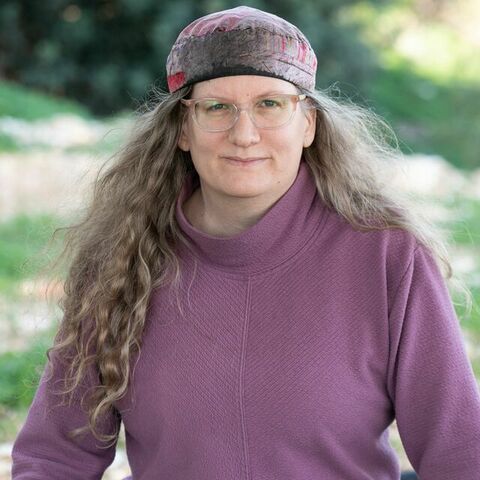
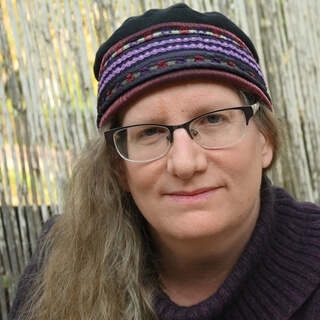
I am Rabbi Hasu Riel Steinbauer,
The founder and director of the Institute for Holiness,
Kihilat Musar.
Welcome to our Torah and Musar mindfulness.
I am delighted that you have joined us to dedicate your time to your practice and to be in community together.
So,
We are going to begin with Bereshit in the beginning.
And before we do,
We always engage in a kavana,
An intention for our practice.
It allows us to be more focused,
More present in our practice.
So,
I'm going to gently share screen with you.
And hopefully,
You'll be able to see what I have before you.
Never know how things are going to turn out.
So,
You have it for you,
The kavana that we actually use during our 40 days Elul practice,
For those of you who participated during Elul and Tishrei.
So,
We see this half hour together of doing Torah and Musar mindfulness as an act of caring for the self.
And in Musar,
This is something that we do to strengthen our own soul in order to be a benefit to others in the future.
So,
That is our kavana for today's practice.
And with that,
We shall begin.
So,
Bereshit is offered to us by God to learn the mida of responsibility,
Achar rayut.
And in Judaism and in Musar,
Achar rayut comes through two layers of meeting in its root,
In its shoresh.
Achar,
Meaning later,
And achar,
Meaning other.
And the first,
Achar,
Touches on the notion of responsibility in time,
Meaning every word,
Every thought,
And every deed has its after,
Its consequence.
And human beings are responsible for the consequences of their actions.
So,
In Musar,
As we practice towards kadushah and holiness,
We practice to become more skilled at anticipating the consequences of our actions and taking responsibility for the details in all the areas where we make choices.
We do this so that we don't cause more suffering.
So,
How do we become more skilled at anticipating the consequences of our actions?
That's done through daily Musar mindfulness practice in community.
And in Musar group,
You're welcome to be in touch with us at kehilatmusar.
Com,
To join such a group and to be a part of the community of this practice so that we all can grow and benefit one another.
The second root meaning is achar,
Meaning other.
It's this notion of responsibility to others,
Of bearing the burden of the other.
It's what Rav Simcha Zifuz says,
To digitally seek the benefit of the other in every possible way.
It's this act of caring for the other,
That we focus the development of our heart and mind to realize our soul's destiny.
Not a small thing.
So our tradition holds that our ancestors actually occupy themselves with intention with Kavanah to be shepherds,
Because they wanted to accustom themselves to bear the burden of even God's simplest creatures,
All the more so human beings.
So we have a story of our beloved ancestor and prophet Moshe,
Who was a shepherd for his father-in-law Yitro.
And one day,
A tiny lamb ran off.
Moshe headed off after it,
Only to find it at a watering hole drinking.
And Moshe arrives and says,
I didn't know you fled on account of thirst.
You must be so exhausted.
He lifts up the lamb on his shoulders and walks back to where they're from.
And Hashem is so delighted.
God is so delighted in this behavior.
It says,
Since you tend to the sheep of human beings with such overwhelming love,
By your life,
I swear you shall be the shepherd of my people.
This we get from Bereshit Rabbah,
A wonderful Agadah,
A text on our Torah portion on our section,
Because it comes in direct contrast to Kayan.
Kayan,
In our Torah portion of Bereshit,
This past Shabbat,
Chose not to be a shepherd.
He chose not to occupy himself with caring for the burden of God's simplest creatures.
And after he struggles with deep jealousy,
He murders his brother,
Hevel.
Hevel was a shepherd.
Hevel's offering to God was accepted,
Was regarded.
So after murdering his brother,
Which is the first recorded history of murder in our people's tradition and in the Torah,
Kayan doesn't take responsibility.
He actually disidentifies with the act of responsibility when confronted by God.
God asks,
Where is your brother,
Hevel?
First he lies.
He says,
I don't know.
Then he rebels with his statement,
Am I my brother's keeper?
This we find in Bereshit in Genesis chapter four,
Pasuk nine,
Verse nine.
So we learn from these examples for our Musar practice that responsibility is when,
One,
We consider the consequences of our behavior so that we don't act in ways that are harmful to others or even ourselves.
Kayan chose not to do this.
He chose not to be aware of the jealousy arising in him and how not to act out on it,
Not to react.
Despite even being warned by God ahead of time,
Go ahead and see verse seven for that.
And number two,
We learn that one actually considers ways to be of benefit to others when one wants to be balanced in responsibility.
We look for acts to care for the other,
Just like Moshe did with the lamb.
So when we engage in our daily practice,
Like we are doing right now together in community with our Musar and our Torah.
With this deep knowledge that we build over time,
We make an effort to bear burden of others as a conscious deliberate practice.
And each act of support that we undertake is an opportunity to develop more mindfulness and finer sensitivity to strengthen our need,
The soul trait of a higher use of responsibility.
So obviously we can question ourselves today.
We're not shepherds.
Most of us intend not to be shepherds.
So how do we engage in life choices and careers that will foster a heart that desires to actually bear the burden of the other?
Again,
It is through our daily Musar mindfulness practice.
And we head with basically as our compass that we are bringing God's good to others.
We're internalize this as our desires.
Rav Shimon Shkop instructs in his introduction to Shara Yoshha.
So with that.
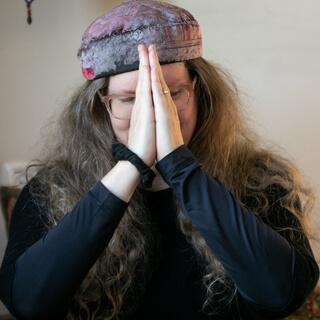
I'm going to move us into a sitting meditation together.
I will guide us a bit,
But part of the practice is going to be sitting in silence.
And you are welcome to visit our website at kehilatmusar.
Com afterwards to actually find more writing on this week's parasha to see how there's more examples,
For instance,
From Adam and Chava of a lack of responsibility and how we can learn from that.
And you can find that in our blog on our website,
It will be there for others to read and share.
So in our sitting,
Which is key to our practice daily,
You want to come to an upright position.
And if you need to stand,
Please do so.
Just make sure that you have a chair next to you to keep you grounded.
If you need to lie down because of trauma or chronic pain,
Please do so.
But keep your eyes open so you don't fall asleep.
For those of us that can sit,
We want to ground our feet to be really held by Earth.
After all,
We're engaged in the Rashid and our Torah portion where the human cannot exist without the Adamah,
Without the Earth and the water and the breath of the Divine.
And that is what we will be doing with our sitting practice.
So we come to an upright position.
Tall,
Dignified,
Created in the image of God,
Not West Point stiff.
And you want to let your arms rest either in your lap or maybe on your heart,
Wherever is comfortable for you.
And when you're ready,
Gently shut your eyes.
If you do not feel safe closing them,
Then just lower your gaze.
And begin with three deep breaths.
Allow this opportunity to notice your breath if it's labored or if you're controlling it.
The breath is a gift from God.
Most of the time we are unaware of it until it is taken from us in some form,
Whether in trauma or illness,
Stress.
As we know,
This is such a healthy good practice for us to sit in stillness.
And we want to allow our breath to just come to the same amount of in breath as out breath.
And begin with a gentle body scan,
Just noticing where you are right now in this moment.
For your love and attention.
Note in this practice that your mind will wander either to the past,
Thinking about something that has passed or has happened,
Or planning for the future.
And this is the practice is to know this this when we can wake back up to come to awakening this heat or root.
When we notice that we have drifted off,
We bring our attention back to the breath,
Back to my voice.
The very states and need notes that drive us away from a balanced responsibility that indeed cause us and other suffering,
Our guilt and low self worth,
Low self esteem,
What we in most are called too much of humility,
Too much another.
And so as we sit in our meditation,
We notice if we have any feelings of low self esteem or guilt that arise either now or later in our practice might interfere with our balance responsibility.
And we think back to Kayan back in our Torah portion of the Rashid who murders his own brother,
Who causes the Adama,
The earth to cry out from swallowing his brother's blood.
Can we interpret Kayan as someone who had low self esteem of too much humility.
After God paid no heed to Kayan's offer offering Kayan allowed himself to enter a state of rage of anger and low self worth.
He is described in Chapter four,
Verse five as vayi pelupanav,
His face.
There was a rise of heat of fury,
And then a fall in the embodied experience of Kayan,
And no awareness of his on his part of what was arising what was coming up in him,
Only reaction,
No space between the match and the fuse.
No awareness of the potential consequences of his action ones that would be final ones that would be detrimental to the land,
To the life force of his brother,
There would be no more breath.
There would be no more relationship no more connection.
That fall of Kayan that face falling is a depression is an embodiment of too much humility of low self esteem.
Where Kayan internalizes the rejection by God of his offering as a rejection of the self.
Allow my words to sit.
Note whatever arises for you.
What does God do with Kayan before he commits his act he counsels kind.
What does he say.
He says,
Do good.
He uses the he feel hello in the thieves at the cost to do good.
If you will do good if you will move your body and deed.
You there will be sad.
So eight,
Excuse me,
Eight,
There will be an applet.
There is dignity in the uplift.
Indeed,
Where there is healthy balance humility.
There is a balanced healthy responsibility.
And now when are sitting together.
We move into silence.
To allow ourselves to receive the gift of the Torah.
To learn from our ancestors of.
Sometimes we have to learn how not to be the gift of the breath,
The gift of life.
We are in the beginning and let this be our beginning.
I will ring the bells when it is time for us to join again and community.
Thank you.
Thank you.
Thank you.
Thank you.
Thank you.
Thank you.
Thank you.
Thank you.
Thank you.
When you are ready,
Gently open your eyes.
Meet us back in this sacred space together and we practice.
Thank you.
Thank you.
Thank you for joining us.
Honor your teachers on your ancestors,
Honor your practice.
Hopefully you will feel that you have fulfilled your cover now your intention for today of self care.
In order to be a benefit to others.
We are delighted to offer this free will offering of Torah and was our mindfulness this wisdom together in a weekly sitting on the Torah portion.
Normally we would offer the sitting before the Torah portion but as we all know leading up the Bereshit was very,
Very full.
After all the high holidays.
So it is my cover now my intention to offer it before but if we,
If we cannot offer it before we will offer on Sundays we haven't decided the exact day in time yet so please do be in touch with us a key lot more star to indicate what day and time is best for you.
Otherwise we'll just continue to offer and invite and welcome all that can join us on zoom live on Facebook on LinkedIn and on YouTube.
Please join our website at Kehila moose are calm.
In order to read the full interpretation of a heart rate of responsibility from this week's Torah portion of the receipt.
I'm delighted to be with you again I'm ever has to have Steinbauer the founder and director of the Institute for holiness Kehila moose are.
And I think all of you for joining us.
We always welcome your sponsorships in honor of someone,
Or in memory of someone who's passed to dedicate this practice to,
And we accept Donna of donations and any amount either weekly or at the end of the whole,
Whole Torah at the end,
Where we will meet again,
You know,
This time next year,
This rotation,
God willing.
So we love to have your feedback,
Feel free to be in touch with us.
And as I said,
Thank you.
Thank you for sitting Thank you for joining.
And I look forward to seeing you soon to cover Noah,
And what need that we can learn in our moose our practice together.