Welcome to awakening,
Allow yourself to settle.
Arrive,
We will begin.
Take this few minutes to enter a small yet quick silent meditation.
Allow yourself to do a short body scan to arrive to see where you are if you're here in the present moment.
Welcome.
Welcome to awakening to ramos our mindfulness,
We will begin shortly.
Allow yourself to settle and arrive if you've just joined us.
Take a minute to do a short meditation,
Perhaps a body scan just to settle and arrive.
We will begin shortly.
Wonderful.
We've hit the 10pm Israel time.
3pm Eastern Standard Time wherever you are joining us throughout the world,
Whether you in the southern hemisphere or the northern,
Whether you are celebrating summer or in the midst of the winter rains in the cold welcome.
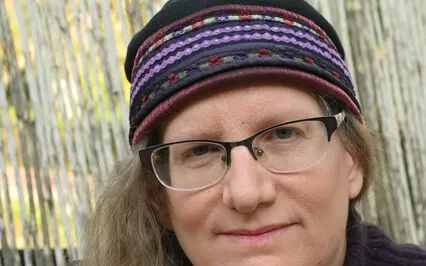
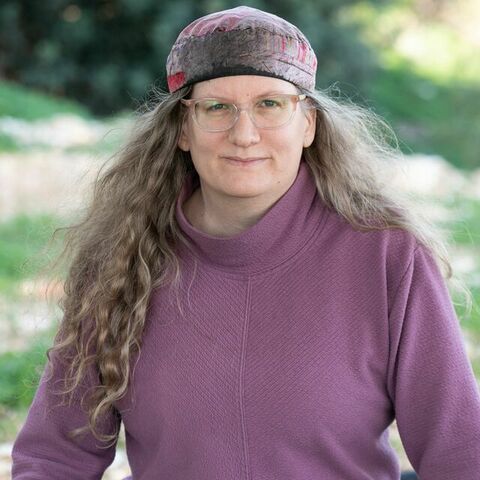
I am Rabbi has your real Steinbauer founder and director of the Mahone the kadusha,
The Institute for holiness.
He left Musa.
You are joining us for awakening Torah moose our mindfulness,
Where we look at the tour portion from yesterday on the Sabbath,
The Jewish Sabbath Shabbat.
The Sabbath just passed,
Which was via era.
And we look at it through the lens of moose or mindfulness of what we can learn from our ancestors from their own me dot from their own spiritual curriculum,
How we apply that to our practice today of moose our mindfulness.
I am so grateful that you've joined us.
Let's begin with our cover notes with our intentions for today's practice.
So give me one minute here as we admit someone who would like to join live on zoom.
And welcome.
So let's give a note as I begin to share screen with you.
We are also live streaming on Facebook,
YouTube,
LinkedIn,
Twitter.
I asked that anyone joining live on zoom please mute themselves.
Thank you.
And the forces that are the covenant the intentions for today's practice.
The first one is before and doing acts of caring for the self because this practice that we are doing today together on every Sunday at 3pm Eastern Standard Time is an act of radical self care.
So we say this together if you're following along.
This is something I am doing to strengthen my own soul.
In order to be of benefit to others in the future.
Let me skip down to the third one,
Because this what we're doing right now with our practice is also to strengthen our relationship with the divine.
So we say together and those of you listening on audio can hear.
This is something I'm doing to strengthen my relationship with the Creator,
So that I can be a better conduit of God's good to others when they need me.
And obviously with our breath and allowing this to be felt in the body.
We allow these intentions these cover note to settle with us to arrive and to enter our study together.
So you may recall that we answered the book of schmaltz,
Known as Exodus in English.
We entered that day,
Not this passion about but the previous one.
Some of the key features that we noticed just as a short reminder to allow us to enter the era is that we saw this kind of simultaneous birth of the vigilante,
Who has this internal moral compass,
This this will that we called fear of God,
That we saw in the books with the midwives of Shira and that that drove them to have this moral compass to know what they should do and what they should refrain from doing.
And at the same time we saw the birth of a nation state that was engaged in acts of in infanticide leading towards genocide,
Beginning to enslave the people.
So you have these these impulses coming through the universe and landing before us with individuals simultaneously trying to maintain this integrity and this morality,
And the nation state that is pushing against that.
And so we have also this kind of simultaneous birth of a new relationship with God,
With the human beings with our ancestors,
And in particular with that merging relationship will eventually a rule of law that will come with it what we call Torah.
And that begins to unfold over time.
So you'll recall that we emphasize the the show rich the root,
You would have done it,
I am that God knew yet that and Moshe Robenio known as Moses and English also knew and saw there was a lot of seeing there was a lot of hearing and very embodied experiential experience of encountering the other so that there was a rough time on new to this compassion that was emerging that tied into responsibility as a meter,
And also as a soul trait,
And also observe the zoo the lacquer D and energy to act out with this.
So the scene this hearing this remembering they were all tied together that propel people to act to care for the other to bear the burden.
So,
We saw this with Moshe on this small individual level when he saw his brethren being beaten by Egyptian he acted and murdered the Egyptian,
Then he acted later when the shepherdesses were being harassed by the other male shepherds that he intervened with the power.
So we're seeing Moshe develop his own spiritual curriculum that he will be pushed to expand his window of tolerance.
So he obviously has this moral push this drive you know this color extensive,
You know it's will that he has to do what's best he obviously is has extreme distaste for injustice he must act.
And now he's being pushed to care for a whole,
A whole people.
And that makes him deeply uncomfortable that is not where he feels strong and his spiritual curriculum where he feels balanced.
So,
I have a person I have conveyed big evade LaShawn heavy mouth heavy tongue,
You know,
Expressing just I don't have the self esteem to do this,
I might even live with a disability I can't.
I'm not your person.
And I'm going to talk about the whole dialogue between Moshe and Shammat,
And the whole dialogue between God and him.
So one of the things that emerged for us that will want to take into today's practice as we move into Vaira is the question of what influences our humility that leads us to courage.
So we saw with Moshe it wasn't God telling him that God will be with him.
It wasn't giving him miracles before him turning the stick into a snake.
It wasn't telling him that God provides all words and hearing to everyone.
It wasn't until God provided a her on his brother,
Three years older,
That familial that support of another human being that suddenly Moshe thought,
I can do this,
I'm going to act now,
I can be the he may me,
I can arrive and be of service.
So,
We want to think about in our own spiritual curriculum.
What is it that strengthens us,
Perhaps it is our relationship with the divine.
Perhaps it is the miracles that we might witness on a daily basis or periodically.
For some of us it is that human relationship that Vad,
That Kahila,
The community that Sangha that strengthens us that we take refuge in.
So that'll be a part of what we carry with us today when we're analyzing this Persia.
And I want to say we witnessed at the beginning of Shammat of Exodus,
A real coming together of all the meedot that we witnessed our ancestors go through all the soul traits,
All their characteristics that they had to develop and work through in Bereshit and Genesis,
And we see it coming together,
And this beautiful balance and right before everyone of this is where,
Where we are where our spiritual curriculum is.
So,
In seeing ourselves in the other relieving suffering having courage,
Following through with the result having responsibility.
All this is there.
So we move into the era.
The first paro that we met in Shammat,
Lo Yedad Yosef,
He did not know Yosef.
So he therefore doesn't know all of the Israelites,
Doesn't know Yosef's people.
And then he begins his negative policies towards them his public policy he feels deeply uncomfortable by their population growth threatened by it.
So then we move to a new paro.
And the thing that you should know this is common even today and new leadership.
It's common for instance with the President of the United States,
That when a new one emerges or even when one's about to leave office,
They will pardon people or appoint people to new positions.
That's part of the emergence of new leadership and this is the same thing with the office of paro in Egypt at the time when a new one would arise they often would let certain people go from their indentured servitude or slavery and things of that sort.
So you can see the B'nai Yisrael,
The Hebrews,
The Jewish people might have had that same desire and something that they were looking forward to.
Oh,
A new paro,
One that didn't know Yosef but now this one may let us go and stop having us be indentured servants.
That's not the case.
So,
This next paro also lo yedah,
He does not know and this time who lo yedah et Adonai,
He does not know God.
And we know from the previous parasha,
When somebody doesn't know God.
And we know what that yedah means there's an intimacy there there's a knowing in the sense that I am responsible for you on some level,
And bearing the burden for you I carry this as an obligation or a relationship.
When there's not that knowing there's no fear of God,
In the sense of morality,
And that moral compass.
And therefore,
In the sense it's kind of a recipe for dictatorship and disaster someone who's going to commit unbelievable,
Often genocide or problems of that level.
When we witness this so he doesn't know God there's no compassion.
So we witness more brutality,
The sense of now he signs he says you,
The Israelis must get their own straw,
It's not going to be provided for them,
But they must still be able to fulfill the same quota.
So,
This just adds on a whole nother layer of suffering and burden.
And finally,
What you witness is we head into Vaira is Moshe begins to argue.
He begins to expand his toolkits and his skills.
And he says why are you having me do this if they're just going to be punished more hurt more.
This shouldn't be happening and we end we ended Shammot with God saying,
Well now you will see.
It's almost as if Moshe is being put through certain curriculum,
Certain experiences to expand his skill set to learn to use his skillset to use his speech in new ways in his growth.
So we open with Vaira,
Chapter six,
The sukhim two through five verses two through five,
Where God says I am God.
I had made a covenant with your ancestors,
And I hear,
And I heard the groaning of the Israelites Okay,
Meet me in a sense I zaharti I remembered.
And we immediately witnessed that pushback of Moshe which there will be this dance,
Anyone's growing in their spiritual curriculum.
There's often that saying it's a bit tui and I'm glad to a saying and I'm glad to two steps forward one step back.
This is the same with Moshe and the training of him we see in chapter 612 where he says the Israelites won't listen.
They won't listen.
And so,
He goes on to say then if they won't listen power won't listen the Pharaoh won't listen.
And he even goes on to describe his lips as uncircumcised this kind of metaphor for that which has an impediment something in its way.
We often talk about the heart,
Either being circumcised or not being circumcised.
You know,
Is there an obstacle to acting in a balanced way with wise discernment.
So,
Um,
Again God this time has a new way of responding kind of ignores Moshe's complaint in this sense,
And says,
Oh here and he addresses our own immediately our own emotion and our own emotion.
And so,
He's going to say,
I will make you like a god and I will be your prophet who will speak.
And the key thing to notice about their behavior is that in this issue,
Especially in chapter seven in verse 20.
Moshe and Aharon do exactly as God commands,
There's no deviation there's no bringing in their own mix of what should be done and how it should be done.
We want to keep this in mind.
When the cohenin on her own and his sons began to be trained later,
Because this behavior and this commandment the sense of God expecting to follow exactly as God directs will come to have consequences for the cohenin the priests later.
So,
I want to point out two things from you that we learned from the Jewish publication society from the wonderful a professor sign on his memory before blessing.
So he points out to us on page 31,
That in ancient Near Eastern world names a general and particularly in the name of a god,
It possessed a dynamic quality and were expressive of character of me don't have attributes and potency,
The names of gods were closely identified with their nature status function,
Meaning I when Hashem says I do,
I did not make myself known to them by the name of you would have a,
And is to state that the patriarchs didn't experience the essential power associated with that name.
And why didn't they because this is my theory I pass it towards you were witnessing God also expanding,
Kind of it,
I wouldn't call it a window of tolerance but a whole new way of relating from that with individuals,
Cover harm.
It's a key a cold,
Of course,
Their spouses and children.
That's very different relationship and a different way of needing to identify yourself as a god and which means don't are shown and model,
And then coming with a certain power and the need for a whole on the whole nation.
So,
God to a will have to stretch and grow and change and how God is in relationship with the human beings because it's a very different relationship to go from speaking to one man and his spouse as they move and leave his father's home and land and the place of the horn to a new land to addressing a whole nation that is enslaved.
It's very different qualities and power that is needed the same.
There's we witnessed that Moshe will have to move from someone that only dealt with individual acts of justice to carrying a people.
And then he goes on to say the promises made to them belong to the distance future.
The present reiteration of those promises exclusively in the name you'd have a means that their fulfillment is intimate.
So,
I want to witness one other thing I want to touch on today that we will bring to our practices we actually sit together,
Which is,
There are seven makkot plagues that are addressed here.
And the final one.
It comes in chapter nine,
And it runs through the verses 13 through 21.
And what is significant about this is actually what happens before the actual plague comes.
And that is God tells Moshe and our home to warn power and his officers and the Egyptian people of what is coming.
And in particular that they should take in anything that's outside any animals any humans,
Anything that they don't want killed or destroyed.
And this is a righteous act this is an act of compassion.
We see this today and modern armies from time to time.
And this may be an odd example because you're thinking what suffering is caused by war,
But for an army or even here and God to Warren,
The population ahead of time it's seen as full of integrity it's it's it has a moral standing.
And we really witness a shift in this moment because it's the first time that power,
And it's that he was at fault for how he behaved beforehand.
And he calls God righteous.
He recognizes God.
And suddenly who yet that he knows God.
On a certain level now.
And he knows God you may say it's like the combination of the other my quote beforehand there's a certain knowing of God there.
Perhaps knowing of God's power.
But this is a different knowing.
This is a knowing that I know a certain righteous quality to you.
I recognize a certain compassion in you.
And that's,
It's quite beautiful.
And,
You know,
It's short lived of course.
Of course it changes but we want to carry this with us.
The thing I want to point out about that is the dominant motif in these plagues is essentially to,
It's both the Israelites and the Egyptians must know.
They must know Adonai,
Must know Hashem,
God,
And the coming to know them is going to be different for different people are different experiences,
But both are known through either witnessing the plagues or experiencing directly through an embodied felt sense.
And this is,
This is really.
This is where we really witness a new form of knowing with this final this final place here.
So I want you to carry that in mind and as we move through into our practice.
Again,
Be mindful of what strengthens you.
What leads to you to a balanced humility that leads to your courage.
And with that we're going to move into the final plagues.
And with that,
We're going to move into our guided seated meditation with,
God willing,
Some time for silent meditation also.
So as I say before we begin every session,
If you are someone who lives with chronic pain,
Or you're just having a high level of anxiety,
Please do stand for this meditation or lie down,
But with your eyes open so you'll remain awake and alert.
If you are someone that is dealing actively with trauma right now.
You are not sure of your window of tolerance.
Be kind to yourself practice self compassion,
Perhaps listen with your eyes open.
Be sure to look around the room and keep your feet on the ground so you remain rooted,
So that you're in the here and now and always come back to the felt sense and your breath if you're able or my voice.
For the rest of us,
Please come to an upright seated position.
Sit as if you are created in the image of God because you are.
And take three deep cleansing breaths.
Allow yourself to settle and arrive fully.
There's nothing like the breath to really root us and bring us to the present moments,
Allow your hands to rest in your lap,
Or on your heart.
This is truly a mindfulness practice,
Being awake to the present moments,
Whatever is here for us now.
Breathing in awareness,
Breathing out compassion.
Allow yourself to witness if you have any strong emotions that are pulling you away.
Want your attention right now.
Notice if you have any thoughts of the past,
Or any planning thoughts for the future.
Simply note them,
Honor them and bring yourself back to the present moment.
For some of us it will be sensations in the body that will pull us away.
When you wake up to that,
Simply bring yourself back to your breath.
Whatever your chosen anchor is.
From time to time,
You will notice that I will go silent.
You can trust if you are beginner to meditation that I will speak again.
These moments of silence allow you to move into reflection of what is here for you right now.
Begin to recognize what is your felt experience right now.
There's no need to push any experience away to have a version,
Or to cling to anything to hold on to it to attach.
Just to be with it and just to allow it.
What strengthens us like our ancestor Moshe Rabbeinu Moses,
For him it was the strength of being with his brother,
Having that support,
Knowing that he didn't have to do it alone.
Didn't have to carry that burden by himself.
What helps strengthen you to lead you to taking up the proper amount of space,
What we call an avar,
Humility in the Musar tradition.
What space is appropriate to you.
What might serve you best.
The book of Shemote has been very kind and dear to us from God and our ancestors to lay out a lovely practice for our spiritual curriculum,
For our growth.
We learn that our ancestors see.
Resh arefeh,
The shoresh,
The root of seeing.
They choose to go out and see the suffering.
Then they act out on that scene with wise discernment.
What is needed in the here and now,
Which leads to a form of remembering.
Zion chafresh,
The root of remembering what,
That they actually have a moral imperative to act with integrity,
With what some call the noble eightfold path,
With the halacha,
The Jewish way of walking and being in the Torah and in the tradition,
That they feared God,
Which means they carried an internal moral compass that showed them what to do and when.
And that knowing that yud dalit ayin yada,
That means a knowing of God,
Knowing that leads to wise speech,
Wise behavior,
Wise ways of being in the world.
This righteous behavior full of integrity and moral intentions.
Notice what is arising for you right now.
For some of you,
You may be feeling fear or overwhelmed at what is being shared.
For others,
There may be a sense of excitement and relief of,
Thank God,
I found my path and my community.
Allow the full range.
There's no need to push any experience away to just note it with self compassion,
With a non-judgmental curiosity,
What we call the beginner's brain.
Just know that you're not your thoughts,
Whatever might arise for you in this meditation,
Simply note it and let it pass.
Do you allow yourself to see your own suffering?
Do you allow yourself to begin to move from that which is unpleasant to neutral?
Self compassion is required in order to see our brethren suffering.
Do you remember how to engage in self care?
What is obligated of you?
Oh,
You must honor this body,
The soul that has been given to you.
Short time.
You were born and you will pass one day.
What are you doing in service with this body and soul and time?
Do you know God?
The type of knowing that compels you to bear the burden of the other,
That compels you to bring God's good to others.
We now move into silent meditation to allow a non-judgmental exploration and a nurturing practice as we sit together in silence,
Taking refuge in the practice and in community and in God.
I will ring the bells when we are to come out.
All right.
.
.
.
.
.
.
.
.
.
.
.
.
.
.
.
.
.
.
.
.