Welcome.
We will begin in two minutes.
Allow yourself to settle and arrive.
Welcome.
Welcome.
You are joining awakening Torah Musa mindfulness.
We will begin in one minute.
Welcome.
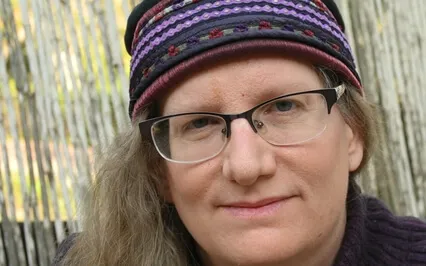
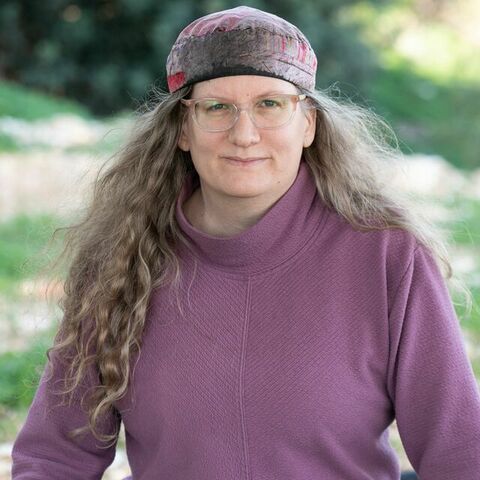
I am rather a serial Steinbauer,
The founder and the director of my home the kadusha the Institute for holiness.
He left more star.
And you are joining us on Sunday,
Yamri Sean at 3pm Eastern Standard Time.
10pm in Israel,
And we are just so delighted that you have joined us we are live on Facebook on LinkedIn,
And on YouTube,
I think on Twitter also.
And of course we're live on zoom for all of you joining us right now.
Thank you.
Well,
This is our weekly program of called awakening Torah Musa mindfulness where we take the time to look at the weekly Torah portion that we Jews read.
We study it generally all week,
And then we hear it lanes read in the big canister and the synagogue or temple.
And we here at key let me start the Institute for holiness decided to spend our time in looking at the partial after we had learned it and heard it.
The next day,
So that all that information all that learning is with you.
And so,
We look at the pressure at the Torah portion from the Hebrew Bible that just a past.
So we are in a very gush,
And I'm delighted that you've joined us.
We spend anywhere between 15 minutes 20 minutes learning Torah Musa mindfulness from the lens of most our mindfulness in order to learn from our ancestors to see which me dot which soul traits of those are balanced and strong or I need of strengthening,
And how we might apply that to our lives.
And we also is move into a seated meditation I guide you.
And sometimes with silent meditation for us to engage in a mindfulness practice one usually with the rain practice to really investigate what's going on inside for us in the embodied experience.
So,
As we do every week we begin with our cover now with our intention for this week's practice.
For those of you joining on audio only,
Which we have on our podcast or our website at www dot kahilat moose our.
Com.
If you are live on spot fly and anchor and all the other places you can find a podcast,
You will be able to hear our cover now.
We actually have to cover notice we do now.
So,
These carbon notes are really based in a rabbi Shimon scopes work in Shari yosha where he believes that if this is my language,
If he we have a mission statement as Jews.
I would say all of humanity but as Jews.
And so that's where we're,
We're on this path of kadushav towards holiness this lifelong practice to engage in that and and to have that be our will kind of aligning our will with God's will.
So our first one is,
We see this,
This,
This time together as an act of self care.
We lay together,
Starting with the word is this.
This is something I am doing to strengthen my own soul.
In order to be a benefit to others and the future.
Now that to sink in and the felt sense of the body.
And then we move on to doing this cover now because we are strengthening our relationship with the divine why we do this.
And so we say it starting with the word this here,
This is something I am doing to strengthen my relationship with the Creator,
So that I can be a better conduit of God's good to others when they need me.
And with the help of heaven.
Those are our covenant to begin together.
So,
Let's begin with the concept of value gash.
Okay,
So if I gosh,
A has three meanings,
To be honest with you.
It's not a tater some our tradition,
It means generally to draw close right.
And that's what we're going to do to get the today we're going to draw close,
And also watch our ancestors do the same thing is this is this is really a wonderful portion of reconciliation of to shuva beautiful repentance beautiful forgiveness.
And so let's engage together so very gosh is this drawing close.
Okay.
And generally it has three different kinds of action in our tradition we learn this.
And the first is to do battle,
Which we learned from smaller schmuel Stein,
Chapter 1013 to conciliate which we learn and you sure chapter 14,
Six,
Verse six.
And then we also pray,
As we learn in Mala team olive King one kings one in chapter 1836.
So,
We learn in Genesis Raba,
That they see these three ways of vy gosh of drawing close drawing near is being really related.
So when we see you who that Joseph's brother.
He's the fourth eldest and latest son,
Sons.
He is the one that draws close to yourself here so just to give you this background quickly.
We're at the scene where Joseph is the second in command of Egypt,
He's helping manage to save as many people as possible through a seven year famine.
His brothers come down from the land of Canaan in order to procure food.
And,
And this is where you also recognizes them.
He remains closeted and test them but also has his own reactions and his own that which to deal with you know the whole clinging version and dealing with them.
And any of the greed the hatred and delusion that comes up.
We witnessed it and we did last pressure.
So,
This drawing near so first we want to notice you who there.
When he approaches his brother has amazing courage,
His meter of courage is very well balanced,
Because he really,
He could have endangered himself and the rest of his whole brothers by approaching,
And he did so in a very approachable way.
And you have to understand what preceded this okay before he came close.
They have to remember that you're so factually says something for the first time I felt it this year when I was studying it that it was a little,
Little evil,
Which is to be expected if we're going to give the benefit of doubt to Joseph.
This is someone who was almost killed by his brothers thrown into a pit sold into slavery.
And,
You know,
We can we can recognize that there was room for vengeance and Joseph could have done much more damage to them had he wanted to.
And that impulse was probably there.
So we witness it at towards the end of the last partial when he says,
I'm only going to keep them as a slave.
And the rest of you can go home in peace to your father.
Basically,
You know,
The lack of the push along,
The,
The,
So,
Um,
In the in the course How could the brothers return in peace to their father and leave then you mean there,
There's no way that would have ever happened.
And so it almost tinges of a little that little dig for we see men's metaphor of a knife going in like,
Of course they can't return in peace and you know that yourself.
It's where we witness this so here comes your huda in response to this and so maybe there's actually a little bit of not only him being a meat full of courage but a little bit of hoots for that because there might be a little bit of anger there,
Like kind of self righteousness and the sense of it,
You just told me to go home in peace to my father and there's no way I can do that.
And,
And so there's that that energy that we get from that or righteous anger.
All right,
But before we even jump into that.
I want to remind you about you who that you who that this is really this partial is the birth of verbal to shiva verbal.
And so,
Taking responsibility.
Up until then with our ancestors we really see just an embodied acts of forgiveness or reconciliation but not so much verbally.
Okay.
And so I want to remind you.
I want to remind you that there is a person in the past who is the first to take responsibility for his behavior,
Who back in a vice chef chapter 38.
And he was supposed to take responsibility for his behavior and just to recall quickly.
He had ended up having sexual intercourse with his daughter in law,
Who closeted herself hid herself and acted as a prostitute because he was supposed to set up the third son,
The first two had died,
And had actually essentially been taken by God,
Because of their behavior towards this woman.
Her name is tomorrow.
And so he's about to hold her responsible in the sense that he's going to do an awful thing to her because she ends up being pregnant through this encounter.
And he doesn't know that it's actually tomorrow that he tomorrow who me slept with.
Okay.
So,
When he realizes this,
He's had time,
He takes a verbal responsibility he says to in front of everyone present.
She is better than I she knows better than I,
I should have given my son to her.
And so we see this verbal accounting happening,
And in particular I'm supposed to 26.
And so he's had this history of practice there's been a change is this,
You know,
Sense that a little bit of to shoo va with you who we start to witness it with his relationship with tomorrow.
And so then we land here,
Where he's down in Egypt,
And we noticed all these amazing me those soul traits that are balanced and strong that start coming out in the key ancestors the key characters okay that come out here we notice empathy,
Compassion,
Mercy,
Responsibility is sending this righteousness and,
And it's all there in the in what's coming up so first you hold it as this longest speech and better sheet and Genesis,
Where he essentially using multi methods to a cause in a response a reaction of mercy,
Mercy and compassion and then we see in yourself to make sure that he understands that they can't return without Benjamin,
That,
That their father,
Yeah cool will die that his soul is tied up to Benjamin.
Okay,
And there's no less than I think it's 14 times that,
That the Abba's name is mentioned.
And he gives voice to yaku suffering in front of yourself to keep that right there in front of yourself.
You're not like he's almost like I'm not going to,
You know,
He doesn't know that that this is yourself but essentially it's saying,
I'm not going to let you forget that there is an elderly man at home,
Our Abba,
Our father,
Who is close to death,
Who's already lost one of his sons that he will die from your behavior if you make this boy stay.
So it's like right there.
All right,
This is kind of value gosh is drawing close in a sense of kind of.
This is what we call like this conciliatory battle right it's like,
You should recall here,
And both how yahkov prepared for his encounter with a sob by preparing for battle and praying to God and also sending gifts it's like multitasking coming,
You know,
With this form of action that's what we see in the speech with you who I also want to remind you,
I thought to myself,
Oh my gosh,
This has to be elsewhere right.
This sense of value gosh,
I thought there's somebody else who draws close to kind of both battle but also do so in a very verbal way and to face and to cause mercy,
Essentially.
So who else of course,
Avraham Avinu,
Their grandfather.
All right.
Yeah.
Is it their grandfather.
No,
The great grandfather great grandfather.
When it says here in Genesis 18.
So,
As you can see,
It's a secret 23 very gosh Avraham via your mother,
Half the space,
A deep in Russia.
So you should recall here.
This is when Avraham is approaching God has shown to consider not destroying so them and Gomorrah should less you know he should find out that this is the,
The battle the value gosh the drawing near in order to be like,
You are not that God you are somebody who forgives you are somebody who doesn't harm and hurt the righteous the at the same time as the,
The evil doers,
So we want to be understand the value gosh,
This is all of our,
Our ancestors history that we should that should come up for us.
So,
This,
This forgiveness that happens in chapter 45 pursuit five through seven.
Essentially,
In Joseph ends up forgiving them it solves them without them actually taking verbal responsibility.
He's,
He's been privy to hear how they know what they've done that they know they're being held responsible and perhaps punished by God.
And so,
It's like it's the verbal responsibility happened on the sidelines and he was a witness to it,
But it didn't happen in front of him.
And so this weeping and embrace that happens between him and the brothers is his embodied form of to show forgiveness,
Kind of like what we witnessed between the echo and a soft.
So,
We want to keep that in mind.
Okay.
And also once he embraces his brothers,
They're able to speak to him for the first time,
If you recall when he was 17 and living with them.
And so,
He wouldn't say a kind word to him,
We're told in the Torah,
But here in chapter 45 pursuit 1415 he's it they're able to speak to him for the first time.
So there's great reconciliation happening great responsibility awareness of the others.
And taking that responsibility.
And so you have to remember that we're dealing with a family where there's just been notoriously,
Generation after generation a lack of communication a lack of honesty,
And the lack of kind of facing the elephant in the room and Elizabeth to a thing in this family it's very challenging to say the least for some of us it's very unpleasant at times to study and deal with it.
And so what I want us to notice is significant change,
It's kind of the what's happening behind the curtain but it's there and it's real,
Is that once the humans,
Our ancestors start taking more verbal responsibility and actually speaking more and recognizing and using speech in order to have reconciliation.
You notice that God begins to speak less and less to the ancestors.
So it's almost like there's been a learning curve,
Since we started the Torah since our ancestors began with a dumb and Hava and generation after 10 generations,
And no off,
And then 10 more generations offer hum.
Finally to our third patriarch and his son,
And their brothers with you who that there has been significant growth in skills of verbal skills and communication.
And just to be aware of that,
The withdrawal of God verbally and the increase them with the human beings.
Okay.
So that's how we what we want to hold here.
We noticed great empathy,
Both on your who this part of really thinking of his father really feeling what his father would feel and not being able to bear that he knows that a father won't be able to bear it so that that empathy that day that compassion of who the really causes it and yourself really causes it to spill out and come into fruition.
And one of the last things I want to share with you is this shift to two more things.
The shift in how you serve has come to see what has happened to him.
What was caused initially by the brothers.
He.
This is his form of resourcing,
Which one does in dealing with discrimination with trauma.
So we see him resourcing and we see him also expanding his window of tolerance,
The in response to the traumatic events in life.
And this is this is a skill,
This is something he's been practicing and working on and building over time we see this.
This building of righteousness and Joseph.
Okay,
This is someone who could have had great revenge on his brothers and there's so much self restraint,
Even though it comes out sometimes in these little statements to his brothers of may you go home and peace to your father right.
So,
What do I want to tell you about him.
He,
He shifts how he sees what happened to him.
So originally this is seen as like a criminal deed of kidnapping and selling someone into slavery.
And suddenly there's a providential scheme of.
No,
It's not you that that sold me into slavery,
It is God it is Hashem who sent me down here in order to save lives.
That's really profound for a victim and survivor of that kind of trauma who lost 12 years of his life.
You know it's rotting and sitting in a dungeon pit in the prison.
It's very profound,
And we want to honor that in him we may not agree with it.
We may think,
No,
The brother still did what the brothers did.
But this is how Joseph has chosen to internalize and survive and resource his trauma.
And it's profoundly beautiful.
And it allows his brothers to be able to still be in relationship with him.
Because had it not been that and instead the other.
I'm not sure if this family could have had the skills and survive and gotten through this.
Something larger is at play here.
So that's what I want to share with you that there's been this beautiful growth.
So,
The last thing I want to say is this idea where,
Not the last but the second to last is in a barber now a wonderful rabbinic commentator.
I think back in 18,
800 900 excuse me for not knowing exactly his dates right now.
He really says that a person is not judged by the actual result of his deeds,
But by his intent.
So,
And he is trying to say that he has the intention to sell him into slavery,
The brothers attention and so therefore,
They're,
They're responsible for what they did and it's still like it doesn't matter that Joseph sees it's part of God's plan,
In a sense of reducing the crime his brother's crime of throwing him into the pit and selling him.
I think this is so interesting because if we look at today and our and our work of anti racism.
We often hear the opposite in the sense that we're told,
Look at the impact of your behavior and not your intention,
Especially for people of white privilege,
That we are to understand that even when we have good intentions to do anti racist work or support those with who are obviously people of color based on the tone and skin of their color of their skin,
That in that it's really the in the in the impact that we have that we are to pay attention to.
And so it's very interesting to kind of look at that because I mean obviously the impact is Joseph is still you know was enslaved and went through that,
But to hear him now and say,
No,
It's not you who put me into slavery,
This is the will of God,
So that I may actually do a huge meets saving how many people from a famine.
You know,
You know,
Should we pay attention to the intention of the brothers,
Or the impact.
And I think maybe we need to hold both,
Especially for our own practice and growth.
The final thing I quickly want to say and then we'll move into a seated meditation practice together is,
We begin to shift from individual behavior of our ancestors and how it affects the family unit to the effect of an individual's behavior and the family units behavior,
And how it begins to affect a people,
A collective.
And so I want us to hold that and be aware of that that this is often what happens.
So,
Joseph,
Make some very clear choices and how he's going to manage the seven years of plenty,
And the seven years of famine in meets rhyme in Egypt.
And that we need to understand and we learn this from the Dharma that there are consequences for behavior even when we think we're doing the right thing or good deeds,
And that we need to be aware of that.
So in chapter 47 of the soup 13,
We suddenly have a even before 13 and 4517 we have Paro,
Who is giving yourself family,
The best of the land the fat of the land they're able to go to where the land can actually be worked still where there's pasteurizing the past,
The pastor,
And where there is a famine going on for everyone else they're starving.
And somehow this these people who are an alien,
Who are simply kind of residents essentially but they do have a special position,
Meaning that.
I'm going to share that with you right here in 47 six we're told that they're going to supervise Paro's cattle and their offices of the crown they're essentially turned into officers,
And they enjoy a legal protection that usually accorded to aliens.
So,
You have this people coming in,
In the middle of famine,
At least 70 of them probably more like 140 of them because I believe it only is a really counting mostly the males.
And so let's just hold that in mind,
Cars privileging and an outside people.
They're given land,
They actually acquire the land in the middle of the famine.
Okay,
There's an actual acquiring that goes on.
And they're reproducing.
Chapter 4727 chapter 47 per soup 27,
Our ancestors began reproducing.
So if you recall,
Joseph,
We are told with great pain I think it's polite Rashi,
That the the Joseph didn't reproduce his two sons during the famine it was during the years of plenty,
Almost as if to say it's not appropriate to be reproducing during a famine.
And all of a sudden you have this whole group of people,
Outsiders.
Welcome been by the power,
Given land acquire it,
And are reproducing in the middle of a famine.
All right,
Let's just let that sit for a minute.
So,
Also you have all the rest of the Egyptians who have sold their bread,
Like their their anything they have they've sold their given their money for bread.
They're starving.
So they begin to give their livestock for for bread.
And then they finally give their land for bread and basically put themselves in certain like put them,
Almost like a form of slavery to be honest with you but instead it's like a tenant farmer surf down to power that it begins to beg the question,
You know,
As I'll just speak from my own mother perspective when I'm studying this with my beloved 11 year old she was like,
Why does this exchange necessary like why,
Why can't he just give them food they are they're less their citizens they Why aren't they taking care of them in this way.
And this one sided power relationship,
Right.
And as much as we want to judge.
And believe me I'm there too.
I think this is.
We want to keep this in mind because all sudden you have yourself,
Causing these people to have less and less and less.
And this is to the fact that they'll have nothing.
While whole other people are thriving,
That he comes from.
It's going to set up that precedent this is what this type of behavior that you don't want to cause between different peoples in a country in a land.
And I do believe that this is like the foundation of what comes towards our ancestors in me time in Egypt,
Because of what has happened here with him,
Joseph,
And the brothers and family settling and acquiring land of caution.
Of course,
No one's responsible for being enslaved,
You know,
Obviously,
The domineering part party,
And people choose to do that but we do need to be aware of consequences for our behavior.
But I do want to say that we can't really measure his behavior by our own moral standards today.
In fact,
I want to teach that really within the context of an ancient Near Eastern world that we're dealing with here,
That Joseph emerges here is really a highly admirable model.
He's shrewd he's a successful administrator.
But we have to understand that we're beginning to have this kind of moral judgment and awareness of how unpleasant,
The policies,
And that being and probably the effect of them.
Over the seven years,
And the situation is suddenly introduced into the narrative right where the onus of responsibility for the fate of the peasants from yourself to the Egyptians themselves.
This is coming from the GPS.
So,
With that,
We're going to move into a guided meditation together.
And I want to,
We're going to actually pay attention to the beautiful me don't here because we do see this beautiful and beautiful growth beautiful practice beautiful way of a family so this family that had so much trauma and causing it to the 17 year old boy.
So,
And now we have them being able to communicate together to embrace and weep together to communicate.
So we want to we want to hold these positive meat dog and take a look at them within ourselves and our own,
Where we are in our own relationships with our own family.
This is where we are today.
So please come to an upright seated position,
If you're not already.
If you need to stand or lie down due to trauma,
Or any chronic pain please do so.
You need to be able to take care of yourself.
For those of us in a seated posture.
Operate yet also relaxed,
Created in the image of God,
Sitting with dignity,
Allowing the hands to rest either on the lap,
Perhaps on your heart.
Three deep cleansing breath.
And to notice what is alive for you right now in this moment.
Perhaps there's a sense of relief of joy.
You can allow a smile to emerge on your face.
A sense of gratitude.
That's your who does courage and Joseph's opening of his heart.
Really forgiving.
Not forgetting.
He's a wonderful balanced meter of static of righteousness and mercy and compassion.
He's able to pull himself out if his own traumatic response out of his own pain his own suffering.
Because of his great balance me that have been to home of trust in God have a moon faith.
So foundational for yourself that he is able to rewire his whole experience the embodied felt experience.
Allow yourself to have that flow with your breath.
Where to in your own life have you been able to resource expand your own window of tolerance,
Moving out of a hyper or hypo response to your own trauma.
Is your relationship with the Almighty with the divine help carry you through your trauma help strengthen you helped you resource.
Where is that embodied for you right now in this moment and the felt sense.
Do you feel it in your chest and your shoulders.
Perhaps in your cheeks,
Your lips,
Your tongue,
Your stomach.
You shut your eyes if you feel safe,
Allowing yourself to be here in the present moment.
With whatever is here for you right here and right now.
We'll spend a few moments engaging and investigating.
What have we turned to what have we read and reread as a resource as a form of resourcing during and after our own trauma.
Carrying this family trauma of our ancestors,
Knowing to that we can see both the responsibility of the brothers and God as involved in this amazing history,
Bringing yourself down in order to save lives.
And it's almost as if we could picture,
Joseph sitting in his cell from the time he's 1819,
All the way through to the 30s,
Saying this to show pass.
I can be with this.
God has a higher purpose for me.
And if I'm here and I'm ready to serve.
We could picture yourself practicing.
This is our moons,
Most are mindfulness.
We too can practice.
Allow the next few moments few minutes of when we move into silence together for you to be in the present moment of scanning your embodied awareness.
Where is your own window of tolerance.
Where can you nurture yourself right now.
Be in the practice with us here,
Taking refuge in the song on the VOD in the key law.
We are here together with God.
Let's move into silence.
Silence.
Silence.
Silence.
Silence.
Silence.
Breathing in awareness and compassion,
Releasing judgment,
Allowing ourselves to move to a space of non identification,
Nurturing.
You or thoughts will wander from time to time that is the nature of the practice.
And simply when you do awaken,
Bring yourself back to your anchor your breath,
Or it could be the sounds that you're hearing simply begin again.
Silence.
Allow the joy to enter.
What a release.
What a moment of gratitude that Joseph and his brothers were able to have reconciliation to fall on each other and cry and speak.
And such a familial trauma that could have turned out much worse.
There's a sense of deep joy and gratitude and relief that we are here now and present,
Because they came to mercy,
They came to compassion and empathy.
They chose to be in relationship.
Rather than be full of vengeance and causing more suffering.
Slowly and slowly allow your eyes to open and join us here in this zoom room live wherever you're meeting with us from all over the world.
God bless you.
Thank you for your practice.
Tap into these me don't these soul traits demonstrated by our ancestors of you who then yourself of courage,
Of righteousness,
Very balanced and these moment and these situations in relationship with one another,
Of mercy and empathy and compassion and finally responsibility,
Beautiful responsibility of being aware of the other.
And speaking of responsibility.
If you are benefiting from these practices and enjoy being in community with us and sitting,
Please donate,
It is part of our practice to give true ma and Donna.
Whether in the poly tradition of Buddhism or in Fuma and the Jewish tradition to sustain the Institute for holiness Kehilak Masara so that we may offer these beautiful teachings and tradition together,
And to be able to practice and grow.
So today is sitting with is was is sponsored by a beautiful soul,
Located in Oregon,
Lily violet moon,
We thank her for her sponsorship and donation to sustain us and to continue this beautiful teaching and practice together.
You too can go ahead and do so by reaching out to us at Kehilak Masara gmail.
Com.
We accept anything through Zellie and the United States or Canada bank transfer or PayPal.
And also an insight timer through their donation system.
Again,
Our website is www dot Kehilak Masara calm.
We accept all sponsorships and memory of someone may their memory be for blessing or to honor someone who is alive and with us today who we want to have our practice merit to lift them up and to honor them.
And so,
With that we we honor Lily we thank you.
And we thank all of you for being here today and doing the practice together.
We are looking forward to seeing you next week this rat Hashem God willing on Sunday.