Shalom and welcome.
Allow yourselves to settle and arrive.
We'll begin in one or two minutes.
Always allow yourself to think what is it that I need in this moment to settle and arrive.
As we engage in this practice together.
Allowing those to enter to arrive on time.
Welcome.
Welcome to awakening.
Vayikra,
Torah,
Musa mindfulness from the Institute for Holiness Kehilat Musa,
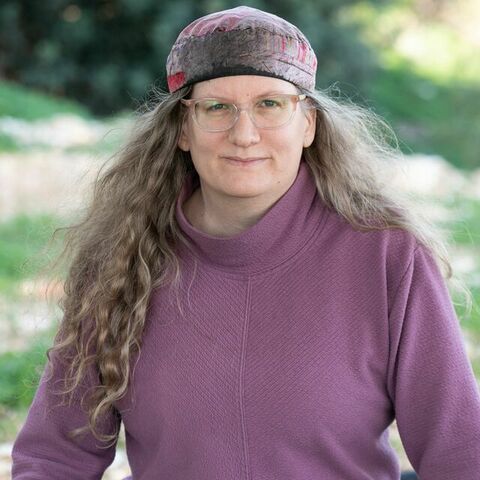
I'm rather hasia or your Steinbauer,
The founder and director,
We are delighted to have you here at Hamakonda kadusha begins to for holiness,
Where we engage in this practice of looking at the weekly tour portion.
The Hebrew Bible from the lens of Musa mindfulness and engaging in a seated meditation practice.
So we with God's loving guidance and with strength are entering the book of Vayikra of Leviticus.
We feel very grateful to be able to enter this as we as we just left the sheet and then,
Which is Genesis,
And then in Shemot which is Exodus and so now we're entering the third book of five from the five books of Moses.
And it is a delight to be here with you.
So,
As we begin every week here which is usually on Sundays,
Yon reshawn at 3pm Eastern Standard Time so as you know,
The United States has entered daylight savings time,
Which is the eastern seaboard.
And so,
If you're joining us and Israel or anywhere else in the world.
We've had to meet an hour earlier to still keep that 3pm time.
So normally we meet at 10pm Israeli time,
And now we're here at nine.
We begin with our cover notes.
I'm going to go ahead and share screen with you.
And you will see before you that there are three cover note listed here we're only going to address the first and the last as we do every week.
We always enter this practice with our intentions which are called cover notes in Hebrew.
Before doing acts of caring for the self.
I would like to say that this is something I am doing to strengthen my own soul.
In order to be a benefit to others in the future.
We see this practice together sitting from half hour to 45 minutes with this talk and seated guided meditation as radical self care that we must begin with,
Which is most sacred and holy our own souls in order so that we gain strength and balance to be able to care for others.
The last one at the bottom here if you're following along on the screen or if you're listening through audio.
We say before doing acts to strengthen my relationship with the divine.
This is something I'm doing to strengthen my relationship with the Creator,
So that I can be a better conduit of God's good to others when they need me.
So we jump in to Vayikra.
As you may recall last week,
In the last parshah of the book of Shemot,
Pekude,
We saw this amazing model and the Divine's wisdom being laid out before us in the building of the Mishkan and more importantly how it was put together.
What precisely came first,
What came next.
And all the nuanced,
Both commandedness and free will offering that was witnessed of God commanding to Moshe that they bring me gifts of nadiv lev,
Of this generous heart.
And you may be wondering how could you be commanded to give freely to give of your generous heart and that's the some of the beauty and that which will be left unknown that can't be answered completely,
That almost has to be answered with a moon now with faith,
This building of trustworthiness that we can rely on to realize that in the wisdom of the Divine and the universe that there's something that could be simultaneously obligated and would come from your strongest impulse of free will,
Of generosity,
Of nadiv.
And so we witness this in this building of Pekude in the last parshah that when Moshe starts putting together the Mishkan,
He starts with the center of what is most sacred and holy and then moves out.
And I pointed this out to you last week through these concentric circles of joy and obligation.
And so too with us and our practice I feel like this has been modeled to us by Hashem,
By God,
Of how we on a daily basis,
Engage in our Moser mindfulness practice that we begin with the self care of that which is most holy and sacred our own inner spirit.
And we move out from there.
And these concentric circles of obligation to others.
So there's something very profound there.
And you're going to see now this get played out in vahikra something kind of amazing happens.
It's a model for our ancestors of B'nai Israel,
Of the Israelites,
How they suddenly have this new community center.
This tabernacle,
What are they going to do with it?
How are they going to be in relationship with the Divine whose kavod Hashem,
The presence of God has entered through this kind of cloud that covers all there's not even room for Moshe,
He can't enter.
Okay,
So,
And then God dwells among them inside the camp,
In the sense so here comes this model,
We are suddenly from the very onset,
A being told and commanded to bring quarter by not,
Which comes from the shore is cool,
Race that.
Okay,
Kind of,
Which means close drawing close to God.
How is this done?
It's done through you through obligation.
There are certain korban notes certain offering certain drawing close sacrifices that will be brought to Hashem when one is done a sin to a hatat offering or a sham a guilty offering.
And then there are three other categories which obligated,
But not worded as such worded as free will offering in the sense,
And those come,
Of course,
In the categories we five are addressed in the first one is the Ola offering,
Where the whole animal is burnt up.
And then,
A mincha,
Which is a gift offering.
And this has this lovely tier of addressing class difference of means of financial means and ability is we see a full range of being able to give a flower raw or big sometimes with oil,
This is the,
You know,
For the poorest person.
And then obviously in the Ola offering you're offering bird or lamb or bull,
And then in the shlamim in essentially what gets translated as peace offering gift of greeting it also can mean completion.
And that is either a sheep or a goat or cow and that's shared that shared with going in and everyone that you bring an around you and with the men has offered only to the kohanim and then the Ola goes completely up.
So you have this like five carbon note the system of sacrifice,
Where a person offers and gives up something for a bigger purpose.
Okay,
This is to draw near to Hashem to correct something in the sense if it's through sin or guilt,
Or to engage in this kind of gratitude and generosity and in celebration of joy with others.
And,
You know,
People sacrifice things all the time.
So examples of this is that you know if you spend an hour with someone you just sacrificed your time.
And if you gave us a DACA and the form of money,
You sacrifice some of your money or possessions and parents make all sorts of sacrifices in order to provide for their children to make sure that they're healthy,
God willing happy,
Things of that fact and so the Torah in its wisdom,
Sharing the divine wisdom,
Showing us that we too must actually make sacrifices for God and God showing us that it's happened this two tier system that actually are quite united being commanded to give a free will gift offering and being commanded to bring offerings when you send or full of guilt.
Now,
What is important to note here is that the sacrifices that are to the korbanot who are that are offered through chatat and Hashem that are through guilt offering or sin offering that they that there's no reference to those those pleasing God at all whereas the other three do have that reference.
Okay,
They affect atonement.
When done correctly just through the obligatory nuance of them.
Okay.
And so I want you to hold both because we're starting to see a framework,
I mean this has started being built in Shemot.
I mean this started even back in in Bereshit when I told you we had this vigilante justice of the individual who had this fear of God,
This impulse this knowing what was right knowing right from wrong and acted out on it we witnessed that in our individual ancestors.
And then we saw unfolding this rule of law,
Coming out of slavery,
And that impulse there and how we kind of live with both and witness it,
And how there's been this.
And I think that's the word I'm looking for.
It's almost like through practice through discipline spiritual practice.
This is disciplining of these impulses of the vigilante and this rule of law,
Through this new institution through this holiness and space of the of the tabernacle that out in that tabernacle will take place life in order to correct,
Which that has been caused through unbalanced has been turned from the right path,
Where there has been sin,
Where there has been behavior through one,
Not with the intention to do so or not aware that they have behaved improperly can find a means and a way to enter that holiness and space in the community center in order to correct things to draw close to be balanced again with community and God.
And so,
I always try to introduce you to some new wonderful teachers or some writing and we had met Nahama Levowitz a couple weeks ago.
And so I'm actually going to introduce you to a colleague and friend of mine,
Rabbi David Jaffe,
Wonderful Musar teacher,
And based in the United States.
And he shares actually in his essay on Vayikra where he focuses on generosity and the devote of giving away and bringing close that you'll find in the book called the Musar Torah commentary,
Some wisdom for us that the same interplay,
Remember I talked to you when there's this beautiful design there with how Moshe enters the the tabernacle to put in that which is holy most sacred first and then moves out.
Well,
This is implications for our own life of how we can witness here in the korban note that is simultaneously obligatory.
And then also free will offering of coming from generosity,
Right.
So he writes here on page 151 the same interplay of responsibility of achariot of eveh yuv,
Of obligation,
Right,
And open hearted giving is a feature of many healthy human relationships.
This is the model that I think Hashem is laying out for us in Vayikra.
He says strong relationships cannot rely on free will,
Desire,
Or generosity to give and connect only.
Such relationships while feeling good in the moment are actually undependable.
And he says,
I want to know that good friends feel committed to me and that they do not base their involvement in the relationship only and how they feel in the moment.
On the other hand,
Relationships must be more than just obligations.
So this is this fine tune that I laid out for you.
If you went ahead and read the blog on Pekude,
This amazing how we live in the gray,
How we are messy,
Our lives are messy and humans are messy,
And how we need a corrective.
We need a way to get back on the path.
We need a way to be forgiven and to forgive ourselves.
And that it can't be too strict,
Too unrealistic.
Okay,
So I laid out for the model for us that,
Yes,
It's beautiful that everyone brought their free will offerings and gave too much and so much that Moshe had to say stop bringing them.
And we noticed to Parashiotago,
And how that model actually helped build the tabernacle,
The Mishkan,
And how God's presence then came.
So we had that at one extreme and then I told you the key Tisam model was that when it was just a free will offering.
And when it was out of our own base desires,
And not considering of the other,
Which is here,
This is God and also Moshe,
Then you end up having just a destructive,
Impulsive acting out of individual desire,
There's no sense of obligation or responsibility.
And that comes out in that model where you have the golden calf,
And I said that we humans need to be able to live in between these two,
Or to be realistic for us.
And so we have this new model coming in Vaikra where obviously we have this tabernacle and it's amazing it's beautiful it says holiness and space,
But to actually become something where you can enable people to come together and their joy to feed each other.
To be close to God,
And simultaneously find a means to seek out forgiveness and atonement allow you to go right back.
This is what we're witnessing in front of us.
So I'll share one Pasuk with you.
That comes from Vaikra,
The first chapter,
Pasuk bets.
Okay.
It says,
A person who offers a sacrifice,
From you but here it's like you plural,
Right you masculine plural.
From you to God.
Okay,
All commentators notice that the placement of the word mikam is strange in this Pasuk it's also strange that it starts off talking about a single person Adam.
And so who is and what does it refer to,
Right.
And so,
So far know who we've learned from before who comes from Italy 500 years ago loves to say that a key,
Yeah,
Leave me,
At the time,
From your very selves.
Okay plural.
What is this and he goes on to say,
Vidui,
Devarim,
With a confession,
From your words in your mouth,
Ve-khakh-na-a,
And from a form of anava,
Humility of taking up the proper amount of space.
What really behind his words is this sense of,
How is the korban to be offered.
It's about the how.
Yes,
We think in some commentators think that it's enough to affect the tournament just by bringing it.
But we notice what happens when people bring things of their own accord,
And they think they have good intentions,
We saw this in kithi sa people brought their gold,
They actually required the men from their children and wives those who are married and had children required the gold earrings demanded of their leader at the time which is on her own to make them.
To make them a god or make them a Moshe replacement.
And the desire the impulse may have actually been beautiful and pure may have been,
I want to draw close to motion and God.
I want Moshe back again,
He hasn't returned.
But as we noticed that the how is not right,
It was not in alignment with what was commanded what God wanted.
And it wasn't an alignment with actually caring for the whole community,
And having a long term responsibility and obligation so the how is very important how we give.
Okay,
So obviously,
God,
God includes the youth obligation actually lays out very specifically and Shammoth.
What is the how these very specific gifts,
Go ahead and bring brain of your own free will of your own generosity and bring as much as you want,
Obviously they gave and gave and gave.
But I'm going to be very specific God's going to be very specific of what's brought.
And I said this can happen in the in the can actually be very fruitful in relationships is actually to be transparent and clear with your partner and spouse and even children.
What is it that I want.
What is it that I need.
So this is the how here if you want to draw close if you want the core role of the core one.
This needs to be laid out.
And this is what God does.
And this is what the people bring from themselves wholeheartedly approaching with this animal seeking to become correct and alignment again.
And this is key.
This is key to how we even will progress in our own progress practice and progresses and outward for spiritual discipline and practice.
But there is this sense of,
Am I on the right path.
Am I drawing near to others and strengthening them myself and community and my relationship with God.
So as we move into our seated meditation practice.
I want to point out the key media.
The key personality and soul traits that is involved in this evolving vyra right that is evolving God calling to Moshe and the people,
This is how you now will be in your new community center,
And your new Michigan,
And it ties to the more the more the media,
The soul trait of a moon of trustworthiness reliability integrity.
God is both modeling this and showing up for giving the people remaining in relationship with them despite going off the derrick going off the path,
Over and over and over,
And even the people,
The people must forgive themselves they must find a way of tone man to seek to forgive each other.
And this is done through a moon.
So I want to say how in our own practice learning from our ancestors and this evolving relationship with God.
How can we stay true to our highest most noble attentions that actually have the impact that the person that we're in relationship once,
Not just our own intentions.
How can we show up for ourselves,
Our best version of ourselves this practice so trustworthiness and Mona can help us become more reliable and fulfilling our commitments to others.
And we can learn from the Torah from our lens of most our mindfulness.
Get those glimpses of how those structures are built what we are to learn from them how we can internalize them do our own practice and move out.
So,
Through honesty through punctuality and consistency dependability.
We instill a sense of safety and others.
We are feeling them in turn to be more trusting and vulnerable and authentic with us.
This is what you see happening with God and the people,
Even Moshe and the people,
It will be this dance of a moon of trustworthiness and practice around it.
We keep our promises we see we say what we mean we mean what we say we act accordingly.
We align our actions with our intentions and live with greater integrity.
And here's the converse.
When we fail to practice and will not to balance it to work on it as a daily discipline.
We actually can't trust ourselves and we generate mistrust and others we undermine their safety.
We cut corners with the truth we are vague we are manipulative we lose credibility we erode trust,
We fail to show up punctually are missing significant moments,
Undermine the connection of friends and family.
So,
When we fail to take care of ourselves and engage in this fishbone Hanifish this daily accounting of the soul through our moose our mindfulness practice.
We,
We don't carry through our commitments,
Okay,
We have to engage in the practice to nurture our body,
Our mind,
Our heart,
Our spirits.
So,
The destructive side of not practicing and then we'll see this at times when Moshe doesn't have this trustworthiness this Amuna towards the people and to him.
We see this growing excessively dependent on each other,
Vice versa,
Or resentfulness that one doesn't care for them the way they need or want.
People start to believe on truths will see this coming up later on with Cora.
We deceive ourselves we gradually drift from what is real want you to keep all this in mind and learn from our ancestors like just here's a really tiny example.
Aharon who,
You know,
Obviously,
Was part of the whole golden calf incident continues to be the leader was not murdered with the 3000 of our ancestors.
And there doesn't seem to be an accounting.
There will be in a divine one later on.
But this is going to have ramifications this doesn't build a moon on this doesn't build trustworthiness This is why he will be challenged.
Later on,
Because there's this remnant.
It's what's left when you don't address things when you don't affect that atonement that to shuva of returning of being on the path and you ignore things.
This deteriorates the social fabric.
So where do we begin.
Let's move into our guided is CD didn't mess it meditation with this in Mona.
This trustworthiness deep inside of us as our practice.
So as I say every week if you are living with chronic pain,
Or just such discomfort today that it's not healthy for you to sit,
Please stand.
For those of us who are seated.
If you are in a chair allow your feet to rest on the ground to feel grounded and held.
Let your sit bones really sink into the seat upright dignified position we are created in the likeness and image of God.
If you are in a meditation cushion like a Zafu allow your legs to fall and rest and be carried by the cushion or the ground underneath you,
And your sit bones.
Allow yourself to feel that you are beginning to arrive and settle with that proper posture,
Not stiff,
But awake and alert.
Take three deep cleansing breaths.
With each inhalation.
And each exhalation notice your shoulders begin to relax.
Begin to notice that your awareness of your body is alive and here in the moment,
Noticing things that you might not have been mindful of sensations of the body emotions that are calling for your loving attention.
Maybe you're noticing thoughts,
Planning for the future,
Ruminating over something that happened in the past.
We can allow for all of this.
Recognizing what is here in this moment,
Knowing that we have the toolbox to carry this expanding our window of tolerance,
Honor what is before you tell that which is calling for your attention that's not in the present moment that you will visit it later,
Like a good friend.
Allowing your anchor to either be your breath or the sounds around you.
Bring your attention to whatever feels most difficult in you right now,
With the attention intention the cover now fully letting it be no need to push it away.
No need to attach yourself to it to tell your stories around it as if it is you.
Allowing is the willingness to pause and stay present with life that is here just as it is.
Whatever difficulty there is for you.
We need it with gentleness and tenderness.
You may whisper to yourself this too.
Yes,
I can hold this.
This is about opening to your experience,
Even when it is painful.
Investigating and inquiring into the felt sense of the experience.
While your story and beliefs can be a portal to your experience.
Keep returning your attention to your body.
The felt sense and sensations of wherever you feel most vulnerable.
Face yourself with curiosity,
Even with a smile,
Like a gentle friend.
That kind attention to your experience and begin to ask yourself,
What is the worst part of this,
What wants my attention?
What is the most difficult or painful thing I am believing?
What emotions does this bring up,
Perhaps fear,
Anger,
Grief?
How do I feel these emotions inside?
What is the felt sense?
Is it clenched,
Is it raw?
Hot or sore?
Aching,
Empty or squeezed?
What would it be like if your most vulnerable hurting part of you could communicate?
What would it express?
How does this part want me to be with it?
If we don't spend the time to care for ourselves and address this,
We don't build our own Amuna towards ourselves.
We build trustworthiness,
Reliability and integrity.
How we behave towards ourselves,
How we care for ourselves.
So what does this part most need from you right here and right now or from some larger source of love and wisdom?
You can always call on the wise and compassionate,
Loving wisdom of a friend,
A partner,
A family member,
A teacher,
A spiritual figure,
A sham,
God and even a pet whose wisdom and love you trust,
Maybe even the impermanence of it all,
The whole world you trust,
The wisdom of the world as it unfolds.
Knowing as you breathe consciously and adjust your posture to help you come fully in contact with your most awake experience of your heart and mind.
We offer love and acceptance,
Forgiveness,
Compassion and protection to the most vulnerable part.
Allow yourself to whisper whatever that part of you needs to hear now.
Allow your hand to touch your heart or whatever you need.
Allow yourself to imagine seeing your inner child embraced or surrounded by light.
If you are feeling any new or residual difficulty,
Offer your acknowledgement and care.
As we move into a few minutes of silence,
Allow yourself to experience and learn from this practice what you want to remember.
As you breathe,
Allow yourself to experience and learn from this practice what you want to learn.
As different sounds come into,
We acknowledge that even the cat has a need to connect.
A 13th century Sufi poet Rumi teaches in the guest house that this being human is a guest house.
It's not unlike the Mishkan,
The tabernacle that our ancestors just finished building last week in Shemot.
Every morning a new arrival,
A new korban to draw near,
A joy,
A depression,
A meanness.
Some momentary awareness comes as an unexpected visitor.
You welcome and entertain them all,
Even if they're a crowd of sorrows who violently sweep your house,
Empty of its furniture.
Still treat each guest honorably.
He may be clearing you out for some new delight.
The dark thought,
The shame,
The malice meet them at the door laughing and invite them in.
Be grateful for whoever comes because each has been sent as a guide from beyond.
Begin to see yourself as one of those guides from beyond.
You are connected to the divine and you visit God's house as our ancestors did as you enter that Mishkan with your korban,
With your sacrifice.
Think of all that comes to Hashem.
All can be carried and held.
And we always are welcomed in,
We are always accepted to repent,
To return.
Allow that in yourself and allow it of others.
That's how we build a munah.
That is how we build trustworthiness,
Integrity,
One day at a time.
And we are always accepted to repent.
And slowly open your eyes.
When you are ready to meet us in this sacred space,
This holiness of space and holiness in time,
This combination of shebat,
Of ceasing,
Stillness,
And holiness of space,
Of us taking refuge in community here.
In this practice that we dedicate and meet together in order to do this,
It is a gift that we give ourselves.
It is a korban to God and to ourselves.
Thank you.
Thank you for your practice.
Thank you for showing up.
May we all merit through our practice to bring less suffering to the world,
To support those in need.
We welcome your donations in honor of this practice,
And any amount.
You can find that under our support donation page at www.
Kihilatmusar.
Com.
All forms of currency,
All different ways to give.
So please do open your hand,
Open your heart and give so that we may continue to offer these freewill offerings.
We also welcome sponsorships in honor or a memory of someone each week.
You can be in touch with me at rabbichasia.
Kihilatmusar.
Com in order to arrange for that.
So we thank you.
Please do subscribe to our free mailing list to receive a newsletter that announces the blog that actually is an extension of what I share with you here on the weekly parasha,
On the weekly Torah portion,
And we will provide more insight and sources and citations,
You will receive that through the mailing list,
And do join us as a member of our community,
Offering a monthly contribution of $18 for those residing in North America,
Or 18 shekels for those in Israel or other countries,
Depending on where you're located,
So that we can build this community and continue to offer Musa mindfulness and share it with the world,
So that we may all continue to be on this path towards holiness,
Becoming our better and highest self,
And to support others,
Offering God's good to the world.
Thank you again for coming to today's awakening vayikra our 24th sitting together.
And I look forward to seeing you,
This vata sham God willing next Sunday.
Take care of yourself.