Tonight's bedtime story is called The Springtide of Love by Mrs.
Egerton Eastwick,
Also known as Pledal North.
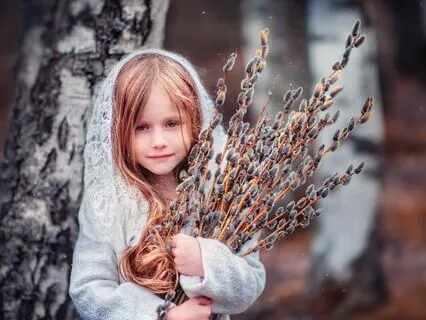
This lovely story from the Diamond Fairy Book was written in 1895 about a 7-year-old little girl who gets lost in the forest.
By nightfall,
This frightened,
Hungry,
Cold little girl unknowingly finds her way back home.
Tonight's episode is part story and part relaxation,
So if by the end of the storytelling you are still awake,
You can continue to listen to my voice as I guide you to relax and ease into a restful sound sleep.
And so as always my friend,
Settling comfortably under the covers,
Take a full,
Comfortable breath,
And as you exhale,
Relax and let go.
Allow any tension to just melt away,
Sinking deeper and deeper down into the softness that you're resting on.
There is nothing else to do and nowhere else to be,
So just lay back,
Relax,
And enjoy the story.
The mists of the early twilight were falling,
And Elsa,
The little girl who lived at the woodman's cottage,
Was still far from home.
She had wandered out in the spring sunshine in search of bluebells and wild anemones with which the wood abounded,
For the child loved the company of the birds and flowers better than the rough play of the boys who were called her brothers.
The woodman and his wife said she was strange and dreamy,
Full of curious fancies which they found it hard to understand,
But then they were not Elsa's real parents,
Which might account for their difficulty.
They were kind to her,
However,
In their fashion,
And Elsa always tried to remember to obey them,
But sometimes she forgot.
She had forgotten today,
For although the good wife had told her to remain near the cottage,
The eagerness of her search for the flower she loved had led her farther into the wood than she had ever been before.
The sunlight disappeared,
And the darkness seemed to come quite suddenly under the thick branches of the trees.
The birds had chanted their last evening song and gone to their nests.
Only a solitary thrush sang loudly just overhead.
Elsa thought it was warning her to hurry homewards.
She turned quickly,
Taking as she thought the direction of the cottage,
But as she was barely seven years old and felt a little frightened,
It is not surprising that she only plunged deeper into the wood.
Now she found herself in the midst of a great silence.
The beautiful tracery of young green leaves through which she had hitherto caught glimpses of the sky had disappeared,
And over her head stretched only bare brown branches,
Between which she saw the shining stars.
Clear as on a frosty winter's night,
The stars looked friendly,
And she was glad to see them,
But it was growing dreadfully cold.
The plucked flowers withered and fell from her poor little numbed hands,
And she shivered in her thin cotton frock.
Ah,
What would she not have given for a sight of the open door and the fire in the woodman's cottage and a basin of warm bread and milk,
Even though it was given with a scolding from the woodman's wife.
She struggled on with her poor little tired feet,
For it seemed to her that the wood was growing thinner.
Perhaps there might be a house hereabouts.
But oh,
How terribly cold!
Now there was frost upon the ground at her feet,
Frost upon dead leaves and blades of grass,
Frost upon the bare tree branches.
The moon had risen,
And she could see that all the world around her was white and chill and dead.
Surely she had wandered back into the cruel bitter winter,
Frostbound and hard.
It was strange that she had strength to go on,
But she looked up at the stars and thought that they were guiding her.
At length she came to the border of the wood,
And there stretched before her a wide open space with only a few trees scattered here and there,
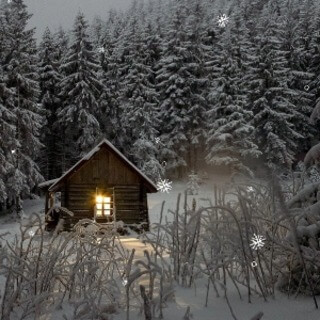
And through an opening of the trees the cold moon shone down upon a white silent house.
The house looked as dead and winterbound as everything else,
But still it was a house,
And Elsa said to herself that surely someone must live in it.
So she thanked the friendly stars for leading her aright,
And with what remaining strength she had,
Dragged her poor little numbed feet up the broad path or road between the trees.
At the end of the road,
An iron gate hung open upon its hinges,
And Elsa found herself in what once had been a garden.
Now the lawns and flower beds were all alike,
One blinding sheet of ice and frozen snow.
But there was the great white house,
And from one window shone a light,
Surely the light of a fire.
All the rest was dark.
Up a flight of stone steps the child dragged her weary feet,
Across a terrace that had surely once been gay with flowers,
Until she stood before a huge door,
Brown and black,
Except where the frost gleamed,
Closed and barred with iron bars.
The great knocker hung high above her reach,
But with her poor little hands she beat against the woodwork.
Surely,
If someone did not let her in soon,
She must fall down there and sleep and die upon the step.
But at the sound of her faint knocking,
There came from within the deep baying of a hound,
And Elsa was terrified anew,
But could not run away,
Then in a few moments,
A heavy bar seemed to be withdrawn,
And the great door opened slowly.
A tall man stood within,
A man in the dress of a hunter,
Pale-faced in the moonlight,
But strong and powerful,
And wearing a long,
Dark beard that reached almost to his waist.
His was a figure to fill any child with fear,
But Elsa saw only the scene behind him.
A great blazing wood fire upon an open hearth,
With rugs in front of it,
Upon which were stretched two large hounds,
A third,
Shaking himself slowly,
And followed his master to the door.
Elsa stretched out her little hands to the blazing warmth,
With the cry of a perishing child.
Take me in,
Oh,
Take me in,
She pleaded.
Please,
Let me come in,
She ran forward.
Then,
With a strange hoarse sound that she did not understand,
The man stooped,
And lifted her in his arms,
And carried her forward,
And laid her gently down upon the rugs in the graceful warmth,
And the hound sniffed round her,
And seemed well pleased,
And ready to welcome her,
And for a little while she remembered no more.
When Elsa came to herself,
She thought she must have been asleep,
But the waking was a little strange and difficult.
She found that she was propped up among soft cushions,
Still upon the rugs,
The dogs now lay at a respectful distance,
Each with his forepaws stretched out,
And his nose held between them,
While with gleaming eyes,
He watched with keenest interest all that was going on.
The rough looking man,
With the long dark beard and the pale face knelt beside her,
Holding a basin of warm steaming broth.
Then Elsa sat up and tried to drink,
But she was so weak with fatigue and cold,
That her new friend was obliged to feed her with a spoon,
Which he did rather awkwardly,
After she had swallowed the broth.
The warm blood flowed once more freely through her veins,
And she sank into a deep,
Sweet sleep,
Her little head falling serenely against the stranger's breast,
And her hair spreading out in golden waves over the arm that held her.
When Elsa once more opened her eyes,
The cold grey light of morning fell through the uncurtained windows into the hall.
She found herself lying on a couch covered with rugs of warm fur,
At the side of the hearth,
Were logs of pine wood,
Newly kindled,
Leapt and blazed,
Filling the air with sweet,
Pungent odors.
For a while,
She was bewildered,
Wondering how she came to be there,
Instead of in her own little room at the woodman's cottage.
Then she saw her friend of the night before,
Kneeling in front of the fire,
Evidently preparing food,
While the dogs,
Grouped around,
Sat on their haunches with ears erect,
Keen and observant,
Watching his movements.
Then Elsa remembered,
And she clapped her hands with a merry laugh,
The laugh of a happy,
Waking child.
The man,
Kneeling by the fire,
Started at the sound,
And then turned his grave face towards her with a wistful expression,
Strange to see.
I want to get up,
Said Elsa promptly.
If you please,
I can wash and dress myself,
I've been taught how.
Wait a few minutes,
Little lady,
Then you shall have all you want.
The voice sounded strangely,
And the man seemed to listening to its tones as though surprised to hear himself speak,
But the rough,
Halting accents seemed less out of keeping with the old house than Elsa's laugh.
The dogs came and licked her hands,
And she played with them until the man rose from his place before the fire,
And lifting her up,
Made her come with him.
He led her to a small room off the hall,
Which was indeed curious in its arrangements.
A toilet-table stood there,
With most costly fittings.
Brushes with silver and ivory handles were lying upon the faded silk.
A little pair of satin shoes had been thrown carelessly upon the floor.
A cloak of crimson satin was flung over a chair.
All these things looked as though a hand had cast them aside but yesterday,
Yet all were faded and soiled,
And the dust lay thick as though that yesterday had been many years ago.
And among these relics of unknown past,
The child made her simple toilet.
She had never seen such magnificence,
Or felt,
She thought,
So sad,
But when she returned to the hall ten minutes later,
The sadness was forgotten.
She looked a quaint little figure,
Indeed,
Clad in a silken wrapper provided by her host,
Which trailed far behind on the ground,
Greatly to her delight.
Her little feet were cased in dainty slippers,
Which,
Small as they were,
Were many sizes too large.
In spite of misfits,
However,
She contrived to walk with a stately grandeur,
Quite amazing to behold,
Until the dogs jumped and fawned upon her,
When she forgot her finery in a game of play and lost her slippers in the rug.
On the table,
A breakfast was rudely spread,
Cold meats for the master of the house,
Who fed his dogs from his own plate,
While for Elsa was provided a bowl of goat's milk and some crisp cakes,
Which she thought delicious.
When the meal was over,
Elsa pleaded to be allowed to do for her new friend the household duties she had been taught to fulfill by the woodman's wife,
And soon,
With the wrapper deftly pinned about her waist,
And the silken sleeves tucked up from bare and dimpled arms,
She stood before a bowl of steaming water,
Washing plates and dishes.
Only the table was rather high,
And she was forced to stand upon a stool.
From that day,
A strange new life began for little Elsa.
The rough-looking man who had given her shelter seemed to be living quite alone with his dogs.
Every morning he went out with them and his gun,
Apparently to hunt and shoot in the forest,
For he usually returned laden with game,
Which served to keep the larder stocked.
Of other kinds of provisions,
There seemed to be a plentiful supply on the premises.
The granaries were well-stocked with corn,
Which the master ground himself,
While some goats tethered in the outhouses gave a sufficient quantity of milk for the daily needs of the little household.
Of Elsa's return to the woodman's cottage,
There seemed to be no question.
She was terrified at the thought of being again lost in the wood,
And pleaded hard to remain with her new friend,
Who,
On his side,
Was equally loath to part with.
Soon,
Having learned many useful ways from the woodman's wife,
She became a clever little housekeeper,
And could make a good stew while Ulrich,
As the master of the house baiter called him,
Was out with his dogs in the forest,
Though now only two of the hounds accompanied him in his expeditions.
One was always left as Elsa's companion and guardian.
Then,
Too,
She could milk and feed the goats,
And keep the house-place clean and tidy,
But all the day was not given to such work as this.
When Ulrich had returned,
And they had dined together,
He would bring the great carved wooden chair with the huge back up to the fire,
And Elsa would fetch a stool to his side and busy herself with needle and thread,
While he told her strange stories,
Or sometimes he would fetch a ponderous volume from a library the house contained and read,
Either to himself or aloud to her,
Such things as she could understand.
Now,
If you wonder where Elsa found the needle and thread which I have mentioned,
I must tell you that Ulrich had given her a little work-basket neatly fitted,
But the silk lining of which was made faded and some of the needles were rusty.
There was in it also a golden thimble which Elsa found a little too large.
As for the clothes she worked at,
One day he brought her a quantity of beautiful garments,
Some of silk and satin and some of fine cloth,
And in these,
Having nothing of her own but her one poor little cotton frock,
The child managed to dress herself,
Till she looked like a quaint little fairy princess.
Her stitches were awkward and badly done at first,
But as time went on,
Instinct helped her small knowledge and she grew handy with her needle.
When she was cooking and feeding the goats,
She wore a woolen petticoat and an apron,
A costume more suited to the occasion.
In the evenings,
Ulrich taught her many things,
To read and to write,
And even to speak in strange languages,
So that her education was by no means neglected.
He let her wander over the great mansion where she would,
And showed her many of the rooms himself,
All bore signs of having been used quite recently,
And yet a long time ago.
Dust was thick everywhere,
And soon Elsa grew to understand that the dust must remain and accumulate,
No hand was to be allowed to touch anything in that strange silent house,
Beyond the hall and the little room which Ulrich had arranged for her sleeping apartment.
One part of the mansion,
However,
She never penetrated.
At the end of a long passage hung a heavy velvet curtain,
And behind this was a door always securely locked.
Only Ulrich passed beyond it,
At stated times,
And when he returned from these visits,
He was more than usually sad for many hours.
The weeks slipped into months,
And Elsa dwelt on in this strange home.
Every day,
At first,
She looked eagerly for the breaking of the frost,
For the promise of the sunshine and flowers she had left behind in her wood,
But the spring never came.
The bitter cold and the frost continued,
And in time,
The child's heart must have frozen too,
But for the strong warm love which had sprung up within it for Ulrich.
Old and thoughtful she grew,
Beyond her years,
But never unhappy.
Ulrich needed her,
Was glad of her presence,
She could minister to his wants and brighten his sad life.
So Ulrich's love grew more to her than the flowers and sunshine of the outer world.
To think of leaving him now would break her heart,
But she wondered often over the mystery that shadowed his life and hers,
And the months grew to years,
And Elsa was twelve years old.
Then one evening,
Ulrich came in from one of his visits to the closed chamber,
More sad and thoughtful even than usual,
And taking Elsa's hand in his,
Bade her to sit beside him for a little while and put aside her work.
She came obediently,
Looking anxiously into his face.
Little Elsa,
He said,
I have counted the time,
And it is now five years since you came to me.
You told me then you were seven years old.
Now you are therefore twelve,
And will soon be growing into a maiden.
The time has come.
Instinctively,
The child clasped his hand closer,
Not to part as father,
For she had learned to call him.
That,
My child,
Must rest with you.
Then it is soon settled,
Said Elsa,
Trying to laugh,
For I will never leave you.
Something like the light of hope shone in the man's clouded eyes,
Eyes in which Elsa had never seen a smile,
Although his lips had smiled at her often.
Listen,
He said,
Before you speak rash words,
I must tell you all.
Then you shall decide.
It is a little more than eleven years since the curse fell upon me.
I was a hard man then,
Elsa,
Hard and cruel and strong.
It was my boast that I never forgave a debt or pardoned an enemy.
I had married a young and beautiful wife,
And her I loved passionately,
But in my own hard and selfish fashion.
Often I refused to heed even her gentle pleadings for the suffering,
The sinful and the poor.
And we had one child,
A girl,
Then only a few months old.
It was a New Year's Eve that I decided upon giving a great entertainment to all the country round.
I did it for my own glorification.
Among the rich I was disliked,
But tolerated on account of my position.
But the poor far and wide I was feared and hated.
Everyone invited came to my ball.
My wife looked exquisitely lovely,
More lovely,
I thought,
Than on our bridal day.
Everything ministered to my pride and satisfaction.
We had mustered here,
Here in this hall,
To drink the health of the dying year and welcome the incoming of the new,
When above the sounds of laughter and good cheer was heard from without a pitiful feeble wail,
The wail of a child in pain.
That feeble cry rang then above every other sound.
It rings in my heart still.
Before I could interfere,
My wife,
With her own hands,
Had flung wide the great barred door,
And I saw a sight which I alone could explain.
Upon the step,
Upon the step,
Was huddled a woman with a child in her arms.
A man,
Gaunt and hunger-stricken,
Towered behind her in the darkness.
Two other children clung to her,
Shivering and weeping.
We were in the midst of the cruel,
Bitter winter.
The earth was frostbound,
Hard and cold,
Even as now.
That day I had given orders that these people,
Poor and starving as they were,
Should be turned from their home.
The man I suspected of being a poacher,
And he was doing no work,
A good for nothing,
But she,
My wife,
Had pleaded for them that I would wait at least until the summer.
Now she bent down to the poor creature on the step,
Who was striving to nurse and warm her babe in her chill arms and whispering something.
I guessed it was a promise of shelter.
In my fierce pride and anger,
I laid my hand upon her arm and with a strong grip drew her back.
Then,
Without a word,
I closed the door and barred it.
But within,
There was no more laughter.
A voice rose upon the still night air,
The sound of a bitter curse,
A curse that should rest upon me and mine,
The chill of winter and of death,
Of pitiless desolation and remorse,
Until human love should win me back to human pity and God's forgiveness.
One by one,
With cold good nights,
My guests departed.
My wife stole away to her own apartments without a word.
Upon her arm I sank the mark of my cruel hand.
In the morning,
The curse had fallen.
The woman I had turned away had been found at my gates,
Dead,
Her child still clasped to her breast.
The servants fled and left me alone,
Taking with them our child.
My wife that night,
She too died to me.
The man's head drooped upon his hands.
For a moment,
There was silence in the hall.
Elsa stood.
Her child's heart grieved at the terrible story,
Her whole nature sorrowing,
Pitiful,
Shocked.
Presently Alric recovered himself and continued.
Now,
Elsa,
You know all,
My child.
If you will return to the world and leave me to work out my fate,
You shall not go penniless.
I have wealth.
For your sake,
I will venture once more among the haunts of men and see you placed in a safe home.
Then,
I will try to forget.
It is right that you should shrink.
Father,
Dear father,
I love you.
You are sorry.
I will not leave you.
Do not send me away.
A look of rapture changed the worn and tear-stained face of the man who had owned his sin,
And the child's arms closed once more round his neck,
And her golden head nestled to his breast.
A few minutes later,
He led her to the closed chamber.
Together,
They passed beyond it,
And Elsa found herself standing in a richly furnished room.
Near a window was a couch,
Covered with dark velvet,
And upon the couch a figure lay stretched,
As if in quiet death-like sleep,
Or carved in marble.
The figure was that of a young and very fair woman.
Her dress of white satin had yellowed with time.
Her hands were clasped upon her breast as though in prayer.
Her golden hair lay unbound upon the pillow.
It is fitting now,
Said Alric,
That you should come here.
Softly,
Elsa advanced.
She stood beside the couch,
Gazing down upon the still white face,
So sweet in its settled grief,
But which in this long silence seemed to have lost its first youth.
Elsa bent lower and lower.
What new instinct filled her warm young heart and made her speak?
Mother,
Awake,
She said.
Mother,
And kissed the cold,
Quiet lips.
Was it a ray of sunlight that stole through the open window and trembled upon the mouth,
Curving it into a smile?
Slowly,
The dark eyes opened,
And rested with a look of ineffable love upon Elsa's face.
And so,
The curse and the shadows of eternal winter passed away from the house of Alric,
And his young bride came back from her long slumber.
In due time,
The garden,
Too,
Awoke to the touch of spring,
And the flowers bloomed,
And the birds mated once more,
And sang in budding trees,
And the sun shone,
And Elsa's love bound closely together the hearts of her father and mother.
For perhaps you have been clever enough to find out that the woodman's wife was the nurse,
Who had carried her away on the night of the New Year's ball.
Be still,
My friend.
Let your body soften.
Let your breath be fluid and steady as it flows in and out,
In and out.
Feel your chest and belly rise and fall like an ocean wave that ebbs and flows when the tide drains away from the shore and when the water rises again.
Now bring awareness to the center of your chest,
This healing space that channels your breath,
Sending warmth and nourishment throughout your body all the way to the edges.
Feel a soothing warm glow radiating in the center of your chest,
A beautiful warm yellow glow,
Nourishing like rays of sunlight.
Your breath like a gentle breeze,
Bringing comfort and healing to your body,
Mind,
And your dreams as you sleep.
Visualize this glow now emanating in the center of your chest,
And let it soften your heart,
Filling you with peace,
Tranquility,
And harmony.
Let the soothing warmth that radiates now from the center of your chest flow through every part of your body and beyond.
Soften and let go.
You are fully capable of falling asleep easily and effortlessly,
Letting go into the softness of your bed and into the sweetness of restful sleep.
Breathe in and out,
In and out.
Soften and let go,
Soften and let go.
Calm and rest,
Tranquil,
Peaceful,
At ease.
Sweet dreams,
My friend.
Sleep well.