Welcome to the Mindfulness Meditation Podcast.
I'm your host,
Dawn Eshelman.
Every Wednesday at the Rubin Museum of Art in Chelsea,
We present a meditation session led by a prominent meditation teacher from the New York area.
This podcast is a recording of our weekly practice.
If you would like to join us in person,
Please visit our website at rubinmuseum.
Org slash meditation.
We are proud to be partnering with Sharon Salzberg,
The teachers from the New York Insight Meditation Center,
The Interdependence Project,
And the Shambhala Center.
The series is supported in part by the Hamara Foundation.
In the description for each episode,
You will find information about the theme for that week's session,
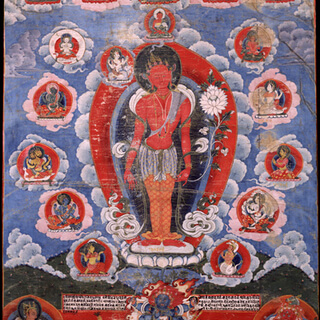
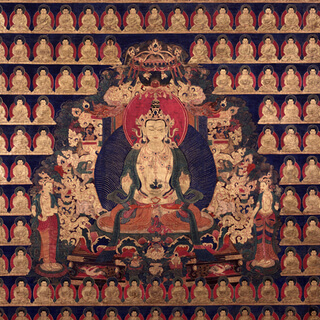
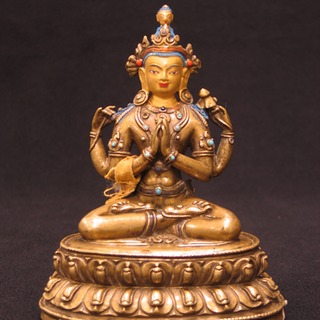
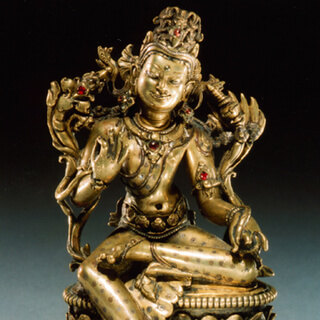
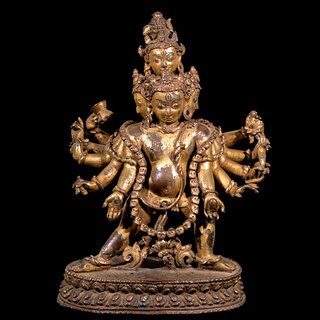
Including an image of a related artwork chosen from the Rubin Museum's permanent collection.
And now,
Please enjoy your practice.
Welcome to the Rubin and to our weekly mindfulness meditation practice.
I'm so delighted that Sharon Salzberg is back with us.
And of course,
We know her as the co-founder of the Insight Meditation Society in Berry,
Massachusetts.
And she's been studying and teaching for many decades.
She is the author of wonderful books,
Including the very recent Real Love.
Please welcome her back,
Sharon Salzberg.
So liberation.
What an interesting topic.
Because of course,
It means so many different things to us,
Even like my being in New York,
Which is a choice,
Right?
Sometimes people who know Berry,
Massachusetts,
Which is really tranquil,
It's a little quiet little country town,
Very tranquil,
Very peaceful,
They come up to me if I'm teaching somewhere in New York and they say,
Are you okay here?
And I say,
It's a choice.
No one's making me be here.
So there's freedom in that,
Right?
There's liberation in feeling,
You know what,
I have alternatives,
I have choice.
And sometimes,
Of course,
External circumstances keep us from feeling that sense of choice.
And sometimes,
Oddly,
Internal circumstances,
Something old,
Some damaging old tape about ourselves arises and it's so quick and it's so strong.
We don't even notice that it could be a misperception.
Not that it's not happening,
It is happening.
But sometimes what we feel,
What we believe is such a distortion of reality,
That what we need is just a little bit of space so that we can look more clearly and then decide and then choose.
Do I want to go with this or do I not?
And all schools of Buddhism really,
This is described often just as the word mindfulness,
Which is such a kind of cliched word,
Oddly enough right now.
But one classical meaning is an awareness of what's happening in the present moment.
So our perception is not distorted by bias,
Like old habits may arise,
But they don't necessarily have to take over.
And we have a much cleaner,
Clearer sense of what's actually happening.
So one old habit that's so common is projection into the future.
Something physically painful happens or kind of emotionally disquieting,
We're a little bit anxious,
Just a little bit.
And then we create a future out of it.
Like this is the only thing I'll ever feel.
This will never get better.
Or that plane will be late and then I'm going to be stranded.
And once I'm stranded,
I'm not going to be able to ever get to where I'm going.
And you know,
What's life and wherever going to be like.
One of my trips here recently,
You know,
Because I have been going back and forth a lot,
I was supposed to meet someone here the day after I flew.
And she wrote to me just to confirm.
And I wrote back and I said,
You know,
I'll definitely be there.
The only thing is I'm flying the day before.
So if I end up in Detroit,
I'm not going to make it,
You know.
So I'm on the airplane the next day.
And all of a sudden,
The pilot gets on the PA system and says,
Well,
We're circling Detroit because it's raining in Newark and we don't know if we can land.
So we were just told to circle Detroit.
And I thought,
Why did I say that?
Why?
But we ultimately stopped circling.
We landed in Newark and I made my appointment the next day.
You know,
But our minds,
You know,
Can create a nearly certain reality,
Which is not only certain because we're investing it with that kind of energy.
Right.
And we suffer from that.
We feel all this anxiety.
So to have clear choice means to clearly see what's arising and to decide,
Do we want to nurture it or do we want to let go of it?
That's the kind of liberation.
And even though the word liberation is so kind of fancy,
You know,
In highfalutin and the Burmese tradition of Buddhism,
They would say every moment of mindfulness is a moment of liberation.
It doesn't mean that nasty things aren't happening.
It means that we're relating to them in such a way that we're not taking them to heart.
We're not embroiled in them.
We're not defined by them.
Our choices and our actions are not driven by them.
We're free.
Even in the presence of maybe very old fears or tremendous greed or whatever may be coming up.
And even with delightful,
Wondrous,
Beautiful,
Beautiful things that arise for us,
We can have a very distorted relationship to them as well.
You know,
Maybe something good happens and the instant it arises,
We're clinging.
Like,
How can I keep it?
How can I keep it from ever changing?
Well,
Good luck.
You know,
Then we're not actually enjoying it at all.
We're just afraid about not being able to hold on.
Or we feel guilty about it and we don't even let ourselves experience it fully.
We're kind of half or more shunning it even as it's arising.
So we can see a distorted relationship to anything and we can see the possibility of being free in the face of anything.
That's real liberation.
If liberation only implies a kind of quietude to us where everything's serene and everything's pleasant,
Then usually that's a path of greater fear and resistance because how can we ensure in any way that nothing disturbing will arise?
It's just not going to be.
I have one teacher,
Tibetan teacher,
Sukhneer Rinpoche,
And he's a very great teacher,
I think in part because he's a great mimic.
And of course the people he mimics are his students,
So it's us.
And he'll describe,
Say,
Sitting in a living room in New York City meditating and you just feel like this incredible peace.
And then the peace sort of is on the edges,
It's surrounded by joy.
And then the joy deepens into bliss and then it's peace and bliss and peace and bliss.
And then these sirens go by and it's all over.
So you freak out.
You think,
Oh,
You know,
I can't meditate,
It's too noisy.
I better move into my closet.
So in certain situations in New York,
That is your only closet,
Right?
So you empty out your only closet and you create an altar and you have like everything's beautiful and wonderful and you sit down and again you enter this really serene,
Lovely state and then you think,
Oh no,
I hear the water in the pipes,
I hear the plumbing.
So then you go out and you buy those ear things they wear in airport tarmacs,
You know,
And then you're sitting in your closet afraid of a sound.
Or maybe,
You know,
Before you sat down,
You're sitting on a cushion and you've smoothed everything out so that nothing is rubbing,
Nothing will irritate you and you have incense going and you have,
You know,
Beautiful music and you're sitting there with your ear things on so you're not hearing the plumbing and then you have a memory and it's very disturbing.
And it's like,
There you go.
At some point we face the fact that we're not in control of the arising of circumstances.
It doesn't mean we don't make any attempt to influence circumstances,
We do.
We don't necessarily turn on the radio and sit with it blaring,
We try to create quiet.
But in the end we understand we don't absolutely need quiet in order to be aware,
In order to be present,
In order to be kind,
In order to be balanced,
Right?
So we do work with trying to create conditions or influence conditions and we also have the possibility of letting go so that we can marshal the inner strength we absolutely have and the presence and the clarity and all of that in the face of whatever and that's ultimately what's liberating.
That's why every moment of mindfulness is called a moment of liberation or a moment of freedom.
It's sort of like not lesser freedom,
It's not lesser liberation,
It's not like it's not good enough and we sort of have to do remedial work to buff it up or something like that,
It's not like that.
But for almost all of us it's quite intermittent,
Right?
We have a moment of really being present and clear and connected and aware and kind and then it's gone.
It doesn't mean it doesn't count,
That moment counts,
But it's just there and then it's gone.
So the question isn't improving the moment,
The question is getting more of them,
Right?
So we either get more of them in a row before we lose it or most realistically we lose it and we start over again as quickly as we can because that's the place that we've really trained ourselves.
So there's this wonderful example,
Very,
Very simple example I've always loved in the Buddhist teaching,
Where the Buddha said,
A mind,
Your mind,
My mind will get filled with qualities like mindfulness and loving-kindness,
That's a free mind,
Right?
Your mind will get filled with qualities like mindfulness and loving-kindness moment by moment,
The way a bucket will get filled with water drop by drop.
Your mind will get filled with qualities like loving-kindness or love and mindfulness moment by moment,
The way a bucket will get filled with water drop by drop.
And I always love that example from the first time I heard it because from the first time I heard it I could just imagine myself standing by that bucket and responding in a variety of ways.
One is looking in and thinking it's going to be so wonderful when that's filled and I'm completely enlightened back in New York,
Floating down the streets,
You know,
But not bothering to add one more drop,
Right,
Which is this moment relating to it with mindfulness,
With loving-kindness.
Or certainly I can imagine myself standing by that bucket and looking inside and thinking it's so empty,
That's never going to get filled.
Once again,
Not doing the only thing that really matters,
Which is right now adding one more drop and one more drop.
And since I love the example,
So I use it a lot,
Several people have come up with different iterations like somebody said,
Well,
Can't you see yourself standing by the bucket and your bucket and completely ignoring it and just like peering over into someone else's bucket?
Like,
How they doing over there,
You know?
I thought,
Yeah.
And many,
Many people come up and say,
I think my bucket has a leak.
I say,
These buckets don't leak.
Actually,
They don't leak.
So if you want to think about liberation in a real way,
You know,
Not in a next lifetime when I live in a cave,
You know,
And I don't have to deal with where to park my car,
An alternate side of the street,
Parking,
Whatever.
And you want to experience it in this lifetime here and now.
It's moment after moment after moment.
And then you lose it completely.
And you start again as quickly as you can,
Because that's how it actually happens.
Okay,
So we're going to sit together.
See if you can have your back be straight without being strained or over arched.
You want some energy in your body.
But I like so much energy,
You're really stiff and uptight.
You also want to be relaxed and at ease.
You can close your eyes or not,
However you feel most comfortable.
We can start by listening to sound.
It's like the sounds,
Whether it's the sound of my voice or other sounds can just wash through you.
It's a way of relaxing deep inside,
Allowing our experience to come and go.
And bring your attention to the feeling of your body sitting,
Whatever sensations you discover.
And bring your attention to the feeling of your breath.
Just the normal natural breath,
Wherever you feel it most distinctly.
Maybe that's the nostrils or the chest or the abdomen.
And find that place where the breath is clearest for you.
Bring your attention there and just see if you can feel one breath just as it is.
And if you like,
You can use a quiet mental notation like in,
Out,
Or rising,
Falling to help support the awareness of the breath,
But very quiet.
So your attention is going to feeling the breath,
One breath at a time.
And if you find your attention has wandered,
You've been lost in thought,
You've fallen asleep,
Whatever,
Truly don't worry about it.
It's time to add one more moment,
One more drop to that bucket.
See if you can let go of the distraction gently.
Just return your attention to the feeling of the breath.
And if you like,
You can use a quiet mental notation like in,
Out,
Or rising,
Falling to help support the awareness of the breath,
But very quiet.
So your attention is going to feel the breath,
One breath at a time.
And if you like,
You can use a quiet mental notation like in,
Out,
Or rising,
Falling to help support the awareness of the breath,
But very quiet.
So your attention is going to feel the breath,
One breath at a time.
And if you like,
You can use a quiet mental notation like in,
Out,
Or rising,
Falling to help support the awareness of the breath,
But very quiet.
So your attention is going to feel the breath,
One breath at a time.
And if you like,
You can use a quiet mental notation like in,
Out,
Or rising,
Falling to help support the awareness of the breath,
But very quiet.
So your attention is going to feel the breath,
One breath at a time.
And if you like,
You can use a quiet mental notation like in,
Out,
Or rising,
Falling to help support the awareness of the breath,
But very quiet.
So your attention is going to feel the breath,
One breath at a time.
And if you like,
You can use a quiet mental notation like in,
Out,
Or rising,
Falling to help support the awareness of the breath,
But very quiet.
So your attention is going to feel the breath,
One breath at a time.
And if you like,
You can use a quiet mental notation like in,
Out,
Or rising,
Falling to help support the awareness of the breath,
But very quiet.
So your attention is going to feel the breath,
One breath at a time.
And if you like,
You can use a quiet mental notation like in,
Out,
Or rising,
Falling to help support the awareness of the breath,
But very quiet.
So your attention is going to feel the breath,
One breath at a time.
And if you like,
You can use a quiet mental notation like in,
Out,
Or rising,
Falling to help support the awareness of the breath,
But very quiet.
So your attention is going to feel the breath,
One breath at a time.
And if you like,
You can use a quiet mental notation like in,
Out,
Or rising,
Falling to help support the awareness of the breath,
But very quiet.
So your attention is going to feel the breath,
One breath at a time.
And if you like,
You can use a quiet mental notation like in,
Out,
Or rising,
Falling to help support the awareness of the breath,
But very quiet.