Welcome and thanks for listening to Truth,
Wisdom,
Freedom Conversations.
Each week I'm joined by various conscious leaders as we discover more pathways in becoming heart-centered human beings.
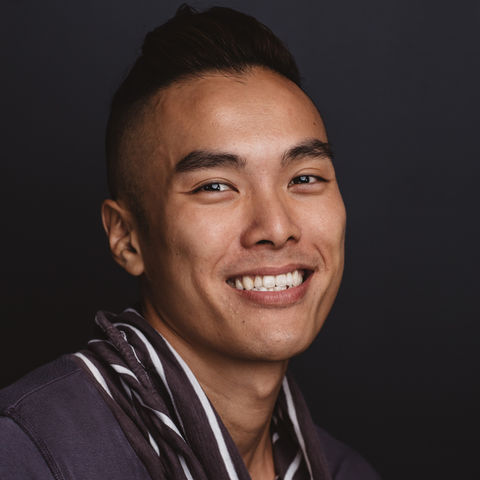
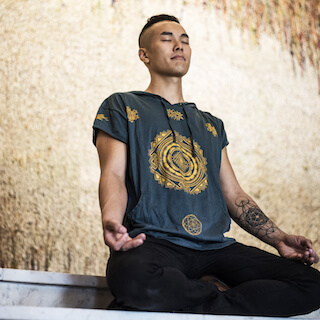
This is your host,
Author,
And spiritual coach,
Johnson Chung.
Good morning,
Good evening everyone,
Wherever it is that you are,
Tuning in from around the world.
Welcome to another episode of Truth,
Wisdom,
And Freedom Conversations.
So I'm really excited this morning here in Sydney and it's evening for Coach and Paley Ellison in New York City,
Where he is currently based.
And we're going to have a conversation about the healing power of facing death and suffering directly.
It's not exactly the cheeriest of subjects to talk about,
But well,
When you have a Zen monk,
These are the things that you talk about.
So welcome.
Thank you so much.
It's a joy to be with you.
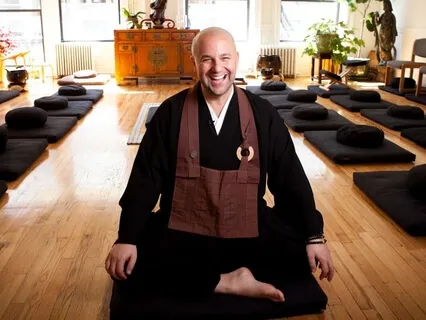
Coach is actually an author and he is a Zen teacher and he does many other things.
He's also a Jungian psychoanalyst and a certified chaplaincy educator.
And so he does a lot of work at his center that he's co-founded in New York City,
The New York Zen Center,
And they do a lot of contemplative care.
That's hard to say.
A mouthful.
And a lot of education and personal caregiving that's really anchored and based in the Zen practice.
And he is also the author of two books.
One is called Wholehearted,
Slow Down,
Help Out,
Wake Up.
And he's also the co-editor of this other book called Awake at the Bedside,
Contemplative Teachings on Palliative and End of Life Care.
Thank you so much for taking time out of your schedule because I know you're doing lots of trainings and New York City is so full.
And so maybe you can start by sharing a little bit about what brought you into this work that you're doing,
The path that you're on.
One of the things that brought me into this work is I grew up in an environment of children and grandchildren of immigrants and people were affected by the Holocaust.
And so there was a lot of chaos in our lineage and a lot of pain and suffering.
And as often is the case with many of those communities,
There is a lot of chaos that keeps being handed down from generation to generation.
And so,
Like many people in my shoes,
I experienced lots of emotional and physical and sexual violence as a young person and a lot of chaos.
I was very drawn to,
For whatever reason,
To healing.
As a very young kid,
I was always kind of on the lookout for even moments of going into nature and laying on mounds of moss and just feeling the sky above me and wanting to experience myself in a different way and to feel connected and held.
And one time when I was around eight years old,
I went to my grandfather's house,
Who I love very much,
My grandpa George.
And he used to collect National Geographic magazines,
Which back in the day,
They used to have like literally lost native tribes.
And when there used to be lost native tribes and every once in a while,
They would profile a city.
And in this one that they profiled,
There was this one of Tokyo.
I remember him turning the page and even the smell of the magazine or laying there on the carpet.
There was this picture of this monk with the Aria Rogasa hat,
Which is this large bamboo hat where you can barely see the person's face,
Just their mouth.
And he had a little smile.
All the people in the picture were blurred.
He had this little smile and was so content.
I remember looking at the caption below and said,
Zen Buddhist monk in Tokyo.
And I remember saying,
I want to be that.
So we can say it was a kind of a calling when you're eight years old.
You were gravitating towards the Zen life at such a young age.
And so when did you actually embark on the journey of doing that?
And what specifically brought you to the Soto lineage?
Because there's many different lineages.
So one of the things that brought me to it was around a couple of years later,
I started practicing karate at the local strip mall.
I grew up in the suburbs.
And so strip malls are the way it was in the basement.
When the strip malls,
There was a karate school and it was right after Star Wars had come out and karate kid.
And it was the first time I understood you can have a teacher,
But not like one from school,
But someone who taught you about life and how to be in yourself.
And I was so drawn to that.
And so I started practicing at this karate school.
And it turned out that the teacher who was named Sensei White,
He was really intense and was a Zen person.
We used to sit in Seizo,
Which is when you have your knees underneath you and would sit there on the wood floor for 20 minutes and sweat and sweat and sweat.
And I remember still to this day,
You would always say,
You'll never be free until you learn how to be still and be with your pain.
And I remember thinking,
I'm going to learn how to be a superhero.
It felt like learning a superhero skill.
It felt like a really important beginning.
And it wasn't until a few years later when I was 17,
When I was walking down the street in Boulder,
Colorado,
Where I saw this guy dressed up,
An American person dressed in these clothes.
And I realized what he was.
And I realized,
Like,
Oh,
My God,
He's an American Zen monk.
His name was John Dido Luri and who was a Soto Zen teacher.
He was the one who really was my first entry into the Soto Zen path.
He was so kind and generous and tender and ruthless,
That great combination of qualities,
And he was really into paying attention ever since then.
I've never really gone back almost 30 years later,
More than 30 years later,
And feel like I'm still just getting into it.
I feel like that's an ongoing way of learning how to be intimate in my life.
And so that,
Wow,
Like,
Look at you,
Johnson.
I can get to see you and see the it looks like clouds outside of your window and that we get to be together.
And I feel like that learning of how to be still in the midst of chaos that the world is in now is such a powerful teaching and a way of being free so that you're not just in the overwhelm,
That you can actually be still in the midst of the tornado or the hurricane or whatever it is,
Learning how to be more alive,
More loving and more intimate.
I love that.
Let's talk a little bit more about this stillness because as you were talking about sitting in the kneeling position and Zen.
So I sat with a Zen teacher years ago and it was my first exploration in Zen.
You know,
If you compare it to artwork,
It's almost like very stark and minimalist.
Here you are sitting and looking at a wall.
I had to sit there every day looking at a wall and I got so angry.
I used to get so angry at everything,
Everyone and all of this rage would come up and I had to sit there with that.
And so when you said to sit there with your pain and your suffering and still find freedom or that's what your sensei said,
You won't find freedom until you can sit there with that.
And I remember hating Zen because it brought up all this stuff that I brought it all up.
Exactly.
Even though I wasn't looking for it,
But it was hidden.
And so there is a power in the stillness.
So how did the practice of stillness help you through a lot of the types of trauma that you said you experienced as a child?
I think that learning that I was not just those things.
Like you,
I think that all of those things emerged very similar.
I wasn't expecting them to emerge because I was going for like peace and ease and I wanted to be like that woman on the cover of the Time magazine in her bathing suit and just be like,
What I realized is that I had a lot of work to do that I needed to go through actually what I was afraid of through my rage,
Through my fear that it was not going to be around suppressing it or burying it or running from it or any of that.
Because I had to realize that I am those things.
That was a part of my experience.
I realized that the more I try to suppress those things,
Then they became more powerful.
It's interesting when you say inner peace and the nice fluffy things that you were looking for.
I think that's what most people think of when they think of Zen.
And if we want to embody those states of lightness and softness and expansion and greater awareness,
Ultimately inner peace,
Then what do you feel is the common misconception that people have coming into stillness practice?
They kind of want to bypass,
Right?
All of these things.
Totally.
Like what you're saying.
The dark shadows.
So in the Zen tradition,
How do you deal with the dark shadows when they come up?
Do you dialogue with it?
Do you just watch it?
There was a really funny study done in the 1980s where they said,
Well,
Why do people stop meditating?
Because people started to feel bad feelings.
So they were like,
Forget this,
Man.
I want something that makes you feel good.
What I've experienced over time is that the more you start to realize,
Like,
Oh,
Right,
I can feel rageful.
I can feel fearful and not believe it.
I can just know that it's a story that's cycling through me.
And just over time,
You know,
In Zen tradition,
That it's also a tradition that's not so popular because it really is the long haul.
People often say,
Well,
In the tradition,
Practice it for 30 years and then decide whether it's working or not.
Because in my experience,
It takes so long to burn through our preferences and our opinions,
But I realized over time,
Who cares if you don't like it?
Who cares that it's a little uncomfortable or really uncomfortable?
But learning how to face it has been the most liberative thing that I've ever experienced.
And over time,
And it's not like I'm done.
There's no arrival in my point of view.
It's just constant practice and consistent practice.
Finding loving,
Kind,
Compassionate companions to support us along the way is everything.
There's this whole notion of committing to something through thick and thin.
That's really what it means when the storms come and we can look at nature as a direct reflection of that.
It's not always going to be blue skies and chippy birds floating around.
Sometimes there's a tornado,
There's a hurricane,
There's COVID-19.
That's just how things roll,
Right?
I was watching one of your talks and you were quoting Dogen.
He says this lovely thing about flowers.
I actually have it here.
Dogen,
Who was a Zen master a long,
Long time ago,
Said,
The flowers bloom every year.
Nevertheless,
Not everyone attains awakening by viewing them.
Only through the virtue of long study and continuous practice,
With the assistance of diligent effort in the way,
Does one realize this way.
And then there's this other part of it where the blossoming of the flowers doesn't happen alone.
It happens with the help of the spring breeze.
That is really a reflection of how we blossom.
It's in direct relationship with one another.
And I think on the path or any path that anyone takes,
It doesn't have to be a Zen path,
But that it's our relational work that is most challenging and most confronting.
Because when we go,
Let's say,
To a meditation retreat center and we just get into this lovely space.
I've seen this in participants and clients and myself.
And then we go back to city life or wherever it is that we come from.
And then we have to deal with our parents or with some estranged lover or whoever it is.
And then we're put into conflict again.
So there's this balance that needs to be found in how we navigate our relationships.
Because if we're all pursuing this inner peace and stillness and awakening,
Without including everyone around us,
Then what is it all for?
So what is your take on relationships and how people apply stillness,
Zen meditation techniques into real life?
Yeah,
You know,
In the Zen tradition we talk about that the small retreat is off in the mountains where you're at a retreat center,
Yoga studio or something.
But the great retreat is disappearing in the capital.
Like being in the midst of your life is the great retreat.
Going home for the holidays is like a really great retreat when we used to do that.
Really finding where your practice edge is and meeting it.
Because I feel like it's so exciting to be alive if we can just keep saying like,
Wow,
What is it now that I need to meet in myself?
My Zumi Roshi,
Who is the founder of our school in the United States,
His father used to say to him,
The things that bother you about other people are not other people.
It's what we have to reckon with in ourself.
It's always such an important thing when we start pointing in our life,
Oh,
That's the problem or that's the problem or that's the problem or that's the problem,
That person.
And to learn how to do that.
We don't know about changing everything else.
We know about how do we work with it in our own experience.
And so how do we not engage in the same reactivity that keeps that wheel of suffering going?
I keep doing the same thing,
Keep doing the same thing and interpreting things the same way.
So meditation practice to me is so amazing because it teaches us to collect ourselves,
Come back into our bodies and refocus on our Hara,
Which is that place,
The base of your abdomen basically.
How do you just come back and say like,
Wow,
I'm freaking reactive right here and I'm losing my shit.
But I want to really be here learning how when we're feeling reactive,
What do we return to?
And how do we find the compassion that is both including ourselves and others?
And I know myself when I get into reactive states,
It's not so compassionate even to my own heart and mind.
So of course,
How am I going to be compassionate to anybody else?
How do we kind of remember that compassion is giving and receiving equally including ourselves?
It's an adventure.
It is.
And as you're talking about including all the different parts of self,
So I know you're a Jungian psychoanalyst,
So it's like the shadow aspects,
Right?
The wounded aspects of self,
The bully within our self,
The Adolf Hitler within our self,
Right?
This is something one of my teachers says a lot.
He always reminds us and says,
Mother Teresa didn't go to Calcutta to do her great work.
She said that she went to Calcutta because she saw the inner Hitler within herself.
So that was the impetus to drive her into the field of compassionate work that she did.
It was really working on herself through the service of serving others and helping the planet in the way that she did.
And that there's oftentimes when we see people entering into meditation because it's such a fad now.
Oh,
I'm on this app.
I'm on this app.
There's so many apps out there,
Right?
And actually we met through an app,
Which is the app that we're both on.
10% happier.
We're both on this app.
So there are these apps and these tools out there.
But I notice sometimes when I'm just walking down the street and I hear conversations with people,
Meditation comes up a lot in conversations is almost a throwaway.
Like,
Oh,
Yeah,
I did my five minute meditation this morning and people are still really like wired and they're having their like fifth coffee.
And they're like,
Oh,
My God,
It's like a thing to do.
Right.
So there's it's almost as if the essence of meditation through its popularity nowadays has kind of it's almost diminished because people are looking at it as almost like a quick fix.
It's going to make me feel better,
Like what you said.
Instant gratification.
What are some things that you feel that people must be doing in conjunction with the techniques of sitting there and meditation so that they can get to the essence of holding onto all of it,
The shadows within and the light within so that it's not this.
Let's just bypass all that stuff because it's yucky and I don't want to look at it.
So what are some maybe principles or are there other techniques besides just sitting there and listening to some guy talk to you?
What else can people be looking for?
Well,
I think it's interesting because I think for at least twenty six hundred years,
There's been this.
It's unusual for people to want to go for liberation from really from fear.
Even at the time of the Buddha,
Historical Buddha,
It was unusual.
He was it was against the stream of popularity.
So I think that it's wonderful that people are even meditating for five minutes.
I think it's great.
And at the same time,
The practice and the tradition offers this possibility for liberation.
The Buddha was kind of like trying a lot of different things out of it was contemporary,
Be like trying a little yoga,
Trying a little deep breathing,
Trying a little of this,
A little shamanism,
A little of everything.
You know,
It's like all the wonderful things,
Actually.
And each of them you can go really deep into.
Right.
At a certain point,
He said that I have to stop.
I have to stop.
Enough of the rigmarole.
I have to stop.
And so he sat under this tree and what he had to face was this fear and all the things,
All the greed that takes him away and distraction.
He had to feel the distraction and stay there.
He had to feel his rage and stay there.
He had to feel all of his delusions of who he was or what he wished had happened to him and stay there.
And what he said always moves me at the,
Well supposedly he said,
You know,
He said,
Oh,
House builder thou art seen at last.
The ridge pole is shattered.
Nevermore will you build a house of sorrow.
And so what he saw was that he builds his house of sorrow.
It was that the brain,
Its habit is,
You know,
80% of our thoughts,
We think the same thoughts that we've been thinking for decades.
We interpret the same information as fearful or with the same information as a way reason to distract ourselves.
And learning how to be still is like a superpower.
It's actually a kind of me a gateway into new possibilities of intimacy and love.
Beautiful.
I love that.
So do you want to tell us a little bit about the palliative care that you do and the trainings that you offer because you work a lot with death,
Which is popular,
Very popular.
Fear,
Death.
It's like,
Who is this Zen monk?
You must have lots of lessons or insights that people can glean from,
From doing a lot of work by confronting death directly and the power of grieving.
Maybe a lot of people don't actually know what palliative care is.
Maybe you can start there.
Right.
So palliative care is really an extra layer of support.
And it's for people with serious illness,
End of life.
Palliative means to provide relief from suffering.
Early in my practice,
First 10 years or so,
I felt like there was something missing in my practice,
My meditation practice.
And I was so moved by the story of the Buddha where he actually encountered a sick person,
Encountered a dying person,
Encountered an old person.
And I realized that,
Wait a second,
I don't really encounter those things.
And maybe there's something actually about being with people could actually both be a form of service and a way for me to enliven what this practice is really about.
You know,
I met Chodo and we decided to do this together.
And so we went on this wild journey of taking care of people.
I took care of my grandmother and he was a volunteer at a hospice and doing AIDS work.
And it was through actually sitting with people as they're dying,
You start to realize how much people are holding back their whole lives.
I've never met a dying person who is like,
Oh,
I'm so glad that I was so fearful my whole life.
What you hear again and again and again and again is what was I doing with my time?
Why was I so afraid?
I was so scared that people wouldn't like me.
All these different ways that they held back from loving and being loved,
Essentially.
Nobody cares about whether they wrote a book,
Whatever they did.
And we work with celebrities and homeless people.
The concerns are the same at the end of the day.
Did I love well?
Did I live well?
Did I live fully?
Did I live wholeheartedly?
For most people,
There's enormous amounts of regret.
And I remember one of the first people we got to accompany through her dying was this incredible woman.
And I said,
What would you want people to know?
And she said,
Don't hold back in your life.
And she said,
Promise me you'll let other people know that.
It's amazing how we hold back.
We get worried.
We're scared.
And it's like,
OK,
OK,
We get scared.
We hold back.
And then what?
We always have a new opportunity.
I learned that from my grandmother,
Who became more and more alive in her 80s.
She thought at first,
Maybe it's too late.
And then she realized it's never too late.
Our center,
We have international training programs for people who want to learn how to integrate a spiritual practice with service.
And so we have a program called Foundations in Buddhist Contemplative Care,
As well as we'll be starting a clinicians program in the spring for fellowship in contemplative care.
And it's just very exciting a way for people to come together to learn how to face what is difficult and actually meet people who are old,
Meet people who are sick and meet people in their dying so that we can become more alive and more connected and more intimate.
Really,
Our mission is to change the culture of care through addressing old age sickness and death with compassion and wisdom.
And I think that one of the things is we have to change the culture of how we care.
And most of us are not living day to day in accord with what we actually say is the most important to us.
We don't fill our days with that.
And yet we can learn to,
Which is so exciting.
It is very exciting.
Thank you so much for sharing that and about what you're doing at your center.
It's really important work to help people embrace,
As you say,
The intimacy of self.
And then from that,
The intimacy of others and the intimacy of life and being so connected to all the different colors of life.
So I wanted to ask you about the current state that we are all in.
You know,
When 9-11 happened after that,
It was always,
Oh,
Remember before 9-11,
Pre 9-11.
And then this is post 9-11.
And we've reached another juncture in in our history.
Now people are saying,
Oh,
Pre-COVID and now in COVID.
There's definitely a big shift of attitude and how people are dealing with things and coping with things around the world.
I think you wrote somewhere about the embracing of the disorientation of the self as the new orientation ahead.
So maybe talk a little bit about what that means in the current climate that we're all in.
Well,
First of all,
Before COVID,
We had a pandemic which actually the World Health Organization announced,
Which was called social isolation.
So a pandemic of loneliness.
And that was right before COVID.
And then those things met.
And now we're in this combination of things where people are very afraid and disoriented and lonely,
Feeling very separate and sheltering in place around the world.
And then we're kind of faced with what's always been true is the mirror is really close.
And people are doing lots of different things with that.
But for me,
We are in a place of total disorientation.
Nobody knows when this is going to change or pass or how that will happen.
And lots of theories.
And I feel like that's always true.
We're always in this place of disorientation.
And one of the teachings in Zen is to not push away anything.
So like,
OK,
Well,
This is disorienting.
How do I find a new orientation in the midst of that?
To me,
It's actually heartbreaking and painful and exhilarating all at the same time to meet it.
Our opportunity is how do we meet ourselves when we're totally disoriented and maybe even feeling totally messed up and then learning how to say like,
OK,
OK,
And now what?
How am I going to be in time?
Knowing that these are the new conditions,
Whether you like the conditions or you don't like the conditions,
Doesn't really matter.
You know,
Some of my students tease me because I often say,
Who cares?
It doesn't actually it's almost like we care too much about those preferences.
And how do we learn how to not care as much about those preferences,
Not just cling to them and just say,
OK,
This is the situation.
And how am I going to live my values,
Live the life that I really love in the midst of these conditions?
Not what might happen after covid,
Whatever that is or before.
How do we find the intimacy now and how do we find the engagement now?
We have this amazing opportunity to do something totally new and maybe even to surprise ourselves.
It's definitely a constant reminder.
It doesn't matter what it is.
It could be covid.
It could be a war.
I mean,
There are countries that are constantly breaking out into war.
There's so many things like losing a job or getting divorced or there's so many things in our lives anyway that disorient us.
And to then go,
Well,
I can't do anything.
I'm going to choose fear and stay in this small contracted version of myself because of covid.
It doesn't make any sense because we're constantly,
As you said,
We're always disoriented no matter what.
And we're wired to be resilient.
That's just biologically how we were designed.
We weren't designed to just stop and fall over.
It just doesn't happen.
Right.
And so we have to make good choices about how we're going to spend our time.
It's interesting because the title of your book is Wholehearted Slow Down,
Help Out and Wake Up.
Right.
So the first part of that is slow down.
And that's the thing right now in this climate.
People don't want to.
They want to go back to the pace of what it was before.
The good old days when you could go out and have a wedding party of 5000 people or whatever it was.
And now it's there's a lot of resistance against this slowing down.
So maybe you want to tell us a little bit about your book.
Well,
It's actually a book that I didn't want to write.
It was actually approached by the publisher to write it.
And I said,
No,
Thanks.
And they said,
You know,
No,
We'd really like you to write it.
What do you need?
And so I was like,
OK.
And,
You know,
They asked,
You know,
Is there something you really care about that you'd want to actually you feel like would be helpful?
Because I didn't want to write a book that was just to have a book,
Another book in the world.
The world doesn't need another book.
It needs,
You know,
Some helpful guidance and a good companion.
So I felt I really wanted to write a book about these precepts that have really supported me an enormous amount.
There are these 16 guidelines and then practice for the last about 800 years.
I find the teaching so exciting and filled with ways to pop into life.
They're like 16 lenses to wake up and like the subtitle.
It's about how to slow down and reflect into it,
Be of service in the world and through being of service in the world,
Which can just mean saying hello to your neighbor is how we wake up.
And so the book is really designed to be like having a friend in your pocket or in your ear.
Each chapter,
Like one is about how to work with receptivity and how to work with freshness and how to stop the fog machine,
How we kind of intoxicate ourselves with all kinds of things that stop us from seeing clearly.
And so I had enormous feelings of love writing this book.
I wrote it really for with my niece in mind,
You know,
This and she's in her 20s and not a Buddhist at all.
But,
You know,
Curious and making it accessible.
So I wanted to create a book that also would help people think about how do I steal from myself?
How do I steal from others in the conversation?
If I start talking so much about myself,
How does that steal the other person's opportunity to really express themselves and feel heard?
And so it's filled with my own personal stories and also lots of fairy tales and other stories to help people to see themselves more clearly and to have.
It's designed to be a companion to help and support you.
That's really what we all need right now is a good companion in our back pocket,
Which it sounds amazing.
So if you guys watching or listening to this would like to get a copy of Koshin Paley Ellison's book called Whole Hearted Slow Down,
Help Out,
Wake Up.
It's on Amazon.
You can just search for that title.
And also,
If you want to find out more about the palliative care and the contemplative,
I can't say this word,
Contemplative care.
You can do it.
That's a long word.
Contemplative care.
You can go also to zencare.
Org and find out more about the different types of training programs that they offer in Zen studies.
Thank you so much for spending your evening,
My morning with me.
Is there anything else,
Any other insights that you'd like to share with the viewers or listeners before we leave?
I love to think about,
You know,
The founder of our lineage,
Taizan Mizumi Roshi,
Talked about that the whole thing really is about learning how to appreciate your life.
That's the whole thing.
How do you appreciate all the aspects of your life?
What you're afraid of,
What you love.
Both of those make a whole life.
It's a delight to be with you,
Johnson.
It was such a pleasure talking with you.
Thank you so much,
Koshin.
And thank you,
Everyone,
For tuning into Truth,
Wisdom,
Freedom Conversations.
We shall see you next time.