So,
What follows is a very brief introduction to a mindfulness technique revolving around the breath and colour.
This would not generally be an entire session,
It might be the introduction to a longer session,
Although with younger children it could very easily be a three or four minute method of helping them to relax and get comfortable quite quickly.
So,
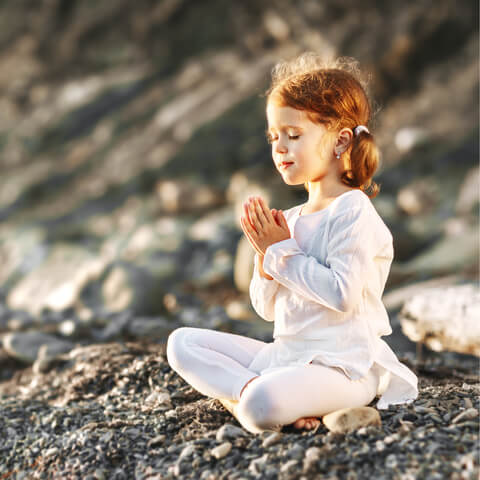
This would begin with the eyes closed,
Again seated in an upright posture,
Preferably with your feet on the floor.
And we would begin by simply noticing the breath,
Noticing the intake of air through the nostrils and relaxing as the exhalation takes place.
So,
Follow the feeling of your in-breath and as you breathe out,
Relax the muscles of your body.
Take a moment to be aware of how your body feels.
Does it feel heavy or light?
Does it feel comfortable?
Does it feel relaxed?
And now think about the air around you,
The air physically around your body at the moment.
And imagine a colour,
Any colour that you choose,
And infuse the air around you,
The air immediately around your body with that colour.
Try to make it a happy and peaceful colour.
And imagine now that when you breathe in,
The air you breathe is that colour and the colour begins slowly to fill your body.
With each in-breath,
Imagine a different part of your body filling up with that colour.
You can begin from the top of your body,
Moving downwards,
Or you can begin in your toes and move upwards.
Concentrate on individual body parts like your head,
Your face,
Your neck,
Shoulders,
Arms and hands and fingers.
With each in-breath,
Imagine a part of your body filling with the colour you have chosen.
Take another 20 or 30 seconds to focus on your breath and on the colour you have imagined filling your body.
Your body is now full of this happy and peaceful colour.
And you notice now that with each in-breath,
The colour inside your whole body becomes brighter and purer.
If you feel ready now,
You can gently open your eyes.
This practice makes it very easy for children to visualise relaxing their body.
If you like,
You can choose a colour for them and you can also draw an analogy to make the visualisation process easier for children.
For example,
If you've chosen yellow,
You could help children to imagine sunlight filling their body and the warmth that would go along with that feeling.
A colour breath meditation can be a very simple way to help very young children relax and even fall asleep.
So that's the end of this brief example of meditating with colour and with breath.