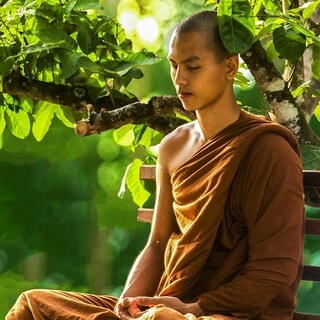
Kis Tuzazen,
The Three Marks of Existence and Raising Bodhicitta.
Thank you for being here with me today.
There are many different types of meditation practices that can calm the mind,
Strengthen concentration,
Reduce stress,
Or lower blood pressure,
Aid sleep,
Or improve self-esteem.
The variations are countless.
Many meditation techniques can evoke a unit of experience,
The feeling of oneness with the universe.
These practices have their benefits.
Unitive experience,
For example,
Evokes a deep feeling of connection to all beings and a sense of profound well-being.
Zen practice engenders insight into the true nature of self and the true nature of reality.
In this way,
Zen meditation can evoke a unit of experiencing,
But it's also primarily described as realisational.
This realisational insight is clearly defined and specific in terms of the three marks of existence – emptiness,
Impermanence,
And no-self.
No-self is a shorthand for no permanent,
Inherently existing self that's separate from causes and conditions and free from causes and conditions.
Everything arises based on causes and conditions.
Insight into the three marks of existence requires right thinking.
Right thinking is the key to realisational practice.
For instance,
You exercised right thinking by choosing to practice meditation in the first place.
This realisational approach contrasts the quietest notion that thinking is an obstacle to spiritual insight and therefore must be eliminated.
In contrast,
Zen teaches that a blank mind is a dead mind and can be described as quote living in a ghost cave or likened to a state of quote dead wood and ashes.
The key to bringing right thinking into practice is expressed and activated through the intention to evoke bodhicitta,
The mind of true awareness,
And the intention to simply sit with the rising and falling of all experience without attachment or aversion,
Without grasping,
Or without seeking after anything and without pushing anything away.
So what shifts is our relationship to thinking,
Not the elimination of thought.
The continued application of bodhicitta in practice engenders the lived experience of the impermanence of all phenomena.
Through practice you'll see that everything changes as causes and conditions change as they do constantly.
In this regard emptiness refers to this ongoing change and to the lack of any enduring self-nature.
So you can see that the three marks of existence,
Emptiness,
Impermanence,
And no self,
Are all intertwined.
They are different ways of understanding this one reality.
Thinking does in fact exist and co-exist in a relative sense.
However,
The nature is transient and lacking inherent,
Abiding,
And unchanging reality.
Through right thinking this is easy enough to understand in a conceptual way.
However,
From the realisational perspective it is through the insistent and consistent application of bodhicitta in practice that engenders an experiential or intuited realisation of the three marks of existence.
Bodhicitta helps to induce clarity and a sense of non-attachment to the rising and falling of experience,
And helps in maintaining a sense of full presence to the moment.
I'll ring the bell three times and we'll practice for a few minutes,
And then I'll ring the bell once again to signal the close of practice.
Now first make sure that you're very comfortable.
Take a few moments to adjust your posture.
Exhale deeply through the nostrils,
And then inhale deeply,
But without straining,
And follow the inhalation into the crown of the head.
And with a very slow and relaxed exhalation,
Feel a sense of relaxation spreading from the crown of the head,
And slowly flowing down from the crown into the back of the head and forehead,
The temples,
The face,
The neck,
And throat,
Across the shoulders,
And down into the body.
Feeling cool,
Relaxing energy,
And exhaling any tension that you may notice.
And work your way down to the soles of your feet.
Once you feel settled,
Step back from the breath,
Just noticing it when awareness goes in that direction,
And not noticing it when you don't.
No need to concentrate on the breath,
Just sitting.
Same with the body.
Simply develop a sense of the whole body just sitting.
Notice if you have any expectations for something special to happen or for something to change,
And let the expectations fall away by simply just noticing them.
As you sit without expectation,
Without an object of meditation to latch onto,
With no goal to achieve,
There is no pressure.
Just sitting and maintaining a sense of an erect but relaxed posture,
Taking notice of whatever rises and falls.
Sounds,
Sensations,
Thoughts,
Feelings,
Just noticing.
Sometimes it's helpful to just say to yourself,
Basic fact of sitting.
In this way you're constantly presencing yourself.
You are simply asserting the intention to raise bodhicitta,
The mind of true awareness to the rising and falling of all experience,
Without judgment,
Without attachment,
Without aversion.
As you continue to sit,
You may feel a deep sense of presence or a profound sense of release,
Of ease.
As you can see,
This is a gentle but active process of simply returning to the awareness of the body sitting and noticing what happens.
Thank you for your presence and most importantly for your practice.
Please practice.
It's very important,
Not only for your well-being,
But for the benefit of all beings.