Hi there,
Welcome to Serenity Wellness Podcast,
Episode 71,
Optical Illusions of the Mind.
Thank you so much for joining me.
And if you're new here,
My name is Nicole White.
I'm an integrated mental health and energy therapist,
And I'm happy to be here to share wellness with you.
You can also gather other wellness tools over on my other channel,
Serenity Wellness Tools,
So hop over there as well.
Today,
I want to talk to you about perceptions and beliefs and what it has to do with how we're moving through life.
What it has to do with this idea of illusion and what we might be able to do to move more into a reality-based kind of grounded way of how we're processing and digesting life around us.
These perceptions and beliefs have to do with a whole lot.
They could be foundational builds that go way back,
But they very much will factor how we're moving through the now in terms of our thought processes,
Our emotional experiences,
Even our optical information highways that we bring in,
The very things we see,
And how we then digest all of that.
I'm going to break it down a bit for you today and give you some tools to help you do something different if you choose.
Let's start with the perceptions and beliefs.
I'm going to talk with you about some areas or ways that our perceptions and beliefs get foundationally built.
It'll give you a good idea of maybe where you're coming from,
What built you in terms of how you're moving through life currently.
These perceptions and beliefs can be deep foundational builds.
They might go back many,
Many generations.
It could be a body experience of memory through past generational imprinting that can go back 14 generations.
It can also be through storytelling,
Through generational storytelling of how others moved through life,
How they perceived life,
How they emotionally experienced life or reacted to it.
In that storytelling,
That could be passed down as well.
Then we could just have that auto cycle of thinking or reaction.
I know that unfortunately we are getting more and more away from storytelling and that can be a very sad thing when we think about a lot of different stuff.
We can also have some of this related to our cultural understanding of the world and us.
It could be the communities that we were raised in.
It could be the educational systems that taught us or didn't teach us.
Many people were just kind of pushed through and I'm just going to leave that there or I'm going to totally bypass and get on a different topic.
But our educational system,
Our community,
Culture,
Generational linking through epigenetics or storytelling.
It could be through experiences and relationships that we have had earlier in life,
Now in life,
Maybe relationships that were built and broken.
It could be through societal things that we gained and learned,
The things that we absorb in our environment through television or reading material or inundation of news,
Lots of different categories there.
But where do we gain our understanding of life and all these different ways that that can happen?
In it,
It creates this foundational build of our perceptions and our belief cycles.
It's what allows that if you are in a room with anywhere from one to a million,
It doesn't really matter how many other people,
You and another individual or individuals all will have a different experience from the same exact situation because you all have different perceptions and beliefs built on all of these different things.
You could hear just from those things I mentioned how no two people are going to be alike in all those categories.
There's no way that two individuals experienced every slice of everything exactly the same.
So just keep that in mind and how that also has to do with judgment of self and comparison mind.
I know it's a different topic,
But perceptions and beliefs,
We're all different.
So how can we compare ourselves to others?
How can we use that as a judgment towards self?
So just keep that in mind.
Remember before I say this one,
I am not saying anything about anyone's religious beliefs.
Everyone has the freedom to believe whatever they want,
Whatever religion they would like,
Non-religion they want.
I'm not here to say anything about that.
What I am here to say though is part of this perception and belief cycle can also be around early organized religion,
Hypnotic imprinting of information.
I will just speak about Catholicism because that was what I was raised within.
I don't practice Catholicism anymore.
That's fine to those who do.
I'm not judging you.
Just going to share in terms of what I'm talking about here.
In Catholicism,
For example,
The way that it works,
Every year it's kind of a repeat.
I have not been to Catholic mass in I don't even know how long,
But I could go right in and I know when I'm supposed to stand,
When I'm supposed to kneel,
What I'm supposed to say,
Because it's the same thing every year with little tiny added sprinkles of difference.
So if we are in that type of situation and maybe we are in a family that took us into that type of organized religion very young in age,
Well then that's year after year after year of hypnotic imprinting of information before we even have the ability to know if we want to receive the information in that way of if you're told something over,
Over,
Over,
Over,
Over,
That's what's kind of in there.
Just keep that in mind because I will be talking a little bit about that as we move through these things.
And again,
Not here to say what to believe,
Not to believe,
Anything else.
I'm just here to try to help you to slow down enough to check yourself,
To pull back the layers and see what's underneath it.
See where things came from,
See what you believe,
And then you decide what you want to start creating in your life moving forward because all this stuff has to do with so many different areas.
Like I mentioned,
Thoughts,
Emotions,
The way we perceive in terms of optical intake,
And then a lot of health things,
Which I'll be talking about here in just a minute.
What this has to do then with emotion.
For many people,
They may bulldoze through life.
They may run through life so quickly that there is no slowing down.
There is no pulling back layers to see what's underneath.
And there might even be these kind of high hook-ins or attachments to must be this way because that's how it must be.
And then it will lead to guilt or shame or illusionary obligation.
And it makes us lose sight of our ability to rewire our system,
Neuroplasticity,
Our ability to open new highways in the brain,
Our ability to understand and manage our emotions differently than maybe we've ever done in our whole entire life.
Every day is an opportunity to start something new.
And so if you've been in a cycle of a certain emotion reaction cycle for years upon years upon years,
I'll just use anger as an example because it's really common for people.
Well,
Today's the day.
Today's the day that you could do something different.
You could do loops,
You get yourself all worried.
And every day is an opportunity to do something different and recognize that you judging yourself is not going to be the tool that is needed here for change.
I often encourage people to just remember that in the moment you were in whatever moment doing the best you could in that moment and holding yourself accountable to know what you know now and to be able to react or process in a way back before,
Well,
You didn't know what you know now then.
So how can you have done the same thing?
And people will attach,
Attach to past stuff.
And I'll be talking about that here today as well as I talk through this.
But what are we doing there for ourselves?
If we bypass ourselves,
If we lose sight of how we can move through something different and how we might even impact our health and wellbeing in a whole different way.
When we are then looking at our thought cycles or the way we process things around some of these perceptions and beliefs,
We might find that we are running marathons in the mind.
We might be running one race and then over here to another race,
Or we're tagging and going to all these different obstacles one after the other.
And then we're underwater somewhere and now we're trying to climb a mountain.
We might find ourselves just all over the place in the mind and not even in the current experience that we're actually in.
I've mentioned before about how sometimes if people are feeling really anxious or worried,
I might encourage them to slow down for a moment and like,
Where are you at right now?
What's in your current environment in this moment?
And is that anxious?
Or are you projecting illusions and it's downloading that emotion through the thought process.
So we can run these marathons or create all these loops of things within our mind,
Within the way we're processing things.
And it's going to impact the emotion.
It's going to impact the health system.
And it's also going to impact the optical intake through the eyes.
Amazing how the body works.
These marathons that we might be running,
Well,
They are also going to create experiences around it,
Emotional experiences and how we are engaging or interacting because it can create illusions of self,
Of others,
Of experiences and situations.
It can actually morph and twist reality in a way that becomes really confusing.
It can also create high attachment cycles,
High expectation cycles,
Judgments,
Or fueled reactions when it's based off of these marathons up here and maybe not even what's going on or what has happened.
And if we're running these different cycles and thoughts,
The emotions are going to be there even if the experience has not happened.
Any of those other things,
High attachment,
Expectation,
The judgments,
It's also going to create an emotional experience around that.
Our emotions are an experience.
It factors into the highway,
Channels that are running in the mind,
How our body is experiencing situations and life.
We might be holding tension a lot,
Up in our shoulders,
Jaw,
Etc.
It might even impact our digestive system.
If we're having all these high emotional reactions,
It will often impact our hunger or lack of hunger,
How we're even digesting food.
Like if the food can even digest when we eat it,
It can lead to increase in addiction cycles,
Whether it be a substance,
Food,
A habit,
Or behavior,
As a way to numb out and kind of balance this chaotic system that we ourselves partially are fueling.
And then there's all those internal,
More quiet systems that go on that we are also impacting.
That stress hormone with cortisol,
Adrenaline kind of pumping through the system that could lead to adrenal fatigue,
Tired fuzziness,
Even things like our serotonin and dopamine when it comes to depression cycles.
We can even have like a opioid dump is what it's called when we get into high trauma kind of cycles.
I know I mentioned before,
I'm going to try to do one on the four stages of what I just did there with my hands,
The trauma kind of gliding,
But just know that if you're in these chronic cycles,
It can really be doing a whole lot internally in the body.
I mentioned about sleep cycles.
With insomnia,
It can really run havoc on our health.
When we're sleeping,
We're not just sleeping to get rest and wake up to feel awake.
There's a whole lot else that's going on there.
We are moving our short-term memory into long-term memory.
The growth hormone in the body is only doing its stuff when we're sleeping among many,
Many other things,
But I'm not going to spend this time talking about it.
Just know that sleep is important for many,
Many reasons,
Not just so that you feel rested when you wake up.
You feel rested when you wake up,
When you get good sleep because of all the other stuff that's going on as well.
The thought cycles,
The perceptions and beliefs that we might be clinging to,
Holding onto,
The emotion imprints that it's creating,
All the stuff that's going on in the body can lead to a lot of chaos that we're feeling or experiencing.
It's one of the things that really can factor into elevating your desire maybe to expand your awareness around emotional intelligence.
It will change if you are eating and swallowing splinters and nails,
Or if you're moving through life experiencing,
Expressing in a balanced,
Harmonious way with yourself,
Your emotions and what's happening around you.
Think about it.
Swallowing splinters and nails isn't going to feel real great for your body,
And we might think about it if we've thought about it physically swallowing those things,
But we lose sight of how all this other stuff is doing the same.
Because when we're numbing out too,
I mentioned about the emotion and the imprinting,
It can get really overwhelming for people,
So it will create some of those numbing out behaviors or just jumping over to one particular emotion as the go-to.
And when we're moving through these things,
It can be uncomfortable.
It can be even surprising what we see and what we feel there,
And that challenge with change is very normal.
We might have been replaying things for a really long time,
And moving into something different might seem really unfamiliar,
Like a mystery of what to do,
But it also might be attached to some fear,
Guilt,
Shame,
Or obligation,
Especially if you find that you have to start creating different boundaries with others.
To talk a little bit about the health stuff as well related to this,
I mentioned about insomnia and even about the depression and anxiety.
When we're not banking in all this stuff of who we are as a human and slowing down enough to understand ourselves,
It really can create some very profound health problems,
Hypertension,
Digestion problems,
But all the way up to stomach ulcers.
When we're losing sleep,
That creates its own health havoc on our body system and emotions.
It can also lead to high levels of inflammation,
Which I know I've talked about many times,
How that has to do with how diseased or non-diseased our body is,
Because when you think about the stuff I'm talking about here,
It has to do with how we're living,
How we're paying attention to ourselves,
How we're digesting life,
Because if we are swallowing and avoiding emotions or swallowing and avoiding experience,
If we're numbing out,
If we are.
.
.
I said a little bit about food,
But food is a big one.
With emotion,
People will emotionally eat,
So they'll eat when they're bored,
They'll eat when they're sad,
They'll eat when they're angry,
They'll eat when they're joyous.
Food is something in our life that we really need,
But it can also create an addiction cycle that loses sight of what's going on here,
And sometimes it could lead to choice behaviors in food that are actually counter-nutritious,
If that's even a word,
I don't know,
But it's not nutritious for our body.
It's like high carbs,
High sugar,
High processed,
A lot of snacky kind of foods or stuff that we're bringing in that can lead to high cholesterol,
High blood sugar in the body,
Leading even to things around diabetes.
I'm not saying these are all factors of it,
But these things also lead to an overmedicated society,
Because we're having chronic health conditions that might be due to lifestyle choices.
I am not saying all of them are,
But some are.
Some are.
Some health problems that people are suffering through are due to choices they are making,
Some choices that are really hard to modify and change.
I'm not downing anyone or saying that you're doing something wrong.
I'm just trying to give you some insight here to remind you of what you have within you,
The ability you have within you to start making different choices that might drastically impact your health and wellbeing.
We are highly overmedicated in terms of mental health medications as a society.
We are putting medication into our bodies to work through life situations,
And these medications are to treat brain stuff,
But if it's not a brain thing and we're using medication,
Like how many times people are diagnosed with bipolar and they do not have bipolar and now they are stuck on this medication that alters their brain and is really hard to get off of,
Or individuals who get on antidepressants who were never suicidal and now they can't get off the antidepressant because anytime they try to even titrate it off,
They start feeling suicidal.
Or things like Effexor,
That when I assist people in titrating off the slowest we can possibly do,
People still get brain shocks a year after being off the medication,
And this is when we take a whole year to titrate off.
The brain shocks are like feeling like you are getting struck by lightning very mildly in your brain is the best way to put it.
I've never experienced it.
I'm just talking about information I've gotten from countless individuals who have been on these medications and have had a really hard time getting off of them,
And then sometimes people are put on,
There's like a little mix of medications.
Just try them all,
And it's a life situation.
Medication is not going to fix a life situation in mental health,
And I highly encourage you to make a real calculated,
Informed decision before ever starting a mental health medication.
I know that some people absolutely need them,
But many don't,
And then they can't get off of them,
And what it's doing to the brain,
And these young children that we're putting on medication that aren't even approved for children,
I mean,
We have adolescents who are having a hard time with these medications,
And then we've given them to five-year-olds.
Back to our rep.
Over medication,
Please make informed decisions about choosing medication for your body.
If you are one who feels like you are numbed out,
Zombied out,
And can't get off a mental health medication,
Please seek medical expertise in doing so.
Do not stop or titrate a medication on your own.
It can be extremely dangerous.
Know that I'm serious there when I say that.
Do not take that lightly,
But I am here to share with you the reality of what's going on here so that you can make informed decisions for yourself,
Because people have a hard time even asking their doctors questions.
They won't even ask the doctor any questions.
Just like whatever the doctor says,
Okay,
That's what's going on,
Or if they do ask questions,
They're shut down.
Not across the board.
Sometimes doctors are super open.
They will spend time talking with you,
But it is a situation that happens more so than we would like to acknowledge or think about,
Especially for women.
I mean,
There's a whole thing called the hysterical woman syndrome within the medical field,
And how often women will go in and they know their body,
And they're talking about what they have health-wise going on,
And they get dismissed and told that they're just anxious and put on an anti-anxiety medication,
Only to find out later that they absolutely knew what they were talking about,
But now their health condition is even worse because no one wanted to listen to them.
Don't be afraid to ask questions when it comes to your health,
Your wellbeing,
And the choices about what you are putting in your body.
It is your body,
And your body's going to be the one with the after effects of all of it,
Not the doctor prescribing it to you.
I know I might be sounding kind of sandpapery here in what I'm talking about.
Just take what feels right for you in terms of how you take this information.
One thing to know is that being under any type of illusion,
That we can bypass life situations,
That we can bypass pain and think it will help us,
Just know that that's not the way the body works.
And with what I'm talking about here,
I'll share a little bit of my personal story.
I've mentioned it before in a previous episode,
Not really sure where,
When,
And I talked in episode one about my backstory and what happened here specifically with losing my mom.
I'm not going to talk about those details because it'll just make me sad right now,
And I'm not going to bring that energy to this podcast.
Like it,
Though,
I lost my mom very tragically at the age of 25,
And when I went into the doctors three months after losing her for a work physical,
Some of the questions on there were about symptoms of depression.
So yes,
I had symptoms of depression.
Obviously,
I just tragically lost my mom,
And I explained that to the doctor that yes,
I'm having these symptoms.
However,
I'm feeling okay.
I'm moving through life.
I'm not suicidal or anything like that.
I'm not having a hard time getting out of bed,
Just having some periods of sadness over grief and the loss of my mom.
Well,
The doctor,
No judgment against this doctor,
I actually like this doctor,
But she kept trying to tell me to get on Prozac.
Like,
Oh,
We'll just take it.
It'll help you feel better.
I'm like,
No,
No,
Thank you.
No medication here for that.
It's normal that I'm feeling sad.
I just went through what I went through.
Nope.
She kept trying to talk me into it,
And she was like,
Oh,
Just take it for three to six months.
That's not how it works.
You can't just take it for three to six months and then easily get off of it and move back into life.
It's not how these mental health medications go.
And so again,
No,
Thank you.
No interest there.
I have no interest in taking Prozac.
So when I was checking out,
Paying my copay,
They gave me a little bag.
We'll have a 30-day supply of Prozac.
I don't want it.
And then a few days later,
The doctor called me.
Who doctors call you?
They don't call you?
Well,
They called me to see if I would take the Prozac.
Mind you,
I didn't have any extreme symptoms around depression.
I was eating.
I was sleeping.
I was working.
I was raising my daughter.
No thoughts,
Contemplations,
Or anything around suicide.
Simply said,
I was a bit depressed at times because I just tragically lost my mother.
I did not take the medication.
I had no interest in taking the medication because why would I try to numb out my grief?
Yeah,
It was hard.
It was difficult.
It was the most painful situation I've ever experienced in my entire life.
But numbing out from it certainly isn't going to heal it.
It's not going to bring my mom back.
It's not going to make my reality disappear other than maybe numbing me out from stuff and making me kind of a zombie moving through life with no emotion.
No thank you.
So be mindful of what's right for you.
I'm not saying there's anything wrong with people who take medication for mental health,
But be mindful of what the right plan for you is.
Ask questions.
Ask about the side effects.
Ask how you'd ever get off the medication.
Ask what that's like.
What are the symptoms like to get off of it?
How do people do?
Is it going to make me suicidal?
Is it going to make my body ache?
Am I going to get brain shocks?
Ask questions and be informed.
This does not mean this idea about you have to move through life in pain.
Get support,
Get a support system,
But also find support that's right for you.
I know mental health therapy is not the right thing for everybody and many people can't even afford it.
That's why I'm doing all these things here to try to get free information out,
But you can find other people,
Professionals,
Check background when you're checking out stuff on YouTube.
There's many of us like myself who are professionals in this area who are trying to get this information out for free to try to help the collective gain the awareness.
So gain your support,
Gain your information,
Read the materials,
Read the books that are going to inform you to make the decisions,
But to also gain awareness that you might not have.
Emotional intelligence is like a dry oasis out there of a desert in terms of the caliber of how many people are elevating their awareness on that.
But I do believe that we're starting to get some rain out there.
You know,
We're starting to get some hydration.
More and more people are understanding it.
And as we do,
Then we are emotionally connecting in ways that are more healthy for all people involved.
These things have to do then with our relationship with ourselves,
Our relationship with our mind,
Our body,
Our being.
And it can be hard to let go of some stuck on things that we feel are there,
But we can also release them and realize they're not stuck.
It's like Velcro.
We can kind of pull them off and,
You know,
Get rid of them.
I do have a meditation over on serenity wellness tools.
It's called the forest store and I use my singing bowl in it.
If that is something you'd be interested in,
You can check that out over there.
And I'll put a link in the description box below.
It will take you into an experience to help you release,
To help you let go of things that aren't serving you,
Mindsets,
Belief systems,
Whatever comes up for you through the meditation,
Because how we treat ourselves and what we believe about ourselves is going to impact what we allow from others,
The treatment,
The relationships and connections.
What all this has to do with optical intake.
I mentioned about how,
You know,
The thought processes,
The emotions,
But also how it will factor into what we actually bring in through the eyes.
There is this little part of our eye kind of in a back portal behind the eye.
If you think about it like a tunnel going back and we can alter what comes in through there based off of the way or the what we are thinking.
I'll give an example that's really concrete and then you might be able to see how that's going to apply to thoughts,
Emotions,
And how you're moving through life.
I went to a concert the other day with a friend and before we left my house,
She had mentioned about how she saw this cobalt car and it was like a different color than she had seen before.
And she was mentioning about,
Huh,
I wonder if they're going to start,
You know,
Having more cars that color.
It was just like something random.
So we leave and we go to dinner and then this concert.
So where I live,
The drive to dinner was less than 10 minutes and we saw three of these cars,
Not the car,
But three of the three cars that were that color.
We go into dinner,
We leave to go to the concert.
It's maybe a three to four minute drive,
Five tops.
We see more blue cobalt cars.
We pull in to the parking garage,
We park,
Blue cobalt car pulls in and parks next to us.
We go see the show,
We leave to come back to my place.
More of the blue cars.
They were like everywhere,
But they really weren't.
They were the same amount of there as they were the day before.
But because we had just talked about it,
It opened up this funnel through our optical awareness that we were seeing more blue cars.
Were we really seeing more blue cars?
No.
We were just thinking about this blue and the blue car and it was a very specific color of blue,
Like not the blues that got around me here in the background.
It was like this,
I don't know if you know the color blue,
You know what I'm talking about,
But we were seeing it,
But not because it was there more.
It's just because we were thinking about it.
It's the same thing with emotions and thought.
So if you are running those races in your mind,
Putting yourself down,
Thinking this,
That and the other,
Judging yourself,
Comparing yourself,
Going through a mind portal of depressed thinking,
Anxious thinking as a regurgitation,
It's going to then factor in what you're bringing in through your optical awareness.
You're going to that emotional reasoning I talked about somewhere in an episode,
I don't know,
But how you're thinking about these emotions or you're experiencing the emotion and thinking about the emotion and now you're feeling more and more and more of it because suddenly you go out as a detective with your detective hat on and you're looking for all the evidence of why you should be depressed,
All the evidence of why you should feel anxious,
All the evidence of everyone who's pissed you off and why you should be so angry.
And we see more of that because it's what we're thinking.
This optical funnel that we create through our thoughts,
Through the emotional imprinting that occurs there is what contributes to body dysmorphia.
Body dysmorphia is when someone will look in the mirror and will actually see something different than what is really there through oftentimes years of mental training where they're putting themselves down,
They're judging themselves oftentimes about dislike of body,
Dislike of self in many ways.
And then it's like you're tripping on LSD or mushrooms or something where you're literally seeing something different through your optical vortex and what you're bringing in.
You are seeing a different image of self.
We have to fundamentally be aware of what we're thinking and what it's creating because when we don't,
It can literally create this mass illusion of what we're seeing,
Something completely different than what is actually in front of us.
And we will strengthen that particular highway.
We have these highways in the brain and we have to be mindful of which ones we keep driving on over and over and over on autopilot.
Can we lose sight that there's all these other routes?
There's all these different options here,
But we might need to close that highway down and start going another route.
And it might take a little bit before we get comfortable there and then it can become our autopilot in a much more healthy way.
So the way that we're thinking and the emotional experience can alter the way that you are actually seeing information and what you're bringing in.
And think about what that has to do then with perception and belief that I talked about at the beginning here.
Think about all those different ways that we build perception and belief,
Where we're gathering the information,
What we're absorbing through downloading of information in our own brain,
Whether it be stuff we're seeing,
Reading,
You can get downloads in meditation as well,
But they are usually not what I'm talking about here.
This is how are we bringing in all this stuff and what does it have to do with how we're perceiving and believing?
What does it have to do with potential illusions that are getting created?
The blue car and seeing it more,
People can get under the illusion that suddenly there's more blue cars.
No,
We're just tapped in.
We're just thinking of that more.
It's like for individuals who are more into meditation,
Into stillness,
Into the download of information in that way,
For example,
They are more prone to see and experience the synchronicities that are happening around them,
Not because it's not happening for others around them as well.
They might see more double digit numbers.
They might have more experiences that they think something and then they see the something or they think of someone and then there is the someone.
It's because their body is in that frequency of optical intake.
What am I bringing in based off of where I'm at with self?
I hope that didn't get too confusing and I know I'm talking about a lot here.
Honestly,
When I started this episode,
I thought this was going to be a short one.
I have no idea how long I've been talking right now,
But I think it's way longer than I thought.
Whether we cognitively understand this stuff or not,
It's there.
It's happening and we can build on the tools either way.
With that,
Let me move into some tools here for you.
Primary tool here is getting to know yourself and slowing down.
The thing that's going to be the most beneficial there is going to be periods of still silence.
I know even when people hear those words,
They're like,
Yeah,
Nevermind,
Shutting this off.
Don't care.
However,
If we don't pay attention and do this,
It's really unlikely that some of those maybe heavy patterns that are hidden behind corners of the subconscious,
They're not going to come to awareness so that they can stop being the driver.
Although that might sound scary and uncomfortable to have things come to awareness that might be under the surface,
It's also though where change happens.
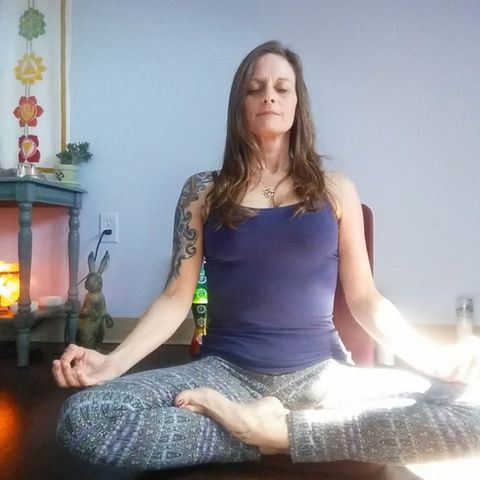
How you would start with this is five minutes a day of dedicated silence.
I know hearing the word silence,
I probably already lost a bunch of people because so many people do not want to experience and move away from silence rather quickly.
There's a point to what I'm talking about here though.
You would start with five minutes of silence and try to do it the same time each day if possible.
I also know that complete silence might not be possible,
But try not to add any additional noise to your environment or wherever you're at when you're doing this.
If you really are having a hard time with comfort in this,
You're going to have discomfort initially if this is your first go around and that might last for even a week or two,
But you can add a white noise machine quietly in the background if complete silence is just too much to start off with for you.
I will link the noise machine that I use below in the description box.
It is my favorite.
I've used many different ones when serenity was a brick and mortar and I had multiple practitioners there and we had lots of sessions going on at the same time as classes.
I've tried a couple of different ones and this is by far my favorite.
I use it personally as well and it's because it offers all these different options,
But all of the options are not rhythmic syncing that your brain can link to.
If you know what I mean,
You know what I mean.
If you're not one who struggles with that,
Then that might sound like what is she even talking about.
Like white noise machines,
You can sometimes people like myself,
We can hear the sequence of the fan cycle that they have trying for white noise and this is not like that.
If that's not a concern for you,
Then just disregard everything I just said there,
But I know I'm not the only one who struggles with that because others have brought it to my attention.
So this white noise machine really helps with that.
It's also a great tool if you are one who has difficulty sleeping to have a quiet white noise machine on in the background,
It can really enhance your ability to sleep soundly.
So I will put that below.
But the idea of this five minutes of silence is really silence to the best that you can possibly do that.
And you're just going to sit within that space and you might notice a lot of fidgety kind of movement.
You have a hard time sitting still.
You might notice that your thoughts are going like 20 miles an hour.
You might notice that you're holding all this like weird body tension.
You might notice a lot of sounds going on in your body,
Like gurgling and things in your stomach.
You might notice a desire to just get up and be done with this and one minute feels like a lifetime.
All those things are very natural and normal,
Again,
Especially if this is something new for you.
But what happens is you're gaining comfort in your body.
You're gaining security and safety in the body.
And you're gaining some internal awareness about what your body even feels like,
What it experiences or doesn't experience.
And getting settled in the system is a foundational thing with health and wellness.
Many doctors are even prescribing meditation now to have that as a health routine because all those helpings I mentioned a little bit ago.
Awareness and silence in the body can drastically improve those things.
So the five minutes,
You would do this for a week,
Just kind of notice what you notice.
And some quick side tools here to help with the thoughts that come with sitting in silence.
You would simply notice a thought whenever you notice it,
Recognize it,
Allow it to float away,
Whether it be on a leaf down a river,
In a cloud up above.
And then you're going to bring your attention back to your current experience.
You can do so using any of your five senses.
You might do so by connecting with your breath.
Or you might even notice your emotional experience in the moment.
Another thing that can happen here is you're noticing high tension holds.
So what you can do in this experience there is actually within the inhale,
You're going to breathe in and you're going to breathe into the tension hold.
So say that you're holding tension in your shoulders,
You're going to take a nice inhale,
Breathe the tension into your shoulders,
And then as you're exhaling,
You're going to release the shoulders down to the earth.
And you can even like in your mind's eye,
If you would,
Visualize like bricks on the shoulders initially,
And then having the bricks crumble as you exhale.
You can also,
If you're noticing high fidget,
You can do the same thing.
So say you notice like your fingers are moving or you're fidgeting or your feet are moving around a lot,
You're having a hard time sitting still.
Notice it,
Notice the experience.
You can also kind of have a little guided insight of,
Hmm,
What's the fidgeting about for me kind of thing.
But then you can do the same thing.
Breathe into it.
And then in the exhale,
Allow your body to gain more relaxation.
You can for a few cycles,
I do not recommend doing this the whole five minutes because again,
This is about silence.
This is not a mantra meditation.
But you can repeat a mantra for a moment or so,
Maybe a minute if needed.
And that might be something like,
I am calm.
I am feeling relaxed.
And you would just repeat that same thing a few times to help settle the system and the body.
The point of this is not to have to be in this like Zen state of being.
You're training your body and your system.
It might be like,
Whoa,
Feeling like it just wants to jump out of the seat,
Even with the idea of silence.
But that's okay.
It's all part of the training.
Five minutes and allow yourself to do that for a week.
And then check in.
Maybe check in with yourself and ask yourself some of the following questions.
Where am I stuck?
And how am I treating myself?
What am I fearing in change?
Even sometimes that change I want.
What fear do I notice around my emotions?
Which emotions?
And where exactly is that coming from?
What's so uncomfortable in my being around these emotions?
And what might I offer myself in terms of support?
Spending a few moments answering those questions is really important.
When we let ourselves kind of explore a little bit through reflective experience,
It will let us see generational loops that we're holding onto.
It might let us identify belief systems that aren't actually things we believe.
It might help us recognize that the voice of judgment isn't even our voice.
It's like a voice from before that somehow morphed into ours,
But when we slow down enough,
We hear where it actually came from.
And then that lets us recognize the power we are giving to a past pain that we're not that person anymore.
You know,
That we can notice that that's not us.
I don't even believe that about myself kind of thing.
It will also potentially bring insight to holds that you have on past experiences.
Sometimes people will hold onto things they did all the way back in kindergarten or first grade or,
You know,
Their first breakup when they were like a teenager and didn't even know what to be doing in terms of,
You know,
Love and relationship.
You know,
It's just a learning cycle then of what it's all about.
But people will hold onto those experiences as a way of continued self-punishment.
Like,
I can't believe I did that in kindergarten to Suzie Jo and I will never forgive myself for that because X,
Y,
Or Z.
Or,
Oh my goodness,
I remember that relationship when I was like 15 and I,
You know,
Blah,
Blah,
Blah.
And I will never forget that or forgive myself because that way I will be sure never to repeat that again.
And blocking self-forgiveness and holding on to pain and the thought cycles and the emotions that stay there,
Even subconscious driving as a way to really move away from self-forgiveness.
And this is where that religious piece comes in.
I understand and respect that for some people,
The religious organizations or doctrines that they believe or were raised around instill this idea that self-forgiveness and forgiveness is not possible,
That it is only possible from a higher power.
I have a multitude of things to say about that,
But I will just say this from a psychological mental health,
Neurological perspective,
Energetic energy body perspective in terms of energy therapy,
And the list can probably go on and on.
There's mounds of research about forgiveness and self-forgiveness and the lack of what it has to do with our mental health and well-being.
Self-forgiveness is possible.
It is a right that you have for yourself.
And even if you're under a religious understanding of some sort that you cannot forgive yourself,
Many of those same religions teach that the human is a part of the higher entity,
Whatever entity you are worshiping.
That like that entity,
We'll use God for example,
Is a part of the being.
And then they say,
But only God can forgive you.
But if you are also supposed to be God in you as part of God,
Then you can forgive yourself.
I'm not going against any religious teachings,
But psychologically and in your mental health,
Forgiveness and self-forgiveness is really a valuable tool to help you move forward in a different way in life.
One that is going to be more in alignment with health and wellness,
And that is not going to be disrespectful of your religion or whatever you have around that that's blocking you.
They will deny themselves self-forgiveness because they feel they're unworthy.
They think they're just not worthy of forgiveness.
That's maybe what they've been taught or what they've been told,
Or maybe they have blocked themselves from forgiving others.
So therefore they don't even really know what to do around forgiveness.
A tool if you are an emotional eater,
You want to consider maybe incorporating mindful eating.
It's where you're really going to use all your senses when you're maybe cooking the food,
Or when you're eating the food,
You're going to take in the fragrance.
You're going to slow down the way you're eating.
You're going to slow down your chewing and actually chew the food.
A lot of times people spend all this time cooking or getting food ready and then like two seconds eating because they're just shoveling food into their mouth.
So try to slow down and try to notice how fast you're eating and by taking in the smells,
Savoring the flavor,
Chewing the food,
It'll allow you to do a little bit more of that.
You can also,
If you feel like you're a really fast eater,
Just maybe eat with the opposite hand for a bit of time,
Or if you don't know how to use chopsticks,
Maybe use some chopsticks and that will slow you down naturally.
So think of ways to slow down the way that you're eating because it's going to help you digest the food a little bit more.
And it's also going to help you to know if you're actually hungry or not.
So portion size on your plate and before you go get seconds,
Pause a little bit,
Maybe even five to 10 minutes so your food can digest to see if you're even still hungry.
If you're a flyby eater where you're just kind of munching,
Munching on things through the day because maybe you're bored or you have an emotion going on or whatever's happening for you,
Notice what your go-to snacks are.
So notice what the things are that you're more likely to go to.
You might want to remove them from your home,
But you might want to also just pause for a moment and ask yourself,
Am I hungry?
Am I really hungry or am I bored?
Or potentially I might be thirsty.
A lot of times we might be dehydrated and it makes us think we're hungry when we're actually thirsty.
If you're feeling thirsty,
You're well past dehydration.
Just remember that.
Two other quick clues.
If you're dehydrated,
You might get a really good night's sleep and you might wake up still feeling exhausted,
Or you might find that you're in high irritability cycles that might not be the norm for you.
Some people are just in some of the stuff I've talked about,
Anger and frustrations their go-to,
But if it's not the natural for you and suddenly you're finding yourself there,
You might need some water and it might take about a week to get into a hydration cycle before you notice change there.
In terms of the optical portal of awareness,
Try to bring in things through your optical vortex here that is going to connect you more to things that are going to instill gratitude,
Appreciation,
Joy,
Empathy,
Connection,
Loving kindness.
I will also post some episodes down there that can help you with that,
But be mindful of what you're bringing in,
Like what you are bringing in through your mind through emotion imprinting,
How it has to do with that,
The vortex,
If you would,
Within the eye system.
You can go opposite direction too.
You can start bringing in more through optical awareness to help then soothe the emotions,
Move them over to something different,
Change the mindset,
Get it off the hamster wheel or the racing.
You don't have to start in one place.
You can decide what feels right for you,
But bringing in optical input that's more in alignment with what you're wanting to experience in life is going to move you more into that experience.
Lastly,
I know all these things that I'm talking about here can create a sense of like walking through sludge or maybe tar,
Or even sometimes like we have bricks of concrete on the bottom of our feet and it can really,
Really enhance and elevate procrastination in a lot of ways of living.
I'm going to share a clip with you here,
And this is a tool that is on a free wellness course that I have over on Serenity Wellness Tools.
The wellness course is called Spring into Action.
It's about procrastination cycles.
It's a four week course,
Including that meditation that's in there as well that I mentioned earlier.
Here's a tool there,
And then if you feel like you want some more insight and information around procrastination and how this plays out in your life,
Then you can also go over there and check out that course,
Or you can find it on my website at serenitywellnesstools.
Com.
Here you go.
Anything that takes under one minute to complete,
Complete it.
Washing that dish,
Hanging the jacket,
Putting the clothes in the laundry basket.
I mean,
Some of those things take like 10 seconds and we still don't do it,
But allow yourself anything that takes under a minute,
Complete it.
Go through the mail that you just got out of the mailbox,
Put trash in the trash can,
Clean the kitty litter.
Yep,
Cat.
I don't have a cat,
But just trying to think of random things.
Empty the dishwasher.
Anything under a minute,
Let yourself complete it.
And notice while you do it,
Those things that you want to internally,
Automatically resist doing in the moment.
Allow yourself to still do it,
But just notice the resistance initially.
Notice the areas that are under a minute that you would desire to procrastinate on.
I hope that information was helpful for you.
As always,
Thank you for joining me.
I know this episode was a bit long.
I have no clue how long,
But thanks for sticking it out and I will see you again real soon.