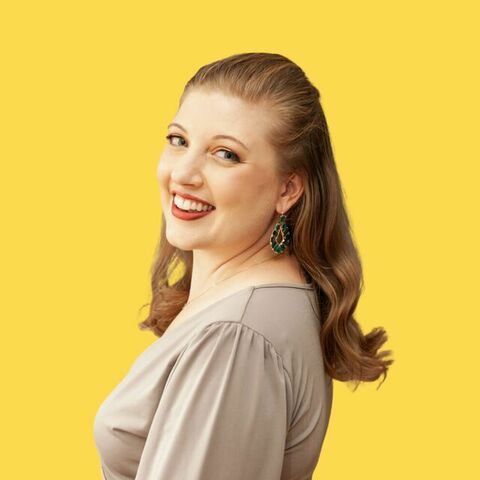
Jen,
I'm really delighted to have you here on Coming Back because you are an Instagram therapist.
You're a therapist therapist,
But also kind of an Insta famous therapist,
Which I feel like now is where a lot of people are getting their therapy or getting their mental health.
Advice,
Encouragement,
A lot of words can be put into that.
But the post I found for you was,
You are allowed to grieve what you have lost,
Even if their loss is bigger than your own.
And this speaks to how it's almost impossible to truly compare griefs.
So your grief matters even when the world is grieving.
And just the spirit of,
You're allowed to have your feelings,
Even if it feels like your feelings are dwarfed by everyone else's feelings.
So I'm really glad to welcome you to the show.
And I know this is a little unconventional and that you didn't come to therapy with a lost story,
But tell us a bit about why you do what you do.
Sure,
And then we'll need to come back to the story behind that post,
Because I've never shared that story and it's fitting.
So why did I become a therapist?
I've always been a very curious person.
I come from a family of curious people.
And so we've just always been people watchers,
Observers.
My mom taught at a residential therapeutic school for children who were in a state's custody.
And that definitely influenced the way that I walked through the world,
Because she would always be encouraging compassion,
Curiosity over criticism,
Trying to understand somebody's world from their own perspective instead of your own.
And I realized,
She was trying to help us as we were interacting with these kids who were quite different from us and traumatized.
But it shapes the way that I just walk through the world and look at the world.
And so I fell in love with psychology in my high school psychology class.
And I thought,
This is fantastic.
Now I started as a math major in college and quickly realized that math and I don't get along.
And then said,
Why don't I just go ahead and go with my backup plan,
Which was psychology.
And I've just loved it ever since.
Yeah,
And before we get to the story about what inspired this grief post,
I literally kind of had this conversation with myself in my head of,
Oh,
It's so interesting that you were taught or brought up to be curious.
So you were raised by a curious person,
Therefore you were a curious person.
And something that I see sometimes in clients and especially in grief is I'm afraid to be curious about myself for fear of what I will find.
So I wonder how you walk people towards feeling comfortable with curiosity,
Especially about themselves and their thoughts and their emotions.
Yeah,
I just,
There's a couple of different elements to it.
One of this is just slowing down the initial judgment.
And just as we slow down and leave a little space,
Getting comfortable with not knowing the answer,
Right?
So we don't have to default to a judgment.
We can maybe sit with,
I'm not sure what's happening here.
Maybe I just observe,
Right?
I think it's also just kind of my nature to be pretty curious.
I know that it helped being raised by a parent who knew the difficult stories that these children were bringing with them to this school,
This therapeutic environment,
Right?
So she really could own it wholeheartedly that we need to be coming from a place of compassion.
And so I think just watching that modeling was powerful.
For me,
The other component of the curiosity is I've always been intuitively focused.
I've always just listened to my gut sense.
That's always been something I knew I could rely on even when I couldn't,
When there was uncertainty in the world.
It always seemed like my gut was onto something.
And so in this work of curiosity,
I just really encourage people to take a chance on their intuitive voice and see,
What if you listen to it this time?
Let's see what happens.
And a lot of times their intuitive voice helps them out.
It guides them forward,
It doesn't hold them back.
It tends to be right.
And then they get the courage to listen to it some more.
Yeah,
Because I think so much,
Especially in Westernized society,
That glorifies productivity,
Making money,
Kind of the hustle culture,
Is stifling to intuition.
So it's like,
No,
Don't tune into that.
These are your real markers of success.
Or no,
Don't tune into that.
This is actually the safest place for you.
Or no,
Don't tune into that.
This is where you actually belong.
And so to relearn how to tune into intuition is a really vital skill.
And I have my own therapists to thank for that.
Yeah,
We definitely live in a hurry up world.
And in full honesty,
You don't get to a PhD without at some point buying into hurry up mentality,
Perfectionistic mentality,
Right?
I mean,
I own that.
And I had a period of time where I was living in that world,
Especially in grad school,
Where I was like,
I don't like this.
This doesn't feel good for me.
And how do I get myself through this really as quickly as I could so that I didn't have to live in this kind of world anymore?
Because it was,
Yeah,
It was lots of ignoring how tired you were or ignoring needs,
Right?
So that you could stay productive.
Yeah,
Absolutely.
And this,
We're recording in the age of COVID.
I imagine this age will be going on for quite a while.
And the call for rest feels enormously loud right now.
And it's enormously important.
And with your body is experiencing stress because of uncertainty and fear and trauma,
You're wearing your body out faster.
Your body needs,
It has a higher demand for rest and recovery when it is under a lot of stress.
And that is hanging in the background.
COVID is hanging in the background,
Or for some people quite in the foreground,
Depending on the numbers in their area.
And then of course we have,
As a country,
We're having to reconcile a really dark history of racism,
Discrimination,
Oppression,
Systemic issues that have been not dealt with for too long.
And so there is another major stress as people navigate,
Oh,
I didn't know that they believed that thing that I really disagree with.
And what does this mean for my friendship with them?
And what are things from my past that maybe I don't feel good about that I have to work on or grieve the loss of what I thought was my life before?
And now I'm understanding very differently.
2020 has been a year.
My eyeballs are huge.
We're doing this time.
I know people can't see me through the recording,
But eyeballs bugging right out of my head because yes,
It has been absolutely enormous.
And I literally just wrote down,
We often underestimate the weight of emotional labor.
So in the midst of COVID,
In the midst of Black Lives Matter,
In the midst of even just like handling our everyday lives or work changes or financial changes,
Or even having to move or be dislocated as a result of this,
It's like a lot of this,
It doesn't involve an intense amount of physical activity.
And so there's almost this urge to berate ourselves of why are you so tired?
It doesn't make any sense.
And then to go back and catalog your day,
You're literally doing every single task while processing some kind of grief.
And that in and of itself adds some kind of weight to the day to day.
Yeah,
It's like we're being picked up and dropped down in an entirely different country and different culture.
And we don't speak the language.
And we are trying to navigate what this new world looks like but no one's told us the rules.
People are trying to figure it out,
Right?
It's just feels very chaotic and unpredictable.
And humans,
We are driven to protect ourselves.
One of the ways we do this is we look for things around safety and trust.
And these are so core and they're being disrupted.
Do I trust that that person standing behind me in line at the grocery store,
Do I trust them to have taken good precautions?
Do they have COVID-19?
Right,
There's just a lot more hypervigilance that's required right now and it's really shaking people's senses of trust.
Yes,
Yeah.
And if you kind of try to find this out into an illustration of like we've been standing guard at the guard tower for three,
Four,
Five months straight now with no rest,
Lots of coffee,
No rest.
The guard tower still feels safer,
Too safe.
It feels like we're standing,
We're like one of the sentinels out wandering outside the fence,
Right?
And there's not the safety,
Especially,
I mean,
Maybe we feel that safety when we're at home.
I know initially with clients I'd have to say,
But remember you are safe inside of your home because people were not feeling safe at all ever.
And so they're like,
I'm washing my hands 20 times a day.
Like,
Have you left your house?
Well,
No.
Right,
And we've come a long way,
Right?
Because people can look back now and say,
Well,
The way that I was handling things in March is different than how I'm handling them now in July and I am feeling a little more accustomed and acculturated to this new way of living than I was then,
But it's still hard.
Yeah,
And learning things,
Having more information about a situation doesn't necessarily make it easier,
But we can feel more equipped.
Yeah,
We get some sense of safety back because we know more of the rules on how to stay protected.
Yeah,
A smidgen,
A tablespoon of safety is what gets returned to us,
Yes.
Because initially you had questions of,
Okay,
So if I go through a drive-through,
Does that mean I'm gonna catch something?
And now we have enough information to say that seems really unlikely,
Especially if you're both wearing masks,
It's really a safe experience.
Initially,
We had no idea,
Right?
And so then you'd hear people say,
Well,
We better err on the side of caution and just not.
And now we know more.
Which gives us a little breathing room too,
To not have to be quite so isolated.
Right,
And not so afraid.
Not so afraid.
Exactly,
Not so afraid.
I wanna circle back to this grief post from,
I believe it was April 2nd on your Instagram page,
If you are allowed to grieve what you have lost,
Even if their loss is bigger than your own.
Yeah,
So let me tell you the story.
So,
You said I'm an Instagram therapist,
And I'm like,
Well,
I'm not your therapist,
I'm a therapist who is on Instagram.
So I will offer that caveat.
But as a therapist,
We're observers.
And by being on there and being connected to people,
And you watch what people are sharing,
And people's commentary,
And you too feel like you get more of the pulse of what is happening nationally,
Right?
And I remember high school seniors being so sad about graduation plans being canceled and their proms being canceled,
And what they thought was gonna be their senior year just done,
Right?
And then people saying things like,
Come on,
It's just graduation.
I thought,
Man,
That's really a sucky way to react.
So just not healthy to say,
Oh,
Come on,
Get over it.
It's not a big deal.
I'm like,
Yeah,
It is a big deal.
I think they get to decide how big of a deal it is.
Does that mean we all go and have graduations?
No,
We have to accept what is the decisions that school administrators make and health professionals make around safety.
But that is still their loss,
And we don't get to decide how big that is.
I don't know if you remember seeing those memes and posts.
I mean,
They were all over,
And I just,
Ugh,
I get sick of it.
And I'll say,
You know what?
I'm writing this post up,
Because let's get our grounding again on healthier ways to think about this stuff.
It reminds me very much of a dear friend I had who had had several losses in her life,
Grandparents,
A dear friend,
An ex,
But the loss that impacted her life the most was the death of her cat.
Oh,
Yeah.
Yeah,
And many of her friends and family were like,
Why are you so upset?
It's just a cat,
As opposed to you've had all these other familial losses or relationship losses or things like that that,
Heavy air quotes,
Should rank higher or heavier than that.
And she's like,
The thing that makes me cry still,
The thing I'm still really attached to is the death of my cat.
And so it's like,
I almost have this energy of how dare you when somebody tries to rank losses.
I'm like,
Who are you?
What qualifies you to rank the scale or the severity of my losses?
And I think there's such that narrative that I've watched therapists and grief coaches who write about grief,
I've watched them have to help moderate comment feeds of posts because people will say,
Don't compare loss.
The loss of my pet is really significant.
And they'd say,
But don't equate that with the loss of my parent or my kid,
Right?
And I think what part of this is there is this narrative that we rank losses.
And so then when people come in with that expectation and they see somebody talking about the death of a pet,
They're saying,
How dare you demote my loss and say it's not as intense as I know that it is,
Right?
So the person's account that I'm thinking of,
She did a really excellent job of saying,
Well,
Wait,
Let's slow down.
Let's get some ground rules reestablished.
Let's stop comparing and we can compare both ways.
We're not all just the same.
We can connect and still have different experiences.
Yeah,
Honor the universal experience of grief without needing to have had the same loss to get it.
Yeah,
Exactly.
Yeah.
And I love that all of your posts are so different in terms of their themes.
I was just looking right now,
There's ones on boundaries,
There's ones about everything.
There's ones about being in countries.
There's ones about be a person that you can trust.
There's ones about taking time for rest even though you don't need to earn it.
Again,
Going back to our productivity society,
And they all seem to have their roots in how can you better honor yourself as a human being?
Yeah,
I asked people one time,
I put out a question and said,
If you were to talk about the types of posts that you most appreciate from me as I think about posts,
And I think that's really important in the future.
And somebody worded it really well.
And she said that she really appreciates when I name the experiences that we all have,
But that we maybe have never put words to.
Right?
And just little observations,
That tends to be really where my posts come from is they're just my own personal observations about life as I walk through it.
And it might be things that I've picked up from clients or conversations with friends or my own talking to myself and talking myself through things.
And I don't ever typically share the source of the story unless it's me.
And I am very careful in,
Especially around clients.
I tried to not in any way write about a client experience,
But sometimes clients make me think of some general themes around especially like hustle culture,
Perfectionism,
Compassionate living,
And I'll be like,
Oh yeah,
Yeah,
That's a truth that needs to be shared.
Yes.
And every now and then I almost,
I like look at the ceiling and laugh because I'm like,
There's gotta be something in the water because three or four of my clients all in a row all in the same week will be talking about the same exact thing.
I'm like,
Why are we all on this right now?
Why do we need to hear this?
And that's where a bit of my work comes from as well is like,
What themes are we landing on and sticking to?
That does seem to happen.
And I've talked with some of my therapist friends who are on Instagram and there is definitely this feeling of like watching and being curious,
Just observing and saying,
Okay,
What is the message that needs to be said right now that's happening amidst national news,
Social media,
Social media news,
But also people's reposts or comments.
And yeah,
I agree,
There does seem to be this collective experience that we tap into different elements of.
Yeah,
And I kind of wanna segue into that into your connections with other therapists on Instagram or what it's like to be a mental health practitioner where you are so accessible.
It seems like you would have to put up a lot of boundaries in order to not have people spilling out their guts to you through direct message,
Asking for advice in the comments,
Trying to fight you on the wisdom that you're sharing of your own free will.
I think it's interesting to be in this space and to be online simultaneously.
So I wonder if you could speak to boundaries.
Sure,
I had assumed that it would be a lot more challenging than it's been.
I mean,
There are parts of it that definitely are like,
Oh,
Wow,
Okay,
Let me name these boundaries again.
And how do I do it?
Just not in a non-reactive,
Highly emotional way,
But how can I help deescalate these situations?
But I generally don't get people direct messaging me or getting me sharing personal stories.
I try to make that pretty clear that I don't respond to direct messages.
And if I see that that's starting to happen,
I just repost my disclaimers.
And it honestly comes from a place of,
Well,
First off,
I have licensing laws.
I cannot be off practicing psychology outside of the state of Tennessee.
Most people who follow me do not live in the state of Tennessee.
So if there's a legal and ethical component,
It's also appreciating that you're a complex person.
Your life is very complex and nuanced.
I cannot in any way appreciate all of the complexity in a paragraph long direct message.
I'm bound to get it wrong,
Right?
And when people feel compelled to reach out to me,
The feedback I tend to give them is,
This is important and you should seek the counsel of the wisest person in your life that you know for that particular situation.
So if somebody has a career concern,
Okay,
Look around in your life and reach out and ask for help.
I think people are scared to ask for help and they find that people are generally pretty receptive to doing that.
It's just about asking.
I think the healthiest of us don't wanna impose and take over for other people so they don't tend to offer unsolicited advice,
Right?
So in terms of direct messages,
I thankfully haven't had that,
But I think I've been very consistent about boundaries and I'm very careful about the questions that I ask in my captions because I don't think it's fair to ask questions that elicit a really personal response from people.
If I'm not gonna be able to reciprocate with any,
Like it just is out there in the world,
This vulnerable share and it's just there.
I don't feel good about setting people up for that.
Now I do love it when I see other people who follow me respond back to these people who do leave these comments and like,
Oh,
This is a nice community feel,
I love this.
I don't know if I'm answering your boundaries question besides I just try to name them pretty transparently if this is what this account is,
This is what it isn't and I never respond to direct messages.
I just don't,
Because then I'm picking favorites.
I feel like I would be picking favorites there and that's not okay.
Yeah,
Well,
And I appreciate what you said too about there's no way to possibly know the full scale of somebody's experience.
I know when I meet with clients it's for a full hour and there's a lot of depth and expansion that goes into that.
I'm like,
This is far more than just a paragraph if somebody were to transcribe it.
Exactly,
Like you are able to help them unpack the layers of their experience.
Maybe I am getting old,
But I just don't see myself unpacking the layers of somebody's experience via text.
I want to be able to see them,
For them to be able to see me,
Right?
There's just so much in that experience of actually just sharing a space with them.
Yes,
And I know there's a lot of people listening right now that have never received traditional therapy from a therapist and I know that you do,
General psychology,
So you see people who are grieving,
But you see people for other issues as well and I wonder if somebody who's grieving is like shopping for a therapist,
What should they know going in?
Yeah,
It depends on where the therapist is located.
Like I am in a solo private practice,
So I am my own secretary.
I answer my calls,
I do my scheduling,
Right?
So if you call me and I have an opening and you leave a voicemail,
We'll talk on the phone and I would give you a chance to ask me questions and I would ask you,
What are you hoping to work on?
Because you cannot be good at that.
You cannot be good at everything and I don't want people to come and see me and be vulnerable in sharing their experience,
Telling their story and saying,
Oh shoot,
I don't do couples therapy.
That is so unfair if I know it from the outset,
Right?
And so I would just say if you were gonna see a therapist to try to talk to them on the phone and say,
This is what I'm coming in for,
How would you help somebody like me who is working through these issues?
And just listen to what they have to say.
Pay attention to your feelings about that as they're talking does it fit for you or not?
The empirical literature on psychotherapy doesn't suggest that one treatment modality is better than another like theoretical orientation.
So what I find is some people are really cognitive.
They really think logically and they then may like a cognitive behavioral approach because it's how their mind works.
And other people like me who are not very analytical,
Data focused,
I'm going back to that math degree again.
What was I thinking?
There's another,
I'm psychodynamic and feminist therapist and so I look at big abstract,
Let's look at themes in your life and conflicts overall that can span across years.
And that is something that really just fits for my personality and the way that I look at life,
Right?
So I would just ask them about their style.
You'll get a sense as you're talking to them about fit.
If somebody is at an agency,
They may not directly say,
Oh,
You can talk to the therapist.
But typically if you just ask and say,
Could I do like a little short 15 minute free consultation?
Most people will offer that if you ask.
Yes,
And I've heard a lot of grieving people compare shopping for a therapist to dating because you have to get some kind of resonant fit or have something in common in terms of vocabulary or yeah,
Practice.
Are you more cognitive or are you more abstract?
Kind of where,
How do you tell stories?
What do you believe to be true?
And even beliefs wise,
What do you practice?
Is it feminist therapy?
Is it therapy for BIPOC?
Is it therapy for men as well?
Yeah,
Or EMDR or I mean,
There are so many different approaches that you can ask them.
I mainly,
I appreciate when people ask me that question or sometimes I just assume the question might be in there and I try to answer that question.
So this is typically what our work would look like.
It does that seem like that's a good fit for you.
Yeah.
What oftentimes comes back to is how well do you feel like you connect with your therapist and you can figure these things out.
I would say there are people that can tell on a phone call with me of like,
Oh yeah,
This isn't a style that's gonna work for me and then I try to help them get with a therapist that is closer lined up with the way they approach the world or what they are hoping to get from therapy.
But typically you can know after,
I always say give it a few sessions because you are really nervous when you first are sitting down and that first telling your story sessions,
That can feel quite different than the therapy relationship overall.
It's sort of like when you talk about dating,
A first date with somebody,
You both might be a little bit nervous and a few dates in,
You've got the sense of the conversation and the flow and how connected you are and like,
Okay,
Is this seeming like this is gonna work over the long term or not?
You can make a more informed decision.
Yeah.
Yeah,
And I really agree with that because I've had fantastic therapy experiences and I've had really stinky ones as well,
Especially when it pertains to grief and when it does not pertain to grief.
And so it's just fascinating to recognize that therapists are as different as we are.
And so one therapist does not speak for them all.
And there are some therapists who are really burnt out and there are some therapists who haven't done all of their own personal work and they have some sensitive spots that part of their ways of coping and therapy is to try to avoid topics and that can hold clients back.
A somewhat controversial post that I haven't posted in a while because I honestly don't really wanna deal with the comments that are gonna come is it's okay to break up with your therapist.
And generally I will have therapist accounts.
A couple of them say,
Don't say that,
That makes us look bad.
Therapists are good.
Thankfully,
Most therapists will say,
Uh-uh,
Not all therapists are a good fit,
Not all therapists are great at every part of the job.
We're like anyone else,
We're human.
So someday you'll see me repost that.
I'll look forward to that because I think that's very true.
We can find grievers who are listening to the show who've had horror stories with therapists of grief,
Of therapists who believe there's a timeline for it and they should be over it by now,
Or that trying to get to the roots of a suicide or murder or something intensely traumatic in a re-traumatizing way.
But then conversely,
There are people who've been with their therapist for years and years or had breakthroughs or progressions that they never could have gotten to on their own.
But no,
I wholeheartedly agree with that,
Especially because many of the practitioners I've talked to being in this space say,
Yeah,
Therapists don't spend a lot of time specifically on grief.
And so to be a grieving person and show up to therapy,
I don't know what was true for you necessarily,
But maybe a week,
Two or three modules on grief and loss.
And it's part of the package,
But it's definitely not the whole experience of training unless you're specialized.
Yeah,
In terms of book work,
I don't know that we had,
A lot of your experience would come with the intensive supervision that you receive as a student,
Which then means your experience is dependent on what clients are placed on your caseload,
Right?
And then you're diving in and doing intensive work behind the scenes to educate yourself so that your client isn't educating you and meeting with supervisor and watching tapes and getting feedback on how you're doing.
Like,
Oh,
It seems like you're avoiding this difficult thing for this client.
Do you see how you're like moving away?
Cause what was happening for you there?
I went to a really psychodynamic program.
So we talked a lot about your own reactions as a therapist and working through those blocks so that you could more authentically connect with your client.
Yeah,
I mean,
You're not gonna take a class on grief necessarily.
Maybe if your program has a professor who studies grief,
Then you would have potentially a special topics on it.
Yes,
But this practice of theropizing the therapist to root out those,
Oh,
See where you stopped there or redirected the conversation.
It's very meta,
That makes me laugh.
As you were offering therapy,
You are receiving therapy yourself.
Yeah,
And it's not therapy,
But it's very,
Very personal.
Because you are your own best tool,
Your ability to be authentic and present and compassionate while also being an observer.
That's gonna be the tool that helps people move forward,
Which means you have to identify your blocks,
You have to identify your fears and deal with them.
And so this is where a lot of supervisors will say,
Let's have you go see your own therapist.
So you can not talk about the client,
But talk about these reactions and where they're coming from in your own past.
Yes.
Some of my favorite clients to meet with are therapists because I realized that this is such,
I just like meeting with people who are,
I guess,
Kind of a little bit like me,
But also realizing,
Wow,
If we help them,
Then they are better at helping their clients,
Right?
And there's just this ripple that brings a lot of meaning.
Yes,
I'm a person who,
I create utopian fantasies in my head.
And in my perfect world,
Everybody gets assigned a therapist at the age of five.
And you can swap them out,
You can dump your therapist,
You can get a new one,
And you can keep trying them on for the rest of your life.
But this idea of companionship via a neutral third party has always spoken to me in some way.
And in my world,
It kind of sucks that it took me to getting to grief to get there because I didn't have a therapist before I started grieving.
And then I did,
And then I really needed one.
And I was like,
Holy cow.
So I was new to the therapy experience,
But then I was also grieving and I almost wish I had done the therapy experience first and then entered into it with the additional weight of grief.
And so in my utopian society,
Everybody has a therapist or some kind of observer or story editor that comes in and is like,
What are we doing up there?
And in here,
In our heart space as well,
And how can we tailor it so that you feel more free or more light or more confident setting boundaries or kind of whatever goals you have for yourself.
When people tell me they want a neutral third party,
I will say,
Full disclosure,
I am not neutral.
Right.
I am on your side.
Like I'm biased.
I'm biased toward you.
But that doesn't mean that I'm going to ignore issues in the spirit of quote,
Taking their side.
I'm on their side.
I'm their ally.
I'm with them.
I want their life to be better.
And that might mean I have to give them some really hard feedback.
But am I neutral?
I would say no,
Because I'm on their side.
And being in their side,
I might be having to say,
Let's talk about ways that you help to create these problems in your life in the ways you need to change you to have these relationships be different.
Yeah.
I love that correction.
Thank you.
Yeah.
The myth of neutrality.
Yeah,
It's a myth.
And I think it's a myth that psychology started.
Same old myth.
Well,
Freud,
Right?
Yes,
Freud.
Was he really neutral or was he having reactions?
I mean,
He was even talking about you have reactions.
That's why you go to analysis.
As you go to analysis to work out all of these reactions so that you can be a neutral,
Detached observer.
But I think part of how he was able to maintain that detachment is they didn't look each other in the eye.
He stared at a sheet of paper and took notes and just listened.
And the other person's laying on the couch,
Right?
We've all seen that image and they're looking not at the analyst,
Right?
There's this detachment.
Thankfully,
We've,
I mean,
I've not experienced psychoanalysis myself.
I know that there are psychoanalysts in the world today.
And I suspect that there are things about it that look radically different in a positive way in terms of people being able to feel really connected.
But psychotherapy,
Like what I do,
It's very human connection based.
It's exactly the word that popped into my brain is there's humanity when you can look somebody in the eyeballs or see their body language or.
Yeah.
Even you were speaking about intuition earlier,
But like feel their energy.
Ah,
The room just got colder.
Something's happening here.
Yes.
Yep.
Yeah,
For sure.
It's weird in the age of telehealth,
Right?
I haven't seen a client in person since the beginning of March.
Yes.
And so it's different to find this human connection through a screen.
And yet we are surprisingly adaptive and we as humans are finding a way.
It's just strange and there's stress because it's different.
And there is something that is lost when you're not in the room.
But there's weird things that are also gained too where you can see people being able to be comfortable in their own home as they're sharing these vulnerable things or all of their pets who are showing up for therapy as these really nice emotional support animals,
Right?
Oh,
This is so beautiful of a thing that's getting to happen here.
And it'll be really great when we can meet in person again.
Yes.
I primarily meet with clients over Skype,
Zoom,
Many internationally.
So I haven't even set foot on the soil where they live.
But to see where their eyes look when they're talking about the past or where they place their hands when they feel they're in pain.
Or one of them introduced me to her chickens the other day and I was like,
This is amazing.
This is so great.
This would have never happened if we'd met in person.
And there's,
Yeah,
It's a different kind of attention that you pay.
Even right now,
You and I are looking each other in the eye,
But we're over Zoom.
It's a different kind of attention that you pay virtually,
But there's still connection there.
It is not devoid of humanity.
It's just a different kind of humanity,
I think.
Yeah,
And I can also see that there are some people where the emotional intensity of sitting in the room with somebody and sharing really vulnerable parts of yourself,
That it feels too intense and they get overwhelmed by that intensity.
And by being at home and having the filter and layer of the screen,
It helps them be seen more.
Like they feel a little more safety in being seen because there's also a little more distance.
And that has been a really nice,
Unexpected positive of this shift.
Yeah,
Shift in the world,
Always adapting.
I wonder if you could speak to like what the hardest part of being a therapist is,
But maybe the opposite,
The thing that comes to you with the most ease.
Hmm,
You're really making me think on this.
But I think early on,
One of the hardest things for me was really trying to attend to all of my reactions and there's just so much data,
Emotional data that you're taking in all the time.
You're paying attention to your reactions.
You're trying to pay attention to what's coming up for them.
You're trying to connect with your family.
You're trying to connect this to other themes in their life while also managing time.
And there's a lot of balls in the air while also saying,
Oh,
But be present with them,
Don't get in your head.
And that was very hard initially.
I think honestly,
My biggest struggle now is just getting my paperwork done.
I just hate paperwork.
The menial half of the job.
But yeah,
I think that the easiest part for me is maybe for me as a therapist compared to other therapists,
I think a strength that I bring is I say that I'm pretty autonomy granting.
I really have spent a lot of time working through my beliefs about people's competence and abilities to make their own decisions for themselves and how that is just a core value of mine that I can join with them without needing to take over and save them,
That I can really trust that they know what's best for their own life and letting them make those decisions for themselves.
And it's beautiful to see it,
Right?
It's beautiful to see it when it happens.
One of the coolest things when it happens.
I'm smiling because in grief,
A lot of times,
The first book I wrote is called Permission to Grieve.
And we so often look for permission in things outside of ourselves.
I'm like,
What if we just granted ourselves permission to feel what we're feeling or to change our identities or to take some sort of concrete action out in the world?
It really,
I think we forget our power a lot.
Yeah,
We have had many different messages over the course of our life telling us to not trust our intuitive voice,
To look to somebody else.
And at the work is saying,
I get to make the ultimate decision about how I live my life.
Sure,
We may wanna take in feedback and consult other people,
See what their experience is,
But ultimately,
I am the person who is the best knower of how I should live my life.
Yeah,
And I'm the one who has to live it at the end of the day.
And I've said that phrase,
A version of that phrase many times to clients,
Like,
Look,
I don't live with the consequences of these choices,
Good or bad,
So I don't think that I should be able to make the call.
Your exceptions would be safety issues,
Right?
If somebody is coming to you because they are feeling unsafe with themselves,
And then you say,
What I say in them,
In those situations is,
That is the part of you that knows that you want to live,
And we need to listen to that side of you,
Because that side of you will guide you forward.
And I know there's this other strong voice that is telling you something different.
Let's focus on the side that is telling you to talk to people about how you feel unsafe.
That's the side I'm joining with.
And there is something that really resonates.
And then I try to get that side of them to make the decisions,
But also knowing part of why somebody comes to you as a therapist is to help you stay safe.
And so that might be me coming in and making the call,
Right?
And even the phrase you just said,
My part as a therapist is to help you stay safe.
And that is safe in the world,
Safe with others,
But ultimately safe with yourself.
And one of my very favorite posts that you posted,
Actually I have it bookmarked for days that I'm really sad,
But be the kind of person that you can trust that you can trust.
We break our own trust so many times during the course of the day.
And to trust ourselves is to literally hand,
Fork our hearts over into our own hands and say,
Do you got this?
And then to respond,
Yeah,
I got this.
Yeah,
People have experienced me as a pretty non-committal person.
I don't make promises very easily.
And they'll say,
And they'll joke.
And I've had therapist friends be like,
Geez,
Don't try to pin Jen down on hanging out on Saturday.
They're like,
She'll always come.
But it really comes down to,
I am somebody who I keep my promises to myself because I wanna be a trustworthy person to myself.
I wanna,
Because to me,
I'm thinking too selfishly,
If I can't trust myself,
Then how am I trusting anybody else?
If I break my own promises constantly,
Why should I expect anything different from the rest of the world?
So I am careful about the promises that I make.
Yeah,
Like I was glad when I had messaged you,
You had messaged me in March,
Your listeners don't know this,
But you had messaged me in March as the world was falling apart.
And I said,
The world is falling apart.
I am too busy.
Can you reach back to me?
And I thought,
I hope that you just take that at my word that I would say yes.
I couldn't say yes then,
But I would say yes.
And I was glad you reached back because I knew it was a yes.
It was just not in March.
Yes.
And also respecting you enough to say,
But that doesn't commit you to then wanting to record this later,
Right?
Right.
But also my promises.
And yet here we are.
Yeah,
Yeah.
In July when the world is still,
Wow,
It's a lot,
But we've had a little more time to acclimate to it.
Yes.
As we're wrapping up,
If you could deliver one message to people who are listening right now,
What would that be?
Hmm.
Yeah,
Well,
So I'm putting together this e-course and it's about improving your relationship with yourself.
And a theme that came up for me is I think about people's inner voice and oftentimes we have internalized a critical inner voice and maybe we can tie this back to a particular person in our life or maybe not.
But one of the bits of feedback that I had put in the course was think about who,
If you could pick who your inner voice would be,
Who would it be?
Maybe it's,
I've had people will say,
I just always try to think what would Jen say?
You know,
I'm their therapist and they're like,
They know me well enough to say,
OK,
What would Jen say here?
What would she be saying to me?
And I think there is so much value in saying,
All right,
I got to shift this voice.
And if I had a little say here and influence,
Who would I pick?
Whose voice needs to be guiding me through my life?
I love that.
And maybe it's Shelby.
Well,
I was thinking for so many people who listen to this show,
They're like,
When I'm grieving and I don't know what to do or I feel like I'm beating myself up,
I call in your voice.
And conversely,
I told my grief growers this on a Patreon call about two weeks ago that whenever I'm feeling overwhelmed or like I can't put out a podcast on time,
Quote unquote,
Or produce something consistently,
Goes back to productivity again,
I call in the voices of my community of grief growers being like,
Go rest.
We'll wait for you.
You know,
You got this.
Take it easy.
We'll see you on Saturday or like whenever another deadline can be or whenever you can push it back.
And so in some way,
We are all offering each other some kind of grace.
It's really lovely.
And really,
These are the thoughts that we are generating ourselves.
I think that we are allowing ourselves to access a more compassionate,
Understanding side.
Because they aren't literate unless they've literally said the words,
Right?
You're imagining.
Oh,
Yeah.
Oh,
1,
000%.
Grief growers and putting words in your mouth,
In my brain.
Putting words in my mouth and your brain.
Yes.
So that would be my advice to them,
Mainly because that's on my mind because I've been thinking about that recently.
And I've not written a post about it,
But it is a really powerful experience that many of us have stumbled onto but maybe have forgotten about or maybe have never stumbled onto yet.
And it's such a useful tool.
It's useful for you.
It's useful for me.
I have my guides of my people.
And I don't think that they would necessarily even guess that they would be the person that I would pick.
But they're my people.
They're my inner cheerleader voices,
Right?
Yes.
Yeah.
And grief growers,
If you're listening,
Your loved one is on the table.
Oprah's on the table.
Maya Angelou's on the table.
Rob Bell's on the table.
Cheryl Stray's on the table.
Dr.
Jen Hardy's on the table.
Who are the voices in your head?
Who is the crowd that's cheering you on?