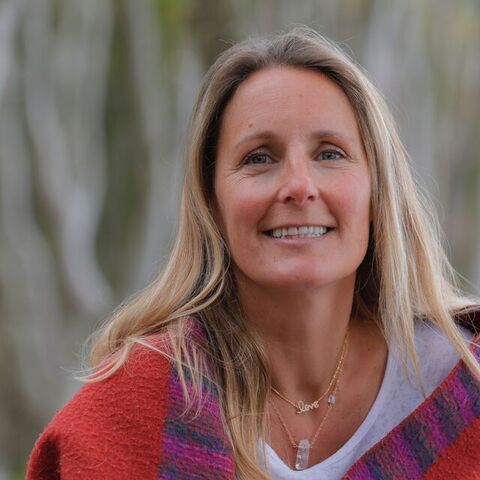
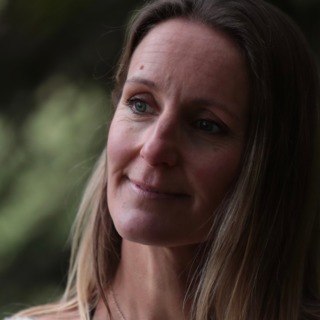
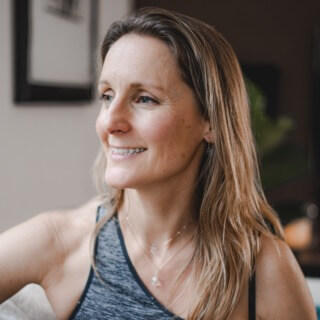
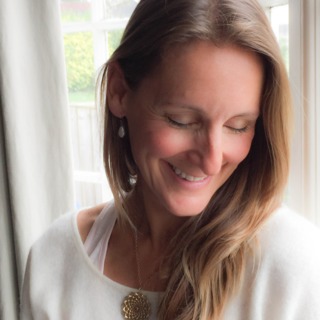
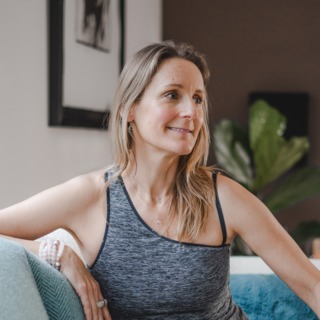
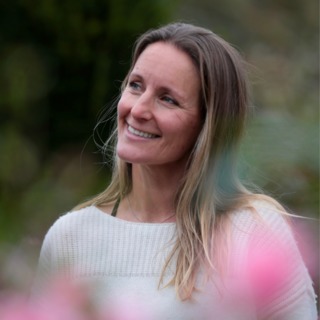
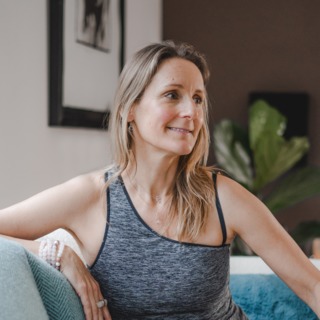
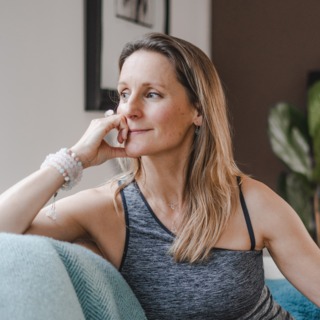
The following practice is led by Sonia Lockyer,
Host of the Wellbeing Ritual Club.
So we'll come to sitting nice and tall through the spine,
Finding the sitting bones.
I'm pressing down,
Of course you can sit in a chair if that's more comfortable for you.
The sitting down part is interesting because,
You know,
We all,
Myself included,
Feel that we should be sitting a certain way.
And the thing with sitting cross-legged is it does help your spine to sit up nice and tall,
But not many of us are genuinely comfortable sitting cross-legged for long periods of time.
I get dead leg myself,
I get pins and needles,
And the origin of yoga practice as we know it today,
The physical practice,
Is the facilitation of us being able to sit.
If your body is flexible and fluid and able to move comfortably,
Then you can come to sitting with greater ease,
Less dead leg,
Less pins and needles,
Because you've been doing a yoga practice,
Which is interesting,
Isn't it?
Because for the vast majority of us in the West,
Yoga practice exists for its physical stretching,
And I say the vast majority,
That's not true,
But a lot of people understand that that's what yoga is,
It's a way of stretching.
But it isn't really that in its origin.
It's a preliminary practice before you sit,
Because the aim of all of it is unity,
It's what the word yoga actually means,
To yoke,
To bring together.
So just give yourself a break if you're uncomfortable sitting cross-legged,
Go sit in a chair,
You just don't need to force it at all.
And finding your pelvic floor muscles,
So just taking your awareness down into your pelvis,
Contracting,
Noticing what that does for you.
Is there a reason why we do that?
Well,
The reason is an energetic reason,
There's an energetic shift.
Physically,
Also,
It provides support to the lower back,
Creates a foundation for your spine.
Pelvic floor,
Generally,
There's just no harm in strengthening the pelvic floor.
But for my experience,
It's the energetic shift that happens when Mula Bandha is engaged.
Then you might find you can lift your rib cage a little higher away from the pelvis,
Keep your chin tucked,
It can be tempting to do this,
And open up the back of the front of the throat.
Try not to do that,
Keep the back of the neck long.
And breathing in and out through the nose.
And then just as you've got Mula Bandha engaged in the pelvis,
In the throat,
Just bring your tongue up to the roof of your mouth.
You don't have to force it,
It's subtle,
But a gentle pressing up against the roof of your mouth.
And maybe you can feel an openness spreading across your jaw and your teeth and your throat.
So pelvis and throat are very,
Very keenly linked to one another.
They have a very strong bond and relationship.
You might be able to get a sense of that.
And then with your eyes,
You might just want to look down towards the floor,
If you'd rather keep your eyes open,
Or you might keep your eyes closed.
There's pros and cons for both,
So let's just say you're going to be able to look down towards the floor,
And then you're going to be able to see your eyes.
And then you're going to be able to see your eyes.
And then you're going to be able to see your eyes.
There's pros and cons for both,
So let's just go with the one that feels good today.
And then your sense of hearing,
Just notice the sounds.
And perhaps to begin with,
You notice the sounds that are quite close to you.
And as you allow yourself to drop into really close to you,
Noticing the sounds further afield.
What is the furthest sound you can hear?
Or is it actually a surprising absence of sound?
And then bringing that hearing back in,
And listening to the sounds of your body,
Perhaps there's a tummy gurgle.
Perhaps you can hear your breath.
And then bringing your awareness to your face.
Our faces can so often hold accidental tension.
So just the simple act of a sensation of a smile,
This isn't a big cheesy grin that's put on your face to please everyone around you.
It's a very subtle smile that comes from inside.
And it may not even be visible to the eye,
But it certainly feels different around your lips and your jaw and your cheeks.
And then that smile can lift up into the eyes beneath the eyelid,
Perhaps.
Maybe you can let that softness spread out across the third eye.
And then that softness can drop down like,
Almost like melting honey,
Through your throat,
Through across your collar and your shoulders,
Coming right down into your belly.
So dantian is this space just below the belly button,
Right in the center of your navel.
It's often referred to as a place of deep contentment.
Can you find that place within your body?
Not always,
You know.
Can you find that place within your body?
Not always easy to find.
Maybe we can this morning.
And when we're functioning with that knot in our tummy,
Perhaps that's a defense and a protection of this dantian.
So just creating space and trust.
That there is a deep contentment there to be found.
And then noticing for yourself the movement of air in and out through your nostrils.
The intake of the in-breath,
How does that feel?
And the outward journey of the out-breath.
Sometimes you can really feel a temperature difference.
So let's go to a place where nothing's forced and everything is curious.
What will we find today?
Bring your awareness to your hands,
Maybe the palms are facing upwards if you want to feel a sense of lightness and openness or turn your palms to face downwards if you'd rather feel a sense of groundedness,
Like you're landing.
You can even just experiment between those two and see if you are able to notice the difference in the subtle body as you play with that.
And come to rest in whichever one is most comforting today.
Noticing the pattern of your breath as you breathe in,
As you breathe out.
We're not massively influencing what's going on,
We're just watching.
And yet just bringing your awareness to your breath is an influence,
It does change things.
There's probably no greater gift we can give anything than our awareness.
You see a small baby when the mom or the dad or the caregiver focuses in attention on that baby,
The way the baby's face lights up,
The eyes sparkle,
The smile,
The giggles.
I mean,
We all know it's not always like that but in general.
You turn your attention onto a small child and the small child shines.
And that's just a really clear indication of what happens to everything that we turn our attention to.
So even the breath,
You turn your attention to your breath and your breath glows,
Flourishes,
Shines.
Basking in the light of your own awareness.
Especially when that attention comes from a place of loving kindness,
Compassion,
Gentleness.
So we're going to start with a very simple breath practice where we inhale for four and exhale for four,
So it's quite balanced.
And please don't get tempted to make this forced,
It's still in this amazingly gentle compassionate place.
It's just a very simple four in breaths and four out breaths.
You'll find your rhythm unique to you in this moment.
So just play with that four breaths in,
Four breaths out.
Basking in the glow of your attention,
Notice what comes up,
Notice what you feel,
Notice the story,
The narrative that might come to your attention.
So anytime it starts to feel a little bit tiring,
Exhausting,
Then just come back to an easy breath.
But while it's feeling good,
Keep going.
And then returning to your easy breath.
It's quite a cleansing practice.
You might find that your breath is quite deeper now.
Let's take some head circles,
Dropping right ear to right shoulder,
Chin down to chest,
And your left ear to left shoulder,
And coming up and over.
How's it all feeling?
How's it all sounding?
And then changing direction.
Try to avoid dropping the head back behind you if you can.
And then when you're ready,
Circling your shoulders,
Noticing how that feels this morning.
Inhaling as the shoulders come up,
Exhaling as the shoulders come down.
Giving yourself some time and some space to be in your body and noticing how it feels.
And taking your elbows circling.
I'm doing some yummy circles.
And maybe your whole arm extending if you have space.
And one more time.
And then depending on how comfortable you feel,
You can circle your heart,
You can move forward and back,
Just bringing some movement into your spinal cord.
And then changing direction.
Where does your body want you to move it?
Can you even hear that?
Can you hear where your body wants you to move?
And coming back to centre,
Settling.
And so we'll come to the practice from the Breathwork Foundation,
Vuloma Breath.
This is an amazing breath practice.
It can be tweaked to either energize you or to calm you down.
We're doing the calming version today.
So it's a fantastic practice should you find yourself awake in the small hours of the night.
And rather than getting frustrated that you're awake,
Rather than dropping into a dialogue about how this is going to impact the day ahead,
Or perhaps fantasizing about all the traumas and problems that may or may not happen,
Which seems to be a common occurrence at 3am.
This breath practice brings you back to your body and it helps your body resource itself.
So you may not be asleep,
But you are soothing your nervous system.
You are self-regulating.
So it's a gem of a practice,
Vuloma.
Very simple.
One long inhale,
And I often feel that inhale coming,
Moving from the base of my spine upwards.
So a deep in breath.
And then the exhale is split into three parts.
The first part comes from the collarbone.
Sometimes it's nice to tap across the top collarbones,
Which coincidentally is a really great thing to do if you can't sleep.
Body usually loves this for self-regulation.
The second part of the exhale is from the ribs.
So perhaps wrap your hands around your lower ribs to just remind yourself of the geography of the breath.
And then the third part is the lower belly.
So not everyone is comfortable holding their belly,
Especially over time as we become more like the Buddha because we're so wise.
But if you can,
Then just hold your tummy and notice how it feels as you exhale.
You can't have a six-pack.
You've got to relax.
So that's the three parts of the exhale.
First part,
Across the collar.
Second part,
Across the ribs.
Third part,
The belly.
And I'll talk you through five rounds,
And then I'll let you continue at your own pace.
So all together,
We begin with an exhale,
Starting at zero.
Long inhale.
Long inhale.
Exhale one from the collarbones.
Exhale two from the lower ribs.
Exhale three from deep within the belly.
Long inhale.
Exhale one,
The collarbones.
Exhale two,
The ribs.
Exhale three,
The navel.
Long inhale.
Exhale one.
Exhale two.
Exhale three.
Inhale.
Exhale one.
Exhale two.
Exhale three.
Inhale.
Exhale one.
Exhale two.
Exhale three.
And off you go at your own pace.
Find your rhythm.
Find the pattern.
There's no rush.
You've got all the time in the world.
Keeping it gentle.
Trying not to get seduced by the idea that it has to be strong,
It has to be hard.
Let it stay soft.
Let your mind stay curious.
If you were the very first person to ever stumble across this rhythm of breath,
How would you do it?
What would your version be?
And then letting that breath practice go.
Maybe even a gentle smile to yourself as you allow yourself the experience of being present.
Inviting that feeling,
That presence to be with us more often today in all days.
Offering our thanks to all the teachers,
The practices and the source of all things,
Whatever that might be.
And gifting the fruits of our practice to all sentient beings.
Namaste.