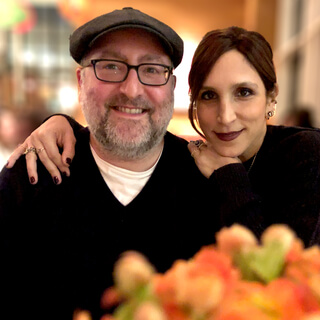
Imagine,
You know,
We think we embrace our partner 100%,
Even if physically giving a hug,
But in reality,
You're only hugging or embracing 20% of them.
Your relationship is that much smaller.
And unless you're,
Again,
Opening yourself up with vulnerability,
With the aim of being at 100% openness and vulnerability one to the other,
Only then can you have a 100% relationship.
Welcome to the Spiritually Hungry Podcast episode 90.
So we really enjoyed speaking- 90 or 91?
You just love to correct me.
I believe I'm right.
90?
Yes,
I was right.
Are we sure?
Last week was 89.
That would make this week 90.
Yes.
You were right.
You were restricting correcting me or challenging me until a little bit later in the podcast.
No,
I think now is the right time.
Really?
Okay,
Thanks so much.
And let's not edit this part out.
No,
Let's leave it in.
Let's leave it in.
This is how couples communicate.
Yes.
So as I was saying,
Episode 90,
Welcome.
We spoke about vulnerability last week and we decided that we had more to say about it and we wanted to bring it into the realm of relationships because that is a big area where people are most afraid to be vulnerable,
Mostly because I think two reasons.
They enter the relationship showing their greatest side and sometimes we hide our past if we have issues with it or we haven't come to terms with it.
So you start from a place that's not vulnerable.
And also it's something that really needs to be worked on every single day of the relationship from the very beginning.
And when you don't practice that,
It's like,
Oh,
I can't show myself now.
I'd have to like,
How would I even start that conversation?
The other thing is sometimes we are vulnerable with our partner before the relationship's really safe and it's used against us.
So then we decide that that is the worst thing to ever do and we're never ever going to do it again.
So I do want to bring a point up.
I thought this was funny about how many are attracted to the archetype of the mysterious rebel,
The impossibly aloof characters.
I think that this was never true for you,
Right?
That's because you're just not like anybody else.
But for most of us,
We romanticize,
We like that mysteriousness.
I know as a kid,
Those were characters that really interested me in films such as J.
D.
Salinger's Holden Caulfield.
He's an icon for teenage rebellion and angst among one of the most important characters of the 20th century literature,
In case you're not familiar with his character,
Batman.
That really didn't do much for me.
And the lovable rogues like Neil Caffrey in White Collar,
Eric Northman in True Blood and remember Sawyer from Lost.
You've seen none of these shows,
Right?
No,
No.
Great.
Now,
Let's not forget the allure of femme fatales.
Let's see,
Michael,
Like Winona Ryder.
No,
Never.
Did you watch any of her films growing up?
I don't think so.
Should I?
Honestly,
You are adding to the argument of.
.
.
Not being popular?
Perhaps.
So in Heather's specifically,
She was interesting.
Sharon Stone in Basic Instinct.
Yeah,
I didn't see that one,
Did you?
And Michelle Pfeiffer as Catwoman.
OK.
So I'm basically having a conversation with myself so far and all of our listeners.
And our thousands of listeners.
So no one thinks.
.
.
I'm listening,
I'm listening.
I'm just understanding.
You're understanding,
You're not relating.
No one thinks to themselves that they ultimately desire a partner who's mysterious.
Intrigue may spark desire as we get to know someone.
But when we encounter challenges in life,
We aren't going to turn to the person who's an enigma because mystery in a relationship translates to being unavailable.
So a question I often get from couples when I first meet them and even usually it's meeting with what happened.
I'm sorry,
I'm just thinking about that idea of being mysterious and that being an allure.
The point is because you're assuming that whatever you don't know about them is better than what you would think.
But it's just as likely that whatever you don't know about them is worse than you think.
Well,
I think it's an attraction.
Like,
Oh,
I'm going to be the one that they're going to divulge their secrets to.
I'm going to be the one to open their heart.
What if you hear their secrets and they're terrible?
They're psychopaths.
Exactly.
Exactly.
So the question I get a lot when I meet with one half of a couple especially is how vulnerable do I really need to be?
And I used to laugh at the question.
I'm like,
Be very vulnerable.
I mean,
Completely transparent.
And I'm often met with a show of.
.
.
Well,
Of course,
We have to unpack that.
As I said in the intro,
How did you start the relationship?
How secure is it?
I mean,
There's many things to discuss,
But ultimately,
What is the goal?
Because it's equal parts to how satisfied you are in the relationship is how vulnerable and authentic you can be in the relationship.
So I want people to have the most satisfying relationship and you can't pretend that this step isn't necessary.
And I would say,
Again,
We know many couples and amongst them,
We know many even we'll say long surviving couples that are completely not vulnerable one to the other.
And it's both shocking,
But it is unfortunately those relationships that aren't really fulfilling for both partners.
But it is.
.
.
Well,
You would like to imagine that after being married for 20 or 30 or 40 years,
People will have found their way to vulnerability,
But it's certainly not always the case.
As a matter of fact,
I would probably say,
Again,
This is unscientifically based,
That most couples are not completely vulnerable to the other no matter how long they've been in the relationship.
And I think what you're saying,
Which is so important for our listeners to take in,
That in the relationship that really matter to you,
You have to make maybe number one priority is how do we become more and more vulnerable to each other?
It's interesting,
I was just thinking,
Because I think that to be vulnerable is to get to a place of full transparency.
I was thinking about a mother-child relationship,
Thinking about myself with our children.
Of course,
The love is there and the trust is there,
But I think as they're getting older,
I am revealing more about myself or my past because they're at a place where they can receive that.
It's not that I didn't trust them.
It's just that there needed to be a maturity to occur.
And of course,
There needs to be an appropriate time for those kinds of exchanges.
But I think that that's in all of the relationships that matter to you,
That really is the goal.
It's not just romantic relationships if they're worthwhile.
Yeah,
It has to be the goal.
And it's the interesting paradox that you mentioned earlier is that people are often more comfortable sharing their vulnerability in places that matter less.
And in places that matter more,
People are more guarded and more frightened of becoming vulnerable.
And in reality,
The paradox is that in the most important relationships,
Those are the ones that you must be at least driving towards becoming more and more vulnerable.
What's interesting is,
As you said,
That I think that's why in films it depicts this a lot.
People go to a bar and they speak to the bartender.
It's not just the alcohol that has their inhibitions lower.
It's that,
You know,
I'm going to speak to a stranger that I'll never see again because I really have to get this off my chest.
We do this with hairdressers,
With our trainers.
It's that kind of like I can still remain this can be hidden in my everyday life.
It's something that's that's one off.
So what I want to ask our listeners is what if we start from a place of honesty?
What if we decide to be vulnerable from the very start?
And again,
Even if you're in a relationship for very for a very long time already,
You can always read,
Choose,
Restart,
Rethink anything you want at any given moment.
What if we commit to growth even when life rolls along smoothly?
The more willing we are to be able to be our true selves,
The stronger the foundation we have on which to build a long term relationship.
So I want to share something that I that I had written to myself,
I think mostly in a journal.
It was after in the wake of my father's passing,
Because I think it really touches upon this idea.
And I was speaking with a group of friends on the nature of love.
This is like the week I think he passed,
Which actually is exactly a year ago this Thursday.
Yeah.
Tomorrow.
And this is I shared that my father had demonstrated for me unconditional nonjudgmental love that instilled a freedom of thought and heart in me that I only fully realized after he had passed away,
Like literally fully realized that two days after he was no longer in this world.
Interesting.
I couldn't fully understand it.
I don't know.
I think that sometimes when a person is still in your vicinity and they occupy a space,
You hold the space for them that you're still trying to figure out,
You can't fully realize them until they're just not there.
So my father was controlling at times,
But his version of love was not of a controlling nature in which I was unable to make mistakes for fear of losing my connection with them.
I think that's really key when we're talking about vulnerability and relationships.
A lot of it is fear of losing that person.
If you show them a part of yourself that they don't like or they don't agree with or they don't support,
We would be devastated if we lost them.
But then is it unconditional love?
He would quietly hold my hand to literally and figuratively,
Even while I made choices that he knew would negatively affect me.
Sometimes he dove headfirst into those choices by my side.
In my teens,
As I've shared before battling anorexia,
I decided to hike the Grand Canyon from the rim down to the cold white rapids of the Colorado River and back to the top in a single day.
It was an attempt to gain perspective and reconnect with myself.
It seemed like a wonderful idea to my 17-year-old self.
I think I also like the idea of burning that many calories in one day,
If I'm honest.
I was definitely too malnourished to make the trek.
My father,
A diabetic and not very sporty,
Was by my side every step of the way.
It was one of the main demonstrative acts of careless love that I still look back on fondly.
I like that phrase,
Careless love.
The conversation with my friends moved around the room touching on stories of,
And these are what they shared,
One who only knew love according to his childhood definition of being a man and the resulting confusion.
A woman who didn't even have a framework for receiving love and another who found that it was easy for him to give love as that is where he had control.
Receiving love was nerve-wracking because he thought he was powerless in the dynamic.
I think that,
And I love to talk about love,
But I think we do have to,
Everybody in this moment,
Really analyze or look at how are you in receiving and giving love?
What is your relationship with love?
Of course,
What is your relationship with yourself?
All of that is going to give you information you need on why maybe you're not as vulnerable as you want to be in relationships and more importantly,
How you can become.
In hearing their stories and reflecting on mine with my father,
It was an aha moment for me and in turn the group.
To receive love,
One must be vulnerable.
My father taught me the internalized ability to be loved is just as powerful as the external force of loving.
You need both and that is at the heart of being vulnerable.
It starts with feeling safe and loving unconditionally.
My father created space for me and knowing that there was no shame in being in the middle of a process.
I'm going to get emotional.
I know there was nothing I could do and no dark side of my personality that would ever cause him to stop loving me.
Nothing would endanger the adoration he gave me.
I think that that's it.
That's all I want to say today.
Just kidding,
But I think it's really powerful and I think it's some place really that everybody should look at their relationship with love and what it means.
And it's interesting because we're focusing today on probably more the romantic relationship side,
But I think it's so important for our listeners to really take in what you just said that as a parent.
Well,
That's where you.
.
.
Because that's your first romance really as a child.
Who do you fall in love with first?
You fall in love with your parents.
I mean,
Assuming that they're good and not abusive,
But it's the first relationship that I remember.
I think that people have fear of loss.
Every child's like,
Oh my God,
I never want to lose my parents.
It's when you actually feel you can't be apart or without somebody else.
That's our first experience.
So I think that is the beginning of understanding romantic love.
But what I'm referring to is the parent's responsibility in this because I think often as we think as parents,
We're responsible to protect our children,
To feed them,
We have a list of responsibilities.
But maybe one of the most important ones is to make them feel loved no matter what.
Unconditionally loved.
Unconditionally loved.
And that is definitely something I know many children do not experience with their parents.
As a matter of fact,
It runs a whole gamut to extremes.
By the way,
You're not going to be perfect.
Like I said,
My father was a very controlling man.
He really was,
But he wasn't controlling with his love no matter what any of us did.
My sisters,
Myself,
My mother,
It was always,
He always,
Always repaired it.
I love you.
I love you no matter what.
I just want what's best for you.
It was always,
That was the most important thing for us to know.
So I think this is such an important point,
Again,
For parents and or friends.
When you think about the different gifts that you give as a parent to a child,
As a friend to your friend,
Or as a partner in a romantic relationship,
To know that,
I don't know if I could say number one,
But certainly up there is the sense that they are loved unconditionally.
And again,
I don't know what the science or the statistics are on this.
I would venture to guess that most children don't grow up with that feeling and the damage that therefore that does for every relationship that follows.
You're also afraid to make mistakes.
You're afraid to show yourself completely.
You're afraid to be authentic.
You're afraid to stand out because somehow you will be rejected.
And I know parents don't mean to do this.
And it's really hard work as a parent to make sure you don't do it because we have our own desires.
We want our children to be okay.
And we have to reprimand and we have to set boundaries.
It's not that they're end all of my parental responsibilities by being unconditional with my children,
But that maybe is priority number one.
And then priority number two,
Make sure they're safe,
Make sure that they don't do stupid things and so on and so forth.
The list continues.
But I really want our listeners to take the time to really pause and ask the question if you're a parent,
If you're a friend,
If you're in a romantic relationship,
How much of your focus is on making sure that my child,
My friend,
My partner consistently feels that they are loved unconditionally?
Because again,
I think you cannot overestimate both the power that then gives your child,
Friend or partner and or the damage,
The long-term lifetime damage done to a child that does not over the years from birth to childhood get reinforced with the sense,
Yes,
I am your father and you just did something really upsetting or wrong and I'm going to speak to you about it and I might even yell at you about it.
But let's be clear,
There's nothing that you could ever do that would ever in any way damage my love and support for you.
And I think,
Again,
Because we have so many other responsibilities,
It's easy to lose sight of that.
And I just think it's so important.
Again,
Having met so many people,
Whether they're in their 20s or in their 70s or even in their 80s sometimes,
And you can hear in the way they speak about their relationship with their parents and where they are today,
How much it's damaged almost every relationship moving forward.
So it's a tremendous both responsibility and again,
Beautiful as you're sharing with your father that I'm sure,
And you've shared with me,
He yelled at you,
He reprimanded you.
There were times where you felt that he was very upset with you,
But the beautiful accomplishment that he accomplished was that you always felt unconditionally loved and supported by him.
And I think it's so important again,
For those who are listeners who are parents,
For those who are listening to our friends,
For those who are listeners who want to be in a romantic relationship,
Set this as maybe your number one priority.
And again,
We want to talk about focus on relationships,
But even as friends,
How many times and you and I have this conversation all the time,
We are often disappointed by friends.
And for me,
That's probably,
We often use the word loyalty,
But really what it's about is the fact that friends can disagree,
Friends can argue,
Friends can have different opinions,
But being a good friend,
It means a commitment to unconditional love and support.
And then everything else flows from that.
I'm not really disappointed by friends anymore.
I've changed my expectations because I was disappointed.
Right,
Right.
And honestly,
Me too,
I categorize,
Okay,
These are the people who I feel unconditional from and these are the people that I just,
For whatever reason,
Enjoy this or that about our relationship.
But if you want to have the best friendship and be the best friend.
Well,
If you want to have a friendship that grows and that flourishes and that lasts,
Right?
Yes,
Vulnerability must add unconditional love.
But I think from the side of the,
Is that exactly,
Is that you are committed to unconditional love,
Unconditional support.
So related to that,
I think it's really related to this whole idea of vulnerability is essential.
It's not,
It's certainly in all important relationships,
But certainly in romantic relationships.
You know,
I was reading earlier this idea that every relationship goes with challenges,
Big challenges,
Small challenges.
If you're in a relationship long enough,
There are going to be challenges.
What is the glue that keeps a relationship strong?
It is the vulnerability.
So that if a couple is in a relationship for one year,
Five years,
And they have not built and consistently pushed towards vulnerability between the two of them,
Much more likely that the challenges that they then face pull them apart or break their relationship,
Or at least damage it in such a way that it can't be as powerful as it should be.
If you view vulnerability as the essential glue of any relationship,
It gives it a much higher priority and impetus to want to make sure that you're building more and more and more openness with your partner.
So vulnerability is in the choice if you want to have a long-term relationship that's going to continue to grow.
So that's the first thing that I think it's important that we understand.
It's not a nice to have.
It doesn't make the relationship better.
All those things are true,
But it is actually the essential glue of any important relationship.
I think if you don't have vulnerability in a relationship,
You're really lonely in the relationship.
I know that when we – because what happened when we had that life quake when Josh was born,
We weren't vulnerable with each other before then.
We just weren't.
There are things that I know I didn't share with you because I felt on some level it was wrong that I even felt certain ways or about past or present.
I think I was lonelier in the relationship then.
Then when you become vulnerable,
It's like you really do have a best friend.
You have somebody that's with you through everything throughout the day.
It's really a beautiful dynamic that occurs.
I don't have the right word really because it's not just a relationship.
It's a different state of being.
It's a bonding.
It's interesting.
The thought that I had,
I often think in images is that if you only know – So do I.
I didn't know you did.
Yeah.
Well,
There you go.
You learn a new thing every day.
If you don't know your partner 20% of them,
Then anything you ever do with them,
For them,
Even if you hug them,
You're really only hugging or embracing 20% of them because you don't know the other 80%.
You can't possibly be connecting.
If you understand that whatever lack of openness and vulnerability that there is,
And I do recommend for all of our listeners,
If you are in an important relationship,
Ask yourself the question,
How vulnerable,
Open,
Transparent are we with each other?
Is it 100%?
Is it 90%?
Is it 20%?
And realize that whatever percent that is,
That's as strong or as complete as your relationship can ever be.
So imagine we think we embrace our partner 100% even if physically giving a hug,
But in reality,
You're only hugging or embracing 20% of them.
Your relationship is that much smaller.
And unless you're,
Again,
Opening yourself up with vulnerability,
With the aim of being 100% openness and vulnerability one to the other,
Only then can you have a 100% relationship.
I think it's a misnomer to say I'm in a marriage relationship when you are not completely vulnerable with each other.
You're in a 20% marriage.
You're in a 30% marriage.
You're in a 40% relationship.
You are not in a real 100% marriage or a real 100% relationship unless you are,
Again,
If not in the journey towards,
But with the goal to become 100% vulnerable to each other.
That's such a great way to put it.
And I was thinking about the relationship with parents and their teenagers,
Right?
We tend to notice that a person's not vulnerable and we worry about them.
When the distance becomes really obvious,
They don't share as much,
They kind of are withdrawn.
You see that in relationships a lot too.
Suddenly the spouse or the partner's a little bit different than they were.
But I think it's up to us to really notice every day how much is your partner,
Even when things are good,
Because it doesn't have to be bad,
Right?
Sometimes usually only when we have that alarm go off,
But throughout the day,
How much are they sharing with you?
How much are you sharing if your day or your thoughts or your dreams?
And if it doesn't feel safe to do so,
There's steps to take to make it that way,
But don't accept that as the norm of what a relationship should be.
And I think,
Again,
I really want our listeners to think about that,
That you are not in a complete relationship.
Again,
I would venture to guess that many of our listeners are not in a complete relationship,
But maybe they don't even think about it in that way,
And hopefully now you will,
Which is again,
Your relationship is only complete to the degree of vulnerability within the relationship.
And again,
If you are only 40% open with your partner and they're only 40% open with you,
And I would say it's the lowest denominator,
Meaning if one partner is 40%,
The other is 40%,
Their relationship at most is a 30% relationship,
And so on and so forth.
Well,
I was going to ask you,
Okay,
But yes,
Ask me and then I was going to ask you a question.
At the beginning of our marriage,
Was there anything that you were afraid to share with me about yourself?
I wasn't the,
Honestly- Or maybe not afraid,
Or maybe you shouldn't think it was important to share.
My views were that you talk about only what's really important to talk about.
Don't waste words,
Don't waste time.
So if there's something really important,
You talk about it.
If it's not that important,
Don't talk about it.
It's funny because you're like that in life still,
But I remember when you were like that in our marriage,
I really did not like it at all.
Is that a complaint?
No,
But I remember that at the beginning.
Yeah,
I'd want to,
Because I like to talk.
Yes.
Yes,
You do.
I knew very good at it,
But yeah,
So I think that,
I think again,
In retrospect,
It was a recipe for not a very good marriage.
And again,
I do think that probably men fall more on that side for different reasons.
Mine was this view of life,
Which I still believe that time is precious,
Words are precious,
Use them for the most important things.
But in a relationship,
Any vulnerability,
Any opportunity to be more open is important.
I think that's where my view of relationship changed.
So I think that answers your question,
Right?
Well,
I think though what you said about men,
I think that men are actually just as emotional as women.
Yeah,
And that's a yes.
Yes,
I just think they get the feedback growing up that it's manly or unseemly to express that part of themselves.
They should seem stoic and strong,
Mysterious.
So yeah,
I think that's why a lot of men don't think it's important or don't even have the practice.
Right.
And just to explain,
So when I came into our relationship,
I again,
Had we not together with a lot of your push come to a place of understanding the importance of constant vulnerability,
We wouldn't be certainly where we are today.
Our relationship,
Our marriage could not have become what it,
And hopefully will continue to grow even more.
But so I think what we're saying to our listeners is,
Again,
It's not a choice.
It's really not a choice.
You want to have 100% marriage,
You want to have 100% relationship,
Push,
Push,
Push for vulnerability better to be more vulnerable,
Too vulnerable than less vulnerable.
Is there such a thing as too vulnerable?
Yes,
I think there is.
Really?
What does that look like?
I imagine because I'm just thinking about so many times we're with couples,
Right?
You of course do this a lot more than me.
And it's so clear that if,
Or actually I was going to say something and maybe I'll correct myself,
I was thinking it was so clear,
I'm thinking one specific relation,
But the argument of everything,
Right?
There was nothing that went on in the house with the kid,
Whatever,
That there wasn't an argument.
And sometimes you got the sense it was just that they were so in such a pattern of argument,
It didn't even matter anymore what the topic was,
Or even if anyone felt one way or the other,
It was just going to be an argument.
And then what I was going to say is,
I think in that state,
Had they become vulnerable to each other,
It would have been just one more cudgel for one partner to hit the other with.
And that's the reality,
I think,
And tell me what you think about this,
That had they,
And again,
That relationship was probably unfixable,
The one I'm thinking about specifically.
I'm trying to make sure I know you're talking about that.
Yeah,
You probably do.
But had they been more vulnerable,
It would only have made things a little bit better.
I think,
And we spoke about this a little bit last week,
And I think this is an important point.
You are more likely to have somebody think about it negatively if you're not vulnerable than you are about them thinking positively about you if you are more vulnerable.
Because they have to fill in the blanks then.
But also just the fact that when you see somebody vulnerable,
It actually draws you to them.
And I think while there is the fear,
And we have seen this as well,
And listeners must be aware of the fact that there are going to be times where you are vulnerable and it doesn't come out well,
Right?
Meaning the partner might,
If they're in the wrong space,
Use the vulnerability you showed to them to hurt you.
It's possible.
But there needs to be a foundation,
And there needs to be a removal of ego,
And there needs to be conversations before you go.
I do not recommend being completely transparent until you're assured that the person's able to receive that.
And you need to prepare them to be able to receive that.
You need to be able to be clear with yourself about why you want to share what you need to share.
You need to make sure you show up in the relationship the way you want the person to show up.
There's so many things to do before you just start to share everything.
It's not possible for that couple that's fighting all the time to be vulnerable.
Yes,
That would have solved it.
Why?
Because then they would have started to listen to each other,
And they would have removed ego.
There's a few steps before just being vulnerable.
That was actually the question I had for you,
Maybe to give some of our listeners some practical steps to awaken or improve vulnerability in the relationship.
But before that,
I do think this is an important point.
Our ego tells us that often,
Especially in fraught relationships,
Being vulnerable makes me weaker.
Whereas in reality,
Almost always,
Being vulnerable opens you and the relationship up to becoming stronger.
I think that is a very important point.
Even with the relationship- Yeah,
I think one of the biggest misnomers is that vulnerability is weakness.
I think I said this last week.
It's the most strong part of yourself.
Although,
There are going to be times when you are vulnerable,
And it will feel or maybe actually be used against you.
There is that possibility.
We can't discount that.
But it doesn't mean you shouldn't do it.
Of course,
That you have to do it.
And the word there is to discount whoever's trying to throw you down.
They'll do that anyway.
I always say,
I don't mind being as open as I am with everybody,
Which I guess is vulnerability,
Because I'm just giving them more content.
If they're going to talk about me,
They're going to find things to talk about me with,
Even if it's a lie.
So I'm not going to stop myself from showing up and being authentic,
Not just for myself and for others,
For fear of that being used against me.
But that's with a lot of practice.
And I'm in a safe relationship where I've understood and felt the benefits of being and living that way.
But the only thing I would add to that is that,
No,
This I'm saying to all of our listeners,
You are overestimating the danger in being vulnerable and underestimating the power of being vulnerable.
Full stop,
100%.
Now,
How you do that,
How often,
That's an important thought and conversation.
But I am sure that most of us,
Again,
Overestimate the danger of becoming more vulnerable and underestimate the power of that.
So the question I had for you is maybe you can give our listeners a few,
Because again,
I would assume most people are either not in a state of a 100% vulnerability in whatever relationship they're in.
What would be a few steps that you would give to our listeners who want to,
Who now understand that it's essential for the growth and strength of their relationship?
How would they go about beginning to become vulnerable with their partners?
Well,
I would say the first thing is be really honest with yourself.
We tend to lie to ourselves before we lie to anybody else.
So what is the question you should ask yourself is what's the one thing that I really don't want my partner to know about me?
Or what's the one thing that I really feel like they can't know about me because I'm afraid that they won't love me or that they'll lose me?
I'm not saying to go say that right away.
I'm saying just understand what that is.
Write it down.
Then play out the scenarios.
If I keep this to myself,
What will my relationship look like?
What do I gain by keeping it to myself?
I think that answer would be obvious.
If I share it,
Then how could my relationship grow?
What are the benefits of sharing this part?
Where could this lead to?
And then the third part would be,
Okay,
What's the first step to take?
So I think that it would probably be share smaller things that you're also hiding and start to share the importance of this next step in the relationship and why it's important to you and invite them to do the same and really take time each week to become a little bit more vulnerable,
Divulging small things about yourself that your partner never knew or never cared to know.
I mean,
I remember one of the first things that I ever shared with you that I had never told anybody was that,
And now I've told everybody because I've written about it,
That I was afraid that schizophrenia was contagious.
I really thought as an eight-year-old when I saw my uncle overnight become ill,
Really,
I thought,
Oh my God,
That can happen to anybody.
And I stayed away from him as much as I could.
He terrified me.
I'd hold my breath when I'd walk around him.
And then I continued like that with anybody who seemed crazy.
If I ran by a homeless person who's talking to themselves,
I would hold my breath for a while until I was really far away.
I remember that we got in an argument early in our marriage and you're like,
That's just crazy.
And it doesn't even matter what you're arguing,
But I can't remember.
It was so long ago.
And I freaked out on you.
And I was like,
What?
Are you calling me crazy?
And I started to panic inside because I was like,
Oh my God,
It's happening.
Now,
You didn't know any of this,
Right?
But this is what was going on in my head.
And we were not emotionally intelligent then.
I was not vulnerable with you then.
I was not comfortable telling you until that point.
But I think this is after we had had Josh and I understood the importance of having conversations that were difficult and that I wasn't certain of the outcome of them because I knew what was at stake.
It was so obvious because when Josh was born,
I was quiet.
You were quiet.
We'd have to really force ourselves.
Okay,
What are you thinking?
What are you feeling?
What are you afraid of?
And it was because there was so much silence and pain at the very beginning.
So I remember telling you why that I said,
Don't ever,
Ever call me.
You're like,
I didn't call you crazy.
I'm like,
But don't say crazy in any context that has to do with me.
And this is why.
And you never did again.
You never,
Ever said it again.
Hence why this podcast is not called Spiritually Crazy.
And now I wouldn't care.
But at the time,
That was a big one.
That was the first time I decided to be.
It just came up because of my argument.
So even if you're not clear,
For instance,
What your big thing is,
I think that when you find yourself being triggered by your partner and you decide not to express yourself,
Just pause for a second and say,
Okay,
Why am I being triggered?
And what is it that I'm afraid to share with my partner?
A lot of the reasons and what stops us from being vulnerable is because fear comes in and it stops us.
So just identify the fear.
That's really the first thing.
So there are two really important things you said I want to underscore.
One is that actively take at least,
Let's say once a week.
I don't like the spiritually crazy title.
No?
So we're not going with spiritually crazy?
Okay.
Well,
If you want to see it by yourself and have a talk and then you're going to look at it crazy,
You can do that.
I won't be here.
One is to actively take once a week and share something again,
Probably not the deep,
Deep ones yet initially,
But start with the smaller ones.
I think that's really important.
And the second,
Which is related to the story you told,
One of the reasons so important to be actively creating more vulnerability and more therefore openness with your partner is that it then allows them to be there for you.
Because so many times- That's a good point.
.
.
.
In our relationships where we're like,
Why doesn't he get this?
Why is he saying the word create?
Like,
Well,
Because he has no idea.
And unless you allow him in or her in by being vulnerable,
You're actually hamstringing them not to be able to be the best husband,
Partner,
Wife that they can be.
So one of the reasons it's so essential and fundamental to create consistently more and more vulnerability is that you're actually giving the opportunity to your partner to be there in ways that he or she have no idea that they could,
Should,
And can support you in ways,
Again,
That they're completely blind to.
It's like,
Again,
It's like telling- We expect our partner to read our minds.
Like,
Wait,
Why didn't you know that?
Well,
I'm not even sure if we expect them to read our minds,
But we're upset if they don't.
We're upset if they don't.
It's like,
Again,
It's literally like expecting somebody to get from here to California by car without a map.
You're expecting your partner to support you 100% of the time in all ways without them ever knowing what it is that makes you you.
But that's the point.
Most people don't know what makes them them.
So I'm saying that first,
You have to be honest with yourself.
You have to start to say,
Okay,
I was triggered by that,
But why?
Don't make it about your partner,
Don't make it about your friend,
Don't make it about your kid.
Just stop and say,
Why was that triggering for me?
What is it bringing up?
What am I afraid of?
That's the opening.
And once you do that and you ask yourself,
Even if it doesn't come right away,
Ask yourself a few times in the day,
Ask yourself that question every day.
When you start to do that,
Eventually the answers are going to come to you.
So what would be a takeaway or takeaways that you would focus our listeners on?
In order for true connection to be created in relationships,
Clearly vulnerability needs to be cultivated and welcomed.
And it begins with empathy,
Which we didn't really go into a lot.
But of course,
If you're able to feel the pain of your partner or the frustration or whatever it is,
You'll want to understand them more.
And I think that's the beginning,
Right?
Really be curious about your partner.
Want to know them,
Want to understand them.
Allow create a space for them to show up authentically and ask them to do the same.
And then maybe your question would be,
How can we be empathetic towards someone if we believe that they're unemotional?
I think that people don't necessarily do this,
Take the steps or use the tools that we're offering and they just say,
OK,
This person is not able.
So as women,
By creating a space where our male partners emotions can be heard in a safe and secure way,
We're strengthening and deepening that connection.
And I say as women,
Because there is something that happens when when boys are young,
They really look to their mothers for that approval.
It's really important what she thinks of them.
And then eventually that's how they feel about their romantic partner.
So we have a big responsibility.
It's not that welcomed or obvious when their children growing up that this is OK to do.
So I think that we can help in that way.
This is the foundation of real love and it rings true for those of us raising sons as well.
And I think also just for each couple to not only be self-interested,
But be interested enough in your partner to help bring out their potential,
To help bring out what they want to create.
And to give them that encouragement that it's OK to be seen,
You are safe.
And I just don't understand why that's not done enough when we're like,
Oh,
You know,
I love so and so.
I can never live without them.
If that's true,
Why not make the ride and the experience together so much more pleasurable?
Absolutely.
And to that point,
I was I was thinking if I should share this or not,
But this is a cute story.
I think you'd enjoy this.
So.
So as we as we were coming to record the podcast,
I was I was ready a few seconds before and I was about to come into the studio.
And then I said to myself,
You know,
In life,
We not to make this dark,
But like when somebody is not in your life,
You're like,
I wish I had another minute with them or I wish I had another day with them.
Right.
Scary thought.
I thought that has like so I can have another three seconds here with Monica.
Why would I go anywhere else?
So I took the time to wait for you to be ready to come down.
I saw you standing by the door.
I was like,
What is the thought?
Now you know.
You're like looking on the window.
It's like maybe he saw a bird.
No,
That's what it was.
Let me take this opportunity.
I did.
I noticed you pause.
That's very funny.
And he paused without saying,
Monica,
Are you ready?
You just made me look bad.
And so I couldn't make you look bad because you just made yourself look really good.
Oh,
Yeah.
OK.
For our listeners,
I think to understand that vulnerability is essential,
Maybe number one priority.
If you are not actively becoming more and more vulnerable,
You're setting your relationship up for breaking points.
The way to strengthen any relationship and the essential glue is the constant push from both sides to become more and more vulnerable because then you could be known and then you can be embraced.
And then the relationship can actually has the ability to not only maintain through life's quakes,
But also grow all the time with the amount that you receive from it.
So before we get to the end,
I'd like to share some of these.
We share letters that people send.
This one,
There's a review that one of our listeners left on Apple Podcasts,
Which we both really liked.
So this is from Jhula.
So I love these two.
I guess me and you.
I started with episode number one,
Gobbling them up hungrily.
And now I am on number 62.
After each episode,
I think that is really good.
I should listen to that one again.
I should take notes.
I'm not sure if it's being gobbled up.
We start again.
I had a visual and then I got so distracted.
We were gobbling.
You want to edit that?
No.
Because there is a core piece of deep wisdom in each and reached by Monica and Michael's unpacking and not necessarily easy to remember.
So I'm already directing myself with two shoulds.
I am simultaneously doing a daily partnership reading of the Course in Miracles,
Which becomes more meaningful after Eminem.
So first of all,
Thank you.
Just like the chocolate.
Thank you for that review,
Which is a reminder to all of our listeners to continue to send in your questions,
Comments,
Stories,
Inspirations to Monica and Michael at kabala.
Com.
Continue to share this podcast with everybody you know.
Continue to write five star reviews on Apple Podcasts and any other place where you get your podcast.
We enjoy recording this podcast because we know that it inspires so many of you and we want that community to continue to grow.
So please support us in any and every way that you can.
And as always,
I hope you enjoyed listening to this podcast as much as we enjoyed recording it.
And don't forget to get spiritually hungry.