Okay,
So what we wanted to explore today is surrender and trust and the intention behind today's session is to cultivate more of an understanding of what does it even mean to surrender and trust.
We all know intuitively that a lot of things in life are not up to us and we are so habituated to spending so much time in the mental control tower here.
So we sometimes get caught up and we might get into that habit of trying to control even the things that are not really within our control and this can create a lot of tension in the body,
Heart and mind.
It's a bit like trying to hold on to a thick rope that's slipping away from you really fast.
We get some rope burn from it.
So this practice of surrendering and trust and doing it repetitively can help prevent that rope burn,
That fatigue and tension that's just simply not needed and reduce our suffering a little bit.
I want to give today three definitions of surrendering.
The first is that surrendering means that we acknowledge,
Really,
That we understand,
Acknowledge,
Accept that there are multiple realities.
In one reality,
Our efforts and actions matter.
They make a difference and the other reality that is equally true is that no matter what our efforts and actions have been,
Sometimes or often,
The results we get,
The outcomes we get or just how exactly life unfolds isn't really entirely up to us.
It can be partially up to us,
But it's not entirely up to us.
So one definition of surrendering is holding these two truths together.
We continue to be active,
Vibrant beings.
We continue to get clear on our intentions and put effort behind those intentions.
And we know that no matter how much of this we do,
Life will unfold the way it will unfold and we make peace with that.
Another definition I can give of surrender is kind of like letting go or putting something down,
Letting it be,
Letting it go.
Again,
Not entirely,
Not the parts that you need to stay active in,
But just the parts that you sense are not up to you.
And then the third definition or the third key component of surrendering is how it feels when we do this.
It's one thing to be able to do this,
And then it's another thing to do this with a light,
Playful,
Calm heart.
And this is where trust comes in.
In order for us to not get heavy and fearful and tense about surrendering to the things that are beyond our control,
We need to trust in something.
And that trust can be trusting in yourself,
Trusting in your team,
In your partner,
Trusting in the process of life,
Trusting that the universe is a friendly place,
Or trusting that even if things are hard right now,
They will work out in the long term,
Or trusting that you can hold,
Your heart can hold whatever comes up.
So we all have different sources of trust,
But it's important that you find something that you can trust in,
And you cultivate,
You build that trust so that when you surrender,
When you let go,
You can do this in a calm,
Lighthearted way.
So in this way,
Surrender and trust are kind of like two sides of the same coin.
To be able to surrender,
We need to trust.
And also sometimes in order to be able to trust,
We need to surrender.
If we're still trying to control something,
We can't really trust.
So they kind of feed each other.
You might have heard of the serenity prayer before.
It says,
Grant me the serenity to accept the things I cannot change,
The courage to change the things I can,
And the wisdom to know the difference.
So really,
We understand with wisdom,
Which one is it?
Can I make a difference here or can I not?
And then if I can,
I'm courageous,
If I can't,
I'm calm,
And I'm lighthearted in the face of that thing that I need to accept.
That's sometimes a mix of things,
Right?
Sometimes I can partially change something,
I can partially impact and influence something,
But not fully.
So we need to find that balance between courage and serenity.
I want to give some examples.
First from the meditation practice itself,
Because we're all practitioners here,
We know what this practice is.
So each time we anchor our attention on the breath or on the sounds,
Whatever your primary anchor is,
And then things come up,
A thought comes up,
An emotion comes up,
A belief comes up,
A memory comes up.
What we do is we surrender it.
We let it go.
We let it be,
We let it go.
We don't hold on to it,
And we come back to the primary anchor.
So in actuality,
In meditation,
We're constantly practicing this,
Letting it go and coming back.
And actually,
In meditation practice,
We also are always practicing trust,
Especially when we begin to meditate in the early days of this practice.
We don't know yet how exactly this practice will help us.
We trust that it will,
But we haven't yet fully seen the results.
We trust in the practice,
We trust it will be of benefit,
And we keep going until we see that we are sleeping better,
Or we are happier,
Or whatever it is for us.
We also trust in the teachings,
We trust in the teachers.
So I'm saying all of this because I think every time we come to meditate,
We are actually practicing surrender and trust.
These are things we already know how to do.
And then if you look at life examples,
I wanted to give one easier example and one more challenging example from maybe my life or things that have touched me,
But I think these are examples that touch so many people.
So easy example,
Let's say you're managing a project at work.
Based on the three definitions,
The first way of surrendering is acknowledging that on one side,
One reality is that there are many things that are up to me.
I can deliver things on time,
I can clearly communicate,
I can think critically,
Etc.
And then there are many things that are not up to me.
This is how others deliver on the team,
Or how a client meeting goes,
Or how the client understands something that we said with good intention,
Or the macroeconomic conditions of the world.
So can we hold both of these realities together?
And then the second definition is,
Can we let this all be?
Can we let it be okay that there is just so much that is not up to us,
Just put it down?
The third point,
When trust comes in,
Can we trust that this project will be okay in the end?
And if it is not okay in the end,
We will be okay in the end,
Or the company will be okay in the end,
And things will be okay in one way or another in the end.
A more challenging example is,
Let's say someone we love deeply,
Closely,
Has a health issue.
Maybe there's an illness,
And maybe it's serious.
So again,
The first part is acknowledging that there are many things up to us.
We can give them compassion and forgiveness.
We can offer them resources.
We can answer the phone when they call.
And then there are many things that are not up to us.
This is maybe whether or not they go to that medical appointment,
Whether or not they heal or they don't,
Maybe it gets worse,
Or just the quality of the medical treatment they get.
So can we hold both of these realities,
Multiple realities?
And for the other parts that are not up to us,
If we notice that we are pushing and pulling and tensing up and trying to control it too much,
Can we just let it be,
Let it go,
Put it down?
And then third piece is,
Can we trust that again?
Here is a wide definition of trust,
Right?
Trusting in something.
Can we trust in something?
Maybe trusting that they will heal and get better,
Or trusting that there is a larger order to life,
Or trusting that life and death and sickness and good health,
These are just parts of life and we can be with them.
Our hearts are designed to hold this reality of life.
So trusting,
Finding trust in something.
And then a few more things I want to,
Two more things I want to share before we meditate in a second.
Some images,
Some imagery has helped me with surrendering that I want to share with you.
I've been using this word,
Putting it down a lot.
And so one thing you can visualize is that,
Let's say you have a backpack,
Let's say you're on a trip,
You have a backpack,
You're carrying a backpack.
This you can carry,
Everything in the backpack comes with you,
No problem.
It's not fatiguing you.
Sometimes though,
What we do is we go on that trip,
We have the backpack and then we have a really,
Really heavy luggage and that luggage really weighs us down.
It slows us down.
We don't need that luggage.
So can we put it down?
Can we just leave it somewhere under a tree?
Another image or gesture is bowing.
So either bringing your hands together or not,
Just kind of a sense of bowing.
This can help you get a felt sense of the fact that yes,
You know,
There are many things in life,
In the universe that are bigger than me,
That I in my small little self here can't control.
So I bow.
I respect that.
I bow to that.
Another or bringing your hands together in prayer gesture or putting hands together on your heart and chest area.
This can also again,
Help us cultivate trust or just again,
Help us understand that,
Yeah,
There are things beyond our control or handing something over.
So opening our two palms up towards the sky and just kind of like,
I can't carry this heavy luggage anymore.
You carry it for me,
Whoever you're handing it over to.
And then sometimes water imagery can really help being visualizing that you're being carried by a river.
You're still in the river,
You're swimming,
You're floating.
And as you do that,
That part that is up to you,
The river is also just carrying you forward.
And the last thing I want to share before we meditate is a few things might come up as we practice surrender.
Some of it is pleasant.
It can feel like a huge relief.
A friend of mine shared this quote with me the other day by Dan Millman.
He says,
If you want peace of mind,
I suggest you resign as general manager of the universe.
So it can feel like a,
Yes,
This is,
I'm not the general manager of the universe.
It can feel like a big relief that we don't have to hold on to that rope and get rope burn anymore.
And it can get so light because we are only taking what we can take and leaving what we can't take.
So we can have some lightness that comes from that.
Some difficult and unpleasant things can come up too,
Though.
First of all,
Grief might come up.
I know this comes up for me a lot.
I say to myself,
I wish I could control the quality of the medical care this loved one gets.
Right?
Like,
But I can't.
And that can bring up some grief.
Maybe there's a sense of loss there.
And it's really important to honor the sadness,
The loss that we feel.
There might also be fear,
Because when we put down that heavy luggage,
Leave it under a tree,
Maybe we are still feeling a little afraid of what's going to happen inside to everything that's inside that luggage.
And trusting,
Which we talked about so much,
Might not be super easy.
I think just like many things that we explore in these sessions,
It's not necessarily something we are actively cultivating in life.
So when you begin to cultivate it,
It might feel new at first,
And it might take a little bit of time to develop this trust in ourselves,
Or even finding exactly what it is that we want to trust in.
Let's put this to practice.
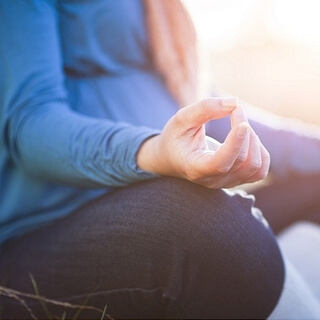
So I'll invite you to come into a meditation posture that supports you tonight.
You can choose to sit,
Or stand,
Or walk,
Or lie down.
You can move around a little bit,
Checking in with your body,
And trying to understand what the body needs,
How to find a posture that will help you stay awake and also be relaxed.
When you are ready,
You can see if you'd like to lower the gaze to a neutral point in front of you,
Or if you'd like to close the eyes.
And one more time,
You can check that your posture is awake,
Your spine is tall,
Your arms and hands are comfortable,
Your feet are on the ground if you're sitting or standing,
And that you are relaxed.
And we'll do some deep breathing here to help with that.
For the next minute,
You can very slowly and deeply inhale,
Pause,
And then slowly and fully exhale,
And repeat.
You can let the breath be natural when you are ready.
And bring a gentle attention to your connectedness to the ground underneath you,
Noticing where you touch the ground,
Or where you feel the pull of gravity very strongly.
You can notice the qualities of this touch,
Is it warm,
Is it cold,
Is it soft or hard?
And you can imagine that you have roots that extend from your body into the earth,
Just like a tree would,
Visualizing this energetic connection of stability and support between you and the planet.
And even here,
Starting from here,
You might see if it's possible to find a sense of surrender and trust in this connection to the ground.
Maybe a small sense of letting it be or letting go into it and trusting that you're always carried by the earth underneath you.
You are supported.
You might then take a minute or two to do a body scan,
Noticing the feet and the sensations inside the feet,
And then breathing into the feet,
Relaxing,
Letting go of the feet.
So again,
Trusting that the feet are there,
That they are okay,
And letting them go.
And then moving up to the legs and the rest of your body,
And doing this at your own speed.
I'll be quiet.
Each time you come into a new body part,
Noticing what's there to notice,
Breathing into it,
Softening,
Letting go and trusting.
Following your way all the way up to the top of your head at your own rhythm.
When you are ready,
You can notice the body as a whole now,
From bottoms of the feet to the top of the head.
And for another few seconds here,
You might let go and soften,
Noticing what it's like to have this embodied experience of life,
Being here fully inside the body as life pulses through you.
You might then bring a gentle attention to your primary anchor for a second or two.
This might be the breathing or the sounds.
This is your home,
And you can always come back to this home ground during this practice whenever you need to.
Noticing how the breathing happens on its own or how the sounds rise and fall.
And then as we begin this practice on surrendering and trusting,
You might scan your life for a situation in which you're getting a little caught up in wanting to control.
You're holding on too tightly.
Maybe you're carrying too much.
This might be at work,
At home,
In the larger society.
And as you think of this thing,
You might also sense your window of tolerance.
What is the difficulty level here?
Is this a 10 out of 10,
A 5 out of 10?
Anything that's below a 7,
Sorry,
Above a 7,
8,
You can just let go.
And you can see if you can find another place of difficulty,
Another place of wanting to control that is more like a 5 or 6.
It's manageable.
You might recognize this situation,
Maybe play it out in your mind like a movie.
See where you are,
What's happening,
And then hit the pause button.
Exactly that moment when you're trying to wanting to control or you're holding on too tightly,
You're getting a bit of rope burn.
You might see what's primary emotions or thoughts are coming up for you here.
There might be fear,
Anger,
Frustration.
There might be thoughts like,
I have to do something.
This needs to be different.
So for a moment here,
You can allow this difficulty to be present in your life,
Trusting in yourself that you can be with this,
You can make space for this.
And you might notice what's happening in your body in that moment of trigger.
Maybe you have tense shoulders.
Your jaw might be clenched.
You might be getting a headache.
You might have or extend some compassion for yourself,
Maybe putting a hand on your heart and whispering to yourself,
Yeah,
I'm getting a little caught up here.
This is difficult and I'm sorry.
I'm sorry that I'm suffering.
You might also picture yourself receiving love and compassion from other sources of love and compassion.
Whether this is a dear friend who understands,
Or you maybe visualize that you are in the beautiful garden that feels calming and grounding.
And from this place of compassion,
We'll do a little bit of investigation and letting go practice now.
So using this image of a backpack and a heavy luggage,
You might gently ask yourself,
What's in the backpack?
What are the things I can do?
I can change,
I can carry.
And do I have a heavy luggage that I'm tugging along?
What's in that one?
What are the parts of this situation that are simply not up to me?
If there is a heavy luggage,
You might visualize yourself putting it down,
Just slowly lowering it to the ground,
Putting it down,
And noticing how your body finds a sense of relief just from that action,
Lightness.
There might also be fear or grief coming up,
So you might see if you can find something in which you can trust.
You might trust that everything will be okay and everyone will be okay in the end.
You might trust the unfolding of life.
You might trust in your own capacity to hold whatever fear or grief is coming up.
So asking,
What can I place my trust in?
I'll give you two other images here in case they support,
Just like the backpack and the heavy luggage.
This time,
You might picture yourself swimming in a river and you might imagine that you are swimming,
You're definitely floating above the water,
You're active.
These are all the things you can do.
You can change.
And you might also picture that this river has a current,
Maybe multiple currents that are flowing in certain directions and that are carrying you.
So these are all the things that are beyond your control.
You might hold these multiple realities together.
You might notice what it's like to focus on your own swimming and to surrender to the current,
If that's even possible.
Again,
Maybe finding some trust.
Asking what can I trust in?
And the last imagery to try on here to see if it does anything for you is to visualize that you are standing below,
Underneath a blue open sky.
And from where you are,
From having set your intentions,
Having done whatever actions you can do,
Whatever efforts you could take on on your side.
You're now opening your hands towards the sky and you're just handing over whatever is not for you to carry and whatever is not up to you.
And maybe as you do that handing over,
You whisper some words like,
I trust in the process of life,
Or I will let the universe carry the rest of this.
It's okay if some of these images work for you better than others.
You can take a moment now at the end of this practice to let the practice go and to rest and to reflect.
You might ask yourself,
How did that go?
What did that bring up in me?
What was pleasant?
What was unpleasant?
What did I learn from this practice today,
If anything?
And do I have any intentions going forward?