Sometimes,
We win over the mental defilements,
Sometimes we lose to them,
But in the beginning we tend to lose first.
For someone with only a little effort,
Even waking in the morning at 5am or 6am is difficult to do,
And doing it as a monastic practice of waking at 3am and doing morning chanting at 3.
30 or 4am is even harder.
So we should be able to wake up at 4am,
Then sit meditation and chant at 5am.
What is important is that we have to do it consistently.
Dhamma practice is not like learning worldly subjects for our occupation.
Those,
We learn and know them,
And when we can pass the exam,
Then we have passed it for good,
They progress in stages and grades.
There is primary school,
Secondary school,
Completing one's education,
Then there is higher of a bachelors,
Masters and doctorate.
Once we pass it,
It's been passed.
We have the knowledge and education that is required to be able to do that work.
But in bhavana,
Mental cultivation,
There is combat.
If the Noble Eightfold Path Factor of Sila,
Moral conduct,
Is strong,
Then even if we have anger,
We will endure it.
We have greed,
Then we endure it.
We have delusion,
Then we endure it.
We don't act following it.
This is very excellent.
It is supreme.
We are not following them.
And especially those who have trained to a high level of the spiritual perfection of Sila,
Like the Venerable Mahakassapa and the Venerable Arahant who was his past wife,
Bhadda Kapilani.
Both of them had built a lot of bharami,
Spiritual perfections.
They both didn't desire to have a relationship,
But it was normal that their parents wanted them to get married,
And in the end they met each other.
Although they didn't want to have a spouse,
But from the plans of the parents,
They ended up becoming married.
But after marriage,
They didn't want to be together like that of normal people,
Because their samadhi,
Meditative concentration,
Was very solid,
And they had a lot of wisdom.
They each set up a flower,
Setting up a vow,
So that even in their minds,
They had no thought of lust.
This is called the sila arising from samadhi.
And they had built their sila bharami a lot,
And they ended up giving away all their wealth and going forth for ordination.
And both of them attained to becoming arahants.
And in a past life,
They were hermits who were practicing building their bharami.
They were husband and wife,
And kept the eight precepts as well.
But the great bodhisattva,
The Buddha-to-be,
Was going to be born.
In the text it says,
Sakka,
The king of the devas,
Came to ask them to have lust so that the bodhisattva would be born.
Because the bodhisattva had chosen to be born as a child to the hermits.
But the male hermit just had to touch the female hermit's womb,
And then Sakka would make it so that the hermit would become pregnant.
And so the bodhisattva was born,
Named Suvana-sama,
In order to develop his metta-bharami,
The perfection of goodwill.
He would take care of his parents who were blind.
So we can see that their sila-bharami was very prominent and firm.
And you as laypeople may have just little wealth.
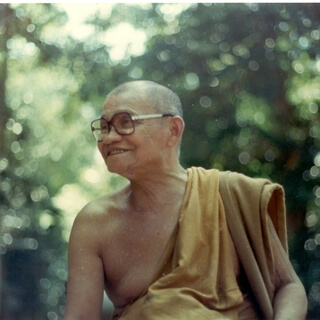
There was someone who asked Venerable Ajahn Chah that,
I have only a little bit of wealth.
How can I make merit?
Ajahn Chah said,
Hey,
To keep sila,
Do you need to use money?
To keep the five precepts,
You don't need to use any money at all.
And there are many people who make merit through keeping.
But the people keeping sila are just few.
When we have determined to keep the five moral precepts,
We can take them up by determining to keep them when they are given by the monks,
Or we mentally determine to keep them by ourselves.
When it comes to the one lunar observance day,
Or to the day that we have decided to observe the eight precepts,
Then we mentally determine to keep them,
And then we have the eight precepts already.
It is samadhanavirati.
And when we are determined to meditate and practice dhamma,
Then this sila will promote it and have a lot of benefit.
Our samadhi will be firmly established,
Because we have metta in the heart.
Our sila will be well established,
Our samadhi is firm,
And it will progress to wisdom.
The wisdom is the knowledge,
An all-encompassing insight into the heap of sankhara,
Conditioned phenomena,
Into this rupa and nama,
The body and mind.
Like when our eye sees forms,
Ear hears sounds,
And so on,
We call this passa,
Sense contact.
Then there arises ignorance,
Craving,
Attachment,
Avijja,
Tanha,
Upadana.
The ignorance,
Craving and attachment arises so quickly.
Then we are suffering.
Venerable Ajahn Chah compared this to like we fall from the top of a tree.
We aren't able to count in time how many branches and twigs there are on the way down.
It happens in an instant,
And bang,
We hit the ground,
And we suffer.
There is the aramanna,
The sense object that enters into our experience,
That we like,
And that we don't like.
Then we have delight and aversion already.
So we have to train.
We train in making the mind to be peaceful.
Then we are able to see it.
Essentially the mind and sense objects are together as one.
We can't see anything.
It's like the water that is mixed in with red dye,
Yellow dye,
Or green dye.
We just see the water that is red,
Yellow,
Or green.
When our mind gets involved in sense objects,
Then it's like that.
But when we train in mindfulness and samadhi well,
We will then be able to separate the mind and the sense object.
This is with the samadhi that suppresses it.
It controls the greed,
The anger,
The delusion.
Then no matter how strong the greed,
Anger,
Delusion is,
We don't think to act on it.
Our life must end in death.
We don't want anything more.
But we want our sealer.
In the time of the Buddha,
There was a man who in his life made some mistakes.
He had taken the life of some people.
And when they chased him to go catch him,
He didn't know where to run away to.
So he entered into the monastery.
The people wanted to kill him.
And so the sangha couldn't do anything to help.
The monk said to him to be determined to observe sealer.
Whatever they do to you,
You don't need to fight.
Hold on to sealer.
And at that time he put down his cruelty because he had sealer arise.
And when he died,
His mind was bright.
But the bad karma that had been done followed and could give its results to have a short lifespan,
Coming from harming the life of others.
So sealer has a lot of benefit.
Sealena sugatinyanti sealena bhogasampada.
Sealer isn't something trivial.
It's not something for fun.
It's a wealth.
It's a noble wealth.
We have taken it up and have determined to keep it.
And it will advance us forward to build higher goodness.
For us to grow in samadhi and wisdom.
Which is not something easy to do.
And sealer is important in buddhism.
The hosts of devas observe sealer.
But when it's an ordinary sealer,
Then when there is no one else there,
There's no mood or sense object,
Then we can have sealer.
But when a mosquito bites us,
Or there is something small bothering us,
Then we may break our sealer.
So we have to be careful.
There is someone coming to speak badly to us.
They blame us.
Then we react to it and we get angry.
We want to say it back to them.
So be careful of your sealer.
Or our speech may not be nice.
It is not pleasant or tender.
It may be divisive speech.
Or speaking harshly.
To swear and to curse.
Here sealer is broken again.
So we have to be one who thinks correctly.
Have a mind that is set up correctly.
We do good actions and practices.
We have dana,
Giving,
Sealer and bhavana.
So may you do it consistently.
Then ultimately you will be able to separate the mind out from the sense object.
The sense object is the sense object.
The mind is the mind.
We can separate it out.
What is the sense object?
They are forms,
Sounds,
Tastes,
Odors,
Tangibles and ideas and thoughts which are called mind objects.
If we have mindfulness and samadhi that is concentrated then we can see clearly that it's not ours.
It's not owned by us.
There is proliferation in the mind that is good and bad.
There is merit and a lot of demerit.
We just know it.
That it's not ours.
It's not permanent.
It's unsatisfactory.
It's not self.
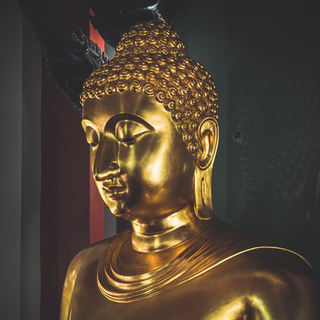
Here we are coming closer to the Sama Sambuddha,
The perfectly self-awakened Buddha.
We come closer with every moment.
And in the time of the Buddha there were many people who saw the physical body of the Sama Sambuddha.
For many it was meritorious.
But for many others it was demeritorious.
It was up to their karma,
Whether good karma or bad karma.
But coming to this era,
We want to see the Buddha.
So we can see the Buddha by way of the mind.
How to see by way of the mind?
Through our meditation.
By practicing samadhi.
We have sila,
Which doesn't use any money.
And practicing samadhi we also don't need to use any money.
And it also doesn't waste our time,
Making us disturbed with external things,
Letting them come into our minds.
Our concerns are,
Do we have greed,
Anger or delusion?
We have the mindfulness to know them in time.
We see the arising and ceasing of phenomena.
We see it more and more.
Our samadhi grows by levels.
We win some and we lose some.
When magga,
The path,
Is strong,
Then it overcomes the defilements.
When the defilements are strong,
Then it wins over the path.
It fights like this.
When we can win some,
Then we are pleased.
We have rapture and bliss.
And ultimately samadhi gathers together and it's amazing.
The mind and body are light.
We walk around and it's like we have no body.
We sit and stand and it's all spacious.
It's amazing.
And laypeople can do it.
You can have this arise.
It's not just for monks.
The monks have the time and opportunity.
It's their work they do and which laypeople have supported them so they can get to the path and fruits of Nibbana.
But there are dangers.
Wealth,
Homage,
Fame,
Rank,
Praise,
Flattery.
They burn and are dangerous.
Monks need to be very careful of this.
Contemplate this well.
So this is for the monks.
The requisites that we use to support us in the day are to be used for developing the mind.
There's nothing that is ours.
Coming to ordain and there are just the 8 basic requisites.
So for laypeople,
You practice to see the Buddha.
So follow the way that I've explained.
And we can win over the defilements.
The body and mind can be light.
And ultimately,
We see the truth.
We can see in our hearts that all things are impermanent.
We don't have jhana,
Mental absorptions at all.
We don't have anything at all.
We just have wisdom,
Insight arising.
The mind gathers together and knowing arises.
Like I have practiced.
Peace arises.
And we see into arising and ceasing a bit.
So may we know the path to practice.
But we have to put down liking and desire.
Otherwise craving will come up and be hidden in that goodness.
And it wants it again.
This brings troubles.
We need to put it down first.
Put down the thought first.
Then like this we will slowly win over the sense objects bit by bit.
We need samadhi as our center.
Then it will be wisdom that knows in time phenomena as they arise.
So for us that have sila,
See it as having great value.
With no equal.
May you be proud in building goodness in your dana,
Sila and bhavana.
And one day you will meet the Buddha.
You will see the Buddha in your hearts for sure.
That is if you don't give up your efforts and dhamma practice.
You keep doing it.
And doing it with letting go.
Putting forth effort can make it tense.
You can put forth effort and tenseness arises instantly.
So if you have little effort,
Then you need to put in more effort.
But if it's too much stress and strain,
Then reduce it.
Have just the right level.
Like the great teacher Venerable Ajahn Chah taught.
To do it with an attitude of letting go.
May you grow in the dhamma.
May you grow in blessings.