Good.
So,
As you know,
Tonight's theme is going to be around solitude and belonging,
Which might seem almost like oxymorons but it's something I've been exploring quite a lot,
Especially because I just finished a four month retreat,
Or let's say a period of solitude and seclusion in Wiltshire over the summer which is our classic rains retreat the monastic names retreat that we do every year.
And for me it was a very interesting experience quite different from the usual retreats.
Firstly,
Because I was not among community,
I was on my own.
In a rented cottage in the tranquil Wiltshire hills.
But secondly,
Because I joined the retreat or I was basically a self retreat.
So I created the retreat on the back of one and a half years of social distancing.
And for me it really was social distancing and not just physical distancing because I didn't have any guests I didn't receive any guests at the monastery,
And I was living alone.
So it was very interesting because even though that solitude was still nourishing and very beautiful and enjoyable and enriching in many ways.
I also met the edge of where solitude can move into feelings of isolation feelings of even marginalization and loneliness as well that arose,
And I think these edges are very interesting places.
And what that led me to do is to explore a little bit about what is healthy solitude How does healthy solitude come about.
What are some of the supports for solitude.
Yeah.
And one of the things that I realized was that a sense of belonging seems to me to be really key.
A sense of belonging in this world,
Belonging in community,
A sense that what we do matters,
You know,
And what we do is a part of contributing to the greater good,
We could say.
And there were times during that period that I was losing touch with that I was actually feeling that I'm not sure this is really matters to anybody I'm not quite sure of my place,
Either in the lay world or even in the center,
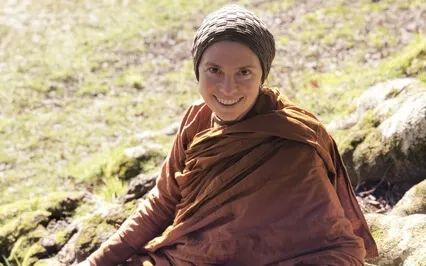
Because as a fully ordained non as the only fully ordained non in this country,
As far as I know in my tradition.
There is a very strong sense of marginalization,
Even when we're reading into the Buddhist texts.
Sometimes we can read into these texts and not find ourselves represented or find ourselves as women represented in less than glowing ways.
And a lot of this is probably owing to later omissions or additions or,
You know,
All kinds of patriarchal influences on the setters I don't think the Buddha had any discrimination whatsoever.
And he totally promoted the ordination of women and made it very clear that,
You know,
Every gender,
Every person from every marginalized group no matter your color your race,
Your sexual orientation has the same capacity for enlightenment,
Of course,
Because enlightenment is a matter of the mind.
And yet still,
These feelings can come up when we are living in communities that are not as privileged perhaps as the mainstream.
And in my case,
This definitely arose.
So,
I wanted to explore this further today.
And before I get further into it now,
I thought we could perhaps start with some meditation,
And then we'll have a bit more reflection around what solitude is and how we can bring about a really healthy relationship with solitude and also prepare ourselves to be ready to really reap the rewards that can be available in solitude,
And in silence and seclusion.
So,
If you wish,
You may get yourself settled.
However,
Your body feels most comfortable.
You are in a group here.
So,
There is a sense of belonging.
And that sense of belonging hopefully includes a sense of acceptance,
A sense of welcome and warmth.
So really find your own comfort,
It doesn't matter what others are doing it doesn't matter how you sat before.
What really matters is how you relate to what's arising in your body and mind right now.
If you want to have your lights down please do the video on or off it's fine.
I personally quite enjoy looking at people's faces in the meditation.
I feel that it offers something to the group.
But if you wish to have complete solitude and close your video you're very very welcome to do that as well.
And if you wish,
If it's supportive for you.
You can close your eyes.
I'm very pleased to see someone's lying down.
That's really an act of compassion to your tired body right now.
And with your eyes closed coming in contact with your physical feelings,
Those feelings that tell you,
You have a body.
Those feelings that arise in the here and now.
Inviting us into this present moment,
Gently,
Gradually,
Slowly,
Withdrawing from the world of sights,
Smells,
Touch.
Leaving just the inner sensations and the sound of my voice.
The thoughts and emotions,
Moods in your mind.
And just landing,
Landing in your body.
Landing,
Allowing your weight to sink into the ground or the chair,
Sofa.
Taking your space inside your room.
Sitting strongly grounded.
With stability and ease.
See if you can find a sense of alertness through your posture,
Without losing that sense of relaxation and ease.
That might mean a very gentle lifting up through the lower back,
Spine.
Perhaps rolling your shoulders gently back.
Relaxing any tension in the jaw,
Face,
Especially the eyes,
The temples and the brow.
To invite your body and mind to relax,
You may even wish to put a very small and gentle smile on your face.
So to welcome yourself more deeply into this moment,
Into this room.
Perhaps if it helps you,
If you wish,
You can bring to mind the other people here together with you.
Recognising you're part of this community.
Supported by others and supporting the others through your practice,
Through your beautiful intentions to develop the mind.
Whether you're in Oxford or other parts of the country or beyond,
You belong.
Reflecting just how fortunate we are to have spiritual friends to practice together with.
Even if we're not together physically,
Our hearts,
Our values are aligned.
We have this beautiful opportunity.
To practice.
To listen to the teachings of the Buddha.
Teachings of freedom.
Teachings of peace.
We have an opportunity to incline our mind even slightly.
Towards kindness,
Compassion.
Letting go of selfish desire.
Simply by being present.
Bringing your awareness into the body.
Combining that awareness with kindness.
As it moves from the top of the head to the tips of the toes.
Listening deeply.
Your inner ear.
As those feelings,
Those sensations,
As those soothing the child.
Who's in need of your care.
Meeting everything that arises with unconditional awareness.
Self and so demand.
You know as pain throws in anger.
.
.
.
.
See if you can accept yourself.
Without judgment.
Without pushing any experience away.
Just holding it lightly.
The spacious,
Gentle,
Kind awareness.
As though you are held in a field of loving kindness.
As though you are being gazed upon by a Buddha.
Or someone who represents that loving kindness to you.
Notice how that loving kindness,
That unconditional acceptance,
Allows tensions to fade away.
Allow silence to enter the mind.
And the more you notice and value that silence,
The longer thoughts may arise.
Between the thoughts,
The silence.
Allow yourself to drop more and more deeply into those moments of silence.
And into the air and now.
And into the air and now.
And into the air and now.
And into the air and now.
And into the air and now.
And into the air and now.
And into the air and now.
And into the air and now.
And into the air and now.
And into the air and now.
And into the air and now.
And into the air and now.
And into the air and now.
And into the air and now.
And into the air and now.
And into the air and now.
And into the air and now.
And into the air and now.
And into the air and now.
And into the air and now.
And into the air and now.
And if you find that any point you're struggling with your experience of becoming tense or tight.
Relax any struggle,
Any fighting.
Return to a spacious sense of awareness.
Remembering that you're held in love and kindness.
Supported by the presence of all those who've come to meditate together tonight.
Nothing you need to do or be.
You need to achieve.
You need to be.
You need to be.
You need to be.
You need to be.
You need to be.
As we come towards the end of this meditation.
Just invite you to once again bring the other people in this room to mind.
Staying present,
Eyes closed to your inner experience.
Physical sensations.
Energies in the body,
In the mind.
Recognising.
All of us feel just the way you now feel from time to time.
All of us experience and grief.
Restlessness.
Kindness.
All of us have the capacity.
Peace.
Generosity.
For men's kindness and care.
All of us have the capacity to both support others and also receive the support of others.
All of us matter.
I'd like to invite you to take three breaths.
I'd like to take slightly deep breaths,
Breathing in the love that surrounds us and breathing out our loving kindness into the world.
And now you can gently,
Mindfully open your eyes.
If you just joined,
See another old friend here,
Nice to see you,
But please don't open your eyes if you need longer to settle in the right.
Absolutely fine.
It's nice for me to land too,
Even though words come out of my mouth,
I still feel the support of the group.
It feels nice to be together,
Very supportive and friendly and kind.
I think whatever does come out of my mouth is probably what I just need to hear.
Hopefully,
It helps for others as well.
So,
As I mentioned before we began meditation,
I wanted to share a few reflections and thoughts around solitude.
The beauty of solitude,
Perhaps some of the dangers,
You could say,
Of solitude,
It doesn't come from the right place.
And also have a look at how the Buddha described solitude on the path,
The place it has on the path and also the preparation that we can do to really enable ourselves to learn from solitude,
To reap some of the beautiful fruits,
The freedoms,
The relief of simply knowing how to be a peace alone.
Yeah,
We can sometimes be surrounded by others and yet feel very lonely,
Feel we don't belong.
And yet when we have a mind that knows how to be its own best friend,
We can have that sense of belonging wherever we are,
Whoever we're with,
And even when we are alone.
So solitude is defined by one of the dictionaries that I checked out online as the quality or state of being alone or remote from society.
Seclusion,
Or a lonely place such as a desert.
And I wanted to change the word a lonely place to a quiet place because a place isn't lonely,
A place is just a place.
But it's human beings that can feel loneliness.
Again,
Whether we're in a crowd or whether we are alone.
And yet,
Solitude differs from isolation,
It is possible for it to tip into isolation if the requisite supports solitude and readiness is not in place,
But it differs because isolation I think is usually has a slightly negative connotation could even be seen as a kind of punishment.
And one of the members of this community,
Kelly,
She's a teacher and she was telling me that school,
They have a kind of detention of might not get this quite correct.
But I'm part of that detention for people whose behavior is less than supportive to the rest of the group,
Have to turn up after school in little kind of isolation blocks that little cubicles on their own.
And it's really interesting that we do this to people because actually what people often need when they're feeling frustrated and discouraged or playing up,
So to speak,
Is connection,
Is support.
And that's probably what some of these behaviors are actually asking for,
You know,
To be seen to be heard to be understood,
And to be respected as well but we just sometimes don't know how to really ask for what we want.
And to have like solitary confinement in prison,
For example,
And I'm not quite sure why this still happens because it's been shown by research that it doesn't actually make any difference to the levels of violence that are shown in those prisons.
And so I think again,
In many cases where people's behavior becomes so disruptive that perhaps punishment is seen as the necessary step,
Many times it comes from trauma,
You know trauma that we experienced in our early life or in life as we continue in this,
You know,
Perilous play sometimes isn't it,
You know where desires and aversion can take hold of the mind and delusion of course is always the culprit behind that.
And yet we put people in,
You know,
Imprison them in solitary confinement which is just the last thing they need.
There's a psychologist called Gabor Maté,
I'm sure many of you have heard of him,
And he was studying addiction and found that most people with addictions and then the consequent difficult behaviors or anti social behaviors arises from trauma.
And he says that the cure for addiction or the opposite of addiction is not kind of weaning people off but the opposite is connection,
Which I find absolutely fascinating.
And so,
You know this isolation is usually sort of quite a negative thing and maybe even suggest danger can even perhaps suggesting imminent death if you're on an isolation ward in a hospital.
Of course on the one hand,
We can say that's the care for you to give you the best care and comfort and support.
And in the case of the corona pandemic you know that's been necessary to protect others as well.
But of course it has this fearfulness about it that if you're in an isolation ward or if you're in a,
You know,
Solitary confinement in prison,
Something terrible is going to happen to you,
Or it means,
You know you're a terrible person in some way.
And,
And I think some of us might have this kind of ambivalent relationship also to solitude.
You know,
In some of the meditation centers that I used to practice in they had a meditation cell.
And of course we had to meditate in the group for many retreats before we were actually allowed to have a meditation cell,
But even the fact that it was called a cell I think some people was a little bit alarming.
And you have to prepare yourself to be ready for that because you go into this small little room which was,
You know,
Completely dark and there'd be just a cushion there,
And you'd sit in there for hours and hours during every day.
So I've sat for the whole 45 day retreats for you know 15 hours a day in those cells and absolutely loved it but this happened after some preparatory steps.
So solitude actually differs from isolation in that it can be positive or negative,
Depending on the situation,
You know,
Depending on maybe whether we do have that sense of belonging,
And whether we feel that our time in solitude is part of contributing to the greater good.
Yeah,
There's enough of a sense of secure attachment for those who may know a little bit about attachment theory,
That you have wholesome relationships in your life,
You have a certain ability to work with your mind,
And that physical isolation is not going to lead to a sense of emotional isolation which can be detrimental even to our health.
I think there needs to be a certain amount of readiness as I said and we'll look into that further using the Buddhist teachings,
And also a little bit about how long,
You know how much time you spend in seclusion and in solitude.
So even in the Buddhist suttas it's very much recommended as part of the path to have periods of seclusion periods of solitude it's seen as essential to take deeper steps towards inner peace.
It's an essential support so that we can actually learn what's happening inside our mind.
Yeah.
And I think,
Right in the beginning,
You know,
Even just for ordinary people living in the world especially highly sensitive people or empaths who tend to soak up a lot of information or other people's emotions.
And so if we're just learning from experience.
Or if we're introverted and you know just prefer a lot of time on our own then it can really be an opportunity to just take some quiet time to discharge the excess information and to recharge,
You know,
By aligning and inclining to the beauty of silence and of solitude.
I've noticed that I develop a really heightened sense of connection to nature and the environment around me.
So that in Wiltshire when sometimes I was feeling alone on retreat,
I would go out and chant Metta to the cows.
And it was really beautiful because they were little cows like quite young little bullocks and I think some of them were female cows.
And they'd all come after like one verse or something they'd sort of put their ears up and the boldest among them would come forward.
And then one by one,
The rest would follow.
And sometimes it was very clear they weren't just coming because they thought there was nice grass around my feet.
There was always a fence,
Luckily,
Because I'd be a little bit,
Not quite sure,
With all those cows kind of rushing up.
But sometimes there was no grass at all it was just sort of dirt,
You know,
Around where I'm standing but they'd come for the Metta.
And it gave me a beautiful sense of connection and support as well,
And a sense of yeah being just another being in the countryside but didn't mean anyone or anything any other being any harm.
I personally find also on retreat that although other people might miss me for a time,
Especially parents and close friends.
It's really strange but when you have a good relationship with yourself and you're coming into alignment with your moods,
Your emotions,
You're having a sort of sense of ease that develops.
I often feel so much more deeply connected to the people in my life as well.
So the sort of essence of what those relationships really mean becomes very clear.
And I notice you know how they nourish me and how fortunate I am to know so many beautiful people in my life.
So even though it might look as though one is alone in solitude sometimes if we do have that external sense of belonging and we have enough to reflect on you know enough virtue enough good qualities and art,
And also enough skill and experience in working with the various states of mind that arise.
It can be a very beautiful experience that connects us more deeply to ourself.
And as a result of that we feel more connected to humanity as a whole.
And of course to those special people in our lives.
It's an opportunity solitude can be an opportunity for timeout,
You know just timeout from the business of the world for a sense of freedom of peace and a quietening of the senses which is again so important and fundamental to the path that we quieten down the external business of the senses.
And we can do that even simply by closing our eyes you know suddenly the whole world of sight drops away.
If you're fortunate enough to have sight in the first place.
And,
Yeah,
Even the world of sound can start to fade,
The deeper we go in our practice,
But it has to go hand in hand with a readiness and with a appreciation of that piece.
We can't just suddenly turn the world off.
And sometimes if we try to do that it can be coming from the wrong place but rather we make peace with our experience.
And we gradually befriend the silence in the mind.
It's also an opportunity to understand our emotions and to unpack some of the contents of the mind.
I'm sure many of you've had that experience you know that when you're sitting in meditation suddenly you're in touch with more difficult aspects of your emotional world or maybe emotions that have been suppressed or pushed down pushed aside for a long time.
Sometimes it's just noticing or tendencies are conditioned tendencies to perhaps hold on to an object of it tightly,
Or to let the mind wander and be distracted in,
You know,
Just wondering thoughts.
We start to notice all this and it's all fine,
You know,
It's all a product of what we've been doing and how we've been conditioned how we've been educated or raised.
But it's only really when we're in silence and solitude,
That we can see the effects of the way we live.
Otherwise it's all too easy to distract ourselves at the slightest bit of discomfort.
And you know it can be difficult.
These are the negative sides now of the solitude is that it can be difficult.
There's a French philosopher I think it's 17th century called Blaise Pascal he's the one that said,
I wrote down a little quote somewhere.
Yeah,
All humanities problems stem from one's inability to sit quietly in a room alone.
That's a powerful statement isn't it all of humanities problems stem from one's inability to sit quietly in a room alone.
So conversely I guess we could say,
And I'm not sure if this is an exaggeration that perhaps there'd be no problems or be far fewer problems if we did learn to sit quietly alone.
Yeah.
Apparently even in seventh century France,
People hated being alone with their thinking mind,
And their distracted nurse and their agitation so much that they started the Franco Spanish war.
And then in 2004 there was an experiment done that I read about today it's in an old Guardian article,
And it was saying that an experiment was done to see if people could sit alone with their mind,
And whether they would enjoy it or not be able to manage it.
And it started off by rather strangely,
Another experiment where people were given electric shocks of increasing severity sounds horrible.
And after is there a question about their experience and you know whether they'd like to have these electric shocks again and the experiment has found that they'd actually pay rather than pay money not to be shocked again in those ways.
And then,
In a connected experiment they,
They asked people to sit in a room on a chair alone for the grand total of 15 minutes.
Okay,
So you're all doing really well.
And not to look at their phones,
And not to get up from the chair,
Not to look at the phones is a tough one these days for modern people because we're checking every couple of minutes sometimes.
And anyway,
The result was that,
Yeah,
They kept the electric shock equipment in the room.
Okay.
And can you believe this they found that 75% of the men actually gave themselves mild electric shocks and 25% of the women did the same,
Because they were so agitated and uncomfortable having nothing to do that it was actually better to feel something than to just sit feeling distracted and agitated,
And perhaps with feelings of severe loneliness or isolation,
Who knows.
Sometimes it can bring up feelings of abandonment or even alienation just to be alone with ourselves for a while.
So that's quite a really incredible finding and strange in a sense that it's so gendered as well.
That's quite interesting and I don't know,
Maybe I shouldn't comment further on that.
But sometimes another negative aspect of solitude is that it's involuntary,
And I think this is where it differs very much from the kind of seclusion and solitude we seek in the practice,
Which is a definite intention born of a wholesomeness,
Born of a wish to purify our mind for the sake of ourselves and also other beings.
But sometimes it's a result of marginalization as well,
You know,
We feel different or we're treated differently because of our gender because of our race,
Or maybe our sexual orientation.
Now as I said earlier,
The lack of representation the lack of actual other bhikkhunis in this country is extremely marginalizing for me.
Even thinking about spiritual teachers that I can really take as examples of a very very few women.
And unfortunately we had a very beautiful Dhamma session on Saturday with Jetsama Tenzin Palmo,
Who many of you may know as the subject of the book The Cave in the Snow.
And she's the probably the most senior most British certainly and maybe white bhikkhuni,
You know,
Convert Buddhist if you like,
In the world today.
She actually lived alone for 12 years in a cave,
So she's a total inspiration.
As far as solitude goes,
And she actually did a lot of preparation of course for this.
And those 12 years were a result of six years already ordained and living with a teacher doing some admin work and you know developing that good relationship that supported relationship with those around her as part of the tradition.
And with a teacher that was there to guide.
And then the next six years of her monastic life were spent in the Himalayas so further away from you know,
Most people the business of the admin role.
And with other nuns until she developed deep states of meditation.
I'm pretty sure from the book if I remember that she did develop Jhana Samadhi.
The real stuff,
Not the Jhana light.
So real seclusion from the hindrances complete seclusion even from the senses,
So that she could go deeply deeply within the mind.
And so this was her preparation before going to live in that cave for 12 years and of course when we did the talk with her the question was raised.
You know,
Did you ever feel lonely,
Did you struggle what were the difficulties you encountered.
And the main difficulty that she could bring up was that her clothes would get damp,
And she'd have to add them from time to time.
She said she never felt lonely.
She never felt even scared.
And I know at one point in that cave she actually got completely snowed in and had to dig,
The voice just came in her head dig,
Get out.
She was completely snowed in under several feet.
I don't remember how many perhaps even meters of snow 3100 meters up in the altitude right.
So even so,
I was reflecting and thinking she was still part of a system of support.
My mother actually ended up watching it along the live stream,
My mom and dad I was really delighted to find that out.
Because I hadn't pushed it on them or anything,
They just chose to do it,
Which was wonderful.
And they asked me,
How did she eat you know how was she fed.
And I said well you know she did grow some vegetables.
But also,
There was someone delivering some extra food I think once a month.
So there was still a support system and of course in that culture there's a cultural context,
There's an understanding of sages that go off to the mountains yeah,
The Santa Muni the silent sage.
The word seminar,
Which means monastic which is used for a monastic basically means a renunciate and someone that leaves the household as life leaves the home life and seek seclusion and solitude.
And so there is that sense of,
You know,
This lifestyle,
She had chosen being understood being valued mattering to others.
Yeah.
And of course ultimately coming back to serve.
So,
I think that a sense of belonging is really one of the keys to successful solitude,
You know,
Feeling that you've made a choice,
And you're making that choice from a place of connection,
A sense of being held and supported by your community by others or even if you are more of a reclusive type of person who doesn't have much of a community around you at least you have a sense of belonging within yourself.
And,
You know,
The ideal context in a sense would be to take these periods of solitude within community.
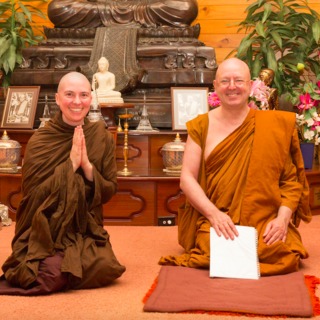
My own teacher Ajahn Brahm describes the ideal monastery as a community of hermits.
So it's a place where your home is,
But together.
So a little bit of an oxymoron but it makes a lot of sense,
Because you've already learned to live in harmony,
And to care for each other so you have that relational practice of virtue.
Virtue isn't something we can practice alone,
You know virtue stems from an understanding that just like me or being suffer,
And that my actions have consequences for those around me.
You know whether they're far or near the way I think has consequences for the way I then perceive the world around me,
And the way I think certainly has very immediate consequences for my own peace of mind.
So we develop mental virtue learning skillfulness and how we relate to the world around,
Whether we choose to dwell on things that lead to anger and frustration,
Or we dwell on them.
Only enough to feel motivated to do something positive to bring about change.
You know,
We can also choose to dwell on the beauty in this world and that's something rarely talked about.
But mudita is also an important practice.
A lot of compassion can bring us down,
Especially if we move into empathetic burnout or empathetic distress,
Which is not really compassion anymore.
But compassion tends to focus on the suffering,
The problems in the world,
And the release the freedom from those problems,
But mudita focuses on the opposite.
Mudita means a kind of rejoicing joy,
Altruistic joy that sees and delights in the well being and happiness of others,
The success of others in this world.
And there are many people at all times who are actually well,
Who are doing wonderful things,
You know,
Who are real inspirations in this world.
And we can use our minds in ways that,
You know,
Balances out any sense of despair or discouragement by focusing on mudita as well.
So our familiarity with the way our minds work and with how to handle our emotional content of our mind is really important to be ready for solitude,
To be ready to enter into seclusion.
And as part of the gradual training in the suttas,
The Buddha says that that readiness is based on virtue,
It's based on the cultivation of wholesome states of mind.
And virtue also includes not only abstaining from the unwholesome actions of body,
Speech and mind,
But also beautiful qualities of body,
Speech and mind such as an ability,
As I said,
To live in harmony to live harmoniously with oneself and with others,
Without this terrible finding that we inflict upon ourselves and those around.
It also includes developing simplicity,
You know,
A fewness of wishes,
Satisfaction with little,
Contentment with little.
And in the suttas it's very beautifully expressed as like a bird travels with its wings,
It's only burden,
So renunciate,
Or someone seeking seclusion we could say in this context,
Travels with only their basic belongings,
You know their bowl and their cups,
Or if you're a householder,
If you're a lay person which of course most of us are,
It means just traveling lightly you know don't pack like 10 suitcases just because you're going on a cruise,
Or just because you're going by car just pack a bit less and see what kind of freedom that brings you,
You actually don't need that much.
And this reminds and encourages the mind to look for its happiness inside.
And these are sort of outcomes really of living a virtuous life we start to develop that inner happiness,
A sense of respect,
Reciprocity,
Care,
Generosity,
And also the Buddha talks about the two types of bliss that come as a result of a virtuous life.
That is,
The bliss of blamelessness and about just it's called,
And the bliss,
The unblemished bliss or on solid bliss which is the happiness in the mind when we're not being bombarded with input through the sense doors.
It's just a general sense of being happy with the way your life is going a general sense of feeling satisfied that you're living in a way that's aligned to your deepest values and your deepest aims and aspirations,
You're on the right path.
It doesn't mean you're always perfect none of us are it's impossible,
And we're not required to be,
You know,
The path is not about creating perfect selves.
The path is really about understanding that what we take to be a self is conditioned.
It is actually not our fault,
If you like.
And we can be wise and skillful about the kind of conditioning that we allow into our minds,
You know,
Through what we read through the friends we associate with,
You know,
It's important to be secluded from bad friends,
You know from people who encourage us to break our precepts or encourage us to even just get on board when someone else is talking in a very negative way about another,
You know,
Trying to sort of form little groups or cliques of people who are against those.
You know,
This is all part of virtue and feeling satisfied with our life.
And part of the gradual training the next part is to start being aware,
Developing more and more mindfulness in daily life which happens as a sense has calmed down,
We become aware of our postures of what we're actually physically doing,
Whether we're walking standing sitting boiling the kettle,
Cutting the flowers and putting them in a vase,
How we take care of our lovely orchids,
I've got a thing now for all kids.
I love that practice because they're so delicate and tender and they easily get infections and things so I really love looking after orchids because they're just so so exquisite and also so delicate,
Just like us really just like the human heart,
Right.
We're very tender to.
Even though we try to kind of erect barricades so that we don't get hurt.
You know even barricades of anger,
This can be a real sort of covering up of our vulnerability or covering over of our sadness pushing it aside and it's okay,
You know,
If you have been traumatized or if you do have a lot of difficulty going on sometimes it's too much to look at it all at once and that's never advisable to go too fast.
But sometimes we can just feel into those things and notice that actually there's a tenderness there,
Even in sadness as a tenderness is something beautiful there too.
Anyway,
I don't know why the orchid made me think of that but they are very exquisite things and very delicate and sensitive to the conditions around them and I think we are too.
We learn what we're doing we start to,
You know,
Bring ourselves into this present moment throughout the day,
And also understand the purpose of what we're doing,
You know,
So when we're sleeping.
It's not like we have to be mindful all through the night but we know how much sleep we need.
We know what's the appropriate amount what's the appropriate time to go to bed.
And I did not do that last night.
I did appropriately have an afternoon nap.
So hopefully that will make up for it.
Anyway,
Sometimes it's funny you think,
Oh dear,
You know,
I'm tired tonight I won't be able to come and do a teaching but actually sometimes it helps the letting go and just going with the flow.
So,
But anyway tonight I'll try to be more aware of the purpose of sleep and the best time to sleep,
Which is not 1am.
And then it's interesting because then only at this point when we have this ability to stay in the present moment with a bit of wisdom and a bit of mindfulness,
This ability to see the way we use our mind and how that affects the things that arise in the mind.
Only then the Buddha says,
One should go out and seek the root of a tree or sit in an empty place,
Cross legged establishing mindfulness in front of one and start to observe the breath.
Some of you might know that little refrain,
Which I paraphrased from the Satipaṭṭhāna sutta,
And many of us I think especially in the Insight tradition which is where I began with the Goenka practice.
I did so many countless retreats and long retreats and service retreats with S.
N.
Goenka ji,
Who I still have a great deal of gratitude towards but really the emphasis in that tradition is the Satipaṭṭhāna sutta and the Satipaṭṭhāna practices,
Establishing our mindfulness based on the body,
The feelings in the body,
The mental states and the contents of the mind.
So this is the Satipaṭṭhāna sutta,
And it begins by advising one to go into seclusion,
Right,
Which is why all of us Insight practitioners go off on retreat.
But actually in the suttas,
As I say,
That was already after we have a very strong foundation of sila.
It isn't something to do straight away.
Of course,
We can do this for a shorter period of time and that's absolutely fine because if you do join,
Say,
A three day retreat or a ten day retreat,
You have the whole package right there.
You know,
The environment means that you naturally observe sila.
There's no way to,
You know,
Speak,
Use wrong speech,
You're in silence.
There's nothing you can really do wrong at the physical or verbal level.
So really you just have your mind.
But sometimes when we begin,
It's almost like opening a cupboard that's been,
You know,
You've just shoved stuff inside.
Even here,
Actually,
There aren't many cupboards for me to use,
So I've stuffed some stuff inside one cupboard and when I open it,
I have to be careful that the seaweed doesn't fall on me or the cop doesn't like come out and crash on the work surface.
So sometimes our mind is like this,
We haven't organised it well first,
We haven't folded up the various,
You know,
Contents of our mind and put them on shelves nice and neatly so we know where to find them.
And we know they'll stay,
You know,
In place until we're ready to take them out and unfold them and have a look at what's inside.
So it's only then that we go into seclusion and the Buddha gives two kinds of teachings at this point,
Either we can practice with mindfulness of the body,
Feelings and mind,
Or for some that have the inclination,
Maybe the skill from past lives or from this life,
Just the natural inclination towards deep meditation,
Deep samadhi states in jhana,
Then we can develop the states of jhana,
Deep oneness with the object.
Sometimes people interpret it as kind of union with God.
It's not union with God.
Well,
It could be seen as union with God actually even in the Buddhist tradition,
But it's not the final goal for us as Buddhists.
However,
These states are really deep states of seclusion because we're completely secluded from the senses from the world of the sense impressions and secluded from unwholesome states.
This is the real beauty of seclusion that was secluded from all those mental states that can harm and hurt our minds and really they are our only meal enemies.
If we have that ability to work with our mind then nothing outside can really hurt or harm us.
Whatever happens to us,
We at least don't generate more suffering.
And I have to be careful when saying that because I'm really not underestimating or even assuming to have any idea of how it would be to be involved,
Or,
You know,
In situations of genocide or,
You know,
Just being,
Yeah,
Violence towards you just because you're not in your particular race or sexual orientation,
Or for no reason whatsoever.
You know,
It's not that we want to invite that or it's not that we should think,
Oh,
I should be fine with that if I'm a good Buddhist No,
You know these things are things to avoid.
And the people who are the perpetrators as Jetsun Mertensim-Homo said on Saturday,
They are the first people to suffer.
So we have compassion for ourselves we have compassion for victims but also in time we can develop compassion to even those who perpetrate such harm.
And part of that compassion is stopping it happen,
Trying to stop trying to intervene when we do see injustices,
Activism or social justice or,
Yeah,
In some cases self defense,
Removing yourself from an abusive situation,
If at all it's safe to do that.
So to end this little talk,
And to give us time for some questions I would just like to summarize and say that you know a healthy solitude a healthy relationship with solitude I think can stem from the sense of belonging a sense that your life matters that your contribution is valued in this world and even your contribution,
Developing yourself in meditation is also part of giving back to the world.
We need to have a certain amount of preparation and readiness,
And we can take off,
We can do small steps,
Don't just go into a four month retreat.
Don't just go into,
Obviously not a 12 year retreat,
But you know there are such things as three day retreats or very structured 10 day retreats with a lot of teaching input where you're held by the structure the system and the other students that are there.
It's important that solitude be a choice,
You know it's when it's enforced or especially used as a punishment that we can develop a really negative relationship with solitude and being alone.
Especially if it's due to marginalization or being pushed out of a community or a society in some way,
Maybe out of a job.
So it should be a choice and it should be done out of a wholesome motivation,
A wise motivation to develop compassion for ourselves and to all beings.
And we're never really lonely,
When we are our best friend,
You know,
When we really know our own mind and we were ears with ourselves,
Then wherever we go we can relate to others.
And we can be happy by ourselves.
I would really like to encourage all of us really to support each other,
To encourage each other to enjoy seclusion,
But also by,
You know,
Being part of a community,
Developing communities if we can,
You know,
Creating social networks that support us.
It doesn't have to be in the Buddhist environment or the meditation scene,
It could also mean looking after people volunteering to serve in a nursing home or to serve people with learning disabilities.
One of my friends volunteers every week with a friend of hers who's an art therapist and she goes to help us set up the place and to interact with the people there.
And she enjoys it very,
Very much and finds a lot of delight in that.
So we can do this to create,
You know,
Support systems for people who are more pushed out in this world.
And then to find a balance of relational practice and solitude.
It's all relational practice because you have to learn to have a good relationship with yourself.
And of course,
I guess I should just say that even developing monasteries because somebody here said that they were inspired by what I'm doing.
Thank you very much.
And the reason I'm doing it is for you,
You know,
It's not for myself,
Because personally I'm very happy and solitude,
And I would love to be in a Buddhist country,
Which understands,
You know,
What renunciation really is,
And where I'm guaranteed to be fed every day without too much effort at all,
And I can just meditate on my own.
But even that,
You know,
Is limited because eventually what happens when I have to leave those places,
If I come back to England,
If I come back to the West,
There's nothing here for women,
Really,
Where I can continue to have a meaningful monastic life.
So,
It's for the sake of future women,
For the sake of future beings,
But it's also for all of you who might come and benefit from being in such a place,
Because a retreat centre is a retreat centre,
You can go and be on retreat there.
But sometimes that in-between step is missing.
How do you apply that retreat to your everyday life?
It's so different,
It's so completely opposite in many ways.
I think a monastery can have,
A good monastery has a balance,
You know,
Between work,
Service and meditation,
And also carves out time for retreat,
And hopefully time for retreat within a community that's very loving,
Very accepting,
And where there is a sense of mutual respect.
So this is what we really want to try to develop and I hope that,
You know,
All of you do feel that connection with a meditation centre or with a monastery somewhere,
Or you maybe have your local sitting groups,
Or if all else fails,
We can meet online.
So this is also one wonderful way of feeling part of a community that where you're valued,
You know,
Where you're contributing,
Because believe me,
You all are contributing.
And every time I come to teach on these groups I just feel so delighted to see all your lovely faces and to feel,
You know,
That there are people there who have the same inclinations,
You know,
To develop on this path of Dhamma,
And to really beautify and uplift and purify their mind.
So thank you for being here,
And I hope there was something in there that was inspiring or encouraging,
Or at least food for thought.