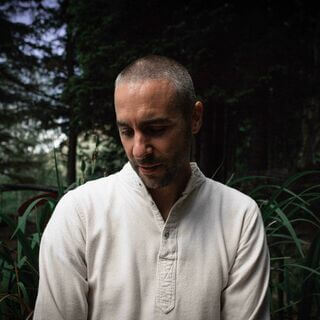
Hello and welcome to the Back to Being podcast,
Where I speak with experts,
Practitioners and everyday people about living a more healthy,
Active and mindful life.
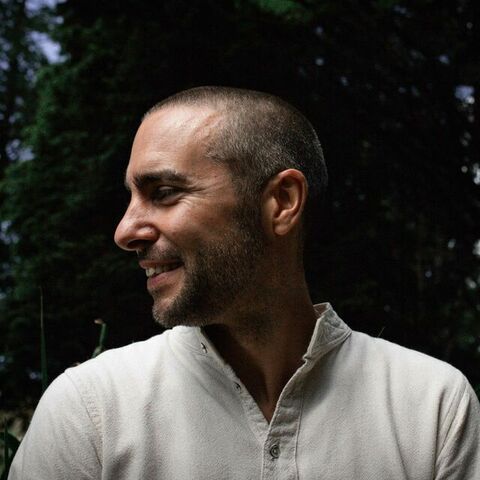
My name is Karim Rushdie and I've spent over a decade learning to transform my own chronic pain and stress so I can lead a life worth living.
Now I'm using what I've learned along the way,
As well as the knowledge and experience of my guests,
To share unique perspectives that can help you do the same.
Thank you for tuning in today.
In this very special episode,
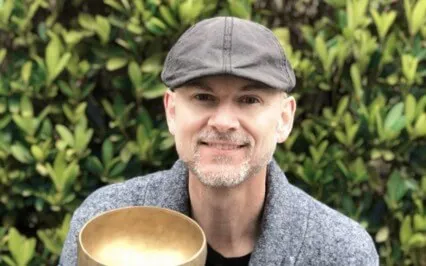
I speak with musician and composer Jonathan Adams,
Aka Sonic Yogi,
About sound therapy.
Jonathan and I talk about his musical journey,
The origin story of Sonic Yogi,
And how he discovered the healing benefits of sound therapy after experiencing extreme anxiety.
Since then Jonathan has become one of the most popular teachers on Insight Timer,
The global meditation app with the world's largest free library of guided meditations.
We also feature two of his tracks,
Which are carefully composed to help listeners relax,
De-stress and enjoy deeper meditation.
I hope you relish the conversation and Sonic Yogi's wonderful music as much as I did.
Jonathan aka Sonic Yogi,
Welcome to the podcast and thank you so much for being with us today.
Thank you.
It's my pleasure.
Thanks for having me.
And because this is not the first time we've done this,
But the second,
So a bit of backstory for those listening,
Jonathan and I recorded a podcast last week and then we had some technical issues and we couldn't get the recording.
We were out of sync in the recording.
So Jonathan really graciously agreed to come back and talk to me again,
Which I'm really happy about because now I know him a little bit better and I think the conversation will flow a little bit.
So thank you for agreeing to do this again.
Yeah,
My pleasure.
And special treat,
I think for today,
We're going to hear a couple of Jonathan's tracks.
During the conversation and he's going to share a little bit about his music and how he created,
Why he created it.
So really looking forward to that.
One of them is my favorite Sonic Yogi track and the other one is awesome too,
But we'll come to those later.
So Jonathan,
To start with,
Maybe you could just share a little bit about your personal journey and your musical journey,
How you went from being a classical guitarist to a insight timer sensation.
Sure.
Yeah.
So I studied music.
Well I started playing the guitar growing up,
My dad played guitar and had them around the house and I was always fascinated by music and just the magical quality of music to sort of transport us into another place.
And later I decided to put my efforts there and I went to music school,
Studied classical guitar and through that process,
Eventually started performing and making recordings.
And I went on the road with a partner for probably about 15 years and we played classical fusion.
In the process of sort of pursuing our music career and traveling,
I began to experience panic attacks and just anxiety and stress in general.
You had no history of anxiety or panic attacks prior to that.
Is it something that kind of came out of the blue or did it slowly build?
I had a few times in college,
But they were just sort of,
You know,
They just sort of came and went.
It began to build into being a more persistent issue.
And so I began to look at ways to resolve that.
I had come to get so used to them and the panic attacks for anybody who's never experienced it,
It's usually not specific to a circumstance or something mental.
They just sort of come on and it can be random.
In retrospect,
I can see that there were more like subconscious things that were maybe pushing those along.
But yeah,
It can be quite a mystery when it first starts to happen because you're not sure exactly why your body's having these sort of responses that are basically fear responses and stress responses.
I've felt anxious about a lot of things in my life,
But I can't say I've ever had a panic attack.
You mentioned it like a fear response.
Is it like going into fight or flight,
But you're not sure why you've gone into that fight or flight mode?
Yeah,
Yeah.
It's almost like losing control of your body momentarily,
But in a fight or flight sort of way.
And so what would happen is I would feel shortness of breath.
My muscles would get tense.
Mentally,
I would feel like this sort of brain fog type sensation where you can't quite focus enough.
And so that might happen at some point where you would want to be composed,
Like maybe in a meeting or something like that.
Or on stage about to perform.
And so they're terribly inconvenient,
But once you have one and you're not quite sure what caused it,
It sort of creates this fear of even having one again.
So yeah,
Sort of a self-perpetuating thing.
So it was kind of a mystery and I was not exactly sure about the cause,
But I definitely wanted to begin to heal from them.
So gradually I started to look at different ways to heal and I started changing my diet,
Changing my lifestyle.
I began to practice yoga,
Which was available at the Gold's Gym.
I think I was the only guy in class at first for those first years.
But I did find that that started to help me begin to feel much,
Much better.
And so that was kind of the beginning of my journey towards the sound therapy.
And I didn't realize it at the time.
Right.
And you talk about lifestyle changes prior to that.
I mean,
You mentioned diet,
Yoga,
And doing better exercise.
Did you lead an unhealthy lifestyle up to that point?
I mean,
Did you,
Were you eating junk,
Were you not exercising,
Not doing any meditation or what was lifestyle like before that?
I wouldn't say I was that unhealthy.
I was not eating a lot of junk.
I was fairly conscious about my eating.
I was drinking alcohol,
Like socially.
So part of my path was just to quit drinking because I was also experiencing digestive issues with the anxiety,
Which in retrospect,
I've found that that's pretty common with people with anxiety.
And so that was part of my path.
Also the change of diet.
I went on this diet called the Body Ecology Diet,
And it was really focused on helping to rebuild the microbiome in the body.
And a lot of our brain chemicals are actually made by these bacteria in our gut.
And of course the colonies of bacteria eat the food that we're putting down there.
So as you change diet,
It sort of helps to shift that microbiome.
And so that was immensely helpful too,
Just to begin to make those shifts.
And of course,
Anxiety can be caused when our serotonin levels drop.
So as we support those proper gut bacteria,
It helps the proper levels of those neurotransmitters like serotonin be produced and begin to alleviate some of these issues.
Yeah,
It's incredible just how important diet is.
I mean,
In the course,
In the Back to Being course,
I talk a lot about avoiding inflammatory foods and eating more foods with anti-inflammatory properties.
And that's with regard to pain,
Structural issues.
But I think when it comes to brain generated pain,
When it comes to anxiety,
As you've just mentioned,
There's such a strong connection between our gut and our general wellbeing.
Cool.
So this was your first foray into sound therapy.
How did you even find out about,
I mean,
You're a musician,
You knew music had a certain quality to it and could evoke certain feelings and things like that.
But how did you first discover sound therapy?
Well,
It really kind of came through the precipitation of that healing process.
So after about two years,
I would say,
Of practicing yoga and being on this path of change,
I was feeling a lot better,
A lot more calm day to day.
But then all of a sudden it all came back like in a week.
I had like an extreme version of anxiety and it was in that process that I felt like I kind of worked through some of these deeper themes of my subconscious and my psyche.
And it helped me to release some of that stress that wasn't on the surface.
And so coming through that experience,
I found that I really couldn't listen to classical music as a relaxing go-to.
That was just sort of too much for my mind to handle.
It was like my nervous system had been stripped bare.
So I actually found that stressful because my thinking musician brain was trying to listen to the music in that sort of analytical way.
And so I began to listen to some sound therapy style music,
Which was actually recommended by a friend that I had reached out to for help.
And as I listened,
I realized it allowed that analytical part of my mind to release.
And for me to just sort of allow those vibrations and tones to wash over my system,
It gave me this opportunity to just let my nervous system completely relax.
And I also began to notice as I listened sort of shifts in my state of being.
And so that really made me very curious.
And I sort of made a note even in the midst of that experience that this is something I want to investigate as I'm coming out of this experience.
And so that sort of put me on the path of wanting to use sound as a way to help others,
Help people experience this sort of healing space to relax and process.
You've mentioned that experience a few times.
I want to come back to that because it is really a powerful,
Powerful story.
But for those that aren't familiar,
What is sound therapy?
How do you describe it or define it to someone who you're introducing it to for the first time?
Yeah,
It's essentially using sound and sort of some of the physical properties of sound waves to help our body and our mind relax.
And so sound waves are measured in hertz and our brain waves are as well.
And it's been found that over time,
Certain rhythms and oscillations and things like that can help our brain waves move into different states and sort of encourage our nervous system on a very basic level to move into these states of relaxation.
So sound therapy is really just consciously accentuating these elements of sound and music to accomplish these things.
Right.
And was it tough having you mentioned that analytical musical mind that you had and you classically trained,
You'd been performing and touring for many years,
That kind of shift away from the very structured classical music you're used to towards,
And we're going to play one of those tracks in just a few minutes,
But towards a very different kind of,
What's the word,
Composition or arrangement,
Very,
Very different sounds.
How was that transition for you?
I mean,
Did that require some unlearning and relearning?
It did require a little bit of a shift.
It was somewhat inherent in that healing process that I was going through in that I was letting go of the analytical part of my mind,
At least temporarily.
And so just allowing myself to go to this more liberated place was also a bit of a rest from that analytical classical music mind that had drilled into me through music school.
And so it was almost in a psychedelic way,
Just allowing myself to see the fullness of vibration and sound and open up to that.
So to me,
It was kind of liberating too.
It was a place of non-judgment,
A place of pure creativity,
Pure openness.
And in many ways,
I think it also helped me when I returned to some musical ideas to return with that openness of really that anything's possible.
Yeah,
It kind of sounds like you're shifting from a very doing mode of mind,
Which was the default setting for the previous musical career,
Both composing and performing into a being mode of mind.
Like you mentioned,
You felt liberated,
You're able to feel the music rather than think too much about it,
Which is really cool.
And did meditation play a role in this journey?
Yeah,
It did.
So as I was coming through that second wave of anxiety that I mentioned after the two years of feeling better,
As that anxiety sort of re-emerged,
I remember not being able to sleep one night and thinking I need to meditate.
And so I remember just going to the end of the bed and meditating a bit that first night and felt a little bit calmer.
And then I eventually sort of went to bed that night.
The next night I had the same issue with not being able to sleep and my mind was on overdrive with negative thoughts.
And so I went to the end of the bed and I meditated again and I really didn't know what I was doing.
I didn't receive no meditation instruction,
Just sort of the five minutes at the end of yoga class.
So I sort of was aware of what meditation was.
But that second night I remember just going to the end of the bed and basically kind of saying a little prayer like,
God,
If you're real,
I just want some peace.
And I sat down to meditate and I basically was just following my breath and allowing that sort of mind with those negative thoughts to begin to quiet down.
And I would reach in and have these pockets of peacefulness.
So I knew something positive was occurring.
And then I would take little breaks and my mind would ramp up again and then I would go back to meditating.
And I must have gone back and forth like that for around four hours or so.
And somewhere deep in the middle of the night at that point,
I just went into that deep stillness and then I had this realization that all of this anxiety was caused by this character that I thought was me,
This Jonathan character.
And I realized this collection of stories and narratives was not real and that my actual essence,
My truest self was something completely different.
And as benign as that sounds in conversation,
It was really jarring and a visceral thing at that moment.
And so that's put me on a path that week of not eating or sleeping for several days and just working through all of these elements of my psyche.
And it was really a transformative experience that week.
And yeah,
So to make a long story short,
At the end of the week,
I realized I couldn't continue with this fighting with myself and I just sort of let go and it allowed my mind and my spirit to let go and just to see,
Not through the lens of my mind and all those stories,
But just to see things as they were,
So to speak.
But it was such a beautiful,
Blissful experience too,
That it was like,
Yeah,
I almost can't describe it in words.
Yeah,
No,
I can relate in a way because I think,
And you said,
It sounds a bit benign in conversation,
But it is such a liberating realization when we're able to put some distance between our thoughts or this idealized self that we create in our minds,
Conditioned to do by society and by so many other things.
And to realize that that's not us,
We're actually the observer of that narrative.
We're the observer of that,
That self that we've created.
So for me,
It was with regard to pain.
I mean,
I was experiencing chronic pain,
Ruined my life,
Couldn't work,
Couldn't hold my infant child,
Couldn't do anything,
Couldn't socialize,
You know,
Basically curled up in a ball on the floor.
But that process,
Which was also instigated through meditation,
Specifically mindfulness meditation for pain relief,
That ability to disidentify or to perceive the pain and realize that I am not my condition.
The pain is real.
The physical sensations are real,
But the thoughts about it,
The emotions that are created,
Those are not real.
They're just impermanent,
You know,
Mental events that will come and go if you allow them to.
So I can totally relate to that.
And you know what,
I think this is a good spot for a song.
I think we can come back to this afterwards.
So you've got two songs that you're going to share with us today.
Could you introduce the first one,
Which I want to add is probably my favorite of all your tracks.
I'm glad you chose this one.
Yeah,
Thank you.
So this is Finding Theta and it's a mixture of music and sound therapy.
So I'm playing some guitar and there's some singing bowls and chants in there.
And I was using a four Hertz brainwave entrainment in the track.
And that sounds like a little oscillation in the background.
And over time,
As we listen to music and these types of oscillations,
They tend to help our mind move into different brainwave states.
So theta is associated with the subconscious mind is breaking into that subconscious.
And it's also sometimes called the waking dream.
So the title Finding Theta was just an artistic pointing towards that place.
I should say also this song is fairly short,
But it takes some time to listen to this type of music and for it to begin to take effect,
You know,
It takes quite a bit of time.
So many of my tracks are 30 minutes to an hour long.
Right.
And you see that with a lot of kind of sound therapy tracks.
They are pretty low.
I think it's a wonderful sound anyway.
So even if it doesn't quite get you to theta in the five minutes,
I think it's just beautiful to listen to.
And this is from the album,
Be The Love You Seek.
Right.
Great.
Okay.
When we come back,
Maybe we can talk a little bit more about those different brain states.
You mentioned theta.
There's before others that we could talk about.
And I know some of the other songs are designed to entrain the brain to those kinds of states.
So here it is,
Guys,
Finding Theta from Sonic Yogi.
So tell us a bit more about these different brain states.
So Finding Theta is all about entraining the brain or last time we talked about it,
It was almost like the tracks or the sounds themselves is like taking the hand of the brain and walking it into this different state of consciousness.
In this case,
In the previous track,
It was the theta state.
What are some of the other states and what are they associated with?
Sure.
We generally have four main brainwave states and they are beta,
Which is our normal waking state.
And each of these brainwave states,
By the way,
Has its own frequency band in Hertz.
And in the dominant state of that band,
We're experiencing a certain state of consciousness.
So beta is our normal waking state,
Kind of problem solving state.
The next one lower in Hertz is alpha.
That's more of like a twilight relaxed state.
Our nervous system begins to relax and release.
There's a lot of talk in popular culture these days about the alpha mind,
You know,
Doing what you can to bring about an alpha mind and stories of Einstein and Newton who would wake up and immediately write down their thoughts because they were still in that alpha state of mind.
Yeah,
Definitely.
That's kind of the state where we begin to sort of open up in creativity too.
And so it's a very free creative state.
Then the theta is deeper than alpha.
This,
As I mentioned,
It's also known as the waking dream state.
So it begins to feel like a different state of being,
So to speak.
And we can often access subconscious themes and begin to see some of these beliefs and ideas that are driving our life.
Then below that is delta,
Which is a very deep state,
Normally a sleep state for most people.
Is it possible to go into delta when you're awake?
It is possible.
They have,
You know,
Measured monks and meditators get into that state.
And then above beta is gamma,
Which is also associated with mystical states.
And so that can occur as well.
I think it likely occurs when you go into theta or delta and then,
You know,
It's sort of activated from the process of actually that descent,
If that makes sense.
And so I realized in the anxiety that I experienced before,
It was more in a high beta state.
So above our normal state,
But in that high beta state,
It's very typical and well known that we would have a lot of intrusive thoughts and our nervous system would be reacting stressfully and things like that.
Yeah.
Again,
Come back to that similarity between what sounds like doing mode of mind and what you describe as beta state.
Beta state is our problem solving mode,
Our analytical mode.
And if you're in that extreme beta state,
They talk about driven doing mode of mind.
In mindfulness based cognitive therapy as being a very unproductive and unhelpful mode of mind,
Which is when that incredible problem solving ability that our mind has gets turned inwards.
I mean,
It's very,
Very effective for solving problems in the external world.
You know,
A project at work or going,
Getting the groceries or fixing something at home.
But the moment it gets turned inwards onto,
Onto emotions or mind states,
You know,
Emotions are not problems to be solved.
Because the mind is so effective at solving them,
It starts to try and fill that gap or maintain a gap between an undesired state and a current state.
And when that happens,
We tend to go round in circles because we ask questions about why the gap is not filled.
What can we do to fill it?
And if you're unhappy and you say,
Problem is unhappiness,
Goal is happiness.
Well,
Why are you unhappy?
The mind is very good at answering those questions.
You're unhappy because you're a loser.
You're unhappy because nobody likes you.
You're unhappy because you're unsuccessful,
You know,
And we start to answer questions thinking that's how we're going to close the gap.
But what it tends to do is actually perpetuate those really unhelpful states of mind.
So I'd never made that connection before between,
You know,
A beta and an extreme beta state of mind and driven doing mode and unhelpful forms of doing mode.
Yeah,
That's,
That's exactly it.
That sort of left brain ego part of our mind.
It's not super comfortable with not knowing.
And so,
As you said,
It starts to fill in the gaps.
And sometimes that is the self-flagellating ideas.
I remember going through that state and remembering the Beatles lyric,
You know,
Mother Mary comes to me,
Whisper words of wisdom,
Let it be.
And so I,
And I realized,
Okay,
I just need to chill and not know and be comfortable and not knowing.
And sure enough that it's in that not knowing and that sort of place of,
Of not knowing that we can allow the answers to come to over time without sort of manufacturing them with our thinking mind.
Yeah.
Yeah.
Letting things unfold rather than always having to act upon,
Exert our agency on them.
Yeah,
That definitely resonates.
So,
You know,
Sound therapy is very effective at helping with mental health challenges.
So anxiety and depression,
Low mood.
Are you aware of how it's used for other ailments or conditions,
Chronic pain and things like that?
I have had some people mention that the sound therapy that I offer has helped them with pain.
When I'm doing a sound bath or something like that,
People say,
Hey,
I didn't experience this pain during this session.
That's not really my primary objective,
But it's a wonderful bonus.
Yeah.
Great,
Great side effect.
Yeah.
So there is so much research being done now and there's a lot more being done with sound.
There's a lot being done with ultrasound as well to affect the mind and sort of using focused ultrasound to affect the brain in different ways.
And so I imagine in the coming years,
Five,
10,
20 years,
It's going to become more and more mainstream,
Even just in mainstream medicine.
And I think that's wonderful because it's those researchers and those scientists and doctors that really have the power to move things forward and to help us all to begin to understand,
You know,
How this mysterious qualities of sounds can be extremely useful.
Yeah.
Yeah.
And I,
I,
I've experienced it myself when listening to yours on other tracks,
You know,
I just lie down and close my eyes and put some sound therapy on.
And I think there's potentially two reasons why that happens.
I mean,
The first is what you're talking about earlier,
It entrails different brain states.
So you just calm yourself.
Those reactions that you're having to the physical sensations tend to be tempered a little bit and you don't get as worked up.
You know,
I was talking to a gentleman called Dr.
Howard Schubner.
He's one of the leading experts in brain generated pain and how to unlearn pain,
Change that using neuroplasticity,
Change the neural pathways,
Et cetera.
You know,
All pain is brain generated.
Some of it is linked to a structural issue in the body,
But as they're finding out increasingly a large proportion of pain is not related to any structural issue at all.
It's entirely brain generated.
So if the sound therapy has that impact on calming the brain,
Calming the nervous system,
That's going to go a long way towards decreasing particularly the thoughts and emotions about the pain can be worse than the physical sensations themselves.
So if the sound therapy can help us deal with those thoughts and emotions,
Which has been my experience with it,
We're going to notice the relationship with the pain changes as well.
And I guess some people who listen to your songs have experienced as well.
Yeah,
Definitely.
There's so many connections there.
Of course,
Our brain and our nervous system are one entire system.
And if you were to Google brain and nervous system,
You would see the brain.
And then of course,
Down through the spine and then the nerves moving into every area of the body.
And so one of my realizations as I've continued to learn in this mind body field is that our entire body is reflecting our mental states.
And I was able to do a Vipassana course a few years ago.
And in that course they talked about the body is the subconscious mind.
And so as you're learning Vipassana,
Vipassana is a technique in which you're scanning the body.
And so you're scanning the body with your awareness,
But just noticing the sensations in the body.
And it's over time as I was practicing this technique,
I did notice these sensations bring up also these subconscious memories,
These subconscious themes.
And so I think it's another interesting way to access our hopeful being,
So to speak,
And maybe also relates to what you're saying,
Which is that some of these other sensations are connected to these mental states and we just store them in different ways.
Yeah,
Totally.
When people dismiss or are very skeptical about mind body medicine or the mind body connection,
You just have to show them a schematic of the nervous system.
And you see that the nervous system is just an extension of the brain,
Right?
I mean,
The reason we can close our eyes and tune into our pinky or our left knee or our right ankle is because the nervous system extends into every centimeter of our body.
So our body and our mind are essentially one.
And I think to your last point there,
That feedback loop,
People are much more aware of how mental states impact the body.
And you hear it all the time.
If you're stressed,
You know,
You can suppress your immune system.
You can make yourself sick when we're going through stressful periods or challenging periods of our life.
We do tend to get ill during those times.
I think what people are less familiar with or less aware of is that it goes the other way too.
There are bodily sensations where they're stored,
You know,
From past experiences.
The bodily sensations can actually trigger old patterns of thinking and old patterns of emoting.
I mean,
I had a flare up a few months ago and it was a very severe flare up.
I hadn't experienced that kind of intense sensation for about eight years.
And for the first two days of that flare up,
I was,
I was devastated.
I spiraled down very quickly.
I was in a very depressed state.
I went from being okay,
Completely depressed and hopeless,
Asking all those same questions again,
Why me?
It's going to be this way forever.
Am I ever going to get my life back?
This isn't fair,
Et cetera,
Et cetera.
And then I I'd been doing some very intensive body scans.
You mentioned that we're passing the body scans as part of my master's program.
So I'd spent the three previous months doing a body scan every single day,
A 45 minute body scan,
Which got a bit tedious at times,
But I'm very grateful for because it helped me,
I was so tuned into my body and the mind body connection was so strong at that point that I realized those physical sensations were taking me right back to eight years ago,
Curled up on a ball in my apartment,
Hating life.
And they triggered those old pathways again.
And I'd slipped back into those old mental grooves and was just mentally and emotionally transported back to that place.
When I had that realization and it was almost as if a switch was flicked and my brain realized you're not there now,
You're safe.
This is just a flare up.
You've had many since then they come and they go.
And I snapped out of it almost instantaneously,
You know,
For a period of one or two hours,
My emotional and mental state lifted.
I spiraled back up.
The physical sensation stayed there.
The intense physical sensation stayed for another two or three weeks.
It was very difficult physically to deal with,
But mentally and emotionally,
It was nothing like the previous experience.
So I think it goes both ways,
Right?
And as you said,
We were really unaware of just how much the body can impact emotional and mental states.
It's fascinating to me.
Yeah,
It is.
And I would even mention that to beginning students of meditation.
And especially if you're starting with a body scan style of meditation is that the process is really kind of like an archeological dig of our psyche.
And in that process,
These old sensations,
These old emotions,
These old thoughts begin to come up.
And I think just making the student or the practitioner aware of that can help to take some of the fear out of the process and just know that it's a natural process for those emotions and those sensations to arise in our body and then to pass.
And of course,
After that,
You feel better.
You come to a new baseline of calm and that sort of reemergence of anxiety that I described earlier in my experience,
I believe was also a sort of purging experience of those types of things.
And so,
Yeah,
It's a common process.
And many times we think of meditation of just going into that peaceful Buddha like state,
But it's actually a process of moving past some of those old wounds that we've stored from the past.
Oh yeah.
It could be a lot of discomfort in meditation.
That's for sure.
There's some great work being done now around trauma informed mindfulness meditation.
So acknowledging that for me to do a body scan,
Maybe a very different experience to someone else who has experienced some form of physical trauma,
Whether that be a sporting injury or on the battlefield or even abuse,
You know,
As a child and then guiding people through a body scan in a way that they're able to just dip their toes into some of those uncomfortable sensations and the feelings that it brings up rather than going,
You know,
Diving in head first,
Which can be quite risky,
You know,
Depending on the trauma that people have experienced.
Great.
I think it's time for another song.
This one,
Very different from the first very different style.
I mean,
Finding Theta is one that I listen to when I'm like cruising around in the car.
This next one,
Maybe not the best one to listen to when you're driving,
Because it does get you very,
Very relaxed.
Maybe you could share,
Set this one up for us.
Sure.
This is a flute and singing bowl track.
And the title is Choose Love in Each Moment.
And the title was actually a teaching that came to me in that time of deep anxiety.
And I was looking for this sort of Rosetta Stone to keep me focused in the moment and in this new vibration that I had found.
And the phrase that came to me was choose love,
Not fear in each moment.
And just that reminder was a simple one for me to come back to over and over.
And so this is a very meditative style track.
It was recorded in one take a couple of years ago.
And so I hope you'll enjoy.
Great.
Yeah.
I was going to say this one is very conducive to meditation and just from the album Breath Into Being.
Yes.
Okay.
Let's hear it.
Choose love in each moment.
Choose love in each moment.
Choose love in each moment.
Choose love in each moment.
Choose love in each moment.
Choose love in each moment.
Great.
So Jonathan,
I would love to now come to the birth of sonic Yogi.
So we heard your story,
The transformation that you underwent,
Really,
Really powerful.
The discovery of sound therapy to help yourself overcome some of these challenges that you were having.
How did you go from listening to sound therapy to creating it?
And the sonic Yogi origin story to all the way to today where you've got thousands of people tuning in for your weekly live sound baths.
So after the experiences,
I began to heal.
I began to be curious.
As I mentioned,
I began to study and learn more about the brain,
The brainwaves and sound.
And eventually I knew that I just wanted to produce this type of music.
I actually began in that recovery process by just humming.
And I noticed when I hummed certain tones that it,
It helped me to feel that sense of being centered in the present moment.
And that sort of vibration,
It was almost like that humming helped my body produce serotonin or whatever these good chemicals were and to come into that place.
And so that was my first clue.
Next I learned about singing bowls at a sound therapy conference that was a couple of months after that.
Then I began to slowly collect the singing bowls and began to produce music.
I began to give the music away to family and friends.
I began to write about some of these ideas just to try to convince people that this wasn't some sort of voodoo,
That this was actual,
You know,
Science based and legitimate.
And so you became an evangelist for sound therapy,
Basically.
I did.
In the early days you were doing this anonymously,
Right?
Yes,
Exactly.
Yeah.
I began anonymously.
I sort of thought of the name Sonic Yogi in a couple of minutes and thought,
You know,
I need a name under which to put out this music.
So I came up with that,
Eventually produced tracks and just put them on SoundCloud.
I gave away downloads for free.
And so it just gradually began to grow.
I also released them as creative commons,
Which copyright,
Which allowed other people to take the tracks and put them in their videos and things like that.
And so it began to grow little by little,
And then a couple to a few years into that,
I received an email from Insight Timer that said,
You know,
We're building this platform.
Would you like to contribute your music?
And of course I said,
Yes,
I just wanted it to be out there.
And so my music was on Insight Timer also for free for many years.
I didn't realize you got a special invite.
So you're like one of the OGs of Insight Timer.
Yeah,
They were a very small operation.
Of course they've grown over the years and I've gotten to grow with them and they're doing wonderful things to bring meditation to a lot of people as well.
For those that aren't familiar Insight Timers,
I mean,
My wife always calls it the YouTube of meditation,
Which I get the analogy,
But I kind of feel like it shouldn't be compared to YouTube because it's having such a more positive effect in the world.
21 million members on Insight Time at the moment and today alone,
640,
000 meditations.
It really is fantastic.
And as you said,
There are paid courses and some paid areas,
But for the most part,
You can go and listen to all those meditations,
Including a lot of your tracks,
Absolutely free,
Which I love.
And people donate right to the artists,
Whatever they,
They feel is a good amount,
Which I really like too.
Yeah.
And you've got a lot,
You know,
I don't want to downplay it.
You've got a lot of followers on Insight Timer,
Don't you?
What was the last count?
There's over a hundred thousand at this point.
So I'm super grateful.
And I think it's beautiful how in the beginning this was not a commercial endeavor.
You were doing this,
It had helped you and you wanted to share that kind of love with others and that knowledge and that information with others.
So the intention was very pure and you know,
That's then manifested later in,
You know,
The success that you've had.
And it's been something that's come up over and over again in a few of these podcasts is when service is the intention,
You know,
Good things tend to follow,
Don't they?
They do.
And my intention in the beginning was that my audience was the one person who was like me,
Who was in that state of suffering.
And my goal was to just produce something that helped to alleviate that suffering and hopefully point away towards peace.
So in a way I felt like my audience was just one person.
And if I could do my job to communicate to the one person who was in that similar circumstance,
That's what I set out to do.
Yeah,
Beautiful.
And it turns out there's a lot of people and increasingly,
Unfortunately,
More and more people who are suffering in the same way.
And I think the last,
You know,
The last couple of years of the pandemic,
It's made life much more challenging for so many,
The isolation,
The lack of social relationships and things like that.
So I'm sure your music has helped many over the course of the pandemic.
Where else do people find you?
Or is Insight Timer the place to go?
Is it a weekly live or biweekly live that you do?
I've been doing them weekly.
I schedule them myself.
So every once in a while,
I'll take little breaks,
But I try to keep them fairly weekly.
I usually do them on Wednesday evening.
Occasionally I'll do them in the afternoon for the European time zones as well.
But Insight Timer has courses that I've produced.
I've produced two courses and then I also have meditations there as well.
And so that's a great place to find some of the things I've produced.
I also have a website,
Which is sonicyogi.
Com.
And then I also release many tracks out to Spotify and Apple Music and things like that as well.
Right.
So a quick Google search and you'll find the Sonic Yogi ecosystem.
Before we wrap up,
I always ask my guests what projects they're working on at the moment that they're excited about or,
You know,
New and upcoming stuff.
So what are you excited about at the moment?
Well,
I'm just finishing up a video course for the Ohm store,
OHM,
Which is a singing bowl retailer,
But they also produce many other types of materials and lead meditations.
And so I'm excited about that.
And then my most recent album was just a few months ago released,
Which was Breath Into Being.
And the vision behind that was that each track,
Or at least the tracks with rhythm could also be used as a breath guide to sort of guide our breath count in and out.
And so that's where the title Breath Into Being sort of came from.
Cool.
And now the borders have opened up and there's some kind of normality returning to travel.
Any plans to tour outside of the US?
I mean,
Sound therapy is beautiful.
I always find that if I'm listening to headphones,
It's a very different experience to listening through speakers,
Through a computer,
But there's no substitute for being in the room with the person who's giving the sound bath or listening to it live,
Is there?
So I know you do a lot of live stuff or did in the past and are doing more again in the US,
But any plans to travel further afield and spread some of the live music in Europe,
Asia,
Africa,
Other parts of the world?
I would love to.
I don't have a concrete plan at the moment,
But as I mentioned,
I did have that background in the performing arts.
One of my visions and hopes is to bring this more to people and I'd love to tour more and bring the sound therapy and the healing and some of the message too,
Of just about relaxation and mental health through this musical platform.
So yeah,
I'm working towards that.
And so I put it out there in the universe.
I'd love to.
.
.
Yeah,
Open to invite.
So anyone listening to this that wants to bring Sonic Yogi to a country that they're in,
Just reach out.
I can attest to that.
I mean,
I just cold emailed you.
I loved listening to you on Insight Time on Spotify and I just cold emailed you and you responded very quickly and here we are.
So I'm so grateful for that.
It's not always the case.
Sometimes many of those cold emails go unanswered and I think it's just a mark of the man and of the character.
So Jonathan,
I think it's a good time to wrap up.
Thank you so much for doing this with me,
Not once,
But twice for sharing a couple of your tracks with us today.
If you haven't already,
Go and check out Jonathan on Insight Time or Sonic Yogi or on Spotify or any of the other platforms,
Many platforms that he's on.
So Jonathan,
Thank you.
Thanks for all the service that you continue to do.
My pleasure.
Thank you for having me.
Thanks for listening,
Guys.
Thanks again for listening to the Back to Being podcast.
If you enjoyed this episode,
You can subscribe to receive news about future shows.
If you're struggling with lower back pain and the distress it can cause,
Then check out the Back to Being method,
A 10-week program based on my own lived experience designed to help you transform your relationship with lower back pain so you can live a healthier,
More active and mindful life.
Until next time,
Be kind to yourself and others.
I wish you well.