Hello,
Welcome to this podcast on when is stress a good thing?
So in this episode we discuss how stress can be both something that wears us down,
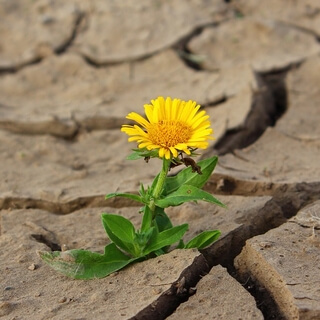
But also something that allows us to have resilience and bounce back from our challenges and even our adaptive capacity to deal with the things that are more difficult in life.
So stress is a survival response,
The fight or flight response that is there in a very primal setting to save our lives when danger is real or we perceive it as real internally.
Stress hormones have a motivating effect on the body,
Increasing mental acuity,
Motivation and exuberance,
But their supply is finite and their effects depleting.
Each stimulus needs a following period of rest and recuperation so that it can recharge rather than deplete us.
Professor Mark Mattson from the National Institute on Ageing in the US says that the right kind of stress can improve length and quality of life.
Regular exposure to mild stressors,
He explains,
Causes a protective body response that supports its defence systems,
Including brain,
Immune,
Muscle and metabolic function which might otherwise decline as we age.
An example of a mild stressor is weight bearing exercise which increases bone density.
This strengthening process,
Known as hormesis,
Means that by exposing ourselves intermittently to good stress,
Over time we build mental and physical resilience to protect ourselves against further,
Bigger challenges.
Finding balanced and positive ways to deal with stress is more effective than trying to eliminate it from our lives,
Which can leave us feeling inadequate and disappointed when that proves impossible.
Hearteningly,
A German researcher named Gerald Hutter has also suggested that long-term stress may cause people to reject long-held assumptions about themselves or their behaviours and become more open to change.
Hans Sehle,
One of the early pioneers of modern stress theory,
Called unhealthy,
Damaging stress,
Distress,
DI stress,
And motivating stress that makes us stronger,
U stress,
EU stress.
Here's how to differentiate between this good and bad stress.
Positive stressful challenges.
These create excitement but are short-term enough not to seem relentless and with no way out.
Here's what categorises them.
They're within our control,
Or seem to be.
That job interview might be making you sweat and shake,
But there's plenty you can do to improve your chances of success,
Such as researching the company and making sure you sleep well the night before.
You can't control the outcome,
But you can control your performance to a certain degree.
They have an end in sight.
Getting for exams or producing a larger-than-life work project by a certain date are stressful,
But they also have an end point.
They're followed by a period of recuperation.
Even the most prolific entrepreneurs,
Athletes,
And pressured pros need downtime or they risk burnout.
Positive stressors.
Being present and able to step away from the need to label things as good,
Bad,
Or neutral allows us to experience things that build flexible and resilient response mechanisms,
Including exercise that challenges your body and is followed by adequate rest.
Contact with nature,
Where your skin is stimulated by the elements.
The odd sting,
Scratch,
And irritation may help reset an over-inflammatory system.
Dry skin brushing at home can emulate this.
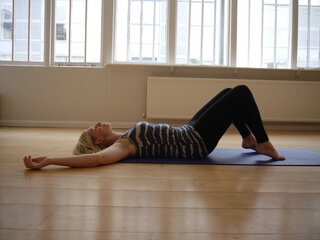
Stretching with breath awareness to learn to stay calm in the face of strong sensations,
Very much part of a yoga practice.
Feeling chilly.
The science of thermogenics asserts that being cold raises metabolism and modulates immunity.
Turning down the heating,
Taking cold showers,
And outdoor movement prompt the body to produce brown fat,
Which we burn as fuel rather than white fat,
Which we store.
These things clearly make us more hardy,
But do ease into them gradually.
Being hungry between meals.
Most animals live in a state of perpetual hunger that galvanizes the overriding imperative to find food.
Eating fewer calories has been shown to increase health and longevity.
So that also includes intermittent fasting,
Where,
For instance,
We might eat just within a window of eight hours in a day.
Intellectual challenges in which you feel a sense of control over the situation and can learn to balance problem solving with the odd frustration,
Like a morning crossword,
For instance.
Negative stresses.
So these are situations in which we feel we're living on our adrenals or living right at the edge.
We don't have any kind of buffer or bounce back or resources.
We can get locked into these patterns and their reactions if we're not being conscious in the way that we live.
So what we might deem this negative stress is chronic and ongoing,
Having a mean boss,
Unhappy marriage,
Or isolated or non-existent social life,
An unrewarding job or money problems that won't relent.
Self-judgmental.
Worrying,
Ruminating,
Or judging ourselves over mistakes or events.
Considering when we listen to,
Tune into this often harsh inner dialogue.
Would a friend talk to you like this?
Would you talk to a friend like this?
Things that are out of our control.
So situations,
Especially jobs or relationships in which you feel helpless,
Have been shown to be the most deeply affecting type of stress.
An excessive physical exertion.
Keeping a stress response running high and breaking down muscle with no time or energy to rebuild can create an addictive need for the beta endorphin high.
Even when you instinctively know it's wearing you down.
Often it is being caught up in stress responses and feeling that even being in slightly raised nervous system states is quite a familiar place to go,
Or we have that kind of addictive relationship with the highs.
So looking at adaptation and resilience within that context,
Researcher Hans Sehle noticed that there is a type of evolution which takes place in every person during his own lifetime from birth to death.
This is the adaptation to the stresses and strains of everyday existence.
Through the constant interplay between his mental and bodily reactions,
We have it in our power to influence the second type of evolution to a considerable extent.
Resilience is defined as the ability to cope and adapt in the face of adversity and to bounce back even when stresses seem overwhelming.
Balancing good and bad stress needs constant attention as it's easy to get caught up in life's pressures and to lose sight of when even seemingly selflessness giving,
Selfless giving wears down our ability to engage fully with others.
Compassion fatigue is common among those who help others,
Including groups like nurses,
Teachers,
Social workers,
And resilience research often observes these groups.
It's a natural human stress response as a safety in numbers survival tactic fueled by the innate urge to protect future generations.
This can be seen more commonly in women,
Originally the gatherers of the tribe and interestingly studies have shown that women are more likely to respond positively to loving kindness meditation practices.
It's not to say that men are less capable of compassion,
Can much be about our societal conditioning for the role of women and also that women may be in danger of putting others needs before their own within that conditioning those expectations and draining their resources in the process.
Prioritizing self-care and putting dedicated space in the diary for that self-care can allow us to be fully present,
Engaged,
And caring around others.
So activities like mindful,
Embodied,
Aware yoga practice,
Listening to music,
Having a massage,
Spending time with those who make you feel safe and happy,
And preparing nourishing food all regulate stress systems.
So I wish you joy,
Space,
Time in finding those particular modes of looking after yourself with kind attention that really help you to then also come to those moments where we're meeting those good stresses,
Increasing those moments of resilience and adaptation.