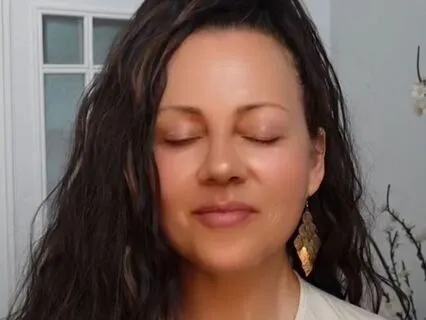
An emotion check-in is a mindful practice of taking a moment to observe and acknowledge your current feelings.
This can be done by focusing on physical sensations like heartbeat or your breathing,
Any tension or relaxation you feel in the body,
Identifying specific emotions and understanding their potential causes.
Regularly checking in with your emotions helps to increase self-awareness and self-knowledge.
It helps you develop your emotional regulation skills and gives you the confidence to know that you can best support your emotional needs.
Emotions are one of the most complex biological processes of humankind.
The word itself dates back to 1579.
It originates from the French word émouvoir,
Which means to stir up or touch emotions.
Emotions are experienced physically.
They are influenced by your thoughts and they certainly influence your actions.
Emotions are powerful.
They can be heart-wrenching and painful,
Yet beautiful,
Expansive,
And they can allow us to feel love and joy,
To connect deeply with others,
And to validate our experiences.
In essence,
The idea of regularly checking in with one's emotions,
Whether it is the form of journaling,
Guided reflection,
Or structured exercises,
Has become a widely recognized practice in various therapeutic approaches aimed at enhancing emotional well-being and promoting healthy emotional regulation.
Just the simple act of identifying your emotions,
Whatever they may be,
Will give you greater clarity.
It will allow you to understand where your emotion comes from,
Why it is present,
And it is incredibly helpful to give you context to explain why you feel the way you do.
I'd like to speak for a moment to primary and secondary emotions,
To identify what they are and distinguish between them as a way of helping you further understand what you are feeling,
And then to guide you in a practice to check in with how you feel.
Primary emotions are the core underlying feelings that are most fundamental to an individual's experience in a given situation.
They are original,
Direct emotional responses to a situation.
Primary emotions are the body's first response,
Directly connected to the event or stimulus They are often very strong,
Which makes them easy to identify,
And they are thought to be instinctive,
Primal,
And sensitive.
In the literature,
It's suggested that there are eight primary emotions.
Now,
Some of these can also be secondary emotions,
Which I'll explain in a moment.
The eight primary emotions that are noted in literature are anger,
Fear,
Sadness,
Disgust,
Surprise,
Anticipation,
Trust,
And joy.
A secondary emotion is an emotion that arises as a response to a more fundamental or primary emotion.
It can often mask the primary emotion,
And secondary emotions can be thought of as learned or habitual reactions to primary emotions.
At times,
They serve as a way to protect ourselves from feeling vulnerable.
Your secondary emotions are largely linked to how you interpret a situation.
So if you are initially hurt by what someone says,
And then your narrative about that experience,
Perhaps you begin to think a certain way,
Perhaps your thoughts lead you to feel angry or annoyed with the words of the other person.
So your annoyance and your anger in this example become the secondary emotions,
And you can certainly ruminate on this experience based on thinking and rethinking the inner narrative that continues to hold you in a place of anger.
Let's take a moment together as I guide you in an emotion check-in.
Let these questions be the wonderful prompts to lead you deeper into understanding how you feel.
Number one,
What single word describes your primary emotion now?
Second,
How would you describe that emotion?
Think about what physical sensations or felt experiences describe the emotion.
Third,
Are there any secondary emotions that you feel now?
And if so,
Name them.
Fourth,
Describe the secondary emotions as how they feel.
Fifth,
You may want to understand the root cause of the secondary emotion by asking,
What was I just thinking prior to feeling this?
Your thoughts will always be a catalyst to what you feel.
You can examine your thoughts to decide if they are indeed true and accurate,
And you may want to adjust your thoughts in order to change how you feel.
Sixth,
We begin to address the feeling with a way of regulating our emotions.
Ask yourself,
What do I need?
This is your cue to actively care for your needs and to give yourself what you need.
Seventh,
Can I breathe through what I feel and allow it to pass?
You may want to take a few moments here and breathe holding presence,
Noticing without judgment.
Your attention onto your breath,
You may notice your emotion lessen and diminish.
As you learn effective ways to engage with how you feel,
To allow for your feelings to come and go,
You can also begin to choose in more moments how you wish to feel.
Happy,
Content,
Peaceful,
Energized,
Confident,
Present.
And finally,
Consider what emotional regulation skills can best help you.
Together we experienced breathing.
Certainly the questions are intended to guide you in strategies to give yourself what you need,
To understand better what you feel and why.
And certainly if you would like my help to temper and shift the emotions that can be so difficult,
Please reach out to me,
Let me help.
Emotional check-ins are intended to be daily practices,
Helping you to ground yourself in the present,
To understand your emotions and from where they originate.
Thank you.
This is Dorothy Sanori Juna.
Namaste.