Welcome to the Happiness Podcast.
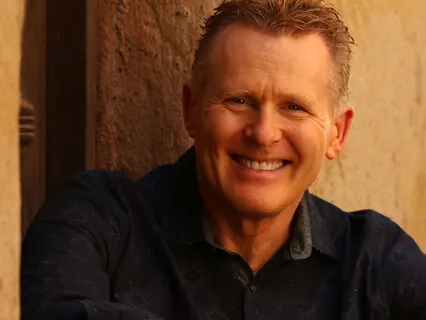
I'm Dr.
Robert Puff.
I don't know if you've ever seen it,
But you've probably heard of it.
The movie Dead Poets Society with Robin Williams.
It's truly a beautiful movie.
It's a story about young men at a private school who really want to get ahead in life.
They come from privilege and they want to stay in the upper bracket of privilege and succeed in life.
But they meet a teacher,
Robin Williams,
Who really challenges their assumptions and says,
What about living today?
Carpe diem,
Which is the Latin phrase,
Which means seize the day.
And you really begin to see both the pros and the cons of planning for the future and making all our efforts towards that,
Which keeps us from living in the now.
But at the same time,
When we live 100% in the now,
We don't plan for the future.
And there can be consequences when we go too far in our spontaneity,
Like drunken revelry,
Getting someone pregnant,
Or dropping out of school,
Or even in the movie,
Suicide.
So today I want to explore how we can find a balance between living a spontaneous life and yet still planning for the future.
What I like to call plan spontaneity.
Let's start off by talking about extremes,
Because there definitely are extremes.
I had a relative of mine who worked really hard.
And towards the end of his working career,
He had to work exceptionally hard because his company laid off so many people.
He got moved up,
But with being moved up and making more money,
He had more responsibility.
He actually finally ended up buying a motor home and he was all excited to travel with his wife and see the world because he only had one year left to work.
And then it would be over.
He would reach his goal that he planned and worked for his entire life.
He was a very hardworking man,
But unfortunately he got cancer and spent the next two years fighting it and died.
And I think with his motor home,
He only went on one trip out of his entire life.
So that's the extreme of planning and not living spontaneously.
We all know examples of that.
But what about the other extreme?
Are there dangers and just living spontaneously?
Of course there are.
I remember once meeting a man,
He was here and had a business,
A surfing business.
And he told me he came to California from Florida.
I believe it was with nine of his friends.
They all came out here together and wanted to surf and lead the surf life.
They just love surfing and wanted to sit back,
Enjoy,
Party,
And not work at all,
Or very little,
Just surf and lay at the beach and really have a good life,
Not planning for the future at all.
And he told me,
And he was in his forties when I met him,
That seven of his friends now were either dead or homeless because they never planned for the future and made choices that were spontaneous,
Were dangerous because of drugs they got involved with and other things,
Ended up killing some of them or making them homeless.
He and his one buddy both started a business and they were doing okay because they planned for the future.
But could you imagine seven of your dear friends either being dead or homeless?
That would be very sad.
And that's one of the dangers of living too spontaneously.
We don't prepare for the future and it can have consequences.
Now these of course are extreme examples,
But we have a tendency to go from one to the other.
Either we're living really spontaneously,
Perhaps in our college or youth,
And then our midlife,
We put everything off.
It's all planned,
Saving money for our kids,
College fund and doing nothing.
I've met so many couples over the years that I've worked with as a clinical psychologist,
Where I asked them,
When's the last time the two of you went on a date?
Like they'd done hundreds of times before they had children and were not married.
And often it's been years.
It's so sad.
They weren't doing anything spontaneous anymore.
It was all about the future and getting their kids through school and working and paying off their home and getting cars.
So we have to find a way to balance between living a spontaneous life with also planning for the future.
That's the solution,
But it's not easy to do.
So let's talk about how do we do both,
Plan for the future and live spontaneously.
The first thing we have to do is acknowledge that both are important.
We really have a tendency to go to extremes.
We can go to religious extremes,
Political extremes,
Health extremes.
We can go to extremes very easily.
It's just easier to do one thing and do the other.
It makes us more comfortable.
We're not incongruent.
We're just doing what seems right.
And we follow that.
Holding two things at the same time creates tension and that tension is harder.
So if you're slothful and just want to sit around and maybe watch TV or play video games all day,
Getting up and going to the gym or going to the park is changing your routine and will make you uncomfortable.
If you're constantly going,
Can never slow down and never rest and sit around and just watch and smell the roses of life,
Then it's hard to change that too.
It's harder to go back and forth between two things.
But I think most of us will agree that extremes are never good.
So it is good to find a balance between two things and particularly in this situation,
A balance between planning and living spontaneously.
Again,
If we only plan,
Then we're not living.
If we live spontaneously,
Then we're not planning.
So the first thing we have to do is that both are good.
Planning,
Of course,
Is good.
Saving for the future.
Having goals is really helpful.
That's how we get places.
That's how we achieve things.
That's how we improve our lives.
But living in the present moment so we're not missing out on life.
So if today were our last day,
We can say,
I had a good life.
I only made it to 36,
But I lived well.
And if I make it to 106,
I'll say,
I prepared for that too.
So both are important.
And we have to start with acknowledging that both are,
Both planning and living spontaneously.
So the next thing we do is we reflect.
We sit down and say,
Are we doing both?
Are we periodically sitting down and writing down our goals,
Working towards things that will improve our lives,
Planning things that will continue to make our lives better and make it so in the future we don't have to be concerned or worried?
And at the same time,
Are we periodically throughout the day,
Throughout the week,
Doing things that are spontaneous,
That are fun,
That are enjoyable,
That bring laughter and lightness to our hearts?
We can check in every day and say,
Am I doing both?
And that would be the next thing that we do,
That we check in.
Are we doing both?
Do we have goals written down somewhere?
Things that we're working towards our future,
Planning for ways to improve our life.
And at the same time,
Can we remember this past week,
This past day,
Where we just were spontaneous,
Free as a bird and really sucked the marrow out of life?
Both need to be there.
Now I know for many of us,
We're busy.
We have a lot of things we're doing just to get by.
And on the weekends,
We just want to relax and sit back and really live more spontaneously.
But yet the future is coming.
And I share this example because it's a good example of how we can both live in the present moment and plan for the future.
Many people have to support themselves.
They have to work.
They may have a family and they weren't able to go to university.
But thankfully here in the US,
You can go to university your entire life at any age,
Truly.
So I tell people that perhaps have a full-time job and have a family,
But they never went to college.
And with that,
I tell them,
Do you know if you took one class a semester,
Just one,
In 16 years,
You'd have a college degree?
It's true.
That's exactly how long it would take you.
So if right now you're 20 years old,
Working,
Supporting yourself,
If you just start taking one class a semester,
You'd be done at the age of 36.
Now you may live overseas as a lot of listeners to the Happiness Podcast do.
Well,
The wonderful thing about modern technology is we can take a lot of classes online.
Actually,
There are many universities here in the US that you could sign up for,
And I'm sure they have them in your country too.
But if they don't,
We have lots of them here in the US that you never once have to put a foot on campus and you can do everything online and get a degree from that university that is no way different from someone who went to school there and lived on campus all four years.
No one would know the difference.
It's seen and treated exactly the same.
If you don't know where to look,
Two of the most oldest and established programs here in the United States are the University of Oregon and Arizona State University.
You can get your degrees from both these universities in a variety of majors and never have to step a foot in the United States at all.
And one of the wonderful benefits of living a planned spontaneity type life is that when things do change,
As they do,
We're like cats.
We land on our feet and we say,
Okay,
I got this.
I wasn't planning on this happening,
But I got this.
So we need to be careful not to be angry when our plans don't work out because they don't sometimes.
As we navigate life,
We realize there's a lot of things we're not in control of.
We can still plan,
Of course,
But we have to realize external circumstances can change our plans.
But when we're flexible and we're able to live spontaneously,
We say,
Okay,
I'm going to make this work.
And then we set about creating a new plan and seeing how that unfolds.
Living in the present moment,
But at the same time planning for tomorrow and our future.
We really can do both.
But what gets challenging,
We have such a tendency to polarize,
To go one extreme or the other.
Total carpe diem or total putting everything off for the future.
And the key of life is a balance between these two.
And we have to work at it because we really have to understand there's such a tendency for us to polarize,
To go one way or the other,
Going crazy or doing nothing and working ourselves into the grave.
We have to find a balance between the two of them.
So I want to end with how we specifically do it.
As you know,
I really like to give specific things that we can do to make these things work for us.
And in this case,
How to live a planned spontaneity.
So what we do is perhaps once a week,
Or maybe every day,
We work on our goals.
We think about,
Okay,
What are my goals?
What are my short-term goals?
Maybe the next few weeks,
Few months.
What are my mid-range goals?
Maybe the next five,
10 years.
And what are my long range goals?
Perhaps when I retire or in my future.
And then we look at them,
We write them down and say,
Okay,
I think I'd like to be here.
I think I'd like to do that.
And these are the steps to get there.
And we write them down.
And as we go forward in life,
We review them regularly,
Perhaps once a week,
Maybe more.
We say,
Okay,
Am I still heading towards that goal?
Is that goal still important to me?
And if it is,
Do we need to make adjustments,
Have life circumstances change so that now we need to make changes to our goals?
We still have goals,
But now we have a child.
We have to think,
Okay,
Most of my money was going towards retirement.
Now I've got to put some into a college fund for my child,
Things like that.
Or I wasn't planning on getting divorced,
But I did.
So I have a little less money to live with.
So what's next?
Where do I want to live?
What do I want to do now that I'm divorced?
There's a lot of circumstances that can change.
Our health can change.
We can have goals to climb the top peaks of the world,
But we had a knee injury and that's not going to happen anymore.
So we say,
Okay,
What can we do instead?
And it's the same sense,
This is what's trickier,
Actually planning to live spontaneously.
What I mean by that is,
Are we doing things where we're just like dancing under the moon and laughing like a child with free abandon and having lots of moments like these?
So the big plus of them is,
If today ends up being our last day,
Or we don't end up reaching our goals,
We can say,
We can say,
I had a lot of fun getting there.
And there really won't be any regrets because we're living well now.
We won't look at a life that's wasted.
We said we had so many wonderful memories.
Thank you life.
And the same sense,
If we're going to live another 50,
100 years,
We're going to be okay.
We're planning for that too.
It truly is a beautiful balance,
But it does take work and it does take effort.
And it kind of goes a little bit against the grain sometimes.
Let me conclude with an example.
As you know,
I work with couples and couple therapy,
And often when they have young kids and they're working and just getting by,
They actually don't make love much anymore and they don't go on dates.
So I tell them,
Once a week,
You're going to plan to go on a date,
Just the two of you.
The kids are going to be in bed when you get home,
Asleep,
You're not going to do anything.
And when you get home,
You're going to make love that night or spend time together.
It's planning to be spontaneous.
And they end up really liking it when they do it because it creates intimacy and joy for the two of them and helps them.
We can truly,
As I say,
Have beautiful lives,
But this one is a lot of work because it's such a tendency of us to do one thing or the other.
And the key is finding balance between the two.
We really are capable of it.
And you want to know the best thing about it is it really helps us avoid burnout.
So we have to work longer than we expected.
That's okay.
Or if we don't make it as long as we expected,
That's okay too,
Because we've lived and enjoyed the journey along with planning and preparing for the future.
It's a balance.
So we just don't get burnout.
We all know people that get burnout,
They get tired,
They're exhausted.
We know lots of people like that.
We're not going to do that because what we're going to do is find that beautiful balance between planning for our future and living spontaneously.
And when we do that,
Each and every day will truly be a beautiful day.
Thank you for joining me on the Happiness Podcast.
Until next time,
Accept what is,
Love what is.