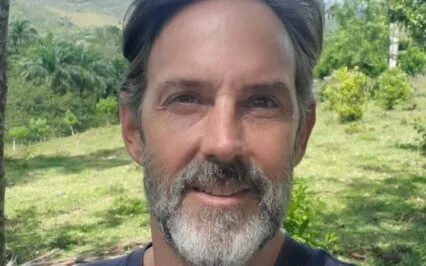
Welcome to Life,
Lessons,
And Laughter with your host,
Glenn Ambrose.
Hello,
Everybody.
What is happening?
Where are you watching from?
Where are all my people at?
Do you have emotions?
Do you have emotions,
People?
Yeah,
We all do.
And that's what we're talking about today.
We're talking about emotions.
So yeah,
I've,
You know,
I mean,
This is something that I work with my clients on,
You know,
Pretty regularly,
Because it's important.
We have to understand this stuff.
We have to understand this stuff,
You know,
Our emotions and this is,
You know,
The longer I teach,
It's honestly,
Well,
If you want to get closer to the truth,
You simplify,
Right?
So this stuff isn't complicated.
It's just that it is a little below the surface about of where most people function.
And this,
You know,
One society,
This is how we're taught,
We're just taught to interact with what we see on the surface,
Right?
So that's a problem.
And then the other problem is,
We don't go deep enough into things,
We don't try to understand things where we just want to accomplish them and move on and just understand them and move on.
And it's just so fast paced,
Man,
The speed is just killing us.
So it's,
You know,
We have to,
We have to slow down and understand,
Like the dynamics of what we're doing,
You know,
People will be slaves to their emotions for decades and literally an entire lifetime.
And they don't understand,
Like,
Even what the purpose of emotions are.
It sounds silly,
But this is how we go through life.
And we wonder why there's so much suffering and struggling.
And,
You know,
Everybody's confused all the time.
I don't understand why this person did that.
And I don't understand why there's so many problems.
And what's wrong with this world?
What's wrong with these people?
And we're just pointing the finger out and just like,
Do you even know what you're talking about?
Like,
Do you even understand?
You know,
It's under,
We have to understand this is where compassion comes from,
Right?
It's compassion is understanding what somebody else is going through.
It's not agreeing with it.
It's not saying that they should.
It's just being like,
Oh,
Wow,
You know,
I understand they're going through a difficult time.
This is tough for them.
That's compassion.
Right?
So we have to understand things.
We have to understand ourselves if we have any hope of navigating this reality in a peaceful,
Contented way.
We have to understand like,
How we function,
You know,
Just,
You know,
Oh,
I,
You know,
Most people struggle with their emotions,
They have difficulty with emotions,
When they feel sad,
They don't know how to handle it.
When they feel angry,
They don't know how to handle it.
They judge other people for having emotions,
They judge themselves for having emotions,
They stuff their emotions because they can't feel it.
And then it's like,
It's,
Geez,
I'm not happy with my life.
I don't understand why.
It's like,
Well,
You know,
You have to have an understanding of how you work,
Right?
So this is,
You know,
This is what I'm going to do with this podcast is discuss our emotions so we can understand them how they work.
So I'm going to start with,
I'm going to start with where they come from,
I guess first,
You know,
So everything is energy.
So in quantum physics,
They've,
They've been able to measure a thought as a unit of energy.
So,
So now,
So,
Wow,
We have energy,
Right?
And we know energy doesn't die,
It just transmutes into a different form of energy.
So what happens is basically we have a thought,
Which something happens and there's a thought about what happens is a judgment.
You know,
We find out somebody is,
Somebody just died.
Well,
We go,
Oh no,
I like that person.
I wish they were still here.
And we're not this conscious with it,
But you know,
This is a version.
Oh no,
Like I liked it when that person is here and now they're not here.
So that makes me sad.
Like we don't even go to that level.
We just go,
Oh no,
No.
And,
And,
And we,
Most of the time when we feel anything that we don't like,
We start assuming that there's something wrong with the reality that,
That,
That made us feel like that.
So like,
Oh,
You know,
Somebody died.
Oh no,
I feel bad.
Well,
They shouldn't have died then if I feel bad that this person is low,
No longer here,
Then they shouldn't have died.
And it,
You know,
That's such a good example because it's so absurd that like we,
There is no contract about how long any of us get to stay here on this earth.
There,
There isn't one.
There is,
There is nothing that says we all get 88.
3 years.
There isn't that.
And everything on this planet dies.
It always has always will.
So how can we say that it's wrong that somebody died?
Like it's not wrong.
It's,
It's actually the most appropriate thing we can do is die.
That's,
We're supposed to,
If somebody didn't die,
That would be really weird.
That would be out of alignment with nature on this planet.
Right?
So we,
We are born.
That's how we come onto this world and then we die.
And that's how we leave this world.
Those are the two things that are mandatory that every living thing goes through.
Everything that's alive goes through some sort of a birthing process and some sort of a death process,
Everything.
So for us to say that it shouldn't have happened is resisting reality.
It's okay to not want somebody to die.
It's okay to be sad that somebody died.
It's okay to grieve because somebody died,
But it's not okay to think that they shouldn't have and to start and to start basing that in a reality because it's just simply not true.
You know,
And most things are like this.
We don't under,
We don't slow down enough to understand what,
What we're thinking,
How we're processing information that's even triggering the response,
The emotions.
That's our response to the way we process it.
So if we think that something,
If we label it,
We determine in our brain,
Even in a millisecond,
That shouldn't have happened.
Well now all of a sudden,
It's not just sadness that we're experiencing.
It's not grief.
It's actually resistance to reality that can't be solved unless you change your perspective.
Unless you no longer think it shouldn't have happened,
You will always suffer until the day you die yourself,
You will suffer over the thought of somebody dying if you label it as shouldn't have happened.
Because there's no solving that.
There's no,
There is something inherently wrong with the reality that you are living,
Which isn't true,
But you have labeled it as such and therefore it's going to trigger negative emotions forever.
Now hopefully they'll lessen.
Some people it doesn't lessen.
Some people just stays there if they've,
If that's,
Especially if that's the foundation.
Like if that's a little piece that's a little lower,
You say,
Oh,
I'm sad.
Oh,
I really love this person.
Oh,
I wish they were here and I miss them.
If that's the primary and then the,
I shouldn't have is down lower,
Just a little piece of it.
Well then people will work through the surface emotions,
They'll work through the sadness,
They'll work through the grief and then it'll lessen,
You know,
But they'll still have that piece.
As long as you think it shouldn't have happened,
You,
You cannot get over whatever it is and that goes for a death or if it goes for,
If you lose a soccer game or that goes for if somebody ends a relationship,
It doesn't matter if you label it,
I shouldn't have happened.
You're locked into suffering on that because you just said there's something wrong with the universe and it can't be fixed.
So my point here is I'm using that as an example to explain that a thought triggers the emotion.
Okay.
Why?
Well,
The reason is,
Is because we are inundated with information.
We are inundated with thoughts.
So there are,
You know,
I don't even know,
Maybe millions of thoughts going through our head every day,
At least hundreds of thousands,
You know,
And then there's also hundreds of thousands of information we're exposed to just by turning your head.
Oh,
There's a color of a wall.
There's a picture on the wall.
There is a ceiling.
There's a crease or a mark where the wall hits the ceiling.
Oh,
There's,
There's a handle on the side of the window.
Like it's just endless.
The things that we're exposed to information wise.
So our emotions are there to capture our attention and to say,
Hey,
This isn't just some little bit of information,
Like the color of a wall.
This is actually something important that might affect your life in one way or another.
You should look at this.
That's what our emotions are for to capture our attention and say,
This is bigger than the normal piece of information that just floats by this probably requires your attention.
Okay.
And sometimes it requires our attention because we might need to interact with a situation.
Sometimes it requires our attention just because it could be just that it gets us angry.
And then that is a message that says you have a trigger inside of you that whenever this happens,
It makes you angry.
So since you're feeling anger,
There's some inner work that you need to do to release that trigger.
So you no longer feel angry every time something like that happens.
Oh,
Okay.
So it's,
It's a messenger.
Our emotions are messenger.
Sometimes it,
It gives us different messages.
You know,
Sometimes that there's something within us that needs to be healed.
Sometimes it says,
Hey,
You know,
This is important.
There was somebody in your life that is no longer here and it's going to affect you.
And you need to go through some sadness and process that.
Sometimes,
You know,
Sometimes it's happy emotions,
Right?
Those we don't usually stuff so much,
But the,
The,
The happy emotions,
You know,
It's like the way I usually explain the processing and how it triggers different emotions,
Our thoughts and how we process information.
That's what triggers the emotion.
So,
Because you know,
You,
You can say like,
You know,
Somebody,
Somebody died.
Well,
Somebody that didn't know that person,
They're not going to,
You know,
They might feel a little compassion for you because you knew them,
But they're not going to probably break down crying and go through some grieving process because they didn't even know the person.
So it's not going to trigger the same emotions in them as it would in you if you knew the person.
Right.
And everything's like that.
It's,
It's our perception is our reality.
How we interact with life is our reality.
So like,
You know,
If I spent a lot of years,
You know,
On the soccer fields,
Watching my son and coaching my son and stuff.
So it's,
So that's one of the,
You know,
The emotions you see,
You know,
With,
With parents.
So,
You know,
If,
If my kid scores a goal,
I,
My brain processes that as a good thing.
So all of a sudden I'm like,
Yes,
Sweet.
And I feel happy.
The goalies parent goes,
Oh no,
My son got beat on a goal.
Oh,
You know,
And then they feel sad.
Okay.
Well,
It's the way it was the same event is the same stimuli.
A ball went in the net,
But my perception perceived it as good.
Their perception perceived it as bad.
So we experienced the corresponding emotion,
Right?
So this is how thing,
This is how the,
The,
The emotions are triggered.
So something happens,
We have a thought or we process the,
Whatever happens in a certain way.
And then it triggers an emotion within us.
The emotions job is to capture our attention and say,
Hey,
This is more important than the average daily stuff.
You might want to take a look at this.
Oh,
Okay.
You know,
Now that the most most emotions,
You know,
I'm not talking about the extreme ones.
So like this is,
This is an area where I'll take death off the table.
I put it on the table when it's,
When it's a good example,
I'll take it off because it's not really a good example because it's,
It's extreme.
Extreme is a good opportunity to see,
To gain clarity.
There's more contrast and extreme things.
So that's why I use them quite often.
But in this situation,
It's I don't want something extreme because I'm explaining the,
The,
The minimal energy aspect of it.
So generally an emotion,
If it's allowed to be felt is about 20 to 30 seconds worth of energy.
That's it just on average stuff,
You know,
Like,
Like you get cut off in traffic and all of a sudden,
You know,
There's this instant where your fear comes up because you think you could be injured because you could get into a car accident or your car might get smashed up or whatever fear comes up.
So like,
As soon as you know,
And I do this,
I don't know if I do it every time I try to do it whenever I think of it.
But I've done this in the car,
Like something happened and I almost,
And I felt that fear come up and then,
You know,
I get past the situation and everything's okay.
And then all of a sudden it's like,
If I'm aware,
It's like,
Oh,
There's probably some energy attached to that experience.
And we are so conditioned to stuff our emotions.
I try to use situations like that to remind myself and to train myself to not stuff my emotions.
So,
So what I do is I allow myself to feel that,
You know,
So I go in and,
And I'm like,
Wow,
That scared me and I'll just put attention on my body.
And there's,
You know,
Maybe my heart's pounding a little bit more,
Maybe my breathing is a little labored and I'll just allow myself to experience that.
Wow.
Wow.
Maybe,
Maybe I'll feel a little dizziness in my head or whatever,
But that that's a physical manifestation of the emotion processing itself.
It's being felt.
If we don't stuff our emotion or distract ourselves from emotion by,
By changing the subject in our head or focusing on something else or getting busy,
If we don't do that and we just allow ourselves to feel the emotion,
Just put our attention on our body.
We'll notice the physical manifestation of the emotion,
Which it's interesting because most people don't,
They didn't even know that an emotion has a physical manifestation.
This is how much we do not allow ourselves to feel negative emotions.
We stuff our emotions so much that we don't even know what it feels like to feel one.
That's amazing to me.
Not amazing,
Not amazing in a way that I don't understand it.
I understand why we're like that.
You know,
It's because we've been conditioned not to feel our emotions.
So of course,
You know,
It's just astounding to me that this is where we are in society,
In our own lives,
In my own life.
In my,
I didn't know this.
You know,
I use myself as an example.
I'm not judging anybody else.
We all,
This is something humanity,
Most of humanity doesn't know what an emotion is.
Like,
What's an emotion?
Oh,
It's a thing that comes up.
Well,
How do you know you're having it?
I feel something.
Right.
So what do you feel?
Well,
I feel the emotion.
No,
You don't.
You don't feel,
Emotion doesn't have like,
What you feel is a physical manifestation.
I mean,
A lot of it,
A lot of it,
That's what you feel like.
I mean,
You can,
And this is if you break it down.
So I'll break it down so you guys understand what I'm talking about.
So like if you're sitting there and something really sad happens,
Right.
And you go,
Okay,
I want to feel this emotion because I want to make sure I don't stuff it.
So you go,
You put your attention onto your body because generally that's where you're experiencing the sensation of the feeling.
And you know,
This,
In this example,
We're calling it sadness.
So something sad happens.
You put your attention to your body and you feel this feeling and you,
If you're talking to somebody,
Like if you're talking it out,
It's like,
Okay,
What are you feeling?
Oh,
I feel sad.
I feel this sadness.
Like,
Okay,
Well what does the sadness feel like?
Well,
It's just sad energy.
Well,
Yeah,
But how do you,
Like,
How is it manifesting itself?
Like what,
Like,
How do you know that you're feeling sad energy?
Is there a physical sensation?
Oh yeah.
It feels like heaviness in my chest.
Like this cinder block sitting on my chest,
This pressure on my chest.
And then,
And then it feels,
There's almost like a sharpness,
Like my muscles are tightening and it's causing almost like a spasm.
That's what feels the sharpness of it.
And I feel like I want to take deep breaths and maybe make a sound like,
Oh,
Oh,
Okay.
So,
So that's what sadness feels like.
That's what that sadness manifesting as a physical sensation.
It feels like pressure on my chest.
It feels like dizziness in my head.
It's,
You know,
Sometimes it goes up the back of my neck and I feel pressure on my temples.
Sometimes it can feel like nausea in your stomach.
It can do all types of things and it can move and it can start as one thing and move into something else.
See,
All of us have felt our emotions our entire lives and we don't even know this.
This is how disconnected we are from ourselves.
We don't even know that our emotions,
Like there are actual physical manifestations that we feel.
There is sensations in our body,
Tactile sensations that the feeling triggers and that's how we know that we're having it.
You know,
We haven't slowed down enough to think about this stuff.
So how are we supposed to control and interact with and process them if we don't know what they are,
Don't know that they have physical sensations,
Don't know how they're triggered,
Don't know how to process them effectively,
And then we wonder why we're all emotional wrecks and then we have to go on antidepressants and we have to have mood enhancers,
Right?
I'm telling you if you understand this stuff it's important,
It helps,
It's understanding yourself.
How can you live with yourself and interact with yourself if you don't even understand how you live or how you interact?
You know,
These are things that happen inside of our bodies on a daily basis and we don't even understand them.
So when you understand this stuff it's like okay,
So when you feel something like all right I gotta get to,
I gotta come back to where we are now because we have to go into one of the most misunderstood parts.
So one of the,
You know,
We began to learn some of this stuff many years ago.
I don't know when,
30 years ago,
50 years ago,
Who knows,
I'm sure there's people that figured it out a thousand years ago but whatever.
So in modern psychology,
You know,
That's what I'll label it.
We figured out that stuffing our feelings was not good and that feeling our feelings was better.
But the problem is we didn't understand the dynamics of that.
We understood that stuffing feelings were bad.
We understood that dismissing feelings and pretending that we didn't have them was bad.
Good,
This is good information.
We're getting there,
Right?
But the problem is we stop there.
If there's one thing that I get attacked on the most,
Bar none,
Is that people say that I do not honor their emotions or that I don't allow them to,
You know,
Like I'm denying their emotions and stuff.
People say this all the time.
It's not true at all.
It's just I don't stay stuck in honoring the emotion.
I think honoring an emotion is an important part but it's not the end.
That's just a part.
That's a beginning.
When you have a feeling,
You should feel it.
You should honor it.
But not forever.
That's not the end game.
And that's where modern psychology or and I don't mean modern psychology in the way that like it's taught.
I don't know the way it's taught because I never was taught it.
But what I'm talking about is how society as a general rule perceives what it's taught.
As a general rule,
Society believes and how do I know this?
Because I'm part of society and this is my job and I interact with it on a daily basis for 19 years.
So yeah,
I know a lot about this.
Most people,
Where they get caught up honoring their emotions is thinking that that's just what you're supposed to do.
That's it.
You're supposed to,
You know,
I have a right to be angry.
I have a right to be angry.
I don't know why you would want that right because all you end up with is anger and I don't know why you want to walk around angry because that sucks.
But you know,
Maybe I'll get into that a little more.
But my point is,
Is that the honoring is about feeling.
And if a small instance is 20 to 30 seconds,
And then we have larger instances that God knows,
You know,
A death of somebody that's really close to you,
That's very unexpected,
Can be an enormous amount of energy,
Enormous amount of emotion that needs to be processed,
And it could take years,
You know.
But if it's done a healthy way,
That can be worked through too.
And it's not to get over the death.
It's not to land in a place where you pretend that this person never lived.
You know,
This is how people honor their emotions for 30 years,
Is they go,
I will never get over this person dying because I love them.
And that's not what grief is.
You never get over grief.
You're never the same.
You're never the same from anything.
So is there truth in that statement?
Yes,
There is truth in that statement.
Of course,
You're never going to be the same if you lose somebody close to you.
Nobody said you were supposed to.
And like,
This is where I get,
This is where I get into trouble.
Because when I say that you can process emotions and work your way through them,
People like,
Oh,
No,
That so you don't understand grief.
No,
I understand grief properly.
Perfectly.
You're supposed,
It's like everything else.
You're supposed to work through it.
You're not supposed to live in it forever.
That's dysfunctional.
Are you supposed to be the same?
No,
I'm not the same after I played on a basketball team when I was 13.
And nothing bad happened,
But I'm not the same.
I grew,
I learned,
I changed.
I'm not the same after high school.
Why?
Because stuff happened.
I learned,
I changed,
I grew.
You know,
We're never the same after anything.
So I'm not implying you're going to be the same.
What I'm saying is that you can live a happy,
Productive life still.
That's all.
I'm not saying you're going to magically like once you once you feel your emotions and process them,
You're going to magically wake up and just be like,
Yeah,
Whatever.
You know,
My best friend kicked off last year,
But I processed the emotion.
So I don't really give a crap.
And I'm just like I was before.
It's kind of like they never existed.
That's kind of what it's like.
Yeah,
That's cool.
No,
That's unrealistic.
You know,
And nobody is saying that you're of course,
If you lose somebody that you care about,
You're,
You're going to be different forever and that's fine.
It's okay.
It doesn't mean that you have to be miserable forever.
Different doesn't equal miserable.
That's what I'm saying.
If you process your emotions in a healthy way,
Eventually no matter what you go through,
You can get to a point where you have transcended them.
How do I know this?
Because I've done it with many situations and many people have,
Many people have,
I mean,
And way more than most of the atrocities,
Like through atrocities that most of the people listening to this podcast have not even dreamed of experiencing.
There have been people who have done,
Gone through horrible,
Horrible atrocities that I couldn't even imagine going through.
Just horrible things.
And they've transcended it.
It's happened.
It's been done.
You name it.
It's been transcended by somebody.
It's possible.
So we can do it too,
But we have to process the emotions.
We don't just honor them.
Well,
I have a broken heart and it's going to stay broken forever.
If you believe that you're right.
You know,
This person hurt me and I'm going to hate them forever.
If you believe that you're right.
I'm going to be angry at them forever.
Yeah.
Yeah.
If that's the route you want to go,
Then that's where you're going to end up.
But we can process the emotions.
We can feel them and release them.
That's what we're supposed to do because energy is not meant to stay stuck.
This is why,
As we get older,
You know,
We,
We,
We stuff our emotions and we stuff our emotions and we stuff our emotions,
Which is energy.
So what happens when you trap the energy in a container,
It starts to spin on itself and push outward on its container.
Right.
And eventually it breaks free of its container.
This is why people are driving around getting road rage because they've been stuffing their emotions for 30 years.
And then somebody cuts them off and you know,
That,
That little doorway opens up to their emotion valve,
That little emotion valve opens and like,
Who knows unconsciously what's happening,
What's attempting to happen.
Maybe it's trying to stuff the emotions of,
Of the driving experience that they're experiencing now.
Maybe they're trying to stuff that emotion.
Maybe they're opening the valve up to allow some anger to come out.
Who knows?
But what happens is as soon as when,
When that,
When you have all that trapped energy and you that's trying to get out and that valve opens,
This is why people overreact.
You know,
This is why people are flipping out because the toilet seats left up.
I mean,
Way over the top.
I'm not saying that we should leave toilet seats up.
I get it woman,
But,
Uh,
And I will keep it down for you.
Uh,
That's not what I'm saying.
What I'm saying is the response to it is way larger than the actual action.
You know,
It could be,
You know,
Slamming a screen door or like anything,
Anything.
We have a tendency to overreact at times.
Why?
It's because we have all this trapped emotion within us that we haven't allowed ourselves to feel that's pushing,
Trying to get out.
And then as soon as it has an opportunity,
It flies out and I'm a very emotional person and anger was my go-to technically rage.
So if I overreact,
It ain't pretty.
So I needed to learn how to release this,
This energy,
Right?
That is the job of the,
The emotion it's to be felt why?
So it,
So it captures our attention and we learn what we're supposed to learn from it.
We get the message that the,
The emotion is there to give us to deliver.
So sometimes we can get the message intellectually,
But then we don't allow the energy to be felt,
But it's,
But it's a feeling energy.
So it has to be felt.
It's not a thinking energy.
It was a thinking energy when it was a thought,
But then it transmuted into an emotion.
Now it's a feeling energy.
You see,
So this is why we have to feel it so it can transmute into a different form of energy because energy never dies.
It just transmutes.
When does it transmute?
When it's completed its job,
When it's a thought and that thought passes through your head and goes into a processing department and we process it and goes,
Okay,
Cool.
The thought that its job,
It was processed.
We labeled it as bad.
It triggered a bad emotion.
So transmute into the bad negative emotion.
Okay,
Cool.
Now what's the emotions job?
The emotion is to capture our attention and be felt.
It captures our attention because we can't deny that.
You know,
Like if we could,
We probably would.
And I,
You know,
I mean,
I'm sure we do to some degree,
But for the most part,
When we label something as bad and we feel anger or sadness,
We're pretty,
We're aware,
You know,
Hey Mike,
Listen to it while at the,
Of course you are,
You're always at the gym.
So,
So we're,
We're processing this emotion.
So it needs to,
You know,
Now it needs to be felt.
So when it's felt,
Then it just transmutes.
It's completed its job duties.
So boom,
Right?
This is what we don't allow.
So the,
What we need to do is allow ourselves to actually feel that emotion.
This is the biggest piece.
People either don't do it at all,
Or they attempt to do it in the wrong way.
So most people,
If they allow themselves to feel the emotion,
What they do is they play the story,
Which is the thought process that triggered the emotion originally.
They play that in their head when they're feeling the emotion,
We cannot do this.
Okay.
This is like one of the biggest mistakes people make.
This is why we don't transcend stuff.
This is why people think some people,
You know,
I mean,
You know,
To,
To kind of follow what I was saying earlier,
Some people don't even think we're supposed to transcend our emotions.
Like,
Oh,
This bothers me.
And it's going to bother me forever.
Like,
Oh my God,
Please don't think that things don't have to bother us forever.
Like what kind of existence would that be?
We're on it.
We're we're we're in an ever-changing reality where things constantly change all the time.
So that means we're going to experience a real decent load of crap that we don't like.
We're going to experience a bunch of stuff we do like,
But do we carry that around?
No,
We feel the emotion to the stuff that we like,
Right?
Because we don't stuff happy emotions.
We feel those,
Oh,
I love this.
This is great.
Woo.
Yeah.
And we feel all the good emotions and we stuff all the negative emotions we're trained to from birth.
You know,
What does everybody do when a baby's crying?
Assume that there's something wrong and we have to fix it.
What do we have to do to get the baby to stop crying?
You know,
Oh,
Maybe let them cry.
Maybe there's nothing wrong.
You know,
Sometimes there is,
I mean,
Sure.
You can check their diaper.
You can feed them.
I'm not saying not to take care of your kid.
But what I'm saying is,
Is we,
And it's unconscious that whenever somebody is experiencing something bad,
We think that they're not supposed to be thinking experiencing something bad.
Like if somebody is experiencing a negative emotion,
We have to stop it as quick as possible.
Then we wonder why we stuff all the time.
It's because we're trained to,
You know,
And even our support systems in society are warped.
Most of the what people think is supporting a friend or supporting a family member is actually reinforcing the victim mentality,
Which is about the most unhealthy thing you can do for somebody.
So when people are,
You know,
If like,
Take anything negative,
You know,
Somebody wasn't there for me when I was there for them.
I tried to help this person,
Then it was my turn and they didn't help me or I got fired from my job and it wasn't my fault.
I didn't do anything wrong or they,
You know,
They,
They laid me off,
But I didn't do anything wrong or,
Or you know,
This person was a jerk to me.
Anything negative,
Right?
Just go out to 10 people and say something negative happened to you and pay attention to how they support you because that's what they're going to do.
They're going to try to support you nine times out of 10,
What they're going to do is they're going to be like,
Oh my God,
Yeah,
That's not your fault.
Oh man.
You know,
You deserve better.
That shouldn't,
They're going to tell you some reason why it's not your fault and it shouldn't have happened to you.
That that's what people's vision of support is.
And if let's,
You know,
You got to go deep to understand this stuff.
So if you follow that,
Just follow the energy of the thought,
Follow what those words mean.
So like if somebody,
Somebody says like,
Oh,
Don't,
You know,
Don't you hate it when you do something for,
For other people.
And then when it's your turn,
They don't do for you.
And they go,
Yeah,
They should do for you.
They're,
They're bad and you're good.
And,
And you know that,
I'm sorry that that happened to you.
You don't deserve it.
You deserve better.
So what they're saying is basically that person and or life screwed you.
So therefore it's not your fault.
You're good.
And then you feel a little bit supported,
Which is only an ego stroke.
There's no truth to it.
It's not real.
You're not actually a good person.
You didn't even do anything.
In fact,
You,
Somebody didn't do something for you.
So that makes you a good person.
That doesn't even make any sense.
You know,
So,
So,
So what they're saying is just an ego stroke that doesn't technically make any logical sense,
But you feel supported and it's not your fault.
So cool.
But if you follow that even further,
What they're saying is that you have no control over your life,
That you are at the whim of other people and or life itself.
And you're just a victim of that.
And it's not your fault and you have no control over it.
So therefore you're good.
And the other people slash life is bad.
Is that empowering or disempowering?
Okay.
Because if we're going to live a healthy life,
We need to be empowered.
We don't need to be disempowered.
That actually steals your power away and says,
You're a victim.
You have no control over what happens to you or how you feel about what happens to you.
And you will be a victim every other,
Every time anybody else does a similar act to you.
And if you do feel like a victim,
You are correct.
That is what,
That's the energy of what that statement is saying.
That's what it's reinforcing.
And we get our little ego stroke and go,
Okay,
I'm good.
And then we move on.
No,
You just got disempowered.
So a more empowering way to look at this,
Which is how I usually respond.
And I have to,
You know,
Sometimes people just want to be heard,
You know,
And I tell people that just want to be heard that are in my social circles because my clients don't,
I mean,
If you just want to be heard and you're my client,
You shouldn't be my client because I'm not going to sit there listening to you.
What I'm going to be doing is I'm going to be trying to shift your perspectives to a healthier way of looking at that,
That empowers you because that's my job.
It's to empower people to gain control over their lives and live a happy,
Productive,
Healthy,
Peaceful life.
That's what I do.
So my clients understand that.
My friends and family don't always understand that.
So I tell them,
If you want me just to listen and not offer any advice,
I can do that.
I can hold space for you.
There's a value in that.
This value for holding space,
Just letting somebody get something off their chest and just sitting there non-judgmentally and holding loving space and giving them a safe space to talk.
That's a highly valuable asset.
It's a beautiful thing to do for somebody.
But I tell people like I'm a life coach and a guy and guys tend to try to fix things and life coaches,
That's all they do.
So I get a double dose.
So if you want me just to listen and you're in my social circle,
Please tell me that ahead of time because that's not my go-to.
I try to give a more empowering outlook so your life gets better.
So another way to look at that situation is to go,
Okay,
So you did for somebody else and then when it was your turn,
They didn't do for you.
So do you think that maybe like the way I look at those situations is that when I was doing for them,
I had an expectation that they were supposed to do for me.
That's why I'm upset.
I mean,
If I just gave freely and then somebody didn't give back,
Why would I be upset?
I wouldn't expect them to give back because I was just giving with no attachments.
So I wouldn't be upset if they didn't give back when it was my turn because that wasn't part of the deal.
I wasn't expecting them to.
I was just giving freely.
So that's how I look at it.
And then I don't feel disappointed if somebody doesn't give to me.
The other thing that I talk to people about sometimes,
Depending on the situation,
Is I go,
Okay,
Well,
You know,
Now this person's been in your life a long time.
Usually they have.
And they're like,
Oh my God.
Yeah,
I've known him for 40 years.
Okay.
So like when whenever anybody's going through a difficult time,
Are they a support system for them?
And usually they go,
Oh no,
They,
They're nowhere to be found.
It's like,
Right.
Not everybody's capable of emotional support.
So why are you expecting it from them?
They've shown you who they are.
Whenever any of your friends go through a difficult time,
This person disappears.
So they've shown you that they are not good at giving emotional support.
So why are you expecting them to give you emotional support when you're going through a rough time?
If they were to give you emotional support,
That would be out of the ordinary.
That would be weird for them to disappear and not emotionally support you.
That falls right in line with the type of person that they are.
That's should be expected.
Oh,
Wow.
I never thought of it that way.
Right.
So you see,
You shift the perspective and then people go,
Now all of a sudden that person isn't a victim.
Oh,
I'm not,
I'm not their victim.
They don't make me feel bad.
It was because my perspective needed to be adjusted.
So now I look at it and when I give to people,
I make sure that con I give consciously and without attachment.
So when I'm giving to people,
It's with an open heart,
Without expectation of receiving anything in return.
Good,
Good.
That's,
That's empowered.
And the giving is freer and that's unconditional giving.
That's beauty.
That,
That,
That's a wonderful thing to do.
So people start experiencing that and it's much more freeing and loving and it's wonderful.
So their life enhances.
And then when somebody doesn't give to them,
They don't feel like a victim because they're not expecting it anyway.
So now all of a sudden they're not experiencing negative emotion.
So now I just showed them how to experience more pure,
Positive emotion and how to avoid the negative emotion.
See,
That is helpful.
That's,
That's what support should look like.
This is what we need to do to start supporting people to be a good friend,
To help them live a happier,
More productive life.
If we do that,
That to me is being a good friend.
This is why I do friends sometimes because it's like I can keep my mouth shut sometime.
But even like I can't just sit there listening to people complain about their lives all the time because that's disempowering and I can't stand people being disempowered so I can only take so much of it.
It's like,
Let's just shift this so you don't have to live like that.
I don't,
If I care about somebody,
I don't want them walking through life like that,
Feeling like a victim and disempowered.
So,
So you know,
This is how we can gain control over our feelings and we can support people in a healthier way.
So since most people,
You know,
I was talking a few minutes ago about,
About,
Um,
About the mistakes that we make.
So that,
That,
That,
That's one aspect of it.
You know,
The,
The other thing that we do is if people actually go to feel their emotions,
They play that story in their head.
Oh,
I can't believe they did this to me.
They did that and it's wrong that they did that.
And this is bad and it makes me feel so horrible and I feel horrible inside and I'm so sad that they did this and this is,
It's just unfair.
And you know,
Oftentimes we kick into the reinforcement of why we're feeling sad by,
By,
By telling ourselves we're a victim,
Um,
Because that's what's making us feel bad.
You know,
We're a victim of something usually.
So my point is,
Is that we play the story in our head.
Now our body does not know the difference between whether we're thinking about something or whether we're experiencing something.
And they've proven this,
You know,
They've,
The visualization is amazing.
We can actually,
We can actually like perform sporting activities better through visualization,
Lots of different things through visualization because our brain,
Like they,
Our muscles will actually fire out in the same sequence as if we're doing it.
Like our body,
Our body doesn't know.
It's,
It's not a thinking entity in this way.
It does have intelligence in different places,
But it's not a thinking entity like this.
It doesn't,
It doesn't determine what should be happening and what shouldn't be happening.
It just has a system.
So if we're thinking about something that makes us feel like crap,
The thought triggers the emotion.
If we're experiencing something that makes us feel sad,
We process it with a thought that triggers the emotion.
It's the same sequence.
Whether we're thinking about something,
That's a thought that triggers the emotion or whether we're experiencing something that's processed as a thought that triggers the emotion.
It's still thought to emotion,
Thought to emotion.
That's the system.
So it doesn't matter if we're thinking about something or if we're experiencing it.
So when you're trying to feel your emotion and you're like,
Oh,
I'm going to allow myself to feel this anger or this sadness.
Oh,
I can't believe they did that to me.
Yes,
We are feeling the emotion.
So the emotion is being felt.
So therefore it is transmuting into a different form of energy because we're experiencing the sensation,
Right?
So it is releasing emotion.
The problem is,
Is that we're replacing what we're releasing by thinking about the story.
So we're replacing and releasing at the same time.
So we release,
You know,
We'll put a quantitative number on it.
You know,
We're,
We're,
We're releasing a hundred ounces of energy.
We're releasing a hundred gigawatts of,
Of emotional energy by feeling it.
And we're creating a hundred gigawatts of energy by thinking about the thing that makes us feel bad.
So we're not gaining any progress.
We're not,
We're not actually releasing anything at the end of the day because you released a hundred gigawatts and you created another hundred gigawatts.
So to avoid this and actually process our emotions in a healthy way,
What we need to do usually like if you can just be still and not think cool,
That works.
Just put your attention on your body.
As soon as you start feeling an emotion,
Put your attention on the emotion and allow yourself to feel it.
Pay attention to the physical sensations.
Oh,
I'm feeling tightness in my chest.
Oh,
My breathing's labored,
You know,
And at this point we're not used to feeling emotion,
Negative emotions because we don't allow ourselves to do that.
So you oftentimes you have to one understand that emotions can't hurt you.
Our response to an emotion can hurt us.
So if I get angry and I punch a wall,
Then I could break my hand.
I've actually done that many years ago.
So,
So,
But punching the wall hurt my hand.
That was my reaction to the emotion.
That was because I wasn't processing it in a healthy way.
So I reacted to it.
But feeling,
If I just allowed myself to feel the anger,
That's not,
That can't hurt me.
It can get my breathing labored.
So often you have to remind yourself to breathe,
Breathe,
Remind yourself that you're safe and that you're okay.
I'm okay.
I'm safe.
It's not happening right now.
I'm just experiencing the emotion.
Okay.
What does it feel like?
Become the observer of the physical sensations.
That's the best way.
Like I said,
If you can just clear your mind and do this cool,
If you can't,
Then most people have to give their brain a job to do.
Otherwise it goes to the story.
Your brain is,
Our brains are constantly active.
So just turning them off.
Most people can't do that.
Again,
If you can,
Usually people can develop that,
That method through meditation.
It's teaching your mind,
You to be in control of your mind.
So you can just stop it and or turn it off for awhile.
If you can do that,
Great.
If not,
Just give it a different job to do.
Be the observer of the energy,
The physical sensations.
So it's not important really if it's sadness or anger,
But if you want to label it,
You can,
Because that's not the story.
But even that is kind of like a stepping stone.
And most of the time I don't even do that.
Like to me,
It's not really that important labeling what it is.
Who gives a crap?
Like I just want it to be felt so it goes,
You know,
And don't try to control it and push it out or make it go.
You don't have to.
And oftentimes that's actually an attempt at control,
Which restricts you control tightens and it restricts flow.
So your energy actually releases worse when you're trying to control it.
So don't try to control it.
Just allow,
Allow,
Allow.
You can't allow real hard.
You just have to open up,
Relax and allow or you don't.
Right?
So just open up,
Relax and try to allow yourself to feel whatever you're feeling.
Even though you don't like the sensation,
It's okay to have physical sensations that you don't like passing through your body.
It's okay.
And that we,
I,
We literally do not know this,
You know,
General society does not know because as soon as they start feeling something they don't like,
They try either stuffing it or lashing out in anger or running away or freezing.
It's freeze,
Fight or flee.
You know,
Those are the three main defense mechanisms that people do.
As soon as they start feeling something,
They either shut down and freeze or they run away,
Get themselves out of the situation or they lash out in anger,
You know?
So it's fight,
Freeze or flee usually.
So,
Or a version of those.
So,
But we don't allow ourselves to feel,
So we have to understand it's okay to feel physical sensations that we don't like.
It's not going to hurt us.
Breathe through it.
Okay.
This tightness in my chest.
Oh,
This nausea now.
You know,
I realized one thing I realized was the nausea thing.
Like as far as what we allow ourselves to feel,
Like if you're sick,
Right?
Like let's say you're sick for a few days,
Like with nausea and some other symptoms,
You know,
And you're,
You're,
You're like,
You can't work.
You can't,
Your brain is all fogged out.
You can't really do too much,
But lay on the couch and watch some movies or something for like three days.
Right?
So you lay in there and then somebody,
Somebody in the house walks by and go,
Hey,
How are you feeling?
You have to stop disconnect your attention from the movie,
Put your attention.
Like if,
If it's nausea that you've been feeling,
Put your attention on your stomach and go kind of basically ask yourself,
Am I nauseous?
Or at least put your attention there to be able to answer the question.
You have to go,
Ah,
Yeah,
I'm still nauseous.
I don't feel good.
And they go,
Oh,
Okay.
And then they leave the room and that's,
Yeah.
What's interesting about that is you have to check if you are nauseous.
What that tells me is we can actually handle experiencing physical sensations.
So if we accept them,
See when you're,
The reason that you can forget that you're nauseous when you're sick is because you accept it.
If you're sick,
Once you finally accept the reality that I am sick and I'm going to feel nauseous for a few days,
That's full acceptance.
We don't think that there's something wrong with it.
We're not sitting there going,
Oh my God,
I'm not supposed to be feeling nauseous.
Why am I feeling nauseous?
Oh my God,
I'm not.
That's what causes all the suffering.
That's what causes all the perpetuation.
It's resistance to the reality.
So when we're sick,
We just fully accept that,
Oh,
I'm going to be nauseous for a while.
And then sometimes we feel it even after we accept it,
But we can actually focus our attention on something else and completely forget that we're nauseous until we put our attention back.
That's what acceptance can do.
So,
You know,
Not that we're necessarily trying to achieve this,
It's just understanding another level of our emotions and our emotions are just like everything else.
Like we have more dominion over it than we realize and acceptance and non-resistance is part of that.
So when we're feeling these emotions,
We have to learn to not resist feeling something uncomfortable because we've been trained to not do that.
So,
So you just put your attention on your body and you feel,
Okay,
Wow.
Oh,
It moves.
It goes up my neck.
Now it's feels like tension in the temples.
Okay,
Wow.
Isn't that interesting?
So sometimes anger or sadness,
Whatever you happen to be feeling at that particular time,
Wow.
It can change into different manifestations,
Into different physical sensations.
Isn't that interesting?
See,
That's being the observer.
Oh,
Isn't that interesting?
You're not resisting it.
You're just learning from it.
Wow.
Look at how emotions move.
They move to different parts of my body.
Sometimes,
Sometimes they don't.
Sometimes I can feel pressure on my chest and my breathing's okay.
Sometimes I feel pressure on my chest and my breathing is labored.
Okay,
Well,
Let's put a little special attention to my breathing.
Oh,
Okay.
Okay.
So now I can continue feeling this negative sensation,
Physical sensation without holding my breath.
So I pass out because that's not going to benefit anybody.
I don't necessarily need to make myself pass out.
I'll just continue breathing,
Remind myself that I'm safe,
Become the observer.
This is how we can process our emotions in a healthy way because we're not playing the story in our head.
So we're not creating a whole nother batch to it.
And just by the sheer fact of allowing it to be felt,
It automatically transmutes on its own and releases and transmutes into a different form of energy.
God.
If we do this,
We can either do this on our terms or it will do it on its terms but we are going to feel emotion.
I mean,
You know,
You can shut yourself off pretty well but that's a miserable existence too.
I mean,
I've done that before in my life and I know other people that have too and most people,
If they're conscious on any level,
If they're being honest with themselves,
It's a horrible feeling.
Most people that are so shut off that they can't feel their feelings,
There's fear there.
They go,
This is messed up.
I can't feel my feelings.
They're not happy about it is my point.
Okay.
So if you're at that level,
You can go in,
You can still feel this stuff.
Don't worry.
That's not a life sentence or anything.
You know,
I actually went through a period of that in junior high when I was going through some stuff and it was really scary.
I've experienced different versions of it at different points in my life but I just completely shut off for like two weeks and I don't even know how I did it.
I just woke up and I couldn't feel anything.
I was like,
I couldn't feel happiness.
I couldn't feel sadness because if you're shut off,
Can you feel some happy stuff?
Yeah,
Some but it's not the same.
You know,
And I couldn't,
I shut myself off completely.
I wasn't able to feel anything so much so that I went to my sister that was older and I was like,
Have you ever experienced anything like this?
Cause it's kind of freaky.
And she was like,
No.
So what it is,
You know,
So fortunately it kind of went away,
You know,
After a couple of weeks.
But yeah,
I was visualizing the most horrible things that I could imagine and I felt nothing.
And I was like,
This,
I don't think this is good.
So like I said,
Don't worry if that's where you are.
You can get through that too.
But this is how we feel our emotions.
Put our attention on them.
Be the observer,
Pay attention to the physical sensation there or automatically go.
If you have a bunch of trapped emotion,
Which most people don't,
Like if you're out feeling anxious all day,
If you're out,
If you're feeling depressed on a regular basis,
If you burst out crying,
You know,
Especially if you've gotten to the point where you can't control yourself out in public,
You know,
Or,
Or at least,
You know,
Like I shouldn't say it that way.
Like if you get overwhelmed by emotion when you're out in your daily life,
That's what I mean.
Like you can kind of still control it.
You might be able to get to a bathroom or leave a store and go to a car and cry or something.
So I guess that's a,
What a version of handling it.
But if you get,
Especially if you've,
Everybody should do this.
Okay.
Just to be clear.
But if you've gotten to the point where it's bubbling out of you during your everyday life,
This is a great way to get it manageable again,
Too.
You know,
I went through that period when I was going through a breakup and a bunch of other stuff was going on in my life.
I,
I couldn't,
I couldn't process,
I wasn't processing the emotions enough and in a healthy way.
So I was going to work and I was ending up in a bathroom crying all the time.
So what I,
This is when I really learned how to process it well and I would go home and I would set aside,
You know,
30 minutes every day or whatever.
Not that I necessarily needed to do it for that long,
But,
But sometimes I would,
Sometimes I'd do it for longer,
But it's just to set aside some time where nobody's going to disrupt you and you can just feel your emotions and cry and snot bubble and scream into a pillow,
A throw pillow.
So the police don't get called from your neighbors.
And I mean,
I got to the,
You know,
Like I didn't know what I was doing.
I was learning all this stuff.
So I was like hyperventilating and almost passing out sometimes.
And then,
And then I'd be like,
You know,
This one time I was literally snot bubbling,
Just,
It was this huge amount of horrible pain that I was processing.
And I was laying on the floor,
Literally going unconscious,
Hyperventilating.
And I was like half conscious and I was like,
I need to stop.
And then all of a sudden the emotions stopped and I was like,
Huh,
I have control.
I can stop this.
I wish I knew that 10 minutes ago.
So yeah,
We have control.
We can actually turn it off,
Which makes sense because we've been stuffing our emotions for years.
What makes us think we can stuff it one more time?
Right.
So we have free will.
We can,
We can feel for a little while.
And then if it gets to be too much or if it's gone on for a while and we need to stop for the day,
We can turn it off.
Be like,
Okay,
That's enough for today and reel it back in.
We have that control.
I've gone through gigantic batches of pure hell pain that it's not quite so easy.
Like when you're really caught up in it,
It's like sometimes if we've got this real gigantic batch of just,
Just sheer pain,
You know,
Sometimes we have to go into that stuff and it might take a little longer.
Most times you can just do it in little blocks like this,
You know,
And if you have to go into one of those big batches,
Go,
Just go block off an afternoon and get it over with,
Man.
It's worth it.
You'll be so much freer and lighter on the other side.
It's scary.
It's really scary.
It feels like you might implode or no longer exist if you actually allow yourself to lean into it.
But that's just the fear.
That's an illusion.
Once we lean into it,
Is it horrible?
Yeah.
Yeah.
That,
That those big black abyss of pain where you think that you're literally going to go insane if you allow yourself to lean in.
That is,
That's hard.
That's hard man.
And it ain't fun,
But I'm telling you do it anyway because it's so worth it.
You know,
We have to get this stuff out.
There's no,
We cannot run fast enough.
We cannot stay busy enough.
We cannot take enough illegal or illegal drugs.
We cannot have enough sex.
We cannot have enough relationships.
We cannot buy enough stuff to,
To,
To make ourselves not feel what needs to be felt.
And if you have 40 years of pain,
Don't worry.
You don't have to spend 40 years of feeling like it's condensed.
It goes through a lot quicker.
Remember,
The system is rigged in our favor,
So it's not like it has to be manageable.
Otherwise nobody would ever do it.
So don't listen to your ego going,
Oh my God,
I've stuffed for 50 years.
I'm going to be in torture and hell for 50.
No,
That's not how it works.
It's condensed.
It'll plus there's,
There's grace when you're doing the work,
More is released.
That's that,
That's,
That's what I call grace.
It's the only way I can describe it.
It's,
It's part of the system.
It,
It,
It,
The system knows us better than we know us.
It knows what we're capable of,
And it knows we're not capable of feeling every ounce of emotion that we've stuffed for 40 years.
So it's not going to make us do that.
It gives us a grace period.
It gives us some,
A grace release,
You know,
So,
So it,
You know,
It's not so much like that,
But this is how we need to feel it.
So as,
As we,
That,
That's feeling the emotion.
The,
The only other thing I want to touch on before I go is,
Is the reframing and,
And I already touched on this a little bit,
So I'm going to use what I talked about earlier as most of the explanation probably,
But I do want to point out that,
As I said,
It's thought which triggers the emotion.
So the way we process the information is what triggers the emotion.
If we never change the way we view a situation,
We are never going to stop generating negative energy.
Every time we think about it,
We will generate negative energy.
This is why reframing the way we look at it is so important.
And we think,
We think that there's only one way to look at something like,
Like,
You know,
A friend screwed me over and they stole my money.
That's bad.
And that's the only way to look at it.
Well,
No,
As long as,
As long as you look at it like that,
Every time you hear their name,
Every time you think about them,
Every time you think about,
Every time you hear a story about somebody stealing,
It's just going to trigger negative emotion within you because it's going to trigger that thought.
So if you reframe it to a different way that doesn't trigger negative energy,
When you think about it,
Then as you move forward in life,
You won't constantly get triggered.
It's the way you look at things that,
That trigger because some people would go some,
You know,
Let's just use that example.
If somebody's,
If a friend steals money from me and I,
If I choose to say,
Okay,
Well,
You know what?
It cost me 20 bucks to find out that they shouldn't be in my life.
It costs me 150 bucks to find out that they shouldn't be in my life.
150 bucks at the end of the day,
It's worth it.
Whatever they shouldn't,
Maybe they needed it more than I did.
Maybe they thought they needed it more than I did.
Whatever.
Somehow I'll survive.
I'll survive somehow.
So like whatever,
You know,
It was worth it.
At least I,
They're not going to be in my life anymore.
I don't have to worry about that.
See,
I'm not their victim that way.
As long as I'm their victim,
Every time I hear their name or think about the incident,
I'm going to trigger a negative emotion within myself.
So this is why reframing is so important.
And or acceptance.
Sometimes it's acceptance.
If somebody passes,
You can't necessarily reframe that,
Right?
You just have to accept the reality of it.
They passed.
It made me sad.
I'll work through that sadness because there's only so much of it.
It's not an eternal supply of sadness.
It's just so much energy.
So if you allow yourself to feel it,
Eventually there'll be less and less and less and less and less.
Now you might think of them 30 years later and you,
And,
And,
And it might,
A specific memory might trigger a little batch of sadness.
It's okay.
It's manageable.
That's all right.
As long as you process most of it and you can actually live a happy,
Productive life.
That's what we're trying to do.
Just live a peaceful,
Happy,
Productive life on a regular basis.
It doesn't mean,
You know,
The goal is not to,
To,
To release every single milligram of sadness.
You know,
If,
If you feel sad when you think about somebody 20 years later and it's manageable,
Whatever,
It's okay.
You can feel sad.
You know,
This is my point.
Like we're so anti feeling anything negative.
We don't even know that it's okay to feel sad 20 years later,
Or we do the opposite and we latch on and we go,
I have to feel horrible every day or else I didn't love them.
People don't say that,
But that's what they mean.
Like if you follow that thought,
Oh,
I think about them every day and it hurts me 10 years later.
Well,
You're not processing something,
Right?
It's not supposed to be like that,
But,
But they'll defend it.
See,
They'll defend their,
No,
I love them.
So I'm supposed to feel sad.
Glenn,
You,
You're minimizing my feelings.
No,
I'm not.
When the person passed and you had a big batch of sadness,
It's normal for you to feel sadness,
But it's not normal for you to stay in sadness for 20 years.
That's,
That's not how emotion works.
Emotion isn't permanent.
We're not supposed to carry it around with us for the rest of our lives.
And the person that died sure shit doesn't want you doing that.
I thought they loved you.
They love you.
So,
So why else are we doing it?
We do it because it makes us feel like a good person.
If I miss them,
Then I must've loved them.
That's,
That's the reasoning behind that thought.
It's just people don't go deep enough to understand why they're even locked onto a belief system.
No,
I'm going to,
I'm going to feel horrible forever.
Okay.
Why?
Well,
Because I love them.
Right.
So why do you think they'd want you to feel horrible forever?
No.
Well,
Why are you going to feel horrible forever?
Because I love them like that.
They're just stuck there,
Right?
They're just stuck there.
They don't go any deeper.
Like,
Why do you think being miserable for the rest of your life is honoring their memory or is good for you or is good for them or is good in any way,
Shape or form?
Why is your misery a good thing?
They,
They hold it like a badge of honor.
Why?
Because they're getting something out of it.
That's why people do what works.
They feel like a good person.
They feel like that's a representation of their love for them.
And it's not.
But unconsciously,
That's the line they drew.
If I forget them,
Then I must not have loved them.
Or if I forget them,
If I don't think about them every day,
All day and suffer,
Then I must not be a good person.
Or maybe my love wasn't real or,
Or some other ridiculous thing,
But it's unconscious.
So they're not aware of it.
Ridiculous stuff makes sense when it's unconscious.
It's when you bring it up to the light and you have these conversations and you talk about it and you think about it when you start seeing that these things don't make sense.
You know,
So so reframe,
We have to reframe the way we look at things.
I did a podcast on reframing,
So check on that because I'm not going to go through the whole thing again right now.
Yeah.
So the whole point is to feel our emotions,
Honor them,
Get the message from them and allow them to be felt so they transmute and we can move on with our lives.
And some things take shorter periods of time,
Some take longer periods of time,
You know.
But yeah,
That's the dynamics of emotions.
So we can understand them and we can start,
You know,
Understanding what triggers them,
Which is the processing of the thoughts so that therefore we can reframe things so we don't feel like a victim and constantly get triggered for the rest of our lives over an issue that resembles it or whatever.
And then we can process the emotions,
That energy,
We can allow them,
Allow it to be felt so it can leave and we can move on freer without carrying all that stuff,
That horrible stuff inside of us forever,
Right?
And the positive emotions,
We,
Like I said,
We feel those pretty good.
So that's it.
I am feeling complete.
So that's going to do it for tonight.
Thanks for listening and or watching.
And yeah,
I think that's going to do it.
Nothing more is coming through.
So thanks again.
And am I in the right place?
Yes.
Yeah.
All right.
So I'm going to wrap it up.
You guys have a wonderful October 2022 and I will talk with you soon.
Peace.
Looking for more?
Check out over 200 episodes of Life Lessons in Laughter or click the link in the description of this episode to connect with Glenn directly.