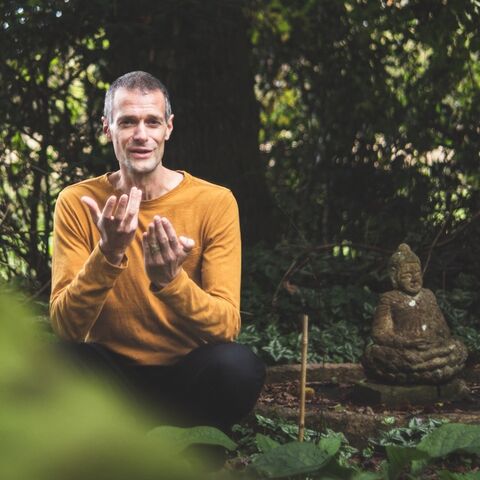
My name is David Holt and I'm with Alternative Life.
This is Josh Stifold of Integrating Presence and we are here talking about things the public should know.
I don't know if anybody caught the last conversation,
The last video we were doing.
We wrapped it up with energy.
What exactly is energy?
We deal with energy every day.
If you heat your home,
Cool your home,
You run or go walk,
You need energy.
How would you define energy and why is that important?
That is a really wide definition.
The sunlight is energy and we know that electricity is energy but we have thermal energy.
Steam energy,
If you look in your science training,
Energy can be defined as all kinds of things but essentially at a crux,
It is a source of power and ability to create other stuff from that source.
For instance,
The electricity powers your lights.
The geothermal energy can create heat.
The idea of fire can burn and produce all kinds of other things.
Energy that we are talking about is a much more esoteric thing.
It's about the planetary key fields.
It's about the inherent life force in the cosmos and creation that extends from the edge of the known universe all the way into the core of every planet and our own hearts.
I think that a lot of the energy concepts that we are referring to can be seen in energy healing and Reiki healing.
Acupuncturists deal with this type of energy when they connect the different points in the body through the acupuncture needles and it's called a wide variety of different names but essentially you could refer to it as chi or just the force is what Star Wars calls it.
But energy,
The word energy is a really good sum total of all of this.
Life force energy is what some folks call it too.
There was a guy with organized stuff,
Wilhelm Reich,
You can look up his work.
Argon Energy.
That's another word for it and he was studied under Freud but then he was,
His whole story,
There's plenty of information about him.
Wilhelm Reich,
Look him up.
And Nikolai Tesla.
Most people are familiar with that name by now just because of the car,
Right?
At least because of the car.
But it's pretty obvious if you want to take somebody that's really sick and close to death,
If you just look at them,
It just doesn't seem like they have much life left in them,
So to speak,
Right?
That's a really good way to look at it.
But then you,
I don't know if anybody's witnessed a birth,
You just go and it's just kind of like a magical,
It's so much life,
Energy,
Life force in where that birth takes place.
I remember that with my niece and nephew anyway.
That's how it even imbues the whole room with energy and everyone there is more upbeat and full of life.
You get around,
Or you just get around somebody that's naturally has a lot of life force energy,
They're just kind of like,
People gravitate to them,
Like a magnetic personality but if you have somebody that's,
You know,
Had been through multiple traumas,
Sometimes it can be more challenging to be around certain people during certain times like that.
So yeah,
It's a really fascinating,
Mysterious type of thing but then also something we deal with just about every day and it's also common,
It can be common places.
One way that observed and how we are all energetic beings,
You mentioned how the,
Some people that are very exuberant and outgoing,
We might even call them extroverts or something like that,
They have a lot of energy to burn,
Right?
And so we're attracted to them,
They're always very outgoing and they can raise the level of the room,
They can raise other people's energy around them.
And that's how they get replenished themselves is through,
You know,
Other people.
Right.
Yes.
Well,
The opposite introverts,
You need to go in,
Recharge your batteries in alone time,
Right?
That's how they recharge.
That's how,
And I'm an introvert very much so.
So when we are around a lot of people,
We actually get drained of our energy unless we've learned to protect ourselves in ways or find a way to continually sustain ourselves,
Which requires a lot of introspection.
For those of you who identify as introverts,
I highly recommend finding a way to have alone time at least every day,
Just a small period of it because it is the difference between wearing yourself thin or having some kind of a robust life because you need that blank space to just be with yourself and you'll feel it.
Don't worry.
But I mean,
Even if you just take time to write in your journal or take time to draw a piece of art or for me,
I like to sit with all my crystals and just kind of hang out there.
But sometimes it's not even about doing anything.
It's more of I'm taking the time for myself because I need my energy.
Especially during this time too,
You know,
When I was more introverted,
I had to have that.
It's hard for me to function the way I wanted to because it was just a necessity.
Yeah,
It's self-care and self-nurturing and self-love during this time is real even for extrovert.
Oh,
Yeah.
And then another way too is even,
Well,
I would say more if you had to put a label,
Mesiovert,
Which is a word I learned recently.
So it's kind of like it's a cross between or it's a balance between introverted and extroverted.
And another way for that is to find people we resonate with,
Right?
So where we don't,
That's another gauge too.
So are you in a situation where your energy is feeling,
Are you feeling constricted and drained?
Are we feeling expansive and energized with the activities and folks that we're around?
So that's a good gauge to know as well.
It really is.
And I'm glad you mentioned that because there's a lot of tools that we can use in the world today.
People have been studying this a long time and there's a consciousness scale and it looks like a rainbow and it goes from 100 down to zero,
Which is essentially death and enlightenment.
But in there they rank all of the levels of consciousness.
And if you can find yourself in your current moment level of consciousness,
Then you can change.
So if you find yourself in like a fear or a downtrodden,
That's not the right word,
But in one of the lower areas on the scale,
Then you know,
Hey,
I can go up,
I can be happy,
But there's stair steps in that.
And if you look online for consciousness,
There's so much information out there.
And what's really fun is nowadays all kinds of counseling and psychology is really coming in,
Studying this information and backing it up.
The original people were all psych who came up with this stuff were psychologists and other doctors,
But they couldn't get the masses.
They couldn't get their information out to the masses because of the technology limitations back then.
Well,
Nowadays we have so many people who are in Cal Nation on their own terms and really professionals in their industries are taking it in and you're seeing people like Brené Brown translate the consciousness scale into her discussion about vulnerability and how it's really important for all of us to learn how to be vulnerable with ourselves and conscious of our energetic state,
Because it doesn't matter whether we believe in religion or woo woo or nothing.
These are more of a practical application concepts that we can embrace to be better functioning.
The consciousness scale to address that,
That's so great.
That just shows why there's,
You can never have too much mindfulness because you have to know,
You have to be mindful of where you're at kind of in consciousness.
So even if,
Even if you're all the way down to low,
One of the lowest levels,
You still have to have some kind of awareness,
Some kind of consciousness to know that,
But you have to have a comparison point too,
Right?
Usually,
Right?
Some reference.
Some reference,
Some other reference point that's not,
And that's another good point.
Or even if you're at the highest expanded state of consciousness,
You still have to be mindful that you're at that state,
Right?
And it's not a constant.
That's the other thing.
That's what I was coming to next because in this world,
It's nothing is really permanent and nothing is really constant.
So just realize no matter where you're at,
There's a scripture thing that says this too will change,
Right?
Yeah,
This too will pass.
So it's like,
Yeah,
That's,
That's what,
If there's any constant in life,
It's that things aren't constant.
Right.
Which I think is important.
Which is a good,
Can be a very good thing too because you would just be stagnated,
Frozen into a same level and you know,
Where would be the,
You know,
There would be no growth or potential or change,
You know,
It just be like,
I guess like mashed potatoes or something.
I've been on top and on bottom in our spectrum of like places to be in career success,
Relationships,
Stuff like that.
I think that the most important thing I've learned over time is that this is not a constant and we can't expect ourselves to be at the same level all the time because it just doesn't work that way.
It's not up for disappointment right there.
We'll also,
We'll burn ourselves out in trying to remain up here.
Like if we,
If we learn how to surf the waves of our emotions and surf the waves of our daily life,
Instead of trying to maintain this at all times,
Realize you go down and you come up,
You can also harness the momentum.
And so for instance,
If I know that I need to be on top right here,
Then I'm going to kind of take it easy in all of my efforts until I ride that momentum up into that high flying place that I need to be at for whatever functionality it is.
Peak experiences are great because they're just,
They make things worthwhile,
Right?
But to be constantly chasing after and trying to recreate peak experience can be a way to burn out too,
Right?
And then also miss other peak experiences as well.
And also that's,
That's great.
Hold on.
Peak experiences at different levels because to like maybe the word peak isn't,
We use the word peak to talk about the pinnacle.
Yes.
Right.
And what you're talking about is having a perhaps lower consciousness experience with greater magnitude,
Greater importance,
You know,
A peak experience,
But in this level,
Because I think that one of the beautiful things about human beings is the spectrum of emotions that we work in.
It really is a constant flow and we can't expect to be happy and go lucky all the time.
You wouldn't want to be anyway,
Would you?
At the same time,
We wouldn't want to be sad.
We were talking earlier about the,
That's kind of air.
We get a lot of flyover.
The airport's over there.
I like the term full spectrum human.
Full spectrum human.
Yes.
I'm so glad you said that.
It's like,
Great.
Really is,
It's such an appropriate term because not only is there a full spectrum of light that we can understand and it's all beneficial for like,
We're just now in our science really coming to understand light as waveform and how important it is in the whole spectrum of light,
Not just the part that we see or the parts that tan our skin or that make the plants grow.
All light has a purpose and we don't understand half of it.
About right.
I love,
That's a great idea of when we need to harness that to reach a certain state when life calls for that and that would be the optimum place to be.
At the same time realizing that sometimes we have only a certain amount of involvement in doing that,
Right?
But this,
Which I feel a really important part of that is intention,
Which we can come back to in a second.
Also to having the ability and the development of will to be able to do something like that at the same time,
Where is the balance point of surrender where we can just let go and see what that might be,
What we think might be optimal for us,
Very well could be,
But it could also be something else that needs to happen kind of on its own that would far exceed our imagination expectations that we just,
Life kind of has in store for us naturally as well.
For me it's about balancing those two things,
Right?
When we feel we just kind of get a,
Just kind of like a notion that,
Well this is probably what I need to aim for.
Other times it's like,
Well maybe we'll hand the reins over to life and see what life has in store as well.
I do really resonate with the Christians say let go and let God,
And I think that you can extrapolate that into it doesn't matter what you believe if you.
.
.
Or God's will is another one.
God's will,
Right.
If you believe that everything is happening the way that it should,
Or that you can just trust the universe,
And I know this is really hard,
But seriously you can do it too.
Letting go and releasing control is probably one of the most profound gifts that I've learned about dealing with this year in 2020,
Dealing with the employment concept and career track concept.
I think many of us find ourselves in places that we don't necessarily like,
Whether it's physical,
Mental,
Career wise,
But try as we might we struggle and strive and fight against the thing and try to find our right place.
For me,
Really realizing that that wasn't working was part of my journey to this point,
And the releasing control actually allowed me.
.
.
Don't get me wrong.
It was not easy or quick,
But it allowed me to truly find myself because all of a sudden I started paying attention to myself inside,
And I'm glad that you mentioned mindfulness because I think that mindfulness is.
.
.
A lot of people misunderstand it as if we're trying to convert you to Buddhism or something like that.
When there's roots of it in Buddhism,
There's roots of it in Asian theology and religion,
There's roots of it in Christian theology and religion,
But mindfulness is just about caring about the moment and experiencing what is a little bit more than you had been before.
Being mindful of how your body works,
Why people do things,
Taking a moment to breathe is just the most simple.
.
.
You don't even have to think about it.
It's just the most simple act of mindfulness,
Is pay attention to your breath and just be.
I feel that mindfulness has had a really good upswing in recent years and popularity.
I think that the concept is just like yoga.
Everybody knows the word mindfulness now.
Whether they practice it,
Who cares?
I think the buzzword is important because we understand that it is a thing,
And then you might be attracted one day to check it out.
By researching mindfulness a little bit,
You might try meditation a little bit.
Going back to that surfing the wave,
It doesn't have to be a long time.
There are times as an introverted,
Empathic person,
I realize that I might need some space,
Literally some days of time to get ready for a presentation or because I have to go to a family gathering or something that I know I'm going to need to be emotionally strong for.
I can go afterwards to integrate those experiences as well.
Afterwards,
Right?
But at the same time,
If I meditate,
It can happen faster.
Yes,
Right.
It's an expedient means,
And it really is.
The mindfulness thing,
I'm glad you brought that up because this month's conversation,
I do a monthly,
Shameless plug here,
A monthly conversation with Denny Mu in California online.
That's our next topic.
It's going to be mindfulness and the mindfulness industry.
It's kind of like a negative thing or maybe a more critical version of its popularity.
The thing is,
I totally 100% agree,
That it's better to.
.
.
Let me say,
Any press is good press,
Right?
Right.
Just to have it draw attention to.
To me,
One of the definitions of mindfulness is knowing what's happening in the moment as it's happening.
Yes,
It's just a basic bare awareness,
Right?
You defined it very well.
The surrender part and how to just let go and give up control.
It's a very fascinating topic because it seems like we have some kind of agency,
Right?
Some people seem to have more of a higher agency than other to affect their world and whatnot.
It seems like on an ultimate level,
Maybe control is kind of an illusion.
This is something that not to be believed.
You have to look into it yourself and it's many layers and whatnot.
A great maybe universal type thing that I just love is it kind of goes beyond.
.
.
It sets aside kind of judgments and judgmentalism,
Who's better,
Who's right,
Who's wrong and focus on what's skillful and wise and wholesome.
Those are kind of.
.
.
That takes a lot of fleshing out.
Yes.
It's like a lot of people can just get on the same page with that.
It means a lot of different things to a lot of different people.
As our awareness increases and we become more mindful,
These things become even more apparent,
Right?
Right.
If an action is skillful,
If a speech is skillful,
If thinking or certain thoughts and maybe initiated emotions are so far unskillful.
Same way with wise.
Are they wise or not?
Then wholesome,
Wholesome or not.
Then the wholesome thing,
It's not so much as,
Oh,
I should do this.
I should be more wholesome.
It's more like this is for my benefit.
If we put this into practice,
We realize that life is just.
.
.
It's hard to describe.
It's just kind of smoother and whatnot.
It's kind of like having.
.
.
We know that certain mechanisms of coping are healthier than others,
Right?
Right.
We can see benefits from that.
Then eventually,
Can get to the point where possibly we just get more feedback of how being wholesome in the world is for our own benefit and everybody's benefit.
When other people benefit,
We benefit from it as well.
It's not so much as a goody two shoes type of thing.
Some of the reasoning is escaping me now.
Maybe it'll come back.
It's a non-judgment reasoning.
Part of mindfulness that I've come to understand is a non-judgmental approach.
Yes.
Yes,
You talked about the skillful and hope and wise,
But when you're observing these,
I think it's very important for us to realize we don't have to judge.
It's not better or worse to be.
.
.
More skillful or less skillful is not better or worse.
It is just a range of skill.
Yes.
A range of wisdom,
A range of.
.
.
It actually,
Truthfully,
Doesn't matter whether it's the best or the worst.
I think that,
Especially in my life,
As I've embraced releasing control,
The first step was releasing judgment about things.
It's super hard to do this because while we can all do this,
I think the most difficult part is the emotional interaction with oneself because we realize how much we do judge,
How much our society is built to judge,
And how much that actually hurts us all.
Every one of us is damaged in one way or another because of the judgment,
Because we have to either judge ourselves as better or worse than someone else,
Or we are told that we are better or worse than something else.
We're better or worse based upon the grades,
Based upon this.
I don't necessarily know what the framework of a non-judgment society looks like,
But people are implementing it all over the place in schools and in community groups.
My colleagues and I started a project this year called the North St.
Louis Mindfulness Project.
We'll get to that in another conversation.
One of the first steps is to observe without judgment.
That's another definition of mindfulness.
It is incredibly challenging,
But once you get the hang of it,
It actually becomes much more satisfying because you're no longer rating yourself in relation to it.
You're no longer,
I've had to completely change my success factors and what I judge myself on and trying to not judge myself because by all standards in corporate America,
I'm not up to snuff,
But that's not my fault.
I have a skill set that goes far and wider than just a computer jockey sitting at a desk.
Maybe I just don't want their job.
Either way,
Non-judgment has brought me to becoming more familiar with myself and also being more gentle.
I like the word non-judgmentalism.
I don't think it's skillful to confuse judging with discernment.
That is different.
Yes,
It's a huge difference.
Some people will judge themselves for judging,
Right?
Then it just spirals down like that.
Matt Kahn is another favorite teacher of mine at the moment.
His teaching on judgment is there actually can be a silver lining there too.
What you said is all very important.
That's the standard,
Right?
The thing that goes overlooked is what I just said,
A lot of times people will judge themselves for judging,
But what I think that anybody that's even remotely concerned about not wanting to judge other people,
They're not really judging other people or other things because they have that awareness there.
Somebody that derives satisfaction and a superiority from judging,
I would call that being judgmental.
They get something out of it.
Yes,
Exactly.
Yes,
That's a great way to put it.
They get energy out of it.
That's where we're going with that.
There is a silver lining when those judgments come up.
We say,
Why am I judging?
I don't want to judge this.
Sometimes that can just say,
Okay,
Well,
I see and honor your Buddha nature,
Your divinity,
But maybe this isn't for me right now.
Maybe this is saying something like this,
Whatever the judgment comes up,
Maybe we take a look that maybe that's there for a reason.
This brings up the ego because some people have a superior ego,
But then there's also the inferior ego,
Like I'm not good enough.
That's an ego too that's often overlooked.
There's a classic teaching that if I think I'm better than someone,
That's conceit.
If I think I'm less than someone,
That's the conceit.
We can both see that.
The one that's a little bit more challenging to see is on a relative level,
Not an absolute level,
Is if I'm equal to this person,
That's conceit.
The way I understand that is that I can never match David's unique brilliance,
Nor could he ever match my unique brilliance.
When I'm trying to get on an equal playing field with someone,
Now I see that there's certain.
.
.
Sure,
There's all kinds of equality,
Like equality of compassion,
Like everybody deserves just equal amount of compassion and things like this.
Overall,
When I say that I'm trying.
.
.
There can also be a competition.
I can try to be in competition.
Do I need to lower myself or do I need to raise myself so I can get on equal footing with this,
Which is impossible anyway on a relative level from what I understand.
I wouldn't want to do that either because it would almost be like potentially,
I would say this wouldn't happen,
But it could be like a gray kind of hive mind mentality where everybody just kind of comes into a group thing because they think they're equal on all levels.
In a way,
There are ways that we are,
But in other ways,
I wouldn't want to be match equal because that's the beauty of individuality,
But now how do we balance that with group consciousness and unity consciousness as well.
That's another thing.
The consciousness can be unified,
Although without having to lose our individuality and things like that,
Right?
I think that uniqueness.
.
.
I think that what you're talking about is a practical application.
It sounds very lofty in conversation,
But it's much more of the practical application,
The nuts and bolts of this stuff.
Coming together as a group in a non-judgmental way,
We could agree that we're all independent and awesome human beings that will collaborate better on these things,
Right?
I think it's our own challenges to be accepting and open and loving in that collaboration,
Right?
Again,
Not again,
But then there's the next level where we come together as a group and agree that we are all becoming like a hive mind kind of concept.
This is where you get into the concept of a high functioning because we kind of release our egos.
She's totally cold.
I'm going to take her inside.
We kind of let go of our egos and allow for the group think to happen,
But this is a choice,
And we notice in groups that are not aligned where everybody is not given their own sovereign individuality that people kind of reject these concepts and buck the group,
Right?
If we're all coming together in complete agreement about our own sovereign worth and self-worth,
Then we can definitely have that group think a little bit quicker.
The group projects,
It just seems so challenging at this time because so many people are dealing with so many issues.
Do you have any examples to look for if cohesive groups that are really like kind of role models and to look for,
I don't know,
Carrying out projects or just interaction or what?
Because that's blanking on me now just because it's so challenging right now.
That is actually a really good idea for another talk because there are plenty of groups that are working on things that have demonstrated good ways to collaborate.
That are not cults.
And that are not cults,
Right?
Because we definitely,
So a note on the cults,
If you find yourself in an oppressive situation,
Cult or not,
You don't need to be in an oppressive situation.
If people are telling you how to think and forcing you into certain mental constructs,
That is not the truth of life and you can find something better and more real for yourself.
Abusive situations.
Do whatever you can to get out of those.
Need to go stay on a person's couch for a little while.
Get out of any abusive relationship that you're in obviously.
If we find our own self-worth,
We can potentially change the situation potentially.
When it involves others,
And this is like a whole other wealth of conversation that other people are more specialized in,
But I know that if you're in a relationship,
Like an individual relationship with like a marriage or something like that,
That you both have self-worth.
If one is oppressing the other,
Then it needs to be a conversation amongst the two.
And if you can't agree on it,
Then leave,
Right?
Then find a way out.
But I feel it's very important to recognize the love that got you into that first and don't give up on it.
Obviously,
If you're in an abusive situation,
Get out because that's never going to change.
But if you can.
.
.
Or even if it is,
You have to remove yourself before it can.
But I do think that you can come together in this situation.
This is actually the perfect segue into the last topic,
But before you asked for a group that demonstrates good leadership and good ways to interact,
There is an educational platform called Mindvalley.
Yes.
Mindvalley.
Com.
And I did that seminar,
And you told me so.
I'm glad.
So it's.
.
.
Their educational opportunities are vast and really awesome.
All their teachers are great.
But more importantly,
If you study the company and if you read the books by the founder,
Vishen Lakhiani,
He talks about how he has built his team and how through personal development on his part,
He got himself in the right spot and continues to get himself in the right spot.
And then he's able to show up and be real for the rest of the group.
But meanwhile,
The rest of the group is getting themselves and doing their own personal work.
So it's more of like finding the group that's committed to self-growth and committed to these ideals,
Right?
And don't give up on it.
If you can,
Bring it into the group.
If you resonate with something in common interest and similar values,
Those are all very important too.
Right.
And don't settle.
I think that's the other thing.
That's correct.
If you have to be there,
Then don't settle for the group performing badly.
Be the one that stands up.
Yes.
It takes guts,
And people might shoot you down.
Yep.
But more likely than not,
If you stand up and try to set it right,
People will follow you because they're looking for leadership.
You'll get respect too,
And then you'll thank yourself down the road as well,
Right?
Right.
Even if it's uncomfortable at the moment.
Going back to the relationship type things,
Yes,
The honor,
Respect,
The validation,
And the value.
Those are all.
.
.
Yeah.
And then the worthiness.
So many people don't feel they're worthy of whatever too.
And also,
Abundance happens with allowing.
It's kind of the flavor of allowing.
Yeah,
It's the flavor of allowing.
The big conversation that we're segueing into is that we as people,
As groups,
As communities,
As the civilization on this planet have the opportunity to stop fighting about all of this.
We've been.
.
.
I think that the construct,
The framework that we've been operating in for thousands of years now has been conquer and overcome.
And that's just no longer true anymore.
I feel that many people talking about this,
Whether it's in the sustainability environment,
Stuff like that,
Or politics,
There have been these thoughts and concepts for generations,
If not hundreds,
Thousands of years.
But we really are coming into a time on the planet that you,
Me,
All of us,
The whole planet,
Nations,
Industries,
All of us can stop fighting because the competition is what's killing us.
And I feel that collaboration is truly the way forward.
And finding out,
We've talked about our self-worth and our sovereignness and stuff like that,
But we have to do that as individuals so that we can be there for our group.
And then our group can be there for the larger group around the world.
Because right now,
We have everything.
The planet is bright and abundant with people and power.
And in any way that you translate those words,
Resources,
There is a finite amount of oil on the planet,
So let's stop using it.
That kind of thought process is a really good thing because we can then discern what's the best thing to use.
But we need to stop fighting about whether oil is the best thing to use on the planet because it's just not.
If you look at all the science and all the information out there,
There's so many reasons to move away from that particular thing.
It's pretty obvious to us,
But I guess not wise.
It's just such an entrenched infrastructure there as well.
The common thread that runs through all of life here,
Pretty much in the States anyway,
Is moving from competition to cooperation.
Our culture promotes or has promoted competition,
Especially for the masculine.
That's the thing.
In sports and then also the business world,
That's our challenge.
And some of the more feminine,
Their challenge maybe might be relationships and family and things like that.
And you mentioned sports and business.
So competition is not a bad thing.
Healthy competition,
Being sportsman-like.
I love playing sports.
I am not on a sports team.
I do not watch sports,
But if you want to go play a game of baseball,
I will dig out my glove and my bat and let's go play because I enjoy playing games with other people for fun and entertainment,
But I don't care about the outcome.
Yes,
Beautiful.
And you can learn cooperation doing that too,
Right?
It's very important.
Yes,
Yes.
I don't want to just shoot down all of that all at once in generalization.
The competition is like,
What is the end result of the competition?
Because there's,
I mean,
Not to throw in these old sayings and stuff,
But I'll do it anyway.
It's like,
Winners,
Winning gives way to hostility and losers lie down in pain.
The wise have set aside winning and losing.
The fighting thing,
Another old,
I guess,
Axiom or saying is that,
You know,
Hatred,
It's never overcome by hatred.
Only by love can be addressed as an ancient truth.
Right.
You can't fight fire with fire.
It just makes more fire,
You know?
And I think the other thing is we have these words in our civilization,
Such as fight fire with fire.
It's very caustic,
Just in our language,
About how we approach things.
Because like,
Why does it have to be a struggle?
Why does it have to be a fight?
What is the,
What if,
What if the world was such that we all got everything that we needed and wanted as we needed and wanted it,
And really all we had to do was wake up,
Be positive,
And interact.
We don't have to sign our life away for a job just to have our basic needs,
You know,
For a job that we don't want to do.
And no,
We're not talking about socialism,
Just to be clear.
There's a lot of,
There's a lot of other new stuff that Josh and I will talk about in the coming weeks.
Yes,
Definitely not.
That's,
I don't feel that socialism,
Communism really is the answer,
Nor is,
Nor is gangster capitalism either.
So I think that all of those philosophical words about economic policies and things like that,
I think all of those can be revisited.
And there are new ways of thought.
There are,
But it comes back to what we were talking about earlier,
That the same level of,
The problem can be solved at the same level of consciousness that created it.
It's all about the inner work and doing the inner work.
So when we do go in and interact,
That we can be at our,
The best level,
Because how can I be of service to the highest degree if I'm not,
You know,
The level of consciousness and development is there to begin with,
Right?
But that's not to say you can't do anything until that starts either.
It's just,
They constantly reinforce themselves in how.
Right.
And I think that all of this,
All of this really comes back down to being mindful about ourselves and our personal space,
Because that's where it starts.
This is,
I realized,
You know,
I've spent years thinking about all these things and that brings me to the conversation that we're having today.
Right.
But I've taken action for myself and I've really done a lot,
Years of inner work and countless masterclasses and introspections and journal writing.
I'm not sure.
Shadow work too?
Yeah.
Shadow work,
Not very much.
I'm going to confront all of these things as individuals and it's not easy,
It's not necessarily fun,
But on the other side,
When we're able to realize,
Oh my gosh,
I've changed my life forever in a good way,
Just by that simple personal interactivity,
Maybe not simple,
But personal interactivity.
Well,
Simple but not easy,
Right?
Yes.
Simple but not easy.
It's just like,
Because the pain that we're trying to run away from,
Hide from,
Cover up,
Distract ourselves from,
Eventually it's going to catch up with us anyway,
Right?
Right.
We can't hide from it.
Not forever anyway,
You know,
But so when we can be in a decent space or have space held for us to actually address that,
Work on that,
Heal that,
And also realize if it gets too intense that there are healthy ways to cope with so we don't have to stare down the barrel of a gun.
Like counseling.
Yes.
Counseling.
Counseling,
Yeah,
There's so many different mechanisms and coping things too as well.
So for sure.
Yep.
Yes.
Great amount today.
Cool.
And we'll sign off there.
All right,
David.
I hope you all have a great day.
Thank you so much,
Josh.
Yes,
I've never listened to everyone that's watching this as well.