Hello everyone,
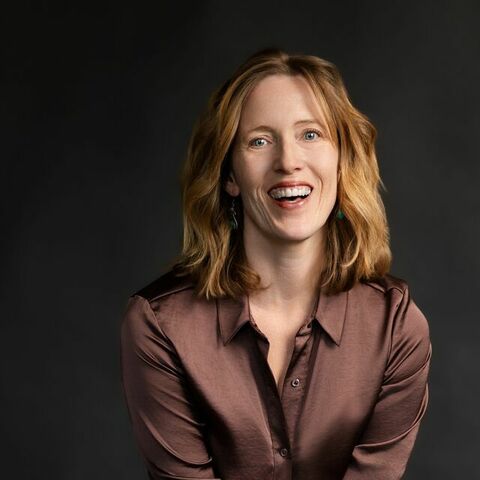
This is Jen Knox and today we're going to talk about how to meditate with anxiety.
If you're suffering from anxiety,
Excessive worry or stress,
You are not alone.
Our daily lives can be overwhelming and in fact often are,
Especially due to the fast pace of just everything going on.
When I was younger I suffered from panic attacks and generalized anxiety that was often triggered by overstimulation.
It was a therapist who originally introduced me to meditation over a decade ago.
In my personal experiences the practices mindfulness and meditation supported me more than anything else but I can still remember feeling the lack of trust that anxiety summoned.
It's a feeling of being without solid ground beneath our feet and it could consume our waking thoughts.
In my personal quest for peace I tried many types of meditations and I learned a lot about the value of acknowledging anxious thoughts,
Facing them squarely with mindful awareness.
I also learned that it's not something that you learn overnight.
It takes repetition but it is possible to reframe worry and anxiety.
The key is finding what works for you and remembering that change is possible with dedicated practice.
So what I'd like to talk about today is just anxiety and its role in our overall health and well-being collectively and I want to look at specific advice for meditating with anxiety because sometimes it can be difficult to calm ourselves enough even to just sit and breathe and we're going to go over a few very helpful exercises.
So we live in an anxious time.
A student of mine recently told me that she belonged to the anxious generation which I later found out was an increasingly common phrase.
As someone who suffered from anxiety and knew how it impacted quality of life this piqued my interest.
Are people more anxious than they used to be?
How prevalent is anxiety today?
Here are some stats for you.
According to the National Institute of Mental Health in the United States 31.
9% of teenagers between 13 and 18 have an anxiety disorder.
John Haight a social psychologist wrote a book called The Anxious Generation which attempts to understand the increasing prevalence of mental illness especially among young people.
Adults are impacted too of course.
19.
1% of all adults in the United States have anxiety.
Anxiety levels have increased globally as well and the takeaway here is not to say we're hopeless but to say you know what we're not alone.
If you are suffering from anxiety,
Worry,
Stress there are a variety of techniques that can help.
The good news is that more resources are going to find ways to remedy anxious thoughts because of the prevalence.
There are many clinical resources and among them is mindfulness meditation a practice that has been scientifically proven to help you work through your anxious thoughts methodically.
So why meditate and is it even possible for people with anxiety?
Managing anxiety with meditation begins with understanding that it might not be easy to meditate at first.
It seems counterintuitive but if you experience anxiety and are starting a meditation practice to manage your symptoms you have to be patient and know that you can create a successful practice with the right support.
Anxiety and stress can make it more difficult at times because our thoughts seem to get away from us but with a bit of persistence it can truly help and with that persistence a lot of people who suffer from anxiety can become some of the deepest meditators.
A few practical tips for starting a meditation practice if you do have anxiety.
One thing that helped me was starting small.
So just a few mindful breaths every day can lead to a more regular practice and if you're new to meditation of mindfulness or if you've fallen off the meditation wagon or you feel resistance see if you can make a small goal a very small goal of just 10 mindful breaths.
Inhale,
I'm breathing in.
Exhale,
I'm breathing out.
Inhale,
I'm breathing in.
Exhale,
I'm breathing out.
Incorporating this into a daily routine to better manage anxiety will help you build confidence and give you the ability to stay centered throughout the day.
You can also try guided meditations which really helped me.
A little support from a calm voice that resonates for you and clear instructions can help you to go deeper into a meditation practice especially if you're predisposed to mind-wandering.
These calm voices are like bumper lanes for a wandering mind and can help to guide your thoughts in a way that better serves you.
And finally experiment with mind-body practices.
So a body scan meditation can be effective releasing and relaxing from the very crown of the head all the way to the toes or you can try a meditative movement practice such as Qigong or yoga.
Just remember to be patient with yourself.
We do not have to meditate two hours a day to feel better.
As Dr.
Martin Luther King Jr.
Said,
If you can't fly then run and if you can't run,
Walk.
If you can't walk then crawl but whatever you do you have to keep moving forward.
This is the mindset that helped me to find ways to use meditation for reducing anxiety symptoms and finding increased focus,
Calm,
And peace of mind.
And with repetition I'm confident that you can too.
Once you begin to incorporate meditation into your daily life you'll start to feel its calming effects even when you're not actively meditating.
So the Mayo Clinic refers to meditation as a complementary medicine stating that meditation can help you to learn to stay centered and keep inner peace.
These benefits don't end when your meditation session ends.
And I want you to really think about that because when we're thinking about meditation it's not just about the time you're putting in.
The meditation serves you throughout your life.
So two ways to support a calm mind and with breath and guided support,
Which is one of the biggest hurdles to people who are new to the practice and trying to find time,
Along with those ten simple breaths,
Is to practice something called the 3-3-3 rule.
This is a mindfulness-based stress reduction technique that's simple enough for young kids and impactful enough for busy adults.
So wherever you're at you can do this right now.
Simply look around the room and name three things that you can see.
Identify three sounds that you can hear and gently move in three different ways.
So just a subtle move of the finger or a sway right to left or blinking the eyes.
And each movement,
Each sound,
Each thing that you see,
Give it your undivided attention just for a moment.
Noticing what you see,
Hear,
And noticing the subtle movements of your body might seem simple but they work because they use aspects of mindfulness meditation that brings you into the present by engaging three different senses.
They help you to move your attention from recurring thoughts that are playing in your head and can reconnect you with yourself and your surroundings.
Aside from mindful breath work,
Guided meditations and loving-kindness meditations are also effective ways to address anxiety symptoms.
If you are by yourself you can also try this simple and quick guided meditation technique.
Simply sit tall and close your eyes.
Imagine someone you love and respect and send them a positive thought.
Wish them peace,
Health,
And joy.
And really,
Really see that.
See them happy,
Healthy,
And full of love.
Now release that image and imagine someone you feel neutral about and send them the same positivity and the same love.
See them peaceful,
Healthy,
Joyous,
Loving,
And loved.
Finally imagine yourself with the same positivity and love.
Wish yourself peace,
Health,
Joy,
And love.
And breathe into that,
Really feeling it within your own body,
Your own energy.
And then take a nice deep breath and release.
As you continue to practice loving-kindness you can add a fifth step to imagine someone you have had a difficult relationship with who makes you anxious.
And you could send them the same positivity and love,
Wishing them peace,
Health,
And joy.
You can take a few tries to work up to this but this is a beautiful practice that often doesn't need a guided meditation but can benefit from one.
And if it's too much for you,
You can go back to taking those ten mindful breaths or noticing three things,
Hearing three things,
And noticing three sensations.
The development of personalized guided practices allow you to create sustainable practice.
So make sure that what resonates for you is what you do.
I've personally felt the benefits of meditation and mindfulness firsthand.
It has not erased my stressors or the inputs of my stress but it has taught me to bounce back quicker,
Build a resilience,
And live in a more mindful way every moment,
Appreciating the present.
So whether you're just starting to build your mindful meditation practice for anxiety,
Don't forget to come back to the core principles we talked about.
Start small,
Use guided meditations,
Use body scans and body awareness,
And when in doubt,
Come back to ten simple breaths.