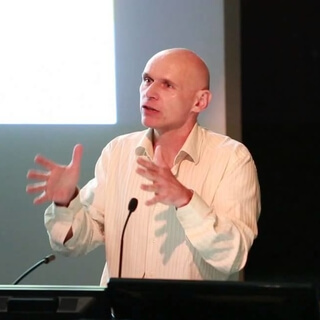
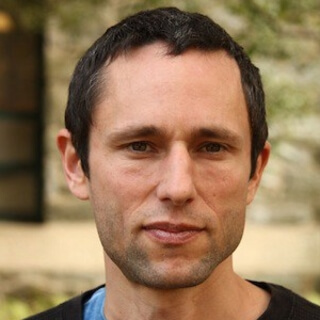
Welcome to the Flowstate Performance Podcast,
Created for those committed to mastery and success.
Coming to you from Manly Australia,
We break down the science and philosophy of optimal performance,
So you can unleash your potential.
Welcome to the Flowstate Performance Podcast.
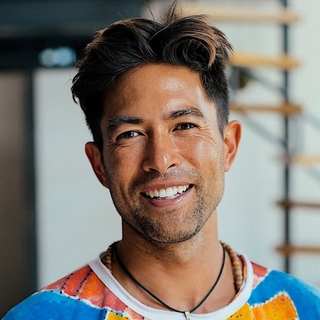
I'm your host,
Jiro Taylor,
And on today's episode,
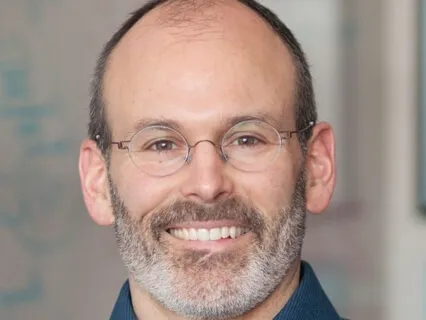
I am talking to Dr.
Judson Brewer.
Judson is a thought leader in the science of self-mastery.
He's an adjunct professor at Yale University,
And he also works at the Center of Mindfulness at UMass.
He also has a research position at MIT.
He's basically a bit of a badass when it comes to this convergence of psychology,
Psychiatry,
And neuroscience with meditation,
Flow states,
And contemplative practices.
He's right in there.
That's his playground.
Obviously,
A super interesting guy to talk to.
The other cool thing is that Judson is a mountain biker.
This is his way of experiencing flow states.
So in this conversation,
We get real deep into how technology is converging with meditation,
What the future might look like in terms of technology and meditation,
How it's helping,
What meditation does for addiction,
And really the similarities and the crossovers between flow states and meditation.
I think you'll find it a super interesting chat.
He's a great guy.
Enjoy the episode.
Welcome to the show,
Judson.
Thanks for having me.
Just give us a little bit of a brief introduction into the work that you're focusing on at the moment.
Sure.
I'm studying right now two streams of research.
One is around digital delivery of mindfulness training to help people change behavior.
For example,
Helping people quit smoking.
We're studying an app and online training called Craving to Quit.
We're about to launch into a program called Eat Right Now,
Where we help people change their stress eating and emotional eating behaviors.
The other line is looking to see if we can develop mental mirrors for people as they're meditating and learning mindfulness training so that we can help them learn to practice in ways where they can see and be put in touch with mental states that they might not be able to see.
So when you say mental mirrors,
Is this similar to the kind of biofeedback or the kind of the muse devices that we see on the retail market?
It's not like those in the sense that,
Well,
It's somewhat like them in the sense that it measures electrical activity from the scalp,
But that's about where it ends.
Right now,
We're using a 128 lead EEG array that's only available in research settings with our own custom program software where we can actually give feedback from specific brain regions.
I don't know anything on the commercial market right now that can give precise source-estimated neurofeedback.
Okay,
So you get to play with the real-deal powerful toys and the rest of us are basically getting something like what we would give the kids.
Okay,
I got it.
So it seems to me like where psychology,
Psychiatry,
Neuroscience meets contemplation and meditation,
That's kind of your playground.
Yes,
It is.
Awesome.
Is this a playground?
I know it's obviously an emerging field and there's more and more conversations happening around this.
When you first entered this playground,
I imagine it was really emerging,
Really quite new.
Yeah,
That was almost,
I guess,
Eight years ago or so and there were just the first studies being published on neuroimaging related to meditation.
I was actually hoping that more would be published so I wouldn't have to do the work.
I remember just assuming that somebody had already published that and then when we looked at the literature,
There really wasn't a whole lot.
So our first fMRI studies were started around 2008.
I think we published our first study in 2011 and then things took off from there.
And what have you found when it comes to mindfulness as a treatment for addictions?
What have the results been?
Well,
We found that mindfulness training works as well as gold standard treatment for alcohol and cocaine dependence and then we found that it was actually two to five times as powerful as gold standard treatment for smoking cessation.
Wow,
Okay.
So pretty effective stuff.
Yes,
We were pleasantly surprised especially with our smoking work.
Yeah,
Wow.
And when you say mindfulness training,
Are you talking about what has become a kind of standard eight weeks MBSR type program or what sort of timeframe are we talking about?
The first studies we did with alcohol and cocaine dependence were modeled after MBSR.
We did a modification of a program called mindfulness-based relapse prevention.
The second study that we did,
We stripped out all of the relapse prevention components and just focused specifically on mindfulness training and delivered it twice weekly over four weeks.
So it was a four-week treatment at that point.
We've since taken all of that to digital platforms where we can take the core trainings and the pieces that were especially linked to the outcomes and deliver them in ten-minute segments over the course of three weeks or so.
How do you explain mindfulness to laypeople because I guess it's become like a very popular term these days and I think there are some misconceptions around out there.
So how do you define it?
Well,
I think there's a standard working definition that probably a lot of folks have heard that Jon Kabat-Zinn kind of coined where he talks about paying attention on purpose in the present moment non-judgmentally.
If you look at the aspects of that,
It's really about bringing a quality of awareness to whatever's happening in a way that's not pushed or pulled by our experience.
So we're not sucked into it and we're not trying to push it away,
But we're really just in it.
Is that the definition?
Is that the way you see it?
The way you describe it to people?
It depends on the day.
Okay.
So talk to me about how you came into this because for me,
When I first started meditating,
I was actually living in Japan at the time and I'd stumbled across a Zen monastery.
And at the time,
Having had a standard upbringing,
My mind was extremely untrained,
Really like that puppy metaphor,
And it was all over the shop and I found it extremely difficult to focus on things and I was really just being tossed to and forth according to the whims of my thoughts.
How did you come across this,
I guess,
A practice that's rooted in the Eastern tradition?
I was suffering.
I was looking for a way out of my suffering.
I had gone through a bad relationship breakup right before starting medical school.
I was having trouble sleeping,
Probably for the first time in my life.
Somehow this book by Jon Kabat-Zinn landed in my lap and I started meditating my first day of medical school.
And which book was this?
Full Catastrophe Living was the name.
Ah,
Full Catastrophe Living.
Okay,
Excellent.
And did that change your decisions around your career?
Eventually.
I was in an MD PhD program,
Studying medicine.
I wasn't sure what specialty I would go into,
But had plenty of time to figure that out.
I was studying immunology because I was very interested in how,
You know,
Why we get sick when we get stressed out,
Basically,
But from a very molecularly oriented standpoint.
So I would knock out genes and specific cell types in developing mice and figure out how,
You know,
How steroids or stress hormones affected the immune system.
But throughout my MD PhD training,
I kept practicing more and more and started going on retreats and really learning about how my mind works.
And at the end of it,
I decided to shift from animal research to doing human research and also shift my,
Or go into psychiatry as a profession because I could see very clear links between what the early Buddhist psychologists were talking about in terms of where suffering was coming from and what my patients were talking about.
I love the way you just said early Buddhist psychologists.
Can you just expand on that because a lot of people see Buddhism as a religion and there's not going to be psychologists there.
There's going to be theologists there.
What do you mean by Buddhist psychologists?
Well,
I guess,
You know,
I would ask,
Was the Buddha a Buddhist?
I think he was a guy that was trying to figure out where suffering was coming from.
So in that sense,
He was taking a very pragmatic approach.
And if you look at his trainings,
There's nothing in there about believing anything.
It's a very empirically derived process.
When you look at the trainings and the teachings,
For example,
There's one term,
Dependent origination,
Which is basically an early map of operant conditioning.
So he's really figuring out how our minds work more than forming a religion.
Absolutely,
Absolutely.
I think that's something that more people should be aware of.
It really does seem to be perhaps the man's earliest attempt at creating a science of the mind.
That's how I see it.
So talk to me about that because you obviously had a scientific inclination and a lot of the energy around meditation has an esoteric flavor to it.
Did you struggle at any point in your early days of meditation with balancing out the esoteric nature against your scientific leaning?
I'm sure I did.
There's a lot written about meditation,
Tons of books.
It was a while ago,
It was about 20 years ago now,
So I can't remember the details,
But I'm sure the answer was yes.
I was interviewing a neuroscientist called Arne Dietrich on the show a couple of months ago and we're getting deep into the topic of consciousness,
The science of consciousness,
And really talking about where consciousness exists and what the limits of that are.
His view was very mechanistic that consciousness exists within the brain and only within the brain.
Can I ask your take on that?
It's a good question,
But not one that I'm particularly interested in,
To be honest.
I actually don't have much of an answer for that.
People have debated this for many,
Many years,
If not centuries.
From a pragmatic standpoint,
I'm a pragmatist as well.
I don't know how helpful it is to figure out exactly where consciousness comes from.
That's a really interesting point.
There's a lot of people saying this,
A lot of people on the other side of the fence,
And maybe one day we'll never know,
And maybe we're not meant to know,
And maybe there's no point in knowing.
One thing I would say is,
Again,
Following the early Buddhist teachings,
When we get attached to views,
One thing is pretty clear that that leads to suffering.
Unless there's a pragmatic aspect to figuring this out,
I think there's good advice in not getting too caught up in these types of debates.
I think that's great advice,
Man.
That's great advice.
I'm going to take that on board myself,
Because there's a lot of debate out there,
And often people take a very entrenched position,
But in fact that position is completely unprovable,
And it's often based on a hunch or some sort of life experience.
At the end of the day,
We might never be able to prove some things.
That's the way I see it,
So why be attached to it?
Talk to me about flow states in your life,
Judson.
How do you experience flow?
I experience it when I get out of my own way.
Some simple ways that I've experienced it are mountain biking,
For example,
When the conditions are set up so that I don't have time to pay attention to myself.
I think some of Mihaly Csikszentmihalyi's descriptions of flow are very helpful for outlining or framing it in terms of its equality,
Where we're not there,
It's selfless,
It's timeless,
It's effortless,
Those types of things.
That's happened for me when I'm playing music,
When I'm mountain biking,
Sometimes when I'm just going about doing things in the day.
Have you found that there's a correlation between your meditation practice and your ability to be in flow?
Yes,
A direct correlation.
Meditation is about learning to get out of your own way.
So everything in a simplistic view,
I would say meditation is a way to train people to get into flow because it moves people into this non-dual framework,
Which I would say is at least my definition of flow.
Yeah,
Absolutely.
I think that for me,
When we talk about flow states at the Flow State Collective,
Mindfulness meditation awareness training is sort of like the complete foundation of everything for us.
But not for everybody.
There's a whole flow hacking movement out there,
Which is sort of about adding external stimulus or increasing the risk or adding things to daily life in order to elicit a state.
Whereas I,
And I think you,
See it quite the opposite as flow being what happens when we take things away,
Like we take our ego,
We take our sense of self away.
What do you feel about this whole flow hacking movement that's going on?
Well,
I haven't followed it that carefully,
But the most prominent examples that I've seen are the ones,
And I was reading a book,
Was it The Making of Superman or something like that,
Where they talk about all these extreme athletes.
And in that book,
The author dedicated an entire chapter to how many people had died even since he'd written,
Started writing the book.
So,
In terms of risk benefit analysis,
If you need to kind of put yourself in a life or death situation to achieve a flow state,
I would say that there are probably less risky ways to do that.
So,
To each their own,
If somebody prefers to do it that way,
Great.
I hope they know it.
I hope they have good health insurance.
Right,
Exactly.
So,
The risks to meditation versus the risk to jumping off of a,
Or base jumping or something like that are much lower.
And I would say with practice,
You can actually learn to create the conditions without needing to go jumping off of a cliff or mountain biking down some very treacherous terrain.
Yeah.
But there is a distinction between flow states and meditation,
Or there's a couple.
I think for me,
One is that flow is almost the accidental side effect of putting yourself in a certain situation or doing things a certain way,
Whereas meditation seems to be more intentional.
It is intentional.
It's not the state that occurs when we're hurtling down a single track.
Are there any other differentials that you spot between a flow state and a meditative state in terms of that quality of awareness?
No,
I don't think so.
I think the two really,
They start to converge at that place where you're in flow.
Hmm,
Interesting.
So,
A couple of people I've spoken to have theorized that flow is a state of single-minded or focused awareness,
Whereas meditation is a state of open awareness.
And the example they used was,
When you're in a state of flow,
Like let's just say you're on your mountain bike and you're going down a single track at high speed,
You might not hear the birds or you might not see what's in your peripheral vision.
Some aspects of your awareness might be limited in order to deepen your focus on what you need to do to survive or to thrive.
Does that fit with your experience?
Well,
I think meditative states can also have focus as well.
So,
It just depends on what you're doing.
And I think my sense is,
And I could absolutely be wrong here,
I'm thinking about when there's single-pointed concentration even then,
There can often still be a sense of some do or even if it's very minimal.
And in flow states,
It can be just a wide open awareness or it can be a more narrow focus.
I'm thinking about when I was trail running and running down a trail specifically.
There was a,
Like you're saying,
I may not have heard certain birds chirping,
But it was certainly moving at a pace that wouldn't probably allow that so much.
So,
There was some focus,
But at the same time,
There was a more broadened awareness.
Now,
If I'd carried that beyond that trail running,
There are times when I'm in flow where there's just a wide open awareness of whatever's arising.
So,
I'm wondering if the aperture narrows or broadens as the conditions dictate more so than flow being defined as a broad or a narrow state.
Yeah,
That's interesting.
I think you're probably absolutely right.
There's been times where I've been surfing where I'm paddling through a wave and all my friends are hooting me on and yelling at me and stuff.
I literally cannot hear them,
But there's been other times where I've been riding the wave at high speed and I've been acutely aware of the color of the coral that's passing underneath me as I surf over it.
Things that I normally would not be aware of.
So,
I think you're right.
It's probably a varying state of that aperture of awareness.
That's interesting.
Can we talk about technology and meditation?
Because it fascinates me.
It's obviously traditionally a very extremely low-tech practice.
How do you see technology converging with meditation in the most helpful way possible for humanity?
Well,
I can see several and there are probably other ways that these could converge as well.
As we start to learn how the mind and the body work,
I think that those types of measurements will help provide feedback because humans learn best through feedback.
We're feedback machines like most other animals.
So,
If you can provide some type of precise feedback for a specific state or condition,
You can learn that much more quickly and efficiently than if you didn't have feedback.
So,
I think providing feedback from specific physical and mental states can be very helpful.
And some of it being simply just pointing out not necessarily unconscious ones,
But just helping to point us toward our own experience that we may not have particularly paid attention to previously or where we have taken something for granted.
So,
For example,
There's this saying,
I think this was a teacher who said that people mistake excitement for happiness.
And so,
We can be subtly attached to excited states or even think that excitement is the way to go and train ourselves to move into an excited state.
Whereas with neurofeedback,
For example,
We can point to excitement and say,
Hey,
It might be worth really examining that state in your experience.
So,
Not necessarily changing the state,
But just providing a pointer that says,
Hey,
Pay attention to this.
Pay attention to this aspect of your experience where we might not have noticed it before.
That's interesting.
So,
Do you find that has your practice,
Has your routine and your meditation practice modified according to technological advances or has it stayed quite old school?
Some of the technology has helped be a signpost along the way,
Like,
Okay,
When I'm in a certain state or noticing something,
Then this technology has been consistent with that.
So,
I wouldn't say that it has altered it per se,
But also,
I've been practicing for a while and I think I've developed at least some level of my own bodily awareness feedback.
In that sense,
I'm tapped into more of what does it feel like to suffer on more subtle levels.
In that sense,
I don't know any technology that is better than that right now,
But it's pretty consistent with what my experience is.
Yeah,
Okay.
Excellent.
So,
What do you think is going to change in the next five to ten years in terms of meditation tools?
I noticed that people like,
I heard something about 40 Years of Zen,
A program in California that Dave Asprey was talking about where you go for a very,
You basically book in for like eight sessions and it's very intense neurofeedback type training.
Do you think that these things,
These sorts of programs are going to become more prevalent?
Yes,
I think so.
I think as the technology improves and as our understanding of neuroscience improves,
Those two will blend to make better and more accurate neurofeedback devices where we can really help people see what their experience is.
I don't see it.
I'm sure people are working on this,
But this isn't,
I'm not sure that I would advocate for this where it's not necessarily going to do the work for you,
But it can help point you to in the direction or point to what you might be doing that's helpful or not helpful.
In that sense,
It's like we are,
One analogy that I've heard is if you're holding onto a hot coal and you don't realize that it's burning you,
As soon as somebody points it out,
You drop the hot coal.
And in that sense,
I think these technologies can help point out experience that is already in our awareness or can be brought into our conscious awareness quickly.
And in that sense,
It helps through that process.
I'm sure people are developing tools.
Somebody said,
You know,
Could I just get a thing that could zap my posterior cingulate cortex?
And I'm sure eventually people will be able to do these types of things on a deep brain level,
But I don't know what the results of something like that would be because ultimately,
I find it helpful to learn the specific conditions so that we can recreate these conditions on our own rather than having something external create them for us.
Yes,
Yes,
Yes.
Absolutely.
What do you think about creating or being very deliberate about our environment?
I was speaking to a guy last week who,
You know,
Used a lot of sounds,
Binaural beats,
Isochronic tones,
And then he started moving into smells.
And then he started creating different lighting to evoke a different mental state if he was trying to be creative or if he was trying to just get stuff done,
Like pay the bills.
He'd have a different kind of office setup to evoke a different kind of state.
Have you looked into any of those sorts of things?
We have not.
Do you think that there could be validity?
I don't know.
I really don't know.
One thing that we do know that's reproducible is that the placebo effect is very strong,
And we're really good at associative learning as humans.
So if you are in,
I'm not saying this is the case for these people,
But if you say,
Okay,
Red is going to be my concentration time,
I'm just making this up,
And we do that,
Then we're more likely to condition ourselves just like any lab rat to be more focused at those times purely through just conditioning.
So being able to differentiate what is actually physiologic from an external perspective where it's actually inducing it versus our own mental states associating it is going to be the key there.
And I have to say the mind is probably much more powerful than we imagine,
But the placebo effect is just one example of it.
That's interesting.
I guess when I think about things like smells and sounds and just the environment,
I think about temples and incense and bells and the different kind of mood that is evoked within yourself when you go into a sacred space.
Maybe that is placebo effect or maybe those guys are really onto something that we're just not clued into yet.
Yeah,
It's a really good question.
And so I think it would be really interesting as we study those things to see.
There could be some collective something there that we don't even know how to measure yet.
That's right.
That's right.
Fascinating.
So,
Justin,
Can you tell us a little bit about your rituals or your daily practice?
A lot of our listeners are either new to meditation or they don't have a meditation practice,
But I think everybody around the world or certainly in our culture is tuning into the idea that a ritual,
Especially around the morning time,
First thing in the morning or possibly in the evening as well,
Can be a very powerful way for us to be more settled,
More happy,
More productive,
Operate at a higher level of performance.
Are there any rituals in your life?
That's funny you mentioned rituals because that makes me think back to what we were just talking about in terms of how rituals can help evoke certain states based on them being conditioned from doing those rituals previously.
So,
Do I have specific rituals?
In the morning,
Whenever I can,
My wife and I meditate together and we have a meditation room and all that's associated with that.
And it's funny that our meditation room kind of smells like one of the walking meditation rooms at a retreat center that I used to do month-long retreat at.
And so,
Just walking in there can evoke that memory,
Which is interesting in itself.
It is.
Yeah,
So I would say I don't have anything elaborate.
Really,
For me,
It comes down to in any moment that I can remember is just to check in to see if I'm taking anything personally,
For lack of a better way of saying it,
If I'm getting in my own way.
And then just paying attention to that.
So,
I would say that's a momentary quote-unquote ritual or procedure or remembering that helps me.
Well,
That's a minute-to-minute,
Second-to-second ritual,
Isn't it,
Of just checking in?
I guess so.
Yeah,
And that's one of the things about mindfulness training that I think is often overlooked.
What is the minute-to-minute effect of it?
And one thing I was chatting about with a friend last week was this increased ability to observe a thought and either modify it or change it or let it vanish before this thought is fully developed.
And that's a pretty powerful thing when you think about it,
Isn't it?
Yeah,
Absolutely.
That's really powerful.
So,
Just to wrap up,
I've got a question from a listener.
I let my listeners know that I was going to have a chat with you and had a few questions come in.
He had a question about perfectionism.
He's obviously a perfectionist and this perfectionism really stands in the way of him and flow states.
And he wondered whether there was anything,
Any advice you could give him in terms of how to deal with this.
That's a great question.
And one thing that I would say is just notice what you get from having perfectionistic tendencies.
So,
If you – I'm just imagining what it feels like for myself.
If I want something to be perfect,
I kind of clench or get contracted around it and try to force it.
And that feeling or that act of contracting is the opposite of movement and the flow.
So,
If you think about just paying attention to a binary where it's either contracting or expanding,
At the extreme end of expanding is flow.
And so,
We can be moving in any one direction,
Either contracting or expanding at any moment in time.
So,
I would say if he's noticing a tendency or a thought around being perfectionistic,
Just drop into his body to see if he's contracting,
His or her – to see if he or she is contracting.
And at that point,
Just see what happens when he or she brings awareness to it.
Great advice.
Great advice,
Judson.
Well,
Maybe I'll have to give you a call next year.
Basically,
We set up these adventures where we go mountain biking or we go surfing,
We go snowboarding,
And we also practice meditation in the morning and in the evenings.
And the idea is basically to explore an altered state while we're on the cushion or on the floor and also when we're on the trail or riding waves.
And just so that we can let these experiences filter into our consciousness and so that they can flavor the rest of our existence.
But it would be great to have you on one of those,
Man.
It would be great to ride the – get on a bike with you.
Sign me up.
I will do.
I will do.
Thank you so much for your time,
Man.
I really,
Really appreciate your wisdom.
And I know that our viewers will get a lot out of listening to the work that you're focused on and how they can blend technology with their practice.
And really just I think the overall message from this is just really just to have a practice,
To develop a practice and the enduring power of meditation for our modern lives.
Is there anything else you'd like to say before we wrap up?
I would just say enjoy the practice because that enjoyment quality helps quite a bit as I'm sure many of your listeners know.
But sometimes we forget.
Awesome.
Thanks,
Man.
Enjoy the practice,
Guys.
And with that,
We'll wrap it up.
Thank you so much for your time,
Judson.
My pleasure.
All right.
Take care.
Well,
Guys,
I hope you enjoyed that conversation with Dr.
Judson Brewer.
He's a super interesting guy and I love chatting with people who really blend the science and the theory of meditation,
Mindfulness,
Flow states,
Peak performance with a personal practice that involves some sort of playing and adventure.
And after the call ended,
I actually had a five-minute chat with Judson which I wish I'd recorded.
But we got stuck into mountain biking and how we both feel that mountain biking is one of the most amazing ways to experience flow states.
There's something about being on a bike and being,
You know,
The length of a trail can be the length of a flow experience.
And some of my longest flow state experiences have been on a bike.
So yeah,
We talk a lot about that and I really hope that he can come along to one of our adventures soon.
So the key takeaways from that for me is that technology can be blended into a meditation practice.
It really can.
And I think the next few years is going to be super interesting in terms of the stuff that's coming out.
Some of the devices,
I've just ordered a device from Emotiv which is a neural feedback device,
An EEG device.
And there's going to be more and more things coming up and it's really going to help to push meditation and altered states of consciousness forward.
Judson and I both chatted about,
After the show,
About how we both got a shared vision of really guiding a lot of people to experience their original state.
Meditation and flow states is all about what is your original state below the conditioning,
Below the programming,
Below the thoughts and the fears.
And that's what I'm driven,
That's my sense of purpose.
And I just wanted to talk to you guys about a program which I'm launching on January the 29th.
It's the Flow State Freedom Formula.
It's a super powerful course.
It's basically the condensation of much of my 15 years of practice.
The thing is,
A lot of people in our culture try and get peak performance and they try and go for the mindset,
They try and hack flow,
They try and do all these sorts of things to try and be a peak performer.
But it's like a tree with no roots.
It's very unstable.
It's like building a house on sand.
You have to have the foundation of self-knowledge and self-awareness.
So the Flow State Freedom Formula is a six-week program that's designed to build this amazingly solid foundation of self-knowledge and self-awareness,
Utilizing the best practices that I've come across from Eastern philosophy and blending them into modern life.
So I know that we're not monks and I know we don't live in Japan or Asia or Thailand and I know we're not Buddhists.
I'm a modern man.
I'm all about peak performance.
So this course is really going to be consumable and powerful for those guys out there and girls who are interested in knowing more about who the hell they are and what their purpose is in life and how they can express this through their relationships,
Through their business,
Through their hobbies and all that sort of stuff.
So jump on to the Flow State Collective website,
Flowstatecollective.
Com and you'll see lots of stuff about the Flow State Freedom Formula.
There's very limited spots,
Guys,
So get in there fast.
Okay,
Guys,
Until next time,
Keep it flowy.
See you.