Welcome everyone.
We are so glad that you're joining us.
I'm very pleased to be introducing our special guest today.
Dr.
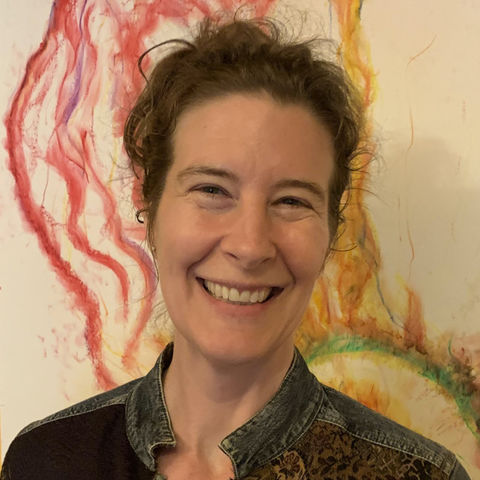
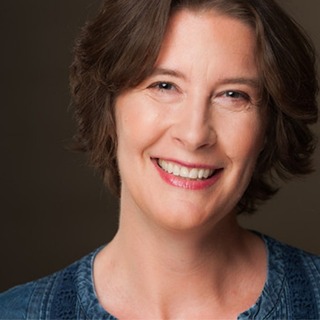
Julia Mossbridge is a scientist,
Technologist,
And change leader aiming to scale hope,
Unconditional love,
Future preparedness,
And human potential.
She's an affiliate professor at the University of San Diego,
The founder and research director at Mossbridge Institute,
A fellow at the Institute of Noetic Sciences,
And she co-founded the nonprofit TILT,
The Institute for Love and Time.
Julia,
It is such a great pleasure to have you joining us today.
Welcome.
Welcome.
I love that you say that.
You're very inclusive.
I know you a lot through IONS and through working there and being one of your science team and then a fellow,
And you're always very inclusive and you're always very welcoming.
So thank you for that in the broader sense too.
Thank you so much,
Julia.
It's true.
We have worked quite a bit together and I know of all your incredible projects that you've been working on.
And I'd love to hear about your most recent project,
The Time Machine.
Sure.
It's probably the most recent project to get out there in the world.
There's always one that I'm thinking of that's on the cusp of getting out there,
But this one actually got out there and is doing some good,
And I'm super excited about it.
And we're actually growing it at TILT and I'll tell you what it is.
So Time Machine,
So first of all,
It's a technological tool and it's actually very simple.
It's based on the idea of time travel narratives.
So this is the idea,
And actually a therapeutic intervention,
So not just an idea,
That by putting yourself in the position of imagining that you can travel through time and connect with your past and your future selves,
That you can actually feel better about things that have happened to you that have been hard on you.
You could actually forgive yourself for things that you've done that you recognize later weren't the right thing or didn't fit in with what you wanted for yourself.
And you can connect with,
You can imagine at least,
Connecting with a future version of yourself who can give you wisdom.
Our future selves are definitely older and wiser than we are,
Even if it's only five minutes from now.
And so there's this sense that the older you are,
The wiser you are.
And so,
Hey,
Come share that wisdom with me.
And so these kind of time travel interventions are popular,
Especially with people who have been through,
Popular is the wrong word because I'm about to talk about trauma.
Trauma is not a popular thing,
But it's a common thing.
But these kind of interventions are popular among therapists who know about them to work with people who have childhood and adult trauma.
So people who have PTSD or any kind of traumatic experience that's still living with them and that they feel is sort of blocking them from moving forward.
And that could be from military,
That could be from child abuse or neglect,
Or it could be from just a traumatic experience that happened in your adulthood.
And I guess there's other options,
But those are the ones I think it could be intergenerational.
It could be past life.
That's one of the things that I think would be interesting to think about.
But in any case,
The trauma lives in the body.
And one way to imagine connecting with it is to give yourself a perspective of perspective of yourself through time.
And this is the time travel narrative approach.
And I've read about that.
And because it wasn't just academic,
Because I had my own childhood trauma that I medded,
I guess,
Intuitively this way by connecting when I was a child with an older version of myself.
And then as an adult,
Connecting with my younger version of myself and telling myself it would be okay.
Because of that,
I knew it was very powerful.
So I had sort of my personal experience and I had the academic papers on this.
And I thought this needs to be scaled.
This is powerful stuff that people don't know about it because it's this one-on-one intervention with a therapist,
Or it's a group therapy intervention,
But people need to be able to do this out in the world.
The cool thing about it is it's also self-guided.
So like if you're with a therapist and they're saying,
Now I want you to go back in time and connect with the younger version of yourself,
The therapist is guiding that.
What we've done with Time Machine is we help you learn to do that.
So we have no idea actually what people are saying to themselves,
Because they're recording messages of themselves talking to themselves,
Giving themselves encouragement,
Telling themselves where they hope that they will be,
Talking to themselves about things they hope they could forgive in themselves.
None of that stuff do we listen to or have access to.
So this is a personal relationship they're having with themselves over time using this tool.
And that's part of why I'm really excited about it is that it doesn't require someone else to trust.
And there's a whole generation of people,
I don't know if you saw the CDC announcement today,
There's a whole generation of people coming up who are going to have less trust than ever because of abuse,
Of assault,
Of neglect,
Of violence.
And so being able to learn to trust yourself is the first step towards being able to heal these wounds and to trust other people.
And so I'm very interested in that.
The other pieces of the tool do things like help you make your own meditations that you can listen to.
And then the community piece of the tool is called the Community Garden.
I love this,
Where you can actually plant little seeds of hopes that you hope can bloom.
And then people in the community can water them.
And I love this because there's no liking,
There's no commenting,
There's no,
I'm only going to water this one,
But not this other one.
Everything gets watered.
Everything grows.
Probably one of my favorite pieces of that.
So the tool has been tested in a pilot study with 96 folks,
Some people who are going through addiction recovery,
Some people with just really difficult trauma in their lives,
Some people who didn't have trauma or not as much trauma.
And what we found is the people who had trauma were more likely to improve.
However,
They started at a lower level of overall well-being,
Which you would expect,
Right?
Which kind of tells us that we're measuring things correctly.
But they improved during the 26 days of the study by using the tool to the same level of well-being,
Which was an improved level of well-being,
As people who didn't have that trauma.
So basically,
This is difficult to do with this population of people who've had trauma,
To get them to get to a regular level.
And they did that,
And they improved some.
So I'm excited about the future potential of this.
Can you tell?
That's amazing,
Julia.
And it brings in such incredible concepts,
Right?
So especially in the West,
We have this view that time only moves in one direction,
In a forward direction.
And so you bring this idea that time is actually fluid,
And we can use it for healing.
Can you talk to that dissonance,
If you will,
About time as linear versus time being stoic?
Yeah.
You know,
The idea of time being fluid and sort of your life as a whole,
Kind of like laid out before you,
Kind of like the Akashic records or something that's fairly holistic like that in a mystical sense,
That idea is an old idea.
That's an ancient idea.
That's an indigenous idea.
That's an ancient Greek idea.
This is the stuff of which we've mostly built our culture.
Then we learned this idea of forward causality only.
And it sort of makes sense,
Right?
We go,
Well,
Actually,
You know,
It is kind of weird that everyone starts as a baby and dies older,
And they look different,
And you don't go in the other direction.
You know,
Like that does seem to be happening.
So that is a big explanatory piece that science,
Western science brought on,
Saying,
You know,
That wasn't just Western science.
Like even before that,
There was this noticing of like,
Yes,
There's this fluidity,
And there does seem to be a certain number,
A certain process,
Specifically the aging process that causes a number of changes that go in this direction.
And sort of with our big excitement at explaining that,
It's like we left off the,
Threw out the baby with the bathwater,
And left off the recognition that human experience is not like that.
Like day-to-day human experience,
Mystical human experience.
Even when you,
And I can travel faster than the speed of light and imagine when I was two-year-old right now,
Right?
And that's just non-linear.
So then it comes to,
Well,
People say,
What is real?
You know,
The non-linearity,
Well,
That's your mind,
But that's not real.
And that's where we get into the split of what is real.
Can what's in your mind be real,
Or does it have to be something that's not in your mind?
And if it's something that's not in your mind,
You're kind of in trouble because everything that's outside of your mind is inferred by your mind.
So you kind of don't get to do that.
So that's where we kind of are now,
I would say.
The starting to recognize,
Especially in physics circles and the philosophy of physics circles,
That there's this mental component to time,
An experiential component to time.
There's a learned component to time.
There's our as we experience it,
But forget we experience it that way component to time.
So there's these different components to time.
And then there's this physical component of time,
Which is definitely not one direction.
So in physics,
Definitely time is going in both directions.
So the real question becomes how did we turn the physical reality of symmetric time into an asymmetric unidirectional story?
Because that's where we lose contact with what's real.
That's where we lose contact,
Not with all of what's real.
There is some kind of direction to our experience,
As I said before,
But that's where we lose contact with some of the basic foundations of who we are.
And there's something powerful that I see in people when they get into contact with all these selves.
It's like,
All of a sudden,
You don't have to have everything here and now.
If you're not happy right now,
You could still draw on a part of the time when you were happy or imagine a time when you will be happy,
And that can give you strength.
So you're no longer this sort of shell of existence a slice,
A very,
Very thin slice of the moment.
So it's said,
Well,
Some people will say,
Well,
Aren't you supposed to be in the present?
They said,
Yes,
The only way to access these sort of past and future selves is to be absolutely present.
That is how you do it,
Ironically,
But it expands and strengthens you so you could kind of handle anything.
I mean,
You don't just have to rely upon this right now.
You get to rely on the self that got a lot of sleep last night or the self that felt really good after that particular interaction or that amazing dream or whatever it is.
So much richness at your disposal.
It's kind of unsurprising that we're not taught about this because everyone would just be walking around going,
I feel amazing.
So it's powerful.
It is quite powerful.
It's like this multi-dimensional layering of our beingness that is marked in time in a certain model,
But we can actually access it.
That's right.
That's right,
Because we don't have to be in that model.
We can step out of that model and say,
There it is.
And so you mentioned trauma,
Which so many people are faced with the symptoms of traumatic experiences at some point or another in our lives.
And many people would say that all humans have post-traumatic stress disorder on some level or another.
So can you speak to trauma and this idea of being trauma aware and how,
Well,
You already talked about how you use this technology to help heal that.
Yeah.
I think I will talk about why I think it works with that particular group more than others.
But what is trauma aware?
So trauma aware means as a grownup,
And this is something really for adults because I think it's harder for children.
I think this is not something you would teach kids.
I think it's better to teach adults who are working with other adults and working with kids.
The recognition that something like 74% of the adults in the world have experienced trauma in their lives,
Something like 83% of Americans have.
So the recognition that trauma is pervasive.
So the chances are that the person you're interacting with has had a traumatic experience over which they have not recovered.
The chances of that are high.
So just being aware of that is very helpful.
It starts to kick in the compassion.
It starts to kick in the thoughtfulness of what you do and don't say or how you are with your energy.
And it starts to kick in the recognition of connection and belonging and the offering of unconditional love.
So it starts to help you realize how important it is that for the most part what you are offering is unconditional love because the expectation that the other person is going to be at a level at or have the capacity of which you kind of hope they aspire to or to which you hope they aspire.
Let's be more grammatical.
Sorry.
Sometimes I hear my internal grammar nerd complaining.
Anyway,
So the chances of them being able to get to where you want them to be without you being aware of trauma as a likely mitigating factor in their life,
Those chances are small.
And so to work with people and to connect with people in a real way where what you're offering is unconditional love by connecting with unconditional love,
Being aware of your own trauma is also very helpful.
So it's likely that you had trauma.
And just to tell a quick story about this,
I knew when I was,
And I went into therapy in my teens because I already knew I had trauma,
I was working through it.
As an adult,
I thought I had handled it.
And I was like,
Yeah,
That's the thing I worked through when I went to therapy as a teenager.
I'm done with that.
And because I interacted with a few,
Very few people who were trauma aware and who were not invested in me being over the trauma,
I learned,
Oh,
Wow,
That trauma was really still there.
And I really did need to heal it,
Which is a lifelong process,
But it can get going,
Especially when you're interacting with someone who has love for you and is trauma aware.
So how I think that the tool works is it's a witness.
It's assumption is everyone using it has trauma.
Frankly,
It's a pretty good assumption.
Everyone using it has trauma.
Generally,
The people who don't have trauma don't understand why anyone would use this.
So when we talk to people without trauma,
They're like,
Wait,
You talk to yourself?
Like,
Can't I just write myself a note,
Like pick up the cheese?
And I'm like,
Okay,
Different.
So those who do feel like they have something to heal are drawn to it.
So that's the first thing.
The second thing is it's asking you every day,
Every time you log in,
How are you feeling right now?
How is your body?
How is your mind?
How is your spirit?
How is your hope for the future?
So it's flagging those things as important.
And then the third thing I think it does,
This is from focus groups with people who did the pilot study.
They actually wanted us to create the focus group.
We didn't have a final focus group,
But to create this tool,
I think you asked this question earlier,
I didn't answer it very well.
We engaged the community of people and we asked them to be our design partners.
And we said,
This tool is for you,
Tell us what to make better.
So they engaged in several studies with us.
And after the first study,
The ones who really loved the tool,
They called essentially a focus group.
And they said,
We know we're not getting paid,
We're no longer your participants,
But we want to tell you about the tool.
And what they told us is that the most important things were the simplest.
Like the fact that it said,
See if you can listen to yourself with love when you were listening to your message to yourself the next day.
So the time machine part comes,
You record a message and then it says,
Great,
See you tomorrow.
And then the next day you get an email that says,
Hey,
You got a message from your time machine.
And the funny thing is almost everyone forgets what the message was.
You literally are like,
Oh,
That's what I said.
And so it challenges you to listen to yourself with love,
To hear your voice,
Which is the core of who we are.
I mean,
You could tell so much about a person from their voice,
Literally physically at the core of your body.
And this challenge to try to love yourself as you listen is transformative.
And I think that's what really helps.
So it's like you're creating a witness in yourself over time.
That's so incredibly powerful.
And you know,
What came to me when you were talking,
You know,
In terms of healing trauma,
We're essentially going backwards to a traumatic event,
Right?
But then there's also this connection between envisioning what we want our future to look like,
Which is connected to,
You know,
Visualization and all these processes that people do to manifest what they want in their life.
Can you speak to that a little bit?
Yeah.
So you're right.
We've been focusing on the past and healing the past and sort of forgiving and feeling love towards the past and learning what you can from the past.
The process is the same for the future,
But sort of backwards.
So for the past,
You're the loving future self who says,
You know what?
That was horrible.
I love you.
You know,
And I forgive you if you feel like you have a guilty piece there.
You kind of have to do that.
This is funny.
I'm going to say this because I'm so into time symmetry.
But what I've noticed is it's very helpful for people to do that part before they do the getting the wisdom and love from the future part.
And the reason why is because what you learn is that your future self can be loving.
Your future self can be wise.
So you begin to trust your future self because when you go to the past,
You are that future self and you are learning to be loving and wise.
So now that you're learning that,
Or at least you feel that's true,
And you can trust yourself,
Now your mental image of your future self is kinder,
Wiser,
Has good stuff to tell you.
And so it's more of a receiving on this direction.
So I know there's a lot of focus on attention and I want this to happen and I want that to happen.
And what always comes up when people connect with their future self is like,
You know,
Like,
Hey,
I got this,
You know,
You can relax.
I love you.
Like,
It's more of a receiving.
It's more of a receiving wisdom sometimes,
But often just receiving the love of like,
You're going to make it.
Like the fact that I had a friend who did this meditation when he was in a situation with his car where he didn't know if he was going to make it in terms of living.
And he just said,
All right,
Checking in with my future self.
Can I see myself alive tomorrow?
Yes.
Totally.
It was easy to see.
He's like,
I totally relaxed him.
Ah,
Okay.
So I think we often think we have to cause things from the present moment,
But I think often the present moment is really where the witnessing happens and the action is happening sort of in that loop between the past and the present.
So it's the action and the connection.
So it's kind of counterintuitive.
You know,
You've mentioned love and unconditional love quite a few times.
Can you share a little bit about the role that you think unconditional love plays?
And I know you've done a bunch of research on this.
Yeah.
The role it plays is all of it.
I think it's not subtle.
I think it's quite dominant.
I think that there's a natural force called,
That is reasonably called unconditional love or universal love.
And when I say natural force,
I mean like a physical force that eventually we will understand in a scientific way.
It is different from,
But related to the human emotion of love.
So when someone feels that they have unconditional love,
Which I guess I've defined in scientific circles and with my team as essentially loving everything as it is without a need to change it.
That's the shorthand version.
The longhand version is a little too long,
But the shorthand version of loving everything as it is without anything needed to be fixed or changed.
That is a human experience.
So that's a feeling,
That's a motivation,
That's a feeling.
So that's all normal psychology stuff.
But I think we get that human experience by accessing something that is not normal psychology stuff.
That is this force that I want to call unconditional love or universal love or something like agape or something like that.
So it's like when we come in contact with the sun,
We feel warm and we'd like to feel warm.
So we come in contact with the sun.
So when we come in contact with unconditional love,
We feel,
Oh,
I get it.
Nothing needs to be fixed.
I love everything as it is.
It's this expansive unity experience.
So we want to get in touch with that.
We want to access that thing.
And so it's the prime causer of healing.
I think it is the cause of healing,
Of real healing,
Of real healing of human beings.
And at the same time,
We don't cause it.
So I think there's this surrender piece of the sun is up.
I'm so happy that I happen to be out in the sun.
Thank you,
God.
I mean,
There's a piece of surrender to it because we are not the causers,
Although we could have the intention,
And I think this is key,
To access it.
So if you have the intention to access it,
It makes it,
It's like if you have the intention to go out in the sun,
It's much more likely you'll get there.
Now it's possible on the way out the door,
You'll trip and like,
Oh,
I never made it out the door because I broke my leg or whatever horribly,
Right?
But it's also very likely that if you have the intention to walk out into the sun and you have capability to do that,
You have a wheelchair,
You've got your legs,
Whatever it is that you can get out there.
So it's the intention that's going to make your chances of getting out there,
Of getting in contact with unconditional love,
Of getting to that place of the actual cause of healing,
That is really key.
And I know you love intention,
And you are one of the people who convinced me through your teaching that intention is something else.
It's not just this wanting,
It's not just this like human egoic will,
That it's something else entirely.
It's almost like,
I almost think of this as a loop,
Like unconditional love places intention in us to connect with unconditional love,
To place the intention within us to connect with unconditional love,
That kind of thing.
Thank you,
Julia.
What would you say to someone who was doubtful or was like,
Felt not deserving?
Or,
You know,
I've never felt unconditional love,
Or I don't really believe that that's true.
What would you say to someone like that,
Who was kind of beginning on a path of healing?
I don't think I would use words,
Because you can't really convince someone to have an experience.
I think I would want to sit with them and be in their presence and connect with unconditional love in their presence,
So that they could feel it too,
Maybe.
That's the only way I know how to deal with that.
I think words don't work there.
You can't convince someone of it.
No,
And even if you did,
It wouldn't do any good.
Like,
Okay,
So what if they go,
Okay,
Now I'm convinced there's unconditional love,
But I don't know how to get it.
I'm like,
Okay.
It's like useless.
You know,
It's not a human activity.
It's just like grace,
You know,
That's not instigated by us.
It's accepted and celebrated.
So this wonderful tool that you've created,
Where can people use it?
How does it work?
Oh,
Yeah.
So,
Because we wanted to work with the team,
So I've said all this when I'm talking about this,
Because I'm sort of in my cognition thinking about what do I want to say about this tool,
Et cetera.
And it sounds like I just made up this tool,
But actually it's this team of amazing people.
Not only the team at Tilt,
Amber Williams,
Who is our UX,
UI lead and project manager for the tool.
Karee Johnson,
Who is our lead developer and just total whiz-bang coder.
Polly Washburn,
Another project manager.
It's a backup coding database staff.
Thomas Skowron,
Ralph Myatt.
So there's a whole team of fantastic people who are all different colors and sizes and shapes and LGBTQ statuses.
And it's fantastic.
So we have,
Partly because that team pushed me to see the value of this tool is why it's actually going into the world.
But also the team said,
Who do we want to have use this first?
And we really wanted people who had been incarcerated or were incarcerated currently to be able to use it.
But what we found out is that almost most jails and prisons,
That's just not even possible.
Technology,
You're not going to be able to get that to happen.
So what we learned is the best thing to do is to put it on a website so that people who are incarcerated in like light security jails can potentially go to the website and use it with guidance.
So we,
Amber Williams created this focus group for folks at Cook County Jail in Chicago,
Who,
14 men,
Who were really excited about this program.
It was a six weeks program.
They requested that it become an eight week program.
Some of the folks who were working at the jail decided they wanted to be involved.
So she taught them all about mental time travel,
About psychic abilities,
About remote viewing,
Telepathy,
Healing.
It was really powerful.
And that's because of this amazing team.
And that means that the people who have used the tool use it at the same place where you can use it.
So everyone who's using the tool is on the same place,
Which is at timemachine.
Love.
So you can go to timemachine.
Love and you'll be on the same platform as now.
We have active duty military people,
People,
Incarcerated people,
Folks who don't fit into any of those categories.
People who are overcoming addictions of food,
Sex,
Opiates,
All these things,
All on the same platform.
So you can actually listen to other people's encouraging messages to themselves in the community garden.
These are people who have chosen to put their hopes in the community garden.
And I find that an incredibly inspiring thing to do,
Just to hear what people say.
Some people,
It's like,
I'm going to make rent for March.
I'm going to make it.
And other people,
It's like,
My class that I'm teaching and bouquets is going to be fantastic.
And then someone else is like,
I hope you're going to make it.
And I'm like,
Someone else is like,
I hope to get out of jail soon.
So it's pretty neat.
That's incredible.
You know,
What do you think,
Just hearing about these stories is so inspiring.
What do you think are the greatest gifts of healing trauma and doing this type of work?
The first gift I think is that if you're healing your own trauma,
You recognize the powerful impact that has on the people in your life.
It's like you're giving a gift to them by taking care of yourself.
And it's very touching.
It's hard to talk about without crying.
It's really touching how powerful it is when people realize,
Wait,
When I love myself,
All of a sudden I can love all these other people.
It's the most powerful force.
So I would say that's the greatest one that comes up.
And then the other one that comes up is the capacity to know that anything that is inside of someone else is likely inside of you.
So anything that you judge in someone else,
As you look at yourself and you have the strength that it takes to look at yourself over time and the capacity to know like,
Hey,
That wasn't a great moment,
But there have been good moments.
And seeing yourself in that more realistic way,
Because you're stronger and you have all those moments to look at,
It allows you to feel more connected to other people and to work with other people in a more compassionate way.
Because now you see,
Oh,
That thing that I'm judging in them totally wasn't me last Thursday.
And it may be even next week.
That's beautiful.
You know,
You've shared so many incredible things with us today,
Julia.
What do you think is the most empowering take home message that you can leave with our audience about health and healing?
You are loved.
Even if you don't go out into the sun,
The sun is still there.
So you always have the chance to feel it.
And that if you can have the intention to feel it pretty quickly,
You're going to feel it.
Beautiful.
What a wonderful invitation and such incredible wise words to support us on our path of healing.
Thank you so much for sharing with us today and audience.
Thank you for listening.
Thank you.