Hello,
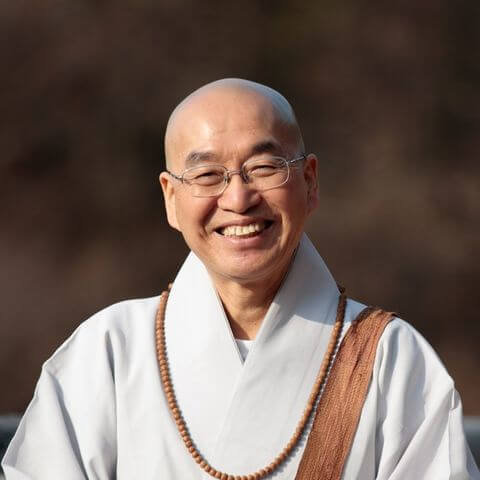
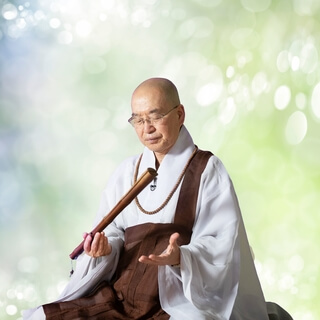
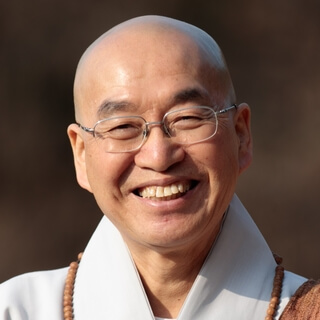
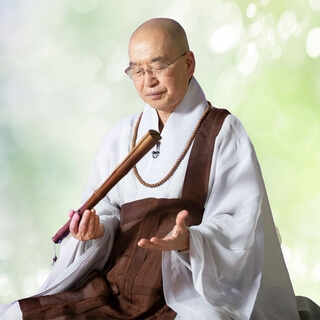
I'm Seo Iljeulg-Sal First time I've been Knight Harbor.
The It's about 80-87 degrees Fahrenheit.
So it was quite hot working outside today.
As if the late spring is giving way to early summer.
As always,
We'll start today responding to a couple of questions from the non-Korean speakers.
First question.
Does meditation have the ability to improve our lives?
How?
Do we meditate in order to improve our lives?
Or is there another reason to do it?
So it's hard for me to understand exactly what you mean by improve.
So what are we saying when we say our lives improves?
Are you saying is improving means more wealth,
Higher status,
More enjoyment in life?
That's why it's a little bit uncertain what you mean by improve.
It's hard to use the term improve to explain what meditation does.
So from an external perspective,
When you train the lens on our lives,
Obviously there are differences between those who have more wealth,
Higher status,
More things.
But in meditation,
None of these really matter that much.
So if you look at somebody's state of mind,
Somebody's state of mind could be anxious,
Unstable,
Always worrying,
Or maybe raging.
So basically unstable all for all.
But then again,
There are other people whose mind does not tend towards the negative,
But it's very stable and very positive.
For example,
You're waiting for a bus and the bus is not coming.
And then you're waiting for a bus and the bus is not coming.
Different people may react differently.
Some may react with calm,
With weightfulness.
Others may react with anxiety.
And others may be angry and complain vociferously.
Yet others might actually come up with a different way of getting to the destination,
Take another bus,
Or find some other transportation without getting angry.
And even if things don't work out your way.
And there are people who despair,
Who get angry,
Who complain.
Then there are others who investigate the causes of the failure and try to find some other better options to get it done,
Ask people,
And try and try again.
And if you have money,
Then you have the ability to help others,
So that's great.
If you don't have money,
Then you have the option to live your life more simply.
If you have money,
Then you have the option to live your life more simply.
So you're not creating a set expectation of what life should be and judge your life against that standard and complain if it doesn't actually meet that standard that you have set for yourself?
If you have money,
Then you have the option to live your life more simply.
It's a matter of adapting to what's been given.
It's akin to taking a piece of clothing off when it's hot or putting something back on when it's cold.
And if it's something that you need,
You try to earn the money to get it or try to produce it yourself.
At least attempt and try to get something that you like.
So in all these different processes,
The focus should be on your mind not reacting and adjusting to these processes negatively.
If you improve can be defined by these terms,
Then I guess meditation can be said to improve your life.
But if you try to define improve by the external metrics by which the world defines a good life in terms of wealth,
Status,
Whatnot,
Meditation has very little to do with those.
But what we can say about meditation is a way to transition the negative tendencies of your mind to more positive tendencies and to transform the anxieties and nervousness into calm and peace.
And also allow you to be more resilient in adapting to new environment.
And if there is something that you need,
Allow you to be more positive in managing the change in operating this change management for yourself so that you are more positive and more investigative and you explore things positively.
And if this is what you mean by improve,
Yes,
Then meditation does improve your life.
Second question.
I have consistently done meditation 30 minutes nearly every day since joining the Sunday evening meditation some weeks back.
I have noticed a kind of internal enthusiasm,
An exploration arising.
So I know that there are some discomforts of one kind or another that happens.
It's like a good friend,
A dear friend asking,
Why is this?
What is this?
Looks like you're in a good state.
But even so,
You don't have to imbue it with any meaning.
If this is what we decide to do,
It's just a matter of doing it.
And if it doesn't work out the first time,
Then try again.
It's just doing it as is.
Third question.
So I went through several quite powerful emotional experiences and maybe realized that how much I do not live in the moment or how difficult it is to live in the now.
I'm just hoping that with more practice and time that I might be get out of this kind of weird state I'm in.
This will happen if you continue.
But if you set this as an end state goal that you have to work towards,
Then if you fail to reach it,
Then you might create anxiety within yourself because you haven't achieved your goal.
For example,
Let's say we want to reach a destination 10 kilometers away.
But you can't go there in a moment.
You have to take one step at a time.
But if your desire to get there is too strong,
Then after 30 minutes,
You're asking yourself how much longer.
After an hour,
You're asking yourself how much longer.
Then you start questioning whether you can get there at all.
So you create this type of distraction to get to the destination 10 kilometers away.
It takes 2 to 3 hours.
And if your body is not fully healthy,
It might take longer.
So it's a matter of just taking that next step.
If you want to go there faster,
Take the next step a little faster.
Then you might tire yourself out a little more.
Then if you slow down,
Then you'll just get there a little slower,
A little later.
If you're not fully healthy,
Then you can rest.
That means you'll just get there a little bit later.
So it's a matter of setting some performance standards to how fast you need to get there.
You just decided to get there.
Then you're just doing it.
If you want to get there faster,
Although it might tire you a little more,
Just hurry a little bit.
And if you're too tired,
Then you may want to slow your steps.
That's all there is.
Next.
Fourth question.
Is it better not to meditate right after waking up?
Is it better to meditate after going to the bathroom or whatnot?
The reason why I'm asking this question is that I don't sleep well.
I wake up at night and fall asleep until the video has already started.
This is not that important.
Say you woke up in the morning.
Then you don't need to go to the bathroom.
And your eyes are wide awake.
And you feel good.
Then you can start meditating right away,
Just sit up straight.
But say you want to go to the restaurant after waking up.
Then you just meditate after you go.
And if you need to wash your eyes,
Then go ahead,
Wash your face.
Then if your mind is still cloudy after sleep,
Then maybe you want to take a quick walk and make sure that you're wide awake before starting meditation.
Then you wake up a little bit and say,
Oh,
The video has started already.
Then you can start meditating.
But once you have that,
If you feel this anxiety arising because you're late,
Meditation is all about recognizing and seeing this anxiety as it arises.
That's meditation.
And to recognize this anxiety and make it dissipate so you restore calm to yourself.
And if you still need to go restroom,
Just go ahead and start a little late.
But if you don't need to go,
Although you woke up a little late,
Just go ahead and start meditating right then and there.
What I'm saying is that circumstances are different for each person,
Each time,
Each instance.
So meditation is maintaining a calmness to your mind despite the circumstances that you might encounter.
Now let us begin.
Strain your posture,
Lotus position,
Strain out your back as well as your head,
Both hands in front of you or on your knees.
Allow your eyes to close restfully.
Last your body and mind.
And if your body is tense or you are anxious,
Recognize that they are so.
Focus your attention at the edge of your nose and sense the breath coming in and leaving.
Recognize the long breath if your breath is long.
And recognize that your breath is quick or your breath is slow and gentle.
Just recognize the state of your breath.
And as you try to do so,
You'll encounter distractions.
You lose your focus to that sound from the outside.
But do not allow yourself to be distracted no matter what kind of noise you hear.
And maintain your focus on the edge of your nose on your breath.
And also maintain your breath in spite of all the different sensations in your body whether it's your leg hurting or some strong emotions arising.
Just maintain the focus on your breath.
And memories of the past might come unbidden or great plans of the future might also come streaming.
Just let them be,
But don't lose focus on your breath.
Just a matter of recognizing the breath.
But if you lose focus on your breath,
Then realize that you have lost focus.
And regain that focus.
The only thing that matters is to be consistent and constant.
Do not try to perform well.
And do not get disappointed when you don't perform well.
And do not try to tense up or be anxious.
But do not try to be lackadaisical or be lazy and give up.
Just as a cow grazing in the grass.
Slowly relax in comfort by consistently and constantly.
And rest for the next 30 minutes.
How was it?
Now that you have done it.
So I opened my windows because it was hot outside and the room was filled with sounds of frogs croaking.
Please put your comments on your experiences of meditation in the chat window.
Say I hear the frogs croaking.
It's a reminder of my youth.
Inside of my head feels refreshed and relaxed.
I really enjoy the sound of the frogs.
I guess you can hear the sound of the frogs as well.
How do you deal with the sensation of itching all over your body or really tickling inside your ears during meditation?
Whether trying to endure during the itchiness,
Is that me just being distracted or am I just focusing on the distraction itself on the itch?
I want to know the difference between enduring and just observing and recognizing.
So if you endure something that's uncomfortable,
Then your body and mind tense up.
That leads to stress.
So that's why you have to allow yourself just to feel the sensation of the itchiness.
Do not scratch it with your hands.
Do not endure through it.
Just observe and look at the sensation of the itchiness.
And do not lose your focus to that sensation.
You hear the sound of the frogs outside.
But my mind is not with the frogs.
My mind is still focused on the nose as the breath goes in and out.
Say you itch on your side or inside your ear.
Despite all that,
You're just focused on the edge of your nose,
Knowing the breath,
Being mindful to the breath.
That's all there is.
Just do that.
When we usually lose our focus on the breath,
We allow our mind to be interested to some external noise.
When we lose our focus to some pain from your legs,
Some itchiness from your side,
And we try to endure through it,
And thereby losing our focus on the breath.
Or we become sleepy,
And our mind becomes cloudy and dull,
And thereby lose our focus.
Sometimes we're distracted by past memories.
Or some brilliant idea comes up and you focus on that,
Investigating that idea,
And lose your focus.
So whatever noise you hear,
Whatever sensation,
Experience,
Whatever thoughts stream through your head,
Just let them be.
I am now singularly focused on the breath at the edge of my nose,
And nothing else is meaningful to me.
And despite all this,
You may lose your focus.
Just all you have to do is regain that focus.
In the midst of calm and peace,
And just try consistently and constantly.
In a way,
It's very simple.
If you don't do it the first time,
Then you practice and train.
Then you see your mind becoming calm.
Your focus becomes stronger.
And your mindfulness becomes clear.
And once you have practiced,
Even in the midst of conversations with other people,
Whatever sound or whatever sights you experience,
Then you will be clearly awake to the sensations or to the reactions of your own mind.
That allows you to control your emotions and not be led by your emotions.
You're not engaged in a tug of war with your emotions and your being tense and stressed out about it.
You are just in a state of calm and peace,
Recognizing as different emotions arise.
Let's go back to the comments.
I just realized how difficult it is to maintain my focus on my breath.
It was a fantastic experience to recognize that once I am mindful to the sensation of my pain in my legs,
That the pain started to disappear.
Now that we are on our fourth week,
It's becoming easier.
I wish these online meditation sessions could go on.
So a lot of you have uploaded your comments to the chat window.
We'll do this again next week.
I wish all of you a good night or a good day.
In the US,
It's the morning.
Thank you,
Jason.
Thank you all.