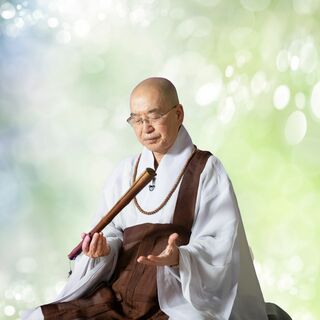
There seem to be two stages in meditation.
The first was sitting in half lotus and straightening the body and spine,
And a heightened attention to keeping focus on the breath.
Then awareness or curiosity of the subtle start of a thought process and attention moving away from the breath.
Here curiosity seemed to help coming back to the breath more quickly.
At the second stage,
Resuming the half lotus position,
The mind is now in a state of full awareness.
The mind is now in a state of full awareness.
The mind is now in a state of full awareness.
The mind is now in a state of full awareness.
The mind is now in a state of full awareness.
At the second stage,
Resuming the half lotus position,
Attention seemed lighter,
I felt more at ease and less concern over a thought process moving away from the breath.
I was all aware of this.
Still I had curiosity like,
Why is that?
A faint yet distinct awareness.
Is this the correct way?
Is the curiosity simply a thought too?
Or an obstacle?
Or something else?
I was not aware of the curiosity.
I was not aware of the curiosity.
I was not aware of the curiosity.
I was not aware of the curiosity.
I was not aware of the curiosity.
I was not aware of the curiosity.
I was not aware of the curiosity.
I was not aware of the curiosity.
I was not aware of the curiosity.
I was not aware of the curiosity.
I was not aware of the curiosity.
I was not aware of the curiosity.
I was not aware of the curiosity.
I was not aware of the curiosity.
So what you describe is an actual very precise,
Relatively precise experience that we go through during meditation.
But I want you to understand that this is your experience.
So I want you to understand that this is your experience.
I want you to understand that this is your experience.
I want you to understand that this is your experience.
So do not try to create some kind of an artificial taxonomy over your experience and try to generalize that this is how meditation goes.
So what you have done,
You observe yourself being mindful of the breath,
Losing the mindfulness and refocusing on the breath,
And kind of experience and describe what you went through,
Through that process.
And through your observation,
You've been asking yourself,
Why am I mindful here,
But how did I lose my focus there?
How did I regain my breath?
And these are the nature of your observation,
How you describe them.
So I can't say that you are way off base in your description.
However,
The only thing that you should really focus on is focusing on the breath.
If you lose the focus,
Just refocusing on the breath.
So all the analytics that goes behind,
All the analysis that you are doing on the whys of yes or no,
Or regain the breath or not,
Are just mere thoughts.
Of course,
You can't think your way to no thoughts.
However,
Any thoughts that you create out of actual conscious intention are not the desired state of meditation.
So,
If you lose the focus,
Do it again.
If you regain the focus,
Do it again.
Don't try to do too much,
Don't do research,
Don't look for reasons why you can't do it.
Just focus on the breath,
And if you lose the focus,
Do it again.
If you regain the focus,
Do it again.
It's inevitable that you will have thoughts,
But don't let them take you away.
Don't put them into meaning.
Don't even think about them.
So,
In English,
We say,
Thinking stops.
We express it like this.
We also avoid the intention of stopping.
We should let go of any intention.
Whether you should do it or not,
Whether it works or not,
We should let go of all these intentions,
But we should realize that if we lose the focus,
We should do it again.
So,
All you have to do is just to not try to just maintain the awareness without the effort.
Just focus on the breath,
And you can't really stop these random thoughts from occurring,
But don't try to analyze or diagnose yourself and try to find the causes of certain activities,
Certain successes or failures,
All that.
You should let go.
So,
In English,
I heard some describe this process as thinking stops,
Stop all thinking.
However,
Even the intent to stop thinking,
You should let go,
And the only thing is basically maintain awareness of the breath without an effort and just without any intent behind it.
Because I know we're going to engage meditation soon,
But any sense coming out of it that you had a good session or bad session,
Any kind of results-oriented evaluation of your meditation session is actually far from the intent of the meditation session.
So,
You should let go of the intention of stopping thinking.
You should let go of the intention of stopping thinking.
So,
You could be tired today and you may doze off.
And you may be distracted by some thoughts.
But you should be aware of them and let go of them.
And you should let go of the intention of stopping thinking.
And you should let go of the intention of stopping thinking.
And you may be distracted by some thoughts.
But you are mindful of these and you regain your breath.
You may have been distracted for a long time or you may have been mindful and focused for a long time.
These things just happen.
And that's just a representation of your current state.
So,
Yesterday during meditation,
You might have been distracted for a lesser time.
But today you were distracted for longer and you had a harder time regaining the focus.
That's just your state today.
So,
We are letting go of the whole paradigm of setting goals and performance and evaluation.
Determine whether you did well or not.
And we are letting go of the whole paradigm of setting goals and performance and evaluation.
And we are letting go of the whole paradigm of setting goals and performance and evaluation.
And we are letting go of the whole paradigm of setting goals and performance and evaluation.
Because all this entail some kind of intent and effort into a certain direction.
We are letting all this go.
So,
We are letting go of all the intent and the associated effort.
And we are just in a restful state,
Being aware of the breath.
So,
Coming out of session,
You should feel refreshed and rested.