Welcome to episode 85 of Bite-Sized Blessings.
This week,
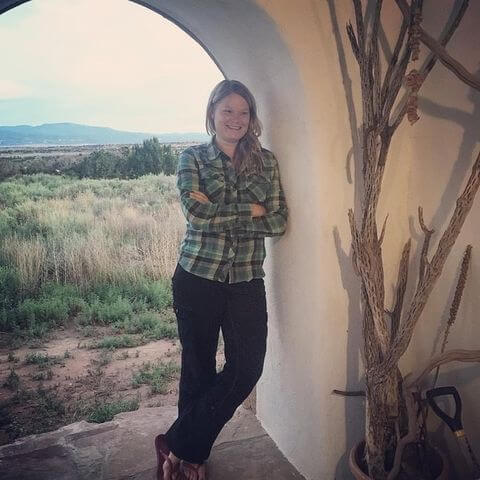
I interview Jen Peer Rich.
I interview a lot of guests who are resilient,
And that's resilient with a capital R.
Jen's resilience is at least 10 stories tall,
And she's absolute proof that humans are strong enough,
Brave enough,
And determined enough to rise up above all the trauma in their pasts.
Jen's a remarkable human being.
On her website,
She describes herself as a metamodern humanimal,
Reverend,
Artist,
Autoethnographer,
Scholar,
Author,
And speaker on a variety of research interests.
She has a BA from Athens State University and an MA in transpersonal psychology,
Ecopsychology,
From Naropa University.
She's also the author of three books,
So Be It,
Friends in Presence,
And the forthcoming book,
Which I'm so excited about,
The Alchemy of Being a House,
A memoir of intergenerational transformation.
And Jen is all about transformation,
Transformation and resilience,
And her story is astonishing.
I'd been wanting to meet this glorious individual for months,
And finally we found some time to sit down and have a conversation.
Jen is the perfect example of a human being that inspires me every day.
I hope this conversation does the same for you,
Reminds you and convinces you that human beings can survive anything.
So now,
Episode 85 of Bite-Sized Blessings.
My father,
As I mentioned,
Was an alcoholic,
And he was drunk driving with my brother and I in the car.
And I was,
We were on the way to pick up my mom from work.
And I was not in a car seat,
I was just,
It was in a Volkswagen Bug,
So the seatbelt was just sort of wrapped around me on the front seat,
And we got into an accident,
And that's when they found the tumor.
Now,
Growing up,
My dad always,
He called me his miracle child,
And when he would get really drunk,
He'd say,
On the reason you're alive,
Because I'm an alcoholic.
If I wasn't an alcoholic,
You wouldn't be alive.
I am a scholar,
A researcher,
And a lifelong learner.
I am a wife of 14 children.
I am a teacher,
A teacher,
A teacher,
And I am a teacher.
I am a teacher.
I am a lifelong learner.
I am a wife of 14 years and a mom of an adopted child that I adopted when I was 19 and she was six,
From foster care.
We've been together for 30 years.
She lives with complex developmental disabilities,
And being her mom is the greatest gift of my life.
It's the best thing I've ever done.
It's probably the wildest thing I've ever done,
But it's definitely the best thing I've ever done,
Is being Francis' mom.
I am a transformative being,
And it took me a long time to understand and appreciate that about myself.
What does that mean?
I was born with cancer.
I was born with stage 3 neuroblastoma that was diagnosed when I was six months old.
And cancer is a transformative experience for anybody.
It's transformative in the body,
On the biological and physiological sense and what it does to the body,
In my case neuroblastoma is an immature nerve tissue that starts growing out of control.
In my case,
I had very experimental radiation in 1974 as an infant.
It was to most of my body.
It destroyed the cancer,
But it also destroyed my insides.
So that tension of transformation has really been with me on a cellular level since I was a baby.
And I've also been highly aware of my inner world because of that trauma,
And the inner world of other people have been very sensitive to how people feel and how I feel.
I don't know if I have used the word empathic,
But you have trauma early on in your life.
I think it predisposes you to a particular type of awareness of your inner world and the inner world of other people,
And that has made me even more aware of transformations.
I love transformation so much that before I became aware of being a transformative being,
I got a PhD in transformative studies.
That's how transformative my life has been and my work of understanding my life has been transformative.
And transformation is both ordinary,
If you look out into nature,
Everything is transforming,
Everything is changing.
It's a constant in the universe transformation,
But it's also miraculous.
The way I think you go from one form to another.
And I've tried to in my life really focus on my inner healing as an alchemist,
As one who studies transformation to apply that to my inner world and my own transformation as a person who has a lot of,
Who carries a lot of trauma and baggage of painful experiences.
How can I enter myself more deeply and be part of,
Participate in that transformative process within myself?
So,
Yeah,
Transformation is my jam.
It's what I do.
It's what I am.
And it's really great to affirm that and say,
Yes,
That that's who I am.
One of my favorite transformative practices,
Speaking of a lot of crying,
Which does come with transformation,
Is the calcination.
So within spiritual alchemy,
There are seven stages of spiritual alchemy.
And one of those stages is calcination.
And that is the process of going from a liquid to a solid.
So what I mean is when you cry and your tears are coming down,
The practice is not to wipe away the tears.
It's to allow layers and layers of the brine to develop and that transformation going from a liquid to a solid.
And almost like after you have layers and layers of tears and you haven't and they're dried and you tense your face,
You can feel it cracking.
And that is such a great metaphor for what happens within ourselves when we really need our pain without turning away,
Without wiping it away.
We walk into it.
And that is a for me,
I love crying and the practice of crying and letting that experiencing that alchemy for myself on a real practical level.
That's really beautiful.
It's they get like crunchy on your face.
Yeah.
You have a crunchy face.
Crunch face is the goal.
Yeah.
In my family,
We were not raised with any particular belief system.
We were highly encouraged to find our own path.
And my mom is very spiritual,
Not religious,
But her her well,
Maybe she is religious and her religion is earth and plants and animals and nature.
And she passed that to me,
She passed a real connection with with with nature as my spiritual practice,
And even today is probably one of the most spiritually connected people with nature that I know.
She's she's more kind of more animal than human and she prefers to stay in the company of plants and animals than be with people.
And that's a and that was a beautiful teaching early in my life.
And that continues.
My father was a brilliant man,
Truly a genius.
He was a spiritual seeker.
And he was really in his best in the heyday of New Age religion,
New Age spirituality of looking for seeking his self in a million different practices and workshops and all the things and I grew up watching that.
It was very curious to me the way he gave himself over to a lot of beliefs,
But he wasn't able to actually practice them in his own life in with us and his children.
He had a beautiful mind,
But he was not in relationship with his mind.
He didn't love his mind,
And it was ultimately alcoholism and hard drugs.
That was the pattern throughout my young childhood,
All the way through to his death that ultimately that ultimately killed him.
But he what he taught me was not only that I was past a beautiful mind like he was and it took me a long time to come into relationship with my mind,
But that loving my mind and being intimate with my mind is the path out of the out of the trajectory he took.
It's where he couldn't quite get those spiritual teachings right he couldn't quite get them.
He couldn't quite practice them in a way in which they stuck to him and so my life,
My spiritual practice in my spirituality is all about being in an inner relationship with myself.
I think my mom gave me a lot of capacity for insight and my dad gave me a brilliant mind where I could engage that insight.
And so it was a big loop of love with a lot of paradox and irony and complexity of parental relationships and parental gifts that came my way that I've had to unpack throughout my life.
I think that's really deep work,
Obviously.
I mean,
I think about,
You know how our parents affect us how they shape and they mold us when we're kids.
When we're little and we're still trying to figure the world out.
But then you add cancer to it,
And you add the radiation and you add all the healing that you had to do with that.
I'm also curious Have you ever done the work where you kind of enter into a conversation with that child that you were and talk to that child.
It's really interesting work.
I have done it,
You know,
Try to console that child and let them know that everything's going to be okay.
It's kind of like traveling back in time.
It's heartbreaking work.
It's intense work,
But it's very worth it.
Have you done that kind of work.
I have,
I practice a psychosynthesis in graduate school I learned psychosynthesis from my mentor,
Molly young brown and psychosynthesis you have what are called sub personalities,
And a lot of my inner work comes in connecting with these sub personalities and maybe Jenny.
I was a little bit of an incubator because they were afraid that the tumor was going to bust it was so big.
And what happened was they put me into this box,
And they put a sign on it that said Do Not Touch.
And that was the,
The resonant tone of most of my,
My life that I felt untouchable that I felt that baby,
Baby Jenny felt really abandoned.
Robert Anton Wilson has a quote that says the abandoned infant cry is not fear it's rage.
And I think I carried that tone of rage through me through,
Through my life,
And really had to unpack it and one way I unpack it is by going back and picking up myself as baby Jenny out of that box and saying,
I'm here for you now.
I'm here to touch you now.
We're safe to be touched,
And that kind of inner work with our deep our deepest traumas our deepest rage is very effective to untangling our,
You know,
Our most broken patterns of behavior,
Because a lot of my life was expressing that rage,
Without understanding that that's what I was doing.
I was repeatedly institutionalized as an adolescent.
Nobody ever asked me,
Why are you doing what you're doing.
Maybe it has something to do with the fact that you had the cancer,
Maybe it has something to do with the fact that your dad was an alcoholic,
Or that your mom's a single parent really can't pay attention to you,
You know there's nobody ever really inquired it took me myself doing that inquiry going back and getting baby Jenny to really start healing.
So I like to talk about probably the most miraculous thing that has happened,
Although my life has been saturated in miracles.
The biggest miracle of my life was how my cancer was found.
My father as I mentioned was an alcoholic,
And he was drunk driving with my brother and I in the car.
And I was,
We were on the way to pick up my mom from work.
And I was not in a car seat I was just,
It was in a Volkswagen bug so the seatbelt was just sort of wrapped around me on the front seat and we got into an accident,
And that's when they found the tumor now growing up my dad always he called me his miracle child and when he would get really drunk he'd say,
On the reason you're alive,
Because I'm an alcoholic if I wasn't an alcoholic,
You wouldn't be alive and to to experience that paradox of truth of real truth as a young person was well it tempered me for paradox let's just say that.
And what was interesting is when I wrote the book and I was writing this scene about the car accident.
I read it to my mom,
And she said,
No,
No,
No,
That is not how it happened.
She says wasn't at the accident that they took you to the hospital it was the next day at a well baby appointment that I took you to the hospital and that's when they found the tumor and rushed you into emergency into the box with,
You know,
With the sign and all of that.
So my whole life,
And I wrote this in the book it's funny how family lore kind of changes it's like the telephone game right my dad always use this story as a way to take credit for my life.
And,
And rightfully so it really did save my life I'm not sure that they would have found that the cancer had it not been for that but it was very miraculous that that happened.
And so,
Yeah,
I think that something like that makes you very aware of the complexity of family dynamics and I really tried to capture that complexity in the book that both of my parents have really different stories about how that cancer was found.
I mean,
Obviously the accident was the catalyst for it being found because,
You know,
Wouldn't have been found either way but yeah I tried to maybe hold both sides of that maybe my,
Maybe my dad is right,
Maybe my mom is right and,
You know,
49 years later,
It just kind of washes out in in the history of story.
Neuroblastoma is,
Is a childhood cancer.
So the problems that I have now,
And have had throughout my life and have caused ongoing progressive disability is that they anywhere the radiation hit has really aged and destroyed my,
So my,
Like my,
For example,
My spine is started collapsing in my early 20s and by the time I was in my late 20s I had to have my entire spine fused from my neck to my pelvis because my spine was collapsing like an accordion,
And I could no longer breathe or walk.
So,
That was the first of several spinal reconstructive surgeries that I've had to have in order to keep walking because the radiation damage to my spine is so severe,
And my bladder,
I'm in premature menopause,
I mean,
I'm fully in menopause at 49 was,
I was never,
Never able to have biological children.
Basically anything in my abdominal area that got that direct hit of radiation was just really decimated and the average life of somebody who was treated for neuroblastoma stage three which it had already metastasized into my lymph system.
By the time they found it,
The average age of survival is 48.
5 years and I just celebrated my 49th birthday so every year I have after this is really kind of a middle finger to the whole cancer situation you know and I have a lot of physical problems I have a lot of disability and I deal with chronic illness and chronic pain every day.
And,
And that's just been a whole nother,
But you know,
If I hadn't had that radiation I would be dead.
So that's the paradox,
That's the complexity of life is that I've been given the gift of life,
But it comes with some conditions.
But nobody ever thinks of that or expects it to happen,
Let alone when you're pregnant,
You know,
And you're just going to have you don't expect to get that message right after your baby's born like three,
Four or five months after they've been born.
And I can't even imagine how devastating getting that message is for anyone.
You know,
So kudos to your parents for.
I don't know the whole story but for making it through my mom,
My mom,
My dad was pretty absent.
Okay,
You know he was drunk.
Not you know he was totally checked out but my mom.
Wow.
I mean what a powerhouse right to do all that on her own.
She had to go to a.
She had to ride the city bus to the bank to get a loan for a new car because the car was trashed and luck and I write a lot of this in the book luckily the sheet,
You know,
She's sitting in the bank and she's,
She's thinking,
They're never going to give me a loan my dad had been in that same bank,
Basically draining out all our accounts.
So,
Everybody in there,
Knew my mom felt like what was going on in her life with my dad,
And the banker came out,
And it was a woman.
She reached out her hand and my mom,
My mom said she reminded her of springtime.
And it was a fresh breath of fresh air to have somebody give her a hand up alone for a car back in 1974 for a woman was a big deal.
And so we have these unexpected miracles that arise in great,
Great pain and great suffering.
That lift us up.
I always say the miracles are in the mud.
I'm convinced of it.
I do have a one more thing I'd like to add and that is the miracle of my stepfather Lamar,
My blue eyed healer who entered into my life as I was being institutionalized as an adolescent.
So I was really mouthy and I,
You know,
Had my own way of doing things and,
You know,
It was pretty,
I was pretty sparky as an adolescent and,
You know,
I didn't know about this guy that was coming into my life but he was the kind of person who healed with the very depths of his love.
He didn't try to heal anybody he just healed and how he loved us and how he held us.
My whole family,
My brother and I,
My brother had had had carried a tremendous amount of the pain that we had growing up.
We were all very wounded by my father and Lamar came into our life and was he had a love of cooking.
And my mom never cooked.
We grew up on microwave dinners,
Breakfast,
Lunch and dinner.
We everything we could make was out of a microwave.
My mom never cooked and we were on our way to,
I was going to be dropped off at another institution,
A long term care facility for troubled youth and Lamar had this big motorhome.
And he took me shopping while we were on our way.
And then he let me pick out what I wanted,
The boots that I wanted,
Which my mama would never let me do.
And we had about an hour before I was supposed to check into this place,
And he,
Mama was up front,
Looking at maps ready to go on her way drop me off and,
You know,
Be on their way in their happy new life,
And he started pulling out fruit.
And he sat it on the table in front of me and started cutting these pieces of fruit.
And I think that was the first time I'd ever really smelled a pineapple.
And it,
The smell of the fruit just lit up that whole tiny space inside of his camper.
And I was just in awe.
I'd never seen somebody cut fruit like that and cut it so lovingly and offer it to me and it tasted,
I think I still can remember every bite of that plate of fruit salad.
And he really taught me so much in that moment about how to love people through food.
And,
And I carry that now in my life still I love to cook.
And I think I tried to replicate that moment of being a squirrelly adolescent being fed fruit salad for the first time in every meal that I cook.
And it's beautiful,
The way love travels through the years like that.
And hopefully maybe somebody I've made a meal for will pick that up and love people in the way they cook too.
Thank you so much for listening to Episode 85,
Where I got to interview the intriguing,
Unstoppable,
And resilient,
Jen Peer Rich.
She has many,
Many things,
But most especially right now she's an author,
Trying to promote her upcoming book,
The Alchemy of Being a House,
A memoir of intergenerational transformation.
And as soon as it's released,
You'll find a link to buy the book under the episode show notes.
I need to thank Jen for sharing all of her stories with me.
And I need to thank the creators of the music used.
Alexander Nakarada,
Taiga Sound Productions,
Chilled Music,
Sasha End,
And Raphael Crux.
For complete attribution,
Please see the Bite-Sized Blessings website at bite-sized-blessings.
Com.
On the website,
You'll find links to books,
Music,
Artists,
And art I think will lift and inspire you.
Thank you for listening,
And here's my one request.
Be like Jen.
Be resilient.
Fall in love with your own mind.
Each one of us is unique and special and has gifts to bring the world.
We all need to do the necessary healing.
We've all suffered trauma.
But be like Jen.
Do that healing.
Fall in love with yourself.
And then?
Then you go out and you change the world.
See you next week for episode 86 of Bite-Sized Blessings.
Oh,
I fan girl on you for a minute.
I mean,
My wife and I were listening and we love your platform and we want to support you and we feel like you're just doing something really important and I love the music.
I love your choices.
I like where you split up conversations and then bring come back in again.
It's so intuitive and smart and clean.
And you I love it.
I love it.