Hello.
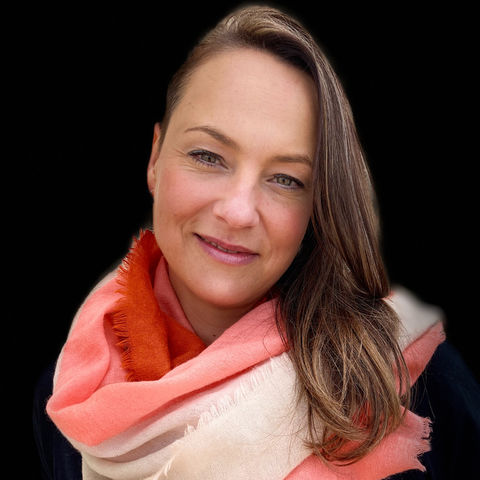
My name is Liv Downing,
And you have joined me on the You Are Loved podcast.
You Are Loved is the title of my forthcoming children's book,
Due to be released in 2021.
And in this book,
I explore the possibility that love is actually always available to us.
And that maybe,
Just maybe,
We don't actually have to rely on external sources of love or other people to feel a sense of true belonging.
As you may know,
Research tells us that a sense of belonging or a deep sense of connection is really essential for us humans to thrive.
And in this series of podcasts,
I want to learn more about why that is and how we can all get more of it,
To nourish both ourselves,
Our kids,
And our beautifully broken world.
It's my deep hope that through these conversations,
It's together we can learn more about creating a more loving and wiser world.
Welcome to the You Are Loved podcast.
Hey there.
I really hope you enjoy this conversation that I had with the gorgeous Fleur Chambers.
Fleur is a very well respected meditation and mindfulness teacher here in Australia.
You can find out more about her if you search for her on Insight Timer,
Which is a free meditation app.
And Fleur also has her own app called the Happy Habit.
So you can download that and learn more about her courses and experience some of her absolute magic.
In our conversation,
Fleur and I covered a range of really deep and rich topics.
And as you guys know,
My goal for this podcast is to really introduce people to different pathways to self-love and different pathways to coming home and realizing that there's a safe place for us all to rest.
And one of the pathways that Fleur offers us in this discussion is really the pathway of pain and pain,
Physical pain,
Emotional pain as a pathway to support our evolution,
Our development,
Our capacity to build our own self-awareness.
She really challenges me on rest and really encourages me to rest more and ask to rest more.
I found the conversation invigorating,
Insightful,
Playful,
Fun.
And I really hope you enjoy listening to it and get as many pearls of wisdom as I did from the beautiful Fleur Chambers.
Enjoy.
So hello,
Fleur Chambers.
It's so lovely to have you here.
Thank you for joining us on the You Are Loved podcast.
It's my pleasure to be here with you,
Liv.
It's such a joy.
So Fleur,
You and I haven't actually met in person,
But we have tracked each other's careers and journeys over the last couple of years,
Given we've kind of worked alongside at a similar meditation studio.
So it's a real joy to get to actually speak to you face to face,
Screen to screen.
So I'd love to hear a little bit about what kind of projects you're working on.
I know you're an amazing meditation teacher and you've got a good solid following within Insight Timer and you've done lots of online programs and everything,
But what are you working on at the moment and why do you love what you do?
I'm taking my work to the next level at the moment.
I'm pushing a visibility boundary,
I guess,
And I've decided in the context of COVID that I really wanted to create something that felt global.
So I approached a beautiful composer who lives in Mexico and called Pablo and a.
.
.
Of course,
Because he should be called Pablo if he's in Mexico.
Absolutely.
He's as gorgeous as a Pablo from Mexico could be.
And then a lady called Uta who lives in Amsterdam,
Who is a professional singer.
She plays the violin and a myriad of instruments.
And I decided that I wanted to create a course that was really stripped back and you'll love it.
It's called You Belong.
So it's been incredibly creative because how we work is I get an idea,
An emotion,
And then they bring it to life.
And then I come back and I do the spoken word over the top.
So it's a very different way to work.
And when I receive the music,
It's like.
.
.
I mean,
I have tears streaming down my face.
It's like receiving just a little bird in your hands.
It's so beautiful.
But what I've been realising is that people love to sit down and meditate,
But they also love just to be moved in everyday life.
So the idea about this course is I'm hoping people will press play to a track whilst they're in their kitchen.
My big goal is that they'll listen to it in yoga studios.
So it's a really stripped back piece of music with my spoken word over the top around belonging.
Oh,
How divine.
Tell me more about belonging.
What does that mean for you?
So we belong in a sense of shared breath.
So we all breathe.
We all take in oxygen.
So it's this shared breath with birds and bees and trees.
We all have beating hearts.
So there's a sense of rhythm in our belonging.
We all belong in the earth.
So there's this meditation where we travel to the centre of the earth and Mother Earth speaks to us and then we come back out again.
We belong in the universe,
In the stars and the planets.
And this idea of coming home to ourselves.
So belonging in your body,
Belonging in your heart,
And really sensing that everyone is just looking for belonging.
That is so profound Fleur.
I'm in my 40s now and it's taken me a very long time to work out that that's what I needed.
And that no matter what is going on in my external life,
Through my meditation practice,
I've been able to cultivate this space of belonging,
Which is just such an incredible gift to have discovered within myself.
So thank you for creating this program.
How can we find out more about it?
And how can we it's still in its evolution.
So if you follow me on Instagram or whatever,
It'll be birthed into the world when it when it's ready.
It's one of these ones that you can't hurry it.
You can't turn it into something you put on your to do list because I need to be in the right frame of mind.
Yes.
Totally.
And during COVID and homeschooling kids,
It's finding those chunks of time can be tricky.
I find creativity for me,
It needs time.
So you can't say right,
I'm going to sit down for 20 minutes and be creative.
It's like,
No,
There needs to be space there.
Yes,
And a ritual around it,
A switching off of everything else.
But in terms of other projects I've been working on,
So I have my own meditation app.
So this is like my little baby and I've learned to add new content to it on my own.
So this is very exciting.
So I added 10 new meditations the other week.
So this is a project of my near and dear to my heart.
I'm always thinking about new things I could add to my app.
And then this week,
I have recorded a 10 day course called breaking the cycle of chronic pain.
And so that has been a big process for me because I was asked by a quite a big app to be their pain expert.
And as soon as someone said pain expert,
It just felt wrong.
I wasn't ready to be that person.
I don't think there is one of those people.
So I said no to that project.
The seed was planted in my mind that maybe there was an offering that I could help other people learn to live well with chronic pain.
And I actually had a real aha moment about my pain a few months ago.
And from there,
I just realized I was ready to write this course.
And so it flowed naturally and I recorded it this week.
And it's really beautiful.
And I'm so excited to bring it out into the world.
Ah,
Amazing.
Very excited to experience it,
Which actually brings us onto the topic that we thought we might talk about today,
Which is around pain and living with pain and pain as a teacher and pain as a as a guide.
And as,
As I've shared with you,
I've lived with rheumatoid arthritis for about 11 years now.
But before that had random pains that I could never really explain.
And to be honest,
It was the RA that got me meditating.
It was that's what I needed to wake up.
And you know,
As we were chatting about before our recording today,
I'm actually really grateful for that,
Because I think I my life would be incredibly different had I not discovered mindfulness and meditation.
But I,
You know,
There's that whole that quote is in there.
First,
The body whispers,
Then it yells,
And my body yelled,
And it yelled in the form of not being able to walk,
Not being able to change the nappy of my baby,
My one year old.
And so that's definitely what I needed to to wake up and it's definitely informed my teaching.
So tell us a bit about your your pain journey and how that's contributed to the development of this course and your work.
So I have explored my pain in so many different ways.
I've tried to be very good at understanding my pain.
It's funny,
Isn't it?
We can try and be a perfectionist at healing the irony there.
But so I searched,
You know,
All the external world for the answers.
And it wasn't until I decided to try all this medication,
Which I've been totally anti my body,
I just knew I shouldn't be doing it.
And I took it.
And I had a severe allergic reaction where basically,
I thought I was going to die for 12 hours,
I lay on my bathroom floor,
It wasn't glamorous.
And I just breathed in and out for 12 hours.
And as I was doing it,
I heard this voice in my head.
And it said,
Your body's rejecting this medication.
You are stronger than your pain,
You have what it takes to heal.
And it was like this aha moment for me.
And I just realised it was time to stop looking externally for answers and solutions and time to get quiet.
And the quiet has provided me an opportunity to understand all sorts of things.
As tendencies,
My desire to please people,
My struggles with expressing unpleasant emotions like anger and rage,
Some shame,
Wanting to be good,
To be loved,
To be liked,
All of these things,
And the potential that that was actually sitting on my nervous system as pain.
So it's been a real gift pulling back those things.
And also understanding that I am actually a highly sensitive person,
And I'm an empath.
And these are real things that we don't need to be ashamed about.
But when we own them,
We can really live them.
So given that I'm a highly sensitive person,
Well,
It's okay for me to not watch the news.
It's okay for me not to be in the weeds with people who are really,
Really distressed.
It's okay for me not to sit at my computer for seven hours a day.
So giving myself permission to show up in the world in a way that felt good for who I was energetically,
Physically from a nervous system perspective.
But it's required a lot of pulling back of shame,
Of uncomfortableness,
Of feeling like I should be able to cope.
So I've had to have some real moments of honesty with myself.
Absolutely.
And it takes so much courage,
I think,
Because the system that we're living in,
They sell a story to us.
Well,
It sells a story to us,
Which is what we should be doing,
As you said.
And so to have that courage to actually step outside and say,
No,
Where's my zone of genius?
Where can I thrive and be happy and step outside?
And it often,
Definitely in my experience,
It takes our nervous systems to get that information to us.
I can think of this example where,
So when I started to heal,
I realised that I had to hop into bed between 2pm and 3pm every day in order to be able to drive the car without pain to pick the kids up to then drive them around for four hours without having a nervous breakdown.
And at first,
I felt really hostile towards this hours rest that I had to have because I was in the middle of my day,
I was feeling productive.
I was 40,
I was getting things done.
And I was like,
I don't want to have to rest for an hour.
But I did,
Because I trusted in the process.
And now,
That rest is like one of my favourite parts of the day.
I nurture it.
It's beautiful.
I deserve it.
So it's about shifting the mindset around rest as well.
So first of all,
I was making rest as something I had to tick off my to do list.
And then as you pull back the layers and your nervous system starts to settle and soothe,
You actually realise that rest and nurturing yourself is beautiful.
But it takes a long time to get there,
Doesn't it?
And so when you're very stressed,
Or you're in pain,
Or you're really caught in this productive mindset,
To take those first steps can feel hard.
And I think that's often where meditation falls short,
Is people have this expectation that they'll go from wiping the bench and doing the nappies and cooking the food to sitting down and having this beautiful,
Relaxed experience.
And I'm sorry,
But that's not how it feels at the start.
It feels uncomfortable.
It feels boring.
You feel irritable.
Your mind's like,
I should be wiping down the bench.
This is boring.
So there needs to be some education out there that when you first move from go,
Go,
Go,
To slowing down,
It feels murky.
And that's all part of it.
Oh,
It's so truthless.
So many times people have said to me,
Nah,
Tried meditation,
Can't do it.
It's too uncomfortable,
Awkward,
Difficult,
All those things you said.
And wouldn't it be great if there was some education around,
You know what,
Of course,
No wonder this is a lifetime worth of habit we're trying to shift here in this work.
And also I think,
You know,
You touched on something else that was really interesting is making that commitment to rest.
And we have this real mentality around rest is bad,
Rest is lazy,
Rest is fill in the blank.
What do you think that's about?
Oh,
Well,
It stems from masculine production.
You know,
Machinery was made to work for eight hours.
That's how the eight hour day started.
It has nothing to do with the feminine energy or females or flow.
Machinery worked for eight hours,
Which is where the masculine eight hour day productivity came from.
So we are pushing ourselves like we are a piece of machinery.
And I love this idea that women can move mountains from standing still.
I just think that is awesome.
So a woman can have a conversation with another woman,
See her,
Hear her,
Open her heart,
And that can create a powerful ripple effect for that other woman's family,
That other woman's sense of wellbeing.
And that is more powerful than sitting at the computer or wiping down the bench or folding the washing.
So how can we lean into this idea that we can be of value,
We can contribute,
We can make the world a beautiful place in a way that doesn't feel do,
Do,
Do.
Yeah,
That is such a big shift for predominantly for women.
I think it's,
You know,
It's this,
You know,
I know that habitually,
Definitely before I started meditating and before I started to be aware of this,
My internal dialogue,
I'd get to the end of the day and say,
Well,
What have I achieved?
There'd be like this checklist.
And I know where I got that from.
I got it from my beautiful mum.
She would get to the end of the day and she would say,
What have I achieved?
And it was this constant go,
Go,
Go,
Do,
Do,
Do,
Not allowing time to rest,
Not allowing time to connect and be really present.
And so two things I think are helpful when people are wanting to rest and understanding is at an intellectual level,
But can't quite get there.
The first thing to know is what message do you want to be sending other people in the world?
Do you want to be sending a message to your kids to not listen to their body,
To push on through,
To prioritise other people,
To not forgive themselves when they make mistakes?
This is not the modelling we want to be teaching our children.
So if you can't be self-compassionate for yourself,
Do it for the people around you.
And people think it's about time.
I don't have time.
It's not about time.
It's about worthiness.
It's thinking that you're not worthy for rest.
And I would ask,
Why aren't you worthy of rest?
What made you so special that you don't deserve rest?
I love that.
Could you say that statement again?
It's not about time.
It's about,
Could you go there again?
It's not a question of time.
It's not a question of not having enough time in the day.
It's a question of worthiness.
Oh,
Mind blowing.
Yes.
You're feeling like you're not worthy.
And adding to that,
The ruthless truth is it's a question of priorities.
What are you putting above your rest?
And if it's social media,
You need to take a long,
Hard look at yourself.
Absolutely.
You know,
I have just recently popped all my social media into a little folder and I've called it Time Vampires.
Because that's how it feels.
It just,
It steals that time when I could be over doing something meaningful,
Connecting with people I love,
Resting,
Meditating,
Doing something that nourishes me.
Awesome.
You are so correct.
So it's about the shift from I don't have enough time to what tells me I'm not worthy of this time to rest and nurture and support myself so I can be of service to both myself and the world and children if there are children.
Which brings us to,
You know,
Really the topic of the You Are Loved podcast,
Which is all about that self-compassion piece and all about that connection to ourself.
So I'm interested to hear how in your experience of navigating pain,
How you think that's brought you closer to home?
Well,
I have had to be very curious about the ways my body speaks to me.
So you introduced that idea of your body whispers and when you ignore the whispers,
It screams.
So that's been yours and my experience.
And I would dare say if other people got curious about their body sensations,
It's probably a scream.
And so I get really curious now about what my body's trying to tell me.
And I love this communication.
So I can get pain when I feel not enough,
When I feel vulnerable,
When I'm reaching a new.
.
.
So when I went to write this pain course,
Sat down at the computer,
My wrist just went.
I hadn't done anything that could have caused pain in my wrist.
And it was like,
This is my body telling me it's not safe to be seen in this new way.
And so I have to say to my body,
It's okay.
You're strong,
You're comfortable being visible,
You're enough just as you are.
So this ability to soothe your body every time it speaks to you,
I'll have an emotion.
I'll feel like I don't want to disappoint someone and my body will speak to me.
I'll feel it in my shoulders.
I'll feel it in my neck.
And so I say,
It's okay to disappoint people.
Body you don't need to produce that pain.
I've got this,
I'm safe.
I can show up in the world in this way.
You don't need to protect me by producing pain.
So I am constantly offering my body self-compassion because it's gotten in the cycle of producing pain to protect me.
So that's one way my relationship with my body has allowed self-compassion because it's a really gentle,
Lovely way to respond to your pain as opposed to,
God,
This pain now I can't run,
Now I can't exercise.
What did I do to deserve this?
What did I do to flare it up?
That's not compassionate dialogue.
So you can sense the different ways I communicate with myself and my pain.
And then the other really powerful self-compassion practice that I have is just being acutely aware of my thoughts.
And it's frightening to realise how mean we are to ourselves.
So often I will just say to myself,
What would a friend say to me if I said that out loud?
And I picture one of my dear friends and I imagine myself saying this to them,
Like,
God,
I've put on so much weight,
My body's really ageing.
And I know they'd say to me,
Flers,
You look absolutely gorgeous.
You're drop dead gorgeous.
I just take a bit of that on.
I've got one friend in particular that I bring to mind.
And then I imagine how I would respond to a friend if they said that to me,
If they said,
God,
I really yelled at the kids the other day,
Such a bad mum.
I'd say,
No,
You're not.
I see all those wonderful things you do.
Your kids are lucky to have you.
So this real changing the way you communicate with yourself,
Which requires some skill,
Because first of all,
You've got to even be willing to know that you're thinking these things and that they're actually not who you are.
So this is the beauty of meditation in that people think,
Oh,
In meditation,
You're not supposed to think and thinking is a sign that you're not doing it well.
No,
Thinking in meditation and then having the space to understand those thoughts,
That's the gift.
So I now know this idea that I can't say no to my kids or I'm a bad mum if I raise my voice.
No,
That's not an objective truth.
That's just a story.
And so how can I respond to each of those stories as I would to a friend or a friend would to me?
I think you've touched on such an important point there,
Which is that almost the levels of practice,
It's almost like,
You know,
Many of us come to meditation to relax and to manage our stress.
But as we said earlier,
When we sit down,
All of a sudden,
We open up our brain and see all the worms in there.
And so but that's the gift.
That's the point where we go,
Okay,
Well,
These,
These are my habitual thought patterns.
Wow,
What an opportunity that I get to actually observe these with a degree of objectiveness.
And then what what kind of comes next?
So there's that awareness piece and that ability to observe.
And that's the entry point.
Would you agree?
And then and then there's the practices because often,
Certainly my experience,
If we jump straight to the practice,
It feels incredibly artificial.
So if we,
You know,
We jump straight to the,
I'm great,
I'm wonderful,
Everything's going to be fine.
Without the first understanding of where we are,
It can be a bit problematic.
Yeah,
And that's where again,
The body awareness comes in.
So and the mindfulness values around curiosity and playfulness.
So you hear you hear this thought,
I'm a bad mom,
Because I yelled at the kids because I gave them eggs on toast,
Whatever.
Okay,
Where do I feel that in my body?
I feel it as a tightening in my chest,
My neck goes forward,
It's a clenching in my gut.
Okay,
And if it had a texture,
Would it be like a slimy rock?
Or would it be abrasive?
Would it be soft?
So you're getting curious about this thought.
You sort of bring the thought to life.
Where does it sit in your body?
How does it make you feel?
What beliefs might be sitting underneath there?
And the more you can get curious,
And even breathe a sense of compassion into that,
Then you can plant the seed,
You know,
You pull the weight and you plant the seed,
But you can't go straight to planting the seed,
Because there's no room for them.
Yes,
You haven't pulled the weights.
Yes.
Oh my gosh,
I love that.
I've never heard that.
Pull the weight and plant the seed.
I've got a whole course on it.
It's called,
It's like attending to the garden of your mind.
So every day,
You need to spend time pulling the weights and planting the seeds,
But you do it with a sense of curiosity,
With a sense of compassion and with a sense of playfulness.
You don't bang yourself over the head because you've got these negative thoughts.
Because we can,
When we first come to meditation and from the mindfulness perspective,
Certainly,
If we don't come to it with those attitudes you so beautifully articulate,
We don't come to it with the compassion,
The curiosity and the playfulness.
I want to talk about playfulness with you in a bit.
We can then just become even more self-critical.
So it is,
It's so important.
So,
Oh,
Great.
Another awesome course for people to look into.
In my own meditation journey,
When I first started,
I took it incredibly seriously.
You know,
Six o'clock every morning I was there,
Rain,
Hail or shine,
Meditating,
Kind of whooping myself over the back.
And it was,
It's really only been in probably the last three or four years that I have been able to bring some more gentleness and play.
In fact,
In the programs I've written,
Playfulness wasn't in there until three or four years ago.
Tell us a bit about play and how you weave that into your meditation and into your practice as a mum and into your daily life.
Tell us about it.
Well,
I think I'm always interested in the people that stick with the work.
So I've got,
You know,
A lot of courses with a lot of days and some people just keep on coming back for more.
They're at like day 120 listening to my voice.
And I know it's not me.
It's not me they're in love with.
They're in love with spending time with themselves.
But in a way that's playful.
Let's say for example,
You're caught in these cycles of blame.
You're just blaming your kids.
You're blaming life,
You're blaming COVID.
If you can pull back that and actually have a little laugh about how you blamed your kids for them leaving their shoes on the floor when they're at school and you tripping over them.
If you can laugh at blaming your husband when you lost your car keys or blaming your husband for when you tripped over all of this stuff.
If we can have a laugh at this idea of understanding ourselves,
It sustains our practice because the truth is when we peel back the layers of judgment of blame of criticism,
We're going to find some things that maybe we don't really like.
So we need to be able to laugh at ourselves,
Laugh at the human condition,
Laugh at the fact that we can make progress and then just come back to that same story that we thought we're dealt with.
Oh,
I know.
How can I solve this one?
And then there it is up again,
Ready to remind you that your work is not done.
How can you have more moments of joy?
I have a very youthful spirit.
So joy and playfulness comes easy for me.
I'll say that.
I've always been very young.
So,
But how can you bring mindfulness and presence into your day to have more joy?
So for example,
If you're on a bike ride with your kids,
If you're on a walk and you see a rainbow,
You hear a bird,
How can you make that ordinary moment extraordinary through the awareness you place on it?
So how can you make just a regular everyday moment feel playful and joyful?
So you lean into it.
You notice how the bike ride makes you feel.
You notice the colours in the rainbow.
You breathe into the song of the birds and you allow that moment to become extraordinary.
You allow it to land on your nervous system and then you're strengthening your pathways for playfulness,
For joy.
And those things are deeply healing.
So people think joy is like the thing you'll do when you've done everything else.
No,
No,
No,
No.
Joy needs to be done way before you finish the to-do list.
That is such a piece of wisdom that I would have loved to have known as a young person that the moments of joy and play and gratitude and love are in the everyday moments and that our job is to not try and get through the to-do list to get to those great joy,
Beautiful nurse shiny things.
It's to actually discover them here and now and savour them and feed them.
And exactly as you said,
You know,
Going for a bike ride with your kids,
Seeing the bird and then modelling that to our kids and saying,
Well,
Look at that.
Isn't that amazing?
How lucky are we and landing in the nervous system,
Which all comes back to the body,
Doesn't it?
Yes,
Absolutely.
Back into the body and feeding that wisdom.
People don't allow the moments to land long enough for them to change the fabric of who they are.
So this idea of state to trait.
So you can have a moment of joy,
You can have a moment of gratitude,
You can have a moment of compassion,
But we usually don't sit in them for long enough for them to actually change who we are.
And it can feel.
.
.
Can I stop you there?
I want you to say this thing you said at the very beginning,
Because that was quite incredibly profound.
People don't let them land for long enough.
Say that again for us just so that we can really let it sink in.
So the moments are there for us,
The moments of gratitude,
The moments of connection,
Compassion or wonder,
But we don't linger in them long enough for them to land.
So they just stay as a fleeting state,
Not a deep trait.
So for example,
Gratitude is a really great one to talk about.
We sit down for our cup of coffee or our meal and we go,
Oh,
This is delicious.
And then we scroll through social media.
No,
That moment is not long enough for it to actually change who you are.
That moment of gratitude won't make you a grateful person.
It won't allow you to have that deep sense of gratitude that you can draw upon anytime you need it.
So you need to linger in the moment.
The coffee,
Ah,
The coffee,
It feels so nice in my hands.
It's delicious.
I'm excited that it's going to give me a little buzz.
And that man who put the love heart on the top,
Nice.
He didn't have to do that.
That felt really good.
Loving my keepsake cup.
It's a great colour,
You know,
All of this so hard and then breathing it in.
Where does the gratitude land on my body?
I softens my shoulders.
It sort of opens my heart.
Oh,
That niggling pain over my eyes is gone.
So we're lingering in that moment.
And if your kids are there,
Even better,
Use them to make it bigger,
Bolder,
More beautiful,
Not the coffee example,
But you know,
The rainbow or the song of bird example.
Isn't that bird so sweet?
Look at the little colour on his chest.
And you say to the kids,
Gosh,
I really noticed my body relaxes when I hear birds.
Do you notice it relaxing?
So you're encouraging them to learn how to make these moments land.
What a skill.
What a life skill.
And you're right,
Gratitude is such a magical antidote to so much of the pain and the struggle that so many of us are feeling at the moment.
It's what an incredible skill to cultivate in ourselves and then pass on to our kids.
And they love it.
So when I lie in bed with their kids at night,
Again,
It's a moment for connection.
So how do you make that moment bigger,
Bolder,
More beautiful,
So it actually changes the fabric of who you are?
You lie in bed and you say,
When I touch your little hand,
It makes me feel so safe and warm.
My belly goes all relaxed when we cuddle like this.
Your little eyelashes,
They're so long.
Who gave you those eyelashes?
Do you feel safe in here with me?
Isn't the dinner comfy?
Do you think Teddy's happy?
So that we don't need to meditate with a silent mind and a back straight.
We can find these moments in life and they only need to take about five breaths,
But we need to give our whole selves over to them.
And the problem is most of the time we're distracted.
Yeah.
Yeah.
That was,
You actually just answered the question I was about to ask,
Which is why don't we,
Why don't we do that?
Because we're replaying the conversation that didn't go to plan.
We're thinking about what we'll watch on Netflix.
We're berating ourselves for not getting through the to-do list.
So it's our busy mind.
We're either in the past or in the future.
I felt relaxed just imagining myself in bed with you,
Holding my hand and looking at my eyelashes.
So I'm sure that your kids love it.
Oh,
Fleur,
I feel like we've covered so much today.
Could we just kind of touch on,
I've taken a couple of notes.
Just as some of the wonderful things that we've covered just as a bit of a summary for our listeners.
Cause I know when I listen to podcasts,
I hear all these wonderful things and then I promptly forget them.
So,
You know,
We talked a little bit about obviously first of all,
The You Belong course,
Which sounds amazing and with Pablo and Uta,
And we can't wait to hear more about that.
So we'll make sure that I pop,
I'll make sure I pop a link to whatever the best way for people to find you is on the show notes.
And then you've also got a course on breaking the cycle of chronic pain,
Which we talked a little bit about.
In your,
As a bit of a summary in dealing with pain,
What would be your three top tips for helping those of our listeners who might be dealing with pain,
Just to either top tips to either manage pain,
To help it,
To allow the pain to support them to grow and develop or any other thing you'd like to add about pain?
I would like to say that you're not alone.
The pain is not your fault.
It's not because you're not strong.
You've done something wrong.
You haven't been able to cope.
And even though there's a psychological and a behavioral and a social element to pain,
It's not all in your head.
What I would encourage people to do,
And it's hard when you're not there,
Is to open to the idea that there will be some gifts in your pain,
Even if it's someone in your life having to see you feeling vulnerable,
Even if it's you having to hop into bed on a Saturday afternoon instead of watching your kids play sport,
If it's your husband or partner or parent having to cook for you one night a week.
There are gifts in pain,
And if we can soften into them,
It really supports our healing.
And just this idea of noticing that the thoughts we have about our pain can actually make our pain worse.
Yeah,
So this idea of when a pain moment strikes and you are critical of yourself about what you did the day before,
That might have meant you're in pain today,
Or you go off into the future and start worrying about what if the pain's there tomorrow,
Can you really be diligent with yourself and come back to the present moment knowing that the futuring and the pasting actually exacerbates your pain?
Yeah,
Awesome tip because I have spent many years on and off ridiculous diets,
And just to try and manage the inflammation.
And so then if I have a piece of pizza and happen to have a sore wrist or foot or knee or whatever the next day,
I spend the whole next day then really beating myself up about that.
So rather than doing that,
We're suggesting that,
Sure,
Learn from it,
But come back to the present and really befriend the pain,
I guess.
Remember when you had a first baby and one night they slept perfectly and then the next night they didn't and you just talked to your partner or your friend about all the mistakes you could have possibly made that day that meant that they didn't sleep?
The truth is we never know.
You'll never know if it was that slice of pizza.
You'll never know if it was the glass of alcohol.
But what you will know is that you can control your experience of the pain in the present moment.
The rest are just stories.
Okay,
Then the next area we talked about was around rest and really that irrational belief of those range of irrational thoughts that so many of us have,
Which is I don't have time to rest.
And you helped us shift that from time to worthiness.
So what kind of tips do you have for people just to help to support them to find more opportunities for rest in their days?
I think being really honest about time wasting habits is a huge one and I don't want to be anti-social media.
But if you're in the habit of scrolling through social media for 20 minutes,
I really encourage you just to do one of those mini experiments and to see what would happen if you swapped the scrolling for 20 minutes of rest and really being open to it,
Feeling uncomfortable for the first little bit.
That's okay.
I remember I felt guilty whilst meditating many,
Many times,
But I do it anyway.
And now I'll have three kids fighting pre-dinner and I'll say to my husband,
I'm just nicking off for a meditation.
So things will shift within you,
But you've got to allow the uncomfortableness for a little while.
Yeah.
Yeah.
That is,
It's learning to be comfortable with the discomfort.
And then with that,
We create some space and then we can go up that ladder we talked about,
I guess,
From awareness to ascendance,
If you like.
Yeah.
Absolutely.
Beautiful.
Thank you.
And then,
Well,
I mean,
We covered lots of different things,
But the final area we really talked about was around,
I guess,
Play or gratitude and that sense of lingering and really savouring and captivating those moments that are available to us all the time,
But we skim over the top of them.
So just again,
Just another practical tip about what we can do to really lean in to that,
To those opportunities.
Breath.
Absolutely.
So if you notice something that feels good,
Birds travelling in the sky,
Your favourite song,
The laughter of your kids,
Take one deep breath and scan your body and then begin that process of being curious.
But just say to yourself,
Whenever I notice something nice,
I'm going to stop and I'm going to take a breath.
Amazing.
And the rest will naturally follow as you strengthen those muscles of curiosity.
Yeah.
Such a beautiful tip.
And as I said to you in our preparation for this session today,
When I first came to meditation and mindfulness and I started when I was about 20,
But then didn't really get into it until I was about 30.
And I was sick of people telling me to focus on my breath because it does all sound very hippy and I don't really,
I didn't have time for it,
But please,
Listeners,
Know from a 40 something year old woman and a very wise meditation teacher sitting next to me,
That breath is incredibly powerful and it really does help settle so many layers of our being,
Doesn't it?
Yeah,
Absolutely.
And it's free.
It's yours and nobody even needs to know you're doing it.
Yeah.
Awesome.
Fleur,
Is there anything I haven't asked you that I should have?
No,
It's really funny enjoying this interview with you because you have a style which is different to any other podcasts.
I can really sense your very thorough,
I mean,
You've even summarised the interview in the interview,
Which I think is just so funny.
It's the over preparing nerd in me.
It's just awesome.
And this is what I love about chatting to people.
There are so many different ways of showing up in the world.
I attend some where people are like,
Nah,
We'll just go with the flow and then others have very strict lists and then you've done what no one else has ever done,
Which has provided a summary in the interview,
Which I think is just awesome.
So good.
So good.
Oh,
Fleur,
It's been such a joy to speak with you.
Thank you so much.
And gosh,
Thank you for all the work you're doing in the world and in your own little family because you're building three beautiful boys who are going to be three beautiful men who are going to keep,
You know,
Save us and help us in our retirement,
Hopefully,
In our old age.
So thank you.
And you also,
You're doing amazing work in the world and it's so lovely for me to have connected with you here today.
So thanks for having me.
Take good care.
Bye.