Stoic Anxiety Challenge: 7 Days To Calm Worry & Overthinking - by Jon Brooks

COURSE

Stoic Anxiety Challenge: 7 Days To Calm Worry & Overthinking

With Jon Brooks

Your mind won't stop. The same worries loop back at 3am, during your commute, in the middle of meetings. You know the overthinking isn't helping — and that knowing somehow makes it worse. This 7-day course gives you seven ancient Stoic tools for working with anxiety, each a guided contemplation designed to change your relationship with an anxious mind. Not positive thinking. Not suppression. These are specific techniques the Stoics used two thousand years ago — and that modern cognitive behavioural therapy has since validated — for working with fear at its root. Each day is one tool, one guided session. The sequence matters: the work deepens as it builds, moving from self-inquiry through reframing, perspective, exposure, acceptance, and finally the deepest fear of all. What you'll practise: Day 1: The What If Technique — find the hidden fear beneath your anxiety Day 2: Build your personal Stoic anxiety maxim Day 3: Shift anxiety from enemy to ally Day 4: The View From Above — the Stoic cure for being trapped in your head Day 5: Premeditatio Malorum — face your fears instead of running from them Day 6: Amor Fati — the acceptance formula that ends resistance Day 7: The Stoic death contemplation — the fear beneath all fears Who this is for: anyone whose anxious mind has started to run the show. No prior Stoicism required. The only prerequisite is the willingness to sit with discomfort for twenty minutes a day. The course works once. It works again. Many of the 7,000+ students return to specific sessions whenever anxiety surfaces — Day 4 when overwhelmed, Day 6 when stuck in resistance, Day 7 when the fear feels existential. Complete the course once in seven days. Then return to whichever session helped most whenever you need it.


Meet your Teacher

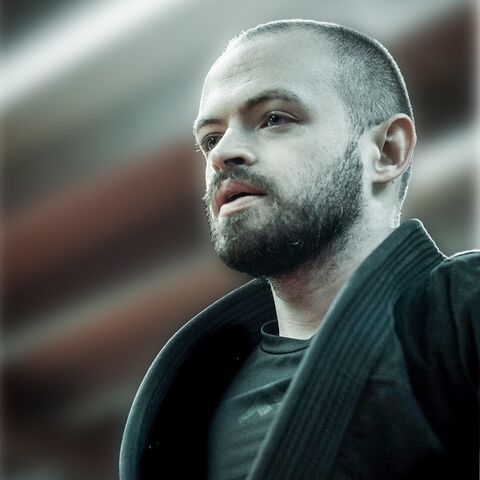
Jon Brooks helps people apply ancient Stoic philosophy to modern life. On Insight Timer, Jon's courses have 35,000+ students across 19 programmes with a 4.86 average rating. His 120+ guided practices cover anxiety, sleep, morning routines, anger, relationships, and resilience — drawing on Marcus Aurelius, Seneca, Epictetus, and modern psychology to build practices you can use immediately.

read more

7 Days

7.3k students

4.8 stars

11 min / day

Anxiety

English


Lesson 1

Find The Hidden Source Of Your Anxiety

Your surface-level worry is rarely the real worry. The fear of being late for work might actually be a fear of being fired. The fear of being fired might actually be a fear of losing everything you've built. The fear of losing everything might actually be a fear of dying alone. We all have layers. Today you'll practise the What If Technique — also called the Downward Arrow Method in cognitive behavioural therapy — to trace your anxiety down to its real root. It's a Socratic questioning exercise built from Stoic self-inquiry and modern CBT, and it's the foundation of everything that follows in this course. You can't work with an anxiety you can't see clearly. The session might feel uncomfortable. It may even stir up new anxieties as you go deeper. That's the point. You're doing the work the Stoics called "knowing thyself" — and it's why Day 1 is Day 1. Complete this session today and move to Day 2 tomorrow. For best results, return to the What If Technique whenever a new anxiety surfaces — it works on every layer.

read more

Lesson 2

Build Your Personal Stoic Anxiety Maxim

The Stoics weren't emotionless. That's the biggest myth in all of Stoicism. What the Stoics actually trained was the second half of the emotional sequence — the moment after the involuntary first impression, where you either confirm or challenge what you're feeling with reason. Miss that moment, and whatever the nervous system throws up runs the show. Catch it, and you're free. Today you'll build a tool for catching it: your personal Stoic anxiety maxim. A short, memorised phrase designed specifically for your anxiety — something concrete to reach for in the moments reason is hardest to access. Epictetus carried maxims for everything. "An impression is all you are, not the source of the impression," he'd tell himself under pressure. "I am kissing a mortal," he'd say when saying goodnight to a loved one. The ancient Stoics used these relentlessly — not as inspirational quotes, but as practical tools deployed in the moment of difficulty. You'll build your own using three rules the session walks you through: - If-then format — anchor the maxim to your specific trigger so it reliably fires ("Every time I feel my voice tremble, I will…") - Specific and concrete — no vague generalities - Phrased in the positive — what to do, not what to avoid By the end you'll have a personalised implementation intention tied directly to whatever anxiety pattern you uncovered in Day 1. Memorise your maxim today. Recite it whenever the trigger appears — during the rest of this course and long afterwards. The more you use it, the faster it works.

read more

Lesson 3

Make Anxiety Your Ally, Not Your Enemy

Here's the paradox at the heart of anxiety: the harder you fight it, the stronger it gets. Feeling anxious about feeling anxious is the trap most sufferers are stuck in without knowing it. What you resist persists. Today you'll practise the Stoic reframe that breaks the loop. Instead of treating anxiety as something to remove like a tumour, you'll learn to meet it with curiosity — as a teacher, an ally, even a friend. This sounds counterintuitive until you understand the mechanism: by becoming physically relaxed in anxiety's presence, you stop feeding the fire that keeps it burning. You'll practise a guided mindfulness of sensations — noticing where anxiety actually lives in the body, welcoming it fully, and staying with it long enough for something to shift. We'll also look at why panic attacks happen (it's a feedback loop, not a medical event) and how the Stoics and modern psychology both agree on the cure. Return to this session whenever anxiety surfaces during the rest of the course. The practice of welcoming rather than fleeing gets easier every time.

read more

Lesson 4

The Stoic View From Above: Gain Perspective On Your Fear

When anxiety grips you, your world shrinks. The problem in front of you feels like the only problem in the universe. Your body, your thoughts, your fear — everything zooms in until there's no room for perspective. Today you'll practise the Stoic technique Marcus Aurelius used to break that spell: the View From Above. It's a guided cognitive distancing exercise drawn directly from his Meditations, in which you zoom out from your situation progressively — first watching yourself on a movie screen, then seeing your life from a god's-eye view, then from space itself, then through the eyes of an alien civilisation wiser than our own. At each stage the anxiety shrinks. Not because the problem has changed, but because the frame around it has. This is the Stoic answer to being trapped inside your own head. This is the session most students return to when they're overwhelmed. Bookmark it. Use it whenever your world shrinks.

read more

Lesson 5

Premeditatio Malorum: Face Your Fears To Heal Them

Psychologists know anxiety behaves like a flame on a candle. Avoiders try to dampen the flame — which only extends the burn. The counterintuitive truth is that the fastest way to end the flame is to intensify it until the wick burns out. Today you'll practise Premeditatio Malorum — Premeditation of Adversity — a Stoic exercise that does exactly this. Rather than avoiding the thing you fear, you'll deliberately imagine it, vividly and in detail, making it worse each time you replay it. Modern psychology calls this cognitive exposure. The Stoics called it preparation. The exercise delivers three benefits: it motivates practical precautions, it builds resilience in advance of the feared event, and it generates gratitude for what hasn't happened yet. Seneca, Marcus Aurelius, and Epictetus all practised this daily — not out of pessimism, but as the foundation of genuine equanimity. This session is demanding. Complete it fully — the effect depends on going all the way in. Return to it whenever a new fear begins to grow.

read more

Lesson 6

Amor Fati: The Formula For Deep Acceptance

Yesterday you practised facing your fear. Today goes one step further: you'll practise loving it. Amor fati — love of fate — is a concept the Stoics pointed toward and the German philosopher Friedrich Nietzsche named directly. The formula is radical: don't just accept what life gives you, love it so completely you would ask for more of it. More anxiety. More adversity. More of everything that presents itself. This sounds counterintuitive until you try it. When you ask for more of what you fear, something strange happens: the fear loses its grip. You reframe the emotion from "something to remove" to "something to welcome," and the entire relationship changes. The Stoic acceptance paradox is that the first step toward feeling better is being genuinely okay with feeling bad. You'll practise this with the specific anxiety you've been working with throughout this course. You'll also explore the self-acceptance versus self-improvement paradox — and why the Stoics saw no contradiction between loving your fate and still working to change it. Return to this session whenever you find yourself in resistance — against anxiety, against circumstance, against life itself. Amor fati is a practice, not a one-time realisation.

read more

Lesson 7

The Stoic Death Contemplation: Annihilate Your Deepest Fear

The final session. And the deepest. Some of the great philosophers — Stoic and otherwise — believed that nearly every anxiety we carry traces back to a single root fear: the fear of death. If that fear loosens, every fear above it loosens with it. If it doesn't, the others always grow back. Today you'll practise the Stoic death contemplation. The Stoics — Seneca, Marcus Aurelius, Epictetus — thought about death every day, not out of morbidity but as the foundation of a well-lived life. You'll contemplate death at three distances: ten years from now, one year from now, and one day from now. You'll imagine your own body after death. You'll sit with Epicurus's argument that death may not even be an experience. And you'll finish with a compassion practice, because the Stoics believed inner work is only half the job. This is a demanding session. It's also, for many students, the one that changes the most. The fear beneath all fears, faced directly, tends to shrink to the size of what it actually is. Complete this session once to finish the course. Return to it when the big fears surface — a diagnosis, a loss, a sleepless night. The contemplation doesn't get less powerful. It gets more precise.

read more


Ask your teacher

This course includes 66 community questions and 27 audio replies from Jon Brooks. The community classroom and teacher audio replies are only available via the app.
66

4.8 (377)

Recent Reviews

Caroline

April 19, 2026

I love it when a meditation requires me to deeply contemplate, and this really did, in a gentle, compassionate but veey thoughtful way. Thank you 🙏

TJ

February 11, 2026

🙏

Benjamin

December 24, 2024

This is a hard course, but it has good tools

Torie

November 15, 2024

Thank you for this course . So helpful and I plan on taking it again. Jon is wonderful teacher and very knowledgeable .

Cynthia

November 13, 2024

This was a very different set of meditations than I'm used to doing but I found great value in these perspectives. They really did make my comparatively minor anxieties *poof* into the wind. (Aliens would think, "THAT is what you're all worked up about?!") 🙂 Thank you, Jon! I intend to explore more of your offerings here on Insight Timer.

Alistair

November 13, 2024

Awesome course. Day 7 really hit home!

Chad

November 3, 2024

This was one of the best courses for my mental health. I can see how so many other ways of working with mental health stem from stoicism. Even notice how my therapist has incorporated these techniques. Thank you.

Imran

October 22, 2024

Excellent

Marc

July 25, 2024

It is not for the faint of heart and maybe a bit advanced in heavyness. However, this is because it goes straight to the issues without any sugarcoating

Monica

June 3, 2024

Excellent course. Found so much utility in it and I’ll go through it again to really capture the lessons. Very digestible concepts and wonderfully concise.

Silas

May 6, 2024

This has hepled. Thanks Jon.

Dave

April 28, 2024

Outstanding insight into anxiety. Thank you for sharing your thoughts about a positive experience in this existence. Namaste 🙏

Tracey

April 11, 2024

Excellent!

Hermann

April 5, 2024

Very helpful course, the exercises are really effective. Thank you

D

March 31, 2024

Delving into the stoic ways, with Jon’s insights and his own way of teaching has been freeing. 💝 I have learned more about navigating through my emotions than I thought possible. With decades of false beliefs, I get closer to truths that serve me…and this helps me live in LOVE. Thank you Jon

Dan

February 25, 2024

Very insightful & useful.

Scott

February 16, 2024

What an excellent course 👏 For many years I read the daily stoic, and the likes of the obstacle is the way and others. This course susinctly explains some amazing (yet very provocative) meditations to prepare us for some of our deepest challenges.l, well, the ultimate challenge. Cannot recommend this enough, however, be prepared to face your anxieties head on.

Melinda

February 12, 2024

So much good information here that will take further contemplation to process and keep in practice. I have incorporated some techniques that are being helpful in dealing with anxiety and depression. Thank you. 🙏🏼☮️🧡

Dr

January 26, 2024

I have lived the life of a stoic since very young, although I did not know it then. I continue to learn stoic principles from the great teachers. I try to apply all to my feelings and emotions regarding the tragic death of my 12 year old daughter and my present and future self, living this “new” life. Thank you for your creation of this course. It helps me sustain each breath I take and each step on my journey 🙏🏼✌🏼

Bela

January 17, 2024

Must listen to everyone independently whether you have anxiety or not. Great thoughts 😉

More from Jon Brooks

Trusted by 35 million people. It's free.

Insight Timer

Get the app