In this episode of the Project Mindfulness Podcast,
You will learn more about mind and body medicine,
Biofeedback,
And the breath.
Honest and open to all religions,
All traditions,
All ages,
And all levels of experience.
Radically accessible,
Pragmatic,
And eye-opening.
Simply for everyone.
Welcome to the Project Mindfulness Podcast.
We'll take you on a journey across the globe and talk with other meditators about their practice,
The lessons they have learned,
And what they want the world to know.
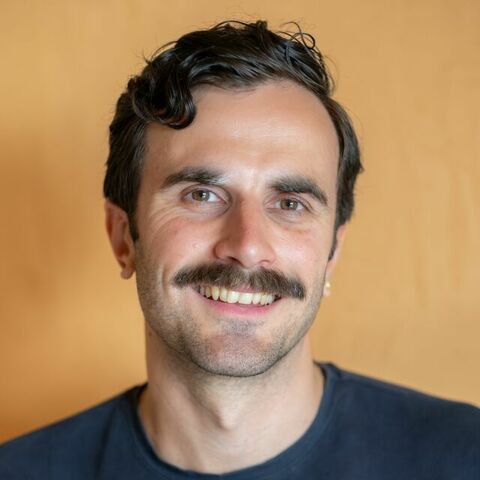
Good day and welcome.
This is episode 9.
I'm Christian Netsson.
Thank you for joining us.
Today,
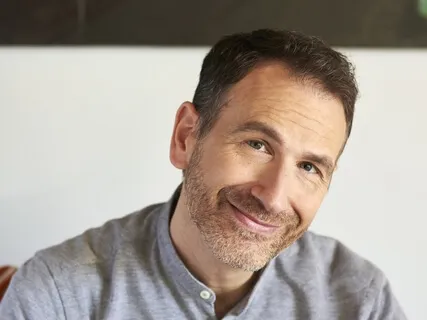
I talk with Dr.
Brad Liechtenstein,
Naturopathic physician and professor at Bastyr University.
We talk about his private practice,
His insight on body and mind medicine,
And the most central theme to his philosophy,
The breath.
You will learn more about what breathing does to your mind and body,
The importance of spirituality in our healing process,
And an important personal advice at the end.
My wish is that this talk will inspire you as much as it inspired me.
Welcome to this podcast.
Today,
I'm talking with Dr.
Brad Liechtenstein.
And of course,
You should say that well.
Yeah,
Exactly.
I try actually to pronounce it right.
Did I pronounce it right?
Yes,
Yes.
Okay,
Perfect.
For the people who don't know you,
Who are you and what do you do in life?
Well,
Several things,
But I'm a naturopathic physician here in Seattle,
Washington.
And what my specialty,
My focus is,
Is on mind body medicine.
So I also teach at our naturopathic medical school here,
Bastyr University,
Where I am the primary teacher of our mind body medicine,
Our behavioral medicine curriculum.
So I also have a private practice.
And my work with people is really teaching them how to regulate their nervous system.
That's one way I say it.
But I'm really teaching people to learn resiliency techniques,
How to be resilient.
And I'll use a wide array of mind body medicine techniques from biofeedback.
But my staple is meditation.
Right.
In many forms.
So one other thing I like to share is that as a naturopathic physician here at Bastyr,
I was part of a research study where I went to the bedside of hospice patients twice a week doing guided meditations until they died.
So I had experiences of doing over 500 bedside hospice meditations.
And it was such a profound experience.
That must be profound.
I mean,
To be so close to the end of a life must have an impact on your life too.
Yes.
Yes,
It does.
Yeah.
And on several on several ways.
One,
It was profound because I was working not just with the patient,
But with the families.
I mean,
I got to see the caregivers and how they were while they were with someone at the end of life.
But I also was with people talking to them about meditation,
Which really was a vehicle to talk about how are they viewing their life?
How are they right now with all of this going on in their life?
And you know,
I've had several experiences working with end of life care,
But all of them just remind me you have to look at how you're living right now.
And you know,
When I was in the midst of that meditation,
It really had a stronger impact.
You know,
As you move away from those experiences,
You know,
Like all of us,
We tend to forget.
But that's part of my practices to recognize that we're going to die and we can die at any minute.
So how do we want to live?
Right.
It sounds like a very profound practice.
And I wonder if we could rewind a little bit from the first moment you encountered meditation.
Was it was it like did you do it through your practice with the mind and the body?
And from that came meditation?
Or was there another way of you entering sort of the world of meditation,
So to say?
Oh,
That's a great question.
I like I like how you phrase that.
Because my first experience with what we'll call meditation was really when my mom took me to a yoga class when I was about seven years old in the basement of our synagogue,
They were having yoga classes.
And right,
And I remember the asanas.
I remember the postures.
But at least what I think I remember,
I know that memory is made up each moment we're thinking of it.
But what my memory was is that we were in Shavasana in corpse pose.
And the yoga instructor led us through this guided meditation of every time we would think a thought to put it on a leaf and let it go downstream.
And our body was really quiet.
I mean,
So we had just done a vigorous asana movement practice,
But then we were sitting still lying on the mat and identifying thoughts.
And every time you have a thought putting it on a leaf.
And of course,
My understanding of that at seven is not what it is now.
So I know I'm embellishing my memory a little bit.
Yet that was my introduction into it.
It was meditation via yoga.
And then as I got older,
I was learning more and more about it as a teenager.
And then I had somebody tell me,
Psychotherapists told me once when I was 16 that,
You know,
You're really a Taoist.
And I had no clue what the heck a Taoist was.
I was like,
Okay,
Cool.
Yay.
Then I just started reading about that.
And actually was this psychotherapist who taught me more in-depth meditation techniques,
More mindfulness meditation techniques.
Right.
And that really helped my journey.
Wow.
You learned about meditation through yoga and went to,
Well,
Psychotherapy and Taoism.
And is that still something that's still resonating?
Because what I mean,
I read up a little bit and I read a lot about breathing.
Yes.
So how,
When did the breathing became so central to your practice?
That actually happened probably about maybe about 15 years ago.
So yoga has always been a cornerstone for me.
So actually it's been like this mix.
My personal practice has always been asana yoga practice with mindfulness meditation and followed a lot of people in the Insight Meditation community.
So I would always do a mix.
And then I started to teach a course on yoga therapy.
I became certified in some forms of yoga therapy.
And so at the Naturopathic Medical School here,
I started teaching a yoga therapy course.
And that evolved into just a pranayama class.
And that was when through pranayama classes,
I started learning holotropic breath work.
I learned a lot of different pranayama techniques.
I learned about rebirthing techniques.
I learned all these different breathing techniques.
And then I became certified in biofeedback,
Which does a lot with respiration and breathing.
And so I just like found that that was the main thing.
Because in all these yoga practices and all these meditation practices,
There's always a cornerstone with breathing,
Whether we're just watching it and letting it come and go on its own or actually we're manipulating it in some way.
And so I found how different breathing techniques were not only useful for certain situations,
But resonated differently with individuals.
So the task for me was trying to figure out for whom would different breathing techniques and practices benefit?
Right.
So it was really about 15 years ago that I just started studying the world of breath and really liking this because in the Upanishads and some of the yogic texts,
We talk about how prana rides on the breath.
In the Bible,
We talk about how God breathed life into Adam.
And so it's like the breath of life.
And so that became a foundation of my meditation practice.
Right.
Makes a lot of sense.
I mean,
That's how it started for me too.
And I think for most people is the awareness of breath is such a strong anchor in the moment because there's basically no moment there's no breath.
And maybe becoming aware of it takes some time to be consistent in it.
But in the end,
It's so fruitful to be aware of the breath.
But now I'm wondering,
Since you talked about different kinds of breathing,
What does that mean?
Is there for a certain person does a certain breath method or technique work and for others?
Or is it more in a way of where they are in their life and what might help them to progress in their journey?
Yes,
To both of those questions.
Yeah.
But yes,
To both of those in that,
You know,
One of my frustrations that,
You know,
Being a naturopathic physician and looking at people's health,
There's a lot of breathing techniques out there,
Some that cause you to hyperventilate and over breathe.
And if you look at the old pranayama techniques,
We have to keep in mind the context,
Those pranayama techniques were not physical health practices,
They were spiritual practices,
They were to raise the energy,
Create insight.
And so taking them out of context as an exercise can actually be deleterious to somebody's health if they have certain conditions like asthma or hypertension,
High blood pressure,
Those actually could have a negative impact on some people.
And so we could also just watch our breath coming in and out on its own,
And that teaches us mindfulness,
But we might be breathing in a way that's dysfunctional for our physical health.
So there are certain,
I'd like to say absolutes in breathing that for instance,
When we breathe in,
When we breathe in,
Our sympathetic nervous system speeds up.
When we breathe out,
Our parasympathetic nervous system activates through our vagus nerve,
Which slows our heart rate down.
So if somebody has any vagal dysregulation or nervous system dysregulation or heart cardiovascular issues,
Learning to breathe in a way which is very slow,
Abdominally,
Where the inhale is never longer than the exhale,
Where the volume is never really large,
These are like structural functional types of breathing practices that can help our overall health and our nervous system.
And for some people can help quiet the nervous system and the mind and the rumination and give them an anchor more than just watching the breath or more than breathing some other type of way.
So that might be essential for some people to start with.
So that's just one example.
Yeah,
That makes a lot of sense.
I've personally gotten into Wim Hof,
The Wim Hof method.
I love it,
Especially the cold showers.
Well,
I wouldn't say I love it,
But it's good to be confronted with that cold.
But one big part of it is also the breathing,
Which is,
I suppose you do more in breathing than you do out breathing.
And you keep doing that for a time.
And I'm so bad with the name,
But there's a process that happens in your body when you do that.
I suppose it has to do with the activation of a certain.
.
.
Well,
When you do that,
You are increasing your sympathetic nervous system.
You're going to hyper oxygenate,
Which for some people is not a good thing because they have hyperventilation syndrome.
So his method is not just breathing.
As you pointed out,
It's actually tummo breathing.
It's an old breathing meditation practice,
Which was to raise the Kundalini energy up from the base of the spine.
So he was doing that,
And then he combines it with hydrotherapy.
And as an atropathic physician,
We talk a lot about hydrotherapy.
And some could make the case that one of the main benefits of his approach is the hydrotherapy,
The cold plungers and the cold showers.
And I recommend that all the time.
I do not recommend the hyperventilation for everyone.
I've seen videos where he'll do the really rapid breathing,
And then you can do more pushups.
Well,
Of course you can do more pushups because you're activating sympathetic nervous system.
That's not necessarily a functional thing.
And I myself do some spiritual practices with people where we do a hyperventilation breath work practice for a long time.
But that's similar to holotropic breathing and a number of other processes.
But again,
This is a real spiritual mental thing,
Not necessarily appropriate for all people with certain health conditions.
Yeah,
Makes a lot of sense.
So from the practice side,
It's very clear to me that you're concerned with the mind and body relation.
But the spiritual part of it,
Is that something that grew out of also your youth or is that something that came later on?
Because more and more you see the trend of separating the spiritual from the practice and making it very pragmatic,
Very secular,
Very scientific based.
And there seems to be a drift away from spirituality because it doesn't seem to serve a lot of people well,
But it does seem to serve you well.
And what's why?
No,
That's a great question as well.
At Bastyr University,
I was also core faculty in our undergraduate program,
Which was a health psychology program.
And I was teaching all our spirituality and science and spirituality and psychology classes.
And as I'm talking to you about breathing,
Of course,
I can get very biochemical,
Very neurological and what some would call science based.
Yet at the same time,
We have to look at spirituality.
And I think it's important for all people because there's many ways to define spirituality.
We could talk about spirituality as a transcendent connection,
Connection with a divine being.
We could also talk about it on a horizontal plane,
How we're all interconnected.
And we can show that we are all interdependent on each other.
We can go into not just our emotional connection there,
But also the science about that.
We could also talk about spirituality as what gives us meaning and purpose.
And for me,
That's one of the first things I talk to people about that before we begin any work,
No matter what we're doing,
What's their vision for their life?
How do they want to be and what gives them meaning and purpose?
Because without that,
Without that,
How are we going to breathe?
Right?
How do we take a breath in?
How do we breathe in life because the word inspiration,
In spiritus,
To breathe in spirit,
Well,
What gives us meaning and purpose?
And this question just came from my youth.
And then working as a physician,
My first work was actually an HIV care.
And it was before a lot of the medications came out.
So a number of my patients died.
And while I was talking to them,
We're always talking about how do you want to live this moment right now?
And so to me,
These are all spiritual questions.
And so for me,
It's the foundation of everything.
How do you want to live?
And that guides than what we do.
Right.
Yeah,
That makes a lot of sense.
I've just recently read about the memory.
And it's also a known fact that you can remember things when they have a connection to each other,
But when you're trying to remember random words or random things,
It's much harder to keep remembering them because it has to do with function.
You see one as functional and the other just as random.
So there's no deeper connection to it.
And it seems the deeper connection is very important to,
I'd say,
Basically everything we do.
But I wonder whether,
Yeah,
There seems to be a divide sometimes between the science and religion.
And I enjoy when there's a healthy dose of both.
Yeah,
I agree.
And the other thing is with just even biofeedback where we measure people's heart rate or EEG or biofeedback,
Where we're measuring brain waves,
When someone feels a sense of connection,
Whether it's to another person or to the divine or to their life purpose,
Even to their cat or the environment,
When they feel that sense of connection,
It regulates the nervous system in a different way.
So I don't know how health care practitioners can avoid that.
It is really strange.
So many physicians,
Whatever discipline,
Will say,
OK,
You need to do these exercises or you need to take these medications or supplements.
But if they haven't understood the person's values and what gives them meaning and purpose and connect that prescription to those values,
It's empty,
Just like you're discussing.
Yeah,
No,
That definitely makes sense.
But it means we have to take some time with people.
But oh my gosh,
Take some time?
No,
That's not on the list.
Nope,
Nope,
Nope.
We don't have time.
Well,
Actually,
That's the part where mindfulness definitely comes in.
Through mindfulness,
For me personally,
Time slows down.
The perception of time,
I feel,
Is way different.
And it's not that days necessarily last longer,
But I feel I can use my time much more.
And I imagine that mindfulness is a big part of also your practice.
And also,
Yeah,
You explained that in the part where you got to know meditation and mindfulness that mindfulness is a way of sharing even things that are related to science or not necessarily on a spiritual.
Well,
I don't want to separate them constantly.
But my point is that I think mindfulness is a way to approach everything.
And breathing is central for that.
Exactly.
I do agree that mindfulness is a prerequisite to being present.
So some people balk at this mindfulness word and they don't like mindfulness,
Don't want to use the mindfulness word.
It's so popular now.
But really,
Mindfulness is just a practice of being present without judgment or elaboration.
And that's what all scientists are doing.
They're trying to be present in a very objective way.
That's a mindfulness practice.
I'd like us to expand that.
But if I want to know what gives me meaning and purpose,
If I want to know how I'm feeling,
I have to check in.
And it takes time.
You have to check in,
Notice how you're orienting to this moment,
What judgments you're carrying with it,
What you're saying.
So you need mindfulness before doing any of these other practices.
So we're always doing it.
But to expand it so that we don't get caught up in rumination and judgment or living in the past or living in the future,
You can go so deep just with mindfulness.
Yeah,
Definitely agree.
On that note,
I wonder,
How does a typical day of practice look like for you?
Is there a certain routine that you go through every day or a certain time of the day where you do a more formal sitting practice?
What does your practice look like,
I wonder?
Yeah,
And having worked with people,
As a biofeedback practitioner,
Teaching people to be aware of their physiology.
And so biofeedback,
We hook all these physiological sensors to them so they can see what they're doing.
When I'm teaching people with biofeedback,
What I tell them is none of this will change.
Your emotional physical state won't change unless you have a formal practice.
An athlete would never dream of going to the Olympics without practicing every day.
It doesn't matter if they're tired.
So they do the exact same stuff.
So I very much try to tell all my students that I'm teaching and myself to have a daily practice.
So I wake up,
For me,
What I've learned over the years is the morning is the time.
If I don't do it the first thing in the morning,
It often gets missed.
So my tendency,
I wake up every morning and the first thing I'll do is have some water.
Well,
No,
Actually,
The first thing I do is feed my cats because they're the most important thing in the world.
Feed the cats,
If they're not happy,
They will not let me do anything.
So feed the cats.
And then I'm also a tea drinker.
I'm a matcha drinker.
So I actually make some matcha because it is part of my meditation experience.
And then I go downstairs,
I have a meditation cushion and I sit down and I consume my matcha mindfully and then I begin at least a half hour practice,
If not more.
Every day does consist of some mindfulness,
30 minute mindfulness meditation.
Some days I will add an additional moving meditation to that as well.
And I start with a moving meditation,
I always end with the seated practice.
The benefit of my job is that I'm teaching people breath work,
Meditation,
Guided imagery,
No matter what form of these things.
So I get to do it all day long.
And so that's a benefit.
And when I'm in the clinic and when I'm in our teaching clinic at Bastyr,
My students and residents,
We begin our session and I begin every single class I teach at the university with a meditation every single time.
So I get to do it all day long.
So it's kind of nice.
And the days I don't do it,
I notice that.
And my work with individuals,
I don't even like to say patients,
My work with individuals is really a mindfulness,
An extended mindfulness practice because I get to sit,
Be present and witness them.
So that's my goal is to make my life a meditation.
I know it's not.
I know it's not.
It's far from that.
Yet I do a half an hour to an hour meditation every morning.
And sometimes before bed as well.
It's interesting to hear.
I'm very interested in habits of people and how they work.
It's very interesting to find out what drives someone or how they do their morning routines.
It's very insightful.
Thanks for sharing.
Sure.
And it goes back to if you don't,
You know,
It sets the tone for the day.
I read once that the Dalai Lama meditates for several hours in the morning.
And when asked,
One of his responses once was,
Well,
It helps me remind me how I want to be.
I was like,
Man,
You already know how you want to be.
You're doing it all the time.
But that I've carried that.
It's like,
I want to set my intention for how I want to be every day.
Right.
Yeah.
Yeah.
Makes a lot of sense.
So we've talked a bit about breathing.
We've talked a bit actually about,
Well,
I'm still interested.
Mostly about your practice as a physician.
You've talked about there's neurofeedback you've talked about.
And biofeedback mostly.
And biofeedback.
Yes.
And are those two sort of central to your practice as a physician?
Yes.
Yeah.
Right.
So when people come to see me,
I mean,
I used to do more general medicine,
But you know,
What I do now is,
As I say,
I have one focus in my practice.
It's teaching people to live the way they want to live.
My one question is,
How do you want to live?
And so then we begin to define what that means.
So I'm not talking about what you do for a living or like,
Oh,
What do I want is I want to have this car or this job.
It's just how do you want to be no matter what?
What if you don't get that job?
And having worked in oncology,
Cancer care and HIV care and working in hospice,
I always ask people like,
Okay,
What if your diagnosis comes back?
What if you only have a year to live?
What if,
You know,
So I'm asking people,
How do you want to live no matter what?
And then we begin to define what that would be like.
So many people tell me I don't want to have anxiety.
I don't want to be depressed.
I don't want to be stressed.
And that's the negation.
That's the not.
I don't want but that doesn't help them imagine how they do want to do that.
And so every patient comes to see me,
I give them a vision statement.
They have to identify a vision statement for their life.
And then we start to talk about if they say I want to live in peace,
I want to live mindfully,
I want to live no matter what happens,
I want to respond calmly,
If appropriate,
You know,
There's times to be motivated and mobilized.
But they say they want to be calm.
Then I talk to them through their posture,
Their muscles,
Their breath,
Their self talk,
Their attention,
What they're going to be saying to themselves.
So we do this whole thing of like recognizing what would a calm state look like.
And then I train them to be in a calm state.
And so then we begin to desensitize them to situations so that then when their boss comes into the room,
That they can adopt that with more ease.
As I said,
It's like training.
It's like,
I'm a coach,
You know,
It's like,
You get up on that 10 meter board,
And you're about to dive with all these flashlights or not flashlights,
But you know,
Lights going off on cameras and all of this.
How do you want to be?
And so the person rehearses that so many times.
Well,
We rehearse releasing muscle tension,
Breathing evenly,
Even self talk,
Even where our attention is going.
And so that's what I do.
And I use biofeedback often so that I can show them what's happening to their muscle tension to their heart rate to their sweat.
And then we train it.
And so it's quite exciting.
Yeah,
Yeah,
I can imagine.
It sounds quite exciting.
It also sounds like there's quite a psychological aspect to it about defining sort of goals of where do you want to be and then helping them to get there in a certain way by showing them all these different practices of,
Yeah,
Being calm.
I think calmness is so central to almost everything you want to be.
Well,
And everyone says that.
Everyone says,
I want to be calm.
And I said,
Well,
Do you know what that will look like?
Do you even have a clue what that means?
And they don't.
And I said,
Would your shoulders be up near your ears if you were calm?
And like,
No,
They wouldn't be.
The last thing I would want to ask about,
Well,
The last thing I want to ask for you is for anyone listening right now,
And they might be new to meditation and mindfulness,
They might never heard of it,
They might be practicing,
What would you advise to anyone listening?
What is a,
Well,
Yeah,
What would you advise?
Well,
It depends on where you are,
Like you were saying.
So if you are novice,
New to meditation,
The first thing I would remind you is you meditate all the time.
It just means to contemplate deeply.
So everybody meditates,
And that if a certain form of meditation just doesn't work for you,
The whole mindfulness perspective is that you don't beat yourself up.
So that's the first thing I'd like to encourage people to do is to really try to find what works best for them.
And this is where finding a meditation teacher can be useful,
Because you can ask questions about that,
And there's also so much now online,
Right?
There's this course,
These courses,
Podcasts,
All these things.
But not to beat yourself up.
You know,
I do breath counting meditation with some people,
You know,
Where we're just breathing one in,
Two out,
Three in,
You know,
And every time their mind wanders,
They go back to one.
And once they get to 10,
They go back to one.
And you know,
I did that as part of my hospice meditation.
I did that over 500 times.
And most of the time,
My mind never made it to 10.
But you know,
The novice will go,
Oh,
I never made it to 10.
And the experienced meditator said,
Hey,
I made it to three.
Isn't that exciting?
And so it's trying to adopt that state,
Whether you're a novice or experienced meditator,
Just to adopt that engaged,
Friendly,
Curious state with yourself.
So that's another thing is just to be compassionate to yourself.
So it's find what works for you,
Be kind to yourself,
Find a teacher if you can.
And remember that all of us meditate.
We do.
And so some people do it through movement.
Some people do it through focusing on the breath.
Some people do it through guided imagery.
Some people like to recite a mantra.
And going back to the science part of it,
I've done the research on all of this.
And there's numerous ways.
And they're all beneficial.
It just depends on the person.
Right.
Well,
That's a very solid advice.
It shows that there's not one approach for everyone.
And every person,
Wherever they are,
Might need something different.
And it's really up to them to find out what works for them.
Yes.
And it's not to be beholden to one person going,
This is what you need to do.
The nice thing about biofeedback is I've put experienced meditators,
People who've done it for years,
That go,
I know how to do this,
On a biofeedback device.
And they say,
I'm really calm.
And I was like,
Well,
Your sweat glands are increasing and your heart rate is here.
So I was like,
Are you even aware of what's happening in your body?
And they're not.
Sometimes.
Sometimes.
Many are.
So it's just have more of a playful,
Open attitude,
Too,
About things.
Yeah.
Well,
That's a very solid advice.
Thank you so much.
And also thank you so much for the talk and for joining me on this podcast.
It was great having you.
It was great talking to you.
I really appreciate it.
Thank you.
If you enjoyed this talk with Dr.
Liechtenstein,
Make sure to check out his website in the description of the podcast.
Don't forget to subscribe to this podcast if you enjoyed this talk.
And thank you for listening.
And have a great day.