Awesome,
So welcome,
Welcome to this instinctive meditation practice.
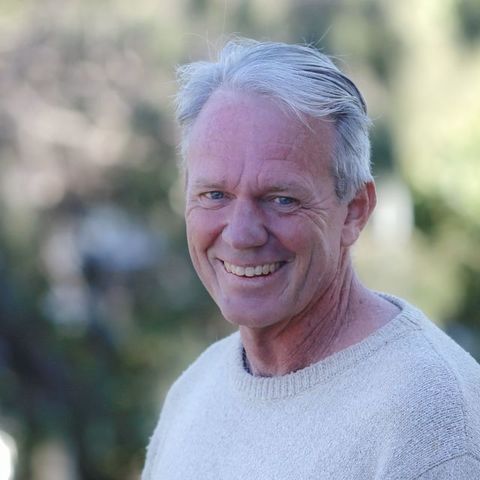
My name is Michael and we're going to dive into a practice this evening that is,
I suppose one that's a little bit,
A little bit further away from what you would think,
Consider a normal meditation practice,
Where you might sit and put your attention on your breath and be with that and bring your awareness back to your breath.
Our instinctive meditation practice number one is that we want to start with attending to something that we love to do,
That we enjoy,
That somewhere where we might lose time or really just feel that we're completely being ourselves.
And one of the key tenants of instinctive meditation is that we embrace all of our experience and when we start on a meditation practice it's like,
Okay well,
Sometimes we don't know why we start to meditate,
Other people say I've been told that I need to go and meditate because I need to calm down.
One of the things that we say about our meditation practice is we don't need to think that we need to calm down because our experience is our own.
Another aspect of a meditation practice is that it really ends up being part of a healing journey.
And quite often in our practice,
When we give ourselves time just to be with ourselves,
Our inner wisdom or our spirit or our subconscious often brings up moments in time,
Sensations and feeling that may not have been particularly comfortable for us.
And we recognize that our life has rough and smooth in it,
That there is good and bad and there's suffering and joy in life.
And one of the,
Another tenant of our practice of instinctive meditation is we have this concept of syzygy which is,
It's like a flow of opposites from one extreme to another.
And often we might think of happy and sad as the swing of a pendulum.
And a lot of meditation practices might say,
Well,
You don't want to go to happy and you don't want to go to sad,
You want to go and look for an equilibrium in between.
But our practice and really our life is about experiencing the full range of emotions,
The full range of experiences and to be able to experience them fully.
So no matter what doorway we use as our meditation or as our way into meditation,
We want to honor that journey from happy to sad,
From joy to suffering and recognize that this is part of being human.
And our meditation practice is about engaging all of our humanity,
All of our essence,
Which is all of experience really.
So we invite you,
Invite you to welcome your experience,
Whatever they may be.
And what we'll do is we'll step through a couple of short practices just to allow ourselves to come into this space of meditation.
And then I'll invite you in a longer practice and I'll use one of the radiant sutras as an entryway,
As an invitation to look at this rough and smooth,
This happy and sad,
This joy and suffering and to recognize where we are in this spectrum.
So let's just begin with the simplest of invitations for a meditation.
And I'm not going to ask you to close your eyes,
I'm just going to ask you to make yourself comfortable to start with.
So however that is,
If that's sitting down,
If that's lying down,
You certainly don't want to make yourself look like you're sitting in a meditation posture.
You just want to make yourself as comfortable as possible.
If that's lying down,
Then that's fine.
And one of the simplest ways to bring ourselves into an awareness of how we're feeling is with a sigh,
Simply by having a sigh.
So if we think of a sigh as starting from full lungs,
Let's fill our lungs up to start with.
And not over-filling,
Just take a breath.
And then as we exhale,
Let's just sigh together.
And just notice any sensations in your body as they change with the sigh.
And you might find that naturally after your first sigh,
That your next exhalation might be a little more easeful and lengthen out.
And sometimes I find that my next inhalation is a little more easeful and it's a little fuller.
This gentle resting of an awareness on our body and on our breath is one of the simplest and the very available way to be with ourselves.
And breath lets us know that we're alive.
So let's have another sigh.
Wherever that comes from,
If your lungs are empty,
Then pay a little attention to your inhale before you.
.
.
Maybe your sigh,
You can even invite some sort of vocalization of it.
And then you're just attending to your experience.
Are there any sensations in your body that you feel?
So any part of your body that's calling your awareness.
So we might have a minute or so just to be with this after the after effect of the sigh.
And if you're called to sigh again,
You're welcome.
We can just be in your experience.
One of the micro skills of Insinctive Meditation is to welcome our experience.
Whether that sensations in your body,
Whether it's emotions or whether it's thoughts.
And simply welcome our entire experience.
That welcoming is tender.
We practice being tender with ourselves.
Might find that just after a couple of minutes of being with your breath and being tender with yourself that you notice a shift in your body.
That it can start to relax.
You might notice a release of some tension.
We don't force this,
We don't look for where tension is and force it to disappear or dissipate.
Just notice.
Oh,
My legs have softened.
Oh,
My face,
It's released.
We've got a very light awareness,
We're attending to our experience.
And without any expectations and without any judgments.
And then the invitation is very simple from this state of a little bit more relaxation is to attend to an experience that you've had where you felt completely at home,
Where you felt completely yourself.
Perhaps where you've been so engrossed in what you're doing that you lose time.
And a way to enrich that experience is to bring into your awareness your senses.
So your doorway might be looking at a campfire or sitting at the beach in the sun,
Maybe in a bath,
Reading a book,
Nursing a child,
Running with a dog.
But we can call on our sensory memory,
Our sense memory.
And we can attend to,
I suppose,
The visual field.
What is it that we remember seeing or what is it that we create in our visual field?
Kind of like on the inside you can look around,
What is it that I see?
What are the colors of the day or the night?
What's moving around me?
Am I attending to something that's just beautiful to behold?
Perhaps it's a sunset or a sunrise or a flower.
You might invite your sense of hearing,
What sounds do you recall in this experience of being with something that you love to do?
What are the sounds that are close and handy,
What are those that are further away?
You have a 360 degree field of hearing,
Front and back,
Side to side,
Up and down.
But we're building a rich sensory experience of this doorway,
This natural doorway for you into your meditation.
And then we give ourselves freedom to be in that experience however that experience comes to us,
However it journeys,
However it transitions,
Whatever,
Wherever it takes us.
When we give ourselves permission to rest,
We create a space that we honor our inner wisdom,
Then we allow whatever to arise to come.
And without judgment we embrace our experience,
We embrace the rough,
We embrace the smooth.
And whatever arises,
We continue to tend to our experience with a tenderness that we would hold for a baby or for a kitten or for something that is just so delicate,
We tend to ourselves as the delicate one.
We hold ourselves gently.
Listen with joy.
And we recognize that there can be a rhythmic flow to our meditation experience where we can be carried away by a train of thought,
By a particular sensation,
By some emotions and we can come back to ourselves and wonder what was I doing?
Where was I?
And we can say,
Oh,
That's right.
I was meditating.
And we inquire,
What was I meditating upon?
What was my doorway into rest?
It's just a gentle reminder.
My own doorway.
And we recognize that like life,
Our meditation experience can show us the rough and the smooth.
We're called to embrace our entire experience.
And while embracing the entire experience,
We can be in the center and traveling with our experiences of joy,
With our experiences of suffering.
Our essence,
Our nature is to experience life fully.
So I'll share with you the sutra from the Radiant Sutra,
Sutra 80,
And then just allow you to and invite you to be with your experience for a few minutes after that.
And I'll leave you in silence for a while.
That space is bad.
This space is good.
The ride is rough for the going is smooth.
We're thrown into suffering.
We are thrown into joy.
Beloved soulmate,
Find the space in the center,
The pulsing spaciousness encompassing all opposites,
The pulsing spaciousness encompassing all opposites,
Embracing the full spectrum of experience.
Here in you,
In the center,
The essences of creation are at play.
We are earth,
Water,
Air,
Fire and space.
We are all of these things.
And we are the senses that perceive them.
This space,
This pulsing spaciousness that encompasses all opposites is the center,
It's our center and this center,
This center is the dancing ground.
Allow yourself to dance your experience,
To welcome all.
And if you have this experience,
Oh what was I doing and what am I doing?
You remember,
Oh that's right I'm in a meditation practice.
And I can choose to continue with my practice.
I can re-engage with my doorway.
Or I can begin my transition.
I can begin my transition back into a fuller awareness of the space that I'm in.
And we'll gently begin to bring our awareness.
Start off with just recognizing the shape that your body is in,
Whether it's seated or lying.
Tuning into these senses that we have that tell us the shape of our body.
Where our body is in relation to the center of the earth,
This feeling of balance.
You can attend to the sounds around you perhaps a little more.
You might invite an inquiry into the feeling of the air on your skin.
Imagine the feeling of the air in your nostrils as you're noticing your breath again perhaps.
You might invite some gentle movement into your body.
Whatever it is that feels right for you.
Give yourself another full minute to bring yourself back into a more normal state of awareness.
Where you'll be able to attend to your evening or your day again.
With bringing a sense of relaxation with you,
With bringing a sense of rest with you.
Bringing with you the sensations and feelings that you've experienced while you've been attending to what it is that you love and acknowledging the ride,
The rough and the smooth.
We come back to ourselves without judgment.
Without a need to do anything but to have honored our experience.
And if you're someone who likes to journal and record your experience and you feel like you want to write then you might take a couple of minutes to write.
And after a couple more minutes we'll come together and close.
We might stop the recording now Matt.
C pause.