Welcome to tutorial 2 on beginning pranayama.
In pranayama,
There are three basic breaths that are used,
The abdominal breath,
The chest breath,
And a combination of the two,
The yogic breath,
All three of which we will cover in this tutorial.
When beginning with breathwork,
It's beneficial to practice these basic breaths to become familiar with the body mechanics of each breath and the involvement of the diaphragm,
The main muscle of respiration.
The various breaths focus energy in different areas of the body and stimulate different organs and subtle energies.
Let's get started.
Throughout this tutorial,
I invite you to close your eyes or keep a soft gaze,
Whichever is most comfortable to you.
We'll begin with the abdominal or belly breath.
I will walk you through the steps first and then we'll practice together.
You can either lie on your back or find a comfortable seat.
Begin with an exhale.
Inhale slowly and gently through the nose and allow the belly to relax and expand outward.
This is not a full breath,
The chest remains relatively still.
When the belly is fully expanded,
Stop inhaling and pause naturally.
Exhale slowly and gently through the nose,
Drawing the abdomen back towards the spine.
This completes one round.
There are no contraindications for this breathing method,
Meaning it is safe for anyone to practice.
Let's practice five rounds.
I will guide you through the first two and then you'll do three on your own.
Either lying on your back or sitting comfortably,
Head,
Neck and back tall but relaxed,
You can place a hand on your belly to feel the movement of breath.
Exhale completely,
Inhale slowly and gently through the nose,
Let the belly relax and expand outward,
Keeping the chest still.
When the belly is fully expanded,
Stop inhaling,
Take a natural pause.
Exhale slowly and gently through the nose,
Drawing the abdomen back towards the spine.
Slowly inhale through your nose,
Belly expands,
Mindful not to expand into the chest.
When the belly is fully expanded,
Take a natural pause and exhale through the nose,
Drawing the abdomen back towards the spine.
I'll remain silent as you do three rounds at your own pace.
Once you've completed your five rounds,
Return to your natural breath and I'll give you a moment to reflect and experience the effects of your practice.
There are a number of benefits and effects of this breath.
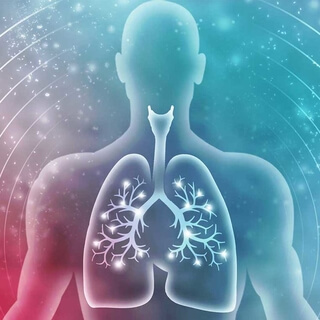
Abdominal breathing calms the mind by stimulating the vagus nerve and the parasympathetic nervous system responsible for rest and digest.
It also teaches the proper use of the diaphragm.
In this breath,
The diaphragm contracts during inhalation,
Causing it to flatten downward as air is drawn into the lungs,
Causing the contents of the abdomen to push down and outward.
Finally,
Belly breathing massages the abdominal organs and stimulates digestion.
Next,
Let's work on the chest breath.
Again,
I will walk you through the steps first and then we'll practice together.
Either lie on your back or find a comfortable seat.
Exhale completely.
Inhale slowly and gently through the nose and allow the chest to expand outward and upwards.
Here,
The belly may flatten slightly as the chest expands.
When the chest is fully expanded,
Stop inhaling,
Pause naturally,
And exhale slowly and gently through the nose as the chest relaxes inward and down.
This constitutes one round.
As with the abdominal breath,
There are no contraindications for the chest breath,
So you're able to practice this one with me.
Let's do five rounds.
Like before,
I will guide you through the first two and then you'll complete three on your own.
Either lying on your back or sitting comfortably,
Head,
Neck,
And back tall but relaxed,
You can place a hand on your chest or around the bottom of your ribcage to feel the movement of breath.
Begin with an exhale.
Inhale slowly and gently through the nose and feel the chest expanding outward and upward.
At the top of the inhale,
Chest fully expanded,
Take a natural pause.
Exhale slowly and gently through the nose,
Relaxing the chest inward and down.
Slowly inhale through your nose,
Chest expands.
When the chest is fully expanded,
Take a natural pause and exhale through the nose,
Feeling the chest relax.
I'll remain silent as you do three rounds at your own pace.
Once you've completed your five rounds,
Return to your natural breath and I'll give you a moment to reflect and experience the effects of your practice.
How did that feel compared to the belly breath?
Were you able to feel the difference between the abdominal breath and the chest breath?
As a final section of this tutorial,
Let's bring these two breaths together and learn what's known as the yogic breath.
Either lie on your back or find a comfortable seat.
Again beginning with an exhale.
Inhale slowly and gently through the nose and allow the belly to expand.
Continue inhaling through the nose into the chest,
Letting it expand while the abdomen might draw in a little bit naturally.
When the chest is fully expanded,
Pause and then exhale slowly and gently through the nose and let the chest relax inward and down.
Complete the exhale by drawing the abdomen towards the spine.
This constitutes one round.
The yogic breath also has no contraindications.
So let's practice five rounds.
I will guide you through the first two and then you'll do three on your own.
Either lying on your back or sitting comfortably,
Head,
Neck and back tall but relaxed.
You can place one hand on your belly and another on your chest to feel the movement of this breath.
Exhale completely.
Inhale slowly and gently through the nose.
Feel the abdomen expanding.
Continue inhaling smoothly through the nose and into the chest,
Letting it expand while the abdomen might draw in naturally.
At the top of the inhale,
Chest fully expanded,
Take a natural pause.
Exhale slowly and gently through the nose,
Relaxing the chest downward and drawing the abdomen towards the spine,
Letting all the air out of your lungs.
Slowly inhale through your nose.
Abdomen expands.
Continue inhaling into the chest.
Pause at the top of the inhale.
Exhale gently through the nose,
Feeling the chest relax,
Draw your belly in.
I'll remain silent as you do three rounds at your own pace.
You may experience a wave-like movement while performing this breath.
Once you've completed your five rounds,
Return to your natural breath and take a moment to reflect and experience the effects of your practice.
The yogic breath is considered a two-part breath,
In which the first part,
The abdominal breath creates space as the diaphragm flattens down.
The transition to the second part is smooth as the chest begins to expand.
This breath is a complete inhalation and exhalation that maximizes the volume of air brought into your lungs as well as the foundation for many pranayama techniques I teach in my other tutorials,
All of which you can find on Inside Timer.
Thank you for joining me today and I hope to see you in some of my other tutorials.