Death of Friends,
Loved Ones and Teachers Meditation In this meditation,
Which is a contemplation of death and impermanence,
We will be bringing to mind the perception of people who are,
Or who have been,
Dear and close to us.
And we will then practice simply acknowledging the fact that each of these people will one day have to die.
Indeed,
Some of the people who we will recollect may have died already.
We practice acknowledging these things in a deep way,
With a calm mind,
So as to train ourselves to be both more accepting of,
And more mindful of death.
In doing this,
We become more aware of the truth of impermanence,
And we see the current blessings of our life more clearly.
Towards the end of the meditation,
We acknowledge the fact that one day,
We too will have to die.
We conclude the meditation with a few minutes of loving-kindness practice.
We begin as per usual by establishing a body-based,
Present-moment awareness.
Focusing your attention to your sitting posture,
Being simply aware that you are now sitting,
With a straight,
Yet relaxed posture.
At first,
Simply feeling the physical feelings of the buttocks pressing against the mat,
Or the cushion or chair on which you are sitting.
Grounding awareness in this present moment.
Allow a broad,
Natural awareness to embrace your whole body for the next few moments.
From now I suggest taking three slow and deep in and out breaths,
Releasing any tension you may be feeling,
Particularly with the out breath.
Breathing slowly and deeply in,
All the way into the abdomen.
And then out,
Letting go.
Once again breathing in,
And breathing out.
Bringing a fresh awareness,
A sense of being present,
Into this new moment.
And one more deep in and out breath,
At your own pace.
Now allow the breathing to become relaxed and natural.
Breathing easily,
Ordinarily,
At your own pace.
Taking small,
Gentle,
Natural breaths.
Now with mindful awareness,
Try to feel the area around the top of the head.
Simply aware of the various feelings on the surface area of the skin,
On the top of the head.
Then include the face,
And the ears,
And the neck,
Front and back.
Now include the upper shoulder area.
Simply aware,
Simply feeling.
Knowing the various feelings on the surface of the skin,
In the shoulder area.
Becoming more aware,
More alert,
More in the present moment,
And at the same time,
Relaxing into mindful awareness.
Now include the chest,
In this awareness.
Moving down,
Include the stomach area.
Then bring this gentle,
Knowing awareness to include all of your back.
Now include your arms.
Embracing the whole upper area of the body,
With gentle awareness.
Not judging,
Not discriminating.
Now include the lower abdomen,
The groin,
And then the buttocks.
Feel your bottom pressing against the harder surface underneath.
Feeling present,
Grounded.
Now slowly include the legs and the feet in your awareness as well.
Feel the whole body simply sitting.
Now bring your awareness to your breathing,
Being very mindful of each in and out breath.
Simply being aware of the feelings involved with in and out breathing.
Try to be aware of the entire in breath,
And the entire out breath.
Knowing the sensations of the breath coming in at the nose,
And through the chest,
And into the abdomen.
And then as it leaves the abdomen,
And the chest,
And out the nose again.
Knowing the entire in breath,
And the entire out breath.
Each in breath,
And each out breath.
We are going to introduce a mental noting method now,
So as to assist our mindfulness in staying with the feelings of the in and out breath.
The main meditation object is awareness of the feelings of the breath.
Yet a gentle mental noting method can help us to stay with our meditation object,
Not letting the mind wander off into thinking about this or that.
So we will practice noting Bhutto at first,
Which means clearly knowing.
As we breathe in,
Mentally note Bhutto,
And as you breathe out note Do.
Bhutto.
Aware of each in breath,
Bhutto,
And aware of each out breath,
Do.
Bhutto.
Bhutto.
As this meditation will be a contemplation of death and impermanence,
You can also practice noting the word Maranang,
Which means death or dying.
Breathing in,
Maranang.
Breathing out,
Maranang.
As the next stage of this meditation entails using the visualizing,
Reflecting faculty of the mind,
It may not be possible to be aware of the breath in as much detail as when we take the breath itself as the primary meditation object.
This is fine.
It is however very helpful to maintain a general awareness of the in and out breathing,
Even while doing visualizations.
And so you can alternate between these two words if you like.
Bhutto and Maranang,
Using the noting as an aid to maintaining some awareness of each in breath and each out breath throughout the entire meditation session.
Simply hear the instructions and promptings and visualize the scenario as best you can while maintaining awareness of the breath,
Especially in the silent spaces.
Bring to mind now the perception of a close friend of yours.
Someone who is currently living and in reasonable good health.
Let it be someone who you find it easy to like.
Someone with whom you are very familiar.
Picture this person's face in front of you now and wish them well.
And I would like you now to gently consider the following.
Acknowledge that one day this person will definitely have to die.
Like all living beings,
Having been born,
Your friend will live for some time and then at a certain point,
Somehow,
They will die.
Continue to be aware of your in and out breathing while contemplating this.
Maranang,
Maranang,
Maranang,
Maranang,
Maranang.
While still keeping your friend in mind,
Consider also that although sometimes we may have some forewarning about death,
Often we usually don't know exactly when or how the event will come.
For all living beings,
Death could come today.
And so acknowledge that your friend will definitely have to die one day.
This person could even die today.
Simply aware of this and holding the perception in awareness while still being aware of your breathing.
Maranang,
Maranang.
Now bring to mind the perception of one of your childhood teachers.
Let it be one of the teachers who you liked.
One who was kind and caring and who really taught you something.
Picture this teacher in your mind now.
You can mentally thank them if you like.
Maranang,
Maranang,
Maranang,
Maranang.
It is possible that this kind person may have already passed away.
If this person is still living,
Acknowledge that one day,
They too will definitely have to die.
May this person be well and happy,
Wherever they are now.
Maranang,
Maranang.
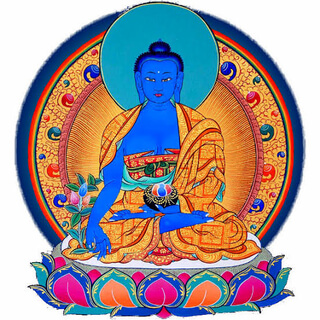
Now bring to mind the perception of the Buddha.
The teacher of our teachers,
The perfectly enlightened one.
Impeccable in conduct and understanding.
While still being aware of the in and out breathing.
Buddha,
Buddha.
Consider the Lord Buddha's life,
His princely childhood,
His skills and talents as a young man of the warrior caste,
His courageous going forth and studying with great teachers,
His extraordinary and heroic practice of asceticism before discovering the middle way.
And then his enlightenment under the Bodhi tree.
Buddha,
Buddha.
And then for 45 years,
Wandering and teaching out of great compassion.
Giving many teachings to many types of beings.
Teaching thousands,
Perhaps tens of thousands of beings.
And establishing a profound training that would endure for millennia.
And then finally,
Mahaparinibbana.
When the time came,
Even the Lord Buddha had to pass away.
His last teaching to the assembly of gathered disciples was,
All conditioned things are of the nature to decay,
Strive on untiringly.
Maranang,
Maranang.
Still aware of the breathing.
Now bring to mind one of your parents.
Or a person who was like a parent to you in this lifetime.
This person may have already passed away.
Or perhaps they are still living now.
While still being aware of the in and out breathing.
Wherever this person may be now,
We can wish this person well.
Acknowledge the gifts,
Resources and time that this person offered you.
Feeling grateful in your own way.
You can say thank you if you like.
And now once again,
Simply acknowledge,
Deeply,
Yet gently,
That this person is also subject to the natural laws of this world.
Having been born and having lived,
When the time comes,
They die.
Perhaps this person has already died.
Maranang,
Maranang.
Maranang,
Maranang.
Now bring to mind one of your Dharma teachers.
Someone who has encouraged you.
Perhaps shared some wisdom,
Experience or insight with you.
In a way which led to an increase in understanding.
Allow yourself to feel some gratitude for this now.
Feeling blessed.
And while still maintaining awareness of your breath,
Wish this person well.
And acknowledge that this wise person is also subject to dying.
Perhaps this person is still alive now.
Or perhaps they have already moved on.
Maranang,
Maranang.
Bring to mind now,
If you can,
While still being aware of the breath,
All of the many different people in your life.
The people who you know intimately.
And the many more who are simply acquaintances.
And all those others who you pass in the street or on the road,
Going from here to there.
See this large mass of humanity before you now.
All of these people wishing for happiness and wishing to avoid pain.
Make a simple wish for their well-being.
May we all grow in wisdom and happiness.
And now,
Simply acknowledge the fact that each of these people,
Every single one,
Will also have to die,
Someday.
Maranang,
Maranang.
Knowing each in-breath and knowing each out-breath.
But-do,
Knowing.
Maranang,
Death and dying.
Knowing each in- and out-breath.
And knowing in-permanence and death.
Maranang,
Maranang.
And lastly,
Bring to mind the perception of your own life.
If it helps,
You can picture yourself sitting in front of you now.
Wish this being well.
May I be well.
May I be happy.
May I be safe and free from harm.
May I take good care of myself.
May I grow in peacefulness and develop wisdom and insight.
And may I always have a refuge in my heart.
While still being aware of the breath,
Out of kindness and for the purpose of developing wisdom,
Acknowledge now,
One day,
I too,
Will definitely die.
Maranang,
Maranang.
I may have some warning,
Or I may not.
Maranang,
Maranang.
I may live to be very old,
Or I may not.
Maranang,
Maranang.
I may die at ease,
Or in pain.
Maranang,
Maranang.
But whatever the case,
One day,
I will definitely die.
Maranang,
Maranang.
Maranang,
Maranang.
But whatever the case,
One day,
I will definitely die.
Maranang,
Maranang.
Knowing impermanence.
Maranang,
Maranang.
Mindful of death and dying.
In about five more minutes,
We will come to the end of this meditation.
Try to maintain a good,
Clear awareness of your breath for the remainder of this session.
If your mind is peaceful,
Simply maintain your awareness of breathing,
Allowing your mind to stay in its peaceful state until the end of the session.
Hear my voice as if it is in the distance.
If you think that it might be helpful,
You can now refresh the awareness of the body sitting,
Knowing the felt sense of the sitting posture.
Feel the weight of your body pressing against the mat or the chair.
Mindfully aware that you are sitting.
Feeling grounded and present in the body in this moment.
And then mindfully bring awareness to refocus on the breath,
Feeling the entire in-breath and the entire out-breath.
Taking one or two deep breaths can be helpful in re-establishing awareness of the physical feeling of the breath.
You can note the in and out-breath as before with the syllables.
Put dough.
We are using alsanya,
Or perceptions,
To stimulate a heightened awareness of impermanence,
And the truth of the inevitability of death.
During the meditation,
We allow the mind to be affected by this exercise,
To be informed on a deep level.
But towards the end of the meditation,
It is good to remember that our visualization meditation was actually just an exercise involving thoughts,
And perceptions,
And feelings,
Arising and ceasing in awareness.
If your mind became peaceful through this exercise,
Wonderful.
If it did not,
Never mind.
The important thing is that we become a little more aware of impermanence in our lives,
And a little less frightened of the very normal experience of death.
These kinds of meditations can be helpful in both training the mind to let go into peaceful awareness,
And also in preparing us to be able to be mindful when our eventual death does actually occur.
Sometimes it is good to end death meditations with a couple of minutes of metta,
Or loving kindness meditation,
Establishing a sense of well-being,
Breathing in wishing,
May I be well,
Genuinely directing metta towards yourself,
Generating the warmth of positive goodwill in the area of your heart,
Breathing in wishing,
May I be well,
Breathing out wishing,
May I be happy,
Breathing in,
May I be well,
Breathing out,
May I be happy.
Breathing in,
May I be safe,
May I be free from danger.
Breathing out,
May I be well,
May I be happy.
Breathing in,
May I be well,
Breathing out,
May all beings be well.
Breathing in,
May I be happy,
And breathing out,
May all beings be happy.
The Buddha explained that consciously developing awareness of impermanence creates an enormous amount of good karma,
Merit,
Or positive potential.
Acknowledging that you have been contemplating impermanence and death in accordance with this ancient wisdom tradition,
You can feel joyful and confident.
In a minute or so,
This meditation session will be over.
If you have time,
You can continue with your meditation on your own.
Otherwise,
You could consider sharing the merit of this meditation with all beings,
Or with someone in particular.
7.
Bringing to mind the merit that was produced by this session of meditation,
Determine how you wish to dedicate the merit.
I dedicate the merit that arises from this session of meditation to May Be well,
May this person,
These people,
Be well,
Be safe,
Be happy.
May this person be well,
May this person be well,
May this person be well,
May this