Welcome,
Allow yourselves to settle and arrive.
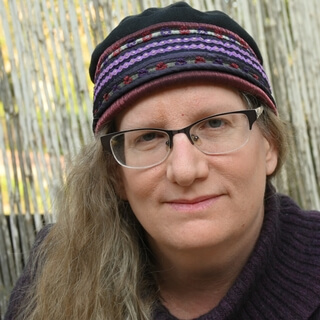
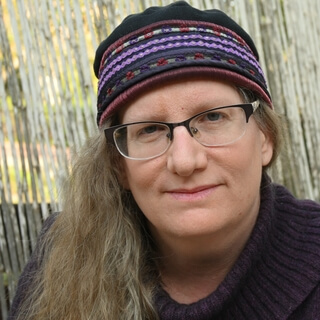
I am grateful that you have joined us here at the Institute for Holiness,
K'chilat Musar.
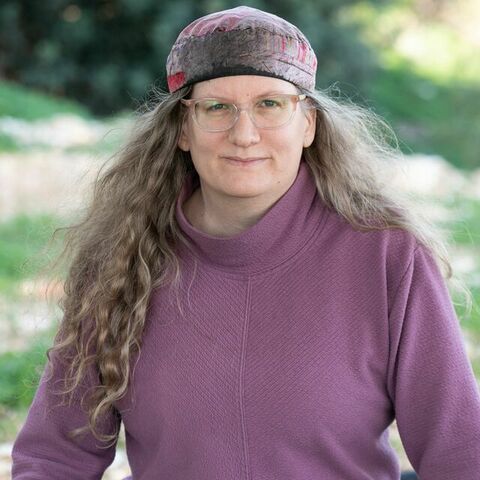
I am the founder and director,
Rabbi Chassio Uriel Steinbauer,
Joining you today on Sunday,
February 5th at 7.
30 p.
M.
Here in Haaretz in Israel,
12.
30 Eastern Standard Time,
Where today,
Well now starting for us,
We've entered Tu B'Shvat,
Which is the new year,
The birthday of the trees.
For those of you still residing on the 14th of Shavuot,
The month of the Hebrew month of Shavuot,
We joined together on Sundays to look at the Torah portion,
The parasha from the day before,
Which was B'Shalach.
And it was falling on Yud Gimel of Shavuot in Tavshin Pei Gimel,
5783 of the Hebrew year,
And it was falling on February 4th of 2023.
And we are going to,
Of course,
Look at this Torah portion from the lenses of Musar mindfulness,
This great gift of taking the insight from two master ancient traditions of Judaism and the Dharma and Theravada Buddhism to see how we can get the most out of this ancient and holy sacred text and what our ancestors wanted to learn from us,
To learn from it and to get from it,
To be able to use it as what we call applied mindfulness,
Applied practice,
Taking this holy text and having it be really this project of meaning making in our lives.
So as before,
We begin,
We begin always the same each week,
Which is a great gift to us.
And we always begin our practice with our Kavanot,
Our intentions for today's practice.
So before you,
You should see here on the screen,
If you have vision and are watching on video,
Three Kavanot,
Which I will summarize for those of you listening on podcast in the audio.
We say that we are doing this act of awakening together of Torah Musar mindfulness.
Particularly,
This is now our 17th sitting,
16th or 17th,
I think it's 12,
13,
14,
15,
16,
Sitting together of the new year,
The new Hebrew year.
That we see this as our act of radical self-care,
An act of caring for others,
And an act to strengthen our relationship with the divine.
It's like a three layered cake,
One that's healthy and beautiful and life affirming for you.
So we say this is something I'm doing to strengthen my own soul.
This is something I'm doing to strengthen my relationship to others.
This is something I'm doing to strengthen my relationship to the divine,
To the creator.
In order to be of benefit to others in the future,
So that I can be a better conduit of God's good to others when they need me.
What a gift.
If we could all put ourselves,
May we merit this intention,
These Kavanot,
The way of living and be able to fulfill even a small amount of this each day.
What a world it would be,
Right?
To quote that beautiful song.
So I'm delighted to be here with you as we normally do.
I will give you a summary of this parasha,
This Torah portion,
And then we will essentially move,
After discussing a very small section of the portion,
We will move into a guided mindfulness meditation practice around this to really begin to integrate one that we can bring home with us on a daily basis in our daily practice.
So you'll probably see me have my hand raised hand here in the corner because I speak with my hands.
And as we all know on Zoom that that causes someone to have a raised hand.
So just bear with me as I always try to remove that raised hand.
It's okay if it's there.
I just have to figure out how to move it over time.
So we are in B'Shalach.
As you know,
Even the people who really look at like,
How is this parasha functioning?
It's really just a continuation of the story that came before in parashat Bo,
The one from two weeks ago,
Really a week ago,
But a week since since Saturday.
Right.
So it continues with the story of B'nai Israel and God leading B'nai Israel,
The children of Israel,
The Israelites,
Out of B'Tzrayim,
Out of Egypt.
And Paro,
The leader of the Egyptians at that time,
Basically in his army,
Chase the children of Israel.
They trap them by Yam Suf,
Which is also known as the Sea of Reeds or Reed Sea.
And Moshe,
The leader of the Jewish people,
The children of Israel,
The Israelites,
Raises his staff and God miraculously splits the sea for them to be able to cross over and safety.
And B'nai Israel cross the children of Israel across the dry land and with water raised as walls on each side.
And then Paro and his army chase after them and they enter into the dry space between the two walls.
And God causes the waters to return to normal,
Thereby killing the Egyptians,
Drowning them.
Moshe,
Miriam and B'nai Israel,
The children of Israel,
The Israelites sing songs,
Thanking God afterwards.
And the children of Israel,
The Israelites,
Then arrive at what's called Marah,
Where the water is too bitter to drink,
Which is very common based on where they're located at this time.
And God shows Moshe a branch to throw into the water to sweeten it.
And later,
Moshe is commanded to provide the Israelites with more water by hitting a rock.
The children of Israel complain that they do not have enough food,
Which is true.
God rains down man,
Which essentially is kind of a miraculous food from the sky.
And on Friday,
They are to collect a double portion since there is no man will fall on the Sabbath,
On Shabbat,
On that Saturday.
Then the final part of this parasha of what happens is Amalek,
A people,
A nation,
Attacks the children of Israel,
Attacks the Israelites.
And Moshe stands over the battle with his special staff and Aharon and Hur help hold his hands up all day long.
And we imagine it to be a little bit like this,
But I suppose it could be like this or like this.
However,
They hold his hands up all day long.
And Yehoshua,
Who is becomes kind of like the helper and servant to Moshe,
Leads the Israeli army.
And they are victorious every time that Moshe's hands are held up or when they go down,
Amalek begins to win.
So lots of miraculous things happening in this parasha,
Lots of interaction between a people and its God and new relationship together.
Lots going on here.
And what I want to focus on,
Which I think we're supposed to really get from this,
Is really fine tuning,
Watching how our ancestors behave and react and really questioning,
Is this truth?
Is this their narrative?
What is the thoughts that are happening?
What is the storytelling that they might be telling themselves that we can actually see or tweak out of the Torah?
What may be going on that leads to certain ways of seeing this?
So I want to begin to bring some text first and then we can discuss this more.
OK,
So something interesting happens in this parasha where Moshe,
In his difficulty in providing the people the water and the food that they need and that they begin to complain is the verb used,
But it's not the best verb.
It comes out as complaining.
Maybe,
Maybe it is the best verb given,
Given who our ancestors were and what they were coming out of.
So I've said this before last year and I'll remind us again.
This is a people that have been enslaved by a nation state,
By an institution,
The institution of slavery.
This is an act of trauma,
Intergenerational trauma,
Communal trauma.
This is a people who has been freed.
And it doesn't mean that they're free here or here.
That takes generations.
So much so that we can even witness today a former people who are not even peoples,
Tribes and peoples from Africa,
For instance,
Who were kidnapped and brought over to the new world.
The lands,
It's not so new world,
Obviously,
Many First Nation Native Americans were living all throughout North and South America.
And they were kidnapped and brought to those lands.
And hundreds of years later,
We are still witnessing the trauma and the resilience.
Of people trying to live with that knowledge,
Integrate it to know how to live with insight,
With liberation,
Very difficult,
Challenging work,
Not only for the individual,
But as a people,
As a community.
All the more complicated when you live still in the former people's land who enslaved you.
All sorts of complications.
So let's keep this in mind for the children of Israel,
The Israelites.
So when it says that they complain for water,
They complain for food.
Let's keep in mind that this may be the only way they know how to begin to ask for or demand their needs.
We might imagine someone or people who are more skilled,
Who haven't gone through trauma.
Right.
Who might say,
You know,
We're thirsty.
We don't have enough food.
We're hungry.
We don't have enough food or water,
Food to be able to be resourced and with skills and to be able to communicate.
But the people and the person who complains is someone who feels disempowered,
Who someone who in some ways only knows how to whine.
So what happens here in this case,
If we're going to bring us just to remind you where we are in the text,
Too,
I'd like to give a summary of the whole B'Shalach.
B'Shalach is a chapter 13,
Pesach 17 through chapter 20,
14,
Excuse me,
Through verse 31.
And it moves them through the wilderness,
The miracle at the sea,
The changes,
Of course,
And lots of lots of opportunity here.
But we're going to focus on the people's reactivity,
Moshe's reactivity or response,
God's reactivity and response,
Things like that sort.
So I'm going to focus right here on on the the complaint for water.
Right.
And we're essentially the people by this point.
This is the second time they're complaining for water.
Right.
The first one was the waters were bitter.
Now they're complaining for water.
There's not enough water.
And so Moshe is beginning to really be tested and tried with his patients,
How much he can bear the burden.
And he goes on to say here,
He says,
What should I do to this people?
Right.
What should I do to this people?
He has an angry outburst to God.
He's speaking this and saying this to God.
And he goes on to say a little more and they will stone me.
OK.
And taking that at face value,
We might think,
OK,
There's a whole bunch of complaining people.
I guess that makes sense that they that the fear that they're going to get so reactive and angry that they begin to engage in violence.
And we might not question that.
We might not question it all.
Wait,
Moshe,
Is this really what is happening with the people?
Or is that the storytelling you're telling yourself about people?
Is that fear based?
Are you functioning in what's really before you?
Or is it fear based?
And at all points throughout this 40 year journey,
I want to encourage you to ask yourself,
Is this fear based?
What's happening here?
Is there some other hindrance involved?
Is this the story that they're telling themselves or is this the truth?
All the while holding how complicated truth is,
Both as a mida in Musar practice and in Judaism in general.
Right.
This sense that in truth are there's multiplicity of truth.
Truth is complicated.
Truth.
Emmett is a media is one that has to rely on a very strong internal moral compass of knowing and trusting right from wrong.
So knowing that we have to hold a lot.
OK,
In this understanding.
So he goes on.
Moshe does not use the affectionate term my people up until then,
When they were complaining and he needed to reach out to God to help intervene and help the people.
He spoke my people.
Right.
When he interceded for them after him,
Even after the sin of the golden calf.
But here he's in.
Oh,
Actually,
It's not even this is the same thing we witnessed after the sin of the golden calf,
Where he actually says this people or your people,
It's not my people.
OK,
So already we see the fear of what Moshe thinks is going to happen,
Being reflected in his speech of distancing.
Right.
And not a healthy distancing.
It's not a healthy balance.
Pre-shoots of separation and abstinence.
This is I'm fearful and therefore I'm going to distance myself from you.
OK.
And you're no longer my people.
All right.
Now,
Hashem actually behaves completely in the opposite.
Response as a response,
Understands the feelings of the children of Israel and response,
Full of compassion and understanding.
If you go to Chapter 17,
Verses five through six,
He says to to Moshe,
Avor Livneham,
Pass before the people.
This is going to be a very important statement that we're going to focus on.
Right.
Bekach itcha mi ziknei Yisrael and take for yourself some of the elders.
Right.
You always have to be in community,
Making sure that you understand and hear multiple truths.
Right.
And what do you need to do?
Umatcha asher hikita bo et ha'yor and take in the hand of the rod,
Which you strike the Nile and go.
Kak beyadecha ve'halakhta.
Go,
Go,
Get out of here.
Right.
Ve'hikita b'tzur,
Strike the rock.
Ve'yatzu mimenu mayim and water will come out.
Veshata ha'am na'am,
Will drink.
Right.
So what does it mean?
Pass before the people.
What does Moshe need to pass before the people in order to take his rod and go hit the rock?
What does it mean?
Think in your own life when you or somebody else gave you very sound advice,
It could have been your own internal higher self.
Pause,
Pass before the people,
Pass before yourself.
Get out of the storytelling and actually see the people for who they are in this moment.
That they're not about to just stone you.
Pass before them so that you can actually tap back into the shared humanity and see them.
See them as created in the likeness of an image of Hashem so that you can stop this fear based reactivity.
The distance yourself from them that you don't even call them my people anymore.
Emotion very profound and how subtle,
How subtle and quickly it happens.
Frustration,
The impatience,
Right?
Having to listen to complaining and think about all of us in our lives,
How much we have to listen to complaining,
Whether it's our own,
Our children,
Our spouses,
Our parents,
Our siblings,
Our neighbors,
Our community,
Our leaders,
Right?
We bear so much and the minute we bear that we can get lost.
They can get so lost,
Right?
In the reactivity and the storytelling and making the situation worse and not based in the truth of the reality,
Right?
Instead,
We're just caught up in the narrative and we have to be careful when we believe our narrative is the truth.
Very careful.
Okay.
So this is a very important moment in this Torah portion that really is guiding us to remember to pass on before the people,
Right?
And lots of midrashim even come to support this.
For instance,
Midrash Tahuma,
B'Shalach 22,
Has Hashem really kind of,
You know,
Go to Moshe and give him some mousar,
As we like to say,
Gives him some moral reproof and says,
Is this the way you talk?
Pass on before the people and we shall see who will stone you,
Right?
It's all the Israelites stood up as he passed by and behaved the greatest kavod,
The greatest respect in Yirah,
Reverence of both this fear and awe and reverence,
This beautiful way of behaving.
And it's like Hashem was able to see past the storytelling,
Past the reactivity,
Right?
The sense of don't commit deba,
Don't commit slander about this people.
Don't create a story as if that is them.
And that's only how you see them from now on.
And we too,
In this coming up this four year journey,
Need to be very careful with this.
I can't tell you how many students and fellow practitioners go through this journey with so much reactivity,
Either against the children of Israel,
Against Moshe,
Against God.
Let's enter a different path this time,
One of moderation.
The Shaville has a haf,
This golden path,
This golden way,
This middle path,
Middle way in honor of the dharma of how the Buddha terms it.
This is beautiful.
This is the potential of the path and the practice together,
That we can see the reactivity and get the wisdom behind it.
Take the,
You know,
The kernel,
Produce something beautiful from it.
Take the mud and see the lotus.
All right.
So that's what we're going to do.
And I could easily bring you other examples,
Quick ones,
I think that would order to this idea.
And I'll close with one.
We have to be very careful.
Like,
For instance,
I'm going to bring up an example here in this portion,
The Shalach,
Where we have Miriam,
Right?
Beloved sister to Moshe Rabbeinu,
Took care of him when he was a baby in the Teva,
The Nile River to make sure he survives.
Right.
So she,
After the sea closes,
God causes the death of the Egyptians.
She raises her temboral and helps to complete this beautiful song of Shirat HaYam,
Very famous song sung daily among the Jewish people in prayer.
She completes the song of praise to Hashem and about Hashem at the sea,
Right after experiencing this amazing rescue.
And let's complicate this for a minute.
Right.
So she's having her height,
Her elevation,
Her moments of ecstasy in some sense.
And then she will come down to as like a huge crash and actually gossip about her brother and say negative things about him and not believe in him.
She will go to reactivity and her storytelling,
Which will lead to speech first,
How we're going to act and behave.
And just to keep this in mind,
That here are the people who we deem at this moment so holy,
So full of a munah and faith and betecho and trust in God that they actually built a kuppim,
Drums and timbrels in mitzrayim because they so believed that God was going to save them and take them out,
That they knew that they were going to be saved and get out and they'd be able to sing and praise later.
Someone like that,
Miriam,
Will too also fall to the lack of the wisest sermon,
The reactivity,
Right?
The dukkah,
The first arrow of the stimuli.
And she will go through her own storytelling and then speak poorly about her brother who she protected and loved.
And that's not to judge her.
That's to learn with her.
That's to be on the path with her because we do this all the time and will we do this all the time,
Whether it's with our siblings or our parents or our spouse or our children,
Right?
Something happens.
We begin telling ourselves a story about it.
We live in that narrative as if it's truth.
And then we act out based on that.
Well,
This is the practice of Musar mindfulness.
We have a choice right here,
Right now.
Begin again.
It's like in our meditation practice.
When the thoughts take us away and we bring ourselves back to the present moment,
We begin again.
The same thing when we fall off the derrick or we behave in ways that are not in alignment with our higher self.
We do teshuvah.
We turn,
We return,
We begin again.
And so I invite you on this path of Musar mindfulness.
Practice with us.
Join our community and be on this path towards holiness.
We will now move into our guided mindfulness meditation practice.
I'm going to close with a few more words and then we will move into our practice.
So as part of the practice in the next week,
I want you to look at yourself and find when do you grumble and do you complain?
And when you find yourself doing it or about to,
Maybe even tap into the sensations in the body when it's about to arise,
Right?
What does it feel like when you're about to complain?
Do you even do this when you witness something especially wonderful?
Like think about all the people witness that great miracle,
The splitting in the sea,
And then they're complaining about bitter water not too much later,
Which I probably would have too.
Who wants to drink bitter water,
Right?
So when do we find ourselves complaining when we just witness something especially wonderful?
And how can we appreciate the wonders and respond to the daily trials with wisdom instead of reactivity?
That is the practice.
That is the path.
And I'll just finally close with saying that even our lovely ancestors,
Our Parshanim,
Our Rabbinic commentators,
Those that we learn most from our tradition in Judaism who passed on so much about these four crises,
That the crises that occur in this Torah portion,
The one of the lack of drinking water in chapter 15,
And the shortage of food in chapter 16,
Further lack of water in chapter 17.
And then of course,
The sudden unprovoked aggression of Amalek,
A wild desert tribe,
Towards the end,
The middle of 17.
Okay,
These misfortunes get responded to and sometimes with reactivity by our ancestors,
Right?
And so one of them in particular is our Parshanim notice the people's,
When for instance,
The children of Israel,
No,
Paro and his army are approaching and the people see them advancing the verb that's used.
I'm looking in chapter 14,
Verse 10,
Excuse me.
It says,
As Paro Junir,
The Israelites caught sight of the Egyptians advancing upon them.
Okay,
So the verb that's used is in this masculine singular.
And what that taught the rabbis,
Right?
Our ancestors is that it's suggested to them that the Egyptians were of one mind acting in concert and thus deserving of their mass destruction.
Do you see where they went?
First of all,
We all know that I'm sure not all the Egyptians were of one mind.
That's just not truth.
Of course,
They want to find him.
We all want to find a reason to justify either why God kills someone or what happens when it happens.
But we have to be very careful of these stories that we tell and even the perpetuation of them thousands of years later,
Right?
Can we see this differently?
Can we live with it differently?
Can we bear witness without reactivity?
So with that,
Come to an upright posture for yourself.
One that feels dignified,
Recognizing that you were created in the likeness and image of the divine.
One where you feel that you are engaged in a practice of being holy to walk in God's ways.
So for most of us,
If we're in the seated position,
It'll be upright.
Not West Point stiff,
As our teacher,
John Kabat-Zinn loves to say,
But rather one where you're at ease.
I like to sit at the edge of the chair because then I don't,
You know,
Slouch down.
Upright,
Planted the feet firmly on the ground.
So I feel held by Mother Earth and present here,
The seat bones strong in the chair.
For those of you who need to,
You can be in the standing posture,
The walking or lying down,
One of the classic four mindfulness meditations postures.
And I invite you to close your eyes if you have vision or lower your gaze.
And we will begin with one deep inhalation,
The gift of oxygen.
Exhalation,
Inviting ease,
Inviting presence and awareness.
Inhalation,
Inviting acceptance,
Inviting being fully here,
Even telling yourself,
I welcome myself to be here fully in the present moment.
Inhalation,
Even allowing your shoulders to rise and then exhale,
Let them go.
Allowing a smile to come to your face if it feels natural.
Grateful for the gift of oxygen,
Grateful for being here together in practice.
Grateful to Hashem for this moment that we have arrived to be able to learn each week together.
From time to time,
I will go silent,
Allowing you to settle into your mindfulness meditation practice.
If you are new to this practice,
Allow your anchor,
That which you pay attention to,
To be your breath if it feels safe and comfortable,
Or the sounds around you.
Focusing your attention on those,
Feeling what it's like to be here in each moment,
And again,
And again,
And again.
Awakening to the good,
Awakening to the present moment,
Awakening to the gifts that are before us.
Allowing ourselves to tap into our higher selves,
What some call our future self,
That which is in alignment with your Torah,
Your own Dharma values,
And kindly ask yourself,
How could that scene have been different?
What would Moshe's higher self have done?
What could he have done differently?
And that's where he begins to recognize and become aware of what is arising in him,
Fear,
Frustration,
The impatience,
Feeling it in his body,
In his solar plexus,
Perhaps in the shortness of breath,
And really at that moment,
The self-care and self-compassion,
He could have said,
Ah,
My people,
My people are fearful,
They're thirsty,
They're hungry,
And as hard as this is,
I'm going to try to be present with it.
He might even ask themselves,
Do I have the resources right here in this moment to be present with this,
To be fully here?
And if I'm not,
How can I resource so that others can help carry this burden right now?
Can I turn to Aharon,
To Miriam,
To anyone else?
There's a reason why Yitro,
His father-in-law,
Comes to help him in the next parasha coming up this Shabbat.
It's not a mistake that he comes to the one that had to pass before the people,
To come back to wise awareness,
To wise presence,
So that he learns to listen to and accept help.
I think into your own life right now,
With great gratitude and joy.
One instance in your own life where you were caught up in reactivity,
Whether it be fear or any of the other hindrances,
Greed,
Delusion,
Sloth,
Torpor.
Where did you feel that in the body?
And if you could tap into your higher self,
What would he or she say,
Or they say to you about that moment?
How could you behave differently?
How could you have thought differently and then spoken differently?
Behave differently,
Holding the narrative of God,
The other,
And you all in mind at once?
What I learned today from one of my students,
Who is always a teacher to me,
That we begin to see things with three eyes,
The truth and narrative of God,
The truth and narrative of the other,
And the truth and the narrative of ourself.
What could you have done differently?
Think of one,
He's done new to one opportunity this week in your practice,
Where you could attempt to apply one small successful Kabbalah,
One small practice where you could tap into that higher self,
That wise discernment to pull yourself out of the reactivity,
To create that space between the match and the fuse.
We will move into silent meditation for the next few minutes.
You will hear my bell when it is time to come out.
Keep your eyes closed,
Your gaze lowered.
Gently and slowly return to light stimulation,
Back into this shared sacred Zoom space or live streaming on YouTube,
On Facebook or LinkedIn,
Wherever you may be joining us.
Thank you for your practice.
Please consider offering Sadaka donations,
Dana,
To the Institute for Holiness in honor and in support of these public offerings on Sunday.
We accept sponsorships in memory of a beloved one who's passed or in honor of someone who is living that you want to celebrate.
Please subscribe to our list so that you may keep in touch of what we are offering and how you can be a part of the community.
I wish you well in your practice.
Please read and study the next Farsha that is coming up,
Each row during this week and possibly listening to it read or reading it fully yourself and studying what others might have to say about it on Shabbat,
On the Sabbath,
To come on Sunday with as much as you can of yourself and the knowledge from the Torah portion.
I'm Rabbi Chassia Uriah Steinbauer,
Founder and director of the Institute for Holiness,
Kehillat Mensar.
Thank you again for today.
God bless.