Welcome to awakening.
Allow yourself to settle and arrive.
We will begin in five minutes.
Welcome.
We begin now with our awakening Torah,
Musar,
Mindfulness.
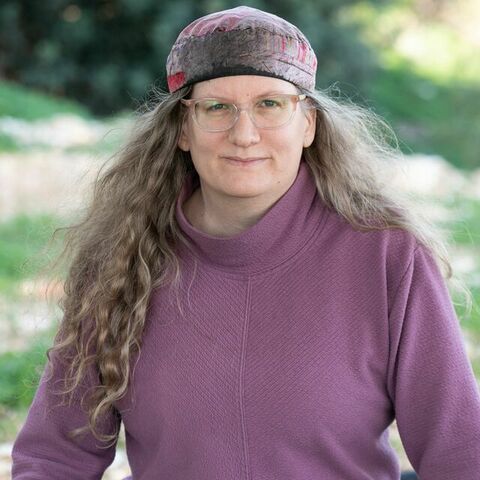
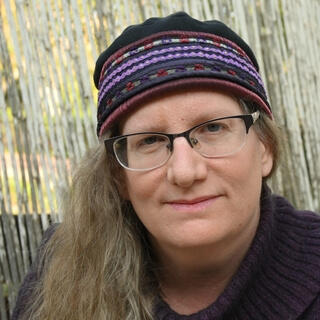
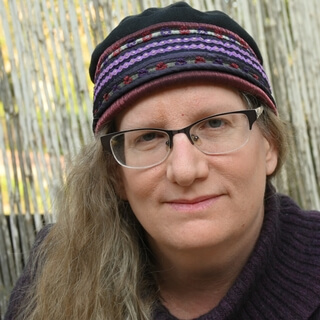
I am Rabbi Hasi Oriel Steinbauer,
The founder and director of the Institute for Holiness Kehillat Musar.
You are joining us in our freewill offering that we offer every week.
Bezrat HaShem,
God willing,
On Sundays at 7.
30 p.
M.
Here in Israel,
12.
30 Eastern Standard Time and all the other time zones all are welcome.
So today is the 24th of the month of Av on the Hebrew calendar,
And it is Sunday,
August 21st.
We are going to be covering Ekev.
So we call it awakening Ekev Torah,
Musar,
Mindfulness,
Which was the Shabbat Torah portion,
Last Shabbat yesterday.
So if you happen to reside in community and either listen to the Torah reading or study the Hebrew Bible or the Torah yourself,
That was the portion that we read leading up to the Shabbat and we heard it read in synagogues throughout the world.
So that's what we will be covering where we look at this from the lens of Musar mindfulness,
Which is our practice,
And we see how we can apply this to our lives.
There will be a guided mindfulness meditation later after I share a little bit about this portion,
What we can learn from this portion.
Before we jump in,
This is our 47th sitting together,
Mazal tov.
It's excellent.
We're going through the whole year.
And this is a wonderful thing to be taking refuge in community and practicing together,
Whether you're joining us here live on Zoom or on our YouTube channel,
Which is live streaming right now or on Facebook or other mediums such as LinkedIn or Twitter.
You can find all our information on the website at Kehillatmusar.
Com.
So let's jump in with our kavanot,
Our intentions for today's practice,
Which is what we do before we begin this every time,
Which we always practice at three levels in our Musar mindfulness practice.
The first is how we treat ourselves,
How we are in relationship with others,
And then our relationship with the divine.
So we say we see this act together,
This time that we spend doing this awakening practice as a radical act of self care.
You're really taking refuge,
Spending this time to learn and practice.
And it's a beautiful thing.
And it really means that you'll be able to over time to treat yourself and others better.
So we say that before doing this act right now,
This is something I'm doing to strengthen my own soul in order to be a benefit to others in the future.
Our practice is very other oriented of how we bear the burden and care for the other.
The second is this is something I'm doing to strengthen my relationship to others.
So I can be a better conduit of God's good to others when they need me.
And the final one,
We're strengthening our relationship with God,
However we may define God or that relationship.
This is something I'm doing to strengthen my relationship with the creator.
So I can be a better conduit of God's good to others when they need me.
And maybe even when I need myself,
Right,
I need to really care for myself.
Okay,
So those are our kavanah,
Those are intentions for today's practice,
Which are really important.
You always want to have an intention for your practice and how you're going to move forward so that you we know now through brain science and research coming out of there,
For instance,
The Institute of the greater good from University of California,
Berkeley,
Teaches and really studies how these practices impact us on a daily level.
And one of the key things,
Of course,
Is that when you have an intention,
And you actually say it or write it or dance it or express it,
That you're more likely to fulfill it,
You're more likely to be successful in that and then in that practice.
So may it be so we may merit that we bring great joy and equanimity and cause less harm and suffering through today's practice.
So a cave,
What does a cave look like?
Hey,
You should,
For those of you who are following along and really study this week to week with me,
The term a cave should bring up a name for you.
Okay,
I am cool.
That right it is the name of yahkoff our beloved ancestor,
Our beloved patriarch,
Our second,
Third in line,
It goes over Hamid sake yahkoff.
He is the father of the 12 sons,
Also daughters,
One of them known as Dina,
A who really,
Really create the children of Israel and really create these master families and tribes,
Okay,
Over time.
And so a cave,
Right is coming to mind here.
And I'm going to give just a little brief summary.
And then I'm going to focus in on what I think we need to get out of today's session,
At least for today,
Right here and right now.
So let's give context Moshe Rabbeinu,
Our beloved ancestor,
Our beloved prophet leader who is leading the children of Israel through this 40 years in the desert,
And basically is in his closing speeches,
He's like the dying grandfather or father,
And the Abba or Saba on his deathbed,
Even though he's not in his deathbed,
But theoretically,
And he wants to get across everything he wants you to remember,
It's like he's giving you an ethical will.
Okay.
So he basically asked,
And the language is asked,
Okay,
He asked the Israelites,
Our ancestors to follow the mitzvot,
The commandments,
And to remember that God cared for them during the desert.
Now let's put this in context,
Two things.
He's never asked really anything like if anything,
He's been this whole time been telling people what to do.
And also God,
God in this portion actually uses the language of Shin Alef Lamed to ask,
Asking the people to fear God or have fear all,
We'll delve into that.
So we have this shift,
This huge shift in language.
Suddenly there's been a shift in how we're going to relate to Moshe and God that we're suddenly being asked to do something.
And also he's speaking to the children of Israel who are like,
As I'll remind you,
Who are the ones who survived,
Who were under the age of 20,
Who weren't taken and had passed away in the desert.
And he's reminding them of that God took care of them in the desert.
Well,
Is the people are the people under age of 20 going to remember that some of them might remember some things,
But really it's not their journey.
It wasn't their journey.
It was their parents' journey and their grandparents' journey.
And this is very important to remember because so much of this gets there.
And we talk about intergenerational trauma,
For instance.
Well,
There's also something known as intergenerational resilience.
What we learn to be strong and get through things we learn just as much from our ancestors as any genocide or trauma that might've happened.
And also in fact affects us and sometimes in negative or unpleasant ways.
So when he's speaking to the children of Israel Moshe,
It's really assuming that they were there or that they've kind of subsumed that experience in their bones,
Right?
In their DNA as if it were theirs.
And that might not make sense to us.
We like to think often as modern practitioners that we're like this independent separate self,
But really we're beginning to know if we admit to ourselves and also in the latest research that we're actually more one and united than we'd like to admit sometimes.
And so we're witnessing this right now.
So he also wants to remind them that they're going to be rewarded.
They're going to be blessed and the land will produce food if they follow God's laws.
Okay.
This can be challenging for a lot of people.
So just notice what comes up for you as I share this part with you,
If you're triggered at all.
This sometimes comes up for modern practitioners where they feel like,
You know,
People have followed God's laws and sometimes there's still a drought or a famine and sometimes there's a,
They're not blessed,
Right?
They're not able to be fertile as it says they will be.
And so what do we do with that?
You know,
We have to,
We have to hold that,
Right?
There's no need to necessarily deny and reject,
But also just hold that liminal space,
That gray what's going on here.
So the biggest fear that we're seeing in this,
In this Torah,
Persia,
You're going to see is the fear of complacency and for,
And forgetfulness.
And what,
What is that fear stemming from that the children of Israel will become comfortable and wealthy,
Meaning they will settle in the land and have everything they need and maybe more and that this will lead to a,
What the tradition sees as a type of arrogance and the sense that you think that everything that you have comes from your own hands instead of from God until you attribute it to your own hard work and not as a gift from God.
And so it leads to this kind of complacency and forgetfulness,
Forgetfulness of the covenant,
Give up forgetfulness of how you're supposed to behave of the commandments of the meets votes.
Okay.
That's the fear going on in this parasha.
And so what ways that suggested as a practice,
It's not worded this way,
But this is how we're going to see it.
And moose our mindfulness is that the meets the commandment of blessing after eating,
Which is known in the Hebrew as beer,
Beer,
Cat,
Amazon,
The blessing after a eating a food and that if this is practiced,
It is seen as countering this complacency in this forgetfulness that comes up when people start taking their gifts for granted.
Right?
So we're going to want to hold that as,
As mindfulness and moose our mindfulness practitioners.
We know that we have to bring that kind of awakeness and alertness to all of our practice because even something as blessing after a meal can become wrote,
Right?
We can just run through.
Thank you God for the food.
Right.
And just not be really awake and present for it.
So there might be another quality that we need to look at.
So Moshe goes on to tell of the rebellion of the golden calf of the egg ale.
Okay.
Were these children there then?
No.
Okay.
Not even if they were 20.
They were not there during that incident.
He reminds them that the people,
You know,
Rebelled,
Worshiped this golden calf,
Which I've talked about.
You can go back to that.
Parshah and look what I have to say about that.
But he wants to remind people that he stuck up for the people he prayed to God.
So his practice,
His method was to pray to God,
To remember the ancestors,
To remember Avraham,
Yitzchak,
And Yaakov,
Ekev.
Okay.
That we are to remind God of them and pray.
That's his practice to kind of turn the wrath,
Right?
Turn the reaction of God from whatever God wanted to do at that moment,
Which if you recall was actually to obliterate everyone.
So Moshe in his love,
His acts of love.
Remember we talked about love last week.
Well,
It's an act of love for somebody to pray on your behalf and attempt to save you.
And so this is one of the key moments where we see Moshe really balanced.
And you might even think in your own life,
I don't know if you've had experience in your practice of maybe a family member or a sibling or someone else that you really felt like you had to stick up for or pray on their behalf.
And that was really an act of love.
They might not even have been deserving in that moment,
But because of you and your connection and you wanting to practice,
You did that.
And so this is what we see Moshe doing.
So we're reminded of three key things that we need to do with God.
When this parsha and the language is very different from all the other four books of the five books of Moshe of the Torah,
The Hebrew Bible.
So we're told to fear God,
Which that's an English translation.
The term is Yirah.
Yirah means both fear and awe.
We don't even have a word in English.
It's really holding both.
Okay,
So we're going to want to pay attention.
What do we mean by that?
So fear can be fear of danger,
That kind of real physical embodied feeling of the race of the fight flight,
Any of those kind of strong reactions.
That's fear.
It's usually that you're fearful of sinning,
Fearful of not being fulfilling what God wants,
Not fulfilling what others want,
A kind of fearing of causing disappointment,
A fear of punishment,
Perhaps those all fall under the fear wing.
And then they're simultaneously awe of like the largeness and unbelievable limitness to God's glory and wonder and the miracles and just unbelievable holding and sustenance of all of Earth and all of us.
And that that grandeur,
You know,
And some people experience this,
For instance,
In nature,
When they're like standing,
For instance,
At Masada or at the Grand Canyon or other big spacious,
Beautiful land to really have that awe.
Another example is like when you're carrying a child on your shoulder and that and you're like walking down the street or maybe somewhere else and that kind of simultaneous,
Like you're fearful that they're going to fall,
You're holding on.
And there's the awe that you're carrying this amazing,
Beautiful soul on your shoulders.
And so it's that combination.
Okay.
And we don't have a word for that in English,
But that's what's going on here,
So that we have this fear of God,
That we have love of God and that there's devi kut,
Okay,
That dalet vet kuf,
Which means to the God.
What does it mean to stick to God?
Right.
And if you do this,
The rains will come,
We're told in this parasha.
So what is devi kut even desirable?
Right.
What does it mean to stick?
So if you look at the devarim where we are in Deuteronomy and Ekev,
If you go to Chapter 11,
Yeah,
Pessuk,
Verse 22,
For instance,
This is where you'll see it here is if you then faithfully keep all this instruction,
Which what are we talking about here?
We're talking about meets vote.
It says,
Hamid's,
The hazard.
Are we talking about the Torah when we say Hamid's,
The hazard is usually how Torah hazards that's open,
That I command you loving the Lord,
Your God walking in God's ways,
Holding fast to God.
So the language here is to to hold fast to God here.
But then it goes on to say it's really ood dev kabo.
OK,
They translate as holding fast.
It's not a great translation to stick to God.
What does it mean to stick to God?
Right.
And then we even you want to be reminded in Deuteronomy earlier in Chapter four,
24,
We were told that God is like a devouring fire.
The language actually uses a fly.
He like he eats.
He's able to eat like fire.
Like,
You know,
When a fire takes over like a forest fire and that ability exists in the divine and might have been experienced by definitely was experienced by the children of Israel during their time in the desert.
And so how can you stick to something that can devour you?
Right.
And more importantly,
How can this be commanded?
I want to bring this back to can you command fear,
Awe and love?
And so that's why the language is used actually in Deuteronomy in this portion.
And if we're going to ask it,
Which is totally new,
It's incredible.
I mean,
We all should have a little awe around this,
The changing relationship.
Right.
And we're going to ask this of the people.
And that's the verb used trying to find the pursuit where that was.
I'll eventually get to it or I'll put it up on the website afterwards.
But the language is kind of asked this for the first time.
And so I just want to get back to the sticky desk.
Right.
This is this even desirable.
And so,
Okay.
So Rambam,
One of our classic rabbinic commentators from eight hundred years ago in Spain.
He actually says that you should practice the vikut,
The stickiness is clinging to God is so strongly that when you even when you're speaking to others with your mouth and tongue,
That your heart is actually not presence with your words and tongue.
It's not present with the people.
It's with God that rather you're always before God.
And we even have that in the shaviti of where we talk about the beautiful kind of contemplation on I place God before me always.
Right.
Shaviti Adonai l'neg diktamid.
I want to trouble that because it is so much part of our knowledge now and practice and most our mindfulness that one,
What does it exactly mean to have your heart before God,
But then your speech and action over here with the people and that we teach that we should be fully present with the people and we should be fully present in the moment.
And I'm going to I'm going to even stand that to say maybe it is being before God by being really there with the people and being present with them.
That is the relationship with God is our relationship with others in that moment and being really there for them with mindful listening and with the mindful speech of talking.
And we know we would even say in Jewish law that you can't actually speak to someone like if you have a customer and have your heart directed towards God,
Because that's in some way stealing.
Right.
You're stealing the person's time.
There's always these examples in our Gemara and the Babylonian Talmud and the halakhic literature that the example of someone who's working for their supervisor or boss,
But they're not really present or there or and that would be considered stealing.
And since it's like it's a ceiling of dots of knowledge,
Right,
Of being present and you know,
The boss or the supervisor thinks that you're there,
But you're not really there.
Right.
Because you're you're before God.
And so I want to complicate it and say,
What is it that we can do today in this practice of Debbie Coot is to understand that we are when we're being really present right here in the in the moment,
Really being there for the soul in front of us and recognizing them as created in the image and likeness of God of really honoring them.
That is really connecting with the divine in both of us.
And that it need not be this external thing that your heart has to be towards some other idea of God over here and you're speaking with the person here.
So I just want to complicate what Rambam brings to the picture.
But the most important thing you want to keep in mind in this practice and we'll actually move into a practice of this soon is are you feeling different?
Are you behaving differently when you actually keep guidance God in mind and keep in sense knowledge of the divine within to the person that you're connecting with and speaking with?
And does that help you behave differently and feel differently?
And so notice that this week is part of your practice and your cheshbon Hanafah journal and your accounting of the soul journal.
How is it different for you?
When you practice this week,
This difficult,
This clinging,
This sticking,
Sticking to God in that it's that divine point within the person that you're relating to and maybe even to yourself,
Right?
Being present for that.
So we're going to hold that.
That's what I take from this week's partial of a cave.
There's a lot there,
Obviously.
But that's what we're going to hold.
And I'll just close with one other teaching that I want to share with you because you all know when I shared the cover,
No,
The intentions at the beginning,
This concept of being a better conduit of God's good.
So that teaching comes from one of our great teachers,
Rabbi Shimon Shkop and his introduction to Shara Yoshua.
And he really is the one that reminds us as that our mission statement in life as moose our mindfulness practitioners and as human beings in general,
But especially as Jews,
This concept that our greatest desire should be about bringing God's good to others,
That we should be attempting to benefit others.
And that's,
That's not a small task to actually wake up every morning with that desire as your first intention of the day.
So he goes on to say something quite amazing.
He goes on to say that this Torah study that we're doing together this weekly awakening and in general,
He understands it as that the this practice of learning together engenders what he calls a year at Shammai.
This goes back to our word year,
Year,
Which is the fear and all together.
And that engenders that in us,
This total awareness of an appreciation of fear and all whatever that fear might be,
Maybe fear of not being awake to the preciousness of life that we might fall asleep again.
But that it engenders this year at Shammai and not only that,
That it improves our ability and drive to benefit others,
That this is what we're doing in this practice.
And I get this from my colleague and beloved friend,
Rabbi Neecher Berger and his text,
Widen your tent,
Highly recommended.
And it's on page 181.
He actually goes through the introduction to Shari Yoshar looking at Rabbi Shimon Shkob's work.
So we just want to keep this in mind when we're doing this weekly Torah portion that we want to engender this year at Shammai,
This real awe and fear of of the heavens,
Of God,
However we may interpret that,
And that we are really improving through our balancing our midot,
Our soul traits in this practice to improve our ability and drive to benefit others.
May it be so.
So we're going to move into our mindfulness meditation practice now.
So I want you to allow yourself to settle and arrive.
If you are sitting,
Bring yourself up to an upright posture,
Whatever that might mean for you.
If you need to lie down,
Do so with your eyes open.
If you have vision,
If you need to stand,
Go ahead,
Do so or even a walking meditation,
Just gently walking back and forth.
Whatever you need in this moment,
If you have any chronic pain or issues,
No need to sit or force yourself into an uncomfortable posture.
So for those of you who are sitting like I am,
You want to ground your feet.
You want to be held by Mother Earth.
You want to be really held.
That way,
If you have any trauma or any type of issues going on that feel somewhat unsafe or out of control,
You can always open your eyes if you have vision and ground yourself by looking around and making sure you know that you're here.
So the rest of us,
If you have vision,
I invite you to close your eyes if you feel safe and ready so that you basically lock out the stimulation of anything visual before you.
And you can lower your gaze if needed.
So just as it's possible to direct our attention to the breath and to body sensations,
We can bring our mindful loving awareness to be directed to observe our thoughts.
And so we will move into a mindfulness of thoughts practice today.
And we'll begin with three deep cleansing breaths.
Inhalation and exhalation,
Allowing yourself to settle.
Inhalation,
Exhalation,
Allowing yourself to arrive.
Inhalation,
Exhalation,
Coming to ease,
Coming to presence,
Coming to the gift of this practice,
Allowing your breath to just settle to its own natural rhythm.
From time to time when your thoughts wander,
Which they will,
That is the practice,
Or strong sensations in the body pull your attention away,
Know that you simply begin again,
Bringing yourself and your awareness to your anchor,
To my voice,
To your thoughts.
So you include mindfulness of thought in your general mindfulness meditation.
Just as you follow the sensations of your breathing or the sensations in your body,
There will be a stream of thoughts in the background.
Just let them be.
No need to try to control them or push them away.
No need to judge them.
Simply kind attending and befriending and leaning in,
Letting them rise and fall like the waves of the ocean around the breath.
Periodically,
Whether it's after three breaths or six breaths or 10 breaths,
A strong thought will arise and carry the attention away.
As soon as you notice this thought,
Name it gently according to its predominant quality.
You can use simple notes like planning,
Remembering,
Judging,
Worrying,
Imagining,
Fearful thoughts,
Happy thoughts,
Interesting thoughts,
Creative thoughts,
Painful thoughts,
And so forth.
Simply naming and acknowledging the thought is supportive of the witnessing quality of mindful loving awareness.
Notice how in your meditation right now that you can simultaneously bear witness,
Having this kind of inner distance of watching your thoughts,
Watching your practice,
Being present for whatever arises,
And you're fully here at the same time.
Simply return to the mindfulness of breath and body until another strong experience,
A strong thought or emotion or sound pulls your attention away.
The practice is really just waking up to when we've been pulled away with that curiosity,
That what we call the beginner's mind.
No need for judging yourself,
No need for pushing away whatever the experience is,
No need for over identifying with it or storytelling around it.
Simply just noting,
Stepping out of the stories the thought tells,
You can become to see a common pattern of thought without being caught in it.
We begin to rest in the field of mindful loving awareness rather than repeatedly being carried away by thought.
Now this quality of what we call the Hetrahek,
This inner distancing,
This ability to bear witness without reactivity is part of the gift from God that we all have.
And it's what I would say is part of the devikut of this clinging,
This sticking to God,
Sticking to the ultimate present moment,
The only place I could really encounter God and life as it is right here,
Right now,
The next one,
The next minute,
This one,
This one right here,
All we have is right here and right now in the present moment.
And we can simultaneously be watching and aware that we're in it and be fully here,
Encountering the divine within,
Refuge in community.
You can alternate your mindfulness of breathing with mindfulness of strong experiences as they arrive.
You become a steady loving witness of all that arises and passes.
You become a peaceful one sitting still amidst the rising and falling waves of experience.
We move into investigating a little bit more of how we are growing in our mindfulness practice.
Notice how it feels the very moment you shift from being absorbed or lost in thought to simply name it without being swept into it or by,
Or without pushing it away.
Where do you feel it in your body?
What is the sensation when you've become awake that you were carried off?
Does it feel like notice which types of thoughts really have an effect on your body?
What thoughts trigger you most?
What are their bodily effect?
Notice how some thoughts automatically bring strong emotions and how some emotions automatically bring up certain thoughts.
In your practice of mindfulness of thoughts and your meditation formal practice this week,
Learn to witness the interplay between thoughts and emotion.
You may experiment by deliberately bringing up a certain type of thoughts,
Whether it be a sad one or an angry one or a loving thought.
Notice how powerfully these thoughts and their connected emotions affect the whole state of your body and mind.
Now last minute of silent meditation.
Allow yourself to feel in your body.
When you begin to think how you can bring God's good to others,
Where does that sit with you?
What does it feel like allowing yourself to nurture yourself?
We move into silence and I will pull you out of the meditation when we are done.
Checkout.
Gently and slowly allow vision to return to your awareness.
If you have vision,
Bring yourself back into the sacred space that we share together in your practice.
Thank you for your practice.
It's good to be doing this together.
God willing,
We meet next week where we'll move into Parshat Ra'eh.
I recommend that you read it and study it and contemplate on it before we meet.
We now have the opportunity,
Susan,
You're here with us if you wish.
You're welcome to unmute yourself and share if you have any questions or comments or anything for today's session.
If not,
You're welcome to just pass.
Okay,
I'm going to take it as a pass.
If I'm wrong,
You'll unmute yourself.
So as we do every week,
We accept your dana,
Your tuma,
Your donations in honor of anyone as a sponsorship or in memory of someone each week,
Whatever amount you can afford,
Help support the Institute for Holiness and its mission and what it offers to the world.
And we gladly accept it.
You will find a recording of this on our YouTube channel and of course on the website and we welcome you to subscribe to our newsletter and updates and to consider becoming a member of the community where you'll be involved in lots of wonderful things,
Including our upcoming Rosh Chodesh Elul gathering for members only.
I saw that you went off mute.
Did you want to say something,
Susan?
I just want to make sure I don't end beforehand.
I just wanted to say Shalom and thank you very much.
Shalom to you.
It's so grateful to have you.
Your puppy or dog wants to say something.
I'm sorry.
Don't apologize.
No,
I love it.
I love it.
You know,
The all animate beings,
Right?
We all inanimate we practice for everyone.
And so we have to believe there's something there to share and I'm grateful for it.
It brings joy and smile to all of us.
So with that,
I wish you a wonderful week for those of you who may be wherever you are in the world and what you're planning right now for us here.
We're closing down in the summer and with if we if you have children like I do,
You're getting them ready with all their school materials and building up and taking any final vacation if you're privileged and blessed enough to have that in your life.
And may you be safe.
And may you be at ease and may you be healthy and may we wish that for everyone out in the world.
Thank you for your practice and I look forward to being with you next week.
Take care.