Welcome,
Allow yourselves to settle and arrive.
We will begin in one minute.
It's great to have you.
Okay,
We are beginning.
Welcome to awakening Torah Musar mindfulness.
This week in particular we're doing awakening Masse.
Okay,
The Masse of the day Israel,
The children of Israel in Bamibar in the desert.
We are in it with them in the journey.
And before we jump in,
I always share our intentions in Kavanah,
But first let me just do a brief introduction.
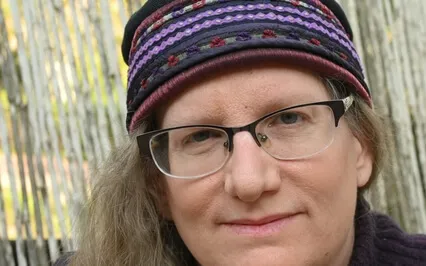
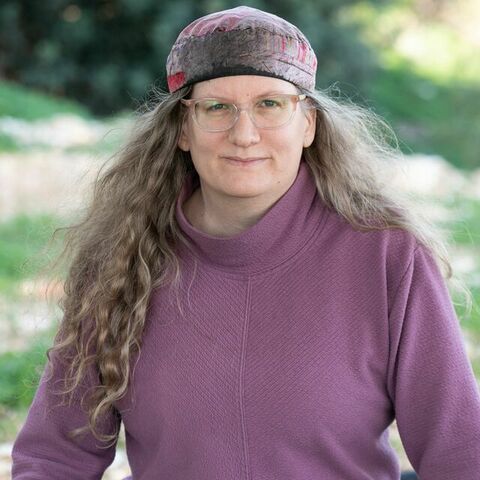
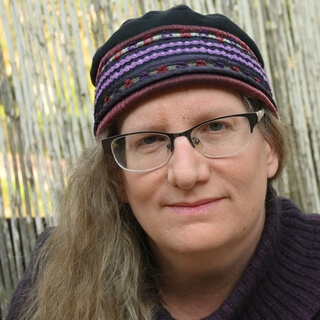
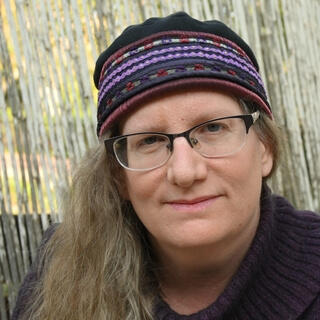
I'm Rabbi Hasi Oriel Steinbauer,
The founder and director of the Institute for Holiness,
Kehilat Musar.
We meet with this freewill offering every Sunday,
Bezrat Hashem,
God willing,
At 730 p.
M.
Here in Israel and at 1230 Eastern Standard Time located on the Eastern board or Midwest also of the United States and Canada and whoever is along that border.
And so we do this as a part of our Musar mindfulness practice.
We basically jump in to the weekly Torah portion to look at it from that lens,
From that practice of how we can learn from the Torah.
What does it have to teach us and how we can apply it to our own daily practice?
And yeah,
Give me one second.
And so today is Sunday,
July 31st,
And we have entered the month of Av,
Which,
If you're not familiar,
Is the saddest day on the Jewish calendar of Tisha B'Av,
Where we engage in reading from Eicha,
From Lamentations,
Mourning,
Essentially,
And not only the destruction of the Second Temple,
But many calamities throughout the history of the Jewish people and what I would call intergenerational trauma,
Communal trauma.
And just so much life was people don't we can't really wrap our heads around what happened when you think of an overarching colonizing power like Rome coming in and destroying everything that you know what life to be is and how you are and then essentially kind of kidnapped and moved into exile into other lands.
So the ramifications of that is something that we will come up with and Tisha B'Av.
But we've entered this nine days from Rosh Chodesh,
The new moon until then.
And that's where we are in our mind state.
So if you're feeling the heat of Av of the summer,
It's all part of what we are supposed to be feeling and the real embodied sense,
This kind of really in the Northern Hemisphere,
The heat and also with that that can come the reactionaryism,
Right,
The being react to the whole reactivity and the anger and what we call baseless or senseless or mindless hatred,
Right?
So we're going to hold all that today and we're going to move into our intentions,
Our kavanaht for today's sessions,
Which we bring every time.
So you see if you are watching on video and have vision,
You will see here,
Whether you're joining us live stream on Facebook or on our YouTube channel or here on zoom delighted to have all you we have here before doing acts of caring for the self,
Because we see this practice today as caring for the self.
We say this is something I'm doing to strengthen my own soul in order to be of benefit to others in the future.
Why we commit to this practice.
The second says in doing acts for others,
Because we are building up ourselves to care for others,
We say this is something I'm doing to strengthen my relationship to others,
So I can be a better conduit of God's good to others when they need me.
And the final one,
We're doing this practice together here taking refuge and community to strengthen our relationship with the divine.
This is something I'm doing to strengthen my relationships with the Creator so I can be a better conduit of God's good to others when they need me.
So may we merit this today and our practice here together as we move forward into today's lesson.
So what is going on today?
You might be have noticed something special has shifted in the in the calendar.
Maybe you've noticed if you haven't,
It's okay.
So normally in Israel,
Since Passover,
Since Pesach,
We have been like a Torah portion ahead of where everyone outside of Israel was.
So essentially,
If we were,
You know,
On Bamidbar,
Then you were still in Leviticus and Vayikra.
So what's happening is that you just had a double portion outside of Israel.
You had Matot,
Masse,
Together,
And you had that yesterday on Shabbat.
And here in Israel,
We had just Masse,
But we're all caught up.
What does that mean?
We're on the same page again.
So next week,
When we meet together,
B'ezrat Hashem,
We will be entering the book of Deuteronomy of Devarim,
And we will be studying the same parshah together.
Like you won't be a week ahead or behind.
So what does that mean?
So it means for this week,
If you have time,
Read through it,
Get a sense of where you are with it and your practice,
And then we'll dump into it together.
If you don't have time,
Then maybe you'll have time on Shabbat on the Jewish Sabbath on Saturday to listen to it read or to study and read through it.
But that's where we'll be next week is the first Torah portion in Deuteronomy called the Varem.
Essentially,
Elie Devarim,
Meaning these are the words.
But today we are in Masse,
Which means the journeys,
Right?
This is the final,
The final,
We like to say the final countdown,
Right?
The final summary of this wilderness journey,
The itinerary that our ancestors went through in the desert,
Where we basically go through 42 stations,
Tachanot,
Basically 42 stations of where they traveled and where they rested.
And now I want you to think when we actually go into our mindfulness meditation practice together,
What are your tachanot?
What are your stations in life?
If you had 42 of them,
Where would they be?
What would you recall?
Where would you pause and say,
This was important to me?
This and this is the reason why.
This is where I rebelled against God,
Right?
This is where I felt God got angry with me.
This is where I got angry at my fellow family and tribe or community,
You know,
Everything like that,
That happened with our ancestors over the 40 years is similar to our own life.
We all have these stations in life,
Things that we can recall that are part of our,
Our journey ourselves.
So we're moving through with our ancestors through their journey.
It's basically split up into three sections.
We have the Ramses to the Sinai wilderness.
Then you have the Sinai wilderness to Kadesh,
And then you have Kadesh to the steeps of Moab where the children of Israel are waiting right now,
Basically to enter the land.
And as I said,
They go through a kind of this whole itinerary of looking at what,
Where they've been,
What they've been through things of that sort.
And so you may wonder to yourself,
Why,
Why do we need a list of 42 stations of where our ancestors went?
And this is,
This is a question that we comply even to our own lives.
Why do we need to recall where we've been?
And we don't have to answer that right now,
But it's something that we want to hold and to understand why this is important to being provided to us.
And it's not just words,
Meaning it's just not like wasted words and paper that there's something to the fact that this,
This sojourn in this desert really cultivated our ancestors,
Right?
If you want to see it as a,
As a spiritual discipline,
That's what they went through.
Not always with mindfulness,
Right?
We learn this.
But there was so much practice and so much triggers and stimuli and things for great growth,
Growth in relationships,
Growth in wise speech,
Growth in how they're going to relate to the divine and be together and work out how they're going to live as this people under the rule of law.
As you may recall,
When we started this back in Beresheet,
All the way moving into past the whole creation stories and into finally stories of our people beginning in Shemot in Exodus,
You have this sense of this vigilante justice,
The sense that there was this moral compass developing in certain individuals like Avraham,
Our ancestor Abraham and Moshe Rabbeinu and others,
And even the midwives in Egypt,
Right?
Where they called it fear of God,
Meaning that was their language in order to say,
I know that this is wrong.
This behavior of being commanded to kill little baby boy children.
And for example,
For the midwives,
So they knew they were using,
You didn't fear God.
I knew this was a place you didn't fear God.
And so it's their moral compass of knowing what's right and wrong.
And that had to develop from individual consciousness to collective,
To creating a people who collectively started really living under a rule of law and agreeing to those terms and rules in order to live by it together.
And so that's what we're going to hold from today's Parsha.
But what is really important to me that I want to share with you is something quite beautiful and significant that happens.
So every once in a while you get to witness our ancestors shift in morality,
Shift in consciousness.
And it's a moment to pause because I think we all go through this even in our own individual lives.
So in this Parsha,
We learn about how our ancestors were commanded to create something called cities of refuge.
Okay.
If you want to follow along,
This is in chapter 35.
We're looking at verses nine through 15.
And what you have here is this basic theological position that the divine presence cannot abide in the land that is essentially polluted by murder.
That essentially if blood is spilled,
Even by accident,
Meaning the person didn't intend to kill the person,
There still needs to be an accounting.
It's almost as if the earth,
If you think back to the first murder,
God forbid,
Of Adam and Chava's sons,
Of Hevel and Cain,
And the earth actually kind of screams out because it's the first time it's swallowing human blood.
It has to consume it and it doesn't want to.
And so there's this sense among our ancestors that there's a real accounting that has to happen.
And this offense of this kind of spill blood is pollution to the earth.
And it's also leads to the abandonment of God from God's sanctuary and people.
So the laws of homicide get really special treatments.
And you will want to think in your own societies,
If you're coming from United States or Canada or wherever you might be,
How does your society work through these laws of homicide today?
How do you treat somebody who kills somebody by accident?
How do they take care of the family that has to deal with the person murdered?
How do they take care of the other?
So this is all very important.
So basically what happens is there's the establishment of asylums.
Asylums,
You may think why,
Why do they need to be asylum?
Because back in the ancient Near East,
And particularly with our ancestors,
There was this blood guilt,
This like blood revenge,
Actually called goel hadam,
Someone that was supposed to be responsible for that ancestor being murdered,
Usually a father,
A brother or uncle,
And that they were supposed to do the accounting,
They were supposed to actually go and murder the person who murdered their family.
But what has happened is a huge shift.
In Israel,
They've decided that when something happens by accident,
Meaning the person didn't intend to kill the person,
And they can actually prove that in a court of law,
This person shouldn't be killed.
They didn't mean to do it.
That's a huge shift in Near Eastern mindset and thinking.
So instead,
They create this place for the person to flee.
I think there were six cities total,
And they went and fled until the cohingadol,
The head priest passes away.
And they fled because the person who is the one that's supposed to take revenge will not be able to go ahead and do the revenge.
It's almost like they created a new institution that will still acknowledge that the family might have that revenge feeling of wanting to hurt the person who and obviously murder them who who by accident killed their family member,
But they won't be able to do it because this person has been given asylum.
Okay,
It's a radical shift.
Essentially because there was such a prevalence in the institution of blood vengeance in the ancient Near East.
See this today.
I don't want to believe that we as modern people don't have this urge or need or desire.
But we witness this.
We witness this in gang violence,
One going after the other.
We witness it even in war.
So there is this human state when it's really unbalanced that can lead from not only anger,
But to rage.
And it's blinded by it,
Right?
It's blinded by that that revenge is really something that just is just out of control,
Right rage in that sense.
And that was like institutionalized in the ancient Near East.
So now you have this blood right of the slain that used to be avenged.
And then they can't do that anymore.
Okay,
The laws of homicide have shifted.
So one,
Only the guilty party is involved,
Not his whole family.
It used to be that sometimes they would murder the whole family if somebody killed somebody even by accident.
So now you have the guilty party only is involved.
No other family member can be slain to like make up for them,
Right?
Number two,
The guilt is determined by the slayers intention.
This is the first time you're getting intention coming in to law,
Right?
This is significant.
So the involuntary homicide is not put to death.
Doesn't mean there still isn't accounting for it.
We're going to hold on to that because a lot the land has still been polluted on some level,
Right?
So number three,
No ransom can take place of the death of the murderer essentially,
Right?
So you can't see if somebody killed somebody on purpose,
God forbid,
You can't pay off the murder that is not allowed.
There still is this concept of a life for a life here that we're witnessing that today often we find morally reprehensible and we don't feel leads to anything like you're going to,
You're somehow going to address the blood being polluting the land by actually spilling more blood.
At least we know in our practice that we don't want to cause more harm and suffering that we need to address this in a different way.
And so finally the fourth is this verdict of either deliberate or involuntary homicide is actually made by the state with a court and not by the bereaved kinsmen.
Okay.
And this is why these asylum cities are established.
So the trial happens and even if the person is found guilty that it's done deliberately,
The Goel hadam,
The Redeemer,
The one that has to actually revenge the death of the family member is essentially only allowed to commit that capital punishment with the sanction of the state and controlled by it.
So you see huge shift and a huge shift from individual vigilante justice,
Families taking out vengeance on other families to a rule of law,
To it being a communal operation,
One that is run more by what we might call the state.
It's adopted by Israel.
It's a revolutionary principle.
The right of asylum is limited solely to the premeditated manslayer,
Right?
I mean,
Unpremeditated.
So there's been a significant shift here.
You and I have been witnesses to our ancestors moving out of the institution of slavery,
Being redeemed and taken.
And that's a nice word actually,
Because God is considered the Goel,
The Redeemer of the people,
Right?
And God's not spilling blood in that moment,
Except right,
There is blood being spilled.
Who's being killed?
The Egyptians,
The first born of the Egyptians.
So you see this.
You see this mentality and this thing playing out.
But our people are coming out of the institution of slavery,
Have 40 years to try to work through this intergenerational trauma of the institution of slavery together.
And they develop this rule of law and start living together more in this community,
In this state.
And so it's quite a privilege,
To be honest with you,
For us to be able to have this record,
To witness it and learn from it each year,
To grow and learn from each other.
So with all this in mind,
I want to move us into our mindfulness meditation practice.
For those of you who are new to such practice,
You are welcome to stand during the practice or do a slow walking meditation or even lie down.
If you have vision,
I recommend keeping the eyes open while you're lying down so you can remain awake and alert.
For those of us who are in a seated position,
If you're in a chair like I am,
Then I recommend grounding your feet so that you be held by the earth and coming to an upright position,
One that is dignified as you were created in the likeness and image of the divine,
One that is awake and alert,
But not stiff.
You want to be at ease.
If you are sitting on a meditation cushion on what we call a Zafu,
Allow your knees to fall down and touch the earth so you are being held by that.
And you may rest your hands in your lap or on your thighs,
Wherever it's comfortable,
On your chest if you want to hold your heart,
If you're in need of self-compassion right now,
If you're feeling vulnerable.
And we gently close the eyes or lower the gaze,
Again,
If you have vision,
In order to block out that external stimulation.
And we will begin with three deep cleansing breaths.
Inhalation,
Exhalation.
Inhalation,
You are beginning to arrive.
Exhalation,
Allowing the body to come to some ease.
Exhalation breathing in presence,
Stillness.
Exhalation allowing your anchor,
Your attention to be on the sound of my voice and on your breath and body.
Always bringing yourself back to this present moment.
It is normal for the thoughts to shift,
That is the practice to simply begin again,
Once you become awake that you went off elsewhere and you simply bring it back to your breath and body and my voice.
Noticing what is here for you right here and right now and welcoming it,
Accepting it.
Are you having any intense emotions,
Anything that you might label as unpleasant?
Simply honor it,
No need to judge it or push it away.
Same thing if you are having any strong sensations in the body,
Any pain or discomfort.
Recognize it,
Even honor it,
Attending and befriending,
Recognizing that it's going to be here with you.
You can even make it part of your awareness practice.
This is what discomfort feels like.
This is what pain feels like.
Perhaps it is disease.
And then for those of you who are caught up in certain thoughts,
It might be that you are ruminating over something that happened before you came to this sitting and talk today.
Or maybe you're in the future planning for what's coming next.
Simply recognize it.
They're just thoughts.
They're not who you are.
You can simply bring your attention to your breath,
To your body,
To whatever I am guiding.
From time to time,
I may fall silent for you to spend time in the practice.
You can trust that I will return.
And you can trust that at the end of our meditation together,
I will gently pull you out with my voice today.
So let's focus on what is here for us right here and right now on our own journeys,
Our own stations in life.
What is the station you are at right here and right now?
Are you finding it pleasant?
Are you finding it neutral?
Perhaps it is unpleasant.
And where are you feeling your current station in life in your body?
Maybe you feel it in your shoulders,
In your neck,
Down your back.
Maybe it's located in your chest.
Is there any tension,
Difficulty breathing?
Or maybe there's a spaciousness,
An openness,
A sympathetic joy allowing for whatever is present for you at your current station in life right here,
Right now.
What is so profound in this practice together and even witnessing our ancestors in the desert is how much we come to learn that we are at our own individual station internally.
And we are part of a people,
Part of a community,
Part of a world that may be at a different station and that we're on that journey with them.
And attempt to be mindful of both.
Not always does the inner match with the outer behavior.
How many of us have had times at our stations in life where our outward behavior,
Our deeds,
Our words,
Our speech,
Even our thoughts did not match,
But we know to be ourselves inside.
That disalignments has the effect of a feeling of lack of integrity,
A lack of continuity.
So many times we want to honor in our practice and learning together as we leave the desert,
As we leave Bami Bar.
How many times our ancestors were so much discord,
So much unwise speech,
Unwise behavior that was not in alignment with the beautiful souls we need,
We know them to be.
How much we humans make mistakes.
That we must address our learning and practice with compassion,
With a little less judgment,
With metta,
With chesed,
With loving kindness.
May you be able to accept the station that you're at right now.
May you be able to do so with kindness.
May you be able to be present.
We will spend the next five minutes in silent meditation together,
Allowing yourself to recognize and allow,
Accept,
Attend and befriend whatever is here for you,
Investigating the felt sense in the body,
Not identifying with whatever arises,
Doing so with a nurturing gentle touch.
I will let you know when we have reached our five minutes together.
Thank you.
Thank you.
Thank you.
From time to time,
Your thoughts will wander.
Simply bring your attention back to your anchor,
Your breath and body.
You have a few more minutes in our meditation.
We will continue.
And our last minute of meditation,
See if there's been an opening or a shift for you from what you began with no judgment,
Just simply noting.
If there hasn't been a shift,
That's also absolutely okay.
There's a fuller range of experience.
Considering your own Kavanah,
Intention for today,
Allow yourself to consider what you wanted to get out of this session,
What you hope to bring to it.
Allow that to arise.
Spend the next half of a minute considering what your questions or comments may be for today's practice and teaching.
When you're ready,
You can gently and slowly open your eyes if you had them closed,
Taking the time and understanding that there's an adjustment to the light when we come back to this shared Sangha,
Shared VAD,
Shared group together on this sacred screen of Zoom together and on live stream.
Allow yourself to have that adjustment.
Thank you for your practice.
Thank you for committing together,
Taking refuge in the teachings and here together and practicing together.
So this is your moment.
You are wonderful subscribers and those interested in our work here at the Institute for Holiness Kehillat Musar.
So take this opportunity to ask questions or share how your practice was.
You're welcome to go off mute and just let us know your name,
Where you're from,
And we'll move from there.
And you're also welcome to pass if you do not want to share today.
Anything from Susan or Jeannie today?
And if I'm not pronouncing your name correctly,
Please let me know.
My name is Jenny.
Jenny,
Thank you for correcting me.
English way of saying.
I'm from Toronto,
Ontario,
Canada.
Welcome.
This is my third time here.
I'm so grateful that you have come back for a third time.
Do you have anything you would like to share or any questions?
I was very frustrated this morning because the website where I used to submit to come in to watch your video,
I could not because there is a ball,
Colorful ball,
Rolling around and around and I lost everything.
I could not figure out what to do.
So I switched.
The computer that I'm using is set into two separate persons.
So I switch user and go to another site.
And instead of going into my email address to go into look for it,
I just type in your your link on the computer.
And then I got here finally.
Wonderful.
So it was amazing.
It is amazing.
It's amazing that you,
Despite your frustration,
You worked with what you could in order to arrive where you are.
Yeah.
But I still cannot understand the 42 stages of journey that the two specialists that I cannot figure out what they have.
Yeah.
They're basically,
If we could,
Let's turn to the text and I can point that out.
And they actually list them in this,
Parshah and Masay actually.
So let me just get to our text.
And so first they start.
Go ahead.
Go ahead.
Sounds like starting with an M.
Another word sounds like starting with I cannot figure out.
Yeah.
So basically they start off,
If you're going to look at chapter 33,
Verse five,
They start off saying the Israelites set out from Ramses and a camp at Sukkot.
And then they start and then they set out from Sukkot and a camp at Eitam.
And they go through 42 different sites,
Locations,
And they list that all the way through with some of the things that happen at each site.
And finally,
They get to the end of that 42 in verse 37,
Where it says they set out from Kadesh and a camp at Mount Hor on the edge of the land of Edom.
So there you have the whole list.
But it's over 40 years that these different sites happen.
So does that answer your question and help you with where we are?
Excuse me.
I don't get the chapter.
I got the number,
But what is the name of the chapter?
The name of the chapter is,
It's not a name.
I mean,
We're in what's called numbers,
Which is.
.
.
Numbers?
Yes.
Okay.
Numbers chapter 33.
Yeah.
I got the rest.
Okay.
Good.
Good.
Yeah.
Thank you.
Yeah,
Absolutely.
And in Hebrew,
It's called bami bar,
But it's called numbers in English.
Oh,
Oh,
Oh.
Yeah.
Yeah.
Which means in the desert.
Thank you.
Yeah,
You're welcome.
I had come across the term,
But I can never remember that.
It's okay.
It's okay.
Absolutely.
So great.
Thank you so much.
You're welcome.
You're welcome.
I hope that you are getting something out of the teaching and practice with us so much.
Thank you.
Yeah,
You're welcome.
Susan,
Do you have anything you want to share?
Would you like to pass today?
She might not even hear me right now.
She's on mute.
Ah,
There you are.
Hello.
I'm going to pass this morning.
Okay.
Welcome.
And I know you're,
You're,
You're in Albuquerque,
Correct?
That's correct.
That's right.
Okay.
So we have Albuquerque and up in Canada and here in Israel,
We're all over the world right now.
That's good.
It's good.
All right.
So,
Um,
We always request and accept donations for our offerings when known as Dana in the Buddhist practice and Shruma in the Jewish practice.
Uh,
We,
Uh,
You can be in touch with me via email or on our website.
We accept any amount for if you've benefited and would like to,
Um,
Honor us with a donation that would be very much appreciated.
We also sponsor,
We accept sponsorships for our weekly settings.
So it could be an honor as somebody or in memory of someone who has passed away.
Just be in touch with us,
Uh,
To arrange for that.
And mostly for your weekly practice,
Just please attempt to sit,
Notice what is soul traits me don't come up for you,
What you might be challenged by on the Jewish calendar.
If you're aware where we've entered this nine days,
Right?
Where it's like this time of morning,
The,
Before we hit a Tisha,
But so it can be a very difficult trying time.
One that is at least a communal morning and sadness,
Even if you're not feeling it individually,
Talk about this outside and matching the inside.
So how can we be witness to a communal morning and,
And be present for it,
Even if we ourselves might not necessarily connect or know,
Um,
To just honor it.
So we do so together and community.
I'm so grateful for your presence today and everyone on live streaming joining us,
Or we'll watch this recording or hear the audio later.
Thank you.
Thank you for joining the Institute for holiness,
Kehila,
Musa.
And um,
So next,
Uh,
Sunday,
We're going to have to have a shift,
Uh,
When we're meeting and I will put on an announcement of that because it actually is Tisha,
But I've,
Uh,
So we will not be meeting the ninth of,
Uh,
The day of morning.
I won't be meeting at the exact same time.
So I will put an announcement on,
Uh,
Through the social media and on the website of when we will meet instead,
Um,
In order to,
Uh,
Cover next week's tour portion of the volume of Deuteronomy,
The first tour portion there.
Thank you again.
Now you have compassionate,
Good week.
I'm so grateful that you joined.
Take care.
Thank you.
Thank you.
Bye.