Welcome to Spiritual Psychology.
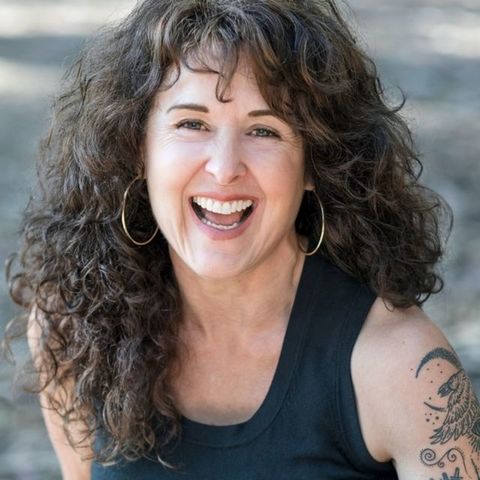
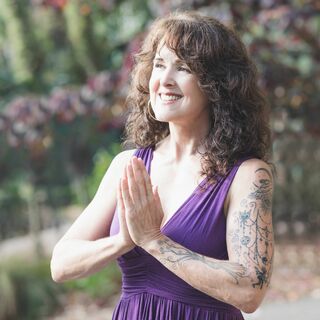
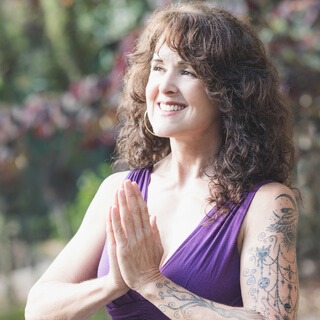
My name is Renee LaVallee McKenna,
And I bring my 30-plus years as a recovering addict and ex-crazy person,
Turned therapist and shamanic healer,
To bring you snackable teachings on spirituality,
Psychology,
And all things personal growth.
And today I want to talk about hope and hopelessness,
And the importance and value of both of these.
And hope and hopelessness are kind of a binary pair of opposites that can be bound to each other in really powerful ways.
And so in general,
Hope is a feeling,
It's an expectation or a desire for a certain thing to happen,
Or an attitude of trust that things are working for the greater good.
Conversely,
Being hopeless is a feeling or expectation that things are moving for the worse,
That there is no possibility of redemption or positive change or improvement,
The expectation that things will stay the same or get worse.
And it's my experience that hope and hopelessness both have their value,
Even be catalytic forces for our growth and evolution,
Depending on the circumstances of our life.
So for me,
It's been important to acknowledge when things are hopeless and when they are hopeful.
And again,
These are completely interrelated.
On the meta level,
There is always hope.
We live in an infinitely creative and generative universe,
Infused with an intelligence and wisdom beyond our comprehension as limited humans,
And confronting or getting honest about the areas of our life or our own perspective or ways of being that are hopeless is often the path to tapping into this larger energy of hope and creativity,
Which is always available to us.
But often we need to grow and transform,
Change and mature our perspective,
Our ways of thinking and doing things.
And certainly in my own circumstance,
I've more than once needed to change pretty much my whole way of life.
Now,
We each have our own unique path on a soul level in this lifetime.
And my name,
Renee,
Actually means reborn.
And so rebirthing over and over again seems to be a thing that I both experience and enjoy in my own trajectory.
And so this experience of coming to the edge of hopelessness and then being reborn into a new dynamic of hope has been a constant part of my own development as a person.
I've been doing some work in human design and gene keys,
Like the Enneagram.
These are systems of understanding human development using tools from astrology,
The I Ching,
Kabbalah and other ancient mystical systems to understand that we each have a unique role to play in this larger system of which we are a part.
And just like all the cells in our body have many different differentiations,
Each of which has an important role to play,
There's many,
Many ways to move through the world.
And the more we can discover and align with our own authentic,
Unique ways of being and processing,
Doing,
Thinking,
Feeling and relating,
Then the more fulfilled,
Peaceful,
Happy and productive we'll be.
So I'm aware that my way of moving through the world is not your way of moving through the world.
Although you may identify with lots of methodologies,
Each of our personal growth paths is to get clear about what's true for us in our uniqueness.
And that may be different from how we were taught or raised or what our culture is.
And that's some of our own personal challenges on a soul level.
And central to my spiritual psychology work is helping my clients and mentees and hopefully my listeners get clarity,
Trust,
Alignment and hope to cultivate and nourish their own unique participation in the world.
I often use the metaphor of the body,
Muscle cells,
Digestive cells,
Nerve cells,
Skin and bone cells,
And each of them has a role to play.
And if a bone cell is trying to be a digestive cell,
It's not going to do a very good job.
So learning about ourselves,
Aligning with our true nature,
Releasing what no longer serves us or what may have even been laid upon us,
Again,
By culture or family or our own idealized image of who we think we should be that may be different from who we really are can allow us to direct our attention and our energy toward doing the things we're good at.
And although we may need to strengthen and develop some of the areas that we're not so good at just to support those things we are good at,
Lots of us put more focus on our deficits rather than our attributes.
And although you've got to pull the weeds out of the garden to allow the vegetables and flowers to grow,
If you don't tend to the flowers and vegetables and only focus on the weeds,
Then your garden may not be as healthy and produce as well as it might.
So there's a balance of pruning,
Nurturing and caring for the producing plants,
Pulling out the weeds and making sure you have enough light air,
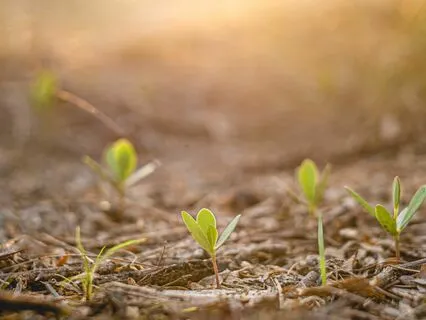
Water and rich soil so that the seeds that we are here to plant can grow and flourish.
Those seeds are already within us.
We often don't have to look too deeply to discover them.
This is where spiritual practice can be invaluable,
Good therapy and healthy,
Intimate relationships.
If you want to know what you're good at or not good at,
Ask someone who cares about you.
Objective feedback can be invaluable in having a healthy,
Accurate perspective on ourself.
I had a fabulous conversation with my college-age son the other day who's actually doing a lot of his own personal growth work,
And we had a really interesting discussion on what it was like to be raised by me.
Whoa.
Got to make sure your ego's intact before you ask your kids what their perspective is on you,
But they have such a unique opportunity,
As do almost all of our close relationships,
To reflect back to us a different perspective on who we are.
So something to consider in your personal growth toolbox is ask one or two of your closest confidants or people who you know really genuinely love you and have your highest good in mind to maybe tell you two or three things that they observe that you're good at and two or three things that they observe as challenging for you.
They may or may not align with your own experience of yourself,
But I have found that this balanced perspective of having a sense of what I am good at and having a sense of what I'm not good at and having the maturity to be able to hold both gives me an opportunity to more clearly put energy expanding in my natural gifts and talents,
And also an opportunity to put some energy toward growing in those places where I may be underdeveloped and certainly pushes me out of the prison of perfectionism,
Which can be a really limiting,
Immature,
And stagnant perspective.
We are always in progress and process.
There is no such thing as perfection.
It's an illusion and a delusion.
We are each a unique expression of consciousness in this larger consciousness system.
There is no perfect rose or perfect pine tree,
Perfect cat or perfect human,
Only unique and infinite expressions of each of those forms.
And so although hope and hopelessness may be a continuum,
There's actually tremendous wisdom in both.
And although an overall general attitude of hopelessness,
Of despair,
Shame,
Or victimization is not helpful,
Truly admitting hopelessness can actually be a catalyst for positive,
Productive change.
As a nearly lifelong student of the 12 steps,
The spiritual principle of the first step is honesty,
But it's also about hopelessness,
Powerlessness.
And I did a podcast number 61 on the 12 steps for everyone if you want to go deeper into those spiritual principles.
But the admission of hopelessness of my addictions,
Rather than being a recipe for failure,
Although I certainly failed at using drugs and alcohol in any kind of a reasonable way,
The admission of that failure was the opening of a doorway into a completely new way of life that was filled with hope.
And in fact,
The principle of step two is the principle of hope.
And the simplest explanation of hope for me is that there is a different way that I can't imagine.
It requires open-mindedness.
Hopelessness is closed-minded.
Now this is subtle and often tricky because particularly in addiction,
Hope is directed in the wrong direction.
The hope that I might find the right combination of vodka,
Cocaine,
And emotionally unavailable men,
Those were my three big drugs of choice,
And I hit drastic bottoms with all of them,
That was pursuing what I call a hopeless hope,
Where we decide how we believe things need to be,
And we can't imagine a different way,
And we keep pursuing things that are not working out,
Relations,
Circumstances,
Behavior that's destructive,
Painful,
Even catastrophic,
And we can't even entertain the idea that there's a different way.
And I have unfortunately watched many addicts and alcoholics pursue the idea that they could drink or use drugs in some kind of a reasonable way right to the gates of insanity,
Institutions,
And death.
And hopeless hope is about doing the same things over and over again,
Expecting different results.
So we're putting our hope in the hopeless.
And so this is where acknowledging authentic hopelessness can actually catalyze a deeper change that we might not have imagined ourselves.
Admitting hopelessness is often a requisite to have a spiritual experience or a spiritual awakening.
I align it with the death-rebirth process that is perpetually happening on this plane of existence.
And like hope and hopelessness,
Death and rebirth are inextricably intertwined.
There is no death without some kind of rebirth or transformation.
Generally,
The birth of something new is tied to the death of something old.
So in order for me to get clean and sober,
I needed to let my old way of life die in order to experience the rebirth of recovery and sobriety.
When the relationship of my marriage had run its course,
And I'm divorced twice now,
And both of those were very healthy divorces because those relationships had served their purpose and it was time to let them go.
And so the death of those marriages was the birth of new ways of life,
New circumstances,
New relationships for everybody involved.
And some of the wisdom of hope and hopelessness is knowing,
Again,
Where to appropriately direct those energies,
Particularly the marriage to the father of my children was an excellent relationship,
Imperfect as all relationships are.
And I like the analogy that in the impermanence of all things,
Both an entire human life or the relationships in it,
They're like tomato plants,
That there's a season for the plant to grow and flower and fruit,
And that season may be years or even decades,
And then there is a time for that plant to die,
To decompose,
To spread its seeds,
To compost back into the earth for the benefit of the system.
And I can stand over a dying tomato plant and say,
Bam,
More tomatoes,
But you know what?
The time has passed.
And that's our wisdom to know the timing of all things and to accept this birth and death,
This hope and hopeless continuum,
And to align and adjust ourself with the deeper intelligence of these cyclical systems.
And so at the end of a tomato plant's life,
To have hope that it's going to produce more tomatoes after the frost is a hopeless hope.
That is healthy hopelessness.
And yet the seeds of hope lie in the remaining tomatoes.
For more things to be birthed,
And we might cultivate them,
Or they may just happen to us,
That there is always life flow happening that we can step into and align with.
And if we follow the plant analogy,
Sometimes there might need to be a season of winter that assists in that composting of the soil and the germination of the seeds in ways that we might not be able to see or understand,
Because it's happening below the level of consciousness under the proverbial soil.
And winter is a very telling and important teacher for us,
Because in the depth of winter can be a place where we feel hopeless.
We can't imagine that spring could come,
And yet it always does.
This particular podcast is being recorded.
The week of winter solstice,
The week between Christmas and New Year's,
And all of those events or celebrations point to this cycle of death and rebirth,
Of darkness turning into light,
Of endings and new beginnings,
Which cannot be separated from themselves.
The symbolic birth of baby Jesus,
The miracle of the lights of Hanukkah,
The winter solstice where the days turn into getting longer again,
More sunlight,
At least in the Northern Hemisphere,
And the acknowledgement at New Year of this rotation around the sun,
Starting yet again another year.
And how do we want to align our intentions?
Where do we want to put our energies?
What is hopeless and what is hopeful in our lives?
And how do we orient ourselves or process these realities?
And the shift from hopeless to hopeful is generally one of expansion.
For me as a hopeless addict,
I kept having hope that I could figure it out all by myself and I needed to expand to receive the help of others and the help of God,
Ultimately for me,
Goddess,
That had not been a part of my life previously.
Again,
I've found hopelessness to be really helpful in my life more than once as it drove me to an underrated state called desperation.
And we can become open-minded intentionally and willingly,
Or we can be driven to open-mindedness by agony and despair.
We have this kind of brilliant system that we live in of pain and joy,
And pain tells us you're going the wrong direction and joy tells us you're on the right path.
But lots of times we're stubborn,
I know I have been,
And I pursue the path of pain because I want that to be the path of joy.
I'm mad.
I'm not getting my way.
Even though this hurts like hell and everything's falling apart,
I'm determined to find a way to drink and drug and be successful in my life.
Didn't happen.
I want this really dysfunctional guy to be a good partner.
Didn't happen.
That was my first marriage.
Not my second one.
He was an excellent partner.
I want to be able to eat white cake,
Pasta,
Donuts,
And eat everything I want and not get fat or have to make myself throw up.
That didn't work either.
So pain can drive us to desperation,
Which can make us open-minded to be willing to let go of our limited ideas of what we think will make us happy.
Believe me,
The last thing I ever thought would make me happy was to be clean and sober.
And yet it has been the most important shift in all of my life.
And it was instructive in me being willing to let go of how I think things need to be and to be open-minded that perhaps what I really need might be completely different from what I think.
And I was very disconnected from my authentic self,
And it has been a long and twisty path filled with lots of resistance to be able to own and support a lot of who I really am.
And I'm still in that process,
Hopefully will be till my tomato plant dies.
So over and over again,
Hopelessness has caused me to release the way I think things need to be,
Or what I think I need,
And open to the hope and experience that I will be shown different,
Better,
More expanded ways that I couldn't imagine create or make happen by myself.
And so I encourage you to look at your relationship with hope and hopelessness in your own circumstances.
And where can you acknowledge true hopelessness and let go?
And where can you cultivate hope in the creation,
The revelation,
The adaptation of new circumstances or ways of being that are more nourishing and supportive of your own authentic unfolding path?
Thank you so much for listening.
Blessings on your path until we meet again.
This is Renee LaVallee McKenna for Spiritual Psychology.