Welcome to the mindfulness meditation podcast.
I'm your host,
Dawn Eshelman.
Every Wednesday at the Rubin Museum of Art in Chelsea,
We present a meditation session led by a prominent meditation teacher from the New York area.
This podcast is a recording of our weekly practice.
If you would like to join us in person,
Please visit our website at rubinmuseum.
Org slash meditation.
We are proud to be partnering with Sharon Salzberg and teachers from the New York Insight Meditation Center.
In the description for each episode,
You will find information about the theme for that week's session,
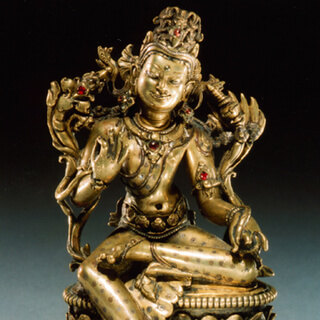
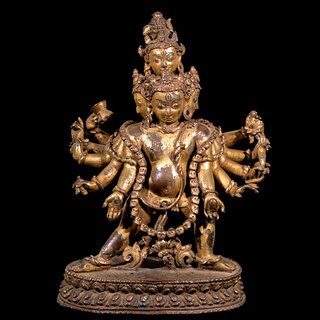
Including an image of a related artwork chosen from the Rubin Museum's permanent collection.
And now,
Please enjoy your practice.
So nice to be back with all of you after a little break.
I hope you're very well.
And I am grateful to see you all and to continue this ritual we have going on here.
Welcome to the Rubin Museum of Art.
My name is Dawn Eshelman,
And it is a pleasure to be here with you for our weekly meditation practice,
Which I will remind you changes to Monday in January.
And it is here in New York City in the Western Hemisphere.
It is fall,
Although it feels like winter today.
So this is a time of harvest,
Of taking account,
Of sort of looking back as we near the end of our Gregorian calendar and just see all the bounty in our lives and all of the things we have to be grateful for.
So we're talking this month about gratitude and how that serves to really empower us in this year of power here at the Rubin to really stand strong in all that we have together.
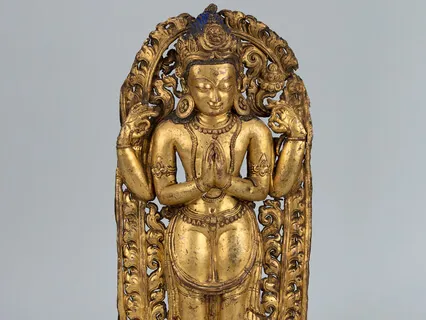
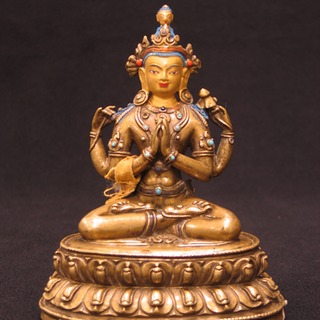
So we're looking at a beautiful object today.
This is Avalokiteshvara.
This is the Bodhisattva of Compassion.
And this particular sculpture here is from Nepal,
1600s.
And we can see that Avalokiteshvara is standing in a peaceful pose with this prayer-like gesture and is wearing the jewels of a bodhisattva.
And that bodhisattva,
Again,
Is a figure of a being that has reached enlightenment but actually decided to stay here on earth to help all others reach enlightenment.
And Avalokiteshvara is a figure that inspires a lot of gratitude,
Right?
And it's interesting,
That relationship between compassion and gratitude.
There's one way of cultivating compassion through a kind of empathy with suffering,
Right?
And another way is through this lens of appreciation,
And Avalokiteshvara inspires that in a lot of practitioners who are devoted to Avalokiteshvara and for those of us who are not,
To conserve as an inspiration.
And I invite you to just bring to mind someone in your life who has compassion for you and to send them a little bit of appreciation and gratitude right now.
So we're about to feel a lot of gratitude for our teacher today,
Lama Arya Drolma,
Who is back with us.
So nice to have you back.
She has studied and practiced Tibetan Buddhism for over 10 years.
And I know when she first came,
I told you all the story,
And she did too,
Of how she became a nun in this tradition.
And it all started in our bookshop.
That's right.
So it's really wonderful to have her as part of the series.
She is trained in the Dharma Path program offered by Kagyu Thubten Choling Monastery and is a graduate of traditional Tibetan Buddha retreats spanning three years and three months.
She graduated from Mumbai University with a BA in sociology and is trained in computer programming from NIIT in India.
She actively volunteers as a fundraiser for breast cancer research and supports several nonprofit organizations.
Please welcome her back to our program,
Lama Arya Drolma.
Thank you,
Dawn,
For the lovely introduction.
And hello and welcome,
Everyone.
Thank you all for being here today.
I'm so happy to be here with you all.
And brings me great joy to come here and see all of you all wanting to learn mindfulness meditation.
And what you do when you learn mindful meditation is you basically give joy back with your sense of peacefulness and joyfulness.
And do we have any newcomers here today?
Wonderful.
Welcome,
Welcome.
The best decisions you made today.
You know,
I'm laughing at my own story because it was in January I had made a New Year's resolution that I should go back and start my mindfulness meditation practice.
And before that,
I had come to the Rubin Museum and got a book here,
Which is called The Buddha Within You by Surya Das.
And I had found this lineage.
So I went looking for the lineage and I found a place in Manhattan where they teach,
You know,
The Kalya lineage of mindfulness meditation.
So it was my New Year's resolution.
I went there to learn mindfulness meditation.
And the next thing I know,
I became an ordained nun.
So watch out.
But there were many seeds in me,
You know,
From the age of eight that,
You know,
Seed after seed,
Seed after seed.
That was the journey,
My own spiritual journey.
And one of the stories is I found the book here and found the Kagyu lineage.
So I'm so happy to be here with all of you all.
And for all the newcomers,
I assure you the session is going to be very easy to follow and we'll have Q&A later.
So feel free.
This is your time.
Feel free to ask any questions you have and I'll gladly answer them all.
So today the beautiful artwork is of our Lokiteshwara.
He's also called Lokeshwara.
And many,
Although he originated in India,
He took different forms like in China,
He was called,
He took a form of a she.
She is in the female form called Kaunyan and beautiful,
Kaunyan is so beautiful and peaceful,
You know,
And another enlightened being.
And in Nepal,
Chenrezig is called or our Lokiteshwara is called Karunamaya and Karuna means compassion.
And of course in Tibet,
It's Chenrezig and in India,
Our Lokiteshwara,
Lokeshwara.
So he's taken different forms because he was so popular.
And it's very,
Very rare to see the image of him standing.
And this is such,
You know,
When I was sitting there,
I was so drawn to this beautiful artwork.
And what is beautiful when you'll come here to the,
To Rubin Museum,
You know,
Sometimes we take it for granted because there are so many of these images,
But to a Buddhist practitioner,
It takes a lifetime to see even one of these images.
And here there are so many,
You know,
Every week when you'll come,
You'll see different images and what happens to most of us practitioners,
There's a pull,
There's a magnetism towards these beautiful statues because a lot of them are concentrated with sacredness.
It's like almost when you are in church and you take the Holy Spirit and the wine,
Which is,
You know,
Sacredness to you all,
Which is concentrated,
It's very similar.
And this is almost like that.
So when we see figures like this,
There's such a strong pull and it awakens our own enlightened nature.
So when you feel like that,
A certain full or a magnetism or just an awe when you see these figures dwell in it and,
You know,
Dwell in it and feel that moment in time.
And so he is a symbolic expression of the enlightened nature of one's own mind.
Our pure primordial mind is of loving compassion and kindness.
Although we may not know it at this moment because we probably have a lot of delusion,
We have a lot of mental afflictions such as anger,
Jealousy,
Hatred,
Resentment,
All these negative afflictions we all have because we all are human beings,
We are dealing with the world.
It is all transferable to loving kindness,
To compassion,
To love.
And it's just a switch,
You know,
It's as easy as that because why?
We have that innate loving kindness and goodness within us.
So to have inner peace,
Happiness,
The key factors to cultivate a compassionate heart.
And the word here is to cultivate.
So what we in the monastery,
You know,
What are our practice?
It is a practice of cultivating loving compassion,
Kindness,
Goodness.
It is cultivating these things.
So in almost all the Buddhist monasteries around the world,
The practice of our Loka Tejwara,
Chenrezhi is practiced daily.
And it's with this practice that was most transformative for me,
Which opened my heart of compassion.
And,
You know,
I truly felt that sense that I'm only here to benefit beings.
I truly,
Truly felt it in my heart.
And this practice,
The practice of Chenrezhi has been transformative for many,
Many of Buddhist students.
So this past Sunday in our monastery,
We had an event called Merit Day.
So what is Merit Day?
Merit Day means doing good day activities.
So there were 200 people who attended the event upstate in our monastery.
And there were many,
Many activities,
Like some of the activities were chanting the Chenrezhi Sadhana,
The Chenrezhi practice.
We chanted it.
And what it invokes is,
You know,
It's all translated in English and translated in Chinese and it is in the Tibetan text.
So it invokes our own compassionate nature.
It's such a powerful prayer.
And then the people could,
We went and released some fish.
There was a place where they held fish as baits for people who wanted to fish.
But what we did was went and released buckets,
The whole store basically.
We released it into,
You know,
There was a beautiful stream out there.
So we released it.
So what it symbolizes is our own longevity of life and good health for our own health,
Releasing this fish.
It's symbolic.
And then we,
You know,
Obviously we chanted Chenrezhi,
We released the fish,
And then we put all around the monastery prayer flags with prayers.
And the idea being is each time the prayer flags blew in the wind,
The prayers spread all over the community and it benefited the community.
And these are all symbolic gestures.
And then we had a huge fire pooja where we prepared a lot of food and everything as an offering to remove all obstacles.
Again,
All these are symbolic.
But each impressions are in our mind.
You know,
It makes an impression in our mind.
It makes a memory.
So we can always go back to it.
It always arises in certain times to remind us,
Yes,
We participated in this fish release.
We participated in the chanting.
And that whole day I could see there were 200 people,
All kinds of people,
Old,
Young,
And there was such harmony.
And so I feel today is also like a merit day that all of you come together and,
You know,
For the goodness of the community and for your own spiritual growth.
So again,
Thank you for being here.
So another important factor to cultivate is gratitude.
And gratitude is the theme of this month.
And now psychologists can scientifically prove the tremendous benefits on the quality of life of having gratitude.
You know,
Who would think that they can even measure gratitude scientifically?
But that's what it is.
Because in our Western culture,
We are thought to be more competitive.
And it's more of an Eastern concept of developing compassion and loving kindness.
It's cultivating.
Here in the Western context,
It's more of developing competitiveness and so on,
Etc.
But having gratitude,
You know,
A lot of leading researchers say it reduces most of our negative emotions ranging from jealousy to anger,
Resentment to frustration and regret.
So developing gratitude is really the most important antidote for negative emotions and one of the simplest way to improve the satisfaction of your own life.
If any of you feel,
Oh my God,
Why have I been dealt with this terrible things that's happening to me,
It's really important to bring your mind to all the things you're grateful for.
So and how does one cultivate gratitude?
By making it a practice,
Literally,
It's practicing just like you'll come here to practice mindfulness.
It is also practicing gratitude.
So for me,
I'm leading a spiritual life.
So when I wake up,
My first thing I bring to mind is five things I'm grateful for.
And it can also be as simple as the white sheet,
You know,
Beautiful sheets on my bed,
You know,
How many of us are so lucky.
All of us here,
We have these beautiful beds,
All these advertisements,
You know,
The bigness and the softness and everything.
And imagine we have this comfort of sleeping in our own beds with clean sheets and waking up.
So since it's a practice,
Why don't we practice now to bring five things into our mind of gratefulness.
We'll just sit,
You know,
In a meditative mindfulness posture,
And just bring into mind five things you're grateful for,
And really feel it,
You can bring any thing into mind,
But bring five significant points of gratefulness and just really dwell in it.
Feel it,
Feel it with an open heart.
So we'll sit upright and just breathe gently,
You know,
Inhale and exhale,
Breathe in and breathe out.
And feel in your heart,
This immense feeling of gratitude to all the things you have today.
And just be thankful.
Just bring five things into your mind and just sit and reflect on this.
So I wanted you all to get back into this five points of gratefulness or gratitude you feel today.
Because this is how one cultivates and practices gratitude,
Gratefulness.
How do you cultivate it?
By regularly reflecting on being grateful every time you feel something negative,
Or if you feel depressed,
Or if any of these emotions of anger,
Why me,
All these thoughts come immediately bring into mind gratefulness,
You know what you're grateful for that.
And how does one cultivate is from moment to moment in a day to bring this thoughts of gratefulness.
So make this a practice,
You'll definitely be more joyful.
Today I took all these for granted,
You know,
The feelings of gratefulness.
And when I really in the morning when I start my day with five thoughts of gratefulness,
I really feel so joyous because it's hard to bring into mind joyfulness because we always have stories after the thought of joyfulness,
You know,
Something negative perhaps,
But gratefulness for something it brings in it invokes something more.
And it keeps like a fuel for the day.
So how do you cultivate?
Again,
Bringing it moment to moment as you step in,
If you watch your thoughts,
When something negative thoughts come into my come into your mind,
Bring into mind thoughts of gratefulness.
So now,
We go back to the mindful mindfulness meditation.
And there's another important factor to cultivate.
And that is compassion,
And loving kindness.
And that is what embodies Chenrezig.
When we see Chenrezig in the monastery,
We connect with him to be the Lord of compassion.
And it invokes our own loving kindness and compassionate nature when we do the praises,
And we do it every day.
And the praises are so beautiful.
One of the sentences in the practice text is to see all the human beings as as we would see our own mothers,
Our own fathers or people whom we love unconditionally.
And so when we look at everybody in that context,
There's a lot of feeling of love develops.
You know,
We are so separated sometimes in cities,
Especially we don't even know what the neighbors do.
But when we invoke this loving kindness in the prayer text and look at all human beings as though they were our mothers.
That's when you understand the sense of love for all people.
And we do this practice daily so we can invoke that emotion and make it stronger and stronger.
Because this is what we want to put our attention on positive feelings rather than invoke any negative feelings.
So how do we cultivate compassion and loving kindness?
We just need to train ourselves to shift our attention from the negative thoughts.
These negative thoughts keep arising.
And it's just like acknowledging,
Okay,
That's negative thoughts,
And then bringing into mind loving kindness and compassion.
So on this note,
The mindfulness meditation,
The session today will be on loving kindness and compassion.
And it's really very easy and simple.
All of us at some point in our lives have felt unconditional love towards somebody,
Towards your son,
Towards your daughter,
Towards your mother,
Towards your father,
Or maybe even to yourself.
We do love ourselves sometimes unconditionally.
Well,
Just invoke that feeling,
You know,
Invoke that strong feeling.
So I'll give you a guided meditation.
And so all you have to do is bring that feeling of deep love and kindness into your mindstream when you meditate.
To start,
You can generate this feeling of happiness and loving kindness towards someone you already know.
It could be as I mentioned,
Your child,
Parents,
Grandparents,
Spouse,
And then all you have to do is to extend it to the people around you.
It could be your neighbor.
It could be to more people.
It could be just to this room full of people.
And if you feel more generous to the whole world,
And this is a practice and it's a very,
Very easy practice.
And when you start doing this,
You will feel so wonderful within you.
I assure you,
As I mentioned,
This practice of Chenrezig has been so transformative for me.
And so again,
Now when we start the meditation session,
I have I've noticed we have so many teachers here,
Wonderful teachers,
Giving you so many meditation practices.
And please understand,
Meditation is not a one session thing.
Every time you come in for a meditation session,
You have many different teachers,
You will take in one point,
You will take a different point.
So it's growing,
Your meditation process will be growing as well.
I initially thought,
I'm just going to do one meditation session,
That's it.
And then I will practice.
But no,
Each time I went,
Each time I practiced,
My own experience changed.
And then the teacher would give us a clue.
And something stayed within my heart and something I let go.
So meditation,
Mindful meditation is an ongoing process,
You're going to learn with new teachers,
You're going to discover things within yourself.
So when I'm teaching you,
I'm really teaching you from my tradition of what I have been taught,
Because they're very strict in that manner that we teach exactly what has been taught,
And we don't add our own BS.
They make it very clear.
And if we do add our own BS,
We are supposed to put our hands up and say,
This is my own thinking.
These are my own thoughts.
So when you start the meditation,
There are only two essential points in this tradition.
The first is your body,
Which is the essential point of your posture.
And the second is the essential point of the mind.
So in this tradition,
When we start the meditation,
There are seven postures to the body that to keep bring to mind.
And the seven postures in the tradition are so to align the body and keep the body grounded during meditation.
So when you when you are really becoming a serious meditator,
And you want to go off into some cave and meditate for hours together,
This posture is very beneficial,
Or even if you want to do just one minute or five minutes,
Okay,
So I'll go through the body postures.
And however,
Please note,
We all have different body types,
You know,
As long as you keep certain key points,
One is to keep your spine straight,
All the other body postures that I'm going to talk to you,
If you cannot,
It's quite okay.
Just try each day to get a few of these postures right.
And most important,
You have to be comfortable.
Okay.
So the first point of the posture is to keep your back straight.
If you're sitting in the chair,
It's best not to lean behind.
Why?
Because you know that the backrest is kind of obstructs the meditation practice,
But if you feel like that's fine.
And you know,
Keep your feet parallel on the ground.
It's not so good to keep it crossed.
And if you're at home and you want to sit on the floor,
Absolutely all right,
You can sit in the Lotus position or you can sit in the Bodhisattva position,
What you feel comfortable and your shoulders,
Keep them squared.
They're not slumped.
It's nice to sit like this lump,
But then it's nice to be squared because it brings all these attention.
Your hands,
You know,
They can be resting with your palms down on your knees or in most of the Buddha statues you see in the equipoise posture,
Which is right or your left with your thumbs touching and you just place them on the lap.
So that's one of the postures.
The chin is tilted slightly like this and your lips are gently touching.
The tongue is resting naturally on your upper palate and your eyes.
So when you tilt your neck like this,
Automatically your eyes,
The gaze of your eyes will go down and then just find a spot there,
You know,
And in this tradition we try to keep our eyes opened,
But I think a lot of people,
You know,
Feel comfortable with your eyes closed.
So you can keep your eyes closed and slowly practice to keep it open.
Why do we keep our eyes open?
Because when you close your eyes,
It's very easy for you to fall asleep and the idea is to be awake,
You know,
An awakened state.
Okay.
And we keep all our senses open,
Eyes,
Our sight,
Everything.
So that's something we will practice.
Okay.
So now we'll start the guided meditation.
Please sit upright with all the postures.
And we'll try to do 10 minutes of this meditation.
So during the meditation,
Your mind needs an anchor.
So place your mind's attention on your breath.
Just breathe in naturally in your own rhythm and,
And bring to mind the feeling of unconditional love and kindness and compassion.
And as you breathe out,
Let this loving kindness and compassion fill the whole place with white light and just breathe that out white light of loving kindness and compassion.
Okay.
.
.
.
.
.
.
.
.
.
.
.
.
.
.
.
.
.
.
.
.
.
.