Welcome to day 5,
The final day of this PTSD help series.
Our final meditation to cope with numbness and or anxiety anger attacks associated with trauma is a progressive muscle relaxation technique.
This will be accomplished by tensing and relaxing different muscle groups.
Before we get to that,
Let's do a quick review of how each of these meditations help with trauma symptoms.
Symptoms A major cause of people feeling numb,
Disassociating,
Or feeling detached from themselves or others is due to a part of the brain known as the insula that is not functioning properly after trauma.
This area of the brain is responsible for connecting our mind to our body.
It is responsible for picking up on shifts in our internal state.
This helps us to recognize and manage unusual changes in our emotions.
One reason a person can swing from feeling numb to having anxiety attacks is that the person is still experiencing anxiety,
They just may not be fully aware of it until it builds,
Builds,
And then erupts like a volcano.
All of the meditations in this series work on developing mind-body-emotion awareness.
Another benefit that I'm sure most of us are aware of by now from any meditation is a reduction in stress.
This meditation specifically goes deeper into helping the practitioner become familiar with their internal state,
Allowing them to better recognize areas of tension in each different area of the body.
Several studies have been conducted on this meditation technique and it has demonstrated the following.
It normalized heart rate variability,
Which is a sign of cardiovascular health and a sign of how well our body is currently adapting to stress.
It reduced depression and anxiety,
It reduced headaches,
And it normalized cortisol levels.
Before we begin,
There are a few things I want to point out that are important for you to know.
You may want to check with your doctor before completing this if you have any kind of physical health problems or if you suffer from chronic pain in any specific area of the body.
If you feel pain during the tensing phase in any muscle group,
It is fine to skip that area.
Another important note is that trauma can be strongly associated with specific areas in the body.
If you bring your focus to a specific area,
You may notice certain emotions associated with that area.
This is normal and a sign that your mind-body-emotion awareness is improving.
Just make a mental note and give yourself kudos for noticing this.
If focusing on a specific area of the body though produces overwhelming emotions,
You can just skip it and return whenever you feel more comfortable in the future.
We are about to begin,
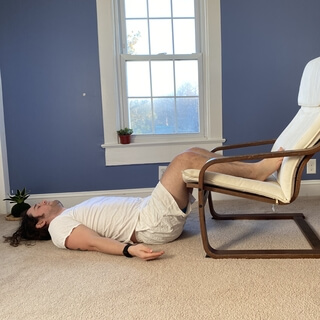
So find a comfortable place to sit or to lie down.
It is suggested to close your eyes if you feel comfortable doing so.
Begin by taking a few deep breaths,
Focusing on the sensations of breathing in.
Breathe in and out.
Breathe in and breathe out.
Take a few more on your own.
Now move your awareness to your entire body,
Just starting to notice any areas of tension.
After assessing for tension,
Look for any areas that feel relaxed and good.
Now we will begin the tensing and relaxing.
Do not tense at your full capacity.
Only tense each muscle group at about 50% capacity.
We will tense for 5 and relax for 10.
You do not need to worry about counting.
I will instruct you when to tense and when to relax.
After relaxing the muscle group,
Note any changes or difference in the way it feels.
So begin with your feet.
Go ahead and tense.
Now relax.
Now tense your lower legs or your calves.
And relax.
Tense your upper legs.
Now relax.
Now tense your buttocks.
And relax.
Now tense your hands.
Relax.
Now relax.
Tense your abdomen.
Now relax.
Next tense your arms.
And now relax.
Tense your chest and upper back.
Relax.
Now your neck and shoulders.
Now your face and jaw.
Relax.
We will now go back down.
Tense your neck and shoulders.
Relax.
Now your chest and upper back.
Relax.
Next your arms.
And relax.
Now your abdomen.
And relax.
Next is your hands.
And relax.
Now your buttocks.
And relax.
Tense your upper legs.
And relax.
Now your lower legs or calves.
And relax.
Now tense your feet.
And relax.
Now take two deep breaths in.
Let it go and feel the relaxation wash over your entire body.
When you are ready,
You may open your eyes.
Great job making it all the way through this five day series.